 50 punkti
Autor soovib selle materjali allalaadimise eest saada 50 punkti.
50 punkti
Autor soovib selle materjali allalaadimise eest saada 50 punkti.
 ~ 1 leht
Lehekülgede arv dokumendis
~ 1 leht
Lehekülgede arv dokumendis
 2010-04-15
Kuupäev, millal dokument üles laeti
2010-04-15
Kuupäev, millal dokument üles laeti
 10 laadimist
Kokku alla laetud
10 laadimist
Kokku alla laetud
 0 arvamust
Teiste kasutajate poolt lisatud kommentaarid
0 arvamust
Teiste kasutajate poolt lisatud kommentaarid
 rubinjo
Õppematerjali autor
rubinjo
Õppematerjali autor
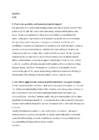
Golden Grammar rules 1. Don't use an with own. Sue needs her own room. (NOT Sue needs an own room.) I'd like a phone line of my own. (NOT ... an own phone line.) 2. Use or rather to correct yourself. She's German or rather, Austrian. (NOT She's German or better, Austrian.) I'll see you on Friday or rather, Saturday. 3. Use the simple present play(s), rain(s) etc to talk about habits and repeated actions. I play tennis every Saturday. (NOT I am playing tennis every Saturday.) It usually rains a lot in November. 4. Use will ..., not the present, for offers and promises. I'll cook you supper this evening. (NOT I cook you supper this evening.) I promise I'll phone you tomorrow. (NOT I promise I phone you tomorrow.) 5. Don't drop prepositions with passive verbs. I don't like to be shouted at. (NOT I don't like to be shouted.) This needs to be thought about some more. (NOT This needs to be thought some more.) 6. Don't use a present tense after It's time. It's t
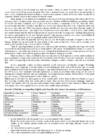
British Cuisine Some people criticize English food. They say it's unimaginable, boring, tasteless, it's chips with everything and totally overcooked vegetables. The basic ingredients, when fresh, are so full of flavour that British haven't had to invent sauces to disguise their natural taste. What can compare with fresh pees or new potatoes just boiled and served with butter? Why drown spring lamb in wine or cream and spices, when with just one or two herbs it is absolutely delicious? If you ask foreigners to name some typically English dishes, they will probably say "Fish and chips" then stop. It is disappointing, but true that, there is no tradition in England of eating in restaurants, because the food doesn't lend itself to such preparation. English cooking is found at home. So it is difficult to a good English restaurant with a reasonable prices. In most cities in Britain you'll find Indian, Chinese, French and Italian restaurants. In London you'll also find Indonesian,
Living in the countryside a pleasant experience or a never-ending hardship? People have always had a choice where they want to live. Many years ago, a most of people did not have a choice where to live. It used to be that poor people lived in the countryside and rich people in the city. Nowadays it has changed. People can choose and most of them choose to live in the city. City and countryside are both different places where to live. Both have their positive and negative sides. There are differences in the environment, in job opportunities and how expencive or cheap is to live in the countryside. Those differences are making people to think about advantages and disadvantages of living in a countryside. There are several advantages, why to live in the countryside. First, environment in the countryside is very different. There is less pollution and there is no danger because there are no´t so many cars, motorbikes, and factories. You can admi
Context is the combination of factors that make up architecture and the city. Contextualism describes this context. Factors emphasize the context in which a building or other architectural object is installed. In my opinion the main idea of contextualism is to find the character of a place and to offer a combination of its most contradictory factors. “Contextualism offers a middle-ground position between an unrealistically frozen past with no future development permitted, and urban renewal with the total loss of the urban fabric.” - Thomas L. Schumacher, “Contextualism: Urban ideals + Deformations” I think that the idea of contextualism is still effective, because in my own work I notice how important it is to see the context in which you are going to build something. If you do not pay attention to traditions, culture and buildings around, then the building will not look organic.
suburbs, and a garden of any size is considered essential. There is a growing tendency to move away from the hustle and noise of big cities, and large areas in the countryside are now being swallowed up by ‘urban sprawl’. The saying ‘An Englishman’s home is his castle’ is well-known and it illustrates the desire for privacy. A large detached house not only ensures privacy, it is also a status symbol. When surrounded by garden, it gives the required feeling of rural life. Many Londoners, if they can afford it, move to expensive riverside apartment blocks, which continue to grow in popularity. Many of the former derelict warehouses in the Docklands have been converted into modern flats. This is the growing trend; Newcastle, Manchester, Glasgow, Cardiff, Swansea – they all have dockland flats. In the countryside, visitors are always attracted by old farmhouses and thatched cottages. Thatching,
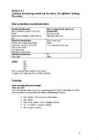
MODULE 1 Greeting. Introducing oneself and the others. The alphabet. Spelling. The tenses. How to introduce yourself and others Formal introductions How to respond and reply to an May I introduce myself? I am John introduction Smith. How do you do. Allow me to introduce John Smith to Pleased to meet you. you. Standard introduction Nice to meet you. I'd like you to meet John Smith. Hello. I want you to meet John Smith. I'm so pleased to meet you. This is Jane Smith. I'm Jane Smith. My name's John Smith. Informal introduction Hi. John. Jane. Hello. Titles: Mr Mrs Miss Ms Ms is a modern form of address for women. It replaces the traditional forms of Mrs and Miss. Greetings Good morning/afternoon/evening! 'How are you?' Very often people expect you to s
ccc_tracy_fm_i-xviii.qxd 7/7/03 3:22 PM Page iii CHANGE YOUR THINKING, CHANGE YOUR LIFE How to Unlock Your Full Potential for Success and Achievement B R I A N T R AC Y JOHN WILEY & SONS, INC. ccc_tracy_fm_i-xviii.qxd 7/7/03 3:22 PM Page i CHANGE YOUR THINKING, CHANGE YOUR LIFE ccc_tracy_fm_i-xviii.qxd 7/7/03 3:22 PM Page ii ccc_tracy_fm_i-xviii.qxd 7/7/03 3:22 PM Page iii CHANGE YOUR THINKING, CHANGE YOUR LIFE How to Unlock Your Full Potential for Success and Achievement B R I A N T R AC Y JOHN WILEY & SONS, INC. ccc_tracy_fm_i-xviii.qxd 7/7/03 3:22 PM Page iv Copyright © 2003 by Brian Tracy. All rights
ECKHART TOLLE A NEW EARTH Awakening to Your Life's Purpose CONTENTS Chapter One The Flowering of Human Consciousness – 6 Evocation..................................................................................................6 The Purpose of This Book........................................................................8 Our Inherited Dysfunction........................................................................10 The Arising New consciousness..............................................................12 Spirituality and Religion..........................................................................14 The Urgency of Transformation...............................................................16 A New Heaven and a new Earth...............................................................18 Chapter Two Ego: The
 annaabi.ee







Kõik kommentaarid