Leidsid 33 sarnast õppematerjali, mis on seotud failiga "Puzzle võõrad sõnad lk 106-110". Need materjalid aitavad sul teemat sügavamalt mõista.
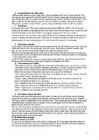
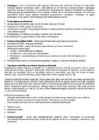
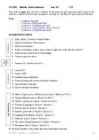
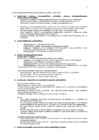
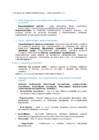
noun, verb, adjective, manager, words, approve, kiitma, accuse, innocent, süütu, civil, rights, alandav, ajav, auxiliary, aitav, needus, publitsist, publisher, ärijuht, persuade, express, tsensuur, courage, julgus, prosperity, monotoonne, abroad, adverb, võõrsil, broadcast, levitama, mööndus, gather, rhythmEnglish lexicology 1. Size of English vocabulary Vocabulary is a sum total of words used in a language by speakers or for dictionary-making. Active and passive vocabulary. The Old English vocabulary was homogenous. There were about 50 000 – 60 000 words, 1/3 of which have survived. o About 450 loans from Latin o About 2000 from the Viking invasions. The Middle-English vocabulary became a heterogeneous hybrid of Germanic and Romanic languages. 100 000 to 125 000 words. o About 10 000 loans from Norman French, 75% are still in use o Continuing Latin influence Early Modern English. 200 000 – 250 000 words
Notice that Spanish has informal and formal ways of speaking. This is because there is more than one meaning to "you" in Spanish (as well as in many other languages.) The informal you is used when talking to close friends, relatives, animals or children. The formal you is used when talking to someone you just met, do not know well, or someone for whom you would like to show respect (a professor, for example.) Encantado, cansado, enfermo, and aburrido are the masculine forms of the words. If the words refer to a woman or are spoken by a woman, then the final o changes to a: encantada, cansada, enferma, and aburrida In Spain, as well as Argentina, Bolivia, Chile, Paraguay, Peru, Uruguay and Venezuela, the Spanish language is called castellano instead of español. 2. Pronunciation Spanish Letter English Sound a ah e ay i ee o oh
All rights reserved. No part of this book may be reproduced in any form or by any means, electronic or mechanical, including photocopying, recording, or by any information storage and retrieval system, without the written permission of the publisher. ISBN 1-59905-201-6 Printed in the United States of America 13 12 11 10 09 08 07 9 8 7 6 5 4 3 2 1 Introduction Grammar is a very old field of study. Did you know that the sentence was first divided into subject and verb by Plato, the famed philosopher from ancient Greece? That was about 2,400 years ago! Ever since then, students all over the world have found it worthwhile to study the structure of words and sentences. Why? Because skill in speaking and writing is the hallmark of all educated people. Lesson by lesson, this book provides basic instruction in the eight parts of speech--nouns, pronouns, verbs, adjectives, adverbs, prepositions, conjunctions, and
I don't like to be shouted at. (NOT I don't like to be shouted.) This needs to be thought about some more. (NOT This needs to be thought some more.) 6. Don't use a present tense after It's time. It's time you went home. (NOT It's time you go home.) It's time we invited Bill and Sonia. (NOT It's time we invite Bill and Sonia.) 7. Use was/were born to give dates of birth. I was born in 1975. (NOT I am born in 1975.) Shakespeare was born in 1564. 8. Police is a plural noun. The police are looking for him. (NOT The police is looking for him.) I called the police, but they were too busy to come. 9. Don't use the to talk about things in general. Books are expensive. (NOT The books are expensive.) I love music. (NOT I love the music.) 10. Use had better, not have better. I think you'd better see the doctor. (NOT I think you have better see the doctor.) We'd better ask John to help us. 11
LEXICOLOGY 1. Size of English vocabulary 1) Old English – 50,000 to 60,000 words Vocabulary of Shakespeare OE – homogeneous; 1/3 of the vocabulary has survived • 884,647 words of running text About 450 Latin loans (Amosova) • 29,000 different words (incl. work, working, Viking invasions added 2,000 worked, which are counted here as separate 2) Middle English – 100,000 – 125,000 words) English becomes heterogeneous (Norman French, • 21,000 words English, Latin), hybrid of Germanic and Romance languages Norman French influence – about 10,000 words, 75 % are still in use (Baugh) Latin influence continues
Unit 6: vocabulary School and work (v.) verb (n.) noun (adj.) adjective (adv.) adverb 1. to retire (from) (v.) - to stop working due to age 2. toddler (n.) young child at the age of learning to walk, age 1-2 3. aspiration (n.) strong desire to achieve something 4. exasperated (adj.) extremely annoyed 5. to be fed up with (v.) sick and tired of 6. rarely (adv.) seldom; not often; infrequently 7. to queue (v.) to stand in a line 8. to be ashamed of (v.) to be embarrassed of something 9
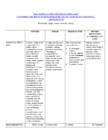
1 KLM 9 ENIRO 2 FARWEK 10 SAUREX 3 TALLEGG 11 MIZDE 4 VESITERM 12 LADA 5 STOW 13 SCHWUNG 6 KALEV 14 MAIASMOKK 7 YAMAHA 15 ISKU 8 ESTRAVEL 2 Affirmative tense Use Signal Words Negative/Questions · action in the present taking always, Present Simple A: He speaks. place once, never or several every ..., N: He does not speak. normally, often, Q: Does he speak? times seldom,
se that the gold, silver, iron and lead were exported back to Rome). Introduced schools,a new language Latin, large farms (villas), baths. In AD 410 they had to leave . roman occupation lasted nearly 400 years. They left behind very little. Roman province of Britannia covered most of present-day England and Wales. 4. Latin influence on English *The influence of Latin is noticeable also in the names of European cities: the Latin noun colonia (settlement, colony) may be found in numerous place-names: Lincoln, Colchester, Cologne ; from Latin word castrum (military camp) were derived English affixes -chester and -castle: Manchester, Lancaster, Newcastle; Latin word portus (seaport) in Portsmouth *-tor - person, doer, masculine form. The suffix is attached to the stem: victor (`winner', from the verb vincere `to win'), spectator (spectare).
Implikatsioonilised keeleuniversaalid: · Greenberg 4. universaal: SOV-keeled on üldiselt postpositsioonikeeled · Greenberg 3. universaal: VSO-keeled on alati prepositsioonikeeled Komplekssed implikatsioonilised keeleuniversaalid: · Greenberg 5. universaal: kui domineerib SOV ja peasõnale järgneb genitiiv, siis tõenäoliselt ka adjektiiv järgneb oma peasõnale 6. Sõnaliigid. Avatud ja suletud sõnaliigid. Klassifikaatorid sõnaliigina · Substantiiv nimisõna · verb tegusõna · adjektiiv omadussõna · adpositsioon, prepositsioon ja postpositsioon (vahel, sees, ümber) · abiverb pidama, tegema, olema · determinant määratleja (need, mõned, see) · adverb (hästi, kiiresti, õnneks · proadverb adverbi asendaja (kuidas või sedaviisi) · modaalverb võima, tohtima, saama, pidama, tulema, näima · afiksaalverb ühendverbid (peale käima, üle ajama, juurde lõikama, üles ütlema)
STYLE AND STYLISTICS FGI 1081 Stylistics (I. Ladusseva) 2 The term "style" is polysemantic (has many meanings): a Latin word "stilus" originally meant a writing instrument used by ancient people. Already in classical Latin the meaning was extended to denote the manner of expressing one's ideas in written or oral form. The precise definition was given by Jonathan Swift, who defined style as "proper words in proper places". In present day English the word "style" is used in about a dozen of principle meanings: 1. the characteristic manner in which a writer expresses his/her ideas (e.g. style of Byron). 2. the manner of expressing ideas, characteristic of a literary movement or period (e.g. symbolism, romanticism, renaissance). 3. the use of language typical of a literary genre (e.g. the style of a comedy, drama, novel). 4
tõusvat intonatsiooni, et moodustada üldküsimust (jah/ei küsimus) • Implikatsioonilised - kui on nii, siis on nii, nt Greenbergi 4. Universaal: SOV- keeled on enamasti postpositsiooni-keeled Võimalikke põhjuseid: mingid keeled on omavahel suguluses (üks keel on teisest eeskuju võtnud), ilma täishäälikuteta ei oleks võimalik rääkida 6. Sõnaliigid. Avatud ja suletud sõnaliigid. Sõnade liigitamise alused. sõnaliigid – substantiiv, verb jne semantilised rollid – agent, patsient, retsipient jne grammatilised suhted (rollid) – subjekt, objekt, predikaat, kaudobjekt jne Substantiiv e nimisõna (noun) Verb e tegusõna Adjektiiv e omadussõna Pronoomen e asesõna (kas ongi sõnaklass?) Adpositsioon: prepositsioon, postpositsioon Abiverb (auxiliary verb) Määratleja (determiner) the, those, some,
1. STYLE The term "style" is polysemantic (has many meanings): a Latin word "stilus" originally meant a writing instrument used by ancient people. Already in classical Latin the meaning was extended to denote the manner of expressing one's ideas in written or oral form. Jonathan Swift defined style as "proper words in proper places". In present day English the word "style" is used in about a dozen of principle meanings: 1. the characteristic manner in which a writer expresses his/her ideas (e.g. style of Byron) 2. the manner of expressing ideas, characteristic of a literary movement or period 3. the use of language typical of a literary genre (e.g. the style of a comedy, drama, novel). 4. the selective use of language that depends on spheres / areas of human activity (e.g
Featuring company celebrity spokesman Brooke Burke, the games sold more than 2 million copies, placing them as one of the top selling games along with an another Xbox 360 hit, Gears of War. These innovative ad campaigns, coupled with other new promotions and a series of new product introductions, drew considerable positive and negative attention to BK and helped TPG and its partners realize about $367 million in dividends. Derivations NOUN VERB ADJECTIVE ADVERB production produce productive productivly introduction itroduce introductery introductevly height highten high highly depth deepen deep deeply disaster - disastrous disastrously
YOU WILL HEAR: To get to the post office, cross the street, go three blocks, and you'll see it right on the corner. YOU WILL SEE: (A) The post office is right on the corner. (B) The post office is at the next corner. (C) The post office has a cross near it. (D) The post office is three blocks away. The correct choice is, which most closely gives the same meaning as the sentence you heard. It is important for you to know that if similar sounding words or the same words appear in an answer choice, that answer choice is seldom correct. Short Dialogs Part B contains short dialogs followed by a question about what the people said in their conversation. Generally, key information is found in the second speaker's sentence. You will need to understand the meaning of the conversation and also the context , such as the time or place in which it could occur. The correct choice directly answers the question. YOU WILL HERE: (Man Did you get to go shopping last night'
Aspects are only used in the past and future tense. When you are talking in the present tense, you can ignore aspects all together. The aspects are: Imperfective - Incomplete, ongoing, habitual, reversed or repeated actions Perfective - Actions completed successfully. The perfective aspect is not created by changing the ending. There are normally two words for each verb. One is the imperfective, the other is the perfective. Often these two words are closely related, but this is not always the case. (Often the perfective is simply prefixed with “По”). ) Жить, Прожить – live Любить, Полюбить – love Делать, Сделать - do, make Говорить, Сказать - talk, speak, say. Работать, Поработать - work Aspects in the negative Using the negative with perfective verbs indicates the person failed to do that action. Using the imperfective will
Tests Superstar 1 Luke Prodromou Test 1 Name____________________ Class_______ Use your English 1 Complete these sentences using the correct form (present simple or present continuous) of the verb in brackets. _ 1 She is in a band and she _________________________________ (record) a CD at the moment. _ 2 She is an actress and often _________________________________ (appear) on television. _ 3 At the moment she _________________________________ (have) a rest because she is tired. _ 4 Mike is a doctor and he _________________________________ (live) in Manchester. _ 5 I _________________________________ (start) work at 8.30 every morning.
43. suppose (v) полагать; предполагать 44. with reference to sth имея в виду что-л., ссылаясь на что-л. 11 45. chalk cliffs (at Dover) меловые скалы (около г. Дувра) the White Cliffs of Dover Белые скалы Дувра Exercises 1. Read the text. Look up new words in the vocabulary. 2. Read the following phrases aloud. Find the sentences with these phrases in the text. Translate them into Russian. a) The largest island in the British Isles; separated from the European mainland; about 35 kilometres of water; at its closest point. b) A mild climate; influenced by the Gulf Stream; to bring warmth in winter; a refreshing breeze in summer; plentiful rains; daytime highs; to drop to freezing;
3 a 10 17 the Another important point is that ... 4 the 11 18 Challenge! 5 a 12 a 19 the Students' own answers Transcript 6 the 13 the 20 the S1 = student 1, S2 = student 2 7 the 14 2E Verb patterns page 16 S1Well, I suppose the most obvious 1 1 listening 6 to buy advantage of online shopping is 2 1 4 /any 7 Some 2 living 7 to have that goods are cheaper than in the
regime that he doesn't agree with. Or information in the recording. Tell by their respective users. The fact that he might be an economic migrant who them to prepare for the listening Latin was the official alphabet of the has come here in search of a better by reading the sentences carefully Roman Empire, which at one point standard of living. and underlining any key words. covered most of Europe, helped to Encourage them to eliminate the 6 wrong answers as well as identifying establish this alphabet as the accepted way of writing across the continent.
mhmh (tagasisidesignaalid); noh, no (kõnevooru alustamise vahendid). 4) Onomatopoeetilised interjektsioonid: 4a) elusolendite häälitsusi matkivad sõnad, nt mjäu, piiks, auh-auh, ha-ha-haa; 4b) tegevustega kaasnevaid häälitsusi matkivad sõnad, nt prõks, müts, tik-tak, pots, klips- klõps. Onomatopoeetilised sõnad on tihti reduplikatiivsed, nt kiiga-kääga, piiri-pääri, kill-kõll, müta-mäta. 15. Tegusõna e verb (verbi liigid tähenduse, objekti käände, struktuuri ja süntaktilise funktsiooni alusel) - Tegusõna väljendab tegevust või olemist ja vastab küsimusele mida tegema? Morfoloogiliselt on verb pöördsõna, süntaktiliselt esineb ta lauses öeldisena. Tähenduse järgi võib verbe jagada: 1. Tegemisverbid, mis vastavad küsimusele mida tegema?, nt jooksma, mõtlema, vedama, töötama, lugema, magama. 2. Olemisverbid, olemisverbid, millest enamikule on raske esitada tegemisega seotud
11.02.09 INGLISE KEEL Palju aega läheb. 10 nädalat aint. One of the ESP courses. What we are going to do, what is needed: · What we do - 1 test, on words. · 2 Essays, that means that we have to look into academic writing · Homereading we read a case from European Court of Justice thingy. · Oral thing. · 90% you have to attend · Have to prepare for class and take part of it etc What we learn: Terms Expressions / collocations (nt obey/abide by the law) Explaining AWOL absence without a leave Legal English can be divided into 3 levels. We learn the first one, which is needed for the
igapäevaselt tegeleb. Mudeli visuaalne kujund on kuusnurk, mille tipudeks on ( alustades ülevalt paremale kellaosuti suunas): 1.struktuur, 2. süsteemid, 3.stiil, 4. töötajad ( staff ), 5. oskused ( skills), 6. strateegia. Kuusnurga keskel on nn 7. jagatud väärtused (shared values ). Kuusnurga ülemine osa ( strateegia, struktuur, süsteemid ) on nn hard S ´d ehk jäigad S´d need on 3 põhilist aspekti, millega tegeleb manager tüüpi juht . Kuusnurga 3 alumist tipu (stiil, töötajad, oskused) ja (NB!!!) jagatud väärtused on nn 4 soft S´i. Iga kuusnurga tipu juurest väljuvad 2 joont mis seovad selle konkreetse aspekti teistega (nt. struktuur on seotud stiili- ja oskustega; süsteemid strateegia- ja töötajatega jne) Juht kui liider e eestvedaja tegeleb kõigi 7 aspektiga ja tänu sellele tekib sünergia : tervik osutub suuremaks kui koostisosade summa. Antud teooria on laialdaselt kasutatav
12. Appointment (ametisse nimetamine) - an act of assigning a job or position to someone 13. Conflict of interest (huvide konflikt) - a situation in which the concerns or aims of two different parties are incompatible (kokkusobimatu) 14. Collection of evidence (kogutud tõendid) - compilation of proof, confirmation a. Admissible evidence 15. To drop charges (süüdistust tagasi võtma) - no longer officially accuse someone of a crime 16. Overburdened criminal system (ülekoormatud kriminaalsüsteem) - criminal justice system with excessive unsolved caseloads Criminal law Criminal offences o Summary offences – väärtegu Tried without a jury Minor crimes Magistrates court o Indictable offences Serious crimes (murder) Crown court About criminal code, penal code
parent to keep and bring up a child after a divorce) 67. acceptance of succession pärandi vastuvõtmine 68. on the basis of a will (testate) testamendijärgne 69. pursuant to law (intestate) seadusjärgne pärimine 70. bequeather pärandaja 71. non-contractual obligations lepinguvälised kohustused 72. deception (deceit) act of deceiving someone in order to make money 73. in good faith in an honest way 74. to ratify to approve officially (sth which has already been agreed) 75. incur to make yourself liable to 76. maturity time when an insurance is due to be paid out (sissenõutav) 77. mandate authority given to a person or group of persons authorising and requiring them to act on behalf of the person giving the authority 78. voidable which can be made not legally valid or not having any legal effect 79. building lease = right of superficious hoonestusõigus 80
ühtki selle töövihiku osa paljundada ei elektroonilisel, mehaanilisel ega muul viisil. Töövihik on kooskõlas 2009. a uuendatud õppekomplektiga I Love English 6. Tartu, 2014 ISBN 978-9949-436-59-0 Kirjastus Studium Riia 15b, Tartu 51010 www.studium.ee Trükitud OÜ Greif trükikojas Lohkva, Luunja vald Tartumaa 62207 --- 3 xxx 1. The Big Apple 1. Write the verbs in the present continuous or the past continuous tense. Do you remember? am is are was were verb -ing 1 Sorry. I ... (write) a report at the moment. I can't come with you. 2 When Peter arrived, his friends ... (play) football. 3 I ... (sleep) when the alarm went off in my sister's room. 4 Dad's mobile phone is switched off because he ... (fly) to Paris. He's on the plane at the moment. 5 I ... (read) an interesting book. It's a collection of memories. 6 Leo was late again. He ... (step) out of his father's car when the bell rang. 7 Helen ..
Nevertheless, I would Thearticlemustbeaboutvarious typesof houses. like to live in a houselike thisbecause it is so uniqueand Thisarticlemightbefoundin a magazine. tmpresStve. . ln pairs,5s write ten words connectedto the theme AskSsto reportback Writethe wordson [. r A l l o w 5 s t w o m i n u t e st o t h i n k a b o u tt h e i r i d e a l t h e b o a r dS sc o p yt h e m i n t ot h e i rn o t e b o o k s h o u s ei n c l a s sT h e n ,a s k v a r i o u sS s t o d e s c r i b e
Nevertheless, I would Thearticlemustbeaboutvarious typesof houses. like to live in a houselike thisbecause it is so uniqueand Thisarticlemightbefoundin a magazine. tmpresStve. . ln pairs,5s write ten words connectedto the theme AskSsto reportback Writethe wordson [. r A l l o w 5 s t w o m i n u t e st o t h i n k a b o u tt h e i r i d e a l t h e b o a r dS sc o p yt h e m i n t ot h e i rn o t e b o o k s h o u s ei n c l a s sT h e n ,a s k v a r i o u sS s t o d e s c r i b e
Nevertheless, I would Thearticlemustbeaboutvarious typesof houses. like to live in a houselike thisbecause it is so uniqueand Thisarticlemightbefoundin a magazine. tmpresStve. . ln pairs,5s write ten words connectedto the theme AskSsto reportback Writethe wordson [. r A l l o w 5 s t w o m i n u t e st o t h i n k a b o u tt h e i r i d e a l t h e b o a r dS sc o p yt h e m i n t ot h e i rn o t e b o o k s h o u s ei n c l a s sT h e n ,a s k v a r i o u sS s t o d e s c r i b e
Nevertheless, I would Thearticlemustbeaboutvarious typesof houses. like to live in a houselike thisbecause it is so uniqueand Thisarticlemightbefoundin a magazine. tmpresStve. . ln pairs,5s write ten words connectedto the theme AskSsto reportback Writethe wordson [. r A l l o w 5 s t w o m i n u t e st o t h i n k a b o u tt h e i r i d e a l t h e b o a r dS sc o p yt h e m i n t ot h e i rn o t e b o o k s h o u s ei n c l a s sT h e n ,a s k v a r i o u sS s t o d e s c r i b e
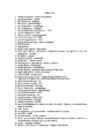
1. reegleid järgima observe rules 2. reegleid rikkuma break rules 3. vägivaldselt käituma (kellegi suhtes) act violently towards 4. vastuvõetava käitumise reegleid kehtestama establish acceptable rules of behaviour 5. õigusi kaitsma protect rights 6. õigusi maksma panema assert rights 7. õigusi piirama restrict rights 8. kohustusi peale panema impose duties on 9. seadust järgima obey law, observe law 10. seaduskuulekad inimesed law-abiding people 11. seadust jõustama enforce law 12. alaealised minors 13. õiguskaitseorganid law enforcement agencies 14. süütegusid uurima investigate offences 15. karistust määrama impose punishment on 16. kuritegu sooritama commit crime 1
beings grasp those meanings without even thinking about it, are very strik- ing facts. A philosophical theory of meaning should explain what it is for a string of marks or noises to be meaningful and, more particularly, what it is in virtue of which the string has the distinctive meaning it does. The theory should also explain how it is possible for human beings to produce and to understand meaningful utterances and to do that so effortlessly. A widespread idea about meaning is that words and more complex lin- guistic expressions have their meanings by standing for things in the world. Though commonsensical and at first attractive, this Referential Theory of meaning is fairly easily shown to be inadequate. For one thing, comparatively few words do actually stand for things in the world. For another, if all words were like proper names, serving just to pick out individual things, we would not be able to form grammatical sentences in the first place. Meaning and understanding
42. Sõnaliigi ja grammatilise kategooria seostest Grammatilise kategooria liikmed (aeg, aspekt, isik, polaarsus jne): · väljendavad samasse grammatilisse kategooriasse (nt AEG) kuuluvaid tähendusi · esinevad üksteisega vastanduvalt (nt korraga ei saa esineda kaks grammatilist morfeemi, millest üks väljendaks minevikku, teine olevikku) · väljenduvad ühe keele sees sarnasel viisil AGA Sõnaliigid on: nimisõna ehk substantiiv, tegusõna ehk verb, omadussõna ehk adjektiiv, määrsõna ehk adverb, arvsõna ehk numeraal, asesõna ehk pronoomen, määrsõna ehk kvantgor. Igal sõnaliigil on mingi teatud kategooria, mis sellega liitub. Näiteks nimisõnadel ja omadussõnadel on kääne, tegusõnadel aeg, tegumood , isik. 44. Sõnaliigi ja lauseliikme seostest Lauseliikmed on: alus ehk subjekt, öeldis ehk predikaat, sihitis ehk objekt, öelditäide ehk predikatiiv, määrus ehk adverbiaal, täiend ehk atribuut. AGA
42. Sõnaliigi ja grammatilise kategooria seostest Grammatilise kategooria liikmed (aeg, aspekt, isik, polaarsus jne): · väljendavad samasse grammatilisse kategooriasse (nt AEG) kuuluvaid tähendusi · esinevad üksteisega vastanduvalt (nt korraga ei saa esineda kaks grammatilist morfeemi, millest üks väljendaks minevikku, teine olevikku) · väljenduvad ühe keele sees sarnasel viisil AGA Sõnaliigid on: nimisõna ehk substantiiv, tegusõna ehk verb, omadussõna ehk adjektiiv, määrsõna ehk adverb, arvsõna ehk numeraal, asesõna ehk pronoomen, määrsõna ehk kvantgor. Igal sõnaliigil on mingi teatud kategooria, mis sellega liitub. Näiteks nimisõnadel ja omadussõnadel on kääne, tegusõnadel aeg, tegumood , isik. 44. Sõnaliigi ja lauseliikme seostest Lauseliikmed on: alus ehk subjekt, öeldis ehk predikaat, sihitis ehk objekt, öelditäide ehk predikatiiv, määrus ehk adverbiaal, täiend ehk atribuut. AGA
 annaabi.ee