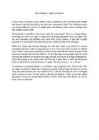
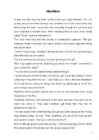
Capital punishment. Some people say that capital punishment should not be abolished. In some points I agree with it but in another points I disagree. When somebody kill someone, then it is impossible describe the pain that family members and friends have to feel. So it seems fair to punish murderer in that awful way, but then murderers family members get hurt and it would be vicious circle. Also the death penalty takes away opportunity to regret those horrible mistakes. Some people can change and would live life properly. But then, some people can't change themselves and they could do same mistakes over and over again. Then it seems right again to punish them with the death penalty. Of course from economical side capital punishment is better than maintaining serious
Forgiveness and punishment Everybody who has ever done anything wrong has wanted forgiveness or gotten punishment. But forgiveness is not easy however punishment is. So should people forgive or should they decide to punish? Firstly people often do not want to forgive others and want them to feel the same pain as they did. As a result of that people want to punish the people who hurt them. Although if the defendant is sorry and regrets what they did, maybe it's okay to forgive. Even though it may be hard to let go of the hatred and emotions in the end it might help to move on. Secondly if the culprit is not sorry, do they even deserve redemption? And all the people in prisons who don't feel guilt, should we keep them in prison until they do? However the problem with that is that it costs a lot of money. On the other hand
why is it an individual responsibility. Truancy in school is a very serious problem nowadays. Unfortunately many students have lost their motivation to study. According to the BBC 400,000 children were persistently absent from England's schools in the past year and missed about one month of school each. The effect that poor attendance at school can have on a child's education can be permanent and damaging but skipping should be child's own responsibility and it is not right to punish the parents for it. Students have many reasons why they are skipping school, mostly they do not like the teachers or the subjects that they are taught. They tend think that they won't need those subjects in their future life. Some children are just lazy and irresponsible. Also one serious reason is bullying. Bad relationships between the classmates make students to skip the classes. People, no matter how old they are should learn to take responsibility for their actions.
pass up- decline an opportunity or chance come down- to rain come down- to travel come on- encouragement come on- start an illness come on- st starts functioning come out- a secret is revealed come out- be published come out- disappear when washed come out- when the sun appears come through- arrive come through- communicate an emotion come throguh- produce a result come upon- find by chance let down- disappoint let in- allow someone to enter let off- do not punish let on- tell a secret let out- allow to leave or go out let out- make a noise or sound let out- make clothes bigger cut in- being working cut in- go recklessly in front of another vechicle cut in- interrupt cut in- include someone on a money making deal cut out- axclude from a deal cut out paper or picture from a book or magazine cut out- when an engine stops working cut up- make small pieces cut up- make jokes, laugh cut off- isolate cut off- disconnect set off- explode a bomb
Wayamba the Turtle man Brigitha Tammets, Carmen Niinepuu Origin • From Australia • Aboriginal Dreamtime story • Origin story of turtles Story • Wayamba the Turtle man • Wayamba took Oola and her children with him • The tribe were going to punish him • Wayamab had two big shields that protected him • Wayamba disappeared in to the creek • The tribe saw a creature resembeling Wayamba • They tought it was Wayamba wile it actually was a turtle.
Translate: 1.Dont get worked up. Nobody is going to punish you. 2.If you miss lessons,youll soon be in trouble. 3.Cool down and dont think about it. 4.Stop dawdling or well miss the bus. 5.Yesterday after the PE lesson Peter picking a fight with me. 6.Would you like to take a walk? 7.Take my words seriously, and dont be late. 8.Sandra always gets cross when we call hers names. 9.It s a pity you didnt apologize. 10.I need your help. Why are you walking off?
realistic to think that the idea of corporal punishment would ever take hold again in schools. I think that most children would respond negatively to a change like this and that this change would only create more of a problem in the long run. Bullying can have a very bad effect on the child who is being bullied and on the child who is allowed to go on bullying. Corporal punishment was not allowed in our school. That is strictly denied to physically punish students in any way. In closing I believe that corporal punishment in schools is a thing of the past. I think that corporal punishment is wrong. Children should be punished when acting out in schools, but that punishment should be in a non-violent form.
f) I can't come to the cinema. I have to read/study for a test. g) In history we had to learn a lot of dates by hand/heart. h) I hope your work will improve by the end of course/term. i) Martin failed/missed his maths exam and had to sit it again. j) If you have any questions, raise/rise your hand. Task 2. Complete each sentence with a word from the box. Use each word once only. cheat copy memorise pay revise concentrate divide pass punish underline a) Our teachers used to punish us by making us stay behind after school. b) If you…….twenty-seven by nine, the answer is three. c) Try to……. the most important rules. d) It is difficult to …….attention in a noisy classroom. e) Pauline tried her best to …….the end of year examinations. f) Your work is the same as Harry's. Did you……. his work? g) Your mind is wandering! You must …….more! h) Helen decided to……. all her work at the end of every week.
1 1. Ann tried to focus on learning new words. 2. The chances are that our tearm will win. 3. Make use of your free time and read books. 4. What goal did you set for yourself? 5. Amy finally gave me a chance to read her essay. 6. Unfortunately, my general knowledge is quite limited. 7. It`s possible to improve your memory skills. 8. Where you successful in the quiz? 2 1. had been 2. raised 3. puffed 4. said 5. did I punish / have I punished 6. sobbed 7. shout / shouted 8. tear / tore 9. don`t remember 10. did 3 1. b 2. c 3. b 4. a 4 1. What did the student have to do? 2. Why didn`t he buy the book? 3. Where did he try to find the book? 4. How did he solve the problem? 5. Was the student told off for reading the book? 6. Why was the book put in another place? Model answers 1. The student had to read a book. 2
In the class teacher´s lesson we discuss topical problems. 5 Kellelegi ei meeldi õpetaja pailapsed. Nobody likes teacher´s pets. 6 Kas sa sõbruned kergesti? Do you make friends easily? 7 Ma ei ole kunagi mingisse kampa kuulunud. I have never belonged to any groups. 8 Mul jäi suu lahti, kui ma teda pärast suvevaehaega nägin. My mouth fell open when I saw her after the sumer holiday. 9 Meie üllatuseks õpetaja ei karistanud meid üldse. TO our suprise the teacher didn´t punish as at all. 10 Me jäime ajahätta ja ei jõudnud testi lõpetada. We were run out of time and we couldn´t finish the test. _______________________________________________________________ UNIT 4: Töövihikust harjutus 8. 1 Ära ärritu. keegi ei kavatse sind karistada. Don´t get worked up. Nobody is going punish you. 2 Kui sa puudud tundidest, oled varsti hädas. If you are absent from school you will soon be in trouble. 3 Jahtu maha ja ära mõtle sellele.
Unfortunately my general knowledge is quite limited. 7.Meeldejätmise oskust on võimalik parandada. It`s possible to improve your memory skills. 8.Kas sa olid viktoriinis edukas? Were you successful at the quiz? 2. Write the verb in the suitable tense. The teacher was very angry with Little Tommy, who …….(be) läte for school for two weeks. He even raised(raise) his voice and pulled(pull) the boy`s ear. „Now, Tommy,“ he said(say). „Why ……(I/punish) you ?“ „That`s just like you,“ sobbed(sob)the boy. „First you ….. (shout) at me, then you ……(tear) my ear from the head, and now you…….(not remember) what you …..(do) it for.“ 3. Read the story and tick the best answer- a, b, or c 1. B 2. C 3. B 4. A 4. Write the questions. Look at exercise 3 and answer the questions. 1.What did the student have to do ? 2.Why didn`t he buy the book ? 3. Where did he try to find the book? 4
sorrowness and pain that has been inflicted . In the other hand, many people cannot live with knowing that someone just died for the things one did, just becuse of a slight malformation, which had nothing to do with his free will. Now he is dead. Does it make the feeling any better, or did it delete all the ill memories or anger? The only answer is : no, it did not. In conclusion a capital punishment is not the best way to punish a man. All the ones, who have been sentenced to death, have claimed just minutes before dying, that death is just the thing they want and they are very satisfied with it, and this knowing has even encouraged them to commit a crime. In their minds, a life-time prisonment is more severe than capital punishment. If convicts say that death penalty is more a relief than a punishment, so why on earth is this act allowed?
Belief in the Angels. Belief in the Book (al-Quran / Koran) (sent by God). Belief in all the Prophets and Messengers (sent by God). Belief in the Day of Judgment (Qiyamah) and in the Resurrection. Belief in Fate (Qadar) It is well known that in the USA and the whole world , Islam is the fastest growing- religion. Islam is growing about 2,9% per year. Music stops playing! G: Can you show us again? L: No, I can't, it's prohibited. A: Why? L: Because I am deeply religious and Allah would punish me for that. A: When is the next praying time? L: The next praying time is at the evening. 5 hours later! We all will pray! ALL: Allah is great!
If I were an English teacher Being a teacher is not an easy task. Teachers have many problems with students who does not know how to behave. Some of them even make fun of teachers and I find this kind of behaviour disturbing, because it is not fair that urchins have more fun in school than decent students have. Yes, teachers can throw the rebels out or punish them in other ways, but that usually agitates the students against the teacher. Firstly, I would like to say that if I were an English teacher I would variegate the classes with subjects, which students would actually find interesting. I would find it exciting to let them think and explore more about politics, social issues, world news and of course other subjects that they really find interesting to speak about. I believe these subjects need
They can be found in the Artic, Canada, Russia, Denmark (Greenland), and Norway. v In the wild polar bears live up to age 25. v Polar bears have been known to swim 100 miles at a stretch. v Polar bears primarily eat seals. Communication v When a Polar bear wants to play, he communicates this to another bear by wagging his head from side to side. Such play sessions involve ritualised fighting or mock battles. v A mother Polar bear can comfort, protect, or punish her cubs by using her body, muzzle, or paws and scold her cubs with a low growl or a soft cuff. Communication v Among Polar bears, hissing, snorting and a lowered head signifies aggression. An attacking Polar bear will charge forward with head down and ears laid back. Submissive Polar bears always move downwind of dominant bears. Sight v A Polar bear's eyes are dark brown, set relatively close together, and look forward.
Test 3 1 Translate. 1 Homme samal ajal on meil kirjanduse tund. This time tomorrow we have a literature lesson. 2 Sule silmad ja kujutle, et sa oled rannas. Close your eyes and imagine that you are on the beach. 3 Meie koduklass on teisel korrusel. Our home-classroom is on the first floor. 4 Õpetaja ei karistanud kedagi. The teacher didn't punish anybody. 5 Üldkogunemisel me tavaliselt räägime mõnest päevakohasest probleemist. At an assembly we usually talk about some topical problems. 6 Ta vaatas mulle otsa ja nareatas säravalt. She looked at me and smiled brightly. 7 otsusele jõudma make up your mind 8 ajahätta jääma run out of time 2 Put the verbs in the past simple or the past continuous. 1 Tom was standing by the window when he heard a knock at the door. (stand; hear)
If this also makes Britain more attractive for overseas visitors, so well and good. You'd only use capital punishment if you were absolutely sure that you'd convicted the right person. It'd be O.K. if they recognised the quality of the songs their grandmother had taught them and went on to sing them to their own grandchildren. 8.2 Questions based on conditions with sentence adverbials " then" and "so" We punish murderers and rapists on Earth, so why shouldn't the same people rot in hell? but if you want to go to a nicer locality, you can spend all day getting there. Then how do you go about making your own arrangements? Other people are part of the environment and they have a right to react to wrong-doing to protect society. Then why shouldn't God send evil people to hell? That's why I'm advocating self-sufficiency as a goal.
object to talk into opinion about talk out of opposite of tax on part with thank for pay for think of pessimistic about tired of pleased with trouble with popular with trust in prepare for truth about present with unite in prevent from unkind to protect against unknown to protect from unwilling to protest about use of proud of used to provide with victims of punish for vote for puzzled about warn about qualified for worry about quarrel about wrong with rank among zest for reaction to recover from related to relief from rely on report on respect for responsible for result of rhyme with rid of room for safe from save from serious about sick of smile at solution to sorry for stand for subtract from succeed in suffer from
advokaatide juhedaja - instructing solicitors for prosecution and defence alaealiste kohus - Juvenile court armuandmine - Mercy edasikaebamine - Appeal haldusõigus - Administrative law/ public law juriidilisele kaitsele - Judicial protection kaitse - Defence kaitsja - Councel for the defence kannatav pool - Injured party karistama - Punish karistust andma/täide viima - Meting out punishment karm karistus a harsh sentence kautsjon - Bail kirjalik laim - Libel kirjutatud seadus/parlamendi aktidel põhinev seadus - Statute law/statutory law kohtu asja võitma win a case kohtuametnik - Court officer kohtuistung - Trila kohtulikule arutamisele minema go on treial kohtunik - Judge kohtuotsus - Verdict kohtuotsust määrama - Passes sentences kohtus tunnistust andma appear in court as a witness
Too many responsibilities are very frustrating. Even some rainy day could make us sad ! It`s easy to study in winter, because nothing is calling us out. In spring only thought is what will i do after school? Weather is warm again and sun can be very foxy! Another disturbing factor is " annoying classmates" . Some people just want to put up a show. They scream , yell ugly words to teachers and impede the schoolwork. Thanks to the yellers, teachers are mad and ofcourse they punish the whole class. This is also very depressing. Just admire teachers!They can give us homework according to their mood. Sometimes opening the daiary and looking at the homework it just seems like teachers want to tease us! But in the other hand , teachers are half of our future ! Who else could have nerves made of wolfram? They listen to our whining from day to day , from week to week from year to year.. Teachers help us to learn stuff we need if we want to be succsesful and educated.
Books have caused big conflicts. From the past, we know a lot of cases, in which the books have been burnt and the writers been killed. That shows clearly, that books are not absolutely dead things. But I think that, no one should be killed or punished because of expressing their thoughts. If people criticise and say negative arguments about something, then it is clear, that something is wrong and must be changed. But we know that many of us do not endure criticism and therefore punish them, who actually want good. Definitely, one of the positive argument is, that reading of any book does not make us dumber. All books give you some kind of information and knowledge. They teach you, they may give you advice, they are like teachers and instructors. I believe that books have saved people's lives. For example, if you are desperate and thinking of ending your life, you can get consolation from book. It is like a good friend of yours, like psychologist. So, it also is an
what?" and ,,Who will decide over it?". It is not exactly like that but it is quite close to the trough, to begin with. The first question includes material amenity's, and dividing rights and liberties.(Wolff, 1996) What is power? It is ability to influence others to do something they otherwise would not. Also, others can be affected with threats and force. (Kilp, 2010) Political power includes also right to force the others and to punish them if they disobey. Who should have that kind of power? Actually the political power is quite mysterious by itself. If someone has legitimate political power over me then he or she has a right to force me to do things that they want.(Wolff, 1996) But how can other person have rights to tell me what I have to do? It feels insulting if someone says to me what I have to do especially if he or she thinks that he or she has a right to punish me if I disobey
● Pigem tekitab segased tundeid ja tohutult küsimusi kui ilukirjanduslikku naudingut “Ulysses” Now let us try for a moment to realize, as far as we can, the nature of that abode of the damned which the justice of an offended God has called into existence for the eternal punishment of sinners. Hell is a strait and dark and foul-smelling prison, an abode of demons and lost souls, filled with fire and smoke. The straitness of this prison house is expressly designed by God to punish those who refused to be bound by His laws. In earthly prisons the poor captive has at least some liberty of movement, were it only within the four walls of his cell or in the gloomy yard of his prison. Not so in hell. There, by reason of the great number of the damned, the prisoners are heaped together in their awful prison, the walls of which are said to be four thousand miles thick: and the damned are so utterly bound and helpless that, as
debate ideas. Growing literacy and the development of the printing press meant that news became widely available. 10: Which street became the center of the embryonic press during the 18th century? Fleet street 11: What were the Bow Street Runners and when were they established? Liis Toomsalu The Bow Street Runners were established in 1750 as a professional police force. 12: What was a common way to punish criminals during this time and how was it done? Penalties for crime were harsh, with the death penalty being applied for fairly minor crimes. Public hangings were common in London, and were popular public events. The death sentence could be passed for picking pockets, stealing bread or cutting down a tree. Minor crime was punished by being sent to prisons, sometimes transported abroad for theft, whipped in public.
The word crime originates from the Latin crimen. When society deems informal relationships and sanctions insufficient to create and maintain a desired social order, there may result more formalized systems of social control imposed by a government, or more broadly, by a State. With the institutional and legal machinery at their disposal, agents of the State can compel individuals to conform to behavioural codes and punish those that do not. Various mechanisms are employed to regulate behaviour, including rules codified into laws, policing people to ensure they comply with those laws, and other policies and practices designed to prevent crime. In addition are remedies and sanctions, and collectively these constitute a criminal justice system. Not all breaches of the law, however, are considered crimes, for example, breaches of contract and other civil law offences. The label of "crime" and the
Another issue caused by illegal aliens is the cost for taxpayers. It has been estimated that the average immigrant without a high-school degree will cost the U.S taxpayer about $100,000. A major reason for all of these problems is that 60 percent of illegal immigrants haven’t finished high school. What can be done to fix the problem? It wouldn’t seem reasonable to just send every immigrant back to their home country. A better solution would be to punish companies who take advantage of the cheap labor provided by illegal immigrants and stop them from paying the immigrants under the table. This would mean that if a person wanted to find work, he or she would have to be documented. Of course there are other ways to try and fix this issue but I think this one would work the best. The issue of illegal immigration is not only familiar to the U.S; it is also becoming a problem in Europe
o Both parties have to prepare for the case o Penalty – usually the wronged party needs to pay damages o Liable or not liable – we won’t talk about guilt o Structure – 5 parts (law of property, family property etc) The courts of criminal jurisdiction o Criminal actions take place between the state and a individual, it is the aim of a criminal court to determine whether the accused person has committed a crime and punish the wrongdoer o It is important to ensure the safety of the society and that only the guilty are punished o Guilty or not guilty Terms 33-3 1. Remedy (korvamine) - a legal reparation a. Legal remedy - a way of using the legal system to make sure that someone's rights are not taken away from them; courts are asked to provide it 2. Wronged party (kannatanud pool) - someone, who has been treated unfairly or in an unaccepted way 3
leave (luba) - permission to do something consent (nõusoleks) - to agree to do or allow something to overturn something (midagi ümberpöörama) - to decide that something is wrong and change it presonal injury case (kehaline/mentaalne vigastuse juhtum) - legal term for damage to the body, mind or emotions, as opposed to damage to property the amount of damages awarded (määratud kahjutasu) - sum of money, given to the plaintiff, victim to punish someone (defendant) remedy (abinõu) - the way a right is enforced wronged party (ülekohut saanud osapool) - indivual who has been treated unfairly or unjustly wrongdoer (kurijategija) - person who has done something that is morally or legally wrong wrongful conviction (väär süüdimõistmine) - punishing someone for a crime they did not actually commit domesti violence (koduvägivald) - the affliction of physicall pain against another person in intimate relationship such as marriage and
Prepositions and word formation (derivation) PREPOSITSIONS You need to understand what word means. Below phrases need to be learnt! · A connection between sth and sth else · To be based on sth · An outlook on life · To be crowded withpeople · By chance · To persist in sth · To be suspicious of sb/sth · To insist on sth · To one's surprise · The cause of sth · To take care ofsb/sth · To care about sb/sth · To punish sb forsth · The result of sth · to relate sth to sth else · to disapprove of sb/sth · to spend money on sth · a lack of sth · to have a liking for sb/sth · to lack in sth · to be equivalent about sth · to be worthy of sth · an insight into sth · to be confronted with sth · to forgive sb for sth · To rely on sb/sth · To depend on sb/sth · To distinguish between sth and sth · To try on clothes
Material world is not designed for our enjoyment is designed for reforming our mistakes Imposing our purpose in it makes us frustrated. Such places where there is some subsistence but also suffering, are jail and hospital among others. That suffering is there does not mean there is no designer. That means designer has designed jail for particular purpose - to punish and reform the prisoners. So the scriptures explain that this material world is like a prison and hospital. When we see the design in connection with purpose then we see that the material world is perfect. When we see the design separate from purpose we will never understand how the material world is perfect. An example of perfect design: FACTORY A (human body)
Lack in Persist in Pleasure in Pride in Reduction in Result in Rich in Rise in Skilled in Specialise in Spend time in Succeed in (have) taste in Weak in FOR Ask for Beg for Blame sb for sth Care for sb/sth Charge for Cheque for Cure for Demand for Eager for Exchange sth for sth else Excuse for Excuse sb for Famous for Fight for sth Forgive sb for Grateful to sb for sth Head for Hope for sth Mistake sb for Necessary for Need for Obliged tos b for sth Pity for Praise sb for Prepare for Punish sb for Qualified for Ready for Reason for Reputation for Respect for Responsibility for Responsible for Reise for Search for Study for Suitable for Thank sb for Thankful for Trend for Wait for AT Astonished at Expert at Furious at Shocked at BY Astonished by Impressed by Satisfied by Shocked by IN Believe in ON Blame on sb Experiment on Impression on Spend money on sth Waste sth on FROM Borrow sth from sb Prevent sb from Prohibit sb from doing sth Protection from Quotation from
After knocking twice a voice from inside called "Enter!" and the child went in. The room was filled with the smoke of numberless cigarettes. The girl, however, made no emotion and came closer to the old and ugly man sitting behind the table. "I wasn't lucky today, Grandpa," whispered the child and her light blue eyes filled with tears as she talked. The man smoked soundlessly, not even glancing at the girl. "But I'll go again, tomorrow, and bring you twice the money! I promise! So don't punish me, okay?" The man stood up and walked slowly towards the girl. "I promised your mother to take care of you, yet, if you are useless in even collecting money from the rich, I can't help you! This is the end, Heartless! Go to the dorms, pack your things and leave my orphanage at once! You are no longer welcome here!" Heartless tried to protest, but the man hit her, so there she was now lying helplessly on the floor. Suddenly, someone else knocked on the door and two other girls and an
had been put into his car (6) He also pointed out that the Chinese vase was a fake, ACCIDENT and was almost (7) The judge did not believe Arthur's story. He told Arthur he was a hardened (8) and that he deserved a severe (9) Then the judge sentenced Arthur to WORTH five years' (10) Arthur just smiled. He had spent most of his life in prison and so he CRIME; PUNISH was used to it. PRISON Task 8. Underline the most suitable word or phrase. a) Harry was told that fishing in the lake was against/by/over the law. b) Catherine led a secret life for/in/of crime before she was caught. c) Having trouble with your phone? Send at/for/to Fix-a-phone! d) I regret to tell you that you are for/in/under arrest. e) I only attacked the young man from/in/with self-defence.
manner. Death of the king (charles I) XVII Convenant w/o the sword are but words" A nation will fight with another nation, but once there is peace they will fall back into fighting among themselves The state is mortal god *The soveregin can do no injury to the individual because he has delegated authoroty to him *The sovereign has the right to ban books in the intrest of peace *The sovereign has the right to make laws regarding property and reward or punish according to the law and act as a final arbiter *he can make war and raise taxes for it XIX The king has the right to kill you but has no right to make you kill yourself XXI *Nothing the soveregin can do can be considered injustice. *Individual freedom, considered as birth right, is a misguided notion of aristotle and Cicero *A person may protect his property by law but not if the soveregin demands it. *A soveregin is obligated to protect the people from disorder and can be removed only if he
These can be considered to be subjects of PIL. Also, some exceptions: International Committee of Red Cross, formerly it wasn't covered by PIL, but due to its unique status (covered by Geneva conventions etc), then it is a subject of PIL. PIL directly regulates private persons, e.g. punishment of international crimes (crimes against peace=crime of aggression, genocide, crimes against humanity, war crimes). This is if specific countries do not want to punish the criminals, specific international tribunals etc are created to do the job for them. Humanitarian doctrine if a certain country violates human rights very severely and if other attempts have failed to prevent and stop this, then war can be used as a method to stop this stuff. Süüria chemical weapons doctrine is one of the strongest doctrine ever, respected by almost everyone, that's why people are so shocked about the events there. It's a grave violation of PIL. If
Pleased with-rahul millegiga (take) pleasure in-nauding (have the) pleasure of-nauding Point at/on-osutama (im)polite to-viisakas(eba) Popular with-populaarne Praise sb for-kiitma Prefer sth to sth else-eelistama Prepare for-valmistama Present sb with-esitlema Prevent sb from-ära hoidma (take)pride in-uhkust tundma Pride oneself on sth/ on doing-milleski väga hea olema Prohibit sb from doing sth-keelama Prone to-kalduv Protect against/from-kaitse Proud of-uhke Provide sb with-varustama Punish sb for-karistama Quarrel about sth/with sb riid, tüli, tülitsema Qualified for-väljaõppinud Quick at-kiire Quotation from-tsitaat kelleltki Ready for-valmis Reason for-põhjus millekski Reason with- mõistusele kutsuma Receive from-saama (keep) a record of-kirje,salvestis Recover from-paranema Reduction in-vähenemine Refer to-viitama,nimetama (in/with) reference to-viide, millegi suhtes Refrain from-hoiduma Regardless of-hoolimata,vaatamata sellele et Related to-seotud,suguluses
property, rather than crime Criminal law – part of the legal system that relates to punishing people who break the law There are various ways to classify courts. It’s possible to classify them according to their functions into courts of civil jurisdiction, that adjudicate on disputes between private individuals or companies, and courts of criminal jurisdiction, which determine whether the accused person has committed a crime and punish the wrongdoer. But that classification is not valid because many courts hear both civil and criminal cases. Courts of first instance, the courts where a case is first heard, and appellate courts, the higher courts to which it is possible to appeal for reconsideration of the decision of the original court. However many courts exercise both original and appellate jurisdiction. In Estonia, there are two types of courts of first instance: county courts and administrative courts, courts of second
to nothing but a bad mood in our common spaces. Prioritize public transportations instead of cars In the long run free public transportation would lead to other positive effects, like a better urban environment with less traffic jams. Today car traffic is prioritized at the expense of public transportation. Roads are financed by tax money and are free to use, but the public transportation is financed by fares. It is rather strange that the authorities punish those who choose the means of travel that suits the environment best. 8 References http://en.wikipedia.org/wiki/Free_rider_problem http://plato.stanford.edu/entries/free-rider/ http://www.investopedia.com/terms/f/free_rider_problem.asp 9
(2014). The History of Utilitarianism. The Stanford Encyclopedia of Philosophy. Edward N. Zalta (ed.), http://plato.stanford.edu/archives/win2014/entries/utilitarianism-history. Feinstein, D. (2014, December 9). Feinstein Remarks on CIA Report. Retrieved May 20, 2015, from http://www.feinstein.senate.gov/public/index.cfm/press-releases? ContentRecord_id=d2677a34-2d91-4583-92a4-391f68ceae46 Foucault, M. (1977). Discipline and punish: The birth of the prison. New York: Pantheon Books. Greenberg, K. (2005). The torture papers: The road to Abu Ghraib. New York: Cambridge University Press. Hobbes, T. (1995). Leviathan (J. Huggins, Ed.). Nashville: Thomas Nelson. Ignatieff, M. (2004). The lesser evil: Political ethics in an age of terror. Princeton: Princeton University Press. Morgan, R. (2000). The Utilitarian Justification of Torture: Denial, Desert and Disinformation
Stability of cooperation · For Tft to be resistant against mistakes, animals must be capable of some kind of detailed evolution of the behaviour of social partners, otherwise they would not benefit from sociality · If you forgive your social partner, then you can resolve you social relationship. Forgiving principle in tit-for-tat game; the opportunity to resume cooperation o Normally there is still a punish before forgiving this way there will be less bad behaviour in the future · Experiment 3: o Usually animals are pretty smart to realise what has happened to their neighbours animals do not punish immediately, at first they try to realise what happened. o Excuse principle neither punishing nor forgiving, but excusing How to fight the uncertainty in partner's behaviour Animal behaviour; animal personalities · Neuroticism
Throughout this time, it was increasingly believed that Christianity was engaged in an apocalyptic battle against the Devil and his secret army of witches, who had entered into a diabolical pact. The Malleus Maleficarum, an infamous witch-hunting manual used by both Catholics and Protestants, outlines how to identify a witch, what makes a woman more likely than a man to be a witch, how to put a witch on trial, and how to punish a witch. In the modern Western world, witchcraft accusations have often accompanied the satanic ritual abuse moral panic. Such accusations are a counterpart to blood libel of various kinds, which may be found throughout history across the globe. Though witch-craze took different forms at different times and places, but never lost its essential character: that of a ruling class campaign of terror directed against the female peasant population
Mr. Bumble then stated that Oliver had come from a bad family, which angered Oliver again. Mr. Sowerberry arrives home asks Oliver what happened. Oliver tells him that Noah said bad things about his mother, and Mrs. Sowerberry began insulting her 1 again. She then burst into tears because Oliver was talking back to her, and this forced Mr. Sowerberry to punish Oliver severely. They then sent him to bed, and early the next morning he rose and left the house. On his way towards London he stopped by the house of Mrs. Mann and saw his friend Dick, who appeared to be dying, out in the garden. The boys embrace, talk, and say their farewells to each other, and Oliver heads towards the city intent on running away from the Sowerberrys. Chapter 8: Òliver began his walk to London. He had very little food and had to beg for it on his way.
left out of the twenty from their class who joined the army. Seven are dead, four are wounded, and one went insane. They mockingly recite questions that Kantorek shot at them in school. Paul cannot imagine what he will do after the war. Kropp concludes that the war has destroyed everything for them. They are not impetuous youths anymore but men perpetually on the run. They cannot believe in anything except the war. Himmelstoss returns with the sergeant-major to punish Tjaden. Paul and the others refuse to tell him where Tjaden is hiding. The sergeant-major solves the problem by declaring that Tjaden must report to the Orderly Room within ten minutes. The men resolve to torment Himmelstoss at every opportunity. Himmelstoss returns later to demand that they tell him where Tjaden is. Kropp insults him, and Himmelstoss storms off. Later that evening, Kropp and Tjaden are put on trial for insubordination. Paul and the others
further stimulated and reinforced my interest in the law, especially international obligations and public law, and my determination to pursue a legal career. Studying to be a lawyer represents the fulfilment of one of my longest held dreams. Whatever I could do as a lawyer to help people who are victimised by unscrupulous businessmen, as well as their own ignorance of the law, would give me a great satisfaction. The duty of the lawyer is not only to punish people for various crimes: from espionage to serial murder and terrorism, but they must do their best to prevent crimes, to fight against evil in our society. The lawyers should help those people, who committed an error (broke the law) to find the right road in their life. Judges can hand down a death sentence for murder in our country. I feel strongly that the death sentence should be abolished. The lawyers protect the rights and legal interests of citizens, institutions and organisations
(riigikohus) (may declare it un-constitutional)it has to be published in the state gazette (riigiteataja) CONCLUSION Is the purpose of law to protect property? Law is an inseparable part of our lives nowadays. But what exactly is the purpose of law? Some think the purpose of law is to maintain and control the people, but in order to maintain, punishment must be used. Therefore the purpose of law is to punish. Others disagree though, they think the purpose of law is just to maintain, but not control. Both parties would agree that one of the purposes of law is to protect property. It is believed that laws set boundaries. Without law, how do you know what is right or wrong? Laws make it clear for all who are under them. Their purpose is supposed to be for the protection of society in general, not simply property. Without law, it is debated, chaos would prevail.
Lydia tells Stiva that Karenin will do whatever Landau advises. We see Landau enter into a trance, muttering weird words and listening for voices. Suddenly, out of nowhere, Landau tells Stiva he must leave. The very next morning, Stiva gets a note saying the divorce cannot happen. Landau is a fake. By coming under his sway, Karenin and Countess Lydia show that they really don't have any true religious feelings in their hearts. Karenin is using religion as a ploy to further punish Anna. He kids himself into thinking he actually is being led by a higher power now. Karenin appears to be a very weak character. We have witnessed his gradual decline. Chapters 23-31 Anna has convinced herself that Vronsky is in love with a certain Princess Sorokina. Yet Vronsky has had his fill of Anna's paranoia. She has become too difficult to live with. Vronsky continues to go to public places like the opera, knowing that Anna cannot accompany him
All intercourse between us would bring scandal; God knows what everyone's first thought would be! They would attribute it to merest scheming On my part--say that conscious of my guilt I feigned a Christian love for my accuser, But feared him in my heart, and hoped to win him And underhandedly secure his silence. CLEANTE You try to put us off with specious phrases; But all your arguments are too far-fetched. Why take upon yourself the cause of Heaven? Does Heaven need our help to punish sinners? Leave to itself the care of its own vengeance, And keep in mind the pardon it commands us; Besides, think somewhat less of men's opinions, When you are following the will of Heaven. Shall petty fear of what the world may think Prevent the doing of a noble deed? No!--let us always do as Heaven commands, And not perplex our brains with further questions. TARTUFFE Already I have told you I forgive him; And that is doing, sir, as Heaven commands. But after this day's scandal and affront
# nn. modernse psühhiaatria algus - Foucault väidab: enne võis hullumeelsus olla tõlgendatud kui moraalne puudujääk, eriline suhe jumalike jõududega vms, nüüd sai see defineeritud kui haigus. Dialoog hullumeelsusega katkestati: sellest polnud enam midagi õppida; distsiplineeritud teadvust defineeriti kui ainuõiget. - teine näide: Surveiller et punir: Naissance de la prison (1975) (Valvata ja karistada: vangla teke) (Discipline and Punish) * alustab karmi kirjeldusega füüsilisest karistamisest isevalitsusliku monarhia ajal (liikmete rebimine kurjsategija kehast jne.) * 18. saj. keskel: karistuse objektiks saab keha asemel inimese hing, südametunnistus. Karistuse elemendid: 1) isolatsioon; 2) töö; 3) karistuse kohandamine mitte ainult kuritöö, vaid ka indiviidi järgi => karsistuse kanmisest saab pidev patukahetsus * kuulus näide: panoptikon . karistaja on nähtamatu, karistatav pidevalt nähtav
Yes, I must admit you’re right. For example: – J. Caesar arrived in Britain to get acquainted with the island and its people. – Do you really think so? I'm afraid you’re mistaken here. Julius Caesar was busy conquering Gaul. The Britons were helping the Gauls in their struggle against Rome, which is not surprising as both were Celt. So Caesar went there with his soldiers to punish the Britons. But of course he learned a lot about the island and the Britons. By the way, he wrote about it in his book Perhaps, he even thought of conquering Britain which would make him still more popular in Rome, but... 88 Appendix 2 Important Dates in British History 3rd millennium BC The Iberians brought the first real civilization to Britain. 8th –1st cc. BC The Celts settled the British Isles.
That to the use of actions fair and good He likewise gives a frock or livery, That aptly is put on. Refrain to-night, And that shall lend a kind of easiness To the next abstinence: the next more easy; For use almost can change the stamp of nature, And either [ ] the devil, or throw him out With wondrous potency. Once more, good night: And when you are desirous to be bless'd, I'll blessing beg of you. For this same lord, Pointing to POLONIUS I do repent: but heaven hath pleased it so, To punish me with this and this with me, That I must be their scourge and minister. I will bestow him, and will answer well The death I gave him. So, again, good night. I must be cruel, only to be kind: Thus bad begins and worse remains behind. One word more, good lady. QUEEN GERTRUDE What shall I do? HAMLET Not this, by no means, that I bid you do: Let the bloat king tempt you again to bed; Pinch wanton on your cheek; call you his mouse; And let him, for a pair of reechy kisses,
 annaabi.ee