Leidsid 33 sarnast õppematerjali, mis on seotud failiga "Ohustatud liigid - NB! inglise keeles". Need materjalid aitavad sul teemat sügavamalt mõista.
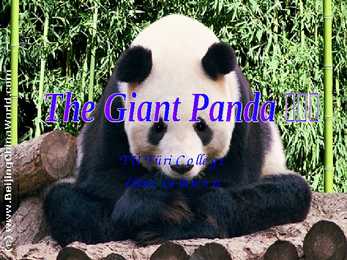
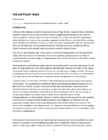
themrotect, live, elephant, rhino, endangered, africa, species, lives, western, bamboo, there, living, wild, grass, hunting, banned, rhinoceros, china, although, diet, subtropical, mammals, bears, hibernate, captivity, habitat, variety, special, wildlifearks, land, animals, alive, today, fruit, asian, symbols, wisdom, memory, once, millions, betweenT Ü T üri C o lle g e Liina Le inm e ts Introduction · Panda (Ailuropoda melanoleuca) is a mammal classified in the bear family, native to centralwestern and southwestern China. It is easily recognized by its large, distinctive black patches around the eyes, over the ears, and across its round body. · The Giant Panda lives in a few mountain ranges in central China. · It once lived in lowland areas, but farming, forest clearing, and other development now restrict the Giant Panda to the mountains. In the wild · The Giant Panda is a · Pandas communicate terrestrial animal and through vocalization primarily spends its life and scent marking such roaming and feeding in as clawing trees or the bamboo forests. spraying urine. It is able
Zoos are sometimes seen as necessary alternatives to a natural environment. Not only people are trying to keep endangered species and rare animals in the nature reserves, but also the number of zoos built around the world is slowly growing. Do we actually need those kind of man-made "homes" for animals or is it better for them to live outside cement walls in their natural habitat? First of all, nowadays we need to help the nature and animals that are the ones facing quite big danger of becoming extinct. Mostly it is caused by our selfish attitude: we do not take care of nature. Zoo is one of the solutions to help to preserve nature and to protect it from poachers. For example Loxodonta africana is an African elephant who has been hunt down and whose population was significantly reduced in 20th century
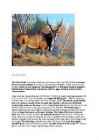
Wildlife under threat Giant panda The giant panda lives in a few mountain ranges in central China. As a result of farming, deforestation and other development, the panda has been driven out of the lowland areas where it once lived. The Chinese language has given the bear 20 different names, such as ,,large bear cat'' or ,,bamboo bear'. Unlike other bear species, pandas have round pupils. Pandas are known for their large black patches around their eyes, ears and across their round bodies. Male pandas can weigh up to 160 kg and females can weigh as little as 75 kg. The giant panda's thick, wooly coat keeps it warm in the cool forests. It has strong jaw muscles and teeth for eating tough bamboo. Giant pandas are generally solitary. Each adult has a defined territory and female pandas do not tolerate each other
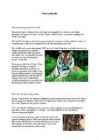
Rare animals Rare Chinese tiger seen in the wild Researchers have confirmed that a wild tiger, photographed by a farmer in the Qinba Mountains of Shaanxi Province, Central China, is indeed that of the critically endangered South China tiger. The South China tiger classified as one of only five subspecies of tiger still alive today is extremely rare, with only an estimated 20 to 30 still remaining in the wild. The wildlife and conservation group WWF says the South China tiger is actually native to the Hainan most forests of south-east China, and because there are so few individuals left, it is regarded by many scientists as being "functionally extinct" in the wild. But a group called Save China's Tigers
Protecting endangered species will make a difference in humans' life In the nature of humankind it is natural to hunt animals. However, nowadays hunting endangered species will make humans be just killers, because it is not necessary to kill something just to have a trophy on the wall at home. People can be proud of what they have done, but decreasing the population of a species largely will cause the specific animal breed to go extinct faster than it would happen via natural causes. Therefore, humans should stop hunting endangered species to slow down their extinction, as these species offer balance in the wildlife, are used without purpose in medicine, and may even reduce poverty. Species on the brink of extinction affect us more than we realize. Sure, pandas are cute, and rhinos are fun to look at, but is there anything more to that
The Giant Eland The Giant Eland (Taurotragus derbianus also known as the Lord Derby Eland) is an open forest savannah antelope. It is found in Central African Republic, Sudan, Cameroon and Senegal. There are two subspecies: the endangered T. d. derbianus, found in Senegal's Niokolo-Koba National Park, and the low risk T. d. gigas, found in Central Africa. Characteristics Giant Eland are typically between 220-290 cm (7.3-9.6 ft) in length, stand approximately 150 to 175 cm (4.9 to 5.7 ft) at the shoulder, and weigh 440-900 kg (968- 1,980 lb). Despite its common name, it is of very similar size to the Common Eland. The smooth coat is reddish- brown to chestnut, usually darker in males than females, with several well-defined vertical white stripes on the torso. A crest of short black hair extends down the neck to the
are scattered all over the territory of Estonia were brought here from Scandinavian Mountains. Scientists know now that the great Ice Age was not the only ice age in the earth's history. Millions of years earlier there were other ice ages. Scientists know, too, that the time we are living in may be just one of the pleasant periods between the times of spreading ice sheets of an Ice Age. What do we know about Ice Age mammals? The woolly mammoth was a prehistoric elephant about the size of a modern elephant.This animal lived near the glaciers. It had a shaggy coat of red hair and a thick layer of fat under its skin. On its head and shoulders were humps like camel's humps. Its wool-coat and its fat helped keep the mammoth warm. A mammoth's tusks curved in to form a kind of a snowplow, and the mammoth used them to push snow away. Then it ate the grass that was under the snow. The saber-toothed tiger hunted the woolly mammoth, it probably chose a
Tundra animals Reindeer Reindeer were first domesticated in Norway and northern Asia. When it was seen how valuable they were, they were brought to Alaska in 1887 and later to parts of Canada. These North American reindeer became known as caribou. Although they are called by different names, they are both considered to be a single species. Unlike deer, both the male and female have antlers. The antlers of the male are long, branched and massive, and they are a little flattened at the ends. The antlers of the female are much shorter, simpler and more slender and irregular. Their large, spreading hooves support the animal in snow in the winter and marshy tundra in the summer. Reindeer are also great swimmers and use their feet as paddles.
Animal Equality’s stance in hunting is that it is cruel past time sport and it is unjustifiable. [2] Animal Liberation Front (ALF) was founded it 1976 and it is international movement that takes illegal steps to ensure animal rights. They don’t have official leaders and are active in more than 40 countries. They mainly liberate animals from places of abuse like factory farms, fur farms and laboratories. After the liberation they provide animals with good homes or places to live out their natural lives free of suffering. Animal Liberation Front’s other goal is to cause economic damage to those companies that profit from animal abuse and to bring out to open abuses against animals. Since they are group with no central leadership they work in small groups and everyone who is vegetarian or vegan and follows ALF guidelines can regard themselves as part of Animal Liberation Front. [3]
MOST ENDANGERED BEARS SIIRI PAURSON EMÜ 2016 TOPICS 1. GIANT PANDA (hiidpanda e. bambuskaru) 2. SUN BEAR (päikesekaru e. malai karu e. biruang) 3. ASIATIC BLACK BEAR (kaeluskaru) 4. SLOTH BEAR (huulkaru) 5. ANDEAN BEAR (prillkaru) 6. POLAR BEAR 7. BROWN BEAR 8. THE AMERICAN BLACK BEAR (baribal) 1. GIANT PANDA • The giant panda remains the world's most threatened bear species. • A very high risk of extinction (väljasuremine) in the wild. • Despite "the establishment of nearly 60 panda reserves, a ban on logging (metsaraie keeld), and widespread reforestation programmes," habitat destruction and degradation are still the panda's greatest enemies. 2. SUN BEAR • The world's smallest bear species. • We estimate that sun bears have declined by at least 30 percent over the past 30 years and continue to decline at this rate.
To the north and south of this central mountain range on the main island lie vast stretches of mangrove swamps and coastal river deltas. /1/ Volcanoes and thermal pools are also found in the southeast of other islands. Papua New Guinea offers the greatest variety of terrestrial ecosystems in the South Pacific, including five types of lowland rainforest, 13 types of montane rainforest, five varieties of palm and swamp forest and three different mangrove forests. Two-thirds of the world's species of orchids come from New Guinea. /1/ Birds include 38 species of the bird of paradise, and the megapode and cassowary. Marsupials and mammals include cuscus, tree kangaroos, wallabies, bandicoots, spiny anteaters and, in the coastal waters, the dugong. There are between 170 and 200 species of frog and 450 species of butterfly. /3/ 4 The forests of New Guinea Richer and more diverse in species than their montane counterparts, the lowland
Palm oil Palm oil is a type of edible vegetable oil that is derived from the palm fruit, grown on the African oil palm tree. Oil palms are originally from Western Africa, but can flourish wherever heat and rainfall are abundant. Today, palm oil is grown throughout Africa, Asia, North America, and South America, with 85% of all palm oil globally produced and exported from Indonesia and Malaysia; but most of the time not using sustainable measures. The industry is linked to major issues such as deforestation, habitat degradation, climate change, animal cruelty and indigenous rights abuses in the countries where it is produced, as the land and forests must be cleared for the development of the oil palm plantations. According to the World Wildlife Fund, an
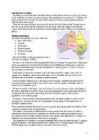
Natural Zones and Flora. There are five distinguishable natural zones in Australia. In the very east there are wet forests (1.) that occupy the space between the Great Dividing Range and the eastern coast. Westward from the Great Dividing Range the wet forests give place to beautiful grasslands with some trees . These grasslands are called the savannas (2.). Farther west the trees disappear and the bushlands (3.) begin. The real desert (4.) occupies the centre of the Western Plateau. In the very southwest there are thin forests of evergreen trees (5.). Most of Australian trees are kinds of eucalyptus trees (or gum trees to Australians) and acacia ( wattle to Australians). Eucalyptus trees are found everywhere in Australia. There are many kinds of them and they greatly differ in size. One kind, the great mountain ash, can grow to 120 metres and it grows in the wet forests in the eastern part of the continent.These strong trees do not die when there are forest fires
Australia Fact file: Australia comprises a land area of 7 686 850 square kilometres. Its population is about 21,3 million people. Australia's capital is Canberra. The national language is English. The official name of it is the Commonwealth of Australia. It's divided into six states and two territories: New South Wales, Queensland, South Australia, Western Australia, Tasmania, Victoria, Australian Capital Territory (ACT) and Northern Territory. Symbols: Australia had the British flag as their official flag until 1901, when the Commonwealth of Australia was formed. Over 30 000 entries attracted the official competition. Five of them, which contained almost identical designs, were placed equally first. The Australian flag symbolises Australia's historical links with Britain, because it has
to the sea. The rapid flow of New Zealand's rivers makes them important sources of hydroelectric power. New Zealand has hundreds of waterfalls. Sutherland falls on the South Island is the fifth highest waterfall in he world. New Zealand enjoys a temperate and moist climate, without extremes of heat or cold. Seasons are the reverse of the Northern Hemisphere History A brown-skinned people called Maori were the first people to live in New Zealand. Europeans first visited the country in 1642, but they didn't start to settle on the island until the late 1700''. Today, New Zealanders are descendants of early European settlers who arrived in 1800's. The settlers came mainly from Britain. The country was once part of the British Empire. Today, it is an independent member of the Commonwealth of Nations. Economy The economy of new zealand has long depended on farming and foreign trade. The sale
Its name means ,,Southland". The official name of the country is the Commonwealth of Australia. It's capital is Canberra. Australia is the sixth largest country in the world but the smallest continent. Australia has 6 states and 2 territories (New South Wales, Victoria, Tasmania, Queensland, Western Australia , South Australia, The Australian Capital Territory and the Northern Territory). The Australian people are culturally the same as the Anglo Americans. There also live aborigines. Aborigines are the ancestors of the people. Like the US and Canada, Australia was an English speaking colony of Great Britain. Today Australia is a modern developed country with a diversified economy. Australia is an island continent of 7.7 million square kilometres, which makes it a little smaller than the USA. Located in south of Asia, between The Pacific and Indian Oceans, Australia is the World's driest continent
Alpine tundra is located on mountains throughout the world at high altitude where trees cannot grow. The growing season is approximately 180 days. The nighttime temperature is usually below freezing. Unlike the arctic tundra, the soil in the alpine is well drained. The plants are very similar to those of the arctic ones. Animals living in the alpine tundra are also well adapted. There is barely any vegetation in the tundra, only about 1700 different species. These are mostly shrubs, sedges, mosses, lichens and grasses. There are about 400 varieties of flowers. The growing season in arctic tundra is only about 60 days long. While trees can't send their roots down, there are no trees, except for some birches in the lower latitudes. Willows do grow on some parts of the tundra but only as low carpets about 8 cm high. Most plants grow in a dense mat of roots that has developed over thousands of years. The
non-native speakers. Spanish is the second language. The largest city is the New York City. The Government is Federal constitutional republic and the president is George W. Bush. 2. Geographical position The United States of America is located on the continent of North America. It has borders with two countries Mexico and Canada. There are also the Atlantic Ocean, the Pacific Ocean and the Gulf of Mexico surrounding the big country. There are 50 states in America. Most of the people live in towns. The biggest state is Alaska; next by size are California, Alaska and Montana. Six states - Maine, Vermont, New Hampshire, Connecticut, Rhode Island and Massachusetts are called New England. They are all small states in the USA that lie in the north- east. The first colony of immigrants settled down in Virginia, in the eastern part of the USA. 3. Relief The USA is situated in the central part of the North American continent. Its western coast is
4000 km from east to west. There are also many different seas around Australia, like the Coral and the Tasman Seas in the west or the Timor and the Arafura Seas in the north, where the Indian and the Pacific Oceans meet. Because all seas and oceans near Australia are warm, surfing is a very popular hobby. Political subdivision Australia is divided into six states, which are: · New South Wales · Victoria · Queensland · South Australia · Western Australia · Tasmania New South Wales is the most populous state in Australia. Its capital is Sydney. Victoria is one of the most densely populated states in Australia. Its capital city is Melbourne and it was named after the British Prime Minister Lord Melbourne. Melbourne is said to be the heart of Australian finance and the headquarters of industry giants. Victoria is more an industry than a tourist state.
Broadleaf trees tend to be nutrient-demanding and their leaves bind the major nutrient bases. The autumn leaf fall provides for an abundant and rich humus which begins to decay rapidly in spring just as the growing season begins. The humus content gives soil horizons a brown colour. Temperate rainforest: This forest has nutrient-rich soil because there is a lot of dead organic matter on the ground. This dead material is being slowly digested by the fungi, insects, and bacteria that live here. Temperate Grasslands: Calcification is the dominant soil-forming process in semiarid regions. When this process works on a loess that itself is rich in calcium, the world's most fertile soils are created, the chernozems (A Russian term meaning black soil). Taiga: The low temperatures inhibit bacterial and fungal action, so the decomposition rate is low and the leaf litter relatively deep.The soil in the taiga is thin, acidic and not very nutrient rich. It also is rocky. 6
There are about twenty million people in Australia.It is 1,800 miles from the mainland of Asia and almost half way round the world from Europe. More than 600 miles of ocean separate it from Americas. Since Australia is south of the equator, its seasons are just the opposite of ours. It has summer while we have winter, and the other way round. States and Territories. Australia consists of six states, two territories and eight external territories. The six states are: Western Australia (capital Perth), South Australia (capital Adelaide), Queenslnd (capital Brisbane), New South Wales (capital Sydney), Victoria (capital Melbourne) and Tasmania (capital Hobert). The two territories are the Northern territory (capital Darwin) and the Capital territory (capital Canberra). Politics The head of the state is the queen of the United Kingdom. She is represented by governor general. The head of the government is the prime minister. Australia's parliament consists of
The official name of the country is the United Kingdom. The United Kingdom is an island country. It consists of the island of Great Britain and Northern Ireland. Great Britain can be divided into three parts England, Wales and Scotland. Each of them has their own capital city. Glasgow in Scotland, Cardiff in Wales and London in England. The country is situated in the north-western Europe. The territory of the United Kingdom is about 244,000 square kilometres and about 60 million people live there. The UK contains a number of small islands. The largest islands that belong to the United Kingdom are the Isle of Man in the Irish Sea and the Isle of Wight which lies off of England's southern coast. The largest groups of islands are the Shetland Islands, the Orkney Islands and the Hebrides. Geographical Position The UK is situated in the Northern Hemisphere. The United Kingdom is bordered by the Atlantic Ocean in the west, the North
.................................. Factfile Australia is the only country in the worlf that fills the whole continent. The continent is also called Australia, if you want to make clear that you are speaking about the country you may call it by its official name: Commonwealth of Australia. Australia is the smallest continent, but one of the largest countries in the world. Its area is about 7,6 million sq kilometers. Its population is about 20,0 million and most of the people live in bigger cities: Sydney (4.2 million), Melbourne (3.7 million), Brisbane (2 million) and in Canberra, Which is also the capital of Australia. National language in Australia is english and the monetary unit is Australian dollar. Australia is divided into 6 states and 2 territories. Symbols Australia has a British Union flag. It is red, white and blue. Five small stars represent the constellation Southern cross. The big star represents country's states and territories
temperatures rarely falling below 0 'C or rising above 30 'C in populated areas. its isolation from continental (influences and exposure to cold southerly winds and ocean currents) give(s) the climate a much milder character. In winter the South Island mountains and central North Island have heavy snowfalls. New Zealand has about 4,3 million people. The population is unevenly distributed. Three fourths of New Zealanders live on warmer North Island and about 84 per cent of the people live in urban areas and about half of these in the four largest cities. The largest centre with over 1 million inhabitants is Auckland. ..................................................................................................................................................... In 1642, the Dutch sailor Abel Tasman visited New Zealand and named it Zeeland. After Captain James Cook's exploration of New Zealand in the late 18th century, an increasing number of settlers came to New Zealand
Topic Canada Tallinn English College 2006 1. Introduction If you had to use two words to describe Canada, they might be large and diverse. Canada is the second largest country in the world with a territory of about 10 million square kilometers and it is bordered by three oceans: the Arctic, the Pacific and the Atlantic Oceans. The population of Canada is about 31 million people. About 77% of the people live in cities which lie in a band about 100 miles wide above the border of the United States. The capital of Canada is Ottawa. Other large cities are Montreal, Toronto, Vancouver, Winnipeg and Quebec. 2. Geographical position Canada is a huge country in the continent of North America. It is bordered with the Atlantic Ocean in the east, the Pacific Ocean in the west, the United States of America in the south and the Arctic Ocean in the north
refugees from the Bolshevik regime due to the hatred for the new Bolshevik regime in their homeland. Great emphasis was put on education. Most notable immigrants from the cultural sphere were Vladimir Nabokov, Igor Stravinsky, and Isaac Asimov. Immigration in 19451955: During the Soviet era, emigration was prohibited, and limited to very few defectors and dissidents who immigrated to the United States of America and other Western Bloc countries for political reasons. Russians who had been deported to Germany during World War II (displaced persons). Approximately 20,000 Displaced Persons arrived in the US. Immigration in 1969-...: the Soviet Union temporarily loosened emigration restrictions for Jewish emigrants, which allowed nearly 250,000 people leave the country, escaping covert anti-semitism. Jews were allowed to leave Russia for Israel, but many had the US as their real goal
It's also bounded with Gulf of Mexico and Bering Strait. The highest point in America is Mount McKinley (6,194 m) in Alaska. The lowest point is Death Valley which lies 86 metres below sea level. The Great Basin Desert is the largest desert in America. Missouri river is the longest river in the States. The largest lake is Lake Superior. Lake Superior Death Valley Nature There are very many species in the States. There are about 17 000 types of trees (larger plants) in the mainland and Alaska. Over 1,800 species of flowering plants are found in Hawaii. The United States is home to more than 400 mammal, 750 bird, and 500 reptile species. About 91,000 insect species have been described. In America, there are very many parks, which 58 are national parks and there are hundreds of federally managed parks, forests and wilderness areas
Tundra swans Tundra swans ● Whooper swan, Bewick´s swan and mute swan (laululuik, väikeluik, kühmnokk-luik) Whooper swan ● Large white swan (bigger than bewick) ● Lenght – 140 to 165 cm ● Deep honking call and powerfull fliers ● Require large areas to live in ● Adult birds – feathers entirely white, black feet, mostly black bill ● Pens (females) – slightly smaller than cobs (males) ● Immatures – white mixed with some dull grey feathering; bills – black, large dirty-pink patch ● In Estonia first nesting - 1979 Whooper swan Behaviour of whooper swan ● Pair for life, cygnets stay with them all the winter ● Breffered breeding habitat – wetlands ● Both build the nest
THE CAPITALIST NIGER Chika Onyeani ………………………Every African must internalise this book - period….DAA INTRODUCTION In October 1960, Nigeria received its independence from Britain. By then, Ghana the former Gold Coast had been independent for three years under the great Osagyefo Kwame Nkumah. It was a time for celebrating Africa’s coming of age, as more and more African countries received their independence either from Britain or France. It was especially a poignant time for Africa, as then British Prime Minister Harold McMillan articulated his now famous “winds of change” sweeping Africa. We had high hopes for Africa, for the Black race, that the insidious imposition of foreign rule on us, the looting of Africa’s natural resources by our colonial masters accorded us would be things of history. That is more than forty years ago. Unfortunately, the promise of independence has not been fulfilled.
reproduce slowly. They protect themselves from the cold and wind by hugging close to the ground. When plants die the cold weather makes it hard for them to decompose quickly. This makes for poor soil conditions. Most alpine plants are adapted to grow in sandy and rocky soil. Plants have also adapted to the dry conditions of the alpine biome. Some 5. How are animals adaapted to life in the biome ? Tundra: There aren't many different species of insects in the tundra, but black flies, deer flies, mosquitoes and "no-see-ums" can make the tundra a miserable place to be in the summer. Mosquitoes can keep themselves from freezing by replacing the water in their bodies with a chemical called glycerol. It works like an antifreeze and allows them to survive under the snow during the winter. The marshy tundra is a great place for migratory birds like the harlequin duck, sandpipers and plovers.
estimated 200 000 or more adults had been removed. The island of Floreana was populated with a group of convicts' in October 1832. Charls Darwin visited the island in 1835, he spent there 5 weeks. Nowadays five of the islands are populated with about 40 000 inhabitants. The name Island of Galapagos means island of tortoises. Every animal or plant had to cross about 1000 km of open ocean to arrive on Galapagos. Despite the trials of arrival, over 560 species of native plants, over 55 species of native land vertebrates and 1700 species of native insect are found on Galapagos. There are no large mammals, the key herbivores are reptiles, and the top predators are birds and snakes. Mammals on the Galapagos include two species of bat, two endemic rice rat species and its most famous mammals - the Galapagos sea lion and fur seal. There can be identified four broad categories of habitat (the coastal zone,
Canada borders the Atlantic Ocean, the Pacific Ocean, the Arctic Ocean and the USA. The capital of Canada is Ottawa and other main cities are Toronto, Montreal and Vancouver. It is a very developed country. Montreal is the largest city and it is called the Paris of North America because most of the people there speak French. The population of Canada is 28 million people. It is a very multicultural country. People from many different countries have come to live there. The natives are Eskimos and Indians. Eskimos have their own self-governing homeland called Nunavut. In Canada there are also 2 official languages English and French. One third of the population speaks French and the other two speak English. Many more languages are spoken in that country. 75% of the population lives within 300 km of the USA border. Political Structure. Canada is a constitutional monarchy and a
Australia is 1,800 miles from the mainland of Asia and almost half way round the world from Europe. More than 6,000 miles of ocean separate in from the America. Australia is the only continent except for Antarctica that lies all south of the equator. The natural zones of Australia are very various. There are deserts, semi deserts, grasslands, savannas, bushlands and rainforests. The wet forests occupy the narrow region in the east. Most of the animals, birds and insects live in that region, because there is enough food. The savannas which are grasslands with some trees are mostly in the west. Farther west are the bushlands. The real deserts occupy the centre of the Western Plateau. In the very south west there are thin forests of evergreens trees. Australia is the driest inhabited continent, the flattest, and has the oldest and least fertile soils. Only the south-east and south-west corners of the continent have a temperate climate. The
 annaabi.ee