Norman conquest of England Eleri Pärna Form 10 Kanepi Gymnasium 2011 Reasons English king Edward the confessor died, leaving no children. William the Duke of Normandy said that Edward had promised him to be the next king. But Harold (other relative)the AngloSaxon earl , was chosen to be king. Norman conquest began on 28 September 1066 with the invasion of England by William, Duke of Normandy. The battle of Hasting Was beginning of Norman conquest. Took place14th of Oktober in 1066. Between the Normans and the AngloSaxons. King Harold was killed. To sum up... The Norman Conquest was the last successful invasion of England by a foreign claimant.
The Norman Conquest William I (the Conqueror) (1066 - 1087) On October 14, in the fateful Battle of Hastings, William defeated and killed Harold and seized the English throne. Two months after the Battle of Hastings, William I was crowned king in Westminster Abbey. The service was held on Christmas Day 1066, with all the traditional ceremonies associated with the coronation of English kings since the time of Edgar. William had gained his throne by accepting the English form of coronation, William emphasised his claim to be legitimate successor to Edward the Confessor. William I was a strong king and a man of immense determination. He was stern to people who opposed his will, but kindly disposed to those who did not. William saw England as an extension of his French domains. He dispossessed nearly all the Anglo-Saxon nobles of their lands, and put Normans in their places. These men discouraged rebellion by building stro...
For over three centuries Western Europe was raided by the Vikings. The Vikings who had settled down in England had mixed with the Anglo-Saxons. They lived under the rule of the English kings. In the 9th century a territory in northern France was conquered by another branch of the Vikings. That territory was called Normandy. They took over the French coustoms,traditions and language. The Normans lived under the rule of their own duke. By the 11th century the dukes of Normandy had become very powerful. Altought the kinf of France was their lord, they were very independent. William was the Duke of Normandy when the English king Edwar died. William had promised him that he'll be the next king. But there was another relative , Harold, who wanted to be king too. William wanted to start a war. Knights from all over the France were invited to his army.Harold was killed in the battle and the English were defeated. The Battle of Hastings was the ...
The early middle ages The Norman Conquest Since William was crowned king, there were many rebellions against the Normans. A small Norman army marched from village to village and destroyed the ones it couldn't control. The Normans took away the Saxon lords' land. Only a few Saxons who supported William could keep their land. Feudalism William gave parts of his conquered land to his captains around the country to avoid rebellions and uprisings. He also kept some land to himself to make sure his was much stronger than his nobles. Of all the farmland half went to his nobles, quarter to church and fifth he kept to himself. William organised the English kingdom according to feudal system. The main purpose of using that system was economic. King gave the land to "vassals" in return of army services and goods. When a noble dies, his son took over the estate. When there was no family, the land went back to king who could give it to another n...
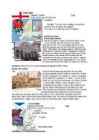
Vikings and Norman invasion, Jorvik Centre in York Who were normans? · They were descended from norse vikings. · Norman means norseman or viking. · They played a major political, military, and cultural role in medieval Europe. Invasion to England · The Norman conquest of England began on 28 September 1066 with the invasion of England by William, Duke of Normandy. · The Norman conquest largely removed the native ruling class, replacing it with a foreign, French-speaking monarchy. Battle of Hastings · The Battle of Hastings occurred on 14 October 1066. · Norman-French army was lead by Duke William II and the English army was lead by King Harold II. · The famous Bayeux Tapestry depicts the events before and during the battle. Bayeux Tapestry Jorvik Centre in York · Jorvik Centre in York is a museum and visitor attraction. · Well-preserved remains of some of...
STUDY QUESTIONS ON CHAPTER 3 · Battle of Stamford Bridge 1066- Battle, that took place on Stamford Bridge between Norwegians who were led by Harald and England (king Harold Godwinson). During the battle many Norwegian leaders were killed. Norwegians lost the battle, and it is very often taken to mark the end of the Viking Age. · Battle of Hastings 1066- Occurred on 14th October 1066 during the Norman conquest of England, between the Norman-French army of William the Conqueror and the English army under king Harold II. During the battle Harold was killed and the Normans won. It was the end of Anglo-Saxon era. · Bayeux Tapestry- Embroidered cloth nearly 70m long, which depicts the events leading up to the Norman conquest of England concerning William, Duke of Normandy and Harold, Earl of Wessex, later king of England and culminating in the battle of Hastings. · Debate poem- ...
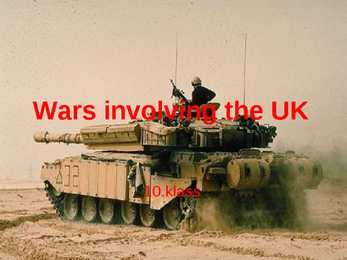
Wars involving the UK 10.klass Roman Invasion · 43 AD 410 AD · Aulus Platius · Archeological and epigraphic evidence The Lunt Fort near Coventry, · New developments a reconstructed Roman fort Aulus Platius Hadrian's Wall Norman conquest of England · 1066 AD · William the Conqueror · Battle of Hastings · Last succesful conquest of the UK Hundred Years' War · 1337 1453 · England France · Edward III · Joan of Arc · French victory English and Welsh longbow; the most Painting of Jeanne d'Arc at famous and efficient weapon during the war the Siege of Orléans The Wars of the Roses · 1455 1485 · Henry VI · Edward IV · Henry Tudor Red Rose of Lancaster The Tudor Rose of England White Rose of York ...
Revision questions for the test on Old English and Medieval Literature. 1.) How is literature analysed and studied? What is the difference between the diachronic and synchronic view? Literature is studied and analysed by reading the piece of work profoundly and work on all the aspects of the piece. Diachronic is development in history Synchronic is particular state at any given moment 2.) Give a general overview of Celtic Britain, Roman invasion in 55-54 BC, Anglo-Saxon invasion and the second Roman "invasion" of Great Britain, who were the leaders, what influence did they leave on the culture of Great Britain? Celtic Britain was during the Bronze Age, there were many small tribal kingdoms fighting one another. Many megalithic monuments were built around that time, e.g. Stonehenge, the Avebury ring. The Roman Invasion 55-54 BC, Julius Caesar ruled Rome, Rome built the Hadrian's wall (73 miles long, built in 121 127 AD) agains...
English studies British history Eleri Pärna Form 9 2010 About 1.What is Stonehenge? 2. Who were the Celts and the Druids? 3. When did the Romans invade Britain? 4. Why did Julius Ceasar call the land Albion ? 5.Why and who built the Hadrian Wall? 6. When did the Saxons settle in Britain? 7. When did the Vikings first raid Britain? 8. Who were the Normans? 9. When was the Battle of Hastings? 10. Who was William The Conquerer? What is Stonehenge? a prehistoric monument located in the English county of Wiltshire built in several stages from 2800 - 1800 BC. Druids built Stonehenge. Who were the Celts and the Druids? The Celts were a group of peoples that occupied lands stretching from the British Isles to Gallatia. The Druids were the wise ones, the educated class of the Celts. ( lawyers, doctors, teachers, storytellers, ...
Medieval England 1066-1485 Eva Asper Anna Pohlak 11.c The Norman Dynasty The Norman Conquest In the 11th century, Normans conquered England - The Battle of Hastings 14.10.1066 The Anglo-Saxon forces had more soldiers but the Normans had better military tactics and won in the end thanks to a clever strategy William I, also known as William the Conqueror, replaced King Harold on the throne The invasion was completed by 1071 - The Norman invasion is depicted on the Bayeux Tapestry a long embroidered cloth The death of King Harold embroidered on the Bayeux Tapestry The Norman England William I ensured his power by dividing the land into parts and making 1/7 of it a royal domain He made his nobles swear an oath of allegiance and become his vassals Died in 1087 while fighting in France, was succeeded by his third son, William...
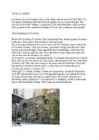
London There were some people living on the banks of the Thames, when the Romans came to England in 43 AD. But we don't know much about them. The Romans built houses, a port and a bridge over the river and named the place Londinium. The bridge which was built by the Romans was later known as London Bridge and it was built in stone in 1176. London soon became the largest city in England and by the time of the Norman Conquest in 1066 it had become the most important city in Britain. It grew area and population until September 1666, when the Great fire destroyed four fifths of the wooden buildings in the City. The fire began in the kitchen of the King's baker in Pudding Lane and lasted for five days. By now London is a city of seven million people covering over 1,5 square miles. Nowadays the population of London is made up of the people of very many nationalities. It is a popular...
Kes on Britanlased? Briti inimesed on arenenud erinevates grupides. Kui Roomlased kutsuti Britanniasse 43 e.Kr, siis oli sees Keltide pool okupeeritud. Keldid olid Britannias erineva rühma inimesed 2000aastat.Suur osa Keltidest elab lõuna Britannias, mille rühma nimi on Brythons, nii et Rooma okupatsiooni piirasid Keldid SuurBritannias, mis on umbes tänapäeva Inglismaa valdkonnas.(1pilt)(Hadrianukseni müür. See on vana müür mis ehitati Põhja-Inglismaale alates jõest Tyne kuni Solway Firthi piirini Suurbritannias.) Keldid säilitasid rahu Walesis, Sotimaal, Iirimaal ja lõuna-, lääne- Suurbritannias(Cornwallis ja Devonis). Roomlase ehitasid m üüri põhja-inglismaa ranikult rannikule, et takistada Põhja -Keltide sissetungi Rooma Britanniasse. Üks neist müüridest on ehitatud Põhja-inglismaale Rooma keisri Hadrianuse poolt. Ehitamine v õttis 6 aastat aega, alates 122 e.kr kuni 128 e.kr ja see oli 120km pikk. Romlased jäid ve...
London There were some people living on the banks of the Thames when the Romans came to England in 43 AD. But we don't know much about them. London first called Londinium . In 200 they built a wall around their city, a part of which can still be seen near the Museum of London . London Bridge was built in stone in 1176. It was London's only bridge until 1729. Now there are about twenty bridges . London soon became the largest city in England and by the time of the Norman Conquest in 1066 it had become the most important city in Britain. It grew in are and population until September 1666, when the Great Fire destroyed four fifths of the wooden buildings in the City including St Paul's Cathedral. The fire began in the kitchen of King's baker in Pudding Lane and lasted for five days. London is an exciting city which attracts people from all over the world. It is popular place to live because there is something new to see and do every day. M...
Anglo-norman period (1066-1300) The normans · The name derives from "the Northmen" · Descendants of the Vikings · Seized the north-western part of France · The area known as Normandy · Adopted French customs and Christianity · Norman-French (their version of French). 1066 · Edward the Confessor dies in January · Harold Godwinson crowned as king in Westminster Abbey on the same day · Another candidate for the throne William, Duke of Normandy · Gathered an army · Invasion delayed (bad weather) · Harald, king of Norway, invades England from the North · A battle at Stamford Bridge · Harald's army defeated, leaders killed · The end of the Viking Age · The Normans land in Britain (a few days after Stamford Bridge) · The Battle of Hastings · Harold defeated ...
The history of London There were some people living on the banks of the Thames when the Romans came to England in 43 AD. The Romans built houses, a port and a bridge over the river and named the place Londinium. The bridge which was built by the Romans was later known as London Bridge and it was built in stone in 1176. It was London's only bridge until 1729. Now there are about twenty bridges crossing the river within London. London soon became the largest city in England and by the time of the Norman Conquest in 1066 it had become the most important city in Britain. It grew in area and population until September 1666, when the Great Fire destroyed four fifths of the wooden buildings in the City including ST Paul's Cathedral. The fire lasted for five days. By now London has swallowed up many of the small towns and villages that surrounded it. It is a city of seven million pepole covering 1,606 square mile...
Emma The Origins Emma is a given female name. It is derived from the Germanic word ermen meaning whole or universal, and was originally a short form of Germanic names that began with ermen. It was introduced to England by Emma of Normandy, who was the wife of king Ethelred II. It was also borne by an 11th-century Austrian saint, who is sometimes called Hemma. After the Norman conquest this name became common in England. It was revived in the 18th century, perhaps in part due to Matthew Prior's poem 'Henry and Emma'. It was also used by Jane Austen for the central character, the matchmaker Emma Woodhouse, in her novel 'Emma'. Popularity Name Emma has been among the top names given to baby girls in the United States, England, Wales, Northern Ireland, Scotland, Ireland, France,Sweden, Belgium, Canada, Australia, Norway, New Zealand, Hungary, Finland, Denmark, Germany, the Netherlands, and Sp...
KUNSTIAJALUGU R O M AAN I S T I I L J A G O O T I K A ROMAANI STIIL 10.-12.saj CULNY KLOOSTER Prantsusmaa 910. aastal Romaani stiil MARIA LAACHI KIRIK Saksamaa Romaani stiil 1093-1156 ehitati (63 aastat) POITIERS´ JUMALAEMA KIRIK Prantsusmaal Romaani stiil 10. sajand avati PISA TOOMKIRIK Itaalia 1063-12.sajand ehitati Romaani stiil PÜHA MARKUSE KATEDRAAL (SAN MARCO) Veneetsia, Itaalia 1063-1092 ehitati Romaani stiil BORGUNDI KIRIK Norra Romaani stiil 12. sajand avati DURHAMI KATEDRAAL Inglismaa Romaani stiil 1018 avati VIIMSE KOHTUPÄEVA RELJEEF Prantsusmaa Romaani stiil GERO RIST Saksamaa 187 cm 965-970.a Puit Rist on originaal, kuid detailid risti taga lisati 1683 Barokki ajal Romaani stiil HILDESHEIMI PRONKSUKSED Saksamaa 1020 Romaani stiil BAJEUX´ VAIP Prantsusmaa 70m Depicts the events leading up to the Norman conquest of England conce...
History of Great Britain Prehistory (55BC) no written records 6th 3rd c. BC the Celts came to British isles hill figures, hill forts, stone circles ( Stonehenge ) RomanBritain (55BC 400AD) Julius Caesar, named the country Albion Hadrian's Wall, villas, roads, the town of Bath The AngloSaxon, Danish and Norman invasions Germanic tribes settled and stayed Anglia Christianity was brought, religion became important, churches were built 8th century = raids by the Vikings and the Danes 1016 1042 : Under Danish rule ( York was the capital ) 1042 : local AngloSaxons regain their rule 1066 : Normans arrive ( the Norman conquest ) Medieval Britain (106615th c.) the Battle of Hastings William the Conqueror a new AngloNorman state the feudal system introduced the rule of the king and church strengthened centralised country, military rule Scotland, Wales and Ire...
The Middle Ages The Middle Ages are one of the most turbulent periods in English history. The Middle Ages are so called as the middle period between the decline of the Roman Empire and the Renaissance. The Middle Ages started in 1066. with the Battle of Hastings and the Norman Conquest. William the Conqueror took all the lands from the Saxon English and gave these to French nobles. Normans were known as great builders. This is assured by the fact that many great castles and other buildings, including the Tower of London, were built during the Norman Conquest. In 1086. Domesday Book was compiled. It is a detailed survey of England ordered by William the Conqueror. The reign of King William Rufus who was the son of William started in 1087 and lasted until 1100. Next king was Henry I who was the brother of William Rufus. His reign was from 1100-1135. In 1135 Henry I nephew Stephen got to the throne of Engla...
HISTORY TEST 5 invasions to Britain until 1066 1) The Celts o Gaels in 600BC; Cymry(Britons) in 300BC o From present-day Austria, Switzerland o The Celtic language survives in the names of many places in England- Dover, Kent, Thames o The Celts are best known for their art- many bronze objects with elaborate designs; brooches; pins; mirrors; Celtic stone crosses o The Celts had 3 social orders: warriors, druids(priests) ordinary people 2) The Romans o (55 BC-Caesar) 43 AD- 410 AD- Claudius o From present-day Italy o Southern Britain became Britannia and was ruled by a roman governor o The Romans built over 20 towns: Colchester, Londinium, Winchester etc. They were good engineers and built roads and villas that had central heating, glass windows and mosaic floors ...
1.Who were the Normans and what did they bring with them? The normans were the people who in the 10th and 11th centuries gave their name to Normandy, a region in France. 2.How long did the Norman period last in the British Isles? 1066-1154 3.How did the Norman Conquest take place and what were the events leading to this? Edward the Confessor died and the throne was seized by his leading aristocrat, Harold Godwinson, who was crowned. Almost immediately, Harold faced two invasions - one from the king of Norway, Harald Hardrada, who was supported by Harold Godwinson's brother Tostig, and the other from William, Duke of Normandy. Harold defeated the Norwegian invasion at the Battle of Stamford Bridge in September 1066, but he was defeated and killed shortly afterwards at the Battle of Hastings. The victorious William claimed the throne. 4.What is Domesday book all about ? William the Conqueror started recording England, because he wanted...
Medieval literature Religious literature- mostly written in church languages(Latin, Greek, Old Slavic) Secular literature- written in vernacular languages as well 6th -15th century Anonymity Religious writing Liturgical writing-hymns, psalms Theological writing-aquinas, abelard etc Religious poetry Mystery plays-reenactment of bible stories Secular writing Troubadour writing:"courtly love", romance Epic poem(song of roland) Travel writing History writing-chronicles Allegory The use of symbols and analogy to convey a certain meaning /message Literary output of medieval English Anglo-saxon or Old English literature(7th century-1066) Middle english literature(12th century-15th century) End of the period:1470s chancery standard(regulating english) and onset of renaissance Middle English literature Written in many dialects in early period 14th century Middle english was used for majority literary works...
ENGLAND Capital: London Flag: Area: 50351 sq (130410 km) Location: Symbol: The red rose is widely recognised as the national flower of England. The oak is the national tree of England. Interesting plases: Royal Opera House The Royal Opera House is the third theatre on the Covent Garden site, the previous two being destroyed by fire. The new building opened in May 1858 becoming known as the Royal Opera House in ...
N. A. Vavilov ASPECTS OF BRITISH HISTORY Н. А. Вавилов КРАТКАЯ ИСТОРИЯ ВЕЛИКОБРИТАНИИ Учебное пособие на английском языке Москва Институт международного права и экономики имени А. С. Грибоедова 2008 2 УТВЕРЖДЕНО кафедрой лингвистики и переводоведения Вавилов Н.А. Краткая история Великобритании: Учебное пособие на английском языке. – 2-е изд., пересмотр. и испр. – М.: ИМПЭ им. А.С. Грибоедова, 2008. – 88 с. Пособие содержит краткий очерк важнейших событий в истории Великобритании – от первых документально засвидетельствованных вторжений на остров (кельтов, римлян и англосаксов) до создания и распада Британск...
What is London? London is one of the largest cities in the world, with an area of 1706,8 km2. It is the capital of England and The United Kingdom. It is in Central Europe. The city lies on the river Thames. London has 7,556,900 inhabitants, which is more than a quarter of the countries in Europe! For one city, London is very special. The beginning of London Before the founding of London, there had already been smaller groups of people in the area. There aren't any records on who they were. The first mayor settlement of London was in 43 AD. Romans came to the banks of the river Thames. They built houses, a port and a bridge over the river (later known as London Bridge). They named the place Londinium. In the year 200 they built a wall around their city. The wall doesn't exist today, but a part of it can be seen near the Museum of London. In the year 61 Londinium was burned down. The houses were made out of wood back then, so this was ...
LONDON HISTORY PERIOD EVENTS PEOPLE The Celtic period (400 BC Name: Celtic words (Llyn (a lake) + AD 43) Dun (a fort or strong place) ) Not important The Roman occupation (AD 43 Londinium not important Boadicea a revolt against - AD 410) politically. An important trading the Roman conquest centre. Devastation AD 61. Rebuilt. Roman walls built in AD 200. Anglo Saxons (AD 400 Destroyed the Roman towns. Many 1066) kingdoms. London in ruins. King Egbert one Flourishing. Attacks by Vikings. kingdom England (the 9th ...
Stonehenge One of the best known ancient wonders of the world, 5000 years old Megalith monument, built by western mediterraneans during 3000-1600 BC Circular structure, large standing stones, aligned with rising sun at teh solstice Attlers and bones were sued to dig pits that hold the stones The Celts in Britain and their legacy 700-200 BC celts invade Britain Gaels or Goehls(Ireland and Scotland),Cymri(Wales) and Brythons(gave name to Brittany) Fierce fighters,superb horsemen.Most of them farmers, lived in thatched houses Good at art, craftmanship, used iron Divided into tribes, ruled by kings, only in face of danger would they choose a single leader Legacy- hill-forts, farms, churches, field system, woodland, pasture, weapons, iron objects, langugae, culture Caesar in Britain The great Roman Emperor Firts came 55 BC to gather information, celts ...
History exam *Stonehenge - is a monument located in England. It is one of the most famous prehistoric sites in the world and is composed of earthworks surrounding a circular setting of large standing stones. The surrounding circular, earth bank and ditch, have been dated to about 3100 BC. Stonehenge was produced by a culture with no written language. Many aspects of Stonehenge remain subject to debate. There is little or no direct evidence for the construction techniques used by the Stonehenge builders. *The Celts in Britain and their legacy The Cets lived in Britain in The Iron Age. They were warring tribes who were battleful amongst themselves as well as inter-tribal war. They were not centrally governed. The Celts brought iron working, iron ploughs and metal swords, horses, wheels and chariots - all these things gave them an instant superiority over the native tribes. The Celts built a number ...
1. The Queen’s official title. Elizabeth the Second, by the Grace of God, of the United Kingdom of Great Britain and Northern Ireland and of Her other Realms and Territories Queen, Head of the Commonwealth, Defender of the Faith. 2. The Queen’s working day. Starts after breakfast. Reads the newspapers which are prepared by the Press Secretary, and a report on the previous day’s proceedings in the Parliament and the letters she receives. Also phone calls. Once a month she attends the Privy Council in order to give Royal Assent to various items of government legislation. Discusses domestic matters with the Master of the Household. Towards the end of the day, there is always another pile of official papers and reports waiting to be read or acted upon. The business on constitutional monarchy never ends. 3. Who is the present heir to the throne? Speak about his education. Wh...
London March 28th Parliament of the United Kingdom The Parliament of the United Kingdom, commonly known as the UK Parliament or British Parliament, is the supreme legislative body in the United Kingdom, British Crown dependencies and British overseas territories. It alone possesses legislative supremacy and thereby ultimate power over all other political bodies in the UK and its territories. Its head is the Sovereign of the United Kingdom (currently Queen Elizabeth II) and its seat is the Palace of Westminster in the City of Westminster, one of the Boroughs of the British capital - London. Tower of London The Tower of London, officially Her Majesty's Royal Palace and Fortress of the Tower of London, is a historic castle located on the north bank of the River Thames in central London. It lies within the London Borough of Tower Hamlets, separated from the eastern edge of the square mile of the City of L...
1. Ancient Britain: the Celtic tribes. 2000 years ago there was an Iron Age Celtic culture throughout the Br Isles. It seems that the Celts, who had been arriving from Europe from the 8th cent BC onward, intermingled with the peoples who were already there. The Celts were extremely talented people, creative and artistic. More than 1 Celtic tribe invaded Br. The descendants of ancient Celts live in Wales, Scotland, Cornwall and Ireland. They lived in primitive society. Druids priests, more powerful than chiefs. Acted like prophets. 2. Stonehenge From prehistoric period. Was built on Salisbury plain between 2500 and 1500 bc. One of the most famous and mysterious archaeological sites in the world. One of the mysteries is how it was built at all with the technology of the time. Another is its purpose. It appears to function as a kind on astronomical clock and we know it was used by the Druids for ceremonies marking the passing ...
1. Beowulf. The dating of Beowulf is still controversial. The poem is one of the earliest and greatest monuments of the Germanic literatures. The main stories of the poem (the fights of B.) are versions of common folk-tales, but the poet also introduces many incidental stories, some of which belong to the world of ancient Germanic legend. He writes his folk-tales and legends in a web of other events, mainly set in the Baltic Kingdoms. He shows a very rich and leisurely portrayal of this Baltic world, providing many customs like the close relationship between lord and man in the war-band and others. All this encouraged the supposition that the unknown author of the poem was himself a bard of the ancient type portrayed within the poem (a lord's scoop). However, many people propose that the author could be Christian poet, perhaps a monk, versed not only in old native traditions, but also in the culture and literatur...
Suppletion Present in languages of different families. Present in Old, Middle and Modern English, though the general tendency is towards more regularity/iconicity so the number of suppletive forms has decreased.In the text: goon to go wenden - to turn Gan was suppletive in Old English, past form: eode.Eode was supplanted by went (past form of wenden) at the end of the Middle English period.To wend has survived in Modern English in phrases such as to wend one's way, we wended homewards (ironic usage). Thus: suppletivity- suppletion different parts of one and the same paradigm come from what were originally different paradigms (different words with close meanings or words in different but close dialects).Suppletion embraces verbs, adjectives, nouns. Be was/were been (Old English beon/wesan) (am, art, is, are); in Old English some suppletive forms were used parallel to one another) Good better best Bad worse worst Much more...
Britain History Pre-Norman Britain The Iberians brought their metal-working skills and the first real civilization to Britain in the third millennium B.C and were overrun by various Celtic invasions that began in the 8th century. The Celts introduced their tribal organization and an early form of agriculture before they were forced westward by the Roman invasion. Forms of Celtic language are still spoken in Britain. Romans (with Julius Caesar in the head of them) first tried to occupy Britain in 55 B.C., but there was a rebellion in Gaul so they had to leave to fight against it. Next time they came in 43 A.D. and their leader was Emperor Claudius. Romans brought a lot with them. Their brought paved roads, the sites of important cities, the seeds of Christianity, the Roman law, Roman baths, language and advanced civilization. They also built Hadrian's Wall in 122 A.D. Romans occupied...
British history Roman Britain Roman Britain was those parts of the island of Great Britain controlled by the Roman Empire between 43 and about 410. The Romans referred to their province as Britannia. Prior to the Roman invasion, Iron Age Britain already had cultural and economic links with Continental Europe, but the invaders introduced new developments in agriculture, urbanization, industry and architecture, leaving a legacy that is still apparent today. Historical records beyond the initial invasion are sparse, although many Roman historians mention the province in passing. Most of the knowledge of the period stems from archaeological investigations and especially epigraphic evidence. The invasion force in AD 43 was led by Aulus Plautius.It is not known how many Roman legions were sent; only one legion, the II Augusta, commanded by the future emperor Vespasian, ...
Islam Assemblers: ********and ******* ************** 8a form 2011.a Table of contents · Introduction · Muhammad · Angels · Five Pillars · Golden Age · Prophets · Family Life · Modern times Intoduction For other meanings, including people named 'Islam', see Islam (disambiguation). Islam is the monotheistic religion articulated by the Qur'an, a text considered by its adherents to be the verbatim word of God (Allah), and the teachings and normative example of Muhammad, often considered by the adherents of Islam as the last Prophet of God. In addition to referring to the religion itself, the word Islam means 'submission to God, 'peace', and 'way to peace'. An adherent of Islam is called a Muslim. Muslims believe that God is one and incomparable. Muslims also believe that Islam is the complete and universal...
Homereading 4 Changing world Religions Islam Islam is a monotheistic Abrahamic religion originating with the teachings of Muhammad, a 7th century Arab religious and political figure. The word Islam means "submission", or the total surrender of oneself to God An adherent of Islam is known as a Muslim, meaning "one who submits (to God)". There are between 1.1 billion and 1.8 billion Muslims, making Islam the secondlargest religion in the world, after Christianity. Muslims believe that God revealed the Qur'an to Muhammad, God's final prophet, and regard the Qur'an and the Sunnah (words and deeds of Muhammad) as the fundamental sources of Islam.They do not regard Muhammad as the founder of a new religion, but as the restorer of the original monotheistic faith of Abraham, Moses, Jesus, and other prophets. Islamic tradition holds t...
1. The Jacobean masque Elizabethan one nation culture, now cultural polarisation between the new courtly culture and the rest of the country. Court in cultural isolation. Ben Jonson. King and courtiers were close to universally recognised ideal types (conflict with the reality). Mysticism. Emergence of perspective view, stage machinery, artificial light, revolution. The stage cast the monarch in the focal point (the lines of perspective of the stage met there. Inigo Jones. Masque an educative vehicle, towards classical antiquity and architecture. Tide towards absolute monarchy. Masque – linked poetry and moral philosophy into art. Music, dance, poetry, lavish illusionistic scenic display to express the doctrines of divine kingship. Great impact. Like gods come down to earth. 2. The Caroline masque Charles decided on subject matter, and acted and danced in masques. Now the regal divinity even more obvious. Ben Jonson. Divine m...
Hamlet Shakespeare, William Published: 1599 Categorie(s): Fiction, Drama Source: Feedbooks 1 About Shakespeare: William Shakespeare (baptised 26 April 1564 – died 23 April 1616) was an English poet and playwright, widely regarded as the greatest writer in the English language and the world's pre-eminent dramatist. He is often called England's national poet and the "Bard of Avon" (or simply "The Bard"). His surviv- ing works consist of 38 plays, 154 sonnets, two long narrative poems, and several other poems. His plays have been trans- lated into every major living language, and are performed more often than those of any other playwright. Shakespeare was born and raised in Stratford-upon-Avon. At the age of 18 he married Anne Hathaway, who bore him three children: Susanna, and twins Hamnet and Judith. Between 1585 and 1592 he began a successful c...
Some of the things you will learn in THE CODEBREAKERS • How secret Japanese messages were decoded in Washington hours before Pearl Harbor. • How German codebreakers helped usher in the Russian Revolution. • How John F. Kennedy escaped capture in the Pacific because the Japanese failed to solve a simple cipher. • How codebreaking determined a presidential election, convicted an underworld syndicate head, won the battle of Midway, led to cruel Allied defeats in North Africa, and broke up a vast Nazi spy ring. • How one American became the world's most famous codebreaker, and another became the world's greatest. • How codes and codebreakers operate today within the secret agencies of the U.S. and Russia. • And incredibly much more. "For many evenings of gripping reading, no better choice can be made than this book." —Christian Science Monitor THE ...
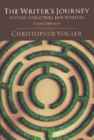
THE W R I T E R ' S JOURNEY M Y T H I C STRUCTURE FOR W R I T E R S THIRD EDITION CHRISTOPHER VOGLER S C R E E N W R I T I N G / W R I T I N G Christopher Vogler explores the powerful relationship between mythology and storytelling in his clear, concise style that's made i this book required reading for movie executives, screenwriters, playwrights, fiction and non-fiction writers, scholars, and fans of pop culture all over the world. Discover a set of useful myth-inspired storytelling paradigms like "The Hero's Journey," and step-by-step guidelines to plot and • character development. Based on the work of Joseph Campbell, The Writers Jour...
;P ulJbijlg lsBN 978-1-8432s-569-7 Illllll]ililil]t llll ||||rl 9 x781843x255697x Conlenls UNI T1 househol d & appl i ances; dw el l i ngs ln Searchof the Perfect My Home is my chores;colours& rooms;home H ome(mul ti pl choi e ce) Castle(pp. 5-19) safety TheCharmingPast:Blarney ...
;P ulJbijlg lsBN 978-1-8432s-569-7 Illllll]ililil]t llll ||||rl 9 x781843x255697x Conlenls UNI T1 househol d & appl i ances; dw el l i ngs ln Searchof the Perfect My Home is my chores;colours& rooms;home H ome(mul ti pl choi e ce) Castle(pp. 5-19) safety TheCharmingPast:Blarney ...
;P ulJbijlg lsBN 978-1-8432s-569-7 Illllll]ililil]t llll ||||rl 9 x781843x255697x Conlenls UNI T1 househol d & appl i ances; dw el l i ngs ln Searchof the Perfect My Home is my chores;colours& rooms;home H ome(mul ti pl choi e ce) Castle(pp. 5-19) safety TheCharmingPast:Blarney ...
;P ulJbijlg lsBN 978-1-8432s-569-7 Illllll]ililil]t llll ||||rl 9 x781843x255697x Conlenls UNI T1 househol d & appl i ances; dw el l i ngs ln Searchof the Perfect My Home is my chores;colours& rooms;home H ome(mul ti pl choi e ce) Castle(pp. 5-19) safety TheCharmingPast:Blarney ...
 annaabi.ee