Leidsid 33 sarnast õppematerjali, mis on seotud failiga "Natural resources". Need materjalid aitavad sul teemat sügavamalt mõista.
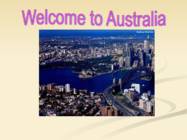
australia, sources, gold, iron, coal, production, value, mining, export, australian, marlene, neiland, leading, mineral, welcome, weight, biggest, major, stern, watchingAustralia Australia is surrounded by the Indian and Pacific oceans, it is separated from Asia by the Arafura and Timor seas. Australia presents an enormous range of climatic conditions, since it covers thirty degrees of latitude. It is mostly temperate, but one third of the continent is tropical, and there are large desert areas. The two largest cities are Sydney and Melbourne. The capital of Australia is Canberra. It is a small city and was built in the early 1900s. History. Two hundred years ago there were no white people in Australia. The only inhabitants were dark-skinned people who were still living in a Stone Age. Their only weapons were stone knives and boomerangs. But their tribes had very well-worked- out customs. A few aborigines still live in the emptier part of the continent. In 1770, the British explorer Captain Cook raised the British flag
...................................................... ................................. Aborigines and first settlers.......................................................................................... Sports............................................................................................. .................................... Culture............................................................................................. .................................. Factfile Australia is the only country in the worlf that fills the whole continent. The continent is also called Australia, if you want to make clear that you are speaking about the country you may call it by its official name: Commonwealth of Australia. Australia is the smallest continent, but one of the largest countries in the world. Its area is about 7,6 million sq kilometers. Its population is about 20,0 million and most of the people live in bigger cities: Sydney (4.2 million), Melbourne (3
Geography The name Australia means ,,southland". It is both a country and a continent, with an area of 7,617,930 square kilometres and it is also an island, separated from Asia by the Arafura and Timor seas. But Australia is also surrounded by the Indian and Pacific oceans. The Great Barrier Reef is the world's largest coral reef. It lies off the north-eastern coast and extends for over 2000 kilometres. The famous mountain range in the eastern part of Australia is the Great Diving Range and it's highest peak is Mount Kasciusco's 2230m. In the continental part, there are the Macdonnell ranges. Other smaller mountain ranges are the Musgrave Mountains, the Hammessley Mountains and the Darling Mountains. The continental part of Australia is mostly covered with deserts and these deserts are the Great Sandy Desert in the north-western part, the Great Victoria dessert in the southern part and Gibson desert and the Simpson desert
..................................................................................................................10 Conclusion....................................................................................................................11 Materials........................................................................................................................11 2 Australia Introduction Australia is the one and only country in the world which fills the whole continent. The continent it fills is called Australia too. So, Australia is both a country and a continent. If you want to make clear that you are speaking about the country, you may call it the Commonwealth of Australia. It’s the official name of the country. Australia is the smallest continent, but one of the largest countries on Earth. It’s 6th largest country. Its area is about 7.6 million sq km
AUSTRALIA Tallinn 2008 Only one country in the world fills a whole continent. That country is Australia. The continent it fills is Australia, too. Australia, then, is both a country and a continent. Australia is one only continent except Antartctica that is all south of the equator. Since it is south of the equator, its seasons are just the opposite of ours. It has summer while we have winter, and the other way round. Sometimes Australia is called the island continent. There is a good reason why. It is an island. It is 1800 miles from the mainland of Asia and almost half way round the world from Europe. More than 6000 miles of ocean separate it from the America. Australia is the world's smallest, flattest and driest continent. It is also the oldest some of the rocks are more than 3,000 million years old. It is the 6th largest country. Its territory is 7 700 000 km2.
climate such that winters are generally long and mild, and summers are short and cool. These conditions help in the development of forests. Finally, around the Great Lakes and alongside the St. Lawrence River as far downstream as the city of Québec, the climate is characterized by relatively warm summers and cool winters, moderated by surrounding water bodies. These conditions are suitable to the development of mixed wood and broadleaf forests. Mineral Resources Mining and fuel extraction and production accounted for 4.5 percent of Canada's GDP or some US$36.1 billion. Fuel exploration and production dominate this sector, but the processing of other types of mineral resources has grown significantly. In 1996, the top non-fuel minerals were gold with production of US$2.05 billion, copper US$1.47 billion, nickel US$1.45 billion, and zinc US$1.25 billion. There was also significant production of lead and iron. There are about 50
Topic Australia Tallinn English College 2006 Australia 1 . Introduction The name Australia is derived from the Latin Australis, meaning of the south. In land area, Australia is the sixth largest nation, its territory is 7,686,850 sq km and its population reaches today over 20,5 million people. It is the only nation to govern an entire continent and its outlying islands. Australia's capital is Canberra, the only city with its own territory. It was built in the early 1900s just to be the capital. The official language is English and the official name of Australia is the Commonwealth of Australia.
Australia Australia is the smallest continent in the world. It is 7.6 million square kilometres big. It is often called the island continent because it is rather small for a continent and very big for an island. There are only five countries bigger than Australia in the World. There are five states in the mainland. Tasmania is also considered as a state so there are six states. The Northern Territory and Canberra are also independent but they are not states. Canberra is the capital of Australia and it is
Australia Australia is the only country in the world that covers an entire continent, yet also the smallest and the driest of all the continents. It's almost the same size as continental USA, being the sixth largest country in the world. It's also the oldest some of the rocks are more than 3,000 million years old. Australia is often called `Down Under', because it lies in the Southern Hemisphere. As a result, its seasons are the opposite of ours. Australia, Tasmania and a number of smaller islands form the Commonwealth of Australia. Because of the country's great size, the climate in Australia ranges from tropical regions of the Northern Territory to the cool temperate conditions in the southeast and Tasmania, where it often snows in winter. In the north, half the year is `wet' and half is `dry'. From November to April heavy rain fills the rivers and makes enormous lakes where thousands of birds come for the summer. From
- What is the capital of Australia? a. Sydney b. Melbourne c. Canberra - Which city is the oldest and largest? a. Canberra b. Sydney c. Darwin - Which is a popular Australian animal? a. bear b. kangaroo c. fox - Who are the Australian natives a. Eskimos b. Aborigines c. Indians - Who discovered Australia? a. Columbus b. Captain Cook c. Lewis and Clark - What is the official Language in Australia? a. English b. German c. Spain Australia is situated south of Asia, between the Pacific and the Indian Oceans. Australia is a continent, a country and an island at the same time. Australia is located in the southern hemisphere. OFFITIAL NAME : Commonwealth of Australia CAPITAL: Canberra TOTAL AREA: 7,700,000 sq.km POPULATION: 20 million people HEAD OF STATE: Queen Elizabeth II represented by Governor- General
Introduction, Location Australia is a country between the Indian Ocean and the Pacific Ocean. It is the only country in the world that occupies an entire continent. The mainland covers an area of 7.7 million km² and it is about 3700 km from the most northern point to its most southern point and about 4000 km from east to west. There are also many different seas around Australia, like the Coral and the Tasman Seas in the west or the Timor and the Arafura Seas in the north, where the Indian and the Pacific Oceans meet. Because all seas and oceans near Australia are warm, surfing is a very popular hobby. Political subdivision Australia is divided into six states, which are: · New South Wales · Victoria · Queensland · South Australia · Western Australia · Tasmania New South Wales is the most populous state in Australia. Its capital is Sydney.
Australian symbols DAGNE MARKIINE KOTKAS Offical symbols Flag The flag includes the Southern Cross 3 September Flag of Australia , Union Flag 1901 and Commonwealth Star . Coat of ar ms Granted by King George V; an earlier design was granted by 19 King Edward VII
Australia Fact file: Australia comprises a land area of 7 686 850 square kilometres. Its population is about 21,3 million people. Australia's capital is Canberra. The national language is English. The official name of it is the Commonwealth of Australia. It's divided into six states and two territories: New South Wales, Queensland, South Australia, Western Australia, Tasmania, Victoria, Australian Capital Territory (ACT) and Northern Territory. Symbols: Australia had the British flag as their official flag until 1901, when the Commonwealth of Australia was formed. Over 30 000 entries attracted the official competition. Five of them, which contained almost identical designs, were placed equally first. The Australian flag symbolises Australia's historical links with Britain, because it has
Main industries Industry • Mining • Manufacturing • Agriculture • Services • Finance • Tourism • Media • Education Mining • Queensland, New South Wales and Victoria • world's leading coal exporter • the second largest diamond mine in the World Agriculture • major agricultural producer and exporter • There are three main zones • Wide variety of fruits, vegetables and nuts • The beef industry Manufacturing • peaked in the 1960s • In 2004–05, the manufacturing industry exported • Motor vehicles • Chemical industries Conclusion Australia has alot of large industries that bring in money for the people, especially mining and agriculture.
East Anglia are perfectly flat. In Ireland all the highland areas are situated on the coastal areas but there are no peaks over 1100 m. Great Britain is rich in rivers but they are rather short. The longest rivers are the Severn, which flows into the Bristol Channel and the Thames which flows just through the city of London. Both of them are an important part of the inland transport network for transporting such products as coal, iron ore and steel. The largest lake in Great Britain, Loch Lomond, lies in Scotland. There are many lakes in Scotland. They are narrow and long in shape because of the mountains. Loch Ness is well-known for its mysterious monster. 6 Climate Britain has a maritime temperate climate which means that it's quite mild, with temperatures not much lower than 0ºC in winter and not much higher than 30ºC in
19th century 2)How did the Americans improve the Western European economy? Marshal aid 3)When did world trade start booming before or after 1950? After 3 top exporting continents in the world: Asia 56%, Europe 19%, North America 10%. Area is considered to be the biggest emerging market: The Indian Sub-continent (India, Pakistan, Bangladesh and Sri Lanka). Products are exported from … Europe: motor cars, mashinery, chemicals.;Asia: video/audio equipment, clothes, shoes.; Australia: iron ore(рудаmaak), dairy products, meat.;Middle East: oil, gas, chemicals.;Africa: fruits, cacao, coffee.; North America: peanuts, grain, coal.;South America: meat, poultry(linnuliha), iron ore. WTO- the World Trade Organisation is the driver to ensure trade between countries has no barriers world wide. 340 mln container are circling the globe! 500.000 ships ensure that cargo is shipped around the world. Import duties have dropped to less than 5%.
In 1968 King was murdered. The 1950s are known as the time of Cold War because of the competition with the Soviet Union. After that in the 1960s and 1970s the Americans fought in the Korean and in the Vietnam War, and in the1990s in the Gulf War and now they are fighting in Iraq. Industry The US is extremely rich in natural resources. The western mountains are especially rich in them. The US is among the leading countries in the value of its mineral production. The US is third, after Russia and Saudi Arabia, in the production of petroleum. Mining has been the key of development of the USA. The US has large deposits of coal, iron ore, natural gas, and petroleum, which are vital to the country's industrial strength. Its many other important minerals include copper, gold, lead, silver and zinc. To meet its needs the US must import additional amounts of iron ore, petroleum, and other minerals.
Australia Australia is a country and also a continent. If someone wants to make clear, that he is speaking of the country, he may call it by its full name of Commonwealth of Australia. Australia's name means "southland."It is south of the equator. Sometimes it is also called the island continent because it is an island. There are about twenty million people in Australia.It is 1,800 miles from the mainland of Asia and almost half way round the world from Europe. More than 600 miles of ocean separate it from Americas. Since Australia is south of the equator, its seasons are just the opposite of ours. It has summer while we have winter, and the other way round. States and Territories. Australia consists of six states, two territories and eight external territories. The six states are: Western Australia (capital Perth), South Australia (capital Adelaide),
In 1968 King was murdered.The 1950s are known as the time of Cold War because of the competition with the Soviet Union. After that in the 1960s and 1970s the Americans fought in the Korean and in the Vietnam War, and in the1990s in the Gulf War and now they are fighting in Iraq. Industry The US is extremely rich in natural resources. The western mountains are especially rich in them. The US is among the leading countries in the value of its mineral production. The US is third, after Russia and Saudi Arabia, in the production of petroleum. Mining has been the key of development of the USA. The US has large deposits of coal, iron ore, natural gas, and petroleum, which are vital to the country's industrial strength. Its many other important minerals include copper, gold, lead, silver and zinc. To meet its needs the US must import additional amounts of iron ore, petroleum, and other minerals
.................................................................................................31 9.2 How wind machines work..........................................................................................32 9.3 Types of wind machines............................................................................................. 32 9.4 Wind power plants......................................................................................................33 9.5 Wind production......................................................................................................... 34 9.6 Wind and the environment..........................................................................................34 TIDAL ENERGY............................................................................................................... 35 10.1 Wave Energy............................................................................................................ 36 10
Around 950AD the Maori arrived from Polynesia (Tonga and Hawaii) to the northern part of the North Island. There is however evidence of earlier settlement by other more peaceful Polynesian people. After the dutch sailor Abel Tasman visited New Zealand and named it Zeeland, more and more settlers arrived, conflicts over land led to several wars between the British and Maori in the North Island. The South island remained rather peaceful until gold was found there and thousand of people hurried there to look for gold. Since World War , New Zealand has moved towards its own unique national identity and place in the world. New Zealand was the first sovereign state to give votes to women. Weather and climate: New Zealand is in the Southern Hemisphere, which of course means mid summer is at Christmas time while mid winter is June/July. The climate is oceanic temperate. The seasonal variations in New
Australia and New Zealand Triin Tens Tartu Veeriku School 2016 General facts about Australia · Commonwealth of Australia · Capital: Canberra · Population: 21 507 717 (2011) · Area: 7 692 024 km² · Anthem: Advance Australia Fair · Currency: Australian dollar · Language: English Location · Bigger cities: Sydney, Melbourne, Brisbane · Regions · Geography History of Australia · Aborigines: 50 000 years ago · Dutch explorers: 1600s · Captain James Cook: 1770 · The British settlers: 1788 · 26 January Australia day · Free settles from Europe (19 th century) Gold Rush · Edward Hammond Hargraves · 1851 · Blue Mountains, New South Wales · Rushing to Australia · Population growth · The end of the prison Natural sites in Australia · Kangaroo Island Third-largest island Many animals · Bungle Bungles Purnululu National Park
Shearer. The growth was fueled by strong investments in bauxite/alumina, tourism, manufacturing industry and, to a lesser extent, the agricultural sector. Economix deterioration continued into the mid-1980s; The first and third largest alumina producers, Alpart and Alcoa, Henry Morgan was a famous closed and there was a significant Caribbean pirate and privateer reduction in production by the second who had arrived in the West largest producer, Alcan. In addition, Indies as an indentured servant, tourism decreased and Reynolds Jamaica like many of the early settlers. Mines, Ltd. Left the Jamaican industry. Jamaican Prime Minister
► Summers are hot and dry in Spain, winters are rainy ► One of the driest countries in Europe (200-300mm per year / m²) ► Mineral resources : iron-, zinc-, copper-, lead- and uranium ore and mercury Population ► As at July 2007 - more than 40 million people (80% Hispanic, the rest Galician and Basques) ► Also Portuguese and Gypsies (mainly in Andalusia) Economy ► Industrialand agricultural ► Large Viticulture and wine production in the earth, a world leader in the production of olive oil ► The biggest export article s are oranges, mandarins and other citrus fruits ► Goods are mainly exported from France, China, Germany and Italy Peculiarities ► The main religion is Roman Catholicism ► Roman Catholic - 76% (2% other faith, and 19% atheists) ► Bullfighting - a traditional spectacle, where bulls are baited and then killed in a bullfight arena for public
Australia History & Geography Rakke Gymnasium X class Katre Pohlak, Alari Uudla April 2011 Key Facts Australia is the sixth largest country in the world. Australia is an island, surrounded by water. It is located on the smallest continent in the world. Key Facts Population: 17.5 million Geographic size: 2.97 million square miles Capital: Canberra Major cities and population: Brisbane, Sydney, Perth, Melbourne and Adelaide. Geographic Landmarks Australia has a very dramatic landscape. Australia is famous for its "outback," the remote lands of the interior.
leaders. The Federal Government carries out its decisions directly, using its own tax collectors and courts. The States are supposed to control education, police and internal regulations. All Americans are citizens both of the United States and of a single State. They vote in elections for both levels of government and they have to pay taxes to both levels of government. The American system of federation was imitated too, especially in English- speaking nations like Canada and Australia. Climate The climate of the U.S.A. differs greatly from one part of the country to another. The coldest climate is in the north, where there is heavy snow in winter and the temperature may go down to 40 degrees below zero. The south has a subtropical climate, with temperatures as high as 49 degrees in summer. Economy The United States is rich in various metals and minerals. It holds first place in the
biosphere, releasing pollutants and greenhouse gases into the air and damaging ecosystems through events such as oil spills. Concern over the depletion of the earth's finite reserves of oil, and the effect this would have on a society dependent on it, is a field known as peak oil. Etymology The word "petroleum" comes from Greek: πέτρα (petra) for rock and Greek: ἔλαιον (elaion) for oil. The term was found (in the spelling "petraoleum") in 10th-century Old English sources. It was used in the treatise De Natura Fossilium, published in 1546 by the German mineralogist Georg Bauer, also known as Georgius Agricola. In the 19th century, the term "petroleum" was frequently used to refer to mineral oils produced by distillation from mined organic solids such as cannel coal (and later oil shale), and refined oils produced from them; in the United Kingdom, storage (and later transport) of
resources centred in Alberta, and also present in neighbouring British Columbia and Saskatchewan. Canada is one of the world's most important suppliers of agricultural products, with the Canadian Prairies one of the most important suppliers of wheat and other grains. Common agriculture plants are barley, oats, rye and wheat. Canada is the world's largest producer of zinc and uranium and a world leader in many other natural resources such as gold, nickel, aluminium, and lead; many, if not most, towns in the northern part of the country, where agriculture is difficult, exist because of a nearby mine or source of timber. 7. Climate Because of its great latitudinal extent, Canada has a wide variety of climates. Ocean currents play an important role, with both the warm waters of the Gulf Stream in the Atlantic and the Alaska Current in the Pacific affecting climate. Average winter and
Topic Australia Introduction Many people know Australia as the land down under because it is the only continent except for Antarctica that is all on the southern hemisphere. Its name means ,,Southland". The official name of the country is the Commonwealth of Australia. It's capital is Canberra. Australia is the sixth largest country in the world but the smallest continent. Australia has 6 states and 2 territories (New South Wales, Victoria, Tasmania, Queensland, Western Australia , South Australia, The Australian Capital Territory and the Northern Territory). The Australian people are culturally the same as the Anglo Americans. There also live aborigines. Aborigines are the ancestors of the people. Like the US and Canada, Australia was an English speaking colony of Great Britain. Today Australia is a modern developed country with a diversified economy. Australia is an island continent of 7.7 million square kilometres, which makes it a little smaller than the USA.
peoples had discovered the food properties of maple sap, which they gathered every spring. According to many historians, the maple leaf began to serve as a canadian symbol as early as 1700. The maple leaf today appears on the Canada's flag and on the penny. Canada's flag is with colours red and white, which are also Canada's official colours. Canada is a very large country blessed with many natural resources. From trees they make pulp and paper, from mines they extract coal, gold, silver, uranium and many other minerals. On the Prairies they grow grain, raise cattle and extract oil and gas beneath the ground. From the oceans they take fisk and other seafood. Because Canada is relatively small population and abundant natural resources, much of their international trade is exported. Their most important customer for exports is the USA. Canada exports a lot of food products: wheat and other grains, beef and other meat, oil, dairy
Kilimanja ro Tanzani a 19,340 Africa Vinson Massif Antarctica 16,864 An tarctica Everest Nepal-Tibet 29,035 Asia Kosciu sk o Australia 7,3 10 Au stral ia Elb rus Russia 18,5 10 Europe Mc Kin ley Alask a, U.S. 20,320 N orth Am erica Aconcagua Argentina 22 ,834 South America
Britain also excels in the field of scientific and technological innovation. The oldest universities are Oxford and Cambridge which are also centres of scientific research. There have been several British breakthroughs in genetics research, including the identification of genes linked to diseases e.g. a form of breast cancer. In 1997 scientists in Edinburgh succeeded in cloning a sheep. Scotland and Northern Ireland have long been noted for their production of whisky and textiles, notably tweed and linen respectively. Today Scotland is also a major producer of computers. The leading manufacturing regions are Greater London, Greater Manchester, West Midlands (Birmingham), Yorkshire, Newcastle, Glasgow, Bristol. Britain has relatively few mineral resources. Zinc, tin, iron ore and copper are all produced in small quantities, together with tiny amounts of gold and silver. Non-
a British Business man. The company was financially supported by an Alfred Beit, who was a British South African magnate and Rotchilds multinational investment banking company. The company got its name from brothers: Diederik Arnolds and Johannes Nicholas de Beers, who were not, involved in the company, but whose farm becomes the site of the most lucrative mine. Shortly after founding the company, De Beers already controlled almost all the world's diamond production, either they bought out new producers or entered into agreements with local governments. They had diamonds mines in Australia, India, Russia and some of the African countries. In 1927 the chairmanship of the company was taken over by the Jewish businessman Ernest Oppenheimer, whose successors have been operating as chairmen of the group till 2011, when they sold their 40% stake to Anglo America. De Beers view during the Oppenheimer times was all or nothing like example:
 annaabi.ee