Leidsid 33 sarnast õppematerjali, mis on seotud failiga "National food presentation - Rijsttafel". Need materjalid aitavad sul teemat sügavamalt mõista.
finely, rice, recipe, taste, onion, seed, sliced, sauce, dish, netherlands, dutch, literally, influenced, indonesia, rolls, fish, fruit, nuts, cooked, preferably, eggs, 400g, shell, salt, garlic, seeds, sugar, 200g, sweetA) stale B) off C) bad D) rotten A) fat B) fatty C) fattened D) fattening c) Don't forget to buy a packet of…. peas. h) Waiter, I can't eat this meat. It's under-…. A) chilled B) frozen C) frosted D) chilly A) done B) developed C) nourished D) weight d) Can you give me the …. for this pie? It's delicious. i) Is the hamburger for you to eat here, or to ..? A) prescription B) instructions C) ingredients D) recipe A) go out B) take away C) carry on D) sit down e) There was a wonderful smell of …. bread in the j) That was fantastic. Could I have a second …., kitchen. please? A) cooking B) roasting C) baking D) grilling A) plate B) course C) helping D) service Task 4. Decide which answer (A, B, C or D) best fits each space. Chickpea soup This recipe is both (1) B
However, during the colonial period the seizure of communal land in South Africa restricted and discouraged traditional agriculture and wild harvesting, and reduced the extent of land available to black people. Decline of indigenous cookery Urbanization from the nineteenth century, coupled with close control over agricultural production, led black South Africans to rely more and more on comparatively expensive, industrially-processed foodstuffs like wheat flour, white rice, mealie (maize) meal and sugar. Often these foods were imported or processed by white wholesalers, mills and factories. The consequence was to drastically restrict the range of ingredients and cooking styles used by indigenous cooks. On the other hand, some imported food plants (maize, tomatoes) have expanded the dietary range of indigenous cooks. Of these maize is the most significant - it has been integrated to
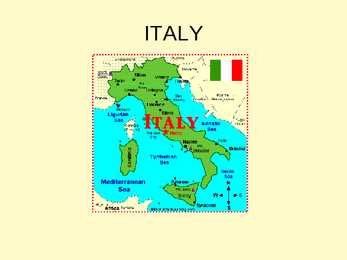
..................................................6 Veneto..........................................................................................................................................6 Lombardy....................................................................................................................................6 Meal structure..................................................................................................................................7 Recipe.............................................................................................................................................8 Pasta alla Carbonara (eesti keeles)...................................................................................................9 2 ITALY KITCHEN Italian Cuisine is traditional Italian food
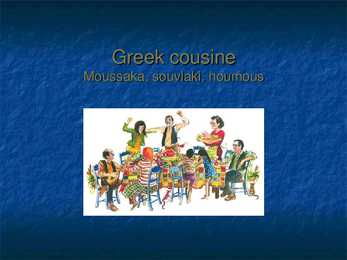
philosophers Archestratos in 330 B.C. 4,000 years of tradition Overview The ancient element of Greek cuisine Wheat. Important vegetables Flavoringsoregano, mint, garlic, dill and bay laurel leaves. Overview "Sweet" spices in combination with meat, (cinnamon and cloves in stews). Goats and sheep Fish dishes Experience The breakfast Dinner Pies before noon Moussaka Moussaka is an eggplantbased dish. Moussaka The bottom layer eggplant slices sautéed in olive oil. The middle layer ground lamb cooked with onion, garlic, chopped tomatoes, herbs, and spices (cinnamon, allspice and black pepper). The top layer a white sauce or egg custard. Moussaka Cook served lukewarm Variations no sauce, other vegetables. Souvlaki Souvlaki is a popular Greek fast food Souvlaki Pork (chicen).
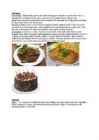
peppercorns, bay leaves and onions and is braised in the marinade for a long period, resulting in very tender melt-in-the-mouth meat. The Black Forest: cake is one of the most popular German national foods. Cake consists of several layers of chocolate cake, with whipped cream and cherries between each layer. Then the cake is decorated with additional whipped cream and chocolate shavings. A Schnitzel in German is a slice of pork or veal haunch. Dish made with boneless meat thinned with a mallet (escalope-style preparation), coated in bread crumbs and fried. Only if it is made of veal and coated in bread crumbs is it called Wiener Schnitzel; a pork version is called Schnitzel Wiener Art (Viennese type schnitzel). These are served with a slice of lemon and without a sauce. Both often are referred to as simply Schnitzel. Poland Bigos: It is a soupy stew made from meat and cabbage, red wine, along with other vegetables
linked to the seasons. In terms of staples, Estonia belongs firmly to the beer, vodka, rye bread and pork "belt" of Europe. The Cold Table Flounder The first course in traditional Estonian cuisine is based on cold dishes - a selection of meats and sausages served with potato salad or Rosolje, an Estonian signature dishes based on beetroot, meat and herring . Small pastries called pirukad ("pirukas" in the singular) - a relative of the pirozhki - filled with meat, cabbage, carrots, rice and other fillings or mixtures are also popular, and are often served with bouillon. Herring is common among other fish as a part of the Estonian Cold Table. Smoked or marinated eel, crayfish dishes and imported crabs and shrimps are considered delicacies. One of Estonia's national dishes is räim (Baltic dwarf herring), along with sprats. Flounder, perch and pike-perch are also popular. Soups Soups are traditionally eaten before the main course and most often are made of meat or
India introduced the dietary habits of the Portuguese and Chinese. · Indian diet is mixed with a variety of cultures. Etiquette: · Traditionally, meals were eaten while seated either on the floor or on very low stools or cushions. · Food is most often eaten without cutlery, instead using the right hand. Among the middle class throughout India, spoons and forks are commonplace. · Hot food is served on banana leaves, the leaves add aroma and taste to the food. Eating habits: · The breaksfast is most importing. They generally prefer to drink tea or coffee with the first meal of the day. North Indian people prefer curd. Western India prefer milk. · Lunch in India usually consists of a main dish of rice. It typically includes two or three kinds of vegetables. Curd and two or three sweets are also included in the main course. · Indian families will gather for evening to talk, drink tea, and eat snacks
least an hour. The dough should be fermented and swollen to at least twice its size in this duration. Take it out of its wrapping, and knock it with your knuckles, again in a kneading motion, to release any air bubbles A traditional Italian meal will consist of the following courses: Anti-Pasto: This consists of hot and cold appetizers. Primo: This has dishes like pasta, risotto, or even soup. This is the first course. Secondo: This contains the main dish of fish or meat. Contorno: This is the side dish of salad or vegetables. A traditional Italian menu will feature salad after the main course. Dolce: This is the dessert course. Caffee: Here you will be served a cup of espresso. Liqueurs: This course is also referred to as the "Coffee Killer" course where you will be served grappa or Farinata 3 3/4 cups of water 2 1/3 cups of chickpea flour 1 onion, medium 4 tbsp extra virgin olive oil 1 tsp salt
Take 5 a day everyday! For lunch you can have the following list of vegetables... · Lettuce · Cabbage · Cauliflower · Beans · Broccoli · Lentils · Spinach · Bitter gourd · Tomato · Okra · Carrot Fruits Fruits are also a source of multivitamins and minerals. Citrus fruits are rich in vitamin C. You can consume a fruit dish everyday for breakfast. They are also natural source of carbohydrates and fibers. Some of the most healthy fruits are enlisted below. · Apple · Orange · Grapes · Lime · Strawberries · Banana Dairy Dairy products are not only rich in proteins but also in unsaturated fatty acids. A glass of skimmed milk is ideal for breakfast or before going to bed. Children can consume cream enriched milk. They are rich in calcium, required for health of bones
Handbook of Meat Processing Handbook of Meat Processing Fidel Toldrá EDITOR A John Wiley & Sons, Inc., Publication Edition first published 2010 © 2010 Blackwell Publishing Blackwell Publishing was acquired by John Wiley & Sons in February 2007. Blackwell’s publishing program has been merged with Wiley’s global Scientific, Technical, and Medical business to form Wiley-Blackwell. Editorial Office 2121 State Avenue, Ames, Iowa 50014-8300, USA For details of our global editorial offices, for customer services, and for information about how to apply for permission to reuse the copyright material in this book, please see our website at www.wiley.com/ wiley-blackwell. Authorization to photocopy items for internal or personal use, or the internal or personal use of specific clients, is granted by Blackwell Publishing, provided that the base fee is paid directly to the Copyright Clearance Center, 222 Rosewood Drive, Danvers, MA 01923. F
Trivia · The sunflower is the state flower of the U.S. state of Kansas, and one of the city flowers of Kitakyushu, Japan. · The Jerusalem artichoke (Helianthus tuberosa) is related to the sunflower. The Mexican sunflower is Tithonia rotundifolia. False sunflower refers to plants of the genus Heliopsis. · Scientific literature reports, from 1567, that a 12 m (40'), traditional, single-head, sunflower plant was grown in Padua. The same seed lot grew almost 8 m (24') at other times and places (e.g. Madrid). Much more recent feats (past score years) of over 8 m (25') have been achieved in both Netherlands and Canada (Ontario). · The sunflower is often used as a symbol of green ideology, much as the red rose is a symbol of socialism or social democracy. Flower formation 1. The first stage of the 3. The flower is nearly flower formation 2
PRAISE FOR The 4-Hour Workweek "This is a whole new ball game. Highly recommended." --Dr. Stewart D. Friedman, adviser to Jack Welch and former director of the Work/Life Integration Program at the Wharton School, University of Pennsylvania "It's about time this book was written. It is a long-overdue manifesto for the mobile lifestyle, and Tim Ferriss is the ideal ambassador. This will be huge." --Jack Can eld, cocreator of Chicken Soup for the Soul®, 100+ million copies sold "Stunning and amazing. From mini-retirements to outsourcing your life, it's all here. Whether you're a wage slave or a Fortune 500 CEO, this book will change your life!" --Phil Town, New York Times bestselling author of Rule #1 "The 4-Hour Workweek is a new way of solving a very old problem: just how can we work to live and prevent our lives from being all about work? A world of in nite options awaits those who would read this book an
a festival somewhere in Japan. Matsuri is the Japanese word for a festival or holiday. In Japan, festivals are usually sponsored by a local shrine or temple, though they can be secular. There is no specific matsuri days for all of Japan; dates vary from area to area, and even within a specific area, but festival days do tend to cluster around traditional holidays such as Setsubun or Obon. Almost every locale has at least one matsuri in late summer/early autumn, usually related to the rice harvest. Notable matsuri often feature processions which may include elaborate floats. Preparation for these processions is usually organized at the level of neighborhoods, or machi. Prior to these, the local kami may be ritually installed in mikoshi and paraded through the streets. One can always find in the vicinity of a matsuri booths selling souvenirs and food such as takoyaki, and games, such as Goldfish scooping. Karaoke contests, sumo matches, and other
sandwich became irrevocably associated with submarines. The third popular theory claims that the term comes from Dominic Conti, an Italian who immigrated to New York in the early 1900s. His granddaughter Angela Zuccar has stated that her grandfather started a grocery store, called Dominic Conti's Grocery Store, on Mill Street in Paterson, New Jersey, selling the traditional Italian sandwiches there. He had brought the recipe from Italy. According to Zuccar, her grandfather first used the term when she was 16 years old at the time, when he went to see the first experimental 14-foot submarine called Holland I, and said: “It looks like the sandwich I sell at my store.” As is known, there are a number of regional words for this type of sandwich. What are they, and where are they used? There are quite a few other terms for the “submarine sandwich”, including: Heros – used in New York
mushrooms and baked beans. Now-a-days a typical English breakfast is more likely a bowl of cereals, a slice of toast, orange juice and a cup of coffee. They have Afternoon Tea (the traditional 4 o’clock tea). This is a small meal, not a drink. Traditionally it consists of tea (or coffee) served with either of the following: freshly baked scones served with cream and jam (known as a cream tea), afternoon tea sandwiches - thinly sliced cucumber sandwiches with the crusts cut off, and assorted pastries. However it’s not common nowadays because most of the people have to work at that time. There is also High Tea (the traditional 6 o’clock tea). This is the meal that British working population had instead of Afternoon Tea. High tea combined delicious sweet foods, such as scones, cakes, buns or tea breads, with tempting savouries, such as cheese on toast, toasted crumpets, cold meats and pickles or poached eggs on toast.
Margit Tepner k0848752 Figure 5. Global biofuel production tripled between 2000 and 2007 (IEA, 2009). 3.1. Maize Maize is the primary feedstock for bioethanol in the USA, where demand for ethanol has increased the total demand for maize. Biofuels' feedstock production has shifted the land area away from maize for food and animal feed production. On the other hand, as maize is more profitable to grow due to biofuels, some farmers have shifted their cultivation from rice and wheat cultivation to maize. As a result, the prices of all staple crops, such as rice, wheat and maize have been affected (Rosegrant, 2008). Corn is one of the most widely used food staples in the world. In 2005, the US produced 42% of the world's corn and it is has a variety of uses. About 50% of the field corn grown in the USA is used for animal feed, but smaller volumes, i.e. 10% is used for direct human consumption in corn based meals. Corn is also important in providing cooking oil and
Valga Kutseõppekeskus Dana Makejenko KS 14 VÕRDLUSTABEL toitlustusettevõtte supi ja prae kohta Referaat juhendaja: Klaire Vaher VALGA 2014 Dana Makejenko Võrdlustabel SISUKORD: lk 3 Sissejuhatus lk 4 Võrdludlustabel lk 5 Oma arvamus lk 5,6 Austrian Airlines menüü eripakkumise tabel lk 7 Allikad 2 Dana Makejenko Võrdlustabel SISSEJUHATUS tsöliaakiast Laktoositalumatus Veganism Tsöliaakia ehk gluteenenteropaatia on Laktoositalumatuse ehk hüpolaktaasia Taimetoitlus on toitumisharjumus, mis haigus, mille vallandavad päriliku põhjuseks on inimorganismi võimetus
The Christmas festivities are preceded by a visit to the famous steam baths, after which everyone dressed in clean clothes in preparation for the Christmas dinner, which is served at 5-7 in the evening. Christmas gifts may be given out before or after the dinner. The children do not hang up stockings, but Santa Claus comes in person, often accompanied by as many as half a dozen Christmas elves to distribute the presents. The main dish of the dinner is boiled codfish served snowy white and fluffy, with allspice, boiled potatoes, and cream sauce. The dried cod has been soaked for a week in a lye solution, then in clear water to soften it to the right texture. Also on the menu is roast suckling pig or a roasted fresh ham, mashed potatoes, and vegetables. After dinner the children go to bed while the older people stay up to chat with visitors and drink coffee until about midnight.
Tallinna Inglise Kolledž Australia Referaat Tallinn Table of contents: Introduction.....................................................................................................................3 Geographical Position.....................................................................................................3 Relief...............................................................................................................................4 Climate & Time Zones....................................................................................................5 Plants...............................................................................................................................5 Animals...........................................................................................................................6 Population......................................................................................
held in an anaerobic area, which can range from a storage tank which is not ventilated to a device which is specifically designed to produce gases. The conditions attract anaerobic bacteria, which start to break down the organic material, producing methane and carbon dioxide as a by-product. Another type of biogas which includes hydrogen, nitrogen, and carbon monoxide can be obtained through the gasification of biomass such as wood or rice husks, a technique which is used to manufacture gas industrially. The gases produced through anaerobic fermentation or gasification are combustible in addition to having a strong smell which makes them stand out to the human nose. Methane leaks from landfills are an ongoing problem, as is the production of biogas in poorly maintained compost piles, manure lagoons, and outhouses. Spontaneous fires and explosions caused by build-ups of gas have
British Cuisine Some people criticize English food. They say it's unimaginable, boring, tasteless, it's chips with everything and totally overcooked vegetables. The basic ingredients, when fresh, are so full of flavour that British haven't had to invent sauces to disguise their natural taste. What can compare with fresh pees or new potatoes just boiled and served with butter? Why drown spring lamb in wine or cream and spices, when with just one or two herbs it is absolutely delicious? If you ask foreigners to name some typically English dishes, they will probably say "Fish and chips" then stop. It is disappointing, but true that, there is no tradition in England of eating in restaurants, because the food doesn't lend itself to such preparation. English cooking is found at home. So it is difficult to a good English restaurant with a reasonable prices. In most cities in Britain you'll find Indian, Chinese, French and Italian restaurants. In London you'll also find Indonesian,
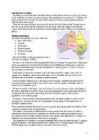
Because sea passages were narrower between the Java and Borneo islands, the first Aborigines could reach Australia from the north. When they finally got to Australia, it was in a much better condition than nowadays. There were large animals, who are now extinct, that provided much meat. The Aborigines lived in harmony with the environment. Because they were cut off from the rest of the world, Aborigines could not trade goods, acquire animals or crop seed, which was very important because the land did not contain any cultivated crops. Aborigines lived in clans that all had occupied a piece of land. Nobody thought about selling, buying or trading land because the clan was a part of the land they owned. Finding food was not easy at that time. In some areas, both men and women had to spend over half 2 of each day on hunting or gathering food
All these names refer to activities carried out during the holidays. According to the ecclesiastical calendar, Lent came to an end on that day and it was allowed to eat meat again. A general custom was dyeing eggs. They were exchanged and presented to friends. The tradition is still practiced today. Good Friday is a quiet day, and everyone is back to work or school on Easter Monday. Easter Sunday is a family affair, with relatives getting together for long lunches. One popular traditional dish is pashka or pasha, a Russian style dessert made with curd cheese, almonds and raisins. In the run up to Easter people seek out the whitest eggs for painting and many hold eggpaintings parties. The eggs are used to decorate the table. Children play at breaking eggs, as in British conker competitions. It also customary to bring young willow twigs indoors for sprouting; sometimes grass seeds are planted in pots
Firstly there is the famous bedouin tea, made from tea leaf with sugar, and desert herbs of habuck and marmaraya. This gives it a distinctive flavour.It is customary as soon as a guest arrives to get the tea on the fire, whilst sharing stories and news. The second part of the hospitality always involves food, Bedouin people will always make sure their guest are well refreshed with tea, water and traditional bedouin food. This includes delicious bedouin bread cooked on an open fire, rice and either a meat, fish or vegetable dish. The cooking is always from fresh produce grown or reared locally. They take much pride in their cooking and food is always seen as a special event. For weary travelers in the desert the sight of a Bedouin Tent was equal to that of seeing an oasis. The custom is that food, water and a place to sleep should be provided to all travelers and guests if needed for up to three days
Extended Essay Research Question: To What Extent Does a Plant Based Diet Lower the Risk of Coronary Artery Disease? Subject: Biology Word Count: 3482 Abstract: Because there has been much debate over whether plant based diets are beneficial or not, I’m willing to learn more about it and since there’s eligible data available on the effects of vegetarian/vegan diets on cardiovascular diseases, my research question is formed accordingly: To what extent does a plant based diet lower the risk of coronary artery disease? The importance of this study lies in my own curiosity and my desire to acquire further knowledge on the prevention and treatment of coronary artery disease. In this investigation I will study two similar prospective studies on plant based diets and cardiovascular diseases, mainly coronary artery disease, to find out if the outcomes of one have anything common
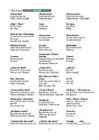
Bolivian boliviano(a) Macedonia Macedonia Bosnia la Bosnia Macedonian macedonio/a Bosnian bosnio/a Malta Malta Brazil el Brasil Maltese maltés/esa Brazilian brasileño/a Mexico México Bulgaria la Bulgaria Mexican mexicano/a Bulgarian búlgaro/a Netherlands los Países Bajos Canada Canadá Dutch holandés/esa Canadian canadiense New Zealand Nueva Zelanda China China New Zealander neozelandés/esa Chinese chino/a Nicaragua Nicaragua Chile la Chile Nicaraguan nicaragüense Chilean chileno/a Norway Noruega
Tallinna Inglise Kolledz Australia Topic Alice Tärk, 8b. Tallinn 2007 Table of contents: Factfile............................................................................................. ................................. Symbols.......................................................................................... ....................................Head of State................................................................................................ ................... Government....................................................................................... ............................... History............................................................................................. .................................. Relief................................................................................................ .................................. Geographical
SISUKORD ENERGY STORY................................................................................................................4 USES OF ENERGY............................................................................................................. 4 2.1 Uses of energy in homes...............................................................................................5 2.2 Types of energy used in homes.................................................................................... 6 2.3 Energy use in different types of homes........................................................................ 6 2.4 Commercial Energy Use...............................................................................................9 2.5 Industrial and Manufacturing Energy Use..................................................................11 2.6 Transportation Energy Use.........................................................................................12 RENE
1. (a) (i) gene length of DNA; codes for a (specific), polypeptide / protein / RNA; max 1 allele alternative form of a gene; found at a, locus / particular position on, a chromosome; max 1 (ii) assume allele refers to coat colour allele (coat colour) gene / alleles, only on X chromosome; A no (coat colour), gene / allele, on Y chromosome male cats, XY / only have one X chromosome; males have only one (coat colour) allele / cannot have two (coat colour) alleles; need black and orange alleles for tortoiseshell colour; 2 r r w w (b) parental genotypes C C × C C ; r w gametes C , C ; F1 genotypes and pheno
Introduction The United States of America is a very big country. Its territory is about 9.4 million square kilometres and its population is more than 260 million people, 12% of them are the Afro-Americans. It is the world's third-largest country by size and by population. The population density is about 27 people per square kilometre. Most of the people live in towns. There are 50 states in America. The biggest of the state is Texas, next by size are California, Alaska and Montana. Six states - Maine, Vermont, New Hampshire, Connecticut ,Rhode Island and Massachusetts are called New England. They are all small states in the U.S. that lie in the north-east. The first colony of immigrants settled down in Virginia, in the eastern part of the U.S.A. The biggest cities are New York, Washington, Chicago, Los Angeles, San Francisco, etc. The official language of the USA is English; Spanish is also widely spoken. The currency of the USA is the Uni
Creole Culture Report Table of contents INTRODUCTION.........................................................................................................................................................2 FAMILY LIFE..............................................................................................................................................................3 HISTORICAL CREOLE GENDER ROLE...............................................................................................................4 CREOLE CUSTOMS.......................................................................................................................................................5 CREOLE CULTURE...................................................................................................................................................5 PEOPLE......................................................................
watches Singular Plural beach beaches branch branches box boxes bush bushes church churches dish dishes dress dresses foxes sandwich sandwiches witch witches fox m ar H am ch + Gr elp
very often are more likely than average to become smokers themselves when older. They are at increased risk of developing cancer as adults. And they also do worse at reading and reasoning skills compared with children in smoke-free homes, even at low levels of smoke exposure. Smoking also has short term consequences like your breath, clothes, hair, skin, and home smell of tobacco. You do not notice the smell if you smoke, but to non-smokers the smell is obvious and unpleasant. Your sense of taste and smell are dulled. Enjoyment of food may be reduced. Smoking is a serious problem, about 100,000 people in the UK die each year due to smoking. It is very hard to quit smoking but luckily there are things like nicotine patches and gums to help you during the process. But those things won't help you if you lack of two most important things - willpower and determination. 3 Narcotics
 annaabi.ee