Leidsid 33 sarnast õppematerjali, mis on seotud failiga "MARGARET THACHER". Need materjalid aitavad sul teemat sügavamalt mõista.
prime, strongrgaret, father, woman, back, even, push, change, stand, decision, cause, support, friend, could, final, herself, position, thing, going, voice, authority, tough, left, thatcher, rather, achievement, these, days, parlament, since, giving, powerful, confident, speeches, motivated, political, figure, gave, politics, wish, someone, somethingTallinn Järveotsa Gymnasium MARGARET THATCHER Maria Ignatenko Form 11.B Tallinn 2008 Margaret Thatcher (1925-...) General Data Margaret Hilda Thatcher was born on the 13th of October, 1925 in London. She is a British politician who served as Prime Minister of the United Kingdom and Leader of the Conservative Party. Margaret is the first woman who has ever held these posts. Childhood and Education Margaret Hilda Roberts was born on the 13th of October, 1925 in Grantham in Lincolnshire, England. Her parents were Alfred Roberts and Beatrice Stephenson Roberts. Thatcher spent her childhood in the town of Grantham in Lincolnshire. The Roberts family ran a grocery business, bringing up their two daughters in a flat over the shop
moments later, punctually as always, she heard the tires on the gravel outside, and the car door slamming, the footsteps passing the window, the key turning in the lock. She laid aside her sewing, stood up, and went forward to kiss him as he came in. "Hullo darling," she said. "Hullo darling," he answered. She took his coat and hung it in the closer. Then she walked over and made the drinks, a strongish one for him, a weak one for herself; and soon she was back again in her chair with the sewing, and he in the other, opposite, holding the tall glass with both hands, rocking it so the ice cubes tinkled against the side. For her, this was always a blissful time of day. She knew he didn't want to speak much until the first drink was finished, and she, on her side, was content to sit quietly, enjoying his company after the long hours alone in the house. She loved to luxuriate in the presence of this man, and to feel -
But it is very likely that he may fall in love with one of them, and therefore you must visit him as soon as he comes." "I see no occasion for that. You and the girls may go, or you may send them by themselves, which perhaps will be still better, for as you are as handsome as any of them, Mr. Bingley may like you the best of the party." "My dear, you flatter me. I certainly have had my share of beauty, but I do not pretend to be anything extraordinary now. When a woman has five grown-up daughters, she ought to give over thinking of her own beauty." "In such cases, a woman has not often much beauty to think of." "But, my dear, you must indeed go and see Mr. Bingley when he comes into the neighbourhood." "It is more than I engage for, I assure you." "But consider your daughters. Only think what an establishment it would be for one of them. Sir William and Lady Lucas are determined to go, merely on that account, for in
Although Anna initially tries to reject him, she eventually succumbs to his attentions. Karenin warns Anna of the impropriety of paying too much attention to Vronsky in public, which is becoming a subject of society gossip. He is concerned about his and his wife's public image, although he believes that Anna is above suspicion. Vronsky, a keen horseman, takes part in a steeplechase event, during which he rides his mare Frou-Frou too hard and she falls and breaks her back. Vronsky escapes with minimal injuries but is devastated that his mare must be shot. Anna tells him that she is pregnant with his child, and is unable to hide her distress when Vronsky falls from the racehorse. Karenin is also present at the races and remarks to her that her behaviour is improper. Anna, in a state of extreme distress and emotion, confesses her affair to her husband. Karenin asks her to break off the affair to avoid society gossip and believes that their relationship can then
Yes, so it is, but, I do have a certain reason. Do you remember Sir Thom of the Minquettes'? That fine young man with fascinating blue eyes... Oh, my sweet Mary, you will never guess what happened yesterday! It was about seven o'clock in the evening when Lillian called me out for a walk you know I can't say `no' to my little sis. Anyway we went to the forest near the Swan Lake and, believe it or not, got lost! Awful! I was so scared... We walked and walked, not even knowing the direction we were heading to, until we reached a huge mansion. And the garden around it was so extraordinary... That is something you just must see! But neither the trees nor flowers could be as wonderful as the owner himself! Sir Thom treated us tea and sandwiches, not forgetting to show us way back to the village. He was so kind, don't you think? In the end, when we had nearly reached our home, he suddenly stopped and called us to a ball! Can you imagine?! A ball with Sir Thom
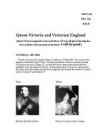
[1] The Duke of Kent was the fourth son of George III and Victoria Maria Louisa was the sister of King Leopold of Belgium. The Duke and Duchess of Kent selected the name Victoria but her uncle, George IV, insisted that she be named Alexandrina after her godfather, Tsar Alexander II of Russia. [2] Victoria's father died when she was eight months old. The Duchess of Kent developed a close relationship with Sir John Conroy, an ambitious Irish officer. Conroy acted as if Victoria was his daughter and had a major influence over her as a child. [2] Edward, Duke of Kent Victoria Maria Louisa of Saxe-Coburg When Princess Victoria of Kent was eleven years old, her uncle, King George IV, died
The general public, however, was not enamored with the German prince; he was excluded from holding any official political position, was never granted a title of peerage and was named Prince Consort only after seventeen years of marriage. Albert took an active interest in the arts, science, trade and industry; the project for which he is best remembered was the Great Exhibition of 1851, the profits from which helped to establish the South Kensington museums complex in London. Reflecting back into her childhood, Victoria was always prone to self pity. On Dec. 14th 1861 Albert died(aged 42) from typhoid fever at Windsore Castle. Victoria was deeply attached to her husband and she sank into depression after he died. She had lost a devoted husband and her principal trusted adviser in affairs of state. For the rest of her reign she wore black. She was persuaded to open Parliament in person in 1866 and 1867, but she was widely
process of producing the task, the short story was analyzed from beginning to end in order to continue the story in a way that is suitable. The nature of this task is a short story as it continues Katherine Mansfield’s short story “Miss Brill.” In the continue of the short story a new literary device has brought in, in order to explain the short story’s protagonist Miss Brill. The literary device is external analepsis as in several parts of the story Miss Brill jumps in her thoughts back to the past. The main audience of the written task are people who enjoy reading Katherine Mansfield’s short story “Miss Brill” and who would now like to read a written task where the short story is continued by someone else than the original author. In general, The audience of the written task can be anyone who is interested in literature, particularly in Katherine Mansfield’s short stories. Word count: 245 Continuing Katherine’s Mansfield’s short story “Mrs. Brill”
1271 Avenue of the Americas, New York, NY 10020 Visit our Web site at www.lb-teens.com First Edition: September 2005 The characters and events portrayed in this book are fictitious. Any similarity to real persons, living or dead, is coincidental and not intended by the author. Library of Congress Cataloging-in-Publication Data Meyer, Stephanie, 1973-- Twilight : a novel / by Stephanie Meyer. -- 1st ed. p. cm. Summary: When seventeen-year-old Bella leaves Phoenix to live with her father in Forks, Washington, she meets an exquisitely handsome boy at school for whom she feels an overwhelming attraction and who she comes to realize is not wholly human. ISBN 0-316-16017-2 [1. Vampires -- Fiction. 2. High schools -- Fiction. 3. Schools -- Fiction. 4. Washington (State) -- Fiction.] I. Title. PZ7.M57188Tw2005 [Fic] --dc22 2004024730 Printed in the United States of America For my big sister, Emily, without whose enthusiasm this story might still be unfinished.
Total marks: /50 6 Macmillan Publishers Limited 2001. This sheet may be photocopied for use in class. Test 3 Name____________________ Class_______ Use your English 1 Complete the second sentence so that it has a similar meaning to the first sentence using the word given. Do not change the word given. Use between two and five words, including the word given. 1 I first started to play the guitar when I was sixteen. (since) I have ________________________________________________ I was sixteen. 2 This is their first visit to the Caribbean islands. (never) They ________________________________________________ the Caribbean islands before. 3 She arrived a few minutes ago. (just) She ________________________________________________ arrived.
9 Awards and nominations 10 Art (selection) 11 See also 12 Notes 13 References 14 External links Childhood Family and early life Main article: Childhood of Marilyn Monroe Marilyn Monroe was born in the charity ward of the Los Angeles County Hospital.[1][10] According to biographer Fred Lawrence Guiles, her grandmother, Della Monroe Grainger, had her baptized Norma Jeane Baker by Aimee Semple McPherson.[1] Although she took a stagename of Marilyn Monroe in 1946, she did not legally change her name until February 23, 1956.[11] Her mother was Gladys Pearl (Monroe) Baker.[12] Her family is believed to have been Anglo-Spanish originally; and possibly related to the Sepulvedas. [13] For many years it was believed Gladys' second husband Martin Edward Mortenson (18971981) was Monroe's father. His name was listed on her birth certificate. [14] Foster homes Mentally unstable and unable to care for Monroe, Gladys placed her with foster parents Albert and Ida
Paine's The Age of Reason, and the Jefferson Bible, but the most influential thinker was undoubtedly John Locke, whose ideas spread to the colonies and across Europe. Main Ideas of the American Enlightenment: The Enlightenment caused a shift in the cultural and social attitudes of the people, bringing in some new and radical ideas. Republicanism: The doctrine of republicanism asserts a system of a government that is elected by the people of the nation. The roots of this ideology go back to ancient Greece, when the concept of a democratic government was examined by philosophers such as Plato and Aristotle. Individual Liberty: "Life, Liberty, and the pursuit of Happiness" developed as the motto of this era, which forms the cornerstone of the U.S. Constitution today. Since the colonies had very few individual rights, they declared certain fundamental rights that they deemed "inalienable
were lining the road. Inside she went smoothly though the corridors and soon reached a wooden door. After knocking twice a voice from inside called "Enter!" and the child went in. The room was filled with the smoke of numberless cigarettes. The girl, however, made no emotion and came closer to the old and ugly man sitting behind the table. "I wasn't lucky today, Grandpa," whispered the child and her light blue eyes filled with tears as she talked. The man smoked soundlessly, not even glancing at the girl. "But I'll go again, tomorrow, and bring you twice the money! I promise! So don't punish me, okay?" The man stood up and walked slowly towards the girl. "I promised your mother to take care of you, yet, if you are useless in even collecting money from the rich, I can't help you! This is the end, Heartless! Go to the dorms, pack your things and leave my orphanage at once! You are no longer welcome here!"
Chapter1: An unknown woman was found lying in the street and brought into the workhouse. She delivered a sickly child who had trouble breathing. The woman, without a word of who she was, died and left her new born boy, Oliver, to the drunken nurse that stood by. Chapter2: The State gave Oliver to Mrs. Mann who housed a number of orphaned children. Mrs. Mann took a large portion of the money given to her by the authorities for each child's food so Oliver grew up small and malnourished. On his ninth birthday, the town beadle, Mr. Bumble, came to collect Oliver and take him to the board for an interview
Reading reflection 12/19/06 Title: The Way Home Writer: Sue Leather This book is about eight journeys which change lives forever. Every story is touched and helps me think more about the meanings of life. The Way Home: Alex had a nice husband she went on many trips from time to time. In one of her journeys, she bumped into an attractive man, Stefano. After a nice talk, he asked her to stay at the same hotel and the same room. At the time she agreed, it just began her betrayal and she didn't know how to stop it. Remembering her childhood, she was very frighten about her mom's
His modest background and upbringing are crucial to his development as a writer. Chekhov always felt that he missed out on childhood. It was a very hard lifeand it may have contributed to his poor health: he succumbed later on to the"family disease", tuberculosis, which led to his early death at the age of 44.His mother was a quiet, gentle soul who was full of stories of her early life. In later years, Chekhov would say that "we inherited our talent from our father,but mother gave us soul". The other great passion of his formative years was nature, the Russiancountryside. As a port, Taganrog was surrounded on all sides by the landscapes of the Steppe and Chekhov's earliest stories reveal how intensely aware he was of his bond with the Don Steppe. Chekhov had always claimed that medicine was his wife and literature his mistress. Chekhov had lived for much of his career as a writer under the shadow of the great literary colossus of the age, Lev Tolstoy.
Any life-form in any realm – mineral, vegetable, animal, or human – can be said to undergo “enlightenment.” It is, however, an extremely rare occurrence since it is more than an evolutionary progression: It also implies a discontinuity in its development, a leap to an entirely different level of Being and, most important, a lessening of materiality. What could be heavier and more impenetrable than a rock, the densest of all forms? And yet some rocks undergo a change in their molecular structure, turn into crystals, and so become transparent to the light. Some carbons, under inconceivable heat and pressure, turn into diamonds, and some heavy minerals into other precious stones. Most crawling reptilians, the most earthbound of all creatures, have remained unchanged for millions of years. Some, however, grew feathers and wings and turned into birds, thus defying the force of gravity that had held them for so long
flashed his winning smile. We'd been unpacking for days, yet he still looked amazing. Leanly built, dark-haired, and green-eyed, Cary was a man who rarely looked anything less than absolutely gorgeous on any day of his life. I might have resented that if he hadn't been the dearest person on earth to me. "I'm not talking about a bender," he insisted. "Just a glass of wine or two. We can hit a happy hour and be in by eight." "I don't know if I'll make it back in time." I gestured at my yoga pants and fitted workout tank. "After I time the walk to work, I'm going to hit the gym." "Walk fast, work out faster." Cary's perfectly executed arched brow made me laugh. I fully expected his million-dollar face to appear on billboards and fashion magazines all over the world one day. No matter his expression, he was a knockout. "How about tomorrow after work?" I offered as a substitute. "If I make it through the day, that'll be worth celebrating
Social acceptance dictated Torvald and Nora's lives, including their relationship. Torvald can be assumed as not only the owner of this "doll house" but of Nora, his "doll", as well. Their marriage had the constant pressures of the image of perfection, and it is this tension that corrupts their relationship. It also forces Nora to realize the self-centered nature of her husband. Nora ultimately changes her resemblance of Torvald's "doll" and becomes an independent and confrontational woman, creating a great contrast with the title of this play. The standards on social acceptance in 1879 were harsh, and Torvald let it consume every every aspect of his life. His dependence on perfection harmed his marriage and himself as he tried to retain this "doll house" image. When Nora borrowed the bank loan from Krogstad to save Torvald's life, his reaction was instantly directed towards how he would look in society's eyes. He had previously said "when it counts, I
(gloomily) situation: King was upset and sat morosely in the car with a beer. to cajole (36) - persuade (someone) to do something by sustained coaxing or flattery. Situation: Lynette cajoled Eli to wear a hat for a while and then she took it. to relent (39) - abandon or mitigate a severe or harsh attitude, especially by finally yielding to a request. Situation: When Lipsha was talking about mother with Albertine he said he wouldn't relent on her even if she would come back, goes down on her knees and begged him for forgiveness. 2. Explain the following literary terms. Learn and use them in your discussion of the book: Protagonist - the leading character or one of the major characters in a play, film, novel, etc. Theme - an idea that recurs in or pervades a work of art or literature. 2 Motif - a dominant or recurring idea in an artistic work.
c) When you want to show agreement you might g) When you are scared or in pain you might d) When you want to show amusement you might h) When you want to attract someone's attention you might 4. Match each sentence (a-j) with a suitable response (1-10). Use each response once only. a) How do you feel about folk music? 1 You can do whatever you like, as far as I'm b) Do you have any comment on the Prime Minister's concerned. decision? 2 In my opinion, the most important matter has been c) I feel really miserable today forgotten. d) Is it all right if I invite some friends round? 3 Mind out, you might drop it! e) Shall I do the washing-up? 4 I didn't think much of it, actually. f) I like this vase. Is it an antique? 5 I'm sorry, but it just won't do.
often mix fiction up with reality and in some cases it does not do me any good. As novels have such a great influence on me, I often misunderstand people in reality. Also, I quite often jump into conclusions. For example there was this awfully embarrassing situation that happened to me when I thought that General Tilney killed his wife. I was very ashamed of myself. To sum up, I lack of experience and am too keen on reading novels. This is what makes me so naïve and sometimes causes trouble. Even when I think I should read less I just cannot help it! I love fiction too much. So, I think that this is it, I do not have much to say anymore. Now you know what to expect from me. Henry Tilney My name is Henry Tilney. I am actually not sure what to tell you about myself, because I am just an ordinary man and I think of myself as a rather boring person. I definitely do not want to sound self-centered, but I must say that I am always rather gentle and caring
It was believed that a witch often joined a pact with the devil to gain powers to deal with infertility, immense fear for her children's well-being, or revenge against a lover. The long-term result of amalgamation of distinct types of magic-worker into one is the considerable present-day confusion as to what witches actually did, whether they harmed or healed, what role they had in the community, whether they can be identified with the "witches" of other cultures and even whether they existed as anything other than a projection. Present-day beliefs about the witches of history attribute to them elements of the folklore witch, the charmer, the cunning man or wise woman, the diviner and the astrologer. Powers typically attributed to European witches include turning food poisonous or inedible, flying on broomsticks or pitchforks, casting spells, cursing people, making livestock ill and crops fail, and creating fear and local chaos.
The vocalist, Daemon, practiced the guitar, while the others tried to calm down from the pressure that was thickening the air. Matrix, the guitarist, had taken his little sister with him. While he himself was practicing with the Ravens, Alice sat amongst the public. Suddenly, someone shook her hand. The girl turned and saw one extravagant-looking woman. "You are Alice Owen, right? The legendary Billy Owen' s youngest daughter?" Alice smiled and nodded. "Yet I don't believe my father is a legend." "Well, for me he's an idol! I've always dreamed about his live-concert! And, now, finally, I can hear his singing!" "He's just opening the competition..." But the woman seemed very happy, so Alice decided not to ruin her mood and agreed to everything she talked about. Matrix finished all the preparations and went to Daemon, whom was drinking soda behind the stage and watching the crowd. "Lots of people, Daemon?"
Maturita Solutions Advanced Workbook Key stand bananas and coffee! It's a bit 3 1 to 8 of Unit 1 uncanny really. Is it something she's 2 about 9 century passed on to me genetically, or is it 3 like 10 assumed / 1A Memories page 3 learned behaviour? Who knows? 4 of thought /
I leave your house, I tell you, quite disgusted; You do the opposite of my instructions; You've no respect for anything; each one Must have his say; it's perfect pandemonium. DORINE If . . . MADAME PERNELLE You're a servant wench, my girl, and much Too full of gab, and too impertinent And free with your advice on all occasions. DAMIS But . . . MADAME PERNELLE You're a fool, my boy--f, o, o, l Just spells your name. Let grandma tell you that I've said a hundred times to my poor son, Your father, that you'd never come to good Or give him anything but plague and torment. MARIANE I think . . . MADAME PERNELLE O dearie me, his little sister! You're all demureness, butter wouldn't melt In your mouth, one would think to look at you. Still waters, though, they say . . . you know the proverb; And I don't like your doings on the sly. ELMIRE But, mother . . . MADAME PERNELLE Daughter, by your leave, your conduct In everything is altogether wrong; You ought to set a good example for 'em;
REVISION QUESTIONS 1. What do you know about Margaret Thatcher? Winston Churchill? Margaret Thatcher was the first female Prime Minister in Europe. She was a member of the conservative party. She died recently. Winston Churchill was the Prime Minister during WW II. He was excellent in making speeches, but he was a heavy drinker and also smoker. 2. What are the main countries of the UK and their capitals? There are 4: England with London as the capital; Wales with Cardiff as the capital; Scotland with Edinburgh as the capital; and Northern Ireland with Belfast as the capital. 3. What is Remembrance Day all about and why is it celebrated at that time?
Women writer's influence on our society Estonian women writer's history doesn't go far back. The reason for that is that people were slaves back then. Even if there were writers, then most weren't famous and they wrote poems and stories more for themselves. Also being a woman and a writer wasn't considered as a decent job for a woman at that time. The stories that we have from that time were given to one another by talking and mostly we don't know who were the authors. Education was also very expensive so only rich people could get it and Estonians, who were just farmers, mostly didn't have money for that. First I am going to talk about Marie Heiberg. She lived 1890-1942. Her first poem collection was ,,Mure-lapse laulud" in translation ,,Problem child's songs"
The gate keepers waved sleepily when he passed them. The young man decided not to disturb them so he went on in total silence. Soon he reached the main hall, but his leader, captain Jacques, wasn't there as he had expected. "Well, now that is quite problematic..."he claimed to the sleeping baby, "Interesting, what would your mother do in a situation like this?" But the child was too small to give him an answer. "Oh well," sighed the man, "sleep while you can, little one!" "You are back!" a gentle voice surprised him. The soldier turned around and saw princess Eliza, the youngest daughter of the queen, swaying at the stairs and smiling her sunny smile at him. "Your highness!" said youth and wanted to make a deep bow, but a sudden laughter stopped him. "What on earth are you doing?" asked the princess and came downstairs waving with her fan. "Oh!" she shouted then and stopped. She was staring at the baby now, whom was scared by such a sudden voice and started crying.
Anni Sandra Varblane Text Analysis 1 Pille Põiklik October 8, 2013 She Set a Path for a Modern-Day Woman Jordan Baker did not play a primary character in The Great Gatsby and she definitely did not start out as the most likeable one, yet oddly enough, she ended up being my favourite. The reason for that is simple: she portrayed a present-day woman who might have been vain, and at times, careless but she was also fairly independent and knew how to take care of herself in a world where women were thought of as nothing more than merely housewives. I
"The people´s princess" 31 August 1997. I guess that almost everyone knows how dramatic that date was. England lost the princess who should become the Queen- but all went wrong. The film took place in United Kingdom and it talked about the Royal Family. At the beginning of the film Tony Blair was appointed as the United Kingdom´s prime minister. Blair visited Buckingham Palace to meet the Queen Elizabeth. Three months later princess Diana, the Queen Elizabeth´s daughter, had a car accident in Paris- she died. Blair gave the speech in which Diana was described as "the people´s princess". All the people in England were in shock and in tears. The country was in deep grief. Since Diana was divorced from her husband Charles, she was no longer a part of the Royal Family. At first, Elizabeth
her last child wasn't her husband's. Her body was discovered with the letter, a glass containing potassium cyanide and a torn suicide note which read: I can't go on. Few days after, Mr Symmington's maid was murdered. Shockingly, the body was found by Megan, Mr Symmington's 20 year old step-daughter. Scotland Yard sent someone to investigate, and came to the conclusion that the letter- writer/murderer was a middle-aged woman who must be one of the citizens of Lymstock. The village was plunged into suspicion and terror. Once a village of trust, now all inhabitants were on the verge of accusations. There was a break in the case when the Symmington's beautiful young governess, Elsie Holland, received an anonymous letter typed with the same typewriter that had been used to create previous letters. The doctor's sister, Aimee Griffith, was arrested, since she had been seen both typing the letter and delivering it.
The book includes maps of the house, the murder scene, and a drawing of a fragment of a will. The Mysterious Affair at Styles was adapted as a 103-minute drama and transmitted on ITV in the UK on Sunday September 16, 1990 as a special episode in their series AgathaChristie'sPoirotto celebrate the centenary of the author's birth. AGATHA CHRISTIE Agatha Christie was born Agatha May Clarissa Miller in Devon, in England in 1890, the youngest of three children. Her father died, when she was a child. At sixteen she was sent to school in Paris where she studied singing and piano. Christie was an accomplished pianist but her stage fright and shyness prevented her from pursuing a career in music. She never attended school. Dame Agatha Christie was an English crime writer of novels, short stories and plays. She also wrote romances under the name Mary Westmacott, but is best remembered for her 80 detective novels and her successful West End theatre plays.
 annaabi.ee