Leidsid 33 sarnast õppematerjali, mis on seotud failiga "London Tube". Need materjalid aitavad sul teemat sügavamalt mõista.
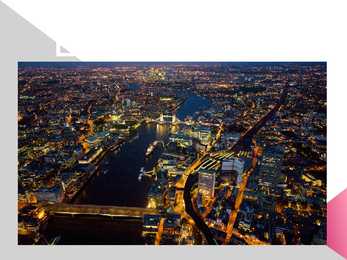
round, underground, tube, rail, station, king, network, than, greater, train, cheaper, fare, terminals, outside, centre, street, traffic, idea, known, getting, lines, along, light, local, trains, between, monday, operating, hours, reduced, sunday, details, depend, website, paper, tickets, cash, single, something, construction, early, 19th, century, builtLondon is the capital city of England and the United Kingdom Located on the River Thames Romans called it Londinium Since at least the 19th century has this town called London The mayor of London is Boris Johnsonc, since 4 May 2008 London is a leading global city And also London has been described as a world cultural capital London has the third most international visitors in the world London's 43 universities form the largest concentration of higher education in Europe More than 300 languages are spoken within its boundaries It is the most populous municipality in the European Union London had the largest population of any city in the world from around 1831 to 1925 London contains four World Heritage Sites Kew Gardens the site comprising the Palace of Westminster the historic settlement of the Tower of London Greenwich
Since its foundation, London has been part of many movements and phenomena throughout history, including the English Renaissance, the Industrial Revolution, and the Gothic Revival. The city's core, the ancient City of London, still retains its limited medieval boundaries; but since at least the 19th century, the name "London" has also referred to the whole metropolis that has developed around it. Today the bulk of this conurbation forms the London region of England and the Greater London administrative area, with its own elected mayor and assembly. London is one of the world's most important business, financial and cultural centres and its influence in politics, education, entertainment, media, fashion and the arts contributes to its status as a major global city. Central London is the headquarters of more than half of the UK's top 100 listed companies (the FTSE 100) and over 100 of Europe's 500 largest companies. The city is a major tourist
capital of the British Empire. Its population expanded from 1 million in 1800 to 6.7 million a century later. During this period, London became a global political, financial, and trading capital. In this position, it was largely unrivaled until the latter part of the century, when Paris and New York began to threaten its dominance. The first railway to be built in London was a line from London Bridge to Greenwich, which opened in 1836. This was soon followed by the opening of great rail termini which linked London to every corner of Britain. These included Euston station (1837), Paddington station (1838), Fenchurch Street station (1841), Waterloo station (1848), King's Cross station (1850), and St Pancras station (1863). From 1863, the first lines of the London Underground were constructed.Parliament finally gave consent for the MBW to construct a massive system of sewers. The engineer put in charge of building the new system was Joseph Bazalgette
Roman province of Britannia. At its height in the 2nd century, Roman London had a population of about 60,000. However, by the 3 rd century, the city fell into a decline due to trouble in the Roman Empire and by the 5th century, it was largely abandoned. But, under the control of various English kings, London once again prospered as an international trading centre. However, Viking raids began in the late 10 th century and reached a head when they took the city under Danish king Canute and forced the then-English king to flee. Years later, following a victory at the Battle of Hastings, William the Conqueror was crowned King of England in the newly-finished Westminster Abbey in 1066. William granted the citizens of London special privileges while building a castle in the corner of the city to keep them under control. This castle was expanded by later kings and is now known as the Tower of London. The city grew in wealth and population during the Middle Ages
They made their way to the river Thames and sailed up it. The Romans knew it was important to control a crossing point at the river Thames, so they decided to build a settlement on the north bank. Although small settlements had been built on the banks of the Thames, the Romans were the ones who built the first city. They called their city Londinium. The Roman engineers noticed that the point where the swampy river narrowed would make an ideal crossing point, they built London Bridge. Less than 20 years later the native Iceni tribe, led by Queen Boudicca, rose up against the Romans in revenge for mistreatment and burnt Londinium to the ground. The well disciplined Roman army defeated her forces and Londinium was rebuilt. By AD 100 it had also become the capital of the Roman province. A massive wall was built to protect the city from further attacks. The Roman Empire came under increasing attack across Europe and in AD 410 they retreated.
As the midpoint between these twin cities, Charing Cross is to this day considered the heart of London, from which all distances are measured. In the 1820s the Prince Regent engaged the landscape architect John Nash to redevelop the area. Nash cleared the square as part of his Charing Cross Improvement Scheme. The present architecture of the square is due to Sir Charles Barry and was completed in 1845. Trafalgar Square is owned by the Queen in Right of the Crown, and managed by the Greater London Authority.[1] Trafalgar Square ranks as the fourth most popular tourist attraction on Earth with more than 15 million visitors a year. Overview The square consists of a large central area surrounded by roadways on three sides, and stairs leading to the National Gallery on the other. The roads which cross the square form part of the A4 road, and prior to 2003, the square was surrounded by a one-way traffic system.
founding by the Romans. Since its foundation, London has been part of many movements and phenomena throughout history, including the English Renaissance, the Industrial Revolution, and the Gothic Revival.The city's core, the ancient City of London, still retains its limited medieval boundaries; but since at least the 19th century, the name "London" has also referred to the whole metropolis that has developed around it. Today the bulk of this conurbation forms the London region of England and the Greater London administrative area, with its own elected mayor and assembly. London is one of the world's most important business, financial and cultural centres and its influence in politics, education, entertainment, media, fashion and the arts contributes to its status as a major global city.Central London is the headquarters of more than half of the UK's top 100 listed companies and over 100 of Europe's 500 largest companies. The city is a major tourist
home of the London Bridge today, suspended over the Thames River. The Romans were not the only people in London Bridge history to construct a wooden bridge. After the fall of the Roman Empire, the Saxons were known to have built at least one, if not many (due to destruction by fire and other calamities) timber bridges. The first stone structure in London Bridge history was built in the 12th century and took 33 years to complete. King John was in power when the bridge was finally completed, and it was King John who had the idea to build houses on the bridge itself. The history of the London Bridge goes on to reflect that scores of houses and shops quickly built up on the bridge. The number of people residing on the bridge eventually became so high that the bridge became its own district in London. Each side of the now stone bridge also had a stone gatehouse. The South gatehouse was the site of a more
The last successful invasion of Britain was in 1066, which is an important date in history books in British schools. Duke William of Normandy (William the Conqueror) defeated the English at the Battle of Hastings, and the Normans and the French settled in Britain over the next three centuries. French became the language of the nobility and, with Latin, the language of the legal system and of government. POPULATION Within Europe only the Netherlands has a higher density of population than England. Historically speaking, the true Britons are descendents of the Celtic tribes who originally came from the Iberian peninsula and settled in the western parts of the British Isles. The re st of the population is generally considered Anglo-Saxon in origin. Nowadays Britain is a multi- racial society. In fact, it has an ethnic minority population of about 2.58 million corresponding to 4.7% of the total population. About 45% of these people were actually born in Britain.
At the end of the fourth century AD the Roman Empire began to crumble and the Roman armies were recalled from Britain to defend Rome itself. Once they had left Anglo-Saxons invaded and settled in Britain. They were farming people who preffered to live outside towns. For a while London probably lay in ruins, but it eventually developed again, partly because of its position on the river was good for trading. The Tower of London There is more of London's history in the Tower than anywhere else in London. It is the oldest surviving building in the capital. The Tower of London was begun by William the Conqueror in 1078 as a castle and a palace but even before the site had been used by the Romans and Anglo-Saxons. The tower comprises not one, but 20 towers, the oldest, the White Tower, dates back to the 11 th Century. The Roman stone wall, parts of which can still be seen on the territory of the Tower, may have been a small Roman fort near the river.
"...bridges should befit the spirit of the community by exhibiting commodiousness, firmness, and delight." In more practical terms, he went on to explain that the way to avoid having the bridge carried away by the violence of water was to make the bridge without fixing any posts in the water. Since the beginning of time, the goal of bridge builders has been to create as wide a span as possible which is commodious, firm, and occasionally delightful. Spanning greater distances is a distinct measure of engineering prowess. In terms of engineering, bridges are discussed by design or type (beam, arch, truss, cantilever, suspension, or moveable); length (usually expressed in terms of clear or overall span); and materials (stone, wood, cast and wrought iron, and what we use today - concrete and steel). The purpose of this contextual essay is to provide parameters of value and significance so that we can focus our
... the accent of younger speakers in Milton Keynes which is a new city quite a long way from the Thames Estuary has many of the features claimed for EE". Further, Crystal (1995) calls `Estuary English' "something of a misnomer, for the influence of London speech has for sometime been evident well beyond the Thames estuary, notably in the Oxford-Cambridge-London triangle (p.50) and in the area to the south and east of London as far as the coast." Moore (p.c.), UK coordinator of the European Network of Innovative 10 Schools, best describes the drawbacks of the term `EE': The name is neither helpful nor accurate. Because of a superficial resemblance of some features to the speech sounds of the south-east of England, it has been named for the Thames estuary. But there is no evidence that it really originates there - and is probably far more geographically diverse in its origins. The description is also stupid, since it omits the name of the river - as if the Thames were the only river with
3. Complete the sentences with the prepositions. by for in of on out to up 1 We've run ... of time. The show starts ... ten minutes. 2 The pegs were ... a string hanging next ... the washing line. 3 Why do you insist ... us wearing wellies? According ... the weather forecast, it'll be fine today. 4 You've been rude ... your sister. Why don't you apologize ... her? --- 10 5 Let's have a walk ... the riverside. I want to take some photos ... the houseboats. 6 We met ... accident at the station when queuing ... tickets. 7 You've wasted a lot of money ... stuff you really don't need. Why don't you save ... for a new mobile phone? 8 Instead ... waiting ... his dad, Eddie left ... school ... bus. 4. Complete the sentences with have to in the correct form. Do you remember? have / has to go had to go don't / doesn't have to go didn't have to go 1 Oh, no! I've lost one of my gloves. Now I ... walk all the way back to find it. 2 We'll be back well before the performance, so Jo ..
This was not likely to happen in ASCII text, but is very likely with binary data. This is known as a data will not acknowledge after the error checking. EOT (End of Transmission) framing/error detection: · Type of CRC (2B or 4B) transparency problem an can be rectified with byte stuffing (for byte-oriented protocols) and bit ·Indicates that a station has no data to transmit. Has 2 address fields (source & destination) for multiaccess · Disable or select authentication stage (PAP, CHAP, EAP) stuffing (for bit-oriented protocols)
The United Kingdom The United Kingdom consists of England, Scotland, Wales and North Ireland and it is situated in the Atlantic Ocean near the mainland of Europe. The population of the UK is 58.6 million and area is 244,110 sq km. Britain has a temperate humid climate. Its characteristic features are mild winters, warm summer, no temperature extremes, abundant rain all year round and frequent changes of weather. The mild climate is partly due to the warm Gulf Stream and partly to the south westerly winds. Occasional winds from the east in winter may bring cold and dry weather. The distribution of rainfall is influenced by the Atlantic Stream. The mountainous areas of the north and west have more rain than the lowlands of the south and east. Wales is located on a peninsula in central-west Britain. The entire area of Wales is about 20,779 km²
Australia Australia is the smallest continent in the world. It is 7.6 million square kilometres big. It is often called the island continent because it is rather small for a continent and very big for an island. There are only five countries bigger than Australia in the World. There are five states in the mainland. Tasmania is also considered as a state so there are six states. The Northern Territory and Canberra are also independent but they are not states. Canberra is the capital of Australia and it is situated between Sydney and Melbourne because both of these cities wanted to be the capital. The population is about 19 million people and growing. New South Wales is
shilling extra. Finally Chelsea successfully opened on Tuesday 20 May 1913, for three days. Curiously there is no Council report on how this Show actually went. The Gardner's Chronicle, which provided the best written records of the early Shows, was more forthcoming. The first Chelsea "had exceeded all expectations". The tent, it reported, were 300ft (100m) long and 275ft (80m) wide, taking up six spans and over 2 acres (0,8hectares). Of a total 73,000sq ft (6,780sq m), more than 21,000sq ft (1,950sq m) were allotted to 84 large groups of flowers, plants, and shrubs, with another 7,500 ft (696sq m) used for95 exhibits on tables. There were 17 large rock, formal, or paved gardens arranged in the open air. In all there were 303 exhibits organized ny244 exhibitors, compared with a mere 25,000sq ft (2,322sq m) and only 126 exhibitions at the Society's Inner Temple show in 1911. Everyone was very pleased.
seriousness. The category used to be called "broadsheet" until several papers adopted atabloid format. Both The Times and The Independent adopted a tabloid format in 2004. The Guardian adopted a Berliner format in 2005. 26. Popular newspapers- newspapers, generally known as tabloids, and collectively as "the popular press", which have tended to focus more on celebrity coverage and human interest stories rather than political reporting or overseas news. 27. Mid-market newspapers- one that attempts to cater to readers who want some entertainment from their newspaper as well as the coverage of important news events. Daily Mail, Daily Express, Sunday Express, The Mail on Sunday. 28. Red tops- tabloid newspapers in Britain tend to be simply and sensationally written, and to give more prominence than broadsheets to celebrities, sports, crime stories and even hoaxes; they
telegraph, telephone, and TV, creating involvement in depth. A fairly complete handbook for studying the extensions of man could be made up from selections from Shakespeare. Some might quibble about whether or not he was referring to TV in these familiar lines from Romeo and Juliet: But soft! what light through yonder window breaks? It speaks, and yet says nothing. In Othello, which, as much as King Lear, is concerned with the torment of people transformed by illusions, there are these lines that bespeak Shakespeare's intuition of the transforming powers of new media: Is there not charms By which the property of youth and maidhood May be abus'd? Have you not read Roderigo, Of some such thing? In Shakespeare's Troilus and Cressida, which is almost completely devoted to both a psychic and social study of communication, Shakespeare states his awareness that true social and
first collection of pieces Sketches by Boz which were published in 1836 and led to the serialization of his first novel, The Pickwick Papers, in March 1836. On 2 April 1836, he married Catherine Thompson Hogarth (1816 1879), the daughter of George Hogarth, editor of the Evening Chronice. After a brief honeymoon in Chalk, Kent, they set up home in Bloomsbury, where they had ten children. On 9 June 1865, while returning from France with Ternan, Dickens was involved in the Staplehurst rail crash in which the first seven carriages of the train plunged off a cast iron bridge that was being repaired.Because of that he died.( 9 June1870) Oliver Twist (1837-39), Nicholas Nickleby (1838-39), The Old Curiosity Shop and, Barnaby Rudge: A Tale of the Riots of 'Eighty as part of the Master Humphrey's Clock series (1840- 41), A Christmas Carol written in 1843. Hard Times- For These Times. is a novel by Charles Dickens, first published in 1854. The
1. Ancient Britain: the Celtic tribes. 2000 years ago there was an Iron Age Celtic culture throughout the Br Isles. It seems that the Celts, who had been arriving from Europe from the 8th cent BC onward, intermingled with the peoples who were already there. The Celts were extremely talented people, creative and artistic. More than 1 Celtic tribe invaded Br. The descendants of ancient Celts live in Wales, Scotland, Cornwall and Ireland. They lived in primitive society. Druids priests, more powerful than chiefs. Acted like prophets. 2. Stonehenge From prehistoric period. Was built on Salisbury plain between 2500 and 1500 bc. One of the most famous and mysterious archaeological sites in the world. One of the mysteries is how it was built at all with the technology of the time. Another is its purpose
We use a lot of energy - in our homes, in businesses, inindustry, and for traveling between all these different places. The industrial sector uses almost one-third of the total energy. The residential and commercial sectors combined use 39 percent of all energy. These two sectors include all 4 types of buildings, such as houses, offices, stores, restaurants, and places of worship. Energy used for transportation accounts for more than a quarter of all energy. Picture 2.1. Share of energy consumed by major selectors of the economy (2007) 2.1 Uses of energy in homes The ability to maintain desired temperatures is one of the most important accomplishments of modern technology. Our ovens, freezers, and homes can be kept at any temperature we choose, a luxury that wasn't possible 100 years ago. Keeping our homes comfortable uses a lot of energy. Over 40 percent of the average home's energy consumption is used for heating
COMPENDIUM ABOUT PRAGUE Prague is the capital and largest city of the Czech Republic. Nicknames for Prague have included Praga mater urbium/Praha matka mst ("Prague Mother of Cities") in Latin/Czech, Stovzatá Praha ("City of a Hundred Spires") in Czech or Zlaté msto/Goldene Stadt ("Golden City") in Czech/German. Situated on the Vltava River in central Bohemia, Prague has been the political, cultural and economic centre of the Czech state for more than 1100 years. For many decades during the Gothic and Renaissance eras, Prague was the permanent seat of two Holy Roman Emperors and thus was also the capital of the Holy Roman Empire. 4 Today, the city proper is home to about 1.3 million people, while its metropolitan area is estimated to have a population of over 1.9 million.
head, won the battle of Midway, led to cruel Allied defeats in North Africa, and broke up a vast Nazi spy ring. • How one American became the world's most famous codebreaker, and another became the world's greatest. • How codes and codebreakers operate today within the secret agencies of the U.S. and Russia. • And incredibly much more. "For many evenings of gripping reading, no better choice can be made than this book." —Christian Science Monitor THE Codebreakers The Story of Secret Writing By DAVID KAHN (abridged by the author) A SIGNET BOOK from
£30,000 ring consisting of 14 diamonds surrounding a sapphire, similar to her mother's engagement ring. The 20-year-old became The Princess of Wales when she married Charles on 29 July 1981 at St Paul's Cathedral. It was watched by a global television audience of 750 million. At the altar Diana accidentally reversed the order of Charles's names, saying Philip Charles Arthur George instead. The ceremony began at 11:20 A.M. and Diana wore a dress valued at £9000 with 25 foot train. On 5 November 1981, Diana's first pregnancy was officially announced, and she frankly discussed her pregnancy with members of the press corps. In the private Lindo wing of St. Mary's Hospital, Paddington on 21 June 1982, Diana gave birth to her first son and heir, William. A second son, Harry, was born a little over two years after William on 15 September 1984. According to Diana, she and Prince Charles were closest during her pregnancy with "Harry". She
Later came Reval (presumably after the old county of Rävala), the name used by the Germans who ruled the country for seven centuries. Russians then modified Reval to Revel. For Estonians, the town came to be called Tallinn from Taanilinn (Danish town) after Danish conquest in the 13th century. Over the course of time, Taanilinn was shortened to Tallinn The place is believed to have been settled by Finno-Ugric peoples about 2500 BC. The Danes, led by King Valdemar II, conquered northern Estonia in 1219. Legend has it that one day, when the Danes were about to lose a bloody battle, the sky suddenly opened and a red flag with a white cross on it dropped down upon them from the heavens. This is allegedly how the Danes obtained their national flag, the Dannebrog in a battle against the Estonians. In the middle of the 14th century Denmark sold its possessions in Estonia to the German Teutonic Order
Words, words, words 4 Write the words which mean the following. The first letter of each word has been provided. 1 Children wear this to school to make them look the same. u______________________ 2 A jacket and trousers made from the same material. s ______________________ 3 A man wears this round his neck and over his shirt to make him look smart. t _______________________ 4 We wear these to protect our clothing. o ______________________ 5 This is made of wool and keeps us warm in winter. j _______________________ 6 You might wear this on the beach in the summer. T-______________________
Arab geographer al-Idrisi in 1154. The Estonians were the first to build a stronghold on the spot of the Toompea Hill, but the real Tallinn was built by the Danes who conquered the north of Estonia in 1219. Legend has it that one day, when the Danes were about to lose a bloody battle, the sky suddenly opened and a red flag with a white cross on it dropped down upon them from the heaven. This is how the Danes obtained their national flag. In 1346 the Danish king sold his Estonian lands to the Teutonic Order, who a year later resold them to the Livonian Order. The Germans renamed Tallinn and called it Reval. Toompea became the seat of the German-born gentry. A fortified wall was built between Toompea (the Upper Town) and the Lower Town, as there were conflicts between the two. The Lower Town was the home of simple people, the artisans and the merchants. The doors and gates in the wall were locked at night.
the Hebrides. Edinburgh, the country's capital and second largest city, is one of Europe's largest financial centres. It was the hub of the Scottish Enlightenment of the 18th century, which saw Scotland become one of the commercial, intellectual and industrial powerhouses of Europe. Scotland's largest city is Glasgow, which was once one of the world's leading industrial metropolises, and now lies at the centre of the Greater Glasgow conurbation which dominates the Scottish Lowlands. Scottish waters consist of a large sector of the North Atlantic and the North Sea, containing the largest oil reserves in the European Union. The Kingdom of Scotland was an independent state until 1 May 1707 when it joined in a political union with the Kingdom of England to create a united Kingdom of Great Britain. This union was the result of the Treaty
Further details of our integrated care work can be found at: www.nuffieldtrust.org.uk/integratedcare Acknowledgements Our thanks go to Richard Gleave, Diane Gray, George Kissen, Dennis Kodner, Judith Smith and Sarah Smyth for their comments, all of which have helped to shape both the structure and content of this report. 3 What is integrated care? `Integrated care' is a term that reflects a concern to improve patient experience and achieve greater efficiency and value from health delivery systems. The aim is to address fragmentation in patient services, and enable better coordinated and more continuous care, frequently for an ageing population which has increasing incidence of chronic disease. The search for ways to integrate care more effectively is a pressing policy concern. But what do we actually mean by `integrated care'? This research report examines what is meant by `integrated care'
The other kind: rugby football is also very popular in New Zealand, France, and some other European countries. English boys play it at school, and in public parks. When they grow up, they play as members of important amateur teams or as a professional in teams competing in football ,,leagues". Professional football is as much a business as a sport. Rugby football was first played in 1823. In rugby every player is allowed to carry the ball. The ball is oval, not round. Each team contains 15 players. The oldest game of football in England is probably the football match which takes place at Ashburn on Shrove Tuesday every year. The game starts in the centre of the town, and the distance between two goals is two miles. The only rule is not to use motorcycles, cars and lorries in the game. In 1958 one team buried the ball. The other team didn't know and ran after them. Later first team took the ball and won. 3) JAMES WATT
education more people went to universities. profound change in morals: · No universal value and perspective on things · Multiple truths, multiple perspectives · Nothing has inherent (kaasasündinud, sisemist) importance · Life lacks purpose Science: Albert Einstein-general theory of relativity had a huge impact on culture as well. Everything is relative. Philosophy: Henri Bergson (French) came to challenge the immediate experience ad intuition are more significant than rationalism and science for understanding reality. Opposition to materialism and positivism. Opposition to abstract, untested theories &ideologies. Friedrich Nietzsche ,,God is dead"-through explaining and putting forward theories had killed Christian god. The essence of Freudian theory: the process in the human psyche Superego-society, conscience, morals, traditions, religion, a moral censor Ego-rational behavior, motivation, self-identification, conscious decisions
In the US, free-care clinics, especially for the homeless do exist in major cities, but they are usually over-burdened with patients. The conditions affecting the homeless are somewhat specialized and have opened a new area of medicine tailored to this population. Skin conditions and diseases abound, because homeless people are exposed to extreme cold in the winter and they have little access to bathing facilities. Homeless people also have more severe dental problems than the general population. Specialized medical textbooks have been written to address this for providers. There are many organizations providing free care to the homeless in countries which do not offer free medical treatment organised by the state, but the services are in great demand given the limited number of medical practitioners. For example, it might take months to get a minimal dental appointment in a free-care clinic. Communicable diseases are of great concern,
 annaabi.ee