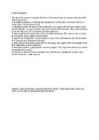
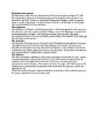
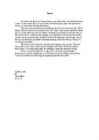
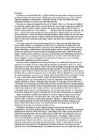
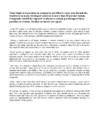
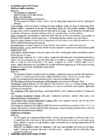
Level of education The aim of the report is to analyze the level of education of men and women in Estonia at the turn of the century. A secondary education is by far the most popular level of education. This shows that it is a centric way to cover ground in life. A significant number of men have basic education. This implies that most men prefer not to pursue education. In case of women, they want to get a better education. This is demonstrated by the fact that only 18 % of women have basic education. A large proportion of women have chosen secondary vocational. This indicates that is chosen an occupation, which suggest a fixed income. A higher level of education is not certainly necessary. This is illustrated by the fact that about 6 % of people have elementary education. A small number of men and women have no schooling. This suggests that some people do not have opportunity to get an education. A substantial number of people have a ...
Estonian and British Education System Estonian and British education system is not quite different. In Estonia, the education system is based on six levels which include the: kindergarten, primary school, basic school, secondary school and university or vocational school. In Britain, the education system is also based on six levels which include the: nursery school, infant school, junior school, secondary school, 6th form and university or college. What is similar for both systems is that the first level of education starts at age of three. While in Estonia this level is called Kindergarten, then in Britain it is called Nursery school. Kindergarten is for children´s from age three to six, but Nursery school is for children´s three to four. Differently from Estonian system, at age of five to seven, British children ´s go to Infant school. This is called year one, year two and year three and all these three...
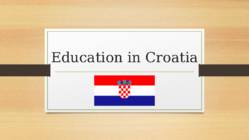
Education in Croatia Educational system in Croatia divided into: 1.Early childhood education 2.Primary education 3.Secondary education 4.Higher education Early childhood education There are three stages of early childhood education: · from when the child is 6 months old to when they're one · from the ages of one to three · from the age of three until the child stars attending primary school Even though these three stages are not compulsory, every child must attend kindergarten for a year prior to primary school. Primary education (Children begin school at the age of 6 or 7.) There are two stages: · 1st through 4th grade, being taught by one teacher per class that teaches every subject with the exception of foreign languages and Religion. The students stay in one classroom for the 4 years. · 5th through 8th grades, where different teachers teach different subj...
2 Educational system in Croatia divided into: 1. Early childhood education 2. Primary education 3. Secondary education 4. Higher education 3 Early childhood education There are three stages of early childhood education: • from when the child is 6 months old to when they're one • from the ages of one to three • from the age of three until the child stars attending primary school Even though these three stages are not compulsory, every child must attend kindergarten for a year prior to primary school. 4 Primary education (Children begin school at the age of 6 or 7.) There are two stages: • 1st through 4th grade, being taught by one teacher per class t...
In England and Wales most school were established by private benefactors and operated as educational carities. Compulsory education was introduced in 1888. Maintained schools follow National Curriculum. National Curriculum core subjects are English, matematics and science. Foundation subjects are design and technology, history, music, art. Children in Englan begin with primary education and it may be divided into Infant and Junior school. After primary school they move secondary school. Nearly 88 pre cent of secondary school pupils in England go to comperhensive schools. After five years of secondary education students take examination in a range of subjects at the level of GCSI (general certificate of secondary edcation) and that marked by independent examination board. Following two years of study, students may take A-level examinationa, which are required for university entrance in the UK. 6-7 % of the children in England go t...
Compulsory education in Britain starts at the age of 3-5. Primary (infancy) School and move to a secondary school at 11 or 12. Primary (infant) Years 1-2 Age 5-7 Primary(junior) 3-6 5-7 secondary 7-9 11-14 Secondary 10-11 14-16 Sixth form Lower sixth form 1 year 16-18 Upper sixth form 1 year A-level advanced level. Higher level academic exams that are taken mostly by people around the ae of 18 who wish to go on to higher education. GCSE general certifcate of Secondary Education. The exams taken by 15 to 16 year olds in England, Wales and Northern Ireland. Marks are iven for each subject separately. Grades are A-G. A, B and C are regarded as good Grandes. Private school ...
The importance of education Education is one of the most important part in our today's society. Children are our future and educating them is really necessary. In the first place, giving children education is really important, because they are our future leaders, teachers and they have to develop our government for centuries. Moreover, schools, highschools and even universities teach some of the things you will have to encounter in your life after studies and have to step to work-life. In Fact, you will probably have to make presentations, CV-s and know how to communicate correctly with people. Furthermore, education gives you experience you can always relay on. It is shown in your documents that you will have for rest of your life. Different jobs require different level of education. For example, if you have documents that are valuable, you have more chance to get your dream job. ...
England Map Click to edit Master text styles Second level Third level Fourth level Fifth level Places to visit in England: Trafalgar Square one of the most famous public arenas in the western world.(London) Click to edit Master text styles Second level Third level Fourth level Fifth level Big Ben-is the nickname for the great bell of the clock at the north end of the Palace of Westminster in London Click to edit Master text styles Second level Third level Fourth level Fifth level Westminister Abbey-large, mainly Gothic, church in ...
Education in Russia Table of contents Compulsory school years School stages Grading system PISA results GDP investment Literacy rate in the country Interesting facts about rules and regulations Compulsory school years Eleven-year secondary education in Russia is compulsory A student of 15 to 18 years of age may drop out of school with approval of his/her parent and local authorities Students with multiple violations may be kicked out of school at starting age of 15 School stages kindergarten (age 3 to 7) elementary (years 1-4) middle (years 5-9) senior (years 10-11) Grading system In Russia, most educational institutions use a five-point grading scale, where 5 is the highest and 1 is the lowest 5 "Excellent" 4 "Good" 3 "Satisfactory" 2 "Unsatisfactory" 1 "Very Poor" In higher education, most subjects are graded `Pass/No pass' PISA resul...
Prince William Styv Solovjov G1a General information Full name: William Arthur Philip Louis Father: Charles, Prince of Wales Mother: Diana, Princess of Wales Born: 21 june 1982 London Click to edit Master text styles Second level Third level Fourth level Fifth level He is second in the line of succession Prince William was 15-years-old when Diana was killed The Royal William Rose hybrid red tea rose Coat of Arms to mark his 18th birthday, derived from his father's Coat of Arms with elements from the Coat of Arms used by his late mother Click to edit Master text styles Second level Third level Fourth level Fifth level G...
School system in the USA Education in the United States is provided by government. Each of the 50 states has its own laws regulating education. Children start school at the age of 5 or 6 and continue until the age of 18. Primary or grade school starts from the first grade up to the sixth grade. Then students attend middle school also called junior high school for three years. After middle school, students attend secondary schools, which are called "high schools" from ninth to twelfth grades. The idea of secondary school is to get a high school diploma. Students should take on average 17 or over 20 units during their studies. Public schools are free of charge and available for everybody. To which school a child attends is determined by where they live. Primary school American children start school at the age of five. The first year at school is called kindergarten. It is obligatory for all American ch...
If I were the Minister of Education in Estonia During my years being a student, I have noticed that there have been some changes in the Estonian educational system. Some of them are useful, some are not. Yet I think there are still many things that could use a change. I think, that one good change has been made related to the national exams, they have been improved a lot. This has assured an ongoing high level of education in Estonia. Our colleges' curriculums have also certified our college students' competitivity worldwide. I would like to bring out the education getting more and more creative as a positive change. I have noticed the use of active teaching methods and personal approach to the students. If I would be the Minister of Education, I would make the first change in turning the educational system to be more student-centered. I find, that not only those students need perso...
Education in Estonia { The beginning The history of formal education dates back to 1314th century crusades The first schools were built near churches The first primer was published in 1575 It was possible to learn reading & writing in various guilds during the 16th century 1617th century Education in the Estonian language started after the reformation by Martin Luther During Swedish era, on Gustav Adolf II's orders, the first school and university were built in 1631 GAG in Tallinn and in 1632 the University of Tartu After The Great Northern War, as Estonia was occupied by Russia, many admiralty schools were built 18th century During the reign of Russian empress Katarina II, many great improvements were made in peasant school system and girls started going to school Estonians were quite highly educated for that time, since at least half of the folk in a parish could read and a third write In 1739, the first bible w...
Invention of Airplanes Mailis Zirk 2012 The discovery of the airplane brought along development in the transport system. The speed of an airplane is so high that it does not take long to reach any place throughout the Click world. to edit Master text styles Second level Third level Fourth level Fifth level Slowly and gradually, emergencies are becoming easier to handle after the invention of airplane. Click to edit Master text styles The involvement of Second level airplanes in the defense Third level Fourth level area has now become ...
Established church The Church of England is the established church, which means that: 1.)the Monarch is the Supreme Governor of the church, 2.)the Church performs a number of official functions, 3.)Church and State are linked. To disestablish Disestablishmentarianism refers to campaigns to sever links between church and state, particularly in relation to the Church of England as an established church. It was initially a movement in the United Kingdom in the 18th century. The established churches in Wales and Ireland could not count on even nominal adherence by a majority of the population of those countries. In Ireland, the predominantly Roman Catholic population campaigned against the position of the established Anglican Church of Ireland - eventually disestablished in Ireland from 1 January 1871. A broad church The Church of England is a broad church, representing a wide spectrum of theological thought and practice ...
History of Estonia Elina, Rasmus, Joosep Pre-history The Mesolithic Period The Neolithic Period The Bronze Age The Iron Age Early Middle Ages Click to edit Master text styles Second level Third level Fourth level Fifth level Counties of Ancient Estonia The Middle Ages Danish Estonia Swedish Coastal Settlements Terra Mariana The Reformation Period Division of Estonia in the Livonian War PolishLithuanian Commonwealth Estonia in the Swedish Empire Estonia in the Russian Empire Age of Enlightenment National Awakening Road to Republic Occupation of Estonia by German Empire. United Baltic Duchy Declaration of Independance As a result of the availability of education Age of awakening Red Army's retreat and arrival of German troops in Pärnu on 23 February in Tallinn on 24 February 1918 Independence (1918-1939) Tartu peace treaty in 1920 First recognized by Finl...
1. Match the term to heir definition A parish priest in the Church of England = vicar, rector A member of the highest order of ministry in the Anglican and Roman Catholic Churches who supervises a diocese = bishop A person authorized to conduct religious worship in the Church of Scotland= minister, deacons, “elders”, readers 2. Which of the following is considered ascribed status? Job Gender - yes Age - yes Position Race – yes 3. A member state of the Commonwealth of Nations which recognizes Queen Elizabeth II as their head of state is called A Crown dependency A constituent country A Commonwealth realm - see 4. The principle that an individual human’s beliefs and activities should be understood bu other in terms of that individual’s own culture is known as Chauvinism Ethnocentrism Racism Cultural relativism- see 5. Math the examinations to their explanations An examination...
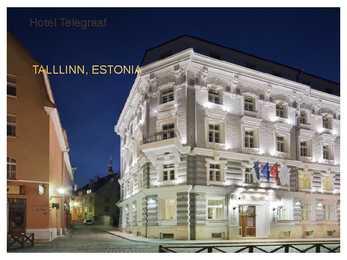
Hotel Telegraaf TALLLINN, ESTONIA Click to edit Master text styles Second level Third level History Fourth level Fifth level The Building The Revaler Handels Bank built our magnificent buliding at Vene Street 9 in 1878. Designed by the architect Peter Schreiberg from St. Petersburg, it was originally a four storey house, the two topmost floors added later. When the Republik of Estonia was established in 1918, the building was used as the post and telegraph center. The building retained this function in Soviet period.I In 2005, the wing of our building which had been destroyed in World War II was rebuilt...
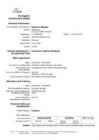
Europass Curriculum Vitae Personal information First name(s) / Surname(s) Katherin Mayfair Address Manni tee 8 EE-11213 Tallinn (Estonia) Telephone(s) +3726667882 Mobile +37255573210 E-mail(s) [email protected] Nationality Estonian Date of birth 23 July 1972 Gender Female Desired employment / Computer systems designer Occupational field Work experience Dates 01/06/2005 - 25/04/2009 Occupation or position held Computer systems designer and analyst Main activities and Designing computer systems and engineering. responsibilities Name and address of employer ...
The Integration of subjects The present-day school system revolves around traditional education, in which students learn each subject individually. This structure means that pupils don’t have the capability or know-how to connect math, biology or even art into their daily life. Even though the tutors of this conventional education have faith in the arrangement of subjects it is still entirely about high test scores, grades and graduation.The essence of progressive, alternative education like the integration of subjects is learning and the accumulation of valuable knowledge & skill. First of all, the courses that should be combined need to be challenging to the students. It would be wise to assimilate math, physics and chemistry because these classes are very similar. For instance, in order to complete a physics equation you need to know math, the same applies to chemistry. If...
Matsalu national park Matsalu National Park is situated in the western part of Estonia Click to edit Master text styles Second level Third level Fourth level Fifth level Goals To protect nesting, moulting and migratory birds Unique landscapes-floodplains, reed bed, coastal meadows, wooded meadows and islets Current situation Area-50 000 hectares, of which 30 000 hectares is covered with water There are 282 species of birds 49 species of fish 47 species of mammals 772 species of vascular plants 6500 hectares of semi-natural landscapes are maintained by local people 5368 ha is traditional farmlands Millions of migr...
Main Sights England is known for its many world-famous sightseeings and people all around the world come to see them. Some of them are even like symbols of England. The most famous ones are: Stonehenge is one of the greatest national icons of Britain. That prehistoric monument is located in the plain of Salisbury, in the county of Wiltshire in the south-west of England. It is built of 150 enormous stones which are set in a purposive circular pattern. Stonehenge was probably built to mark the longest and shortest day of the year because it lies on the line of the midsummer sunrise and the midsummer sunset. That would have enabled people to keep a record of changing of seasons. Although it is still unclear who built it. Hadrian’s Wall is an ancient wall which was built in 2nd century by Hadrian, the emperor of Rome from AD 117 to 138, and it marked the northern border of the Roman Empire in Britain. The wall was 80 Roman miles (117 kilom...
Life in Estonia through the eyes of an economics student With a population of 1 313 271 people, Estonia is one of the least populous member states of the European Union. However, according to the IMF, it is a developed country with an advanced and high-income economy. Estonia follows market economy system which ensures the little government intervention and the determination of prices of goods and services in a free price system. Therefore, economic decisions are guided solely by the aggregate interactions of a country's citizens and businesses. In addition to mentioned afore, Estonia tends to perform favourably in measurements of civil liberties, education, and press freedom. Living in Estonia has many of its good sides, for instance it is a secure place from nature disasters and it has a beautiful nature. Although, when not to look only through rose-tinted glasses, there are still some minuses in country’s organiz...
The highest result of education is tolerance Ladies and gentleman! Today I will discuss a topic what is opened by a quote by beautiful Helen Keller: The highest result of education is tolerance. Today is the day you will understand that her quote is accurate. So I should probably start with a question. Why should we be tolerant to weird kids at school? Does anybody in this room know why?........Okay, let's just drop that question for now, we'll come back to it later. If I would ask you Where do we get our education from you all would probably say: From schools duuuh! But what is a school? Tallinn English College? Yeah, it is a school with all those fancy numbers with what you can become successful........but the greatest education comes from the life school where we learn about other people's views and thoughts. And when those views happen to have even a slight difference from our own then we start a discussion ...
Estonian state system The Resolution of the National Independence of Estonia was adopted on August 20, 1991. The Constitution of Estonia is the fundamental law of the Republic of Estonia and it was adopted in June 1992. Estonia is a Democratic Parliamentary Republic where the supreme power is vested in the people. The head of State of Estonia is the President of the Republic who can be elected for two five-year terms. The Legislature. The Parliament of Estonia is called Riigikogu and it is elected by people for a four year term. The election is universal, uniform and direct. Voting is secret. The Riigikogu is comprised of one hundred and one members. The Riigikogu has three main functions: legislation, reviewing the activities of the executive power, representation. The members of the Riigikogu have the rights to form factions. The Executive. The Executive of Estonia consists of the body of the Prime Minister and cabinet of ministers. ...
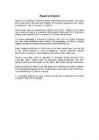
Report on Estonia Estonia is a country in northern Europe. Estonia has land borders in the south with Latvia and in the east with Russia, it's oversea neighbours are Finland and Sweden. Estonia has got 15 counties. Estonia has been an independent country since 1991. Tallinn is the capital city of Estonia. Estonia is a member of European Union nad NATO. Estonia is a democratic republic and it's president is Toomas Hendrik Ilves. The official language of Estonia is Estonian, which is Finno-Ugric language and has many similarities with Finnish. The population of Estonia contains mainly Estonians but some Russians and other ethnicities too. Many foreign people think of Estonia as an old-timed soviet union country, but in my opinion Estonia is quite far-advanced country. Estonian national symbols are cornflower, slate, swallow and it's blue-black-white flag. There is very high level of education in Estonia, m...
Nothing can be done to prevent crime We will always have to face grief and pain as a result of countless varieties of crimes.Unfortunately, we are prone to make bad choices and reap undesirable outcomes. What in future can make more problem, what was. The difference is that most of us have some self-control, but in time of need human beings can change drastically their personality. That is why we can not prevent all crimes every time or build a perfect society: because we are still plain humans. But we can improve on an environment by providing a higher level of education and security. In doing so, there will be a decrease in the attempts of crimes, since a higher level of social development was properly provided. Our world is well known by having a high level of poverty and all sorts of crimes. This is a consequence of bad governments that hav not provided the least welfare throughout the centuries. So...
Comparison of Education in Britain and Estonia When looking into the educational systems of Britain and Estonia, several differences appear. In this essay I am going to point out some of the most distinguish features in the education of both countries. Firstly, there are dissimilarities in the age at which children go to school. In Estonia the age is 7 whereas in Britain children start their educational journey already as young as 5 years old. Primary school lasts 6 years just like in Estonia but the pupils in Britain are 2 years younger when they finish primary school than the pupils in Estonia. However, students in Britain and Estonia finish secondary school at the same age because secondary school lasts 5 years in Britain instead of 3 like it is in Estonia. Altogether, compulsory school in Britain lasts 11 years which is 2 years more than in Estonia. Moreover, there are slight differences as for the compulsory ...
Challenges of children`s “participation”: A Case Study of active citizenship in Cadle Primary School Gerli Orumaa – 662974 9th of May 2014 Word Count: 8,800 `Submitted in partial fulfilment of the requirements for the degree of B.A. International Relations` Table of Contents Abstract 3 Introduction 4 Chapter 1: Citizenship, Children`s Rights and Participation: from the UN to the UK 6 Chapter 2: Citizenship Education in Wales………………………………………………14 Active Citizenship in Cadle Primary School: A Case Study 20 Conclusion 29 Bibliography 32 Appendices Appendix 1: The United Convention of the Rights of the Child Appendix 2: Interview with Jamie Richards, the Head Teacher of Cadle Primary School 2 Abstract: Children inhe...
1) Eduactional charities - Hariduslikud heategevusasutused 2) Universal education - Üldkättesaadav haridus 3) Compulsory education - Kohustuslik haridus 4) Full-time education - Päevane õpe 5) Home schooling - Koduõpe 6) Maintained schools - Riigikoolid 7) National Curriculum - Rahvuslik õppekava 8) Independent schools - Erakoolid 9) Foundation subjects - Alusained 10) School hours - Koolitunnid 11) Terms - Semestrid 12) State schools - Riigikool 13) Primary (education) - Algharidus/algkool 14) Infant - Väikelastele 15) Junior - Algaste 16) Secondary - Põhikool 17) Single-sex - Ühesoolised 18) Co-educational - Segakoolid 19) Comprehensive schools - Üldhariduskool 20) Selective - Valiv 21) General certificate of secondary education - Põhikooli lõpueksam 22) Independent examination boards - Sõltumatud eksamikomisjonid 23) Vocational college - Kutsekool 24) Technical college - Tehnikumid 25) A-Level - Riigieksamid 26) Further eduaction col...
Positive sides of outdoor learning Essay "Tell me and I forget. Teach me and I remember. Involve me and I learn." Benjamin Franklin In the last few years outdoor education has become more and more popular worldwide and in Estonia too. While there are many definitions for outdoor education, I think the best way to describe it would be outdoor education is a form of education, when learning takes place somewhere else than a classroom and the subjects are not only about the environment and nature but also linked to the national curriculum. Outdoor education often takes place on a walk around the block, a visit to the cemetery or a local post office. It can happen at a city zoo, on a forest trail, or in a national park. These kinds of locations are conducive to first- hand experien...
Estonia is a pretty small country in northern Europe. Estonia has land borders in the south with Latvia and in the east with Russia, it's oversea neighbours are Finland and Sweden. Estonia divided into fifteen counties. Estonia has been an independent country since 1991. Tallinn is the capital city of Estonia. It's not very large, there lives about 400 000 pedestrians. Estonia is a member of European Union and NATO. Estonia is a democratic republic and it's president is Toomas Hendrik Ilves. The territory of Estonia covers 45,227 km² and is influenced by a temperate seasonal climate. The surface there is mainly flat, but in the southern parts of Estonia it gets little bumpy. The official language of Estonia is Estonian, which is Finno-Ugric language and has many similarities with Finnish. The population of Estonia contains mainly Estonians but some Russians and other ethnicities too. Many foreign people think of Estonia as an old-timed...
DOES MONEY BUY EVERYTHING? Money plays an important part in our lives. In several aspects, it is the most important thing in life.Without money we could not buy our food, clothes and all the other things that we need to live comfortably.We use money not only to meet the basic needs of life but also to pay for our own advancement. We use it for education which helps us to live a better life. But does money buy everything, especially happines? We live in a material world and most of our lives depend on materials for happiness and comfort. All of these materials have to be purchased and so on a very basic level, without money, you cannot survive, at least not very comfortably. This is the very first level of money buying happiness, money can buy things necessary for survival and without life, there is no happiness. Some people say that they have money but they are not still pleased,the reason is that we're al...
Queen Elizabeth I (1533-1603) Janeli Õim 11A Brief biography Elizabeth Tudor Click to edit Master text styles 7 September 1533 Second level 24 March 1603 Third level Fourth level Queen of England Fifth level Queen of Ireland - 17 November 1558 until her death (aged 69) Protestant Never married Janeli Õim 11A Family Click King Henry VIII (1491 - to edit Master text styles 1547) Second level Anne Boleyn (Executed 19 Third level Fourth level May 1536) Fif...
Curriculum Vitae Name: Paul Põõsas Date of Birth: 9th March 1993 Nationality: Estonian Address: Linnamäe tee 1265 Tallinn 13912 Email: [email protected] Mobile Tel: +372 55648995 Education & Qualifications 2009-2012 Jõgeva Gymnasium, Jõgevamaa 1999- 2009 Sadala Põhikool, Jõgevamaa Additional Information Languages: Estonian- Mother tongue English- poor written and spoken Russian- communication level Finnish-baseline Computer Knowledge: Experienced user of Microsoft office products. Keen user of the internet.
PHYSICAL EDUCATION Physical education has long been a staple in schools on a K-12 level and beyond, with all students required to participate in some form of physical education. Also referred to as "gym class" students participated in activities such as team sports, (volleyball, soccer, basketball, etc.) walking or running (running a mile was common), cardiovascular and strength training exercises (such as pull-ups and push-ups) and even swimming. Physical education provides children with an opportunity to exercise during the day. It gives children early exposure to team sports, and promotes good physical fitness. Children who participate in physical education get a workout, and they also learn the importance of exercise as a lifelong habit. Physical education is clearly an important course in schools, with many benefits for children. In addition to helping kids learn healthy habits and stay off drugs, physical education ca...
Lessons for the future Education seems to be in government's, media's and people's spotlight all the time. Times change and education, as one of the most important areas of our society, needs constant reforming. Nowadays, the main focus seems to be on subjects like maths, physics, chemistry etc. because of current IT-era demands more knowledge in those regions than in humanities. I agree that Estonia's government's steps towards making maths and physics our school- system's top priority is quite right, but I think that there can be a lot more done to improve our educational structure. I find that Estonian schools should pay more attention to teaching our children current state in our political landscape. Kids, who go to school, are our future and soon-to-be full- right voters in national elections. They will become old and independent enough to be a part of deciding process over their coun...
Getting the most out of myself Our world today is a hard place to succeed, but in order to break through, one must work hard on personal development, devote in education and strive towards progress. Thankfully there are a handful of techniques and strategies that will help a person achieve better results in acquiring knowledge. Firstly, it is important to make perfectly clear what is one´s motivation to learn is it a strive for a well-paid job, a place in a university or simply acknowledgement? Motivation is the key tool towards progress, it keeps you going when you experience failure or breakdown. Therefore it is like fuel to a car - a car might have all the functioning mechanical parts, but when it does not have fuel, it will not go very far. On the other hand, if a car has a tank filled with fuel, but lacks the crucial spare parts, it will not work well either. This is where study techniques come in, fo...
Services in Estonia Kärolin Puusild Kärdla ÜG 10th grade 2013 Services ● Health services ● Career services ● Mail service ● Military service ● E-services ● Spa services Health services ● As good as in most other EU countries Health services ● As good as in most other EU countries ● Medicines are only available in pharmacies Health services ● As good as in most other EU countries ● Medicines are only available in pharmacies ● Private clinics Health services ● As good as in most other EU countries ● Medicines are only available in pharmacies ● Private clinics ● Good spa treatments Health services ● As good as in most other EU countries ● Medicines are only ava...
Choices after secondary school There are many things to consider before choosing a career after high school. Like go to job, university or some trade school. Both of them have positvies and negatives sides. I would like to describe both of them positvies sides. Go to the job after high school is very good idea. Especially when you do not know what you want on your life. Lots of my friends went to the job after high school because they have so tired and so sick of the school. Some of them work a year and after that they had thought clear what they want in their life. They go to the school after they had relaxed. Furthermore they study very hard because they have already aim about what they want to study. But some friends who went to the work after high school are decided to stay and they do not want to go to school anymore. This could be due to that they have found what they like and these are their dream j...
Great Britain Pärnu 2012 Contents Great Britain Great Britain or Britain is an island situated to the northwest of Continental Europe. It is the ninth largest island in the world, the largest European island, and the largest of the British Isles. With a population of about 60.0 million people in mid-2009, it is the third most populous isla...
Tartu Located in the South of Estonia, Tartu is one of Estonia's most beautiful cities. I chose to write about Tartu, because with its beautiful green parks and spectacular culture, it's the perfect holiday destination. There are many really beautiful buildings that have been restored after World War II. Most of them are in the heart of the city. There's also a place called the Dome Hill. It's a hill where you can see various monuments and there are also the ruins of the Dome Church. Currently, the building is occupied by a history museum and the visitors can use an observation platform on the roof and enjoy a picturesque view of the city. By the Dome Hill there's the main building of the University of Tartu. It's very big and beautiful. There are several museums, but also some theatres and cinemas. Tartu has many cafés in the centre of the city, for example café Pier...
Education Education is so multifaceted that it is difficult for me to know where to begin discussing it, or how to prioritize the many factors. Relaying my own experience is easy: I had a standard classroom approach, supplemented by inordinate reading. In only the briefest and least memorable instances did I receive any individual tutoring. Education is commonly thought of as the job of schools. Adults cry "educate our children!" Everyone has opinions about the best way to do the job. It is of urgent importance, and all the numerous factors are much studied, debated, and new (or old) ideas continually tested or retested. Some people say "it's as simple as . . . " and then name their pet peeve or passion. My view is not of an education specialist, but of one who loves sharing what I learn, and owes much to educators. Since I don't have an educational theory neatly worked-out, nor an outline of my perceptions, my intent is to addr...
Many high-level positions in companies are filled by men even though the workforce in many developed countries is more than 50 percent female. Companies should be required to allocate a certain percentage of these positions to women. To what extent do you agree? In the 21st century it is all about gender equality and every individual wants to achieve high level position in their work place. In the past, women, in many societies, had less rights and privileges than men. The statement says that companies should give a certain number of higher positions to women. However, I do not agree with this requirement completely. Giving a certain percent of higher positions to women certainly is an easy solution but in my opinion it will bring even more sexism. It shows that women are somehow weaker, fragile and need help for everything. And this on the other hand, will cause a situation where females will receive less credit for their jobs, eve...
1. Social Policy aspects in EU Treaties Social and employment policy: Objectives: - The promotion of employment - Improved living and working conditions - Proper social protection - Dialogue between management and labour - The development of human resources with a view to lasting high employment and the combating of exclusion. Treaty of Rome: belief that improved working and living conditions would arise from the functioning of the common market – cooperation in the areas of employment, labour law and working conditions, vocational training, social security, occupational health and safety, and social dialogue. Improved mobility and professional opportunities of employees and introduced the equal pay for men and women – directly applicable. Single European Act: harmonisation of health and safety conditions at work; possibility for social partners at European level to negotiate collective agr...
Sierra Leone Kasper Keps Generally l Costitutionalrepublic l President is Ernest Bai Koroma l Population 6.5 million l Currency is the leone l Joined with Commonwelth in 27 april in 1961 l Republic declared in 19 april 1971 Location lA country in West of Africa l Bordered by Guinea, Liberia and Atlantic Ocean l The capital is Freetown which is also the biggest city Flag and Coat of arms l The coat of arms symbolises "Unity, Freedom, Justice" and it's also their motto. l The stripes of the flag are symbolic for:agricultural and natural resources of the country(green), justice(white) and Freetown's harbor(blue). Languages & religion l Official language is English l National language is Krio which is understood by 95% and spoken by 10% of the population l 60% of the population are followers of Islam, 30% Christianity and only 10% African indigenous religion. Education Six years at primary level a...
Some people say that children who have a very high IQ need special education at schools that are specifically designed for people like them. I couldn't agree more because usually people with very high IQ are a little bit different than people who have normal IQ. First of all, I would like to say that when kids are in elementary school and some of them are smarter and quicker than others they may be labeled as nerds and weirdos. They are also often ostracized. Another thing is that, in extremis gifted children often knows more than their teachers and are very bored. Gifted students need more than most regular schools can offer to them to improve their knowledge. On the other hand, some of them, who have very high IQ, may be very different than normal people. Some of them may have disabilities like autism, anxiety. With them they absolutely cannot learn in regular schools. To the conclusion, I would like to say that I think it is ...
What qualities should/should not a teacher have The quality of the education of young people depends on the work of the teacher, who is largely responsible for the exchange of knowledge and skills for young people from an early age up to adulthood. What characteristics must a teacher have in order to do their job as well as possible, so that young adults become enough to start their own life? The teacher must have an advanced level of knowledge in their field. The more qualified the teacher is the better and more clearly he knows how to convey his material for students. From that depends how well young people acquire the knowledge and benefit from skills they have obtained in their later life. Teaching skills are very important. Every teacher should know how to be youthful and attractive enough in its subject, so that the students would give it an interest and they would like to acquire knowledge in this matter. If the subject seems at...
Assessment-hinnang, määramine A child is innately wise and realistic-laps on sisemiselt tark Graduate from university-ÜK lõpetama (sünnipäraselt) Grammar school- akadeeiline 11-18 A/S Level exams-kergemad eksamid, edasijõudnutele täiendavad Hindered-takistama eksamid Infant school- eelkool 5-7 A level-riigieksam Involvement-kaasalöömine A graduate- kraad Independent schools-iseseisvad koolid A special seremony-lõpuaktus Influence-mõjutama All abilities- kõik oskused Junior school-noorem kool 7-11 Advantage when applying for job- eelis kui taotled tööd Limited-limiteeritud,piiratud Account for-selgitama Neglet-hoo...
WRITING YOUR SCHOLARSHIP APPLICATION ESSAYS 1. Keep it simple · Don't use unnecessary words (i.e. don't use three words when one will do) · Don't include unnecessary information just to "fill the page" 2. Keep it neat · Type ALL your application materials (refer to the scholarship application form for specifics i.e.: double spacing, margins, font, etc. · SPELL CHECK your essay make sure words are used correctly (i.e.: two, to too, there their, they're, its it's, etc.) · Have someone else read your essay for clarity 3. Talk about your accomplishments · Be clear and to the point · Don't brag or over market yourself 4. State your need · What is your financial situation? Do you work? Do you receive support from your family? Do you receive financial aid? 5. Plan ahead · Don't procrastinate! · Give yourself plenty of time to review...
 annaabi.ee