Leidsid 33 sarnast õppematerjali, mis on seotud failiga "Jamaica - inglisekeelne esitlus". Need materjalid aitavad sul teemat sügavamalt mõista.
kingston, english, reggae, jamaica, language, tourism, growing, sugar, island, royal, airport, christian, faith, marley, dance, writers, films, harder, come, sports, football............................................ ......8 6.Sport.................................................................. ......9 7.Language........................................................... ....10 8.Conclusion......................................................... ....11 9.New words............................................................12 10.References...................................................... .....13 Introduction Jamaica is an island nation of the Greater Antilles, 234 kilometres in length and as much as 80 kilometres in width, amounting to 11, 100 km 2. It is situated in the Caribbean Sea. With 2.8 million people, it is the third most populous anglophone country in North America, after the United States and Canada. Kingston is the largest city in Jamaica and the country's capital. I am interested in this country and it is my favourite country. History
................................ 8 Pictures........................................................................................................................................8 Used material:............................................................................................................................. 9 2 Introduction Jamaica is an island nation of the Greater Antilles, 234 kilometres (146 mi) in length and as much as 80 kilometres (50 mi) in width situated in the Caribbean Sea. It is about 620 kilometres (385 mi) northeast of the Central American mainland, 145 kilometres (90 mi) south of Cuba, and 190 kilometres (120 mi) west of the island of Hispaniola, on which Haiti and the Dominican Republic are situated. Its indigenous Arawakan-speaking Taíno
JAMAICA The english speaking country · Jamaica is an island country situated in the Caribbean Sea, consisting of the third-largest island of the Greater Antilles (*The Greater Antilles is a grouping of the larger islands in the Caribbean Sea). · The flag consists of a gold saltire, which divides the flag into four sections: two of them green (top and bottom) and two black (hoist and fly). · black representing the strength and creativity of the people which has allowed them to overcome the odds, gold for the wealth of the country and the golden sunshine, and green for the lush vegetation of the island.
Jamaica Geograafia Jamaica Kati tsirk ja Janika Kübard Flag Coat of arms Location Jamaica is a country in the Caribbean Sea. Is the largest island of the Commonwealth Caribbean and the third largest of the Greater Antilles, after Cuba and Hispaniola. Jamaica lies in the hurricane belt of the Atlantic Ocean. Capital city The City of Kingston is the capital and largest city of Jamaica. Kingston is located on the southeastern coast of the island. Languages The official language of Jamaica is English. Informally Jamaican Patois is more commonly spoken by a majority of the population. Ethnic origins Jamaica's population consists mainly of people of West-African descent. East Indian 1.3%, White 0.2%, Chinese 0.2%, Lebanese 0.1%, Multiracial 7.3%. Immigration from regions such as China, Colombia, South Asia, and other areas of
Bob Marley This article is about the reggae musician. For the comedian, see Bob Marley (comedian). Bob Marley Bob Marley in concert, Zürich, 1980. Background information Birth name Robert Nesta Marley Also known as Tuff Gong February 6, 1945 Born Nine Mile, Saint Ann Parish, Jamaica May 11, 1981 (aged 36) Died Miami, Florida, United States Genre(s) Reggae, Reggae Rock, Ska, Rocksteady Occupation(s) Singer, songwriter, guitarist Instrument(s) Guitar, vocals, percussion Years active 1962 1981 Studio One, Beverley's, Upsetter/Trojan, Label(s) Island/Tuff Gong Associated The Wailers Band, The Wailers acts Website www.bobmarley.com Robert "Bob" Nesta Marley OM (February 6, 1945 May 11, 1981) was a Jamaican singer, songwriter, guitarist, and activist
for example. It is said that mining produces 20% of Australia's export. Lead and zinc are also found in Australia in quite large amounts from Mount Isa and Broken Hill. Besides those two, copper, uranium, coal and oil are found in Australia. Most of the goods produced in Australia come from New South Wales. Iron, steel, power cables, jet aircrafts all come from there. Melbourne is known for producing motor vehicles, machinery, food and clothes. Tourism is also an important part of Australia's economy. More than 500000 people work on that profession. Tourists come mainly from Japan and New Zealand, but there are many visitors from the UK and the US also. Due to convenient climate, sugar cane, peanuts and many different fruits can grow in the tropical and subtropical parts of Australia. Wool industry is not important just for Australia, but for the whole world, because about 20%
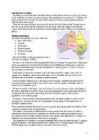
It’s 6th largest country. Its area is about 7.6 million sq km. One third of it is occupied by deserts. It’s both the flattest and, except for Antarctica the driest. Neighbouring countries include Indonesia, East Timor and Papua New Guinea in the north, the Solomon Islands, Vanuatu in the northeast, and New Zealand in the southeast. Its capital is Canberra. Other big cities are Melbourne, Sydney, and Brisbane. National language in Australia is English. Monetary unit is Australian dollar. Their national holiday is on the 26th of January. In 1788 on the 26th of January the first fleet arrived at Botany Bay and established a penal colony near modern-day Sydney. Geographical Position Australia is located in the Southern Hemisphere. It’s the only continent except for Antarctica that is all south of equator. Sometimes Australia is called the island continent. There is a great reason why. It really is an island. It is 2880 km
Britain started sending its convicts to the place now called Sydney, and they established the colony of New South Wales. This day is celebrated as Australia's national day, Australia day. Most of the people there are of British origin, with a culture and outlook similar to the UK and USA. In 1901, five colonies became states linked by one federal government the Commonwealth of Australia. English is the official language, and is spoken and written in a distinct variety known as Australian English. It is believed that there used to be around 200-300 Australian Aboriginal languages, when Europeans first came to the country. Now there are about 70, with all but 20 being endangered. Australia's population is very unevenly distributed. More than 80% of the people live in the six largest cities on the coast. Sydney is Australia's oldest and largest city. Melbourne is the second largest city. Australia consists of 6 states and is also divided into two mainland territories the Northern
It's capital is Canberra. Australia is the sixth largest country in the world but the smallest continent. Australia has 6 states and 2 territories (New South Wales, Victoria, Tasmania, Queensland, Western Australia , South Australia, The Australian Capital Territory and the Northern Territory). The Australian people are culturally the same as the Anglo Americans. There also live aborigines. Aborigines are the ancestors of the people. Like the US and Canada, Australia was an English speaking colony of Great Britain. Today Australia is a modern developed country with a diversified economy. Australia is an island continent of 7.7 million square kilometres, which makes it a little smaller than the USA. Located in south of Asia, between The Pacific and Indian Oceans, Australia is the World's driest continent. Although large areas of the centre are desert, Australia has a wide range of
1 . Introduction The name Australia is derived from the Latin Australis, meaning of the south. In land area, Australia is the sixth largest nation, its territory is 7,686,850 sq km and its population reaches today over 20,5 million people. It is the only nation to govern an entire continent and its outlying islands. Australia's capital is Canberra, the only city with its own territory. It was built in the early 1900s just to be the capital. The official language is English and the official name of Australia is the Commonwealth of Australia. Australia is located on the Southern Hemisphere (because of that Australia is also called "A land down under"). 2 . Geographical position Australia is an island continent and it is located between the Indian and South Pacific oceans south east of Asia. From the north it is bordered by the Timor Sea and the Torres Strait
important islands are Viti Levu and Vanua Levu. The islands are mountainous, with peaks up to 1,300 metres (4,250 ft), and covered with thick tropical forests. Viti Levu hosts the capital city of Suva, and is home to nearly three quarters of the population. Other important towns include Nadi (the location of the international airport), and the second city -Lautoka (the location of a large sugar mill and a seaport). The main towns on Vanua Levu are Labasa and Savusavu. Other islands and island groups include Taveuni and Kadavu (the third and fourth largest islands respectively), the Mamanuca Group (just outside Nadi) and Yasawa Group, which are popular tourist destinations, the Lomaiviti Group, outside of Suva, and the remote Lau Group. Rotuma, some 500 kilometres (310 mi) north of the archipelago, has a special administrative status in Fiji. Fiji's nearest neighbour is Tonga. The climate in Fiji is tropical and warm most of the year round.
Australia Australia is a country and also a continent. If someone wants to make clear, that he is speaking of the country, he may call it by its full name of Commonwealth of Australia. Australia's name means "southland."It is south of the equator. Sometimes it is also called the island continent because it is an island. There are about twenty million people in Australia.It is 1,800 miles from the mainland of Asia and almost half way round the world from Europe. More than 600 miles of ocean separate it from Americas. Since Australia is south of the equator, its seasons are just the opposite of ours. It has summer while we have winter, and the other way round. States and Territories. Australia consists of six states, two territories and eight external territories.
Australia Australia is the smallest continent in the world. It is 7.6 million square kilometres big. It is often called the island continent because it is rather small for a continent and very big for an island. There are only five countries bigger than Australia in the World. There are five states in the mainland. Tasmania is also considered as a state so there are six states. The Northern Territory and Canberra are also independent but they are not states. Canberra is the capital of Australia and it is situated between Sydney and Melbourne because both of these cities wanted to be the capital. The population is about 19 million people and growing. New South Wales is
Jamaica Location and geography Capital-Kingston Cities-Spanish Town, Mandeville, Port Antonio, Negri Neighbours-Haiti, Cuba, South America, Mexico General facts Population- 2, 790 427 Major languages- English, (Jamaica english) Money-Jamaican dollar 1 dollar coin National symbols Flag-The Cross, Black, green, and gold Flower-Lignum vitae National Motto: "Out of Many, One People"(üks ühe,kõik kõigi eest) National Bird: Red-billed Streamertail Goverment Queen-Elizabeth II Monarchy-Constitutional Governor-General-Patrick Allen Prime Minister-Portia Lucretia Simpson-Miller
Tallinn English College Topic The United States of America Tallinn 2007 1. Introduction The United States of America's territory is over 3.7 million square miles (over 9.6 million km²) and population more than 300 million people. The capital city is Washington D.C. Although the United States has no official language at the federal level, English is the de facto national language. English is the most common language for daily interaction among both native and non-native speakers. Spanish is the second language. The largest city is the New York City. The Government is Federal constitutional republic and the president is George W. Bush. 2. Geographical position The United States of America is located on the continent of North America. It has borders with two countries Mexico and Canada. There are also the Atlantic Ocean, the Pacific Ocean and the Gulf of Mexico surrounding the big country
speaking about the country you may call it by its official name: Commonwealth of Australia. Australia is the smallest continent, but one of the largest countries in the world. Its area is about 7,6 million sq kilometers. Its population is about 20,0 million and most of the people live in bigger cities: Sydney (4.2 million), Melbourne (3.7 million), Brisbane (2 million) and in Canberra, Which is also the capital of Australia. National language in Australia is english and the monetary unit is Australian dollar. Australia is divided into 6 states and 2 territories. Symbols Australia has a British Union flag. It is red, white and blue. Five small stars represent the constellation Southern cross. The big star represents country's states and territories. In 1901 the flag was chosen from about 30000 entries in a public contest. It was officially adopted as Australian flag in 1953.
of over 1,130,000, making it the country's fourth largest metropolitan area. On December 31, 1857, Queen Victoria was asked to choose a common capital for the Province of Canada (modern day Ontario and Quebec) and chose Ottawa. While Ottawa is now a major metropolis and Canada's fourth largest city, at the time it was a sometimes unruly logging town in the hinterland, far away from the colony's main cities, Quebec City and Montreal in Canada East, and Kingston and Toronto in Canada West. Ottawa is governed by a 24-member city council consisting of 23 councillors each representing one ward and the mayor, currently Larry O'Brien, elected in a citywide vote. As a single tier municipality, Ottawa has responsibility for all municipal services, including fire, ambulance, police, parks, roads, sidewalks, public transit, drinking water, stormwater, sanitary sewage and solid waste. Calgary
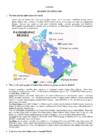
north. The southwest of Canada has a mild climate. Cold winters characterize most of the rest of Canada. The magnetic North Pole is within Nunavut. There are five biomes in Canada: the Arctic Biome, the Tundra, the Taiga Biome, the Prairies and the Deciduous Forests. The Arctic biome is cold, windy and the land is permafrost. There are long periods of darkness and light. The growing season is very short. The tundra is located near the Arctic region. It is cold and windy as well. The land is permafrost and desertlike. The growing season is 5060 days and that is why there grow plants such as mosses and lichens. 6. Animals Some typical animals are Arctic foxes, ermines, polar bears, Arctic terns, walruses and seals. Typical tundra animals are musk oxen, elks, moose, lemmings, wolves and foxes. The Taiga
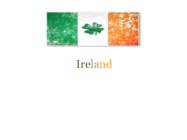
Ireland is the third largest island in Europe. It lies in between the Atlantic Ocean and the Irish Sea. Politically it is divided into a sovereign state, the Republic of Ireland, that covers about five-sixths of the island (south, east, west and north-west), and Northern Ireland, which is part of the United Kingdom, covering the northeastern sixth of the island.[1] The name 'Ireland' derives from the name Ériu (in modern Irish, Éire) with the addition of the Germanic word 'land'. The population of the island is just under 6 million (2006); just over 4.2 million in the Republic of Ireland[2] (1.6 million in Greater Dublin[3]) and just over 1.7 million in Northern Ireland[4] (0.6 million in Greater Belfast[5])). Politics Politically, Ireland is divided into: · The Republic of Ireland, with its capital Dublin.
- What is the capital of Australia? a. Sydney b. Melbourne c. Canberra - Which city is the oldest and largest? a. Canberra b. Sydney c. Darwin - Which is a popular Australian animal? a. bear b. kangaroo c. fox - Who are the Australian natives a. Eskimos b. Aborigines c. Indians - Who discovered Australia? a. Columbus b. Captain Cook c. Lewis and Clark - What is the official Language in Australia? a. English b. German c. Spain Australia is situated south of Asia, between the Pacific and the Indian Oceans. Australia is a continent, a country and an island at the same time. Australia is located in the southern hemisphere. OFFITIAL NAME : Commonwealth of Australia CAPITAL: Canberra TOTAL AREA: 7,700,000 sq.km POPULATION: 20 million people HEAD OF STATE: Queen Elizabeth II represented by Governor- General FORM OF GVERNMENT: Constitutional monarchy
SOCIETY AND CULTURE OF ENGLISH-SPEAKING COUNTRIES Introduction 1. Nowadays, English is so widely spoken that it can hardly be considered "a one nation's" language. The main countries where English is spoken are: the U.K, the U.S, Canada, Australia, the Republic of Ireland, New Zealand, West Indies 2. There are approx. 300-400 million speakers of English in the world. English occupies the 3rd place by its number of speakers; it is right behind Mandarin and Spanish. 3. ESL (English as a Second Language) used in your own country (e.g. India) EFL (English as a Foreign Language) used in a foreign country ESP (English for Specific Purposes) used in business, airlines, hotels etc. 4. Settlement colonies people migrated into them from Britain and started their own
Alberta The capital of Alberta is Edmonton. The population is 3.7 million people and there are many nationalities. Besides English and French there are also immigrants from Scotland, Ireland, Wales, Germany, Ukraine and Scandinavia. In Edmonton and Calgary there are also historic Chinatowns, and Calgary has Canada's third largest Chinese community. Geographical features Alberta covers an area of 661,848 square kilometres, an area about 5% smaller than Texas or 20% larger than France. This makes it the fourth largest province after Quebec, Ontario, and British Columbia
Misso Keskkool New Zealand Precis Compiler: Maiki Joakit Instructor: Mailis Teppo Misso 2011 New Zealand is an island country in the south-western Pacific Ocean comprising two main landmasses (the North Island and the South Island), and numerous smaller islands, most notably Stewart Island/Rakiura and the Chatham Islands. The indigenous Mori language name for New Zealand is Aotearoa, commonly translated as land of the long white cloud. Population (1998): 3,801,000.New Zealand is notable for its geographic isolation; it is
to other kinds of work. They found that Australia has other riches such as coal, copper, iron, lead. The forests have much good timber. People were needed to buy and sell what was raised. Cities grew. But even today the big country is far from crowded. Its population is around 20 million people and is a rich blend of various ethnic groups, with substantial populations from Italy, Greece, the Far East and Africa. There are about 40000 aborigines. The people of Australia speak English. Service industries provide about two-thirds of Australia's jobs. Australians are making a name for themselves in sports. They are especially well known for their swimming and tennis. Australia has become popular with European students for Study Holidays or exchange visits. Political System. The Commonwealth of Australia is a constitutional democracy based on a federal division of powers. The political system is a federation of
trading company if the company brought settlers to New France, they'd have monopoly to trade for furs and they would receive all the profits. First attempts of colonization failed. In 1604, French nobleman and a mapmaker named Samuel de Champlain established first permanent French settlement in the New World on an island. This area was called Acadia. When they moved to more sheltered harbour, the settlement was called Port Royal. By 1607, France wanted to establish a new French settlement along the St. Lawrence River. French went there and came back and in 1610, some of them returned. They were the ancestors of the French speaking Acadian people in Nova Scotia and New Brunswick today. Champlain is also known as the "Father of New France", as he picked out the location of the first French settlement along the St. Lawrence River. The settlement was called Quebec. Most
Newfoundland in the east and those of the Arctic Archipelago in the north. In longitude Canada extends from approximately 52° to 141° W, a distance that spans six time zones. In latitude it extends from approximately 42° to 83° N. With its vast Arctic and subarctic territories, Canada is often considered a country only of the far north; however, the peninsula of southern Ontario juts deeply south into the heartland of the United States, and its southernmost point, Middle Island in Lake Erie, is at the same latitude as northern California. The country also includes several major islands, including Baffin, Ellesmere, Victoria, Newfoundland, and Melville, and many small ones. Its border with the U.S., the longest border in the world not patrolled by military forces, extends 8,890 km. 3. Mountains, lowlands Canada's vast area means it has many varying types of terrain, much of which is mountainous. The Cordillera in the west, the Appalachians in the southeast, the
system and a bicameral parliamentary system based on the Westminster System. The head of state of Trinidad and Tobago is the President, currently Anthony Carmona. The head of government is the Prime Minister, currently Keith Rowley. The President is elected by an Electoral college consisting of the full membership of both houses of Parliament. Capital city • Port of Spain Largest city • Chaguanas Official language • Official language is English Top10 non-English languages spoken • Trinidadian Creole 1million • Tobagonian Creole 300000 • French Creole 1.2million • Caribbean Hindustani 15000 Flag • The flag was chosen by the Independence committee in 1962. Red, black and white symbolise the warmth of the people, the richness of the earth and water respectively. Currency • Trinidad and Tobago Dollar (TTD) Coat of Arms • The coat of arms was designed by the Independence
Tallinn English College Topic Great Britain 2007 1. Introduction The official name of Great Britain is `the United Kingdom of Great Britain and Northern Ireland (or short United Kingdom)' The population is about 60.4 million. The capital is London. Other biggest cities include Birmingham, Bristol, Portsmouth, Glasgow and Swansea. English is the main language of Great Britain, but Welsh is officially recognized in Wales and Gaelic in Scotland. 2. Geographical position The British Isles is the geographical term for a group of about 5000 islands off the coast of mainland Europe. The largest island is Great Britain, which is also the largest island in Europe. It consists of England, Wales and Scotland. The next largest island is Ireland, which is made up of Northern Ireland and the Irish Republic. Britain and
Society and culture of english-sspeaking countries Introduction 1. The countries of the world where the English language is spoken. 2. Approximate number of mother tongue speakers of English approximately 350-400 million native speakers. Which place does English occupy in the world by its number of speakers?After which language? English occupies second place by its number of speakers after Mandarin Chinese. 3. What is the difference between English as a Second Language, English as a Foreign Language and English for Specific Purposes? Give examples of situations where they are used. English as a Second Language (ESL or TESL) is a traditional term for the use or study of the English language by non-native speakers in an English-speaking environment. That environment may be a country in which English is the mother tongue (e.g., Australia, the U.S.) or one in which English has an established role (e.g., India, Nigeria)
Travel may occur by human-powered transport such as walking or bycycling, or with vehicles, such as public transport, automobiles, trains and airplanes. Etymology The term "travel" originates from the Old French word travail. The term also covers all the activites performed during a travel (movement). A person who travels is spelled "traveler" in the United states, and "traveller" in the United Kingdom. Purpose and motivation Reason for traveling include recreation, tourism or vacationing, research travel for gathering information, for holiday to visit people, volunteer travel for charity, migration to begin life somewhere else, religious pilgrimages and mission trips, business travel, trade, commuting, and other reason, such as to obtain health care or fleeing war or for the enjoyment of traveling. World's best places to visit: Paris and Barcelona Why go: Year after year, the Why go: Known around the world
Harness Prague's excellent public-transport system to explore emerging suburbs such as Zizkov, Vinohrady, Smíchov and Holesovice. You'll be guaranteed cheaper prices, a more local ambience, and an assured escape from any more feelings of doubt.. Instead of summer practice i would like to go on trip to Prague. I think it would be more educational then sita t school and trantslate story or doing exercises. Because students can use language in their real life and they will get experiences. We can see beautiful and attractive Prague city and visit famous places. I think it rare opportunity to write an essay and to get trip with your classmates. If i have chance to go to Prague i would definitely vist an Old Town, Charles University Botanical Garden, Praguage COMPENDIUM ABOUT PRAGUE Prague is the capital and largest city of the Czech Republic. Nicknames for Prague have
Ireland Ireland Ireland is a country which covers about 5/6 of Ireland island. Remaining 1/6 of this island is Northern Ireland. Republic of Ireland is located to west from Great Britain. Official language in Ireland is English and Irish. There's 26 countys WebRep Üldine reiting Dublin is the capital and most populous city of Ireland The population of Ireland is approximately 6.4 million. Just under 4.6 million live in the Republic of Ireland and just under 1.8 million live in Northern Ireland Ireland history The first known settlement in Ireland began around 8000 BC, when hunter-gathers arrived from continental Europe, probably via a land bridge. Few archaeological traces remain of this
Indians in everyday conversation. They are still legally categorized by the Canadian Government under the Indian Act as Status Indians. Those who have lost their legal status are called Non-Status Indians. Prime Minister Pierre Trudeau tried to get rid of the Indian Act, but First Nations political groups insisted on keeping it, because it defines their special status. The Inuit are the people who originally lived in the Arctic. Their language is Inuktitut, but it has several dialects the differ considerably from place to place. The Métis, are the group of people who resulted from the mixing of European and Native men and women. The Métis developed a unique culture that included elements of both European and Native ways and artifacts (clothes, tools, means of travel, etc.). They pride themselves on their distinctiveness from both the cultures from which they are descended. 3
 annaabi.ee