Leidsid 33 sarnast õppematerjali, mis on seotud failiga "Irish National Costums". Need materjalid aitavad sul teemat sügavamalt mõista.
irish, meal, other, sport, holiday, days, ireland, women, year, custom, holidays, rural, particularly, dublin, usual, come, gaelic, football, soccer, tradition, customs, early, areas, visit, such, bread, popular, traditional, wide, call, sports, round, wren, marriage, usually, another, christmas, those, include, black, however, serve, evening, lightChristmas in Ireland lasts from Christmas Eve to the feast of the Epiphany on January 6, which is referred to as Little Christmas. Ireland's Christmas is more religious than a time of fun. Lighted candles are placed in windows on Christmas Eve, as a guide that Joseph and Mary might be looking for shelter. The candles are usually red in color, and decorated with sprigs of holly. Irish women bake a seed cake for each person in the house. They also make three puddings, one for each day of the Epiphany such as Christmas, New Year's Day and the Twelfth Night. After the Christmas evening meal, bread and milk are left out and the door unlatched as a symbol of hospitality. St Stephen's Day, the day after Christmas, is almost as important, with football matches and meetings going on. For children, the Wren Boys Procession is their big event
Ireland is the third largest island in Europe. It lies in between the Atlantic Ocean and the Irish Sea. Politically it is divided into a sovereign state, the Republic of Ireland, that covers about five-sixths of the island (south, east, west and north-west), and Northern Ireland, which is part of the United Kingdom, covering the northeastern sixth of the island.[1] The name 'Ireland' derives from the name Ériu (in modern Irish, Éire) with the addition of the Germanic word 'land'. The population of the island is just under 6 million (2006); just over 4.2 million in the Republic of Ireland[2] (1.6 million in Greater Dublin[3]) and just over 1.7 million in Northern Ireland[4] (0.6 million in Greater Belfast[5])). Politics Politically, Ireland is divided into:
The pictures of people and animals are often strikingly lifelike and artistic. Many of these ancient relics have been destroyed by the ravages of nature and of man. Wind and water have worn away and continue to wear away, unprotected sites. And the paintings and carvings are increaslibly falling victim to vandalism: they have been painted over, spoilt with knives, even used for target practice. The American Rock Art Research Association protects rock-art sites. 2) THE FAVOURITE SPORT IN BRITAIN The most popular sport is probably football. Two kinds of football is played in Great Britain. One of them, which is called association football, is played all over Europe. The other kind: rugby football is also very popular in New Zealand, France, and some other European countries. English boys play it at school, and in public parks. When they grow up, they play as members of important amateur teams or as a professional in teams competing in football ,,leagues"
Ireland Ireland (Irish: Éire, Irish pronunciation:) is a country in north-western Europe. The modern sovereign state occupies about five-sixths of the island of Ireland, which was first partitioned on 3 May 1921. It is bordered by Northern Ireland--part of the United Kingdom--to the north, by the Atlantic Ocean to the west, the Irish Sea to the east and the Celtic Sea and St George's Channel to the South and South-East. The legal name of the state is simply "Ireland", but its legal description the Republic of Ireland is sometimes used to differentiate the state from the island. On 29 December 1937 Ireland became the successor-state to the Irish Free State, itself established on 6 December 1922. Ireland was one of the poorest countries in Western Europe and had high emigration
position of the islands in the temperate belt; the fact that the prevailing winds blow from the west and south-west and the warm current -- the Gulf Stream that flows from the Gulf of Mexico along the western shores of England. All these features make the climate more moderate, without striking difference between seasons. It is not very cold in winter and never very hot in summer. So, the British ports are ice-free and its rivers are not frozen throughout the year. The weather on the British Isles has a bad reputation. It is very changeable and fickle. The British say that there is a climate in other countries, but we have just weather. If you don't like the weather in England, just wait a few minutes. It rains very often in all seasons in Great Britain. Autumn and winter are the wettest. The sky is usually grey and cold winds blow. On the average, Britain has more than 200 rainy days a year
Cities Muckanaghederdauhaulia - This is probably the longest place name in Ireland. it consists of 22 letters There is also a village in Ireland called '' Inch village'' outside the village there is a sign '' Inch 1 mile'' i couldn't find a picture of it from the internet so i created a sign myself to make it more clear, so that can be quite confusing for a foreigner The capital city , Dublin was founded by the Vikings in 841 Worth to mention The Titanic was built in Harland and Wolff yards in Belfast , which is nowadays part of the Northern Ireland , but back then in 1909 - 1912 (which is the time when Titanic was built ) it was
a second language. 5. Which British colonies became dominions? What was their status? Is the name dominion used for these countries nowadays? The first dominions were Canada (1867), Australia (1901), and New Zealand (1907) The name "dominion" is not used anymore. 6. Which organisation unites Britain and most of its former colonies nowadays? The Commonwealth unites Britain with its former colonies. Ireland 1. Who were the early inhabitants of Ireland? Seafarers, fisheremen and hunter-gatherers from mainland Europe arrived around 8000 BC 2. When was Christianity established in Ireland? 432 AD Saint Patrick arrived in Ireland and began converting the Irish to Christianity. Who is Ireland's patron saint? Saint Patrick is Ireland's patron saint. When is his feast day? His feast day is on 17 March 3. When did the English conquest of Ireland begin? Henry II, with permission from tha Pope, sought to conquer Ireland
There are usually about 10 signs or more on one post , and its really hard to see them when driving, so tourists disturb traffic quite often when slowing down to read the signs All the signs are multilingual ,due to high percentage of English speakers Forests Ireland has only about 8 % of his whole land covered with forests. Centuries ago people cut the forests and didn't think about the future so nowadays there is mostly peat ( turvas) which Ireland uses to produce energy. Economy Ireland had a big economic boom in the late 20'th century, but now the Republic of Ireland is ranked the second wealthiest per capita country in the European Union. Education in Ireland is free at all levels, including college. The construction sector, which is inherently cyclical in nature, now accounts for a significant component of Ireland's GDP. ( ehitus/tõõstus sektor, mis on loomupäraselt tsükliline , mängib nüüd
UBLIN Dublin is the largest city and capital of Ireland. It is officially known in Irish as Baile Átha Cliath. English name comes from the Irish Dubh Linn meaning "black pool". It is located near the midpoint of Ireland's east coast, at the mouth of the River Liffey and at the centre of the Dublin Region. Originally founded as a Viking settlement(koloonia), it evolved(arenes) into the Kingdom of Dublin and became the island's primary city following the Norman invasion(sissetung). Today, it is ranked 23rd (down from 10th in 2008) in the Global Financial Centres Index, has one of the fastest growing populations of any European
come to see them. Some of them are even like symbols of England. The most famous ones are: Stonehenge is one of the greatest national icons of Britain. That prehistoric monument is located in the plain of Salisbury, in the county of Wiltshire in the south-west of England. It is built of 150 enormous stones which are set in a purposive circular pattern. Stonehenge was probably built to mark the longest and shortest day of the year because it lies on the line of the midsummer sunrise and the midsummer sunset. That would have enabled people to keep a record of changing of seasons. Although it is still unclear who built it. Hadrian’s Wall is an ancient wall which was built in 2nd century by Hadrian, the emperor of Rome from AD 117 to 138, and it marked the northern border of the Roman Empire in Britain. The wall was 80 Roman miles (117 kilometres) long and it is situated in northern
SOCIETY AND CULTURE OF ENGLISH-SPEAKING COUNTRIES Introduction 1. Nowadays, English is so widely spoken that it can hardly be considered "a one nation's" language. The main countries where English is spoken are: the U.K, the U.S, Canada, Australia, the Republic of Ireland, New Zealand, West Indies 2. There are approx. 300-400 million speakers of English in the world. English occupies the 3rd place by its number of speakers; it is right behind Mandarin and Spanish. 3. ESL (English as a Second Language) used in your own country (e.g. India) EFL (English as a Foreign Language) used in a foreign country ESP (English for Specific Purposes) used in business, airlines, hotels etc. 4
Holidays, Festivals, Cultural events TALLINN - If you're looking for entertainment in Estonia this summer, you are really spoiled for choice. Festivals and events dedicated to the consumption of beer are a lot of fun, but if you want to get the true feel of the country, you need something a little more ethnic. Like a town fair. Just as July becomes August, the seaside town of Haapsalu will host a grand spectacle of rural Estonian entertainment. The White Lady Days is a summer celebration filled with amusement for all the family. Held in and around the remains of the Teutonic-knights-era castles, the fair combines enchanting medieval legends with modern countryside charm to create a comprehensive experience of Estonia beyond the big cities. But the legend of the White Lady of Haapsalu, which is at the heart of the festival, is perhaps the most famous tall tale of the many that are so abundant in Estonia's folklore.
2. Distribution 3. Towns 4. Ethnic makeup 5. Age breakdown 6. Religion(s) 1. Size. 1 July 2006 population estimates by UK National Statistics: % (mid- Part Population (mid-2006) 2006) England 50,762,900 83.8 Scotland 5,116,900 8.4 Wales 2,965,900 4.9 Northern Ireland 1,741,600 2.9 United Kingdom 60,587,300 100 Although Britain is quite small in terms of land area (245,000 sq km), it has a large population of nearly 61 million, which ranks the 21st in the world (Britain is the 21st most populous state in the world) and the third largest in the European Union. The size of population is changing very slowly. Natural change is the difference between birth and death rates. It may be a natural increase
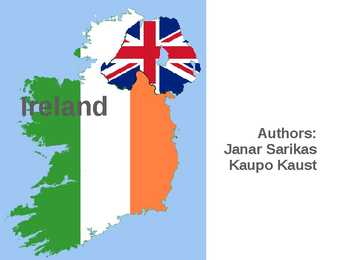
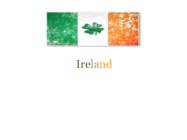
Ireland Authors: Janar Sarikas Kaupo Kaust Location Ireland is west of the United Kingdom (England, Scotland, Wales). Northern Ireland is part of the United Kingdom. Ireland is across the Atlantic Ocean from the U.S. Area: 81,638.1 km2 Population: 6,380,661 Symbol The shamrock is another symbol of Ireland. It is always worn on St. Patrick's Day. Flag The flag of Ireland is green, white and orange. The green represents Catholics, the orange is for Protestants, and the white symbolizes the hope for peace between the two groups. Language Most people in Ireland speak English, but a few still speak Gaelic. You might hear someone say "Erin go bragh" on St. Patrick's Day, which is Gaelic for "Ireland forever." music Irish Folk Music is the music and song in the national heritage
Topic Sports Tallinn English College 8b form 2007 1. Introduction For some people sport plays a very important part in their lives. And to some, it is even a way of life. There are different kinds of sports. For instance, there are sports meant for playing indoors, some can be practised only at a certain time of year. There are winter and summer sports also. Skiing, figure-skating, sledding and snowboarding these four most popular are practised during winter. Good examples of summer sports are: swimming, badminton, roller skating and golf. 2. The ancient Olympic Games The first recorded Olympic Games took place in 776. B.C. at Olympia but the city may have functioned as a meeting place for worship and other political practices many years earlier. The city is located in western Greece
1. The Queen’s official title. Elizabeth the Second, by the Grace of God, of the United Kingdom of Great Britain and Northern Ireland and of Her other Realms and Territories Queen, Head of the Commonwealth, Defender of the Faith. 2. The Queen’s working day. Starts after breakfast. Reads the newspapers which are prepared by the Press Secretary, and a report on the previous day’s proceedings in the Parliament and the letters she receives. Also phone calls. Once a month she attends the Privy Council in order to give Royal Assent to various items of government legislation.
Ireland Ireland Ireland is a country which covers about 5/6 of Ireland island. Remaining 1/6 of this island is Northern Ireland. Republic of Ireland is located to west from Great Britain. Official language in Ireland is English and Irish. There's 26 countys WebRep Üldine reiting Dublin is the capital and most populous city of Ireland The population of Ireland is approximately 6.4 million. Just under 4.6 million live in the Republic of Ireland and just under 1.8 million live in Northern Ireland Ireland history The first known settlement in Ireland began around 8000 BC, when hunter-gathers arrived from continental Europe, probably via a land bridge. Few archaeological traces remain of this group, but their descendants and later Neolitchi arrivals, particularly from the Iberian Peninsula , were responsible for
Estonian cuisine The traditional cuisine of Estonia has substantially been based on meat and potatoes, and on fish in coastal and lakeside areas, but is influenced by many other cuisines by now. In the present day it includes a variety of international foods and dishes, with a number of contributions from the traditions of nearby countries. German, Scandinavian, Russian and other influences have played their part. The most typical foods in Estonia have been rye bread, pork, potatoes and dairy products. Estonian eating habits have historically been closely linked to the seasons. In terms of staples, Estonia belongs firmly to the beer, vodka, rye bread
1. Ancient Britain: the Celtic tribes. 2000 years ago there was an Iron Age Celtic culture throughout the Br Isles. It seems that the Celts, who had been arriving from Europe from the 8th cent BC onward, intermingled with the peoples who were already there. The Celts were extremely talented people, creative and artistic. More than 1 Celtic tribe invaded Br. The descendants of ancient Celts live in Wales, Scotland, Cornwall and Ireland. They lived in primitive society. Druids priests, more powerful than chiefs. Acted like prophets. 2. Stonehenge From prehistoric period. Was built on Salisbury plain between 2500 and 1500 bc. One of the most famous and mysterious archaeological sites in the world. One of the mysteries is how it was built at all with the technology of the time. Another is its purpose. It appears to function as a kind on
Christmas in Australia Christmas in Australia is often very hot. Whereas the northern hemisphere is in the middle of winter, Australians are baking in summer heat. It is not unusual to have Christmas Day well into the mid 30 degrees Celsius, or near 100 degrees Fahrenheit. A traditional meal includes a turkey dinner, with ham, and pork. A flaming Christmas plum pudding is added for dessert. In the Australian gold rushes, Christmas puddings often contained a gold nugget. Today a small favor is baked inside. Whoever finds this knows s/he will enjoy good luck. Another treat is Mince Pies. Some Australians and particularly tourists often have their Christmas dinner at midday on a local beach, Bondi Beach in Sydney's Eastern Suburbs attracts thousands of people on Christmas Day
Farther west the trees disappear and the bushlands begin. The real desert occupies the centre of the Western Plateau. In the very southwest there are thin forests of evergreen trees. Most of Australian trees are kinds of eucalyptus (or gum tree to Australians) and acacia (wattle of Australians). Eucalyptuses give the people timber and eucalyptus oil. Of 600 kinds of acacias the golden wattle, the national flower of Australia, is the best known. Of other trees there grow bottle trees in the savannas, tree ferns in the tropical forests and many others. Lakes Australia has much underground water. There are only few lakes which are full of water only after it rains. The biggest lake is Lake Eyre which is a salt lake. The natural lakes of the interior of continental Australia are salt lakes. Fed by streams and rivers, they receive water rarely. Lake Eyre, Torrens, Frome and Gairdner are the remains of a
The United Kingdom and London United Kingdom is a political name of the United Kingdom of Great Britain and Northern Ireland. These political names include the countries of England, Scotland and Wales. Every country has its own capital and language. The capital of England is London, the people there are english and the language spoken is English. In scotland live the scots, capital is Edingburg and the languages spoken are English and Scottish. The capital of Wales is Cardiff, the people tehre are welsh and the languages spoken are welsh and English. N.
Tallinn English College Topic Great Britain 2007 1. Introduction The official name of Great Britain is `the United Kingdom of Great Britain and Northern Ireland (or short United Kingdom)' The population is about 60.4 million. The capital is London. Other biggest cities include Birmingham, Bristol, Portsmouth, Glasgow and Swansea. English is the main language of Great Britain, but Welsh is officially recognized in Wales and Gaelic in Scotland. 2. Geographical position The British Isles is the geographical term for a group of about 5000 islands off the coast of mainland Europe. The largest island is Great Britain, which is also the largest island in Europe. It consists of England, Wales and Scotland. The next largest island is
Some festivals have their roots in Chinese festivals but have undergone dramatic changes as they mixed with local customs. Some are so different that they do not even remotely resemble the original festival despite sharing the same name and date. There are also various local festivals (e.g. Tobata Gion) that are mostly unknown outside a given prefecture. It is commonly said that you will always find a festival somewhere in Japan. Matsuri is the Japanese word for a festival or holiday. In Japan, festivals are usually sponsored by a local shrine or temple, though they can be secular. There is no specific matsuri days for all of Japan; dates vary from area to area, and even within a specific area, but festival days do tend to cluster around traditional holidays such as Setsubun or Obon. Almost every locale has at least one matsuri in late summer/early autumn, usually related to the rice harvest. Notable matsuri often feature processions which may include elaborate floats
1. Society- people who interact in such a way as to share a common culture. The cultural bond may be ethnic or racial or geographical, based on gender, or due to shared beliefs, values, and activities. 2. Culture- beliefs, behaviors, objects, and other characteristics common to the members of a particular group or society. 3. A unitary state- a state governed as one single power in which the central government is ultimately supreme and any administrative divisions (subnational units) exercise only powers that their central government chooses to delegate. The majority of states in the world have a unitary system of government. 4. A federal state-- a political entity characterized by a union of partially self-
It’s the official name of the country. Australia is the smallest continent, but one of the largest countries on Earth. It’s 6th largest country. Its area is about 7.6 million sq km. One third of it is occupied by deserts. It’s both the flattest and, except for Antarctica the driest. Neighbouring countries include Indonesia, East Timor and Papua New Guinea in the north, the Solomon Islands, Vanuatu in the northeast, and New Zealand in the southeast. Its capital is Canberra. Other big cities are Melbourne, Sydney, and Brisbane. National language in Australia is English. Monetary unit is Australian dollar. Their national holiday is on the 26th of January. In 1788 on the 26th of January the first fleet arrived at Botany Bay and established a penal colony near modern-day Sydney. Geographical Position Australia is located in the Southern Hemisphere. It’s the only continent except for Antarctica that is all south of equator
Lawrence lowlands. Canada's highest peak is Mount Logan (5,959 m) in Yukon Territory. 4. Rivers, lakes With less than 1 percent of the world's population, Canada has some one-seventh of the world's supply of accessible fresh water. Much of this water is stored in lakes and wetlands that cover about one-fifth of Canada's total area. The Great Lakes--the world's largest surface of fresh water--are shared with the United States and form part of the international border. Other large lakes include Great Bear and Great Slave lakes in the Northwest Territories and Lakes Manitoba and Winnipeg in Manitoba. Mackenzie River is Canada's longest river, which flows 4,241 km from its source to its mouth. With its many tributaries, it drains 1,800,000 square km. The St. Lawrence is the largest river flowing into the Atlantic Ocean. Its drainage basin includes the Great Lakes, forming an inland navigable waterway extending some 3,765 km into the heart of the continent
Central Canada, the Atlantic Provinces and the North. The Pacific Region is known for its mild coastal climate, its forests and its spectacular mountains. The three Prairie Provinces are known for their rolling plains and their extreme climate with long, cold winters and hot, dry summers. Part of the Rocky Mountains are in the there. A lot of the Prairie Provinces' area is covered with farms producing wheat and other grains. The region is rich in oil and natural gas. In fact, Canada is the second largest oil reserve holder in the world, after Saudi Arabia. Central Canada which includes Ontario and Quebec is not the geographical centre of Canada. It is called that because it has historically been the political and economic centre of the country. Central Canada is the most heavily populated and industrialised area. In there lie the Great Lakes the largest body of fresh water in the world
and Estonia? In England, there's common to sing Carol's and for children, Christmas means pantomimes plays based on fairy tales which combine comedy, dance and song. A traditional Christmas dinner includes roast turkey with roast potatoes, a range of vegetables, cranberry sauce etc., followed by Christmas pudding and Christmas cake. The pulling of crackers(and the wearing of paper hats) before the meal is quite popular. Afterwards many watch the Queen's traditional Christmas address on TV at 3 pm. Christmas actually contains of 3 days: Christmas Eve, Christmas Day and Boxing Day. The latter is the first day after Christmas or the first Monday after Christmas if Christmas is on Friday or Saturday. 3. What is the same and what is different about the way Easter is celebrated in England and Estonia? Easter lasts for 4 days in Britain: from Good Friday to Eas-ter Monday. Schools
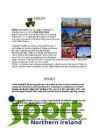
Class 10 2008 Few facts about cities Muckanaghederdauhaulia Inch village Inch village The Vikings founded sign Dublin in 841 Worth to mention The Titanic Guiness beer Traditional field sports Gaelic football- The game Hurling Similiar to hockey is like a mix of a soccer and but played on a field. rugby. Flag and religion o Irish flag is a vertical tricolour of green, white, and orange. o About 90 % of the people are Roman Catholics St. Patrick's Cathedral The Irish flag Natural resources The primary natural resources of Ireland, include natural gas, petroleum, peat, copper, lead, dolomite, barite, limestone, gypsum, silver and some zinc Ireland has no coal. Gypsum mine
Only persons whose names are on the medial register can parties as doctors in the NHS. The minimum qualification for registration requires, for a doctor 5 to 7 years' training in the medical school and hospital, for a dentist 4 years at a dental school. 4. Diseases Today many diseases are well known and can be cured. Such diseases are flu, pneumonia, bronchitis, quinsy, measles and many others. But besides falling ill with one of those diseases, you may hurt yourself in many other ways. You may sprain your ankle, break your leg, cut your finger of graze your knee. You may also have a nosebleed or a heart attack Quite a number of diseases are infectious. We can get these diseases from people already ill with the disease or infected food or animals. Most common infectious diseases are such children's diseases as measles, mumps, scarlet fever and chicken pox. Some diseases have become more rare because children and grown-ups can be
Now I now that there were three general groups that made up Creole society: 1) whites who were Creoles, Americans, and inhabitants of European origin made up the highest class; 2) free Blacks, emancipated slaves and their descendants made up the middle class; and 3) slaves who were household property, were the lowest class. The Creoles were the majority of the white population. They had a complex social organization, which included foreign groups such as Germans, Irish, and Spaniards whose names were given a French accent. The people who could trace their noble ancestors called themselves "Creole." Others were "chacas" or tradesmen, "chacalatas" or country folk (peasants), or "chacumas" for anyone with Black blood. All Creoles, no matter what level of society they were in, including slaves, looked down on the Americans. 3 Family life In the Creole family the father was dominant. His word was law. He was not always a
Estonian national holidays Christmas Christmas , also referred to as Christmas Day, is an annual holiday celebrated on December 25 or January 7 that commemorates the birth of Jesus of Nazareth. Modern customs of the holiday include gift-giving, Church celebrations, and the display of various decorations--including the Christmas tree, lights, mistletoe, nativity scenes, and holly. In many countries there are many different types of decorations used depending on the traditions and available resources. However , in Estonia people bring Christmas tree in and decorate it with straw ,glass balls and candles. Estonians eat sauerkraut and black pudding.
 annaabi.ee