ULTIMATE INTERVIEW One young man went for an IAS Interview. "When did India get independence?" He was asked. "The efforts began a few years earlier and final result was in 1947" He replied. "Who was responsible for our independence?" "There were so many. Whom to mention? If I name one, it will be a injustice to another. " He replied. "Is corruption the number one enemy in our country?" "Some research is going on the subject and I can answer with certainly only after seeing the report" He replied. The interview board was very pleased with his original and thoughtful answers and asked him not to reveal the questions to others, since they were planning to ask the same questions. When he went out naturally others were curious to know what was asked
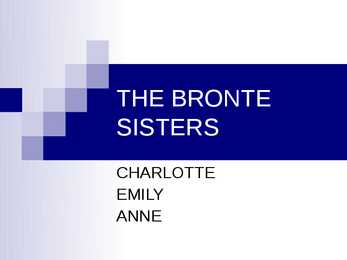
PLOT FULL OF MYSTERY REALISTISC THE TIME, PLACE, CLIMATE, GEOGRAPHICAL FEATURES WUTHERING HEIGHTS MANY SUPERNATUREAL ELEMENTS THE STORY OF THE EARNSHAWS AND THE LINTONS THRUSHCROSS PARK, LOCKWOOD, YORKSHIRE MOORS HEATHCLIFF AND CATHERINE THE STORY OF LOVE AND REVENGE WUTHERING HEIGHTS 1. CATHERINE'S AND HEATHCLIFF'S LOVE, SOCIAL INJUSTICE 2. HEATHCLIFF AS THE REVENGER 3. THEIR CHILDREN MAKE PEACE
Submarine Submarine is a movie, about 15-year-old Oliver Tate, who has two objectives: To lose his virginity before his next birthday, and to extinguish the flame between his mother and an ex- lover who has resurfaced in her life. In my opinion, Oliver was weird. He had his own thoughts and rules like to lose his virginity before his next birthday. He had his own weird friends, and few girl friends. There were times, when Oliver was kind of caring, kind, considering and helpful but most of the times he was very lonely (except being with Jordana). He wanted his parents to love each other passionately and he had pretty much work with this. Then there was Jordana, a girl who was very unusual. To me she seemed a bit angry and kind of shy. She liked to do things that other girls on her age never would do. That pretty much says the basic things about her. Oliver parents were weirder than Oliver. Th...
· Colours Colours have also different meanings The Seven Virtues Prudence Fortitude Temperance Justice (Mõistlikkus) (Meelekindlus) (Mõõdukus) (Õiglus) · 7 Virtues: Cardinal Virtues (inimlikud voorused) ja Theological (jumalikud) Faith (Usk) Charity / Love ( Halastus/ Armastus) Hope (Lootus) The Seven Vices "Desperation (Meeleheide) Envy ( Kadedus) Infidelity (Truudusetus) Injustice (Õiglusetus) Wrath (Viha) Inconstancy (Heitlikkus) Foolishness (Rumalus) The death · "You have been taken from the earth and you have to become it again" · Adam and Eve · Death angel The GOD · It is said in the bible "Nobody has seen the God, if we love each other then God stays in us and his love has become perfekt in us, we feel that we are a part of him and he is a part of us and we feel that he has given us one part from the Ghost
It is also very common in today's World, where people take advantage of others' weaker sides and turn them good for their own benefit. In conclusion humans could be considered as very self-centered creatures, who all in all aim at individual power over other people. They are capable of doing anything just as long as it will produce good results and bring them the outcome they were targeting for. The same thing is reflected in "Animal Farm" the brutal dishonesty and injustice against others just to achieve your goals and to satisfy your power-hunger.
are equally strong, smart or beautiful, but that everyone has the ability to damage or kill the other. The main goals, we all want to achieve, are having a shelter, security, power, wealth and enough food. This means that people are constantly competing with each other and that makes all of us (who desire the same things) enemies. Hobbes names the insecurity and fear people feel towards each other a "state of nature". In this state there are no moral rules or enforced laws, also no justice or injustice. People, being violent and arbitrary, will only follow their own interest. So without laws and boundaries, people would be in constant war - every man for himself. In this kind of society there is no time for cultural or industrial development. No one can enjoy life because of the constant fear they life in. The "state of nature" or in other words chaos is not be beneficial to anyone. So to get what we all want - happiness, peace and security, we must make compromises and
segregation and the chains of discrimination’’. The metaphorical use of the words ‘’chains’’ and ‘’manacles’’ in that statement help the audience to visualize the impact of discrimination and segregation. The black community being bound my the chains of discrimination prevented them from being able to rise up. Chains and manacles can also be seen as objects that bring back memories among African Americans that once experienced criminal injustice by the police due to institutional discrimination. Perhaps the most frequently used literary device in this speech would be repetition. The phrase ‘’I have a dream’’ is used a number of times throughout the speech and is also the name of the speech. The repetition of this phrase helps to emphasize the importance of Martin Luther King’s vision while highlighting the number of transgressions against the African American community. The phrase becomes almost inspirational and
Literature of the 14th century The highpoint of medieval literature, the best writer of late medieval lived then. William Langland 1332-1376 the last important poet of alliterative verse. His masterpiece "The Vision of Piers Ploughman" how important working hard is, the labour of peasants is the base of the welfare of the people. A passionate protest against social injustice. A time when peasants were slowly rising against their feudal lords. Descriptions of different social classes. Religious mysticism. Two great principles: 1) all men are equal before God; 2) honest labour is dignified. It is a dream allegory. A young maiden named Youth, Greed is an old witch. The greatest writer of this period and the whole of medieval times Geoffrey Chaucer (1340?-1400): · The father of English poetry · The creator of English versification
Divine Comedy consisting of Inferno, Paradiso, and Purgatorio, among the finest works of all literature. Critics have praised it not only as magnificent poetry, but also for its wisdom and scholarly learning. Dante was a man who lived, who saw political and artistic success, and who was in love. He was also a man who was defeated, who felt danger and the humiliation of exile, and who was no stranger to the cruelty and treachery possible in people. Dante felt he was a victim of a grave injustice. He also suffered serious self-doubts, natural for a man in exile. His works reflect his experiences and attempts to answer some of life's difficult questions. In 1968, Allen Tate, a conservative thinker and a convert to Catholicism, wrote "The Unilateral Imagination; or, I too Dislike it", in his Essays of Four Decades. This critique was established from a lecture given by Tate in 1955 based on his works. An example of Dante's ability to tell so much in one single word
võimu säilitama – to retain power 9. omandiõigust kaitsma – to protect the ownership rights 10. võrdseid võimalusi soodustama – to promote equality of opportunity 11. konkurentsi soodustama – to promote competition 12. nõrgemat osapoolt kaitsma – to protect weaker party 13. õiglust maksma panama – to implement justice 14. kohtus õigust mõistma – to administer justice in court 15. õiglus, ebaõiglus (2) – justice, injustice 16. õiglane, ebaõiglane (2) – just, unjust 17. võimude lahusus – separation of powers 18. seadusandlik võim – legislative power 19. täidesaatev võim – executive power 20. kohtuvõim – judicial power 21. õigusriik – (state based on) the rule of law 22. praktilistest kaalutlustest juhinduma – to be guided by practical considerations 23. seadust parandama, parandus – to amend a law, amendment 24
Anaximander · All things are apeiron (without border, either internal or external) · From Anaximander we have the earliest words from a philosopher's own writing: - Whence things have their origin, Thence also their destruction happens, According to necessity; For they give to each other justice and recompense For their injustice In conformity with the ordinance of Time Things have tendency to return back to its original form. Things were undifferented mass, this mass is in motion. All things are always in motion. All life, including men came from fish. First humans came full-grown from fish's belly. Anaximenes All is aer (spirit or mist) - all things come from spirit or mist. Spirit is distilled liquor. From cloud- air, water, earth, fire- all comes from aer.
industry, and our talents to cement human society more closely together, man to man. The foundation of justice, moreover, is good_faith; -- that is, truth and fidelity to promises and agreements. And therefore we may follow the Stoics, who diligently investigate the etymology of words; and we may accept their statement that "good faith" is so called because what is promised is "made good," although some may find this derivation/a rather farfetched. There are, on the other hand, two kinds of injustice -- the one, on the part of those who inflict wrong, the other on the part of those who, when they can, do not shield from wrong those upon whom it is being inflicted. For he who, under the influence of anger or some other passion, wrongfully assaults another seems, as it were, to be laying violent hands upon a comrade; but he who does not prevent or oppose wrong, if he can, is just as guilty of wrong as if he deserted his parents or his friends or his country.
psychological dimension, centered on larger-than-life charactersSherlock Holmes,famous detective(A.C. Doyle); Frankenstein(M.Shelley), Dracula(B.Stoker), Edward Hyde(R.L.Stevenson), many other fictional characters. Psychological literature the thoughts and feelings of the characters, the duality of human soulgood and baddescribes almost all of the literary works of the period. · What are the main themes in Charles Dickens` works? The main themes in Dickens` works: social injustice; gloom of urban decay(lagunemine); poverty and despair(lootusetus); children in workhouses and orphanages; consequences of delays in the justice system; evils of industrialism, materialism, educational system. · What were his views of America like? At first, when he went to America he spoke in favour of the abolition of slavery and was very popular among the US people. After that american publishers pirated his works(international copyright) and this
socio-political commentary, advertising or vandalism, yarn bombing is almost exclusively about beautification and creativity. ([http://artradarjournal.com/2010/01/21/what-is-street-art- vandalism-graffiti-or-public-art-part-i/] 14.01.18) The Influences of Street Art 5. ANALYTICAL PART Banksy - perhaps, the best in the world master of street art, this is it. Banksy does not just draw, he expresses his opinion about the next social injustice or political situation with his whole drawing. Until recently, almost nothing was known about his personality. Objects of his works are included in all the tourist routes of London guides and have long gone beyond the framework of ordinary street art, urging everyone to reflect on the meaning of our stay in this world. Banksy's artwork is characterized by striking images, often combined with slogans. His work
The state is mortal god *The soveregin can do no injury to the individual because he has delegated authoroty to him *The sovereign has the right to ban books in the intrest of peace *The sovereign has the right to make laws regarding property and reward or punish according to the law and act as a final arbiter *he can make war and raise taxes for it XIX The king has the right to kill you but has no right to make you kill yourself XXI *Nothing the soveregin can do can be considered injustice. *Individual freedom, considered as birth right, is a misguided notion of aristotle and Cicero *A person may protect his property by law but not if the soveregin demands it. *A soveregin is obligated to protect the people from disorder and can be removed only if he does not. political sience is based on logical observation (empirical knowledge) Part IV: Of the kingdom of darkness Churches are misinterpreting the bible to make profit of it
a catastrophe. 20. If you don't know what your duty is, your duty is to find out. 21. If you're not an animal, then you must be a vegetable. 22. If you want to get along you have to get along with those who don't want to get along. 23. If you whine whenever anybody messes with your crutches you can't claim not to be crippled. 24. I hate an unfair fight, so I need to be ganged up on. 25. Inattention is not O.K. 26. Injustice in your vicinity is your business--particularly your own. 27. It is not enough to refrain from bearing false witness against your neighbor. When he is falsely accused it is your duty to bear witness to the truth, no matter what your opinion of him generally may be. 28. It isn't stupidity that bothers me; it's the reign of stupidity. 29. I want to separate the sheep from the goats; I have no use for sheep. 30. I want what I want. Don't offer me any substitutes
Intended to bring attention to American Indian issues such as treaty rights, living standards, and inadequate housing. Huge media coverage "20-Point Program" · Present situation 1 Reservations situated west of the Mississippi 1% of the population Minority group, less privileged Social problems Self-awareness Mixture of old and new HOW GOVERNMENT ACTS NOW- gives natives money and near Las Vegas the right to own casinos to compensate injustice and taking away land. II First Settlements · Jamestown Colony (living conditions, population, plantations, import of slaves) First permanent English colony in North-America 214 settlers Searching for gold (none found) Strategically good location, James River Quite poor conditions. Starvation, diseases, lack of water, attacks of natives , fierce weather Tobacco plantations African slaves, working in tobacco harvest 1620 by Dutch boat. Also Englishmen (convicts and poor people)
that," they say. J. M. Synge took up this idea very effectively in his Playboy o f the Western World. If the criminal appears as a nonconformist who is unable to meet the demand of technology that we behave in uniform and continuous patterns, literate man is quite inclined to see others who cannot conform as somewhat pathetic. Especially the child, the cripple, the woman, and the colored person appear in a world of visual and typographic technology as victims of injustice. On the other hand, in a culture that assigns roles instead of jobs to people-the dwarf, the skew, the child create their own spaces. They are not expected to fit into some uniform and repeatable niche that is not their size anyway. Consider the phrase "It's a man's world." As a quantitative observation endlessly repeated from within a homogenized culture, this phrase refers to the men in such a culture who have to be homogenized Dagwoods in order to belong at all. It is in our I.Q
Negative notions Adj: dirty, nasty, vulgar, obscene, greedy Nouns: sin, fool, death, tragedy Verbs: destroy, offend, steal, ploth (sepitsema) Positive notions Adj: polite, refine, pure, noble, manly Nouns: virtue, beauty, love, bliss Verbs: worship, save, protect 2 This connotation depends on the thing the word stands by. IC may also depend on the structure of the words. Such words usually contain negative affixes, e.g abnormal, heartless, unpopular, illegal, injustice. 3 Inherent connotation in synonymic sets that occupy ,,The final places". e.g big vs tremendeous (emotional difference), interesting vs amazing, good vs marvellous Such words are emotionally coloured/ charged. The expressive use of language depends on the ability to choose the proper word among those that mean the same thing. The scholar R.M.Eastman illustrates this point : ,,You might speak of a fragrance of a certain perfume if
Legalese is a way for lawyers to show their competence in legal field which makes them more trustworthy. Using legalese helps to prevent loopholes, because lawyer's drafted documents might be tried to be construed. Legalese helps to educate people and protects their rights, because everyone must sign a legal document at some point of their life. Legalese can be confusing to many, but it must be used to protect the rights of people. People should be encouraged to use it to avoid injustice in the future. ____________________________________________________________________ 19. Provision of legal services As legal services (a system that provides legal help for people) are expensive, states sometimes provide access to legal services for those who cannot afford it. For example, there are Law Centres in England which are in deprived areas (poor, small area).
struggle are now seen as “ungrateful nationalists” discriminating against Russians with their language and citizenship policies. Neither derzhavniks nor democrats recognise the occupation, instead using the euphemism “incorporation”. Even though the Russian Federation has officially declared itself the legal successor of the Soviet Union, no association between these two entities is recognised as far as the Baltic issue is concerned. Democrats believe that historical injustice has been fully atoned for by the fact that the Baltic peoples were set free in 1991 without any preconditions. 155
Positively charged words are: noble, manly, virtue, beauty, love, etc. Negatively charged words: nasty, vulgar, greedy, sin, death, fool, etc.). This connotation is called referential; it depends on the referent (mean the thing the word stands for). 2. IC may depend on the structure of the word. Such words normally have a transparent structure and more often negative affixes are used (e.g. unkind, impolite, injustice, heartless, etc.). This kind of connotation is purely linguistic. 3. Emotional connotation characterizes words in synonymic sets that occupy the so-called final position (e.g. big tremendous "tremendous" has emotional colouring; interesting amazing; good marvelous, etc.). The expressive use of language depends on the ability to choose the proper word among those that denote the same thing. 4
g. Positively charged words: noble, manly, virtue, beauty, love, etc. Negatively charged words: nasty, vulgar, greedy, sin, death, fool, etc.). This connotation is called referential, it depends on the referent (mean the thing the word stands for). 2. IC may depend on the structure of the word. Such words normally have a transparent structure and more often negative affixes are used (e.g. unkind, impolite, injustice, heartless, etc.). This kind of connotation is purely linguistic. 3. Emotional connotation characterizes words in synonymic sets that occupy the so-called final position (e.g. big tremendous "tremendous" has emotional colouring. Like worship; interesting amazing; good marvelous, etc.). So the expressive use of FGI 1081 Stylistics (I. Ladusseva) 5
" Richard Drinnon partly blames Thoreau for the ambiguity, noting that Thoreau's "sly satire, his liking for wide margins for his writing, and his fondness for paradox provided ammunition for widely divergent interpretations of 'Civil Disobedience.' Abolitionism used as a single word, was a movement to end slavery, whether formal or informal. The term has become adopted by those seeking the abolishment of any perceived injustice to a group of people. In 1796, John Gabriel Stedman published the memoirs of his fiveyear voyage to the Dutchcontrolled Surinam in South America as part of a military force sent out to subdue bosnegers, former slaves living in the inlands. The book is critical of the treatment of slaves and contains many images by William Blake and Francesco Bartolozzi depicting the cruel treatment of runaway slaves. It was an example of what became a large body of abolitionist literature
to look at the whole sentence Speaker 1 Children's rights are 5 1 case 2 for 3 Given and decide what part of speech one of the most pressing issues 6 1 though (noun, verb, adjective, adverb) is in today's world. There's so much 2 Having said that required. Point out that sometimes injustice around! And I've made it my 3 yet they should use a negative prefix. personal mission to bring the work of 4 Much as Remind them to make sure that Janusz Korczak to the attention of all their answer matches the grammar those who influence children's lives 5 Granted
more substantial, in the improvement of her mind by extensive reading." "I am no longer surprised at your knowing only six accomplished women. I rather wonder now at your knowing any." "Are you so severe upon your own sex as to doubt the possibility of all this?" "I never saw such a woman. I never saw such capacity, and taste, and application, and elegance, as you describe united." Mrs. Hurst and Miss Bingley both cried out against the injustice of her implied doubt, and were both protesting that they knew many women who answered this description, when Mr. Hurst called them to order, with bitter complaints of their inattention to what was going forward. As all conversation was thereby at an end, Elizabeth soon afterwards left the room. "Elizabeth Bennet," said Miss Bingley, when the door was closed on her, "is one of those young ladies who seek to recommend themselves to the other sex by undervaluing their
Change Your Life ➤ 31 worldview. By taking responsibility for yourself and what happens to you, you become positive. You see the world in benevolent terms.You become more optimistic toward yourself and your possi- bilities.You become a happier and more effective person. In contrast, when you take a negative or malevolent worldview, you see problems and injustice everywhere.You see oppression and evil. You see guilty people all around you. You see limitations and unfairness rather than opportunity and hope. Worst of all, you spend your time apportioning blame to various people and institu- tions for all the problems you see. ■ DIFFERENCES IN RESULTS For example, in this country, some people are better off than others.
Should that particular metaphor prove too subtle, just a bit further into the Old Testament, we can read- in what might be the closest biblical representation of the Milgram experiment- the respectful account of Abraham's willingness to plunge a dagger through the heart of his young son because God, without any explanation, ordered it. We learn in this story that the correctness of an action was not judged by such considera- tions as apparent senselessness, harmfulness, injustice, or usual moral standards, THE ALLURES AND DANGERS OF BLIND OBEDIENCE _ but by the mere command of a higher authority. Abraham's tormented ordeal was a test of obedience, and he-like Milgram's subjects, who perhaps had learned an early lesson from him-passed. Stories like those of Abraham and Milgram's subjects can tell us a great deal about obedience's power and value in our culture. In another sense, however, the stories may be misleading
At the personal level, an agon was any challenge that pitted one side of a person's makeup against another. For example, the mind is always trying to master the lazy tendencies of the body. T h e struggle of the artist with her work is an agon, pitting her will to bring creativity into form against all the forces that make it difficult. Or the agon can be a person's struggle with some external condition that makes life chal lenging, such as a birth defect, an accident, or an injustice. All the entertainment of the ancient world was based on the polarizing prin ciple of the agon, and it seems to have an almost magnetic affect on us even today, in our sports, in politics, and in entertainment. 1 6 . POLARITY GIVES ORIENTATION M a g n e t s are widely used for purposes of orientation. A magnetic compass automati cally orientates itself to point north, and from this we can determine south, east, west and all points in between
 annaabi.ee