Leidsid 33 sarnast õppematerjali, mis on seotud failiga "I Love English 5 Unit 8 kontrolltöö vastused". Need materjalid aitavad sul teemat sügavamalt mõista.
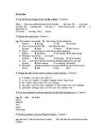
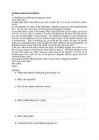
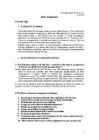
late, please, phone, phrasesuld, mobile, call, film, father, them, english, unit, translate, kevin, speak, surf, internet, enjoy, chat, rooms, switch, send, email, friend, letters, back, later, necessary, tony, class, went, yesterday, lord, rings, police, mother, doctor, piano, years, dinner, apple, football, student, paper, slice, pizzake, honeyTest 8 1 Translate. 1 Siin Kevin. Palun, kas ma saaksin Tinaga rääkida? This is Kevin. Could I speak to Tina, please? 2 mobiiltelefoni välja lülitama switch off the mobile phone 3 telefonisi rääkima talk over phone 4 hiljem tagasi helistama call back later 5 internetis surfama surf the Internet 6 nautima jututubades käimist enjoy visiting chat rooms 7 sõbrale meili saatma send an email to a friend 8 suurte tähtedega kirjutama write in capital letters 2 Write a/an or the where neccessary. 1 We travelled to Tallin by bus. 2 Tony is the tallest boy in our class. 3 We went to see a film yesterday. The film was called The Lord of the Rings.
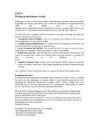
TEST 8 1)Siin Kevin. Palun, kas ma saaksin Tinaga rääkida? This is Kevin. Could I speak to Tina please? 2) mobiiltelefoni välja lülitama Switch off the mobile phone 3)telefonitsi rääkima Talk over the phone 4) hiljem tagasi helistama Call back later 5) Internetis surfama Surf the Internet 6) nautima jututubades käimist Enjoy visiting chatrooms 7)Sõbrale meili saatma Send an email to a friend 8) suurte tähtedega kirjutama Write in capital letters Write a/an or the where necessary 1- We... by bus 2- Toni is THE tallest ... 3- We went to see A film... THE film was... 4- My father is A police officer and my mother is A doctor. 5- I could play THE piano when I was 6 years old.
'How are you?' Very often people expect you to say something positive. Here's a breakdown of how you can express how you really are without complaining too much. · Fine, thanks. / On top of the world, thanks. · OK, thanks · Not so bad, thanks. / Can't complain, thanks. · So so, thanks. / So and so, thanks. · Not so good, actually 1 The English alphabet Spelling Work with your partner and spell out first your name and then some names of places. Write down each letter as you hear it, and then say the word. The English alphabet on the phone: You might find the following alphabet (used by international airlines) useful when trying to spell a word on the telephone. A Alpha O Oscar Ä Alpha-Echo Ö Oscar-Echo
Studium Units 1-4 e-formaat Toimetatud Tartu Emajõe Koolis Toimetaja I. Tars Tartus, 2016 Elektroonilisse vormingusse kohandatud õpikus kasutatud märgised, mis aitavad otsingukäsu kasutamisel navigeerida * Tavakirjas leheküljenumbri ees on kolm järjestikust sidekriipsu, tühik ja vastava lehekülje number, näiteks, --- 5; * peatüki ette on kirjutatud kolm x-i, tühik ja vastava peatüki number, näiteks xxx 5; * visuaalne info on pandud kahekordsete ümarsulgude vahele. I Love English 6 töövihik sobib inglise keele õpetamiseks 8. klassis Töövihik vastab riiklikule õppekavale Retsenseerinud Piret Kärtner, Viive Latt, Ingrit Tera Toimetanud Viiu Menning, Nicola Fyfe, Tiina Helekivi Kujundanud ja küljendanud Eve Kurm Tehniliselt toimetanud Andero Kurm Illustreerinud Ülle Meister Esikaas: Boswell and Dr. Johnson (foto Scanpix). Vaata Unit 20. Autoriõigus: Mare Jõul, Ülle Kurm, 2009 Kirjastus Studium, 2009 Kõik õigused on kaitstud
Tests Superstar 1 Luke Prodromou Test 1 Name____________________ Class_______ Use your English 1 Complete these sentences using the correct form (present simple or present continuous) of the verb in brackets. _ 1 She is in a band and she _________________________________ (record) a CD at the moment. _ 2 She is an actress and often _________________________________ (appear) on television. _ 3 At the moment she _________________________________ (have) a rest because she is tired. _ 4 Mike is a doctor and he _________________________________ (live) in Manchester.
Book 1 BASIC ENGLISH BASIC ENGLISH GRAMMAR GRAMMAR BASIC ENGLISH GRAMMAR Book 1 Book 1 Younger students at beginning to intermediate levels will greatly benefit from this step-by-step approach to English grammar basics. This is the ideal supplement to your language arts program whether your students are native
Golden Grammar rules 1. Don't use an with own. Sue needs her own room. (NOT Sue needs an own room.) I'd like a phone line of my own. (NOT ... an own phone line.) 2. Use or rather to correct yourself. She's German or rather, Austrian. (NOT She's German or better, Austrian.) I'll see you on Friday or rather, Saturday. 3. Use the simple present play(s), rain(s) etc to talk about habits and repeated actions. I play tennis every Saturday. (NOT I am playing tennis every Saturday.) It usually rains a lot in November. 4. Use will ..., not the present, for offers and promises. I'll cook you supper this evening
l just got your invitation to the company's event. l `m afraid I can't make it because I've a/ready made plans which l can "t change ... 3. Dear Sirs, I am writing to complain about the poor quality of the items which I received from your company. I have no other alternative but to cancel the order which 1 placed earlier this week ... 4. ... thus, I recommend that you accept this advice on the matter. I am pure that the suggestion offered is the best solution. Please let me know if this was helpful. Yours sincerely, Lee Jones 5. ... I would appreciate a reply at your earliest convenience. I look forward to meeting you to discuss employment opportunities. Yours faithfully, Nicole Porter Paragraph Plan for Letters · salutation · Paragraph 1 reasons for writing · Paragraphs 2, 3 development · Final paragraph closing remarks · Name
General Rules....................................................................... 2 The Definite Article ............................................................... 5 Names that take the Definite Article...................................... 6 No article.............................................................................. 7 Countable and uncountable nouns ....................................... 9 General Rules There are two articles in the English language – the Indefinite Article and the Definite Article. The Indefinite Article has two forms – a and an (a precedes words beginning with a consonant sound and an precedes words beginning with a vowel sound). It comes from the Old English word ãn, which meant one. The Definite Article is the. It comes from the Old English word ţis, which meant this. Thus, in most general terms, a and an cannot be used with countable nouns in the plural and with uncountable nouns
Exercises 1. Use the Present Simple of the verb be or have. ( 10 points ) Mary........blue eyes and blond hair, but her brother ........dark hair. He ........in his late twenties. He........married and........two sons. I........short, but my sister........tall. We........a dog and a cat. Our uncle........two dogs. They........brown. 2. Choose the correct item. ( 5 points ) e.g. The residents were made...D....their homes by the authorities. A leave B leaving C left D to leave 1) Ann is my best friend! We........each other for years A know B knew C knows D have known
Are they politicians, writers, scientists, musicians? 42. Can you name some Estonian writers who are famous for their humour? Which of their books have you read? 43. What kind of books do you like to read? 44. When did you last read a poem? 45. Do you enjoy reading poems? http://www.abiks.pri.ee 46. Have you ever written a poem? When? What was it about? 47. Can you say a poem in English? 48. What books have you read lately? 49. When did you learn to read? Was it easy or difficult for you? 50. How much time do you spend on reading? Do you think it is enough? 51. Do you have a favourite book? / author? Why? Why not? 52. How do you choose a book to read? 53. Do you prefer to have books of your own or to borrow them from the library? 54. Do you think people will read more or fewer books in 20 years' time? Why?
• the middle of ... • business • the end of May • the end (=finally) • time (= punctual, not • (the age of) 27 • time (=soon enough for late) • the moment sth / to do sth) • present • a week / three months’ • the same time time (=after the time of) • four weeks (during the time), etc In the middle of the meeting my mobile phone started ringing. The house was built in a month. I’ll be back in an hour. In the end, nobody knew why the war had started. Next week I will be away on business in France. John is on holiday this month. This bus never runs on time. He learned to read at an early age. The boss is not here at the moment, please, call back in half an hour. There are no vacancies in our company at present. 2
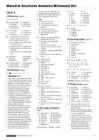
6 have/'ve known interested and it looks as though shipwrecked three times. 7 walked they are working hard. Most of She was lucky because she survived 8 have you phoned them are looking at the experiment each of the three disasters. 2 1 written 8 was trying and working together. They are 4 1 D 3 F 5 G all wearing uniform it's quite an 2 been meaning 9 came
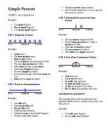
Simple Present · · New York is a small city. It is not important that this fact is untrue. [VERB] + s/es in third person USE 3 Scheduled Events in the Near Examples: Future · You speak English. · Do you speak English? · You do not speak English. USE 1 Repeated Actions Examples: · The train leaves tonight at 6 PM. · The bus does not arrive at 11 AM, it arrives at 11 PM. · When do we board the plane?
forehead. I've seen photos of her when 1E Phrasal verbs page 8 5 (possible answers) she was my age and apart from the 1 1 go ahead 5 come to eighties hairstyle we're the spitting 1 Well, you will go to bed late every night. 2 fall through 6 bring about image of each other! Some people 2 Well, you will refuse to wear a 3 tip off 7 go down with say that they can see a strong family coat. 4 mistake for 8 come up with
.. the ball? 5) ..... piano sounds great, don't you agree? 6) Hey, Keith, bring me some of ..... ice cream, too! 7) Linda sat ..... the rock and sang ..... song. 8) ..... school is something you never forget, yet while studying many things just are forgotten. 9) He jumped off ..... cliff and fell ..... the ice-cold ocean. 10) It was ..... noisiest concert ever! 11) What are you doing? Don't you know that ..... fishing isn't allowed here? 12) Neither ...... them moved, they were just staring ..... each other. 13) You must go, Susan, or else I won't go ..... there as well. 14) He laughed ..... her, not feeling any pity at all. 15) Mother listened ..... the radio while Jim was catching ..... butterflies. 16) She was soon bored, so he decided ..... finish his speech earlier. 17) Marta was hungry; she went ..... the kitchen .... order to grab ..... sandwich and ..... bottle ..... milk. 1
century festival in China and the Apollo 11 moon landing in 1969. However, there is a link and that is that they both relied on the use of rockets. The Chinese first developed rockets by filling bamboo tubes with an explosive made from saltpetre, charcoal, and sulphur. The sealed tubes would be thrown onto fires during celebrations because it was thought that the loud explosions would protect them. It was not long before the ancient Chinese realised the military potential of these devices and primitive rockets were used to repel a Mongol invasion in 1232 AD. Word of these new amazing weapons quickly spread around the world and soon rockets were being used in military operations in North Africa and Europe. During the 15 th and 16th centuries they were widely used in naval battles to set fire on enemy ships. Around this time they also started being used for more peaceful purposes again
Teaching procedure: a) modelling, b) demonstration c) commands in random order to demonstrate comprehension, d) reading and writing commands, e) students issuing commands No forcing to speak Culture is the lifestyle of people who speak the language natively I agree that this method is perfect at the beginner level. And it is pretty natural as well. The goals are having an enjoyable lesson, understanding the instructions and following them. In the beginning it is totally teacher-centred method. If a student doesn´t understand the teacher repeats the instruction. This method is similar to Dewey´s learning technique:" learning by doing". This method emphasizes on listening skills and following the orders. It is difficult to say how is evaluation accomplished but I think if the student performs correctly then the task passed. And once again no native language was used. · Humanistic methods: Community language learning
was not particularly good, he asked his secretary to revise it before she typed it up. Text 2 is the report that was finally sent to the Transport Manager. Read both of the reports and see if you can identify: the changes that the secretary made the reasons for making these changes the effect of these changes TO: Transport Manager FROM: Transport Supervisor (Field Services) SUBJECT: Services Provided by Autocheck Maintenance Company DATE: 6.4.01 Ref your phone call about the maintanance of field vehicles. As I said on the phone, in the past couple of months I've noticed that the standard of service which this company provides has got worse and worse and that this has caused us lots of difficult problems. Our own maintanance people have done some checks of their own recently and have found that AMC's works have really gone down. We had two trucks doing nothing since five days because the Autocheck people
poet Burns”) back-reference In grammatical analysis, the term reference is often used to state a relationship of identity which exists between grammatical units, e.g. a pronoun 'refers' to a noun or noun phrase. When the reference is to an earlier part of the discourse, it may be called a 'back-reference' (or anaphora); collective noun Collective noun is the name we give to a group of nouns to refer to them as one entity. A crew of sailors. A flock of birds. A range of mountains. conjunction any member of a small class of words distinguished in manylanguages by their function as connecto rs between words, phrases,clauses, or sentences, as and, because, but, however. content words Content words are words that have meaning. They can be compared to grammatical words, which are structural. Nouns, main verbs, adjectives and adverbs are usually content words. Auxiliary
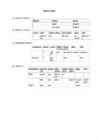
Word order: positive sentences subjects verb(s) object I speak English. I can speak English. Negative sentences subject verbs Indirect object Direct object place time I will not you the story at Tomorro tell school w. Subordinate Clauses conjunction subject verb(s) Indirec Direct place time
I bought a new car. new car. Future Simple FutureinthePast He said (that) he would go to the I will go to the cinema. cinema. Present Perfect Past Perfect I've been to France three He said (that) he had been to times. France three times. Read the sentences and turn them in the indirect form. 1. Ralph said, "We have been in the mountains this summer." 2. "We were very happy to spend the weekend at the seaside," said Donald. 3. "We have left the school," said the children. 4. "In 1991 I entered Oxford University," said Henry. Modal Verbs can could I can swim under He said (that) he could water for two minutes. swim under water for two minutes.
Inglise keele kontrolltöö 7. klassile Õpik: I love English 4 Kokkuvõte aasta jooksul õpitust. Koostaja: Gea Gutmann Viljandi Maagümnaasium Juhendaja: Toomas Rähn Final Test Form 7 Name................. 1. Use the right tense. (15 p) 1) Look! She....................................(carry) a heavy bag. 2) Mrs. Brown...................................(play) the piano at the concert next week. 3) Mary is a good girl. My mother...........................
They say it's unimaginable, boring, tasteless, it's chips with everything and totally overcooked vegetables. The basic ingredients, when fresh, are so full of flavour that British haven't had to invent sauces to disguise their natural taste. What can compare with fresh pees or new potatoes just boiled and served with butter? Why drown spring lamb in wine or cream and spices, when with just one or two herbs it is absolutely delicious? If you ask foreigners to name some typically English dishes, they will probably say "Fish and chips" then stop. It is disappointing, but true that, there is no tradition in England of eating in restaurants, because the food doesn't lend itself to such preparation. English cooking is found at home. So it is difficult to a good English restaurant with a reasonable prices. In most cities in Britain you'll find Indian, Chinese, French and Italian restaurants. In London you'll also find Indonesian, Mexican, Greek..
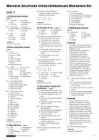
4 Who’s 4 training 5 who’s 5 speak 6 Whose 6 living 7who’s8who’s 7 am 8 eat 2 9 are 2 Where do you come from? 10 use 3 Are you married? 4 When did you start learning English? 8 5 How much English did you know when you 2 good came here? 3 terrible 6 Why are you studying English? 4 Heavy 5 busy 3 6 high 2 Why, f 3 Which, h 9 4 Whose, b 5 What, c 2a
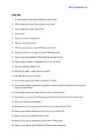
7 Kas sa kogud millegi jaoks raha? Are you saving up for something? 8 Mis number kingi sa kannad? What size shoes do you take? 9 Kas sul on kunagi poes mingeid piinlikke juhtumeid olnud? Have you ever had any embarrassing incidents in a shop? _______________________________________________________________ UNIT 8: Töövihikust harjutus 9. 1 See tõesti ärritab mind, kui inimesed ei lülita oma mobiile teatris välja. It really annoys me when people don´t switch off their mobile phones in the theatre. 2 Ma tahaksin oma telefonihelinat muuta. I´d like to change the ringtone of my mobile phone. 3 Tema teadmised inglise keelest on väga head. His knowledge of English is very good. 4 Ma surfasin eile kaks tundi internetis, aga ma ei leidnud vajalikku informatsiooni. Yesterday I surfed the Internet two hours but i didn´t found neccessary information. 5 Halloo, mina olen Kai. Palun kas ma saaksin rääkida Lizziega? - Ma kuulen. Hello, this is Kai
ADVANCES IN TECHNOLOGY 1. My new cellular phone allows me to send text messages anywhere within the country and abroad. (communications) 2. Don't forget to turn on the modem if you want to go-online. (information technology) 3. The advent of endoscopic surgery has greatly reduced the post-operative recovery time of most patiens. (medical) 4. Supermarkets of the future will make use of scanners to read the contents of your trolley and total up your bill. (electronics) 5
We don't usually use an article week, every day, every night, last morning, last • to talk about things in general. • before the names of countries, cities, towns and villages. week, all night, all day, tomorrow, yesterday,... • with plural nouns and uncountable nouns when talking about them • use the with in the morning, in the afternoon, generally. during the night, the winter, the summer, the day Examples: She has got long hair. He wears black shoes. after tomorrow,... • when talking about sports, people's first names, languages, names of • use a /an or the with whole and entire.
30. Benjamin is really interested ..................history. 31.We were talking ..................you. 32. The girl is standing ..................the two boys. 33. The boy with the green shirt is ..................the right. 34. ..................the picture, there are three kids. 35. He has a gamboy ..................his hands. 36. What are you doing ..................the weekend? 37. We could go there together ..................the afternoon. 38. That's right. But I must hurry home after the film. I have to be home ..................eleven o'clock. 39. It lasts ..................two hours and forty-five minutes. 40. That's interesting. I haven't been ..................the cinema for so many years. 2.Tenses ( Active/ Passive ) 1. Once a week, Tom ................................................ the house.(CLEAN) 2. The customer by the salesman .........................................when the thief came into the store. (HELP) 3. Recently, John ...........................................
........................................................5 Word Order in Negative Sentences......................................................6 Word Order in General Questions.........................................................7 Word Order in Special Questions ..........................................................8 Word Order in Subject Questions ..........................................................9 Types of Sentences There are four basic types of sentences in English. AFFIRMATIVE and NEGATIVE sentences both end with a full stop ( ) : . I live in Tallinn. I do not live in Tallinn. I never watch soap operas. INTERROGATIVE sentences end with a question mark ( ? ) : Do you live in Tallinn? Why do you never watch soap operas? EXCLAMATORY and IMPERATIVE sentences end with an exclamation mark ( ! ) : What a beautiful day! Do your homework at once! Parts of the Sentence The basic parts of the sentence are: THE SUBJECT (WHO? WHAT?) ,
Signifier The signifier is the pointing finger, the word, the sound-image. A word is simply a jumble of letters. The pointing finger is not the star. It is in the interpretation of the signifier that meaning is created. Signified The signified is the concept, the meaning, the thing indicated by the signifier. It need not be a 'real object' but is some referent to which the signifier refers. The thing signified is created in the perceiver and is internal to them. Whilst we share concepts, we do so via signifiers. Whilst the signifier is more stable, the signified varies between people and contexts. The signified does stabilize with habit, as the signifier cues thoughts and images. Signifier + signified = sign • Onomatopoeic words (examples) Argh, achoo, bang, bark, meow, moo… • Roman Jakobson – intralingual, interlingual and intersemiotic translation. Problems in telling the difference between intra and
English structure revision for the exam 1. Terms Language → A systematic, conventional (tavakohane) use of sounds, signs or written symbols in a human society for communication and self-expression. Human language at all levels is rule- or principle- governed (valitsema) meaning that language corresponds to the grammar. Natural language is usually spoken, while language can also be encoded into symbols (such as letters, morse etc) For example: Estonian, English. Linguistics → The scientific study of human natural language. Broadly, there are three aspects to the study which are Pragmatics (studies the use of language → interested in the gap between the sentence’s meaning and the speaker’s meaning). Semantics (concerned with the meaning of the language aspects and the way they change, also how objects and language and thinking and language are related).
interrupted it. We use the past habits or states which are now continuous for the action in finished. progress (longer action) and the Pete lived in California for a couple of past simple for the action which years when he was younger. interrupted it (shorter action). The time expressions we use with He was driving to work when his the past simple are: mobile phone rang. yesterday ,then ,when ,How long for two or more ago...? ,last night/ week/ month/ year/ simultaneous actions in the past. Friday/ October etc., three Jack was listening to the radio in the days/ weeks etc. ago, in 1999 etc. living room while I was doing my homework in my bedroom. to describe the atmosphere,
 annaabi.ee