Tense form Active voice Passive voice Present Simple I greet him every day. He is greeted every day. Present Continuous I am greeting him. He is being greeted. Present Perfect I have greeted him today. He has been greeted today. Present Perfect Continuous I have buun greeting him. He has been greeted today. Past Simple I greeted him yesterday. He was greeted yesterday. Past Continuous I was greeting him. He was being greeted. Past Perfect I had greeted him. He had been greeted. Past Perfect Continuous I had been greeting him. He had been greeted. Future Simple I will greet him. He will be greeted.
Writing letters Formal letters institutions, strangers Semi-formal letters - acquaintances Informal letters friends, family Layout Always in paragraphs A paragraph starts with a space, which is as wide as your finger No empty rows Block style in the content of the letter Greeting and farewell on the left side The greeting and farewell have the same style Dear..................... ........................................................................ ............................................................................. ......................................................... ........................................................................ ............................................................................. ..................................................................
Valentine's Day Saint Valentine's Day is an annual holiday held on February 14 celebrating love and affection between intimate companions.The holiday is named after one or more early Christian martyrs named Valentine and was established by Pope Gelasius I in 496 AD. It is traditionally a day on which lovers express their love for each other by presenting flowers, offering confectionery, and sending greeting cards .. The holiday first became associated with romantic love in the circle of Geoffrey Chaucer in the High Middle Ages, when the tradition of courtly love flourished.hModern Valentine's Day symbols include the heart-shaped outline, doves, and the figure of the winged Cupid. Since the 19th century, handwritten valentines have largely given way to mass-produced greeting cards.The sending of Valentines was a fashion in nineteenth-
France has the world's fifth largest economy by nominal figures Main export partners: Germany , Italy , Spain , Belgium, United Kingdom, United States , Netherlands Main import partners: Germany, Italy , Spain, China France has long been part of the world's wealthiest and most developed national economies. Business etiquette France is one of the most important business and trading partners on a European and global level In France, the common form of greeting in a professional environment is the handshake. French business culture emphasizes formality, people tend to come closer to each other than in North American and Northern European cultures If you do not speak French, apologize for not knowing the language. French people often appear very direct and they do not hesitate to ask questions When you are invited to a dinner or to a restaurant you should not be more than 10 minutes late
Singing is a very Estonian activity and the Estonians are known to have sung their way to freedom during the "Singing Revolution" of 1989-91. Manners Estonians on the whole are quiet and reserved. They tend to speak softly and do not like to draw attention to themselves. Being rational, calm and not going to emotional extremes are all qualities that respected. At first Estonians can come across as aloof. Once a relationship warms up this becomes less so. Meeting and Greeting Greetings can come across as rather formal and rather reserved. Men should initiate greetings with women and the younger person always greets the older person. When meeting someone make sure you are stood up, offer direct eye contact and give a nice firm handshake. The most common greeting is "tere" ("hello"). Titles are very important. "Härra" is for Mr, "Prova" is Mrs and "Preili" is Miss. All should be followed with the surname. Only use first names once you have been invited to do so.
Nombre: VOCABULARIO DE LOS SALUDOS Put the number in the corresponding Spanish greeting. 1 Excellent Regular 2 Good night Terrible 5 Hi Mal 4 Goodbye Hasta pronto 5 See you tomorrow Fenomenal 6 What's up? ¿Cómo estás? 7 And you? Bien
Dog Communication Kristjan Olt Dog communication comes in a variety of forms, and is part of the foundation of dog social behaviour. Dogs use certain movements of their bodies and body parts and different vocalizations to express their emotions. One gesture may mean many different things. For example a tail wag may mean: Excitement Playfulness Happiness Anxiety Greeting ritual When one dog meets another dog, they usually walk around each other, sniff each other or even bark if they don't like something Body movements Tail position usually shows dog's mood. Ear position shows dogs level of attention Mouth expressions inform us about dogs mood Dogs use their tongue to lick each other and that is the sign of friendliness. Dogs stamp their legs when exited. The position of head is a sign of curiosity.
Body language Merilyn Männik 9.B What is body language? Physical behavior Facial expressions etc. Animals and humans Does not have a grammar Body language in Saudi Arabia Meeting: Men and women: ● Shaking hands ● Space ● The nose touch ● Facial expression ● Kissing both cheeks ● Greeting ● Gesture Body language United States ● Greetings ● Personal space ● Acceptable gestures Words/phreses ● Gesture- žest ● Physical behavior- füüsiline käitumine ● Body posture- kehahoiak Questions 1. What is in common between these countries? 2. Is body language to express your feelings? 3. What are the differences between Arab women and men? Used material ● https://prezi.com/n3qr3_fx9fuk/body-language-between-men-and-women-in-
The midday meal is usually referred to as lunch and the evening meal as dinner or, when it is less formal, as supper. But some rural people call the midday meal dinner and the early-evening meal tea. Many people, particularly in Dublin, no longer eat more than a light meal or snack in the middle of the day. Those who have an early-evening meal sometimes have another snack-- sandwiches, cakes, or biscuits--at around 9 PM. Socializing The traditional Irish greeting Céad míle fáilte literally means "A hundred thousand welcomes." However, the Irish greet one another with common English phrases such as "Hello" and "How are you?" or more casual greetings such as 'How's it going?' The most typical Irish greeting is Dia dhuit, which means "God be with you." Goodbye is expressed with Slán (roughly "Go safely") or the warmer Slán agus beannacht ('Go safely, and blessings be with you'). Greetings are generally accompanied by a firm
– Your interest in customers problem Important Things in Customer Service – Create a great first impression – Listen to customers carefully – Make the customers feel special Customer Service Skills and Key Behaviors – SKILLS : Key behaviors: – Clear communication1.Welcome customers to the store with a warm, friendly and genuine – Empathy greeting – patience 2. Use the customer’s name whenever possible 3. Give customers your undivided attention 4. Maintain a positive attitude with every customer How to improve skills? – Ask for direct feedback from customers and colleagues – Ask a manager for feedback – Read customer feedback reports – Practice new skills Thank you for listening!
Etiquette in england *meeting and greeting · The British are reserved, which may cause them to appear cool and indifferent or overly formal. In fact, they are very friendly and helpful to foreigners. · Shake hands with everyone present men, women, and children at business and social meetings. Shake hands again when leaving. · Use last names and appropriate titles until specifically invited by your British hosts or colleagues to use their first names. *body language
in crimes. Older teenagers had higher violent crime victimization than did younger teenagers. Why? There are many ways to minimise teenage crime. Possible solutions 1. We have to enlarge collaboration with teenages. 2. More hobbies for them like sport or music 3. catch them in to joint action 4. more different interesting opportunities 5. Practice different social skills with him/her, such as greeting others, "breaking the ice," asking questions, and listening well. You also can role-play ways to resist peer pressure, such as offers of alcohol, tobacco, or illegal drugs from other kids. 6. minimise narcotic drug and weapons accessibility 7. Fight against narcotic drugs. The fight against drugs is very important not only for preventing drug offences but for reducing crime as such. Conclusion
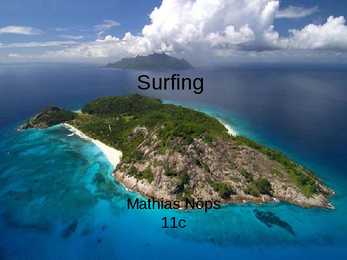
· Freedom · Joy · Satisfaction · Honesty · Adrenaline · Aloneness with the ocean · Only a surfer knows the real feeling Vocabulary · Regular/Natural foot--Right foot on back of board · Take-off--the start of a ride · Duck dive--pushing the board underwater, nose first, and diving under an oncoming wave instead of riding it · Shoulder--the unbroken part of the wave · Snap--a quick, sharp turn off the top of a wave · Shaka sign- greeting gesture Video http ://www.youtube.com/watch?v=aGSh8Rfj5f4&fe Questions? thank you for listening
Informal- are sent to people you know well. Semi-formal- to your friend parents Formal-are normally sent to people an (friends, relatives) ect.. official position or to people u dont know well An informal greeting (Dear Formal greetings (Dear Mr and Formal greetings: Dear Sir/Madam-when u dont know the Lucy, Uncle Bill,Mum) Mrs Jones, ) name.
Scotland Wales • Capital is Cardiff • Population 3 million • Territory covers 20 779 km2 Wales Northern Ireland • Capital is Belfast • Population 1,8 million • Territory covers 13 824 km2 Northern Ireland Culture • „Cultural superpower“ • Christian religious • Christmas and Easter are national public holidays • 95% of the British population speak English British etiquette and customs • The handshake is the common form of greeting • Avoid prolonged eye contact as it makes people feel uncomfortable • The British might seem a little stiff and formal at first • Introduce a younger person to an older person • Introduce a person of lower status to a person of higher status Gift giving • The British exchange gifts between family members and close friends for birthdays and Christmas • If invited to someone's home, bring a box of chocolates, a bottle of wine or flowers
Dear Kaisa, 09.10.2011 Hello! How is it going in Estonia? If you remember I'm in Canada and that is why I'm writing you. I miss you and all classmates. Tell hey them from me. The School where I am studying is Académie Ste. Cécile International School. I can take music, drama and languages courses. That is really interesting and I like here. All the classmates are really friendly and understanding. The family where I am living with is big. There is a mother and father, two sons and one daughter. They are really nice. I get along with their daughter whose name is Carlis. My English is better than before and I am more confident. This is a positive experience. I hope you are okay and I hope to hear from you soon. Best wishes, Mari Mets
good chocolates, a bottle of wine, a potted plant or flowers for the hostess. 5. EATING AND TABLE MANNERS · .Chew with your mouth closed and don't talk with your mouth full. · Don't pick your teeth at the table. · Say thank you to the host/server. · Give the food to the person next to you to pass the dish around the table; don't reach across someone else's plate. · Use a fork, unless you are eating a finger food. 6.MEETING AND GREETING · When asking for anything use "Please" with your request and follow up with "Thank You". · A handshake, a smile, and a 'hello' are all that is needed. · Use first names, and be sure to introduce everyone to each other. · Most people will insist that you call them by their nickname, if they have one. · It is quite common for the recipient to put your card in their wallet, which may then go in the back pocket of their trousers. This is not an insult.
this conversation. On the other hand, starting a conversation with topics like that in some public place is not very good. Because, who wants to listen something about politics in club or caffee. And seriously, who cares which religion are you connected with. It only could bring you the misfortune. Besides, if you want to meet a new friend you should not start conversation like that. There are so much other ways to make it work. The simple way of starting is greeting with sweet smile. Then you could ask the person you are talking with how is he doing or what brings him here. Add some jokes and follow the flow. If this human is interested in you, he will promote your chat as well. To conclude whole this story, I can say, that everything matters of place, people and situation. If you are in the right place at the right time, then there is nothing that can stand on your way, to familiarise with someone speacial.
· Tuvalus tervitades sugulased panevad oma näo vastu teise põske ja nuusivad. Kasutatud kirjandus · http://www.feeling24.ee/?Page=Article&ArticleID=251&Lang=EST 19.09.12 · https://docs.google.com/viewer?a=v&q=cache:lYUWeYj_RvUJ:www.integrationresearch.net/uploads/1/3/ 19.09.12 · http://www.ehow.com/how_2321353_greetmuslim.html 19.09.12 · http://www.cyborlink.com/besite/japan.htm 19.09.12 · http://en.wikipedia.org/wiki/Greeting 20.09.12 · http://amolife.com/customsandtraditions/aquestionofculturegreetingpeopleindifferent coun.html 20.09.12 · http://amolife.com/customsandtraditions/aquestionofculturegreetingpeopleindifferent coun.html 20.09.12 · http://pocketcultures.com/2010/07/14/kisshugorshakehands/ 20.09.12 · http://www.brucevanpatter.com/world_greetings.html 20.09.12 Tänan tähelepanu eest!
The Damned Thing „The Damned Thing“ by Ambrose Bierce speaks about a man who died very mysteriously. The book starts with a meeting where nine old men are present, but unfortunately one of them is dead. A young man named William Harker, who is the witness of the crime, enters the room. Coroner asks him to speaks about what had happened to Hugh Morgan. William starts to tell the jury about what he had seen. He visited Hugh to shoot and fish. After greeting each other they began to hunt for deers and reached a field of wild oats where they hid behind a rock because Hugh saw something moving in the oats. Suddenly William heard a shot and everything was covered in smoke. Hugh had pulled the trigger, but there was nothing in the field. After that William heard two extremely different voices: a scream like that of a wild animal and Morgan crying out as if in mortal agony. He gazed at Hugh and it seemed like his body was split into pieces
Tim Thomas causes a car crash. Seven people died. Because of that, Tim decides to save the lives of seven good people, who deserve being alive. He donates a lung lobe to his brother, a liver to a child services worker Holly, a kidney to a junior hockey coach, bone marrow to a young boy Nicholas. He also helpes a woman who lives with an abusive boyfriend. Tim gives Connie and her kids his beach house. He also finds a blind meat salesman who plays the piano and a selfemployed greeting card printer who has a heart condition and a rare blood type. One day Tim fills the bathtub with ice water and commits suicide by pulling his box jellyfish into the water. The piano player receives his corneas and the selfemployed woman who he falls in love with, receives his heart. I think Will Smith is an excellent actor. He makes the movie so real and his acting really touches me. I also enjoy his performance in the movies ,,The pursuit of happiness" and ,,I am legend"
The Weather and Climate 'Funny weather we are having' is a statement of the obvious we have used for generations as a greeting. When the deep cold lasts long and heavy snow and blizzards give us the shivers we replace "funny" with something stronger, such as "terrible", "ghastly". At times like these people ask what is happening to the weather. So we go to the experts, who tell us in language appropriate to the subject, what happened yesterday, what is happening today, and what might happen in the next few years
It celebrated on February 14th. It is traditionally day on which lovers express their love for each other by presenting flowers, offering confectionery, and sending greeting cards. Modern Valentine's Day symbols include the heart-shaped outline, doves, and the figure of the winged Cupid. Saint Patrick's Day is a religous holiday on the 17th of March St. Patrick's Day is celebrated by the Irish and Irish at Heart in big cities and small towns alike with parades, "wearing of the green," music and songs, Irish food and drink, and activities for kids such as crafts, coloring and games. Its a time for fun.
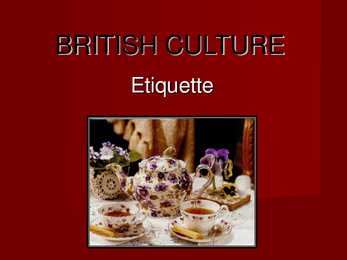
BRITISH CULTURE Etiquette Table of contents Everyday etiquette Time Eating etiquette English literature Sports Everyday Etiquette In general the British prefer to be introduced to strangers, if at all possible wait for a third party introduction when meeting someone new. Great Britain (especially England) is a non touching culture. When greeting someone a handshake accompanied by a "Pleased to meet you" is appropriate. When departing be sure to shake everyone's hand, a general group wave as is often done in the United States is not looked on favorably. Strong eye contact is not overly common among strangers and casual acquaintances, too much eye contact is considered and invasion of privacy. Eye contact is used when one really wants to make a point, when speaking with close
E noho ra Goodbye (from Taonga Treasured possession, person leaving) anything precious Goodbye (from Sacred, not to be E haere ra Tapu person staying) touched Haere mai Welcome! Tena koe Formal greeting to one person War dance, Formal greeting to Haka Tena koutou challenge many people Hapu Clan, sub-tribe Tena tatou katoa Formal inclusive greeting to everyone
Do not disturb! The custom here is that both men and women will shake hands when introduced, or when meeting. Even children will often shake hands upon meeting guests. When greeting someone at a distance, a raised hand or tip of the hat is common. Also, men remove their hats when meeting or conversing, or when entering a home, church, or elevator. Bear hugs and cheek-kissing, so well known
employed. 1. Use the four answering courtesies: · Greet the caller · State your organisation (or department) · Introduce yourself · Offer your help "Good afternoon, Accounts, Andrew Batt speaking. How may I help?" 2. Show enthusiasm when you answer. Help make the caller feel welcome A tired voice lacking in enthusiasm is very unappealing and reflects on the professionalism of your organisation. 3. Use friendly phrases as part of your greeting. · "Thanks for calling." · "May I help you?" 4. Remember to smile as you pick up the receiver. It may help if you have a mirror on your desk, this way you will be able to see how you sound on the telephone. Also, as a reminder, tape the word `Smile' on your phone. Closing the conversation When you finish your telephone conversation there are some appropriate and courteous statements that should always be made. You should: 1. Thank the caller. 2
Mailings ehk Postitused Create- Envelopes Saad teha ümbrikut. Labels Saad teha etikette. Start mail merge- Start mail merge Muudab teksti ümber vastavalt kas kirjaks, emailiks või ümbikuks jne. Select recipients Valib kirja saajad. Edit recipients list Saad muuta kirja saajate nimekirja. Write & Insert fields- Highlight merge fields Toob esile need osad dokumendist mis sa oled juurde lisanud. Address block Lisab kirjale aadressi. Greeting line Lisab kirjale tervituse. Rules Lisab kirjale juhised. Update labels Uuendab etikette. Prewiev results- Preview results Asendab ühendatud sisu selle vastu, milline ta peale saatmist välja näeb. Find recipient Otsib õigele saajale õige teksti. Check for errors Otsib ülesse kõik ühendamises tehtud vead. Finish- Finish & Merge Lõpetab kirja ühendamist. Salvestab selle ja siis on dokument saatmiseks valmis. Review ehk Ülevaade Proofing-
But she uses it to sort laundry, notice cars and people, and on the Fourth of July, to "see all the fireworks," she said. Ms. Campbell, a vocational rehabilitation counselor for New York's Commission for the Blind and Visually Handicapped, has long been cheerfully self-sufficient, traveling widely from her fourth-floor walk-up, going to the theater, babysitting for her niece in North Carolina. But little things rankle, like not knowing if clothes are stained and needing help shopping for greeting cards. Everything is a "gray haze -- like being in a cloud," she said. The device will not make her "see like I used to see," she said. "But it's going to be more than what I have. It's not just for me -- it's for so many other people that will follow me." Ms. Campbell's "realistic view of her vision" and willingness to practice are a plus, said Aries Arditi, senior fellow in vision science at Lighthouse International, a nonprofit agency overseeing
Kiri tuleb lõpetada Yours faithfully kui sa ei tunne inimest nimepidi (s.t. alustad kirja Dear Sir/Madam), Yours sincerely kui tunneme (s.t. alustame kirja Dear Mr Brown). Vali kirjutamisstiil (plokkimine või taandread) ja kirjuta kiri, jagades see paari- kolme lõigu vahel. Kõiki ülesandes küsitud punkte PEAB käsitlema! Muidu kaotad punkte. Kiri peaks koosnema järgmistest osadest: Opening greeting Reason for writing Questions asking for specific information Request for extra information Closing: request for a quick answer Closing: greeting and signature Alljärgnevalt näidiskiri. Dear Sir/Madam I am writing to enquire about your summer courses which I saw advertised in ‘English Today’. I recently took the FCE exam and I am now studying for CAE. Please could you tell me if you have advanced courses available
Performing the presentation Introducing yourself and your talk Greeting, name, position, opening formalities Good morning, ladies and gentlemen. Good afternoon, everyone. Good morning. My name's (...). I'm the new Finance Manager. Good morning. Let me start by saying just a few words about my own background. I started out in... Welcome to Standard Electronics. I know I've met some of you, but just for the benefit of those I haven't, my name's (...). It's very nice to see you all here today. I'm very pleased to be here. I'm glad you could all make it.
However, for the present purposes this question is immaterial Why do metathetical forms oust old forms? ease of pronunciation (suhkrut-suhkurt) analogy-Nucular pro nuclear,Cf circular, muscular Proto-Indo-European *kailo-"whole, uninjured, of good omen" Proto-Germanic *hailaz 1. Old English hal HALE (sound in health, vigorous, robust (HALE AND HEARTY), WHOLE 2. Old English halsum WHOLESOME (e.g. WHOLESOME FOOD) 3. Old Norse heill (healthy) HAIL (as a greeting), TO HAIL (to greet, also: to hail a taxi, also fig. to praise highly, to acclaim, as in "critics hailed her new book"), WASSAIL; German "Heil!" not used any more ("Heil Hitler! and the associated shame (just as with Reich) Germanic *hailitho > Old English hælth HEALTH Germanic *hailjan > Old English hælan TO HEAL Germanic *hailagaz > Old English halig HOLY Germanic *hailigon > Old English halgian to consecrate, to bless,
) to their friends and relatives, similar to the Western custom of sending Christmas cards. Their original purpose was to give your faraway friends and relatives tidings of yourself and your immediate family. In other words, this custom existed for people to tell others whom they did not often meet that they were alive and well. Japanese people send these postcards so that they arrive on the 1st of January. The post office guarantees to deliver the greeting postcards by the first of January if they are posted within a time limit, from mid-December to near the end of the month and are marked with the word nengajo. To deliver these cards on time, the post office usually hires students part-time to help deliver the letters. It is customary not to send these postcards when one has had a death in the family during the year. In this case, a family member sends a simple postcard to inform friends and relatives
They wear the bearskin caps. Some of the guards are on the horses but most of them are on foot. Guy Fawkes Night It is held on 5th November every year. People burn the dolls of Guy Fawkes. It is also known as the Bonfire or Cracks Night. Guy Fawkes was the man who led the Gunpowder Plot. Trooping the Colour It started in the 17th century to celebrate the queen's birthday. It is a military ceremony. It is held on the 2nd Saturday in June. Queen is greeting the parade. Notting Hill Carnival It started in 1964. It is held in August. It comes from Trinidad and Tobago. It is the 2nd largest festival held in London. The City of London Festival It started in 1962. It is similar to our Old Town Days. Regent Street Festival It started in 2009 to celebrate the 180 years of shopping history. It is held close to the Regent Street. All shops have discounts. The Ceremony of the Keys It is held every night since1340 in the Tower of London
letter. In a semi-formal letter showing respect for the recipient with whom you are on friendly terms, begin the letter with Dear Mr/Mrs Smith and end with Love/Regards/Best Wishes/Yours, Anna. 3. In an informal letter, begin with Dear John and end with Love/Regards/Best wishes/Yours, Mike. 4. Remember that it is not necessary to write addresses in the exam. Style in formal and informal letters Formal letters Greeting: Dear Sir/Madam / Mr bobbins, Informal letters · impersonal style Greeting: Dear Julie, · complex sentence structure - frequent · personal, short, zappy style use of Passive Voice - single word · use of slang or colloquial English use of verbs - non-colloquial English -- formal idioms/phrasal verbs
sole control. As the Muslim world came into contact with Western secular ideals, Muslim societies responded in different ways. Turkey has been governed as a secular state ever since the reforms of Mustafa Kemal Atatürk. In contrast, the 1979 Iranian Revolution replaced a mostly secular regime with an Islamic republic led by the Ayatollah Ruholla Khomeini. Etiquette and diet Many practices fall in the category of adab, or Islamic etiquette. This includes greeting others with "assalamu `alaykum" ("peace be unto you"), saying bismillah ("in the name of God") before meals, and using only the right hand for eating and drinking. Islamic hygienic practices mainly fall into the category of personal cleanliness and health, such as the circumcision of male offspring. Islamic burial rituals include saying the Salat alJanazah ("funeral prayer") over the bathed and enshrouded dead body, and burying it in a grave.
MODULE 1 Greeting. Introducing oneself and the others. The alphabet. Spelling. The tenses. How to introduce yourself and others Formal introductions How to respond and reply to an May I introduce myself? I am John introduction Smith. How do you do. Allow me to introduce John Smith to Pleased to meet you. you. Standard introduction Nice to meet you. I'd like you to meet John Smith. Hello. I want you to meet John Smith. I'm so pleased to meet you. This is Jane Smith. I'm Jane Smith. My name's John Smith. Informal introduction Hi. John. Jane. Hello. Titles: Mr Mrs Miss Ms Ms is a modern form of address for women. It replaces the traditional forms of Mrs and Miss. Greetings Good morning/afternoon/evening...
P. = Member of Parliament; ltd. = limited, gvt = government). Abbreviations are particularly abundant in military documents and used as signs of the military code. Another feature is the use of words in their logical dictionary meaning. Words with emotive meaning are not to be bound in the style of official documents either except those which are used in business letters as conventional phrases of greeting or close (e.g. dear sir, yours faithfully). The most noticeable of all syntactical features are the compositional patterns of the variants of this style. Thus, business letters have a definite compositional pattern. Almost every official document has its own compositional design. 23. NEWSPAPER STYLE It is only by the 19th century that newspaper English may be said to have developed into a system of language media, forming a separate functional style
I could say that you complete me...but that would be a lie, because every morning when I wake I long for you more than the day before. You have no idea how good it feels to wake up every morning knowing you are mine and I am yours. You are the first thing to enter my mind in the morning and the last thing to leave my heart at night. Morning is a wonderful blessing, either sunny or stormy. It stands for hope ... giving us another start of what we call Life. A morning greeting does not only mean 'Good Morning,' it has a silent, loving message saying, 'I think of you when I wake up. When I wake up in the morning, I think of you. When I go to sleep at night, I think of you. And for all those hours in-between, I think of us. Sometimes it's better to put love into hugs than to put it into words. A hug overcomes all boundaries. It speaks words within the mind that cannot be spoken. A silent hug means a thousands words to the unhappy heart.
P. = Member of Parliament; ltd. = limited, gvt = government). Abbreviations are particularly abundant in military documents and used as signs of the military code. Another feature is the use of words in their logical dictionary meaning. Words with emotive meaning are not to be bound in the style of official documents either except those which are used in business letters as conventional phrases of greeting or close (e.g. dear sir, yours faithfully). The most noticeable of all syntactical features are the compositional patterns of the variants of this style. Thus, business letters have a definite compositional pattern. Almost every official document has its own compositional design. NEWSPAPER STYLE (I. Galperin "Stylistics") It is only by the 19th century that newspaper English may be said to have developed into a
SEVERAL YEARS AGO, A UNIVERSITY PROFESSOR TRIED A LITTLE experiment. He sent Christmas cards to a sample of perfect strangers. Although he expected some reaction, the response he received was amazing-holiday cards ad- dressed to him came pouring back from people who had never met nor heard of him. The great majority of those who returned cards never inquired into the iden- tity of the unknown professor. They received his holiday greeting card, click, and whirr, they automatically sent cards in return (Kunz 8{ Woolcott, 1976). While small in scope, this study shows the action of one of the most potent of the weapons of influence around us-the rule of reciprocation. The rule says that we should try to repay, in kind, what another person has provided us. If a woman does us a favor, we should do her one in return; if a man sends us a birthday pres-
No doubt he'd have a preapproved orifice lined up before day's end. As I swapped out my heels for my walking shoes, my phone rang again. My mother was rarely distracted for long. The five minutes since we'd ended our call was just about the right length of time for her to realize the cell phone issue hadn't been resolved. Once again, I debated ignoring the phone, but I didn't want to take any of the day's crap home with me. I answered with my usual greeting, but it lacked its usual punch. "I'm still thinking about you." The velvet rasp of Cross's voice flooded me with such relief I realized I'd been hoping to hear it again. Today. God. The craving was so acute I knew he'd become a drug to my body, the prime source of some very intense highs. "I can still feel you, Eva. Still taste you. I've been hard since you left, through two meetings and one teleconference. You've got the advantage, state your demands."
Now for ourself and for this time of meeting: Thus much the business is: we have here writ To Norway, uncle of young Fortinbras,— Who, impotent and bed-rid, scarcely hears Of this his nephew's purpose,—to suppress His further gait herein; in that the levies, The lists and full proportions, are all made 14 Out of his subject: and we here dispatch You, good Cornelius, and you, Voltimand, For bearers of this greeting to old Norway; Giving to you no further personal power To business with the king, more than the scope Of these delated articles allow. Farewell, and let your haste commend your duty. CORNELIUS VOLTIMAND In that and all things will we show our duty. KING CLAUDIUS We doubt it nothing: heartily farewell. Exeunt VOLTIMAND and CORNELIUS And now, Laertes, what's the news with you? You told us of some suit; what is't, Laertes? You cannot speak of reason to the Dane,
I could say that you complete me...but that would be a lie, because every morning when I wake I long for you more than the day before. You have no idea how good it feels to wake up every morning knowing you are mine and I am yours. You are the first thing to enter my mind in the morning and the last thing to leave my heart at night. Morning is a wonderful blessing, either sunny or stormy. It stands for hope ... giving us another start of what we call Life. A morning greeting does not only mean 'Good Morning,' it has a silent, loving message saying, 'I think of you when I wake up. When I wake up in the morning, I think of you. When I go to sleep at night, I think of you. And for all those hours in-between, I think of us. Sometimes it's better to put love into hugs than to put it into words. A hug overcomes all boundaries. It speaks words within the mind that cannot be spoken. A silent hug means a thousands words to the unhappy heart.
So too, a linguistic expression's meaning is constituted by the tacit rules governing its correct conversational use. Start with expressions like "Hello," "Damn" (or "Good gracious"), "Oh, dear," "Excuse me," "Amen," "Thanks," "Stop it!," "You're on" (when a bet has been offered), and "Bless you." These do not seem to mean what they do in virtue of standing for anything or in virtue of expressing propositions. They are just conventional devices, respectively, of greeting, evincing consterna- tion, deploring, apologizing, endorsing, thanking, protesting, committing oneself to a bet, and blessing. They are noises we make that have socially defined functional roles; there are appropriate occasions for using them, inap- propriate occasions for using them, and appropriate responses. When we talk of their meanings, we mean the functions they characteristically perform in the context of our current social practices. On the Wittgensteinian view, this
I could say that you complete me...but that would be a lie, because every morning when I wake I long for you more than the day before. You have no idea how good it feels to wake up every morning knowing you are mine and I am yours. You are the first thing to enter my mind in the morning and the last thing to leave my heart at night. Morning is a wonderful blessing, either sunny or stormy. It stands for hope ... giving us another start of what we call Life. A morning greeting does not only mean 'Good Morning,' it has a silent, loving message saying, 'I think of you when I wake up. When I wake up in the morning, I think of you. When I go to sleep at night, I think of you. And for all those hours in-between, I think of us. Sometimes it's better to put love into hugs than to put it into words. A hug overcomes all boundaries. It speaks words within the mind that cannot be spoken. A silent hug means a thousands words to the unhappy heart.
' fu U.4g"i tr at Pri mary Propert ies: 029,*8,,1!tf..q8tf - a s kf o r i n f o r m a t i o n greeting g'eetrnq l rasl.yourquestions agreeto giveinformation (e.9.exact -
' fu U.4g"i tr at Pri mary Propert ies: 029,*8,,1!tf..q8tf - a s kf o r i n f o r m a t i o n greeting g'eetrnq l rasl.yourquestions agreeto giveinformation (e.9.exact -
' fu U.4g"i tr at Pri mary Propert ies: 029,*8,,1!tf..q8tf - a s kf o r i n f o r m a t i o n greeting g'eetrnq l rasl.yourquestions agreeto giveinformation (e.9.exact -
' fu U.4g"i tr at Pri mary Propert ies: 029,*8,,1!tf..q8tf - a s kf o r i n f o r m a t i o n greeting g'eetrnq l rasl.yourquestions agreeto giveinformation (e.9.exact -
 annaabi.ee