Name The name Prague is derived from an old Slavic root, praga, which means "ford", referring to the city's origin at a crossing point of the Vltava river. The native name of the city, Praha, is also related to the modern Czech word práh which means threshold. History The area of Prague was settled as early as the Paleolithic age. By the year 800 there was a simple fort fortified with wooden buildings. It was founded during the Romanesque era c. 885 and flourished in the Gothic and Renaissance eras. Prague flourished during the reign of Charles IV. Charles IV founded the first university in MiddleEurope Charles University Prague seen from satellite View of Prague from Petri hill The front view of St. Vitus Cathedral with its rose window The astronomical clock of Prague The National Museum Zizkov Television Tower Charles University in Prague Old Town Square Old Town Square during Christmas Charles Bridge The Dancing House
Art nouveau Beginning There was a reaction against the cluttered designs and compositions of Victorian-era decorative art, --------> the second was the current vogue for Japanese art, particularly wood-block prints, that swept up many European artists in the 1880s and 90s, including the likes of Gustav Klimt, Emile Gallé, and James Abbott McNeill Whistler. Art Nouveau, ornamental style of art that flourished between about 1890 and 1920 throughout Europe and the United States. Art Nouveau was aimed at modernizing design Artists drew inspiration from both organic and geometric forms, evolving elegant designs that united flowing, natural forms resembling the stems and blossoms of plants Art Nouveau is characterized by its use of a long, sinuous, organic line and was employed most often in architecture, interior design, jewelry and glass design, posters, and illustration
england, thistel for scotland, a daffodil for wales and a shamrock for northen ireland. · The national currensy is the british pound. Banknotes are issued in diffrent denominations. And also ther's coins · The uk has a lot of plaintful supplies of coal, gas and oil. Industrial revolution in 19th century. People moved to the rapidly expanding towns. Shipbuilding and tectile industries flourished. In the 20th century the light industries that use elecricity not raw materials. The consumer boom of the 1980s led to raipin growth in service industries like banking, tourism, retailing and information processing.
england, thistel for scotland, a daffodil for wales and a shamrock for northen ireland. · The national currensy is the british pound. Banknotes are issued in diffrent denominations. And also ther's coins · The uk has a lot of plaintful supplies of coal, gas and oil. Industrial revolution in 19th century. People moved to the rapidly expanding towns. Shipbuilding and tectile industries flourished. In the 20th century the light industries that use elecricity not raw materials. The consumer boom of the 1980s led to raipin growth in service industries like banking, tourism, retailing and information processing.
Fifth level India as a part of the British Empire For most of the 19th Century, India was ruled by the British. India was considered the jewel in the crown of the British Empire between 1858 and 1947. Queen Victoria had been made Empress of India and the British had a major military presence there. The British who lived in India were the elites of the country. Under the British Empire the nation flourished as a center of textiles, which soon became India's number one export. Tourist destinations of India Images of India are exotic and magical. The dazzling beauty of India is greatly attractive to millions of tourists around the world. There are a lot of sights worth visiting in India, but the most popular sight is Taj Mahal. It is one of the most famous buildings in the world. This perfectly symmetrical monument took 22
The rule of Elizabeth I can be called a peaceful time as England did not enter any huge conflicts. She managed to keep good relations with other great countries. However, the defeat of the Spanish Armada left no one questioning the superiority of the British navy. In addition, the kingdom’s territories grew during her reign, Virginia in America being named after „The Virgin Queen“. Queen Elizabeth I also valued culture. Arts flourished while Elizabeth was in power, most notably the theatre. She had the first real theatres built allowing poets like Shakespeare to create masterpieces. It is no wonder that Elizabeth I’s reign was named „The Golden Era“ as it was a time of peace during which England’s territory grew and arts such as theatre thrived. Secondly, the Victorian era is known for the enlargement of the Empire, revolutions in industry, science, education and Queen Victoria was the symbol for this period
Gray". Oscar and Constance now had two sons whom they both loved very much. But one evening, Robert Ross, a young Canadian houseguest, seduced Oscar and forced him finally to confront the homosexual feelings that had gripped him since his schooldays. Oscar's work thrived on the realisation that he was gay, but his private life flew increasingly in the face of the decidedly anti-homosexual conventions of late Victorian society. As his literary career flourished, the risk of a huge scandal grew ever larger. In 1892, on the first night of his acclaimed play "Lady Windermere's Fan", Oscar was re- introduced to a handsome young Oxford undergraduate, Lord Alfred Douglas, nicknamed "Bosie". Oscar was mesmerised by the cocky, dashing and intelligent young man and began the passionate and stormy relationship which consumed and ultimately destroyed him. While Oscar had eyes only for Bosie, he embraced the promiscuous world that excited his
privileges. He also built the Tower of London, (which was a prison) to keep the people under control. The Tower is the oldest building used by the British government. In 1097, William II began the building of Westminster Hall, close by the abbey of the same name. The hall became the prime royal residence throughout the Middle Ages. Westminster became the seat of the royal court and government, while its neighbour, the City of London (a part of London), was a centre of trade and flourished under its own unique administration the Corporation of London. 1100 its population was around 18 000, by 1300 it had grown to nearly 100 000. The Great Fire of London The Great Fire of London started at the bakery of Thomas Farynor on Sunday, 2 September 1666. It spread rapidly towards the City of London. The Lord Mayor of London created firebreaks to stop it, but he was too late. By the time they started to stop the fire, it was already a firestorm. On that night, the wind was very strong
Invincible / n'vnsbl / võitmatu Unfazed / nfeizd / külma kõhuga, häirimatu Bowls / blz / keegel Supremacy / s'prems / ülemvõim, üleolek Intellectual brilliance / nt'lektl 'brlns / vaimne hiilgus Flourishing / 'flr / õitseng, õitsev Prosperity / pr'spert / majanduslik õitseng Evergreen / 'evgri:n / igihaljas A lively period where much new was learned, naval battles won, sea explored and trading flourished. England beat Spanish Armada, under the guidance of Sir Francis Drake, which was thought to be unbeatable. Most powerful Tudor monarchs were Henry VIII and his daughter Elizabeth I who had a long and golden reign and whose time the literature flourished. Walter Raleigh was an explorer who was the first to bring potatoes and tobacco to Britain from America. The Stuarts 1603 1714
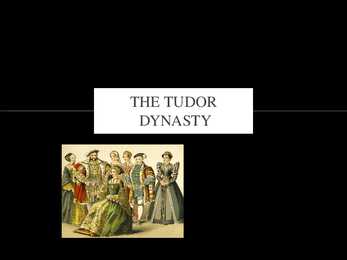
The Tudor line failed in 1603. Tudors England Life had many problems. Towns were becoming overcrowded, roads were muddy tracks and travelling was difficult. The overcrowding caused danger from fire and disease. What did the Tudors do for Britain? During 118 years of Tudor rule, England became richer than ever before. As the country became wealthier, towns grew, beautiful houses were built and schools and colleges were set up. Arts and crafts flourished too. England was home to great painters, writers and musicians. School in tudors time Not many children went to school in Tudor times. Those that did go were mainly the sons of wealthy or working families who could afford to pay the attendance fee. Boys began school at the age of 4 and moved to grammar school when they were 7. Girls were either kept at home by their parents to help with housework or sent out to work to bring money in for the family.
The Kingdom was more or less unified and was conquered by William who came from Normandy. Originally he was the Duke of Normandy. The Normands were Vikings who had settled in the north of France. William became William the Conqueror, William I. The Normands brought with them a centralised political system which was much more stable than the A-S tribes. Gradually the old A-S elements fused with the new Normand elements. Under the Normands the feudal system flourished. The new aristocracy was mostly Normand, many of them of French origin. Catholicism was the highest law (?). The church unified Europe. Abbeys and monasteries became centres of learning. 1168 the founding of Oxford University, 1209 Cambridge University. Alongside the church there was a very complex feudal system based on the idea of land ownership. Landed gentry noble people who owned land, right below aristocracy, quite above peasants etc. Towns grew, London became the true capital
Elizabeth was not only a master politician but also a poet of no mean ability. Most famous of the courtier poets were the Earl of Essex, Sir Walter Raleigh, and Sir Philip Sidney. Edmund Spenser, unsuccessfully seeking court preferment, wrote the Faerie Queene, a long allegorical epic in which Gloriana, the Faerie Queene, represented Elizabeth. The popularity of sonnet led to the writing of sonnet sequences, usually telling the story of unrequited love. Lyric poetry also flourished as courtier and commoner alike found in song an outlet for the exuberant Renaissance spirit. 12. What was the leading genre in English literature at that time? How did it develop? Beyond question, the Elizabethan period was the golden age of English drama, including among its dramatists Christopher Marlowe, William Shakespeare and Ben Jonson, along with more than a dozen other first-rate playwrights. Under the skillful handling of these
.......................................................................10 2 Introduction If you were asked to show on a world map the regions with the most biodiversity, your finger would probably end up pointing at the Amazon, the Congo Basin or the island of Borneo. But I chose New Guinea, an island that represents no more than 1% of the world's landmass, an array of extraordinary animals and plants have also flourished, such as tree kangaroos and birds of paradise. Close to 10% of the world's vertebrates are concentrated here, while 7% of the world's higher (vascular) plants grow on the island's productive soils. 3 Geography Papua New Guinea consists of over 600 islands and lies in the middle of the long chain of islands stretching from mainland South-East Asia. The mainland and larger islands are mountainous and rugged, divided by large fertile upland valleys
Mecca. Every able-bodied Muslim who can afford it must make the pilgrimage to Mecca at least once in his or her lifetime. Rituals of the Hajj include walking seven times around the Kaaba, touching the black stone if possible, walking or running seven times between Mount Safa and Mount Marwah, and symbolically stoning the Devil in Mina. Golden Age (7501258) Under the Abbasids, Islamic civilization flourished in the "Islamic Golden Age", with its capital at the cosmopolitan city of Baghdad. The major hadith collections were compiled and the four modern Sunni Madh'habs were established. Islamic law was advanced greatly by the efforts of the early 9th century jurist al-Shafi'i; he codified a method to establish the reliability of hadith, a topic which had been a locus of dispute among Islamic scholars. Philosophers Ibn Sina (Avicenna) and Al-Farabi sought to incorporate Greek
Man's anatomy corresponded with the physical ordering of the universe. Vital heat, the energy inside him is like fires in the centre of the earth. 5. The cult. Impact of the Norman Conquest on the eng.lit.trad. The circumstances of writers changed greatly in the years after Conquest. The West-Saxon written standard collapsed and English writings were excluded, native traditions lost much of the status. During this period the English poetry and prose flourished mainly towards the margins of society. One of the most obvious changes was the introduction of the Latin- based Anglo-Norman language, displacing the Germanic-based Anglo-Saxon. Because the language of ruling classes. Brought the domination of French. But the natural tradition survived, vernacular literature is saved, since most of it was transmitted orally. Anglo-Saxon gradually evolved into ME
routes. It functioned as the international law of commerce.[1] It emphasised contractual freedom and alienability of property, while shunning legal technicalities and deciding cases ex aequo et bono. A distinct feature was the reliance by merchants on a legal system developed and administered by them. States or local authorities seldom interfered, and did not interfere a lot in internal domestic trade. Under lex mercatoria, trade flourished and states took in large amounts of taxation. (http://en.wikipedia.org/wiki/Lex_mercatoria) Magdeburgi õigus, Lübecki õigus: Magdeburgi õigus oli keskaegne mandrieuroopa õigusnormide kogumik. Lübecki linnaõiguse kõrval üks enimlevinuid linnaõigusi, mis kehtis paljudes sisemaa linnades, kus merekaubandus puudus. Aga ka hansalinnas Riias. Õigus ise pärit 13. sajandist, selle õigusega said linnad oma autonoomia, sellega sai raad seadusandliku, täidevsaatva ja kohtuvõimu pädevuse
Her Silver and Golden Jubilees were celebrated in 1977 and 2002; her Diamond Jubilee is being celebrated during 2012. Cultural Life in Great Britain Artistic and cultural life in Britain is rather rich, like in most of the European countries. It has passed several main stages in its evelopment. The Saxon King Alfred encouraged the arts and culture. The chief debt owed to him by English literature is for his translations of and commentaries on Latin works. Art, culture and literature flourished during the Elizabethan age, during the reign of Elizabeth I; it was the period of English domination of the oceans and colonies, and, due to the strong political and economic position of the country, there were few obstacles in the way of the cultural development. This time is also famous for the fact that William Shakespeare lived and worked then. The empire, which was very powerful under Queen Victoria, saw another cultural and artistic
Musta suitsetaja korstnast paiskub välja keemilisi aineid, näiteks H2, H2S, Fe-sulfiidi, metaani jne. On arvatud, et elu võis Maal tekkida ka sellistes tingimustes. Mikroobid on elanud mustade suitsetajate kooslustes juba vähemalt 3.3 miljardit aastat. Westall, F. et al. (2015) Archean (3.33 Ga) microbe-sediment systems were diverse and flourished in a hydrothermal context. Geology 43, 615–618 http://www.youtube.com/watch?v=rFHtVRKoaUM Mikrobioloogia I 2017
It was expensive style, although its role was to give an aura of divinity and autocracy on Charles II, couldn’t hide that he was kept in power by the will of Parliament. 13. Restoration poetry (Rochester, Sackville, Sedley, Dryden) After 1660. 2 main themes: sex (whoring), drinking.Charles II’s court wa despite of its cloak of Anglican conformity, far more inclined to accept and enjoy sexual, religious and verbal licence. Cultured but lusty court. Sexual hints flourished. Stimulated and fostered the stricter disciplines of poetic satire, which fed on contradictions, the ironies and hypocrisies of society. Sharpness of wit, degree of profanity (pühaduseteotus) or ribaldry (nilbus), cultivated laziness, ministerially abetted (õhutatud) twists of laws and distractions of his mistresses. John Wilmot, Earl of Rochester: writer of satirical and bawdy poetry. To a Lady in a Letter, Song, A Song Charles Sackville: The Advice, from the Latin Sir Charles Sedley: Song
10 | P a g e Muslims (mawali) did not achieve social and economic equality with the Arabs. The descendants of Muhammad's uncle Abbas ibn Abd alMuttalib rallied discontented mawali, poor Arabs, and some Shi'a against the Umayyads and overthrew them with the help of their propagandist and general Abu Muslim, inaugurating the Abbasid dynasty in 750. Under the Abbasids, Islamic civilization flourished in the "Islamic Golden Age", with its capital at the cosmopolitan city of Baghdad. Golden Age (7501258) Artistic depiction of the Battle of Hattin in 1187, where Jerusalem was recaptured by Saladin's Ayyubid forcesBy the late 9th century, the Abbasid caliphate began to fracture as various regions gained increasing levels of autonomy. Across North Africa, Persia, and Central Asia emirates formed as provinces broke away. The monolithic Arab empire gave
Cromwell’s dictatorship. In 1660, monarchy restored under Charles II. 1668 the Glorious Revolution + constitutional monarchy, i.e. constitution added to restrict the power of the monarch and divide obligations and power with the Parliament. Beginning of the century, literature, especially drama flourished. Emergence of puritanism – poetry becomes leading form. Puritanism – purification of religion, of all unnecessary rituals and decorations, in essence, all pleasure equals sin. Closed theatres and denounced all drama, dance, rural festivals, even country sports.
worldwide Anglican Communion. The Church of England understands itself to be both Catholic and Reformed. 19. The Elizabeth Age - was a time associated with Queen Elizabeth I's reign (15581603) and is often considered to be the golden age in English history. It was the height of the English Renaissance and saw the flowering of English poetry, music and literature. This was also the time during which Elizabethan theatre flourished, and William Shakespeare and many others composed plays that broke free of England's past style of plays and theatre. It was an age of exploration and expansion abroad, while back at home, the Protestant Reformation became more acceptable to the people, most certainly after the Spanish Armada was repulsed. It was also the end of the period when England was a separate realm before its royal union with Scotland.
influence of some of the previous century's Russian chancellery language. Mikhail Lomonosov first compiled a normalizing grammar book in 1755; in 1783 the Russian Academy's first explanatory Russian dictionary appeared. During the end of the 18th and 19th centuries, a period known as the "Golden Age", the grammar, vocabulary and pronunciation of the Russian language was stabilized and standardized, and it became the nationwide literary language; meanwhile, Russia's world-famous literature flourished. Until the 20th century, the language's spoken form was the language of only the upper noble classes and urban population, as Russian peasants from the countryside continued to speak in their own dialects. By the mid-20th century, such dialects were forced out with the introduction of the compulsory education system that was established by the Soviet government. Despite the formalization of Standard Russian, some nonstandard dialectal
Province during the Song Dynasty. Its thin, curved stone slabs were joined with iron dovetails so that the arch could yield without collapsing. This technique allowed the bridge to adjust to the rise and fall of abutments bearing on spongy, plastic soils and the live loads of traffic. Following the decline of the Roman Empire with its many engineer- ing achievements, beam, arch, suspension, and cantilever bridge building flourished in China while languishing in Europe for nearly eight centuries. Chinese bridge builders experimented with forms and materials, perfecting their techniques. Selected examples, found in the countryside and parks, may be candidates for World Heritage listing. Other fine bridges survive in Iran, such as the Bridge of Khaju at Isfahan (1667), with eighteen pointed arches, carrying an 85ft (26m) wide roadway with walled, shaded passageways, flanked by pavilions and watch towers
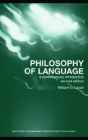
tions of their own. Quine went on to bite that bullet and infer that individual sentences do not have meanings; according to him there is no such thing as sentence meaning. Quine also attacked the formerly widespread view that some sentences are "analytic" in the sense of being true by definition or solely in virtue of the meanings of their component terms. The theory and its motivation The Verification Theory of meaning, which flourished in the 1930s and 1940s, was a highly political theory of meaning. It was motivated by, and reciprocally helped to motivate, a growing empiricism and scientism in philosophy and in other disciplines. In particular, it was the engine that drove the philosophi- cal movement of logical positivism, which was correctly perceived by moral philosophers, poets, theologians, and many others as directly attacking the foundations of their respective enterprises. Unlike most philosophical theo-
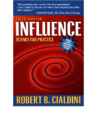
fire-alarm companies will frequently use this approach. Typically, their product, while effective enough, will be overpriced. Trusting that you will not be familiar with the retail costs of such a system and that, if you decide to buy one, you will feel obligated to the company that provided you with a free extinguisher and home inspection, these companies will pressure you for an immediate sale. Using this free-information-and-inspection gambit, fire-protection sales organizations have flourished around the country.3 lA variety of other business operations use the no-cost information offer extensively. Pest extermina- tor companies, for instance, have found that most people who agree to a free home examination give the extermination job to the examining company, provided they are convinced that it is needed. They apparently feel an obligation to give their business to the firm that rendered the initial, complimentary service
Cryptology was born among the Arabs. They were the first to discover and write down the methods of cryptanalysis. The people that exploded out of Arabia in the 600s and flamed over vast areas of the known world swiftly engendered one of the highest civilizations that history -had yet seen. Science flowered. Arab medicine and mathematics became the best in the world—from the latter, in fact, comes the word "cipher." Practical arts flourished. Administrative techniques developed. The exuberant creative energies of such a culture, excluded by its religion from painting or sculpture, and inspired by it to an explication of the Holy Koran, poured into literary pursuits. Storytelling, exemplified by Sheherazade's Thousand and One Nights, word-riddles, rebuses, puns, anagrams, and similar games abounded; grammar became a major study. And included was secret writing. The Arabic knowledge of cryptography was fully set forth in the
 annaabi.ee