Estonian Economy Estonians earn about half of the average European income, despite the fact that the economic growth during the recent years has been very fast and the differences have been diminishing. Although the extremely vigorous period of economic reforms is now over, the changes that Estonia is presently going through are far more extensive than those in the developed countries. The Estonian economy is diverse industry and transport, as well as commerce and different branches of services are all equally important. Due to the available natural resources Estonian economy largely relies on the branches related to the forest; Estonian energy sector is based on oil shale, a resource quite rare elsewhere in the world. Finland and Sweden are the most important trade partners. The Estonian economy profits significantly from the business generated by more than 2 million tourists a year, most of who...
Economy of Estonia The economic growth during the recent years has been very fast. The Estonian economy is diverse industry and transport, as well as commerce and different branches of services are all equally important. Due to the available natural resources Estonian economy largely relies on the branches related to the forest; Estonian energy sector is based on oil shale. Finland and Sweden are the most important trade partners. The Estonian economy profits significantly from the business generated by more than 2 million tourists a year. The important sectors of the Estonian economy are the processing, transport, warehousing and communications, commerce and estate, rental and letting, as well as business services, agriculture, construction and government, education and health care. In order to be able to import all the products and services, something must be exported, that's why export holds such a prominent posit...
Introduction of Estonia The Republic of Estonia is beautiful country which is located in northeastern Europe, bordering the Baltic Sea on the west, the Gulf of Finland on the north, Latvia on the south, and Russia on the east. Estonia is the smallest of the Baltic countries. Administrative division: Estonia has an area of 45,226 square kilometers and Estonia is administratively divided into counties. There are 15 counties in Estonia. The capital is Tallinn which is located in Harjumaa. Counties are divided into 194 rural municipalities. Population: The population of Estonia was estimated at 1.34 million in January 2011, with a density of 30 persons per square kilometer. According to the last census the number of inhabitants has decreased. In 2010 the birth rate was 11,82 per 1,000 population, while the death rate was exactly the same, so population growth rate is 0%. The proportion of urban p...
Life in Estonia through the eyes of an economics student I have been studying economics for a few months now and I would not say that my point of view on life in Estonia has changed. There are some things I recently started to look on differently but I am not sure is it because of TUT or not. Through my entire life I have seen Estonia as a strong and fast growing country which is also a fact because Estonian economy was one of the fastest growing in the world until 2006 with growth rates even exceeding 10% annually. I find it being quite impressive. There are some fields which Estonia can fill with supplies by itself. We are nearly energy independent country, supplying over 90% of our electricity need with locally mined oil shale. Estonia has also an alternative energy sources such as wood and peat. I could call myself earth friendly because I love walking around the forest and breading some fresh air but I do not li...
Introduction Estonia, officially the Republic of Estonia (Estonian: Eesti or Eesti Vabariik) is a country in the Baltic region of Northern Europe. It is bordered to the north by Finland across the Gulf of Finland, to the west by Sweden across the Baltic Sea, to the south by Latvia (343 km), and to the east by the Russian Federation (338,6 km). The territory of Estonia covers 45,227 km² and is influenced by a temperate seasonal climate. The Estonians are a Finnic people closely related to the Finns, with the Estonian language sharing many similarities to Finnish. The modern name of Estonia is thought to originate from the Roman historian Tacitus, who in his book Germania (ca. AD 98) described a people called the Aestii. Similarly, ancient Scandinavian sagas refer to a land called Eistland, close to the German term Estland for the country. Early Latin and other ancient versions of the name are Estia and Hestia. Until the late 1930s, the ...
Estonia Estonia is a little country in Northen Europe. Estonia is borderd by the Baltic Sea and Gulf of Finland, it's between Latvia and Russia. Its geographic coordinates are 59 North 26 Eeast. Estonias capital is Tallin, it is situated in the North of Estonia. Estonias mainland terrain is flat, boggy, and partly wooded, offshore lie more than 1,500 islands. From the north flat and from the east is Estonia hilly. It's highest peak is Suur Munamägi(318 m). Sometimes flooding occurs in the spring in Estonia. It's biggest lakes are Lake Peipsi and Lake Võrtsjärv. It's biggest islands are Saaremaa and Hiiumaa. In Estonia there is 26.5% arable land, 0.35% permanent crops and 73.15% other land. Natural resources in Estonai are oil shale, peat, phosphorite, clay, limestone, sand, dolomite, arable land, sea mud. The population of Estonia is about 1,341,000 people. Estonia, as a new member of the Wor...
ESTONIAN UNIVERSITY OF LIFE SCIENCES Institute of Economics and Social Sciences BOOK REVIEW ("Foreign direct investments in the Estonian economy", University of Tartu, Urmas Varblane) (Pages : 10 20) Prepared: Kadri Tamm, MF-I-5 Tartu 2007 I read book about direct investments in the Estonian economy. The book is issued by University of Tartu and the writers are also scientists from University of Tartu. "Foreign direct investments are relatively new phenomenon for Estonia because during the nearly five decades as part of the Soviet economic system, our economy received virtually none. Such economic isolation from the West lasted until the early 1990s. In consequence of the mid-...
ERLE MAIDO TAAB11 Report Purpose The purpose of this report is to give an overview of Estonian population, political factors, technological factors, economic factors and the trends in Estonian economy compared to Germany and to briefly discuss Estonian business environment. Estonian population The total population of Estonia is 1 313 271 according to Statistics Estonia, of which 69.1% are Estonians, 25.1% Russians, 4.9% of which are of different nationalities for example Ukrainians, Belarusians and Finns. Rest are of unknown nationality. 68.5% of population speaks Estonian as a mother language, 29.6% speaks Russian as a mother language and 0.6% Ukrainian. Estonia has only one official language which is Estonian. Ac...
Economic Country Review: Finland, Estonia and Hungary Girli Vasiljev Report Business Economics, RB1X 06.05.2012 Abstract 06.05.2012 Experience and Wellness management Author Group Girli Vasiljev RB1X Title of report Number of pages Economic Country Review: Finland, Estonia 20 and Hungary Teacher Kalevi Torunen The goal of this paper is to compare the economic performance of Finland, Estonia and Hungary. First, a general overview on the countries will be given. After, economic indicators (real GDP growth rate, inflation, unemployment, household consumption, investment, current account, government budget and deficit) of the three countries will be compared to draw a conc...
History of Estonia Elina, Rasmus, Joosep Pre-history The Mesolithic Period The Neolithic Period The Bronze Age The Iron Age Early Middle Ages Click to edit Master text styles Second level Third level Fourth level Fifth level Counties of Ancient Estonia The Middle Ages Danish Estonia Swedish Coastal Settlements Terra Mariana The Reformation Period Division of Estonia in the Livonian War PolishLithuanian Commonwealth Estonia in the Swedish Empire Estonia in the Russian Empire Age of Enlightenment National Awakening Road to Republic Occupation of Estonia by German Empire. United Baltic Duchy Declaration of Independance As a result of the availability of education Age of awakening Red Army's retreat and arrival of German troops in Pärnu on 23 February in Tallinn on 24 February 1918 Independence (1918-1939) Tartu peace treaty in 1920 First recognized by Finl...
07.11.2012 A business student´s insight into life in Estonia Estonia is a very small country compared with other European countries. But we have lots of students and universities which are internationally appreciated. I am also new business student in university and i have my own opinion. How can i see the life in Estonia? Positive side is definetly the location. We are located near the Baltic sea, which means that around us there is one of the fastest growing market. Also we are near the biggest cities in Europe. It means that we have lots of tourists who want to visit our country. Positive side is that we have unique nature and old town. Also in Estonia there are lower prices than neighboring Scandinavian countries. Estonians are successful in creating different e-government solutions. We have e-school, e- voting and e-s...
Life in Estonia through the eyes of an economics student With a population of 1 313 271 people, Estonia is one of the least populous member states of the European Union. However, according to the IMF, it is a developed country with an advanced and high-income economy. Estonia follows market economy system which ensures the little government intervention and the determination of prices of goods and services in a free price system. Therefore, economic decisions are guided solely by the aggregate interactions of a country's citizens and businesses. In addition to mentioned afore, Estonia tends to perform favourably in measurements of civil liberties, education, and press freedom. Living in Estonia has many of its good sides, for instance it is a secure place from nature disasters and it has a beautiful nature. Although, when not to look only through rose-tinted glasses, there are still some minuses in country’s organiz...
How does the United States influence Estonia? United States of America is one of the most influencial countries in the world. It influences the whole world with their political views, military forced etc. To my mind, one of the biggest influences that the United States has on us is the language. Estonian language surely is very beautiful but has a lot of loans from other languages. Also in colloquial language, especially with the younger generation, we switch a lot of words. Like instead of saying "vabandust" we say "sorry". Estonia is not economically dependent on the United States because they are not one of our most important trading partners, but as the economics of the United States has a great influence on the world economy, they can still indirectly have an influence on Estonian economy. Estonia is mainly influenced by the Americanization that is taking over the whole world. American products are everywhere:...
How does the United States influence Estonia? United States of America is one of the most influencial countries in the world. It influences the whole world with their political views, military forced etc. To my mind, one of the biggest influences that the United States has on us is the language. Estonian language surely is very beautiful but has a lot of loans from other languages. Also in colloquial language, especially with the younger generation, we switch a lot of words. Like instead of saying "vabandust" we say "sorry". Estonia is not economically dependent on the United States because they are not one of our most important trading partners, but as the economics of the United States has a great influence on the world economy, they can still indirectly have an influence on Estonian economy. Estonia is mainly influenced by the Americanization that is taking over the whole world. American products are everywhere:...
Good morning ladies and gentlemen! Im going to talk about Business in Estonia. I`ve divided my talk into three parts. First Im going to give a short overview of the Estonian business. Second Im going to talk about studying business in Estonia and third Im going to talk about business in industrial sector. FIRST: Estonia is a relatively small country in the northern part of Europe. Estonia is strategically placed in the business corridor, between the Scandinavian countries (EU) and other eastern European countries, including Russia. Estonia has suffered from economic Chrisis as many ohter European countries and compared to ohter bigger countries like Spain and Greece, Estonia has managed to recover from the Chrisis quite well. The number of unemployed people has reduced, still many private companies have struggles due to the fact that the income of consumers has been low and the ability to consume products provided by the companies has...
Estonia Estonia is a small country in Northern Europe with an area of about 45 000 sq km. As a part of the East-European Plain, the country has a rather flat surface. The highest and most diverse region in Estonia is in the south-eastern part of the country. At 318 metres, Suur Munamägi is not only the highest point in Estonia, but of all the Baltic countries. There are about 1500 islands in Estonia, the biggest of which being Saaremaa and Hiiumaa. Sixty-four species of mammals have been recorded in Estonia, three of them have been introduced: the racoon dog, the American mink and the muskrat. A couple of species have been re-introduced The European beaver, who was hunted to extinction by the end of the 19th century. A vital population of them now exists in Estonia once again. Another re- introduced species is the red deer. An attempt has been made in Estonia in recent years to disperse the p...
Topic Estonia, Tallinn The Republic of Estonia is the northernmost of the three Baltic States on the eastern shore of the Baltic Sea. To the east Estonia borders on Russia and Lake Peipsi and on the south on Latvia. The area of Estonia is 45 100km2, its coastline is 774km long. The geography of the land is surprisingly varied. Islands make up 9,2 per cent of Estonian's total territory, the largest islands are Saaremaa, Hiiumaa and Vormsi. The highest point is Suur Munamägi, which is 317m high. Estonia has a surprisingly mild climate for an area so far north. Sea winds keep the weather from becoming very cold or hot. The population of Estonia is 1.5 million. Of this number 62 per cent are Estonians. Estonians speak the Estonian language, which is closely related to Finnish. Estonia's flag has three horizontal stripes. The blue stripe at the top of the fla...
How does the United States influence Estonia? The United States of America is one of the most influential countries in the world. Its’ influence can be seen even in Estonia. Estonian national security is built upon being a member of NATO and it is dependent on Article 5. Therefore, it is important for us to be in good political relations with America because it is the most influential member of the organization. To stay in good terms some of our political decisions might be affected by the United States, however, it will stay out of the public view. Although Estonia is not directly dependant on America economically but as the United States’ economy has an effect on the global economy, we are bound to be influenced indirectly. In the cultural aspect, Americanisation is taking spreading all over the world. In our everyday life, we are exposed to American culture because it is everywhere: music, films, food. With th...
Estonia Estonia, officially the Republic of Estonia, is a state in the Baltic region of Northern Europe. It is bordered to the north by the Gulf of Finland, to the west by the Baltic Sea, to the south by Latvia, and to the east by Lake Peipus and Russia. Across the Baltic Sea lies Sweden in the west and Finland in the north. The territory of Estonia covers 45,227 km 2, and is influenced by a humid continental climate. The Estonians are a Finnic people, and the official language, Estonian, is a Finno-Ugric language closely related to Finnish, and distantly to Hungarian and to the Sami languages. The population of Estonia is 1.5 million. Of this number 62 per cent are Estonians. The geography of the land is surprisingly varied. Islands make up 9,2 per cent of Estonian’s total territory, the largest islands are Saaremaa, Hiiumaa and Vormsi. The highest point is Suur Munamägi, which is 317m...
The Republic of Estonia is a country in Northern Europe. The territory of Estonia covers 45,227 km2 . Tallinn is the capital and largest city of Estonia.The city is an important industrial, political and cultural center, and seaport Estonia is a democratic parliamentary republic and is divided into fifteen counties. Estonia is one of the least-populous members of the European Union. Estonia lies in the northern part of the temperate climate zone Estonia has four seasons of near-equal length. The official language is Estonian.Võro and Seto in southern counties are spoken along with Estonian. The Estonian national flag is a tri-color- blue, black and white. The national currency is the Eestonian kroon. Estonia has over 1,400 lakes. Most are very small, with the largest, Lake Peipsi being 3,555 km² .There are many rivers in the country. The longest of them are Võhandu (162 km), Pärnu (144 km), and Põltsamaa (135 km).Estonia has numerous f...
Project ESTONIA MAP OF ESTONIA Southern Viljandimaa The southern part of Viljandi county catches the eye with its sublime scenery. The area today lies in the very heart of the historical Mulgimaa the home of hills, deep valleys and lakes brought together by a beauty spot Halliste primeval valley. According to several folk tales, it is also in these valleys, woods and bogs that Old Nick found refuge.The great variety displayed in the nature is also reflected in the local cultural heritage. At the beginning of the 19th century growing linen spread and became the basis of the legendary wealth of Mulgi farms. The ancient barn-dwellings and decaying manor houses are the mute witnesses of those times. The riches and cultural heritage of Mulgimaa owe to the diligence and tenacity of the local people. Village handicraftsmen and masters have always been honoured. Mulgikapsad (stewed sauerkraut with barley gro...
Most needed professions in Estonia in the 21st Century All people in our society have a role. All adults should have jobs. That means they need to choose a professions. In my opinion one the most needed professions is a doctor. When people get sick, they need doctors to check them, put diagnose and treat them. In my opinion there are few specialists in Estonia because lot of them go to foreign country, mostly because of the low salary in Estonia. Another job needed is teachers. If you want to study a specialty or aquire a high school you need teachers who will guide and teach. The third most needed profession is builders. The cities grow and new building`s are being razed and in turn, the economy is growing. Some old houses are being restored like they used to be in the past. I think that all three professions are needed in Estonia and that employees in this field do not leave Estonia when raise salary and they are reco...
Estonia is a state in the Baltic region of Northern Europe. It is bordered to the north by the Gulf of Finland, to the west by the Baltic Sea, to the south by Latvia (343 km), and to the east by Lake Peipus and Russia (338.6 km). Across the Baltic Sea lies Sweden in the west and Finland in the north. The territory of Estonia covers 45,227 km2 (17,462 sq mi), and is influenced by a humid continental climate. The Estonians are a Finnic people, and the official language, Estonian, is a Finno-Ugric language closely related to Finnish, and distantly to Hungarian and to the Sami languages. Estonia is a democratic parliamentary republic divided into fifteen counties, with its capital and largest city being Tallinn. Estonia's population of 1.3 million makes it one of the least-populous member states of the European Union, Eurozone and the North Atlantic Treaty Organization. A developed country with an advanced, high-income economy, Estonia has ...
Bilingualism The two most important languages on planet Earth these days are English the language of international commerce and of the media and Chinese, which is spoken by one of every six humans. The second tier of importance includes Spanish and Arabic and French for their wide use and Japanese, from Japan's economic influence. The third tier of importance covers Portuguese (for Brasil), German, and Russian. The remaining languages are essentially regional or minor. Success in business in the global economy requires fluency in one or more of the languages in Tier One or Tier Two, no matter where you live.Business operations reception, customer service, sales, websites, advertising that entail use of one or more languages provide access to major additional segments of the global economy. Likewise, the executive or office worker or retail clerk with multi-fluency has...
Kati-Liis Karu 03.01.2011 The euro in Estonia Joining the European Union in 2004 made people in Estonia think about the changing of currency. We had almost six years to get used to the fact that the Estonian kroon is eventually going to end. In that time there was a lot of discussion about whether we should stick to the kroon or change our money to the euro. Lots of people were afraid that they lose their money during the period of transition - this belief was quite popular among people who still remember the time when the Russian rubles were changed into kroons and did lose much money. Luckily there haven't been any complaints yet. The reason I chose this political concern is its contradictoriness. I myself dislike the fact that the kroon is "leaving us" but I hope that in the long run it will seriously benefit us. According to Conjuncture Institute's research 39% of responden...
Estonian Environmental Strategy According to the article in constitution, every person in Estonia is obliged to preserve environment and to compensate for damage they cause. In the last fifty years, the use of natural resources has been irrational. The result is that there are turned out many environmental problem areas and preconditions for environmental crisis. Estonian environment was significantly polluted by Soviet army and it takes decades to eliminate this. After Estonia regained its independence, Estonia has moved towards a liberal and free market economy. Different enterprises and various funds have financed large investments to address enviromental problems. The main object of environmental protection is to provide everybody wtih a healthy environment and natural reources without causing damage to nature. The other goal of protection is to preserve biodiversity. Estonian National Enviromental...
Estonian presidents Estonia has only had 4 presidents, since it's been a republic for little time. Konstantin Päts (1874-1956) was the first president of Estonia. His reign as a president started in 1938 and ended in 1940. Päts' political career started early. He served as a municipal advisor in 1904 and had many political positions after that. With his speech during the War of Independence he put a basis to Estonian economy. Päts' position as a president ended when Soviet Union occupied Estonia in 1940. Päts was forced to leave his office and was deported to Leningrad with his family. In 1941, he was arrested. In time he ended up in psychiatric hospital, where he died in 1956. Konstantin Päts giving a speech in 1919. Lennart Meri (1929-2006). His reign as the second president of Estonia started in 1992 and ended in 2001. He started out as a writer and filmmaker. Through his political activeness he got the position of Foreign mi...
Diana Ostrat Essey How does the United States influence Estonia? The United States of America with it's global economic and political superpower is one of the most influential countries in the world and therefore it’s influence can also be felt in Estonia. Fluctuations in Estonia’s status as an independent country have had significant impact on the amount of influence from other countries, whether it is the language, eating habits or lifestyle. But how has United States influenced Estonia after we gained our independence? Estonia is not economically dependent on the United States as they are not one of our most important trading partners, but as the economics of the United States has a great influence on the world economy, they can still indirectly have an influence on Estonian economy. ...
European Union economic 9th May 1951, six Western-Europe countries (Belgium, Italy, Luxembourg, Netherlands, France and Germany) signed a treaty to run their heavy industries coal and steel under a common management. From this economic cooperation agreement, European Union has grown up. For today, the aim of this union has made 180º turn but the reason why more and more countries are joining it is still same to rise the economy. So how does it work? European Union is functioning like an independent country. It collects taxes to reach its objectives. Taxes are collected mainly from member countries GDP (1,1% of countries budget) but as well the import duties on good bought into EU. Also, every member country is paying 0,1%-0,33% of their VAT (value added tax). It is the way how EU gets its budget which is about 120 billion per year. This money is spent mainly to improve agriculture (direct aid, export refunds, sto...
Living and working abroad Living and working abroad may be better than in your home country. That can only be figured out by looking at your advantages and disadvantages that will occur. Starting with the advantages, the biggest advantage would be new experience. Learning a new culture and the way the people live, what they eat, how they dress, how they talk to each other, is a fantastic new experience. It can also involve more travelling around the world, learning more and more new cultures, meeting new people and getting smarter all the time. Earning money depending on my home country: Estonia, will be better ,because the economy in Estonia is very bad. The disadvantages are mostly leaving your family far away. Getting to birthdays and events involving your family will be very hard. Also when you go living in a new country, there will be a foreign language. If you're not even familiar with the language, it's ...
Estonia Topic Tallinn 2007 2 List of Contents page Facts and figures 3 Geography 3 Climate 3 Nature 4 History 5 Economy 6 Culture 6 Biggest towns 7 Language 8 3 Facts and figures The Republic of Estonia is a small country. Covering only 45, 228 sq km it is slightly bigger than Denmark, Belgium or Switzerland. Estonia's population is under 1.4 million. The official language is Estonian but since very many Russians live here Russian is also wide spread. The capital of Estonia is Tallinn. The currency used in Estonia is Eesti kroon. The Estonian national flag is blue-black-white. It was originally the flag of the Estonian Students' Society. The flag was first consecrated in Otepää Church in 1884. For a while, during the Soviet occupation, the flag was banned but it was again seen in p...
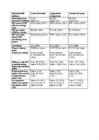
Majanduslik Eesti (Estonia) Argentiina Keenia (Kenya) näitaja (Argentia) Liberaalsuse aste 6 koht 69 koht 86 Koht (Economic freedom) Indeks:3,2 Indeks:2,05 Indeks:1,9 SKP suurus (GDP $22.5 billion (2011) $435.2 billion (2011) $36.1 billion (2011) official exchange rate) SKP per capita $20,200 (2011) $17,400 (2011) $1,700 (2011) (GDP per capita) SKP ostuvõime $26.93 billion (2011) $709.7 billion (2011) $71.5 billion (2011) alusel (GDP purchasing power parity) Gini indeks 31,4 (2009) 45,8 (2009) 42,5 (2008) Eksport inimese $6,988 per capita $1,362.63 per capita $ 113.97 per capita kohta (Export per capita) Kokku eksport: Kokku eksport: Kokku eksport: ...
Estonia railway history The first railway was opened to traffic in Estonia 24th October 1870th In Paldiski - Tallinn - Narva - Gatshina section. This celebrate birth of Estonian Railways. That same year, from St. Petersburg - Warsaw railway. The Baltic To the Railway Company extended the 1870th In line Gatshinast Tosnoni, whereby the connection was present October Railway. thanks to the Baltic railways quickly began to evolve almost ice-free port of Tallinn, which was built at that time a large cropevator. The first narrow-gauge railway in Estonia was opened in 5th of October 1896 between Pärnu and Valga. In 1897 the railway reached Viljandi and in 1900 Tallinn. The supply railway was owned by the private company. In 1923 the supply railway was nationalized; after that it was joined with the Estonian Railway in 1926. Estonia developed its narrow-gauge railway network as an important economy factor: in 1...
Estonia. Estonia, officially the Republic of Estonia is a country in Northern Europe. It is the smallest of the three Baltic countries. Estonia has land borders with Latvia (339 km) to the south and Russia (229 km) to the east. It is separated from Finland in the north by the narrow Gulf of Finland and from Sweden in the west by the Baltic Sea. Estonia has been a member of the European Union since May 1, 2004 and of the NATO since March 29, 2004. The area of Estonia is about 45000 square kilometres and the population is about 1.4 million people. The capital of Estonia is Tallinn and the official language is Estonian. The currency is Eesti kroon. The main religion is Lutheran. Anniversary of the republic is celebrated on February 20. The national flower is cornflower, national bird is barn swallow and national stone is limestone. It is a land of great natural beaut...
Estonian history between 1710-1850 and 1850-1918 Contents Contents.................................................................................................................................. 2 17101850.............................................................................................................................. 3 Population and social structure........................................................................................ 4 Serfdom and the intensifying manorial economy ............................................................. 4 Influences of Pietism and the Moravian Brethren............................................................. 5 Enlightenment and enlightened absolutism...................................................................... 6 18501918.......................................................................................................................
Tallinn English College Topic Estonia Tallinn 2008 1. Introduction Estonia is a small country about the size of Switzerland, or New Hampshire and Massachussetts combined. Estonia is named after the people called "Ests" who lived in the region in the 1 st century AD. The Republic of Estonia is one of the three countries commonly known as the "Baltic States". The other Baltic States are Latvia and Lithuania. 2. Geographical position Estonia is situated in northeastern Europe. Estonia is bounded on the north by the Gulf of Finland, on the east by Russia, on the south by Latvia and on the west by the Baltic Sea. In the north it borders on Finland. The coastline of the Baltic Sea in Estonia is characterized by numerous gulfs and bays, the biggest of them being the Gulf of Finland, the Gulf of Riga and the Gulf of Pärnu. Bays include the Narva Bay, Matsalu Bay, Kolga Bay, Kunda Bay, Tallinn Bay etc....
Võnnu Keskkool ESTONIA Referaat Autor: Klass : 9 Juhendaja: Võnnu 2013 Estonia officially the Republic of Estonia, is a state in the Baltic region of Northern Europe It is bordered to the north by the Gulf of Finland, to the west by the Baltic Sea, to the south by Latvia and to the east by Lake Peipus and Russia.Across the Baltic Sealies Sweden in the west and Finland in the north. The territory of Estonia covers 45,227km2 The Estonian climate resembles that of other countries on the Baltic littoral. On account of the country's proximity to the sea, the skies are often cloudy, and rain often falls in the spring and autumn, in the winter the rain turns to snow. The highest point in Estonia is Suur Munamäg It is in fact the highest point in the Baltic region Forest cover over one half of Estonia. The most common types of tree are pine, spruce and birch. Estonia, along...
TartuWaldorf School FINLAND Report Johan Mähar Tartu 2008 Contents p. 1. Introduction....................................................................................................1 2. Nature and geography.....................................................................................2 3. Position and size.............................................................................................2 4. Climate..............................................................................................
EESTI FISKAALPOLIITIKA MÕNINGATEST ASPEKTIDEST Kaie Kerem Tallinna Tehnikaülikool Kuna Eesti on väike avatud majandus, siis sõltub Eesti majandus väga tugevasti majanduskonjunktuuri muutustest välisturgudel. Seoses Eestis rakendatud valuutakomiteel põhineva rahasüsteemiga pole Eestis võimalik teostada aktiivset rahapoliitikat. Seetõttu on fiskaalpoliitikal täita Eesti majanduses oluline roll. Antud artiklis analüüsitakse valitsussektori tulusid ja kulutusi ning nendega seonduvaid probleeme. Samuti vaadeldakse valitsussektori kulutuste ja tulude struktuuri ning fiskaalpoliitika efektiivsuse mõningaid aspekte. Fiskaalpoliitika efektiivsuse tõstmine on eriti oluline tingimustes, kus Eesti on endale seadnud eesmärgiks ühineda Euroopa Liiduga. Valitsussektori tulud Fiskaalpoliitika järjekindlus on siirderiikide stabiilsuse ühe...
Why did I choose university education over vocational training? An essay Why more and more people nowadays tend to go to universities rather than to vocational schools? Will going to the university open all the doors in our lives? Is it necessary to have a higher education in order to survive in today’s economy? Those are just some of the questions that may arise when we start talking about the topic. Going to the university was once only for the children from wealthier families. Now as we have a lot of free higher education available, many people tend to use this wonderful opportunity. Although it might seem a great way to start building your way towards future career, it might not be the best way. Why? Because we have reached the stage where we have more people with higher education than we have jobs that require that kind of educational degree. To fix the issue, numerous studies have been car...
Services in Estonia Kärolin Puusild Kärdla ÜG 10th grade 2013 Services ● Health services ● Career services ● Mail service ● Military service ● E-services ● Spa services Health services ● As good as in most other EU countries Health services ● As good as in most other EU countries ● Medicines are only available in pharmacies Health services ● As good as in most other EU countries ● Medicines are only available in pharmacies ● Private clinics Health services ● As good as in most other EU countries ● Medicines are only available in pharmacies ● Private clinics ● Good spa treatments Health services ● As good as in most other EU countries ● Medicines are only ava...
Milestones in Estonian History The Estonians are a Finno-Ugric people who came from the area near the Urals and the Volga and Oka rivers. They migrated westward to the Baltic shores some 5, 000 years ago. In the ninth century A.D. Viking ships invaded Estonia and the country became a vital link in the sea-trade between East and West. By the 12th century, the Arabian geographer al-Idrisi had placed the city on his maps. In the 13th century, Tallinn joined the Hanseatic League, the union of European commercial towns that stretched from London to Novgorod. Pärnu, Viljandi and Tartu were also members. Estonia became a vital link in the sea-trade between East and West. The oldest preserved book written in Estonian, a catechism, dates from 1535. Tartu University was established in 1632, on orders from Sweden's King Gustav II Adolf. Literacy spread. The Bible was translated into Estonian in 1739(pole vaja teada). A period of wars began in...
Forestry Importance: · Environmental-protective importance Oxygen Cleans the air/soils/ground water Protects the soil from erosion · Timber Firewood Woodwork Building materials Timber cellulose paper · Mushrooms/berries/juices · Habitat of different species Measuring the amount of forest: · Fixing the area under the forests (ha/%) -> In Estonia 47.4%, 2.143 mil/ha It doesn't take into account the amount of timber · To measure the amount of timber (m3) -> 352.7 mil/m3 It doesn't take into account the annual increase · To fix different species of trees (%) -> Pine 40%, Birch 30%, Spruce 20% · To measure the annual increase of timber (m3, ha, year) -> 9 mil. m3/ha/year Main principle of the economy of forests: Annual cutting should be equal to annual increase. Trees are divided into: · Precious trees (ebony, mahagony, sandalwood) · Hard-br...
ESSAY about my family Everyone has his own definition of what is a family. The meaning of a family is different to every one of us. I think that the family in this point of view is one of the most important things in our life. If you have someone who can do everything for you and you can do the same you are lucky you have a family. I might say that I'm lucky. My lovely family consists of fourth members: mother, father, brother and me. I'm the youngest member in my family. We have pure love and affection for one another. My father live in Finland but he visit us once in a month and he stays here a couple of days. Mother, brother and I live in Anne street. My mother is the most important person in my life. She had done everything that I and my brother will have an amazing life. She only wants the best for us! My brother is four years older than me. He study economy and banking business in Estonian University of Life Sci...
European Union Research Compose: x X School 2009/10 What is European Union? The European Union (EU) is an economic and political partnership between 27 democratic European countries. EU population is almost a half milliard European union stands for caring and fair community. All EU members are devoted to peace, democracy, human rights respecting and working together to spread these values all the world. History The beginning of EU might consider the year 1951, when European Coal and Steel Community (ECSC) was constitute. Six countries joined with it for peace: Belgium, Netherlands, Luxembourg, Italy, France and Germany. With that move, coal and steel industry were put under one organisation, so war was almost impossible between these six country. Cooperation in different areas improved, when in 25. March 1957 Treaties of Rom , European Economic Community and European Atomic Energy Community memora...
The European Union (EU) is an economic and political union where are 27 member states drom European continent. The EU operates through a system of independent institutions and decisions are made by the member countries. EUs population is of over 500 million inhabitants which is 7.3% of the world population, there are 23 different languages and for now 17 countries are using EUs common currency Euro. EU was founded after World War II, when Europe was struggeling in social and political devastations. In 1948 a congress in Hague was held to discuss ideas about the development of European political co-operation. There were many important political figures such as Konrad Adenauer and Winston Churchill. On 9th May in 1950 French Minister of Foreign Affairs proposed that France and the Federal Republic of Germany should combine their coal and steel resources and let other European countries join also. From that on, the 9th of May has been cons...
Tartu Kutsehariduskeskus Autode ja masinate remondi osakond Rainer Kaine AT-109 Iseseisev töö Electric cars Instructor: Tauris Vijar Tartu 2010 Introduction In this essay i´m write electric cars and this how these cars are built, how easy is built electric car, how much costs electric cars. The problems for electric cars, there are many problems why peoples still can´t use quiet and more green cars. But even the electric car is not all green because the electricity produced for nuclear, coal, oil shale and natural gas. These ways to get electricity pollutes nature, the only difference between lies in the fact that pollution is in the one place. Coal Electric power station Oil shale power station in Narva What is a electric car An electric car is a plug-in battery powered automobile which is propelled by electric motor. Electric cars...
I Native Americans · Origin of Native Americans Origin is debatable Siberia->Alaska Crossed the land bridge around 14,000 years ago "ice-free corridor" Hunters, searching for fresh grounds · Different tribes and their way of life In tents, dark skin, hair is long, black and straight, women-agriculture, men- hunting. bands(chief. Travelled together) and tribes land was owned by the tribe that occupied it. 200 different tribes Apache- "enemy"- hunted buffalos, oil and natural gas from their land Cherokee- largest tribe Cheyenne- from Minnesota and S & N Dakota. High system of laws Northwest Ordinance of 1787 Signed in 1787 by Thomas Jefferson. The creation of the Northwest Territory as the first organized territory Ohio River was settled, 5 new states Advancement of education, maintenance of civil liberties, exclusion of slavery Promised not to invade or disturb Indians Northwest Indian War-> to stop white expropriation (sun...
Riigi põllumajanduse iseloomustus Tai Kuningriik Tai Kuningriik asub Euraasia mandril Aasia maailmajao kaguosas. Riik paikneb Indohiina poolsaarel 6. ja 19. põhjalaiuse vahel. Lõunas on naaberriigiks Malaisia, idas piirneb Tai Kambodža ja Laosega ning läänes Myanmariga. Tai rannajoone pikkus on enam kui 3200 km ning riigile kuulub 1430 saart. Läänes ümbritseb riiki Tai laht ning idas Andamani meri. (Raudsepp et al 2010) Maailmas suuruselt 51. riigina on Tai pindala 510 890 km2. Sellest haritava maa moodustab 30,71%, püsikultuurid ehk istandused 8,77%. Karjamaade alla jääb kõigest 1,6 % riigi pindalast. Niisutatava maa suurus on 64 150 km 2. Arvestades seda, et riigi põhjaosa on mägine ning lõunas laiuvad mussoonmetsad, kus põlluharimine on võimatu, on märkimisväärne püsikultuuride all oleva maa-ala suhteliselt suur protsent (võrdluseks Eestis kõigest 0,13%). (The World Factbook 2015; Asia 2015) Tai asub lähisekvatoriaalses kliimav...
Estonian cuisine The traditional cuisine of Estonia has substantially been based on meat and potatoes, and on fish in coastal and lakeside areas, but is influenced by many other cuisines by now. In the present day it includes a variety of international foods and dishes, with a number of contributions from the traditions of nearby countries. German, Scandinavian, Russian and other influences have played their part. The most typical foods in Estonia have been rye bread, pork, potatoes and dairy products. Estonian eating habits have historically been closely linked to the seasons. In terms of staples, Estonia belongs firmly to the beer, vodka, rye bread and pork "belt" of Europe. The Cold Table Flounder The first course in traditional Estonian cuisine is based on cold dishes - a selection of meats and sausages served with potato salad or Rosolje, an Estonian signature dishes based on beetroot, meat and herring ...
 annaabi.ee