Leidsid 33 sarnast õppematerjali, mis on seotud failiga "Environmental problems in Estonia". Need materjalid aitavad sul teemat sügavamalt mõista.
shale, mining, burning, environmental, decrease, eutrophication, caused, thanks, there, things, phosphate, clear, detergent, good, afternoon, talk, mostly, ground, mountains, reduce, based, electricity, producing, biggest, means, nutrient, oxygen, quality, improve, disable, sources, lakes, võrtsjärv, vasula, peoples, often, animals, lose, place, liveThese are air pollution, water pollution, endangered animals, deforestation and rubbish. Air pollution Firstly, lets talk about air pollution, which endangeres our life in cities and also the forests near by. Cars and factories blow poisoned gas in the air and it mixes with the oxygen, so the air that we breathe, becomes dangerous to our health. The ozone layer around the Earth, there is a special type of oxygen called ,,ozone". Ozone is important because it stops ultraviolett radiation from the sun. Many aerosol sprays and factories destroy ozone and they have made a very big hole in the ozone layer. This means that too much ultraviolet radiation now enters the Earth. This is very dangerous because it can cause cancer. Poisonous chemicals also cause acid rain, that destroyes plants, rivers, lakes and buildings. Acid rain can travel
.................. 59 17.1 Where Do We Get Our Oil?..................................................................................... 59 17.2 What Fuels Are Made From Crude Oil?...................................................................60 17.3 How Does Oil Impact The Environment?................................................................60 3 ENERGY STORY Once upon a time, in a town not far away, there was an 8th grader who was afraid of the dark. Her name was Jules. She was also afraid of the quiet, and of the cold. So she always left on the lights, the TV, and stereo even when she had her I-Pod earbuds on. She took lots of very long, hot showers. She never walked anywhere, but got rides from her mom in a big SUV. She couldn't be happy unless she was using all the energy she possibly could for all the stuff around her. Her friend, Les, didn't like to use any energy at all
ENVIRONMENTAL PROBLEMS Our environment is constantly changing. However, as our environment changes, so does the need to become increasingly aware of the problems that surround it. With a massive influx of natural disasters people need to be aware of what types of environmental problems our planet is facing. Current environmental problems make us vulnerable to disasters and tragedies, now and in the future. Unless we address the various issues seriously we are surely doomed for disaster. Current environmental problems require urgent attention. 1. Pollution: Pollution of air, water and soil require millions of years to recoup. Industry and motor vehicle exhaust are the number one pollutants. Heavy metals, nitrates and plastic are toxins responsible for pollution
Acid Rain Acid rain is any precipitation that is unusually acidic. It possesses elevated levels of hydrogen ions(it has low pH level). Acid rain is caused by emissions of carbon dioxide, sulfur dioxide and nitrogen oxides, which react with water molecules. Distilled water(doesn't contain CO 2), has pH level 7. Liquids with pH level less than 7 are acidic, liquids with pH level greater than 7 are alkaline. Unpolluted rain has a pH level over 5.7, so it is slightly acidic. Affected areas Places significantly impacted by acid rain around the globe include most of eastern Europe from Poland northward into Scandinavia, the eastern
Kool Tallinn, 2009 How can we make our planet a safer place to live Essay Nimi Klass Juhendaja notice the cars. But to put this in pracitce, public Is our problems and transport should be improved the buses planet a safe therefore we should be cleaner, they should drive more place to live can't fight frequently and there must be buses driving for animals, them. This to more destinations. This way people would fish, birds, way the air is understand that this is an easier, faster and a ourselves or being more cheaper way to get where ever you want. plants? Many and more You do not have to worry about parking and people think it polluted and gas prizes. is. But they
As the world has industrialized and its population has grown, the problem of water pollution has intensified. The simple fact that millions of people live along coastlines and near rivers means that these bodies of water are likely candidates for heavy and destructive pollution. It is hard to know now what our oceans will look like in the future. Just how damaged they will be by pollution is uncertain. Acid rain The term acid rain refers to what scientists call acid deposition. It is caused by airborne acidic pollutants and has highly destructive results. Scientists first discovered acid rain in 1852, when the English chemist Robert Agnus invented the term. From then until now, acid rain has been an issue of intense debate among scientists and policy makers. Acid rain, one of the most important environmental problems of all, cannot be seen. The invisible gases that cause acid rain usually come from automobiles or coal-burning power plants.
The environment in realtion to mobility/transport in Europe Air pollution is problem all over the world. Through some pollution comes from these natural sources, most pollution is the result of human activity. The biggest causes are the operation of fossil fuel- burning power plants and automobiles that combust fuel. Combined, these two sources are responsible for about 90% of all air pollution in the United States. All kind of pollutions can lead us to serious health problems. For example, air pollution is increasingly being cited as the main cause of lung conditions such as asthma - twice as many people suffer from asthma today compared to 20 years ago. Every year, 3.2m Europeans are
Environmental issues in Estonia The Earth is considered to be the most beatiful planets in the Universe. But our planet is threaten by environmental problems. Even a small country like Estonia can make difference. Our capital city is fighting against air pollution. But people produce much refuse and ways of recycling are getting old. Water pollution is also a problem in Estonia. We have factories that let their waste run into rivers. One of the biggest problems in Estonia is air pollution. Our air is polluted by exhaust fumes, because today we have a lot of cars, buses and other machines. In 2009 we had 407 cars to
Those with heart or lung disorders are under additional risk. Children and infants are also at serious risk. Because people are exposed to so many potentially dangerous pollutants, it is often hard to know exactly which pollutants are responsible for causing sickness. Also, because a mixture of different pollutants can intensify sickness, it is often difficult to isolate those pollutants that are at fault. Many diseases could be caused by air pollution without their becoming apparent for a long time. Diseases such as bronchitis, lung cancer, and heart disease may all eventually appear in people exposed to air pollution. Air pollutants such as ozone, nitrogen oxides, and sulfur dioxide also have harmful effects on natural ecosystems. They can kill plants and trees by destroying their leaves, and can kill animals, especially fish in highly polluted rivers. SOLUTIONS
The Major Environmental Problems in Estonia I would like to talk about the major environmental problems in Estonia. There are many of them but I would like to point out the most important of them: air pollution, huge amounts of waste because of overconsumption and abuse of the natural resources. To begin with, air pollution is a big problem in big cities and in industrial areas. Air pollution is often caused by the exhaust fumes of the cars or by big factories. It affects nature and peoples health causing them breathing problems. Secondly, huge amounts of waste are being produced every day and it is all because of overconsumption. Although, in recent years peoples knowledge about recycling and using eco-friendly products have improved, there are more landfills in Estonia than ever before. The government should take some actions and instead of talking about recession, improve recycling programs.
power source. Watt patented late in 1781 a connection from the piston to a rotating gear. This set-up is still used in the internal combustion engine. Scottish engineer and inventor William Murdock created a vehicle that was powered by a miniature steam engine. In 1813, the precursors to the steam engine train was built by William Hedly. Between 1800 and 1825 steam powered travel increased. Boats, vehicles, and trains used steam engines. The method of steam production was by burning some substance. Superheated steam was produced in an experiment by Jacob Perkins in 1823. His experiment was called a flash boiler. Steam of this type is later used in nuclear power plants to turn the steam turbine. In 1892, Rudolf Diesel of Germany patented the diesel engine. It operated through fuel ignition that caused highly compressed air to expand against a piston. The diesel engine had a 50% thermal efficiency, and was more efficient than steam engines.
Greenhouse gases Why they are cutting rainforest? More place for new homes To build new roads Selling the lumber to Japan To generate electricity Trees are used in flooring, furniture and other items Make more space for grazing lands Solution To enforce their anti-logging laws Provide alternatives to poor farmers Use less firewood and paper products Recycle old furniture and wood Educate yourself Ari Pollution Second largest environmental problem Industrial activities are the major causes Urbanisation Vehicular gas emissions dropped by 94% Burning trees Solution of air pollution Use more public transport To limit emissions of carbon dioxie Recycle different products Need to stop or low burning trees Clear the rainforests Use of wind power Use solar energy Waste disposal Brazil produces an enormous amounts of solid waste More than 161 000 tons of waste per day
The pH scale ranges from 0 to 14 with lower pH being more acidic while a high pH is alkaline; seven is neutral. Normal rain water is slightly acidic and has a pH range of 5.3-6.0. Acid deposition is anything below that scale. It is also important to note that the pH scale is logarithmic and each whole number on the scale represents a 10-fold change. Causes and History of Acid Rain Acid deposition can occur via natural sources like volcanoes and rotting vegetation but it is mainly caused by the release of sulfur dioxide and nitrogen oxide during fossil fuel combustion. When these gases are discharged into the atmosphere they react with the water, oxygen, and other gases already present there to form sulfuric acid, ammonium nitrate, and nitric acid. These acids then disperse over large areas because of wind patterns and fall back to the ground as acid rain or other forms of precipitation. The gases responsible for acid deposition are normally a byproduct of electric power
Presentation about enviroment Good afternoon everyone. First, let me introduce myself. My name is Valter and I am a student of Tallinn University of Technology. I'd like to talk about environment, its pollution and protecting. I shall only take 3 minutes of your time. Let me begin with the word enviroment and what it means! It means surroundings in which people, animals and plants exist. These are the things that we need, to be alive, but they are also many man-made things and technical progresses that harm the nature. Therefore we can´t live on this planet without basic components which are needed for human existence - air, water and soil. Firstly air, which is mostly a mixture of oxygen and nitrogen. People, animals and plants can ´t live without air. Without oxygen there would be no fire. So we can see, that air is the basic condition for life on the Earth
Taking up cycling instead of using a car is too dangerous in cities. It could be argued that taking up cycling is very healthy for people. It supports people more to move and it is like doing a sport. Besides it is very good for environment. Thanks to using bicycles cities air will be cleaner and air is not such impure. Thanks to cleaner air people's can breathe better air. This is partly true, but taking up cycling instead of using a car is really more dangerous than use only cars. Thanks to taking up cycling traffic will go busier and messier. There is much different kind of movers in traffic and it makes traffic really dangerous. It is clear that it is not too dangerous. There are many cities where cycling is very popular, for example in Copenhagen
more public transport or because of the high insurance taxes they are not able or willing to invest so much money for purchasing a car and have started to use bicycles or public transport instead. During the credit crunch people do not have enough finance to make a major outgo like buying a car. Also because the interest rates have decreased on the mortgages and people cannot buy car on credit anymore because their household value has dropped. During the recession there is a good chance to make profit of it, will be for cheaper car brands like skoda, vauxhall and kia. Besides that customers are likely to change over form new car market to the used car market, when they are in need for a new car.(http://academic.mintel.com D) Oil prices have been rising notably during the last years. While the oil price is rising then the purchases for new cars have been falling. Although there has been arise in diesel engine cars
Being on the Baltic Sea the country is subjected to sea breezes and humidity. Estonia has a temperate climate, with four seasons of near-equal length. Summer is warm, while spring and autumn can be mild. Winter, which lasts from November to middel March, 4 can be very cold. The cold winter does not necessarily mean constant snow; in fact snowfalls are few and far between. When it falls it stays though, and there tends to be a layer of snow on the ground constantly. The deepest snow cover is usually in the south-eastern part of Estonia. Temperatures range from a summer average of 30°C to an average in winter of -8°C.The coldest month is considered to be February and the hottest July. There are about 160 to 181 rainy days a year. Rainfall is distributed throughout the year with the heaviest rainfall in August. Nature Waterbodies Estonia is a country of thousands of lakes
Precipitation (750-1500 mm) is distributed evenly throughout the year. Temperate grassland- Semiarid, continental climates of the middle latitudes typically have between 25 cm and 50 cm of precipitation a year. Much of this falls as snow, serving as reservoir of moisture for the beginning of the growing season. Warm to hot summers are experienced, depending on latitude. In the winter, grassland temperatures can be as low as -40° C, and in the summer it can be as high 20° C. There are two real seasons: a growing season and a dormant season. The growing season is when there is no frost and plants can grow (which lasts from 100 to 175 days). During the dormant (not growing) season nothing can grow because it's too cold. Taiga- Long, cold winters, and short, mild, wet summers are typical of this region. In the winter, chilly winds from the arctic cause bitterly cold weather in the taiga. The length of day also varies with the seasons in the taiga
Due to its high energy density, easy transportability and relative abundance, oil has become the world's most important source of energy since the mid-1950s. Petroleum is also the raw material for many chemical products, including pharmaceuticals, solvents, fertilizers, pesticides, and plastics; the 16 per cent not used for energy production is converted into these other materials. Petroleum is found in porous rock formations in the upper strata of some areas of the Earth's crust. There is also petroleum in oil sands (tar sands). Known oil reserves are typically estimated at around 190 km3 (1.2 trillion (short scale) barrels) without oil sands, or 595 km3 (3.74 trillion barrels) with oil sands. Consumption is currently around 84 million barrels (13.4×10⁶ m3) per day, or 4.9 km3 per year. Which in turn yields a remaining oil supply of only about 120 years, if current demand remain static. Chemistry Octane, a hydrocarbon found in petroleum
................................................................................ Introduction To be honest I got the list of topics after most interesting ones for me were taken. At first I was not very satisfied with my topic but then I realized that this could be actually really interesting thing to make a report of. I chose this particular topic because I have always been interested in green energy. This topic gave me an excellent opportunity to improve my knowledge about these kinds of things. For me this report is a great challenge because I have not done anything like this before, especially in English. Primary goal for me is to improve my knowledge about renewable energy and also usage of English language. This report is going to talk about biogas. It provides a brief review of usage and future prospects of the biogas. I have tried to make this report as understandable as possible. By the end of this report I want to come to a conclusion whether biogas is
1879. Negative aspects of hydropower Damming rivers may destroy or disrupt wildlife and other natural resources. Hydropower plants can cause low dissolved oxygen levels in the water, which is harmful to river habitats. Hydroelectric power plants don't work for a very long time. Silt, or dirt from a riverbed, builds up behind the dam and slows the flow of water. Geothermal energy Geothermal energy is the heat from the Earth. It's clean and sustainable. It can be extracted without burning a fossil fuel such as coal, gas, or oil. Geothermal fields produce only about onesixth of the carbon dioxide that a relatively clean naturalgasfueled power plant produces. Unlike solar and wind energy, geothermal energy is always available, 365 days a year. It's relatively inexpensive. There are three types of geothermal power plants: dry steam, flash, and binary. Geothermal energy is generated in over 20 countries. The United States is the world's largest producer.
8133). 2.2.2 Geography Location: Eastern Europe, bordering the Baltic Sea and Gulf of Finland, between Latvia and Russia Area: total: 45,228 km2 land: 42,388 km2 and water: 2,840 km2 Coastline: 3794 km Climate: maritime; wet, moderate winters, cool summers Terrain: marshy, lowlands; flat in the north, hilly in the south Land use: arable land: 12.05%, permanent crops: 0.35%, other: 87.6% (2005) Environment current issues: air polluted with sulfur dioxide from oilshale burning power plants in northeast; however, the amount of pollutants emitted to the air have fallen steadily, the emissions of 2000 were 80% less than in 1980; the amount of unpurified wastewater discharged to water bodies in 2000 was 1/20 the level of 1980; in connection with the startup of new water purification plants, the pollution load of wastewater decreased; Estonia has more than 1,400 natural and manmade lakes, the smaller of which in agricultural areas need to be monitored;
they cover a mere 6% and experts estimate that the last remaining rainforests could be consumed in less than 40 years. · Vihmametsad katsid kunagi 14% maapinnast, praegu katavad nad ainult 6% ja eksperdid arvavad et viimased alles olevad vihmametsad nö. tarvitatakse ära vähema kui 40 aasta pärast. Causes of rainforest destruction Vihmametsa hävitus põhjused. · Logging · Agriculture · Fuelwood- küttepuud · Large Dams- suured tammid · Mining and industry- kaevandus ja tööstus. · Tourism turism. · Poverty and overpopulation vaesus ja ülerahvastatus. · Colonialism kolonialism. Why save it? · The rainforest is home to over · Vihmamets on koduks rohkem fifty percent of all plants and kui 50 % maa loomadele ja animals on earth. It is the taimedele. See on maa elav earth's living lung--it breathes kops see hingab sisse karbon
but are trace level unintentional byproducts of most forms of combustion and several industrial chemical processes. Of all of the dioxins and furans, one, 2,3,7,8tetrachloropdibenzo dioxin (2,3,7,8 TCDD) is considered the most toxic. · PCBs were produced commercially in large quantities until production was stopped in 1977. . Emission sources Dioxins are mainly produced as unwanted byproducts of industrial processes and there is no intentional production or use. They can also to a small extent be formed naturally in forest fires or volcanic activity. Examples of activities resulting in dioxin emissions are waste incineration, burning fuels (wood, coal or oil), chlorine bleaching of pulp and paper and chlorinated pesticides manufacturing. Burning of many materials containing chlorine, such as plastics and wood treated with pentachlorophenol also produce dioxins.
It now refers to land with grass and either scattered trees or an open canopy of trees. Changes in fire management Savannas are subject to regular fires and the ecosystem appears to be the result of human use of fire. For example Native Americans created subtropical savannas by periodic burning in some areas of the US southeastern coast where fire-resistant Longleaf Pine was the dominant species. Aboriginal burning appears to have been responsible for the widespread occurrence of savanna in tropical Australia and New Guinea
places 2 (iii) support, figure lower than 5.991 / figure lower than critical value; R ‘support’ on its own. ecf applies if value in (ii) is incorrect 1 [16] 2. named characteristic; named environmental factor; (mark first answer only) 2 [2] 3. 1 ref to operon; 2 normally repressor substance bound to operator; 3 prevents RNA polymerase binding (at promoter) / prevents transcription; 4 lactose binds to repressor; 5 changes shape of protein molecule; 6 unable to bind (to operator);
shampoo, cosmetics, cleaning agents, washing detergents and toothpaste. A large proportion of palm oil expansion occurs at the expense of biodiversity and ecosystems in the countries it is produced. Currently, a third of all mammal species in Indonesia are considered to be critically endangered as a consequence of this unsustainable development that is rapidly encroaching on their habitat. There are over 300,000 different animals found throughout the jungles of Borneo and Sumatra, many of which are injured, killed and displaced during deforestation. In addition, palm oil development increases accessibility of animals to poachers and wildlife smugglers who capture and sell wildlife as pets, use them for medicinal purposes or kill them for their body parts. The destruction of rainforests in Borneo and Sumatra is therefore not only a
Many plants have dark red leaves that allow the plant to absorb more heat from the sun in the cold tundra climate. All of the plants are adapted to sweeping winds and disturbances of the soil. Many plants grow in a low, tight clump - this growth habit helps protect them from the cold and snow. They can carry out photosynthesis at low temperatures and low light intensities. The growing season is short and most plants reproduce by budding and division rather than sexually by flowering. There are no deep root systems in the vegetation of the tundra; however, there are a wide variety of plants that are able to resist the cold climate. The fauna is also diverse. Animals such as mammals and birds also have additional insulation from fat. Many animals hibernate during the winter because food is not abundant. Another alternative is to migrate south in the winter, like birds do. Reptiles and amphibians are few or absent because of the extremely cold temperatures
In 2006, about 18% of global final energy consumption came from renewables, with 13% coming from traditional biomass, such as wood-burning. Hydroelectricity was the next largest renewable source, providing 3% (15% of global electricity generation),followed by solar hot water/heating, which contributed 1.3%. Modern technologies, such as geothermal energy, wind power, solar power, and ocean energy together provided some 0.8% of final energy consumption. While there are many large-scale renewable energy projects and production, renewable technologies are also suited to small off-grid applications, sometimes in rural and remote areas, where energy is often crucial in human development.Kenya has the world's highest household solar ownership rate with roughly 30,000 small (20100 watt) solar power systems sold per year. Some renewable energy technologies are criticised for being intermittent or unsightly, yet the market
increasingly difficult to compete with cheap producers from outside the European Union Estonian market is also being gradually flooded by cheap goods from China, India and Turkey. Mechanical engineering and motor vehicle industry have experienced a rapid development during the recent years, although the branch became nearly extinct in the early 1990s after the collapse of the Soviet military industry. The local business climate has been revived thanks to the opening of the plant of the international electronics company Elcoteq in 2000. Engineering products and equipment manufactured in Estonia range from cables, mobile phones and computers to security equipment for cars, laboratory equipment, different hoists and other equipment for different industries. The economic changes of the 1990s had an especially severe effect on the chemical industry as many of the enterprises were oriented to the Soviet military industry and their
Canada 8a Teacher: Merike Sisask Composer: Kärt Kalvet 2010 Canada, Kärt Kalvet 8a Canada General Information Canada is in North America. It's area is 9220970 sq km. Canada's population is 313.612.000 people. Canada is divided into 10 provinces and 3 territories. The capital of Canada is Ottawa. Canada has constitutional monarchy. The head of state in Canada's government is the Queen of England. There are two main languages in Canada: English and French. Canada's curreny is Canadian dollar (1 dollar=100 cents[Can$]). The highest peak of Canada is Mount Logan, 5959 metres. The lowest point is sea level. The longest river is the Mackenzie. The climate and geography of Canada vary greatly from temperate in the south to arctic in the north and from islands and plains in the east to mountains in the west. Location Canada is located in the northern-most region of North America
The Executive power in Australia is in the hands of the Commonwealth Government lead by the Prime Minister. Today the Prime Minister is John Howard, the leader of the Liberal Party. History Australia was once a part of the giant continent Gondwana. It included Africa, South America and Antarctica. First Australia and Antarctica split from Gondwana, then Australia broke away from Antarctica and began to move north. Aborigines arrived there about 50 000 years ago. They had occupied the whole continent by 30 000 years ago. At that time Tasmania was still part of the mainland. About 20 000 years ago the ice began to melt and the rising water level cut Tasmania off from the mainland. Traders from what is now Indonesia are thought to have been visiting Australia well before the 17th century. Chinese, Malaysian and Arab sea Captains may also have landed in Northern Australia after the 15 th century.
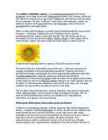
arranged (korraldatud, ettekavatsetud)spirally(spiraalselt). Typically each floret is oriented(suunitlusega) toward(poole) the next by approximately(umbkaudu, ligikaudu) the golden angle(parima nurga alla), producing a pattern(muster, lõikeleht, seaduspärasus) of interconnecting spirals where the number of left spirals and the number of right spirals are successive Fibonacci numbers.(fibonacci arv/ rida) Typically, there are 34 spirals in 1 direction(suund, juhatamine, juhis) and 55 in the other; on a very large sunflower you may see 89 in one direction and 144 in the other. The disc florets mature(täiskasvanud ; valmima, kääritama ) into what are traditionally called "sunflower seeds", but are actually the fruit (an achene) of the plant. The true seeds are encased(ümbritsetud, koorikus) in an inedible husk (söögikõlbmatu, mittesöödav, kest, aganad ; kroovima, koorima)
 annaabi.ee