Leidsid 33 sarnast õppematerjali, mis on seotud failiga "Environment". Need materjalid aitavad sul teemat sügavamalt mõista.
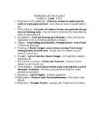
animals, forest, cause, rubbish, there, trees, these, place, them, deforestation, forests, ozone, endangered, oxygen, clean, plant, dangerous, means, rivers, enviroment, places, throw, able, mostly, part, planet, talk, near, layer, important, radiation, destroy, ultraviolet, plants, lakes, country, avoid, useful, work, built, issue, peole, floods, trashKool Tallinn, 2009 How can we make our planet a safer place to live Essay Nimi Klass Juhendaja notice the cars. But to put this in pracitce, public Is our problems and transport should be improved the buses planet a safe therefore we should be cleaner, they should drive more place to live can't fight frequently and there must be buses driving for animals, them. This to more destinations. This way people would fish, birds, way the air is understand that this is an easier, faster and a ourselves or being more cheaper way to get where ever you want. plants? Many and more You do not have to worry about parking and people think it polluted and gas prizes. is. But they
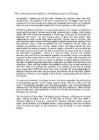
threaten the well being of humans. FIND OUT 5 WAYS HOW TO MANAGE WASTE. 5. Loss of Biodiversity: Human activity is leading to the extinction of species and habitats and loss of bio- diversity. Eco systems, which took millions of years to perfect, are in danger when any species population is decimating. Another example is the destruction of coral reefs in the various oceans, which support the rich marine life. FIND OUT 5 WAYS HOW TO HALT THE LOSS OF BIODIVERSITY 6. Deforestation: Our forests produce fresh oxygen and help in regulating temperature and rainfall. At present forests cover 30% of the land but every year tree cover is lost amounting to the country of Panama due to growing population demand for more food, shelter and cloth. Deforestation simply means clearing of green cover and making that land available for residential, industrial or commercial purpose. FIND OUT 5 WAYS HOW TO STOP DEFORESTATION. 7
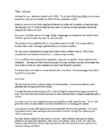
Presentation about enviroment Good afternoon everyone. First, let me introduce myself. My name is Valter and I am a student of Tallinn University of Technology. I'd like to talk about environment, its pollution and protecting. I shall only take 3 minutes of your time. Let me begin with the word enviroment and what it means! It means surroundings in which people, animals and plants exist. These are the things that we need, to be alive, but they are also many man-made things and technical progresses that harm the nature. Therefore we can´t live on this planet without basic components which are needed for human existence - air, water and soil. Firstly air, which is mostly a mixture of oxygen and nitrogen. People, animals and plants can ´t live without air. Without oxygen there would be no fire. So we can see, that air is the basic condition for life on the Earth
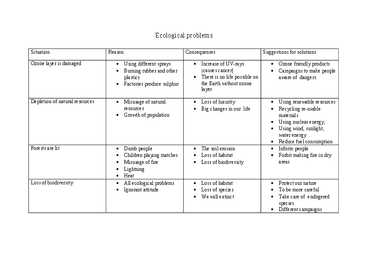
Situation Reason Consequenses Suggestions for solutions Ozone layer is damaged · Using different sprays · Increase of UV-rays · Ozone friendly products · Burning rubber and other (causes cancer) · Campaigns to make people plastics · There is no life possible on aware of dangers · Factories produce sulphur the Earth without ozone layer Depletion of natural resources · Misusage of natural · Loss of luxurity · Using renewable resources
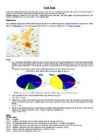
5.05.9 Not especially harmful except when carbon dioxide levels are high (20 mg I 1) or ferric ions are present 4.54.9 Harmful to the eggs of salmon and trout species (salmonids) and to adult fish when levels of Ca 2, Na and Cl are low 4.04.4 Harmful to adult fish of many types which have not been progressively acclimated to low pH 3.53.9 Lethal to salmonids, although acclimated roach can survive for longer 3.03.4 Most fish are killed within hours at these levels Environmental effects Very obvious environmental effect of acid rain is the loss of fish in acid sensitive lakes and streams. Loads of fishes are not able to survive in acidic water. There are 2 ways acid rain effects lakes and streams: chronic and episodic. The first one is long-term process and this acidification is result from years of acidic rainfall. Episodic, on the other hand, is rapid change sudden jump in the acidity of water.
Acid rain The term acid rain refers to what scientists call acid deposition. It is caused by airborne acidic pollutants and has highly destructive results. Scientists first discovered acid rain in 1852, when the English chemist Robert Agnus invented the term. From then until now, acid rain has been an issue of intense debate among scientists and policy makers. Acid rain, one of the most important environmental problems of all, cannot be seen. The invisible gases that cause acid rain usually come from automobiles or coal-burning power plants. Acid rain moves easily, affecting locations far beyond those that let out the pollution. As a result, this global pollution issue causes great debates between countries that fight over polluting each other's environments. For years, science studied the true causes of acid rain. Some scientists concluded that human production was primarily responsible, while others cited natural causes as well. Recently, more
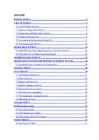
.................. 59 17.1 Where Do We Get Our Oil?..................................................................................... 59 17.2 What Fuels Are Made From Crude Oil?...................................................................60 17.3 How Does Oil Impact The Environment?................................................................60 3 ENERGY STORY Once upon a time, in a town not far away, there was an 8th grader who was afraid of the dark. Her name was Jules. She was also afraid of the quiet, and of the cold. So she always left on the lights, the TV, and stereo even when she had her I-Pod earbuds on. She took lots of very long, hot showers. She never walked anywhere, but got rides from her mom in a big SUV. She couldn't be happy unless she was using all the energy she possibly could for all the stuff around her. Her friend, Les, didn't like to use any energy at all
2. Where is prairie, pampas, steppe, and veldt situated? EurasiaSteppe, North America-Prairie, South AmericaPampa, South AfricaVeldt 3. Using the climate diagram describe the climate of the region. Temperate deciduous forest -Well-defined seasons with a distinct winter characterize this forest biome. Moderate climate and a growing season of 140-200 days during 4-6 frost-free months distinguish temperate forests. Temperature varies from -15° C to 25° C. Precipitation (750-1500 mm) is distributed evenly throughout the year. Temperate grassland- Semiarid, continental climates of the middle latitudes typically have between 25 cm and 50 cm of precipitation a year. Much of this falls as snow, serving as reservoir of moisture for the beginning of the growing season
Air pollution Every day, the average person inhales about 20,000 liters of air. Every time we breathe, we risk inhaling dangerous chemicals that have found their way into the air. Air pollution includes all contaminants found in the atmosphere. These dangerous substances can be either in the form of gases or particles. Air pollution can be found both outdoors and indoors. Pollutants can be trapped inside buildings, causing indoor pollution that lasts for a long time. The sources of air pollution are both natural and human-based. As one might expect, humans have been producing increasing amounts of pollution as time has progressed, and they now account for the majority of pollutants released into the air.
The coat of arms features a kangaroo and an emu (the national animals of Australia), golden wattle (the national floral emblem), a shield with the coats of arms of the six states of Australia and a star for all states and territories. Australia's national anthem is "Advance Australia Fair", which replaced "God Save The Queen" in 1984. the unofficial anthem is "Waltzing Matilda". As said before Australias national animals are kangaroos and emus. Often coalas are mentioned too, its floral emblem is the golden wattle and its national colours are the colours of its flag red, white and blue. Head of state Head of state is Queen Elizabeth II, who is queen of United Kingdom and also queen is Australia. In practice, Governor General performs her functions in queen's absence. Since 1989 Bill Hayden has been the Governor General Government
Besides it is very good for environment. Thanks to using bicycles cities air will be cleaner and air is not such impure. Thanks to cleaner air people's can breathe better air. This is partly true, but taking up cycling instead of using a car is really more dangerous than use only cars. Thanks to taking up cycling traffic will go busier and messier. There is much different kind of movers in traffic and it makes traffic really dangerous. It is clear that it is not too dangerous. There are many cities where cycling is very popular, for example in Copenhagen. If this method will be chosen, city needs to build special cycling roads. Thanks to these roads traffic should be safer. More energy is used up taking items to recycling banks than the benefits gained from recycling materials. It could be argued that there is more energy used up. There is made lot of campaigns, spend lot of money and so on. But quite big proportion of people does not care about it and
REPORT To: local authorities From: a member of the Nature Club Subject: environmental situation at Poku Date: 22 February 2012 As a member on the Nature Club I have decided to write a report describing the environmental situation and make some recommendations based of the opinion poll. The situation at Poku is satisfying. Water and noise pollution is low because there are no cities around here. Wildlife is good and getting better because we have beautiful forests near Poku which gives good living and development places for wild animals. Paper and glass recycling is well organized. We have paper and glass containers and workers are cleaning them daily basis. Due to the fact that overall life in Poku is good we still have some problematic things to consider. Nowadays government has started to cut trees near Poku. This affects development of
Its name means ,,Southland". The official name of the country is the Commonwealth of Australia. It's capital is Canberra. Australia is the sixth largest country in the world but the smallest continent. Australia has 6 states and 2 territories (New South Wales, Victoria, Tasmania, Queensland, Western Australia , South Australia, The Australian Capital Territory and the Northern Territory). The Australian people are culturally the same as the Anglo Americans. There also live aborigines. Aborigines are the ancestors of the people. Like the US and Canada, Australia was an English speaking colony of Great Britain. Today Australia is a modern developed country with a diversified economy. Australia is an island continent of 7.7 million square kilometres, which makes it a little smaller than the USA. Located in south of Asia, between The Pacific and Indian Oceans, Australia is the World's driest continent
1. Key features for all studied biomes. Tundra The main seasons are winter and summer. The tundra is the world's coldest and driest biomes. The average annual temperature is -28° C. Nights can last for weeks when the sun barely rises during some months in the winter, and the temperature can drop to -70° C. During the summer the sun shines almost 24 hours a day. Summer are usually warm. Average summer temperatures range from 3° to 16°C. TaigaTaiga is the Russian word for forest and is the largest biome in the world. It stretches over Eurasia and North America. The taiga is located near the top of the world, just below the tundra biome. The winters in the taiga are very cold with only snowfall. The summers are warm, rainy, and humid. Some of the animals in the taiga hibernate in the winter, some fly south if they can, while some just cooperate with the environment. GrasslandsGrassland biomes can be found in the middle latitudes
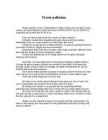
breathing thing we can also do is to use paper and Ho difficulties andcloth bags instead of plastic bags. w can we stomach We can also fight against water make our problems. We pollution. We should stop using the town a should do products of companies whose factories better something cause pollution, so we will force them to place to before its too use environmentally friendly production live in? late. methods. The government should close The these companies who have polluted rivers first thing for a long time. This way our rivers will The we can do is be cleaner. People would have clean water living to stop to drink and to swim in. conditions in
The two major nutrients are nitrogen and phosphorus. Nitrogen is created by biological fixation, and phosphorus is created by precipitation. The most distinctive characteristic of tundra soil is its permafrost, a permanently frozen layer of ground. The average winter temperature is -28°C, but the average summer temperature is 3-16°C. During the brief summers, the top section of the soil may thaw out allowing plants and microorganisms to grow and reproduce. However, these plants and microorganisms become dormant during the cold winter months. Soil is formed slowly. The constant freezing and thawing in the tundra helps to break the rocks into smaller pieces. Permafrost consists mostly of gravel and finer material. The arctic tundra is also a windy place and winds can blow between 48 to 97 kilometres. The tundra is basically like a desert when it comes to precipitation. Only about 150-250 millimetres of precipitation (mostly snow) fall each year. When water
...............................................................................................3 Relief...............................................................................................................................4 Climate & Time Zones....................................................................................................5 Plants...............................................................................................................................5 Animals...........................................................................................................................6 Population.......................................................................................................................6 The Native Australians....................................................................................................6 The Biggest cities..............................................................................................
Acid Rain Acid rain is rain consisting of water droplets that are unusually acidic because of atmospheric pollution - most notably the excessive amounts of sulfur and nitrogen released by cars and industrial processes. Acid rain is also called acid deposition because this term includes other forms of acidic precipitation such as snow. Acidic deposition occurs in two ways: wet and dry. Wet deposition is any form of precipitation that removes acids from the atmosphere and deposits them on the Earth's surface. Dry deposition polluting particles and gases stick to the ground via dust and smoke in the absence of precipitation. This form of deposition is dangerous however because precipitation can eventually wash pollutants into streams, lakes, and rivers. Acidity itself is determined based on the pH level of the water droplets. PH is the scale measuring the amount of acid in the water and liquid. The pH scale ranges from 0 to 14 with
Problems 1 Underline the most suitable word or phrase. a) Many people were injured when the building demolished/collapsed. b) The ship radioed to say that it was in difficulties/dangers. c) The government has announced plans to help the poor/poverty. d) There was a large demonstration/manifestation against nuclear power in Manchester yesterday. e) Everyone agrees that the environment/nature must be protected. f) There has been another increase/rising in the level of crime. g) There are few jobs here and many people are away from work/unemployed. h) The train was in a/an accident/collision with a bus on a level crossing. i) The driver of the bus admitted that he had done/made an error. j) No ships are sailing today because of the high/storm winds. 2 Complete each sentence with a word from the box. Use each word once only.
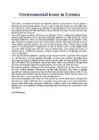
The most pressing environmental issues in Estonia The earth is considered as one of the most beautiful planets in the Universe. Unfortunately, our planet is suffering due to many problems which should be solved before it is too late. Of course our country is not an exception. The major problems that are facing our country today are air and water pollution and recycle problem. Also we have, for example, deforestation problem and traffic jams, for instance, in Tallinn in rush-hour. Nevertheless, those problems are not so significant than previous. One of the biggest problems in Estonia is air and water pollution. One example of air pollution is exhaust fumes. Today we have a lot of transport: cars and buses, in the main in our capital. Gases which are produced by cars contain carbon dioxide. This carbon dioxide in the air causes global warming, which is the result of the green house effect
Australia Australia is a country and also a continent. If someone wants to make clear, that he is speaking of the country, he may call it by its full name of Commonwealth of Australia. Australia's name means "southland."It is south of the equator. Sometimes it is also called the island continent because it is an island. There are about twenty million people in Australia.It is 1,800 miles from the mainland of Asia and almost half way round the world from Europe. More than 600 miles of ocean separate it from Americas. Since Australia is south of the equator, its seasons are just the opposite of ours. It has summer while we have winter, and the other way round. States and Territories. Australia consists of six states, two territories and eight external territories.
the awe-inspiring experience of standing in the heart of a primary rainforest. Rainforests have evolved over millions of years to turn into the incredibly complex environments they are today. Rainforests represent a store of living and breathing renewable natural resources that for eons, by virtue of their richness in both animal and plant species, have contributed a wealth of resources for the survival and well-being of humankind. These resources have included basic food supplies, clothing, shelter, fuel, spices, industrial raw materials, and medicine for all those who have lived in the majesty of the forest. However, the inner dynamics of a tropical rainforest is an intricate and fragile system. Everything is so interdependent that upsetting one part can lead to unknown damage or even destruction of the whole. Sadly, it has taken only a century of human intervention to destroy what nature designed to last forever.
Protecting endangered species will make a difference in humans' life In the nature of humankind it is natural to hunt animals. However, nowadays hunting endangered species will make humans be just killers, because it is not necessary to kill something just to have a trophy on the wall at home. People can be proud of what they have done, but decreasing the population of a species largely will cause the specific animal breed to go extinct faster than it would happen via natural causes. Therefore, humans should stop hunting endangered species to slow down their extinction, as these species offer balance in the wildlife, are used without purpose in medicine, and may even reduce poverty. Species on the brink of extinction affect us more than we realize. Sure, pandas are cute, and rhinos are fun to look at, but is there anything more to that
8 million square miles of land and fresh water it is the second biggest country in the world after Russia. Canada covers most of the northern part of North America. Canada has over 151,480 miles of coastline. Most of Canada's human population lives along its southern border. 3. Relief Canada's geography is very diverse. It has huge lakes, evergreen forests, prairies, meadows and beautiful mountains. There are thousands of miles of coastline with beaches, fjords and wild rivers flowing to the oceans. Canada is a country of wide open spaces and beautiful landscape where traveling visitors can unexpectedly bump into wild animals like bears or be struck by unusual sight like the scarecrows on the Cabot Trail. Canada is rich in natural wonders, one of them, the Niagara Falls between lakes Erie and Ontario, which is the
PROBLEMS OF THE PLANET Problems Cause - Effect 1. Destruction of the rainforests Trees are cut down to make room for cattle or to get paper and land Less clean air, Loss of natural habitat = die 2. Water pollution Factories, oil tankers, farmers use pesticities that get into our drinking water Sea life close to extinction, No clean drinking water, Beaches polluted 3. Air pollution Cars and factories give off fumes Cities will become impossible to live in, Breathing problems, Allergies 4
The environment in realtion to mobility/transport in Europe Air pollution is problem all over the world. Through some pollution comes from these natural sources, most pollution is the result of human activity. The biggest causes are the operation of fossil fuel- burning power plants and automobiles that combust fuel. Combined, these two sources are responsible for about 90% of all air pollution in the United States. All kind of pollutions can lead us to serious health problems. For example, air pollution is increasingly being cited as the main cause of lung conditions such as asthma - twice as many people suffer from asthma today compared to 20 years ago. Every year, 3.2m Europeans are diagnosed with cancer - the most common cause of death after heart disease. Most widespread are cancers of the lungs, breast and colon
So that people would use more public transportation than their own car. Furthermore, it will change our climate. In addition our air is polluted by hydrogen sulfide from plants and factors (Especially in Kohtla- Järve and Maardu). Other big environment problem is garbage. Huge amount of waste is produced every day and it is all because of overconsumption. Although, in recent years peoples knowledge about recycling and using eco-friendly products have improved, there are more landfills in Estonia than ever before. The government should take some actions and instead of talking about recession, they should improve recycling programs or take into use some new ways. Environment problem in Estonia is also water pollution. Big factories let their waste run into the rivers without cleaning it and farmers use man-made fertilizers. Their action is spoiling groundwater. Garbage wrong recycling also affects groundwater quality, because when it rains
Water pollution Water pollution is the contamination of water bodies such as lakes, rivers, oceans, and groundwater caused by human activities, which can be harmful to organisms and plants and for all of us. First, we have to talk about the causes of water pollution. Domestic households, industrial and agricultural practices produce wastewater that can cause pollution of many lakes and rivers. Industry is a huge source of water pollution, it produces pollutants that are extremely harmful to people and the environment. Dumping of litter in the sea can also cause huge problems. Different items take different lengths of time to degrade in water. Oceans are polluted by oil on a daily basis from oil spills, everyday shipping and dumping. Secondly, it is very significant to know about dangers of water pollution.
Oceans. The population of Canada is about 31 million people. About 77% of the people live in cities which lie in a band about 100 miles wide above the border of the United States. The capital of Canada is Ottawa. Other large cities are Montreal, Toronto, Vancouver, Winnipeg and Quebec. Canada has two official languages English and French. It's interesting to know that about 61% of Canadians name English and 24% French their mother tongue. There are also many other languages spoken in Canada such as: Italian, Chinese, German, Polish, Ukrainian, Greek and Dutch. There are also many native languages such as Algonquian. The British and the French as the main settlers from Europe fought for hundreds of years before they managed to build up a country which was based on recognizing the cultural diversity of different nations in Canada. All the communities living in the
Harold McMillan articulated his now famous “winds of change” sweeping Africa. We had high hopes for Africa, for the Black race, that the insidious imposition of foreign rule on us, the looting of Africa’s natural resources by our colonial masters accorded us would be things of history. That is more than forty years ago. Unfortunately, the promise of independence has not been fulfilled. Today, Africa has become more desolate; there is more starvation, diseases and non-provision of essential services than when we got our independence. There are all kinds of wars in Africa than the rest of world put together. The majority of so-called Africans leaders want to stay in power until the day their bodies are put in the grave. Through buffoonery, utter mismanagement and downright stealing of the wealth of the masses, these leaders have so impoverished Africa that we are now nothing but a beggar continent. We beg for
grown on the African oil palm tree. Oil palms are originally from Western Africa, but can flourish wherever heat and rainfall are abundant. Today, palm oil is grown throughout Africa, Asia, North America, and South America, with 85% of all palm oil globally produced and exported from Indonesia and Malaysia; but most of the time not using sustainable measures. The industry is linked to major issues such as deforestation, habitat degradation, climate change, animal cruelty and indigenous rights abuses in the countries where it is produced, as the land and forests must be cleared for the development of the oil palm plantations. According to the World Wildlife Fund, an area the equivalent size of 300 football fields of rainforest is cleared each hour to make way for palm oil production. This large-scale deforestation is pushing many species to extinction, and findings show that if nothing hanges, species like the
Location: Temperate forests are typical of all European continent, the Eastern region of Asia (in special, Chinese and Japan) and North America. Also are finded in tempered areas of South America. Climate: The average temperature in temperate forests is 50° F. Summers are mild, and average about 70° F, while winter temperatures are often well blow freezing. The average yearly precipitation is 30-60 inches. This precipitation falls throughout the year, but in the winter it falls as snow. There are four seasons in this biome, with warm summers and cold winters, often snowy. In autumn, the leaves change color and fall from the trees. The leaves decay on the forest floor, so the soil is very rich. Because of this, and because of the long growing season, many deciduous forests have been cut down for farming purposes. Plants: Trees of this biome include hardwoods such as maple, oak, hickory, and beech. There are often some evergreens, such as hemlock, spruce, and fir growing amongst them
This steam filled the empty space of a closed tank of water with the only opening as a pipe from the depth of the water. The water was forced out because of the pressure of the expanding warm air. In the 1600's several scientists continued work on steam powered pumps. Robert Boyle proposed the steam engine in 1678. During the 1680's a gunpowder explosion was used to heat water. Jean de Hautefeuille tried to up water, and Dutch astronomer Christiaan Huygens tried a piston in a cylinder. These experiments were the beginnings of a nuclear power-like process. In 1712, Thomas Newcom and John Calley built their first successful steam engine. Nicholas Cugnot built the first mechanically propelled road vehicle in 1769. Cugnot's vehicle was powered through a two - cylinder piston connected steam engine. It used high pressure steam as the power source. Watt patented late in 1781 a connection from the piston to a rotating gear. This set-up is still used in the internal combustion engine.
 annaabi.ee