Leidsid 33 sarnast õppematerjali, mis on seotud failiga "Enterprise 4 workbook 10.klassile". Need materjalid aitavad sul teemat sügavamalt mõista.
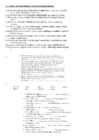
could, enterprise, workbook, weren, join, forgotten, bought, told, came, known, gone, couldn, talk, blown, washed, fruit, wish1.- Choose the most suitable verb form in each sentence. a) If only Peter doesn't live / didn't live / wouldn't live so far away from the town centre. We'll have to take a taxi. b) I feel rather cold. I wish I brought / had brought my pullover with me. c) What a pity. I wish we don't have to / didn't have to / wouldn't have to leave. d) If only you tell / told / had told me about the test. I haven't done any revision. e) I wish the people next door hadn't made / wouldn't make / couldn't make so much noise. I can't hear myself think! f) Darling, I love you so much! I wish we are / had been / would be / could be together always! g) I'm sorry I missed your birthday party. I really wish I come / came / had come / would come. h) I like my new boss but I wish she gave / would give / could give me some more responsibility.
(It is still morning, and it is quite possible that I will do this.) NOTE: With type 1 conditionals we can use unless + affirmative verb (= if + negative verb). E.g., I will not be able to come unless Joe gives me a lift. (= If Joe does not give me a lift, ...) Provided that/providing that are synonyms for if that can be used with type 1 conditionals. 2 Second conditional (unreal present) If-clause past simple/past continuous; Main clause conditional tense (would, could, might + present bare infinitive) Used to talk about the consequences of a hypothetical action (imaginary situations that are contrary to facts in the present, and therefore are unlikely to happen in the present or the future). E.g., If I wrote my essay this afternoon, I would have time to go out tonight. (It is still morning, but I think it is less likely that I will do this.) We can use either was or were for I, he, she, it in the if-clause. We can also use the structure If I were you..
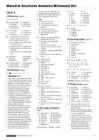
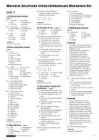
in common with my mum. She's got a knack of choosing really brilliant 3 borrowed 10 dictionaries photos but I never get round to it. birthday presents for me, be it clothes, 4 alphabet 11 spelling 4 After my boyfriend broke off our pictures or whatever, basically because 5 Old Norse 12 influenced relationship I bought some new she likes the same kinds of things 6 evolve 13 non-native clothes to cheer myself up. as I do. We also share a liking for the 7 disappeared 5 My father was offered a job in same kinds of food, like olives and New York but after thinking it strawberries, and neither of us can 2 A honeymoon B salary C posh
4 1 2 had known had been waiting singers and TV presenters 3 had enjoyed/had been enjoying 1A Talking about people 4 had thought/had been thinking page 3 3 1 F 3 F 5 T
wonderful translucent quality, the mouth was soft, and the eyes, with their new placid look, seemed larger darker than before. When the clock said ten minutes to five, she began to listen, and a few moments later, punctually as always, she heard the tires on the gravel outside, and the car door slamming, the footsteps passing the window, the key turning in the lock. She laid aside her sewing, stood up, and went forward to kiss him as he came in. "Hullo darling," she said. "Hullo darling," he answered. She took his coat and hung it in the closer. Then she walked over and made the drinks, a strongish one for him, a weak one for herself; and soon she was back again in her chair with the sewing, and he in the other, opposite, holding the tall glass with both hands, rocking it so the ice cubes tinkled against the side. For her, this was always a blissful time of day. She knew he didn't want to speak much until the
englisch-hilfen.de LEARNING ENGLISH ONLINE Examples Examples Examples Tense Signal words Use Form affirmative negative interrogative every day something happens repeatedly sometimes how often something happens always I work. I don't work. Do I work? one action follows another often Infinitive He works. He doesn't work. Does he work? Simple Present things in gene
It was to Forks that I now exiled myself-- an action that I took with great horror. I detested Forks. I loved Phoenix. I loved the sun and the blistering heat. I loved the vigorous, sprawling city. "Bella," my mom said to me -- the last of a thousand times -- before I got on the plane. "You don't have to do this." My mom looks like me, except with short hair and laugh lines. I felt a spasm of panic as I stared at her wide, childlike eyes. How could I leave my loving, erratic, harebrained mother to fend for herself? Of course she had Phil now, so the bills would probably get paid, there would be food in the refrigerator, gas in her car, and someone to call when she got lost, but still... "I want to go," I lied. I'd always been a bad liar, but I'd been saying this lie so frequently lately that it sounded almost convincing now. "Tell Charlie I said hi." "I will." "I'll see you soon," she insisted
War and Peace 1) a) Couve de Murville's prediction was very correct. When the Americans withdrawed all of their offers to help Nasser nationalised the Suez canal so that he could use the it's revenues to finance the Aswan High Dam. b) When Nasser nationalised the canal the Brits and the French were outraged because they were the main financiers and shareholders of the Suez Canal. They wanted Nasser destroyed and removed.By August 1956 the British and the French were holding meetings to discuss a possible seizure of the Suez canal by force. The French wanted the Israelis to join their side but it would have been a problem because the Brits had a treaty with Jordan
No, I don't like the Spice Girls. Marks: /10 Words, words, words 4 Complete these sentences using the correct form of the words below. There is one extra word which you do not need to use. aggressive nervous dull funny easy-going ambitious expensive usual experienced successful practical 1 She told a very ________________________ joke and everyone laughed. 2 She's a very ________________________ person. She will do anything to become famous. 3 They didn't give him the job because he was ________________________. He had never done anything like that before. 4 This is a very ________________________ animal. I've never seen one like it before. 5 I get very ________________________ before an exam and when I go to the dentist.
kestvad pikad tegevused) Future Continuous Mulder says, "I will be working with Scully tomorrow." · routine or arrangement (igapäevane rutiin, igapäevased kokkulepped) Future Continuous You want a lift from a collegue and ask, "Will you be going home after work?" · Ask politely about someone's plans for the near future (viisakad küsimused inimeste lähituleviku plaanide kohta) Future Perfect "I will have bought lots of new clothes before I go back home." · an action which will be finished before a stated time in the future (tegevused, mis lõpevad enne mainitud ajahetke tulevikus) Future Perfect Continuous "I will have been starving a lot by the time I lose some kilos." · to emphasise the duration of an action up to a certain time in the future (rõhutamaks tegevuse kestvust mainitud ajahetkeni tulevikus)
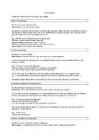
.......................................................................... ...................................................................................................... ...................................................................................................... ...................................................................................................... ............................................................................. d) What could be Mary-Alice's reply? ...................................................................................................... ...................................................................................................... ...................................................................................................... ...................................................................................................... ..............................
BARED TO YOU wouldn't be what it is without you, Hilary. Thank you so much! To Martha Trachtenberg, copy editor extraordinaire. This book is an important one for me and she treated it that way. Thank you, Martha! To Victoria Colotta, for all her hard work on the interior design and typesetting. She took my plain text and made it gorgeous. Thank you, Victoria! To Tera Kleinfelter, who read the first half of Bared to You and told me she loved it. Thank you, Tera! To all girls who were at Cross Creek at some point in your adolescence: May all your dreams come true. You deserve it. And to Alistair and Jessica, from Seven Years to Sin , who inspired me to write Gideon and Eva's story. I'm so glad the inspiration struck twice! 1 "We should head to a bar and celebrate." I wasn't surprised by my roommate's emphatic pronouncement
closes his ears. He remembers how much his mother loved his father but still not even month passed before she got married again. He just can't think about him and says that women are so inconsistent. Only one month passed that wasn't long even long enough to get her shows old with what she followed her husband. He just can't believe it. He says that even an animal without reason would mourn longer than his mother had but her mother got married to his uncle. He could be his father's brother but he was no more like his father than he was like Hercules. Hamlet believes that her mother got married already before her eyes were swollen because of the salt of her hypocritical tears. Her calls his mother wicked as she rushed into that marriage that enthusiastically. Hamlet believes that it won't end happily but he has to break his heart if he wants to hold his tongue.
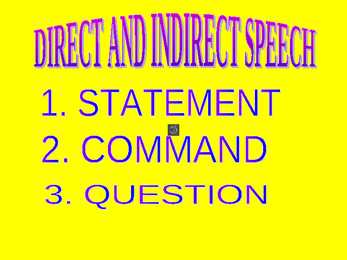
· DIRECT · INDIRECT · Am, is, are · Was/were · Shall/will · Should/would · Can · Could · May · Might · Must · Have/has to · Ought to · Had to CHANGES OF ADVERB OF TIME & PLACE · DIRECT · INDIRECT · NOW · THEN · TOMORROW · THE FOLLOWING DAY · NEXT WEEK · THE FOLLOWING WEEK · TONIGHT · THAT NIGHT · TODAY · THAT DAY · YESTERDAY · THE DAY BEFORE · LAST NIGHT · THE NIGHT BEFORE · LAST WEEK · THE WEEK BEFORE
(Kui oleksid õppinud, oleksid saanud) · Kasutusel ka variant kus kõik tüübid segi, sellisel juhul tõlgi endajaoks lause ära ja mõtle loogiliselt. If-Clause Main Clause SUPPOSE/SUPPOSING (peaaegu sama, mis if) Type 2 Type 1 · Past Simple kujuteldav olukord, vastandub If he came back he won't be (=will hetkeolukorrale late last night,Kui not be) on time for Suppose/Supposing II, would +I ta jõudis eile work today. ei jõua õhtul hilja tagasi, ta täna õigeks Suppose/Supposing he stood you ajaks tööle.
But you shouldn't forget to insure your parcel in case there is something valuable. H: - Then, we shouldn't forget about telegrams! Urgent, express, photo, greetings...They are so useful if we really need to say something to those who are far! J: - And very pleasant moment we can cash our money orders!!! 2.Making a trunk call H: - I what to make a trunk call, so I'm calling to switchboard. Hello! I'd like to book a trunk call. Could you put me through to Moscow? J: - Of course. Give me the number of subscriber. Ah, well... The line isn't engaged, but nobody picks up the receiver. H: - Oh, I've forgotten to ask do you have a system of paying by the minute? J: - Yes, you are right. And don't forget that every subscriber should pay the telephone bill in time. H: - Oh! If you don't put me through to Moscow in 15 minutes, I'll have to cancel my order! J: - Hey! Are you there? The Moscow is on line! H: - Thank you! 3
Inglise keeles Eesti keeles + -/? Usage Näited 1. Present Simple Lihtolevik I ajavorm Do, don't, does, doesn't A permanent state, a generally Every day, always, often, (He, she, it + -s) known fact, usual or repeated usually, sometimes, rarely, actions, timetables, sport never, on Monday, in the commentaries, other events morning. Facts.
PRESENT SIMPLE (lihtolevik) Form: 1st form (+s) Use: 1. Things in general. Nurses look after patients in hospitals. 2. Things that happen all the time or repeatedly. She usually goes away at weekends. 3. Laws of nature (things that are true in general). The sun rises in the east. 4. Timetable events. The train leaves at 6.50 p.m. Negative form: I don't (do not) normally eat my lunch here. He doesn't (does not) like this film at all. Question form: Do you live here? How often does it rain around here? Signal words: always, every day/month, never, normally, often, seldom, sometimes, usually etc. PRESENT CONTINUOUS/PROGRESSIVE (kestev olevik) Form: am/is/are + ing Use: 1. Unfinished actions happening at or around the time of speaking. Listen! Somebody is crying. They are building a new bridge in our town. 2. Changes happening around now.
Brandon Routh and Ken Todd Ingram Katayanagi How familiar were you with the How physically demanding was source material prior to the the role and were you excited movie? to kick some ass? Cera: I'd never read comics but I Cera: I was excited and it was had read this one for some reason. physically demanding because A friend of mine was describing it we did training so we could do to me one day and it sounded basic things so we wouldn't get really good so I went and got it. sick. If we hadn't done that I The first two volumes had been out and I loved them. And I'm think it would've been from Toronto. disastrous. Moving your body that much take after take is exhausting even if you're just
Erik Ponti who had always had violence in his life. Whether he was beat by his father or was he the one being violent to others. After problems in school, his mother decides to send him to a private school, and in order to do so, she had to sell some of her precious items. Erik understand that the private school called Stjärnsberg is his last change to get a good education and he wants to stop being violent. He goes to Stjärnsbergwith great hope and at first, its seems that he could do really well. But after a while he understand, that the school is probably the worst place where to be, when you want a peaceful life. The teachers look the other way as the older students are very brutal to younger, creating a hierarchical society based on class and age. The film was made in 2003 and directed by Mikael Håfström. Andreas Wilson plays the leading role of Erik Ponti. It has been named Best Film, Best Cinematography, Best
true. But puck puts a spell on Lysander to fall in love with Hermias best friend Helena. This love that was true and forever was somehow changed? How can that be they were so deeply in love. Love is constantly changing usually with family increasing for it is unconditional but for lovers it can decrease quicker than the speed of light. "Content with Hermia! NO; I do repent the tedious minutes I with her spent."(Act ll, scene 2 lines 111,112)Lysander wishes that he could turn back time and hadn't spent it with Hermia. But they were in love and they were eloping and they had a future together. Love is altered anywhere anytime and that's where people are so dumb they think that they will be together and that they will love each other and then they make dumb choices that ruin their lives. Puck put a spell so that Lysander would despise Hermia but what if that never happened can it be assumed that they would have been in love until their dying days?
1.SLAID Queen Mary I of England was born February 18, 1516. She was the daughter of King Henry VIII and his first of six wives, Catherine of Aragon. Mary was the only child from that union to survive infancy. She ruled as Queen of England from July 19, 1553 until her death on November 17, 1558. This era was known as the Marian Exile 2.SLAID Queen Mary I was rejected by her father during his divorce from her mother. Her parents' marriage was thought meaningless so for a while she was stripped of her statud as and heir to the throne. She was angry at her father's break from the Roman Catholic Church because it had told him that he couldn't divorce from her mother.
Legends of Tallinn There are many interesting legends about buildings or sights in Tallinn. Nobody can tell, if they are all true or not, but at least they make the medieval capital much more intriguing and attractive for tourists as for the locals. How Ülemiste Elder will drown the town The most known legend of Tallinn is probably about the mythological Ülemiste Elder, who is believed to live in the Lake Ülemiste. Every autumn he is said to come to the Viru Gates and asks the guard, if the town is completed yet. The guard shall always answer that there is much to be done. If he would say that the town is completed, the Ülemiste Elder would flood Tallinn. How did the medieval Tallinn get its name Reval One day the Danish King Valdemar II was hunting
c) I must remember to get a/an agreement/licence/permission for my television. d) The president admitted that there had been a breakdown of law and crime/government/order. e) Jim's parents wouldn't agree/allow/let him go to the demonstration. f) Jake was arrested because he had entered the country falsely/illegally/wrongly. g) Talking to other students is against the law/orders/rules of the examination. h) The two men were arrested before they could commit/make/perform any more crimes. i) I had to take the company to court/justice/law to get the money they owed me. j) Smoking is compulsory/prohibited/refused near the petrol tanks. Task 2. Match word in the box with a suitable description (a-l). blackmailer; forger; hooligan; murderer; shoplifter; vandal; burglar; hijacker; kidnapper; pickpocket; smuggler; witness a) This person takes control of a plane or boat by force hijacker
year. Traffic to the site is up 25 percent in the last year, Mr. Schaub continued, to an average of 2,000 visits a day. As to why that should be so, Mr. Schaub pointed to what he called "an ever-increasing level of dissatisfaction with traditional lifestyle choices, because there's too much alienation and lack of connectedness. Humans are inherently social animals, yet we don't particularly know how to get along with one another." The urge to create a group house or join an intentional community, he said, "is an attempt to address that." Ms. Berger met Ms. Hazard, who had been living in the East Village in her mother's town house and looking for work in "social justice," she said, at a permaculture conference in Vermont last summer. Permaculture is big with the collective-living crowd; it's a model for sustainable living that extrapolates principles from natural ecologies --
Maria will be thirteen next year. Maybe I won't go to the party tomorrow, I'm too tired. Will you help me with my homework tonight? Kestev olevik The present continuous Praegu toimuv tegevus. Now, at the present. am / is / are + -ing We are learning English. Is Mark reading or writing? Where is the teacher standing? 3 Kestev minevik The past continuous Minevikus teatud hetkel parajasti kestnud tegevus. Yesterday at 6, when she came, this time on Tuesday. was / were + -ing When the teacher came in, the pupils were talking. What were you doing when she opened the door? I was not talking, I was reading a book. Kestev tulevik The future conrinuous Väljendab tegevust, mis hakkab tulevikus toimuma. Lause põhirõhk on suunatud ajale tulevikus. will / be + -ing She will be attending school in Switzerland. He will finish working at 4 o'clock. Will she be at home tomorrow. Täisminevik The present perfect
Maria will be thirteen next year. Maybe I won't go to the party tomorrow, I'm too tired. Will you help me with my homework tonight? Kestev olevik The present continuous Praegu toimuv tegevus. Now, at the present. am / is / are + -ing We are learning English. Is Mark reading or writing? Where is the teacher standing? 3 4 Kestev minevik The past continuous Minevikus teatud hetkel parajasti kestnud tegevus. Yesterday at 6, when she came, this time on Tuesday. was / were + -ing When the teacher came in, the pupils were talking. What were you doing when she opened the door? I was not talking, I was reading a book. Kestev tulevik The future conrinuous Väljendab tegevust, mis hakkab tulevikus toimuma. Lause põhirõhk on suunatud ajale tulevikus. will / be + -ing She will be attending school in Switzerland. He will finish working at 4 o'clock. Will she be at home tomorrow. Täisminevik The present perfect
She delivered a sickly child who had trouble breathing. The woman, without a word of who she was, died and left her new born boy, Oliver, to the drunken nurse that stood by. Chapter2: The State gave Oliver to Mrs. Mann who housed a number of orphaned children. Mrs. Mann took a large portion of the money given to her by the authorities for each child's food so Oliver grew up small and malnourished. On his ninth birthday, the town beadle, Mr. Bumble, came to collect Oliver and take him to the board for an interview. They told him he was to live with other wards of the state to become educated and learn a trade. Oliver did not mind this, but soon after he arrived, the state decided to implement a plan that would save money by feeding the people very little. After a time on this diet, the boys at the table chose Oliver to go ask the head cook for more gruel. Oliver did this, and was taken away
Chapter 18 Chapter 39 Chapter 59 Chapter 19 Chapter 40 Chapter 60 Chapter 20 Chapter 41 Chapter 61 Chapter 21 Chapter 42 Chapter 1 It is a truth universally acknowledged, that a single man in possession of a good fortune, must be in want of a wife. However little known the feelings or views of such a man may be on his first entering a neighbourhood, this truth is so well fixed in the minds of the surrounding families, that he is considered the rightful property of some one or other of their daughters. "My dear Mr. Bennet," said his lady to him one day, "have you heard that Netherfield Park is let at last?" Mr. Bennet replied that he had not. "But it is," returned she; "for Mrs. Long has just been here, and she told me all about it." Mr
B. Unreal Conditionals Unreal Conditionals refer to situations that are untrue or imagined, have not happened or are only remotely likely to happen. The Second Conditional expresses a hypothetical condition and its probable result: If I had time, I would help you. (=but I don’t have time, so I cannot do it) In the if-clause we use the Past Simple, in the main clause would + the verb. We can also use the Past Continuous in the if-clause and could or might in the main clause: If Jim was playing his guitar, we could not enjoy the silence. Sometimes were is used instead of was, especially in the clause if I were you: If I were you, I wouldn’t eat so much. 1) Impossible conditions: If I were a bird, I could fly. If John was taller, he could become a policeman. 2) Possible in theory, but improbable in practice : If I were the President of Estonia, I would make a lot of changes.
purpose she was bullied. She wasn't very rich also and she lived only with her mother. The boys of our class called her "fat" and so on. She did a face like she didn't care but I know that she really did and it hurt her. I and some other of my friends got along well with her but sometimes we went with the flow and were with the boys who called her ugly and fat. I don't know if she is bullied any more because I chanced the school but I hope that she has more friends now. Some years later there came a boy to our class. At first everybody got along with him but suddenly the other boys didn't like him and started hassleing him. If the other boys didn't like him, almost the whole class didn't like him after. I have really no idea why, but I think that's because he had glasses or because he didn't study well. He had problems with the teacher also. I was sorry for him but I wasn't bold enough to defend him. And I think I was a little bit scared that the others may bully me too when I defend him
Master of the Moor Author Ruth Rendell born 17 February 1930. She has been writing some books under the pseudonym Barbara Vine. She lives in London and is known English crime writer. Known for her psycological thrillers and murder mysteries. Has worked as a journalist for Essex newspapers. Novel ,,Master of the Moor" was Publisher 1982. She has been rewarded with Silver, Gold and Cartier Diamond Daggers awards from Crime Writers' Assosiation and many other awards. Setting The action takes place in the city of Vangmoor. Lots of action goes around the Moor. Time of the story unknown. Characters Stephen Whalby ''Voice of Vangmoor", Loves walks on the Moor
Cohen / Love, Lucy) Note: 1. In formal letters your address and the date as well as the recipient's address are included in the letter. When you do not know the name of the recipient, you should include their title in the address. e.g. The Director of Studies, St Michael's School, 15, Pine St., London. You should begin the letter with Dear Sir/Madam, and end with Yours faithfully, Peter Jones. When the name of the recipient is known, their name and title should be included in their address, e.g. Mr Witkins, Accounts Manager, Rockdell Financial Services, 17 Stockdal Ave. , London. The letter should begin with Dear Mr Witkins, and end with Yours sincerely, John Smith. 2. In semi-formal and informal letters the recipient's address is not included in the letter. In a semi-formal letter showing respect for the recipient with whom you are on friendly terms, begin the letter with Dear Mr/Mrs Smith and
 annaabi.ee