Leidsid 33 sarnast õppematerjali, mis on seotud failiga "Elva - power point". Need materjalid aitavad sul teemat sügavamalt mõista.
lakes, present, activities, sports, became, grade, named, river, books, already, xviiThe Danes, led by King Valdemar II, conquered northern Estonia in 1219. Legend has it that one day, when the Danes were about to lose a bloody battle, the sky suddenly opened and a red flag with a white cross on it dropped down upon them from the heavens. This is allegedly how the Danes obtained their national flag, the Dannebrog in a battle against the Estonians. In the middle of the 14th century Denmark sold its possessions in Estonia to the German Teutonic Order. Toompea became the seat of the German-born gentry. A wall was built to separate the Upper Town and the Lower Town. In 1285 Tallinn joined the Hanseatic league and became a junction of trade between East and West. Tallinn is said to be built on salt, as it was an important trading commodity. In the 16th century Tallinn had a population of about 7,000 8,000 making it one of the biggest cities in northern Europe. In 1629 Sweden took control of the whole of Estonia. Though hard times
sound installations by Louis Dandrel.Eduard Tubin (1905-1982) was a versatile composer and conductor, one of the most recognized symphonists throughout history. He served as concert master and conductor at the Vanemuise Theatre. In 1944, when the theatre was destroyed, he left Estonia to Sweden. Monument to Gustav II Adolf In 1632, King Gustav II Adolf of Sweden, then at the war camp near Nürnburg, signed the charter to found Tartu University, which was also named Academia Gustaviana in his honour. The memorial statue to King Gustav II Adolf (1594-1632) stood next to the main building of the university from 1928, until 1950, when it was removed by the Soviet occupation forces. With Swedish assistance, it was repaired and re-mounted 42 years later, in 1992. The King of Sweden was present both at the original and the re-opening of the monument. Elisabeth Tebelius-Myren authored the restored work. Karl Ernst von Baer monument
Project ESTONIA MAP OF ESTONIA Southern Viljandimaa The southern part of Viljandi county catches the eye with its sublime scenery. The area today lies in the very heart of the historical Mulgimaa the home of hills, deep valleys and lakes brought together by a beauty spot Halliste primeval valley. According to several folk tales, it is also in these valleys, woods and bogs that Old Nick found refuge.The great variety displayed in the nature is also reflected in the local cultural heritage. At the beginning of the 19th century growing linen spread and became the basis of the legendary wealth of Mulgi farms. The ancient barn-dwellings and decaying manor houses are the mute witnesses of those times
people attended the concerts, but many more just came to take part in the festivities. As such, it is the largest annual music festival in Estonia, and one of the largest folk music festivals in Europe. Lake Viljandi Viljandi is an ancient city situated on a hill by a beautiful lake. The lake glittering in the bottom of the valley is popular with holiday-makers, fishermen and people who enjoy recreational sports. A hiking path runs around the lake and it can be used for recreational sports all year round. Since the year 1928, a run around Lake Viljandi has taken place on the first day of May every year. Tennis courts, cafes, playgrounds, diving towers, boat rental and catamaran trips are available by the lake. In winter, people can enjoy a snow park and test their skills at snow-tubing. Flag and coat of arms Viljandi's flag is a simple light blue over white
Tartu Tartu is the second largest city of Estonia. In contrast to Estonia's political and financial capital Tallinn, Tartu is often considered the intellectual and cultural hub, especially since it is home to Estonia's oldest and most renowned university. Situated 186 km southeast of Tallinn, the city is the centre of southern Estonia. The Emajõgi river, which connects the two largest lakes of Estonia, crosses Tartu. The city is served by Tartu Airport. Tartu is also the seat of the Estonian University of Life Sciences, the Baltic Defence College, Estonian Aviation Academy , and the Estonian Ministry of Education and Research. Other notable institutions include the Supreme Court of Estonia (re-established in Tartu in autumn 1993), the Estonian Historical Archives and Estonian national theatre Vanemuine.
the north of Estonia in 1219. Legend has it that one day, when the Danes were about to lose a bloody battle, the sky suddenly opened and a red flag with a white cross on it dropped down upon them from the heaven. This is how the Danes obtained their national flag. In 1346 the Danish king sold his Estonian lands to the Teutonic Order, who a year later resold them to the Livonian Order. The Germans renamed Tallinn and called it Reval. Toompea became the seat of the German-born gentry. A fortified wall was built between Toompea (the Upper Town) and the Lower Town, as there were conflicts between the two. The Lower Town was the home of simple people, the artisans and the merchants. The doors and gates in the wall were locked at night. Tallinn joined the German-dominated Hanseatic League in 1285 and became a junction of trade between East and West: furs, honey, leather and seal fat moved west, while salt, cloth, herring and wine moved east
Theatre, Russian Drama Theatre, VAT Theatre, Theatre NO99 and Von Krahl Theatre. Estonian National Opera The song and drama society `'Estonia'' was founded in 1865. Play-acting started in 1871. The following theatre activites were relatively haphazard, theatre as a tradition really came into being since 1895, when the society began to direct song plays, folk plays and comedies, usually with singing and dancing; in the start of the XX century already saw more serious drama on the stage. In year 1906 Paul Pinna and Theodor Altermann founded a professional theatre called `'Estonia''. Since 1998, it is called The Estonian National Opera and operates as a body governed by public law according to the National Opera Law passed in 1997 in the Republic of Estonia. Since 1918, the drama troupe was led by the actor and director Ants Lauter until 1949 when the troupe was disbanded and "Estonia" continued as just a musical theatre
In the 13 th- century chronicle of Henricus de Lettis the town was called Lyndanise. Then it was called Reval for some time and finally Estonians started to call the town Tallinn from Taanilinn (Danish town) after the Danish conquest in the 13th century. The Knights of the Sword took Tallinn from the Danes in 1227 and made Toompea their fortress. In the middle of the 14th century Denmark sold its possessions in Estonia to the German Teutonic Order; Toompea became the seat of German-born gentry. A fortified wall was built between the Toompea (the Upper Town) and the Lower Town (inhabited by people of a lower social standing), as there were conflicts between the two. The doors and the gates of the wall were locked at night, a procedure which carried on until the end of the 19th century. Tallinn joined the German-dominated Hanseatic League in 1285 and became a junction of trade between East and West: furs, honey, leather and seal fat moved west,
the banks of the Gulf of Finland, 80 km south of Helsinki, east of Stockholm and west of Saint Petersburg. Tallinn was founded in the 12th century and has been under the rule of Denmark, Sweden, and Germany as well as Russia, and all left their mark on the city's architecture. It is one of the best preserved medieval towns in northern Europe, and makes a beautiful impression from the sea, with its ancient city walls, church spires, and red-tile roofed homes. Tallinn has previously been named as Kolõvan, Lindanise and Reval. Most well-known sights in Tallinn are Freedom Square, Kadriorg Palace, Rotermann Quarter, Tallinn Song Festival Grounds, Toompea Castle and Town Hall Square, the Old Town of Tallinn and many more. Tallinn's Old Town is in the list of UNESCO World Heritage Sites. At the Old Town, you pass beneath the arches of Tallinn's ancient stone walls and enter a world of cobblestones, narrow alleys, and medieval buildings. It's a fun place to explore on foot
It has land contact with Russia from the east and Latvia from the south. In the north The Gulf of Finland separates Estonia from Finland. The Gulf of Riga is situated to the south-west. Estonia has more than 1500 islands. The biggest ones are located to the west. The four biggest islands are Saaremaa, Hiiumaa, Vormsi and Muhu. The highest point in Estonia and also in the Baltic region is Suur Munamägi. It is 318. above sea level. Estonia is a country of a thousand lakes. The Largest one is Lake Peipsi which is also the fourth biggest freshwater lake in Europe. Lake Peipsi and Lake Võrtsjärv are rich in fish. Estonia has many rivers but only nine of them are longer than 100km. The most important ones are Pärnu River and Emajõgi River Climate Estonia lies in the northern part of the temperate climate zone and in the transition zone between maritime and continental climate. Because Estonia is continuously warmed by the
Joy", was composed in 1848 by Friedrich Pacius, a Finn of German descent. The Estonianlanguage words were written by Johann Voldemar Jannsen. In 1869 it was performed at the first allEstonian Song Festival in Tartu and gained popularity during the period of the national movement. Estonians carried the melody in their hearts and souls during Soviet occupation, when it was banned. Another song "My Native Land, My Dearest Love" by Gustav Ernesaks, became an unofficial anthem at that time and enabled the people to express their feelings of national identity. COAT OF ARMS Lions were first used as Estonia's heraldic emblem in the 13 th century when they appeared on the large coat of arms of Tallinn. The originated from Denmark, which was ruling Northern Estonia at that time. A similar motif was later used on the coat if arms of the Province of Estonia under Swedish rule. Estonia changed hands but the three lions remained
London History The Romans AD 43- AD 410 The Romans finally invaded Britain in AD 43 from Kent. The Romans lead by Julius Caesar attempted to invade Britain twice before that in 55 and 54 BC but the invasions were unsuccessful. They made their way to the river Thames and sailed up it. The Romans knew it was important to control a crossing point at the river Thames, so they decided to build a settlement on the north bank. Although small settlements had been built on the banks of the Thames, the Romans were the ones who built the first city. They called their city Londinium. The Roman engineers noticed that the point where the swampy river narrowed would make an ideal crossing point, they built London Bridge. Less than 20 years later the native Iceni tribe, led by Queen Boudicca, rose up against the Romans in revenge for mistreatment and burnt
Canada is a vast country, with a territory of 3.8 million square miles of land and fresh water it is the second biggest country in the world after Russia. Canada covers most of the northern part of North America. Canada has over 151,480 miles of coastline. Most of Canada's human population lives along its southern border. 3. Relief Canada's geography is very diverse. It has huge lakes, evergreen forests, prairies, meadows and beautiful mountains. There are thousands of miles of coastline with beaches, fjords and wild rivers flowing to the oceans. Canada is a country of wide open spaces and beautiful landscape where traveling visitors can unexpectedly bump into wild animals like bears or be struck by unusual sight like the scarecrows on the Cabot Trail. Canada is rich in natural
founded. Starting from the 1995 all the branches offer different educational programmes for children and young people. In 1996 the exhibition hall on the first floor of Rotermann Salt Storage was opened, this branch was closed in May 2005. In summer 2000 the restored Kadriorg Palace was opened, but not as the main building of the Art Museum of Estonia, but as a branch. Kadriorg Art Museum now exhibits the foreign art collection of the Art Museum of Estonia. At present there are five active branches of the Art Museum of Estonia: Kadriorg Art Museum (Kadriorg Palace and Mikkel Museum), Niguliste Museum, Adamson-Eric Museum, and Kumu Art Museum (the new main building of the Art Museum of Estonia) For the first time during its nearly 100-year-old history, the Art Museum of Estonia has a building that both meets the museum's requirements and is worthy of Estonian art in its collections
the wife of Kalev and mother of Kalevipoeg Koluvan - mentioned in Russian chronicles; derives from the hero Kalev from our national epic Reval - comes from the German words “REH” and “FALL”, meaning the falling of the deer; could be deers trying to escape from the Danes, running down the Toompea hill Tallinn - the word origins from estonian language, could mean “taani-linn”, “tali-linn” or “talu- linn”; Reval was replaced when Estonia became independent Symbols Flag - blue black white tricolor; blue represents sky, black the soil, and white our freedom. Danneborg - red flag with a white cross fell from the sky during the battle in 1219. It is also set into the small coat of arms of Tallinn. Great coat of arms - three lions, a knight, and Danish queen; leaves around Old Thomas - quardian of Tallinn, put on top of the spire of Tallinn Town Hall in 1530;
about their history. The history of Estonian theatre does not differ much from that of the neighbor countries. The first play was performed in the 16th century at the Tallinn Town Hall. The town school children, who were Germans, staged Terence's The Andria in Latin. The first theatre house in Tallinn was mentioned in written materials which date from the late 17th century; the house was used by travelling theatre groups. Tallinn was already known then as a theatre-loving city. The first prominent name in Estonian history of theatre, August von Kotzebue, dates from the same period. The Russian authorities sent him from St. Petersburg to Tallinn to work as an official. Kotzebue's entertaining productions became famous all over Europe. He founded the first theatre with its own permanent cast, and brought the Estonian language to the stage. Theatre became especially popular amongst Estonians in the second half of the 19th century,
Tallinn English College Topic Estonia Tallinn 2008 1. Introduction Estonia is a small country about the size of Switzerland, or New Hampshire and Massachussetts combined. Estonia is named after the people called "Ests" who lived in the region in the 1 st century AD. The Republic of Estonia is one of the three countries commonly known as the "Baltic States". The other Baltic States are Latvia and Lithuania. 2. Geographical position Estonia is situated in northeastern Europe. Estonia is bounded on the north by the Gulf of Finland, on the east by Russia, on the south by Latvia and on the west by the Baltic Sea. In the north it borders on Finland. The coastline of the Baltic
In the northern side of the song stage there is 42 m high fire tower, which is used during the famous Song Festivals. It is also opened for the public all year long. 3. Kiek in de Kök tower The cannon tower Kiek in de Kök was founded in 1475-1483. In 1696 the present name Kiek in de Kök was also mentioned, meaning "peek into the kitchen" in Low German. Compared to the other Tallinn towers Kiek in de Kök was predominant in its fire power, due to its 27 embrasures for cannons and 30
money and thus laid a good economic basis for his state. Besides that he built a merchant fleet (kaubalaevastik) England begun to dominate in international trade. Unfortunately the king got old and died. Next king was Henry Vlll, second son of the family, wasn't prepared to become a king. Had to take the role as his elder brother died. Was prepared to come a clergyman got good education: languages, music, literature. Brother jumped off horse into a river, died in bed. Elder brother was already married. Henry Vlll married with his brothers widow.Catherine of Aragon, she came from Spain, she was arden(innukas) Catholic. At first they had good relations. Soon there were big problems. Had daughter Mary, couldn't get a son. Needed a new king. Henry decided to get a divorce. Henry wrote a long letter to Pope for a divorce. Pope said no. Then Henry decleared himself the head of English church to get divorce. Catherine was sent to
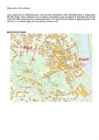
crown of the square. You probably also notice a fountain "Kissing students" in front of the Town Hall, many shops and caffees also. As you move towards Emajõgi you should see a skewed house, that is an Art Museum at the moment. What kinds of institutions are in Town Hall Building? What do you think, how many degrees is Art Museum Building askew? In the end of the Town Square ends you will see the last attraction on your trail, the River Emajõgi and Kaarsild. For what is this bridge famous for? A) For it's beautiful architecture. B) For it's scandalous happenings (a couple had an intercourse on top of this bridge) C) For it's age it is a very old bridge. This photo hunt will last approximately 2 hours. First place what you will see is the sight of Tartu, from the top of Toome Hill. Everybody can take pictures if they wish.
Baroque, Neoclassicicm, Historicism and even Art Nouveau. The origin of the name "Lai" Lai Street belongs among the oldest streets of Tallinn. Despite its length and width its share in the city's inner traffic is fairly modest. The extraordinary width of the street is likely due to the fact that the town wall used to be there and the street then sprang up on both sides of the city wall. But that city wall was eliminated in the construction of a new wall to the west. The freed area became a beautiful wide street with local significance, its main purpose was to create a link between the monastery of St Michael's female Cistercians (founded in 1294) and St Olaf's church. Previous names of the street also refer to it: Susterstrate 1361; Platea sororum 1364-1380; 1606 Süsterstrasse and Schwestergasse, all of which include the concept of a nun or a sister. After the Reformation, the monastery was eliminated and in 1631 a gymnasium was founded
822 singers and 56 brass players participated in the first festival. Starting with the fourth festival, mixed choirs were also participating. Starting with the sixth festival in 1896, the festival tradition moved to Tallinn. It began in 1947, during the first song festival (Laulupidu) held after the Soviet occupation, when a centuryold national poem, forbidden by the Soviets, was set to music. "Mu Isamaa on minu arm" ("Lands of My Fathers, Land That I Love") was set to music and the song became the unofficial Estonian national anthem that miraculously slipped by the Soviet censors. In 1969, more than a hundred thousand participants gathered for the century anniversary of a national song festival and, in a spontaneous act of nonviolent resistance, sang this song. For fifty years, it was a musical statement of every Estonian's desire for freedom. http://www.blogto.com/events/3626 Pärnu Hanseatic Days 2008 June 27th 28th
Each tendency was born by the influence of economic and political changes in the society. Those trends are known as the "hippies" the "punks" the "rockers". But certainly there are different traditional youth organizations in Great Britain. Among them -- the Scout Association, the Girl Guides Association, the National Union of Students, the Youth Club. The latter offers, for example, a wide range of sporting and social activities. The National Union of Students was founded in 1922. It operates through local branches in colleges and universities. It promotes the educational, social and general interests of students. But certainly the most numerous is the Scout Association, founded in 1908 for boys and in 1910 for girls by Lord Baden-Powel. The Scout movement is to encourage a sense of adventure and of responsibility for others among young people. The programme of training
appearance in 140204. It was as early as 1248 when King Eric IV Ploughpenny of Denmark granted the Lübeck Charter to Tallinn. Relying on that document a town council was elected from amongst merchants of the Hanse and started convening in the Town Hall. It is possible to state on the basis of research findings that a meeting place of the magistracy and a goods depot in the form of a small, fortified town hall, constructed of local limestone, existed in its present location already in the mid-13th century. The town hall first mentioned in a real estate record in 1322 had a large meeting room (consistorium) and, considering the times, a huge warehouse (cellarium civitatis). Three walls and seven windows representing Tallinn's oldest secular architecture have come down to our days from that building. In the first quarter of the 14th century the existing building was extended and the basement enlarged. The so-called diele-dornse (front-back room) system was established.
Tallinn is a small port town in which the population is 371 000 people, and the area is only 159,2 km².( square kilometers). Tallinn, the capital of Estonia, is named after taani linnus, which means Danish castle. The Castle in question was built by King Waldemar of Denmark in the 13th century. The settlement quickly developed itself into a busy port. -The Old Town In medieval age Tallinn was called Reval and it was as big as the Tallinns Old Town is now. Uniqueness of Tallinn is that it is one of very few European cities, where the historical lay-out is kept in it's original form , and has a lot of monuments of that time
America. The Rocky Mountains stretch more than 4800 km. The Rocky Mountain System within the United States is a United States physiographic region. Though part of the Pacific Cordillera, they are not to be confused with the Pacific Coast Ranges which are located immediately adjacent to the Pacific coast. The Rocky Mountains are a great place for holidays for walking, climbing, fishing, hunting or skiing. The only big city in the Rockies is Denver. Lakes The Great Lakes are a group of five large lakes in North America. They are the largest group of fresh water lakes on Earth. They are sometimes called the inland seas. There are: 1. Lake Superior (the largest and deepest) 2. Lake Michigan (the only one entirely in USA) 3. Lake Huron 4. Lake Erie (smallest and most shallow) 5. Lake Ontario (much lower elevation than the rest). The Great Lakes between the USA and Canada are joined together by rivers and canals. The
In the 1200s the German crusaders converted Estonia into a Christianity by force and took control over South Estonia. In 1219 Denmark conquered Northern Estonia. About a century later, in 1346 Denmark sold its territory to Germany. By the 1500s German nobles owned much of Estonia's land. After the Livonian War (1558-1583) the northern part of Estonia went under Swedish control, the southern part belonged to Poland and the islands to Denmark. Only in1629 the whole mainland Estonia became subject to Sweden. Under Swedish rule the University of Tartu was founded in 1632 and also the oldest school working on the same premises was founded in Tallinn (GAG).After the Northern War (1700-1721) Estonia became a province of Russia. During that period the gentry of Baltic-German origin prevailed in Estonia. They kept estates in Estonia until 1919. Under Russian rule the Palace of Kadriorg was built and the park was laid out.
8. Independence 9. Main sights 10. the Czech Republic 11. List of famous people from Prague 12. Geography 13. Weather and climate 14. Population 15. Culture 2 INTRODUCTION The Czech Republic lies at the heart of Central Europe and at its center is the beautiful and historic city of Prague. With a population of some 1.3 million residents, the city lies on either side of the Vltava River in the middle of Bohemia that is one of the three historic Czech territories; the others being Moravia and Silesia. The city has seven "Chapter Divisions" or districts. 3 I read one girl blog and she described Prague so beautifuly. She talked about her adventures. When i was reading that it seemed so real, that i was there to.
1. Ancient Britain: the Celtic tribes. 2000 years ago there was an Iron Age Celtic culture throughout the Br Isles. It seems that the Celts, who had been arriving from Europe from the 8th cent BC onward, intermingled with the peoples who were already there. The Celts were extremely talented people, creative and artistic. More than 1 Celtic tribe invaded Br. The descendants of ancient Celts live in Wales, Scotland, Cornwall and Ireland. They lived in primitive society. Druids priests, more powerful than chiefs. Acted like prophets. 2. Stonehenge From prehistoric period. Was built on Salisbury plain between 2500 and 1500 bc. One of the most famous and mysterious archaeological sites in the world
I totally disagree with this statement. There are just other values in a town with a small population density. Values concerning family life are coming more forth, career and such kind of personal ambitions are kept in the backround. Also it is often mentioned that making a successful career in a small town is largely impossible, because of the lack of different resources and opportunities. By these it is commonly ment a uncompetitive education and few opportunities to develop extracurricular activities. In my opinion it is again a misunderstanding. I am at the moment eighteen years old and I have spent all my life in a beautiful small town called Tartu. From the early age I have been interested in photography and the world in general. Photography is a pretty expensive hobby and starting with it was quite difficult in the beginning. I had to take photographs with really poor cameras and more than once I heard how somebody was laughing over me because of my uncompetitive equipment
larger than that of the United States, Canada has an extremely varied topography. In the east, the mountainous maritime provinces have an irregular coastline on the Gulf of St. Lawrence and the Atlantic. The St. Lawrence plain, covering most of southern Quebec and Ontario, and the interior continental plain, covering southern Manitoba and Saskatchewan and most of Alberta, are the principal cultivable areas. They are separated by a forested plateau rising from Lakes Superior and Huron. Westward toward the Pacific, most of British Columbia, the Yukon, and part of western Alberta are covered by parallel mountain ranges, including the Rockies. The Pacific border of the coast range is ragged with fjords and channels. The highest point in Canada is Mount Logan (6,050 m), which is in the Yukon. The two principal river systems are the Mackenzie and the St. Lawrence. The St. Lawrence, with its tributaries, is navigable for over 1,900 miles (3,058 km).
,,Noblenesser's" and ,,Bekker's factory"). Tramway was opened in Kopli in 1915 by factories ( ,,Vene-Balti's", ,,Noblenesser's" and ,,Bekker's factory") to they'r workers transport. 4 Independent Estonia (1918-1940) On February 24, 1918 Estonia took advantage of the weakening Bolsheviks and proclaimed independence; already the next day German troops occupied Estonia. Local town government was restored after Germany capitulated in the WW I. The first city council elected during the Republic of Estonia assembled on June 16, 1919. On 2 February 1920, the Tartu Peace Treaty was signed with Soviet Russia, wherein Russia acknowledged the independence of the Estonian Republic. Tallinn became the capital of an independent Estonia. Esonian first constitutional law was accepted in 15.06.1920
· Buckingham Palace is the official London residence of the British monarch. Originally known as, the building which forms the core of today's palace was a large townhouse built for the Duke of Buckingham in 1703 on a site which had been in private ownership for at least 150 years. During the 19th century it was enlarged, principally by architects John Nash and Edward Blore, forming three wings around a central courtyard. Buckingham Palace finally became the official royal palace of the British monarch on the accession of Queen Victoria in 1837. · Harrods is London's most famous department store, is named after Charles Henry Harrod, who opened a family grocers shop on the site in 1849. The store occupies a 5-acresite and has over
 annaabi.ee