Choices after secondary school There are lots of choices after secondary school. The main question is which is better to do - to work or go to university. Both options give many advantages. On the one hand, there are definitely some good sides to going to work. If you could not choose the subject that you would study to learn then it is better to get a job. Working can show if there are any of professions you are good at, as it will arouse your interest in certain occupations. On the other hand, many people know what they want to do with their life after secondary school and therefore going to university is a good idea. After graduating university it is easier to find a job, because you will have a necessary education then. In my opinion, it is better to go to university after high school because 18-year-old students are not ready to start their career. They do not have any profession after graduati...
Essay United States and Estonian education systems USA and Estonian school systems are very similar. But still there are some differences. How children attend school and when? How chlidren are divided by age in USA and Estonia? The American school year traditionally begins in August or September, after the traditional summer recess, which is three months long. As well in Estonia. School year usually ends in may or june. First difference between Estonian school system and USA's is that children attend school at the age of 5-6, but in Estonia children go to school at the age of 7-8. Before going to school american children attend preschool (selectively). Years 5-6 american children attend kindergarden, which is a preparation for the first grade. Most children enter the public education system around ages five or six. Children are assigned into year groups known as grades, beg...
TALLINN COLLEGE OF ENGINEERING INGLISE KEEL Essee Differences between Estonian and USA school and education systems. Juhendaja: Koostanud: 2009 Differences between Estonian and USA school and education systems. Question is, how different are our own and this big country they call United States of America's education. Or maybe there is no difference at all, and our systems about school and education are more similar than they appear at first sight. After reading all the materials and all sorts of notes about USA's education systems and their school household. All at once I realized, that they are not so different at all. Like for example USA's kids have to go to school exactly the same amount of time as our Estonian children. And basically learn same amount of same things. Like everywhere there are always ...
The French education system is split into three stages: primary school (école), secondary school (collège) and high school (lycée). Primary and secondary education is free, neutral, secular and compulsory between the ages of 6 and 16. However, there are some private schools that are not subject to these obligations and particularities of the French education system. Nursery school classes accept toddlers at 2 or 3 years of age, starting in September. The children develop their basic faculties, improve their speaking skills and are introduced to the world of reading and writing, numbers and other key areas of learning. From age 6 to 11, the children attend elementary school which is mixed and freein the case of public (state) schools. The 'collège' accepts all pupils after elementary school without the need to pass an entrance exam. The teaching is structured by subject: French, mathematics, history-geography, 'civics' or civil education...
USA school system Most children enter the public education system around ages five or six. They may begin in preschoolpreschool, kindergartenkindergarten or first gradefirst grade. They normally attend 12 grades of study over 12 calendar years of primary and secondary education before graduating, earning a diploma that makes them eligible for admission to higher educationhigher education. Education is only mandatory until age 16, however. There are generally five years of primary (elementary) school, during which students customarily advance together from one grade to the next as a single cohort or "class", three years of middle school, which may have cohorts, and four years of high school. There is some variability in the arrangement of grades. In the U.S., ordinal numbersordinal numbers (e.g., first gradefirst grade) are used for identifying grades. Typical ages and grade groupings in contemporary, public and private schools may be...
Education in Russia Table of contents Compulsory school years School stages Grading system PISA results GDP investment Literacy rate in the country Interesting facts about rules and regulations Compulsory school years Eleven-year secondary education in Russia is compulsory A student of 15 to 18 years of age may drop out of school with approval of his/her parent and local authorities Students with multiple violations may be kicked out of school at starting age of 15 School stages kindergarten (age 3 to 7) elementary (years 1-4) middle (years 5-9) senior (years 10-11) Grading system In Russia, most educational institutions use a five-point grading scale, where 5 is the highest and 1 is the lowest 5 "Excellent" 4 "Good" 3 "Satisfactory" 2 "Unsatisfactory" 1 "Very Poor" In higher education, most subjects are graded `Pass/No pass' PISA resul...
If I were the Minister of Education in Estonia If I were the minister of education in Estonia, I would change many things. Firstly, I would rather spend our money on building schools and purchasing new equipment for teaching, than wasting it on our tough national examinations, because there are a lot of schools that would need a new building. Secondly, English would be taught as a second language at schools. It must be a compulsory subject, because most of the world's population is talking English. I would have all the textbooks revised so that they would be updated with latest happenings and etc. Especially history, because we are learning from textbooks that are missing a lot of information that has been discovered after the book was printed. Also I would change most of the subjects for optional, that students can choose the best subjects for them. I think that the absences wouldn't be so punishable by the sc...
Do Small Classes Reduce the Achivement Gap between Low and High Acrivers? Evidence from Projegt STAR Meeri Kuustemäe This study was carried out by Spyros Konstantopoulos from Northwestern University 2008 by the University of Chicago Examined: how small class size can affect the achievement of low- and high- achiving students. Tennessee Class Size Experiment/ Project STAR Data from 4- year, large- scale, randomized experiment conducted in Tennessee in the mid- 1980s. Nearly 11000 students in 79 elementary schools in 42 districts in Tennessee Hypotheses about Class Size Mechanism 1. High achievers benefit more than low achievers from being in small classes 2. Low achievers benefit more from being in small classes 3. Small and regular classes help higer- and lower- achieving students similary Method Empirically Validity of Project STAR ...
Unit 6: vocabulary School and work (v.) verb (n.) noun (adj.) adjective (adv.) adverb 1. to retire (from) (v.) - to stop working due to age 2. toddler (n.) young child at the age of learning to walk, age 1-2 3. aspiration (n.) strong desire to achieve something 4. exasperated (adj.) extremely annoyed 5. to be fed up with (v.) sick and tired of 6. rarely (adv.) seldom; not often; infrequently 7. to queue (v.) to stand in a line 8. to be ashamed of (v.) to be embarrassed of something 9. to be depressed about (v.) to feel down/sad 10. to be responsible for (v.) to be in charge of something and take either credit if it succeeds or blame if it fails 11. to be famous for (v.) to be known for 12. to be interested in (v.) to be curious 13. to be proud of (v.) to take pride in 14. to complain about (v.) to whine about 15. to su...
Vocabulary list 1. internet service provider company that provides internet for a fee 2. globalization - or extending to other or all parts of the world 3. flash drive a portable miniature solid state drive that connects to a computer via a USB port 4. abbreviations a shortened form of a word 5. nonverbal communication communication without talking 6. social networking service that connects people who for example share interests, backgrounds or real-life connections 7. addiction - state of being enslaved to a habit or practice or to something that is psychologically or physically habit-forming 8. plagiarism presenting someone else's work as your own 9. distractor a person or thing that distracts the attention 10. cyberbullying the act of harassing someone online 11. kindergarten/nursery/preschool (2-7) 12. primary/elementary school (7-13) 13. basic/secondary sch...
Some people say that children who have a very high IQ need special education at schools that are specifically designed for people like them. I couldn't agree more because usually people with very high IQ are a little bit different than people who have normal IQ. First of all, I would like to say that when kids are in elementary school and some of them are smarter and quicker than others they may be labeled as nerds and weirdos. They are also often ostracized. Another thing is that, in extremis gifted children often knows more than their teachers and are very bored. Gifted students need more than most regular schools can offer to them to improve their knowledge. On the other hand, some of them, who have very high IQ, may be very different than normal people. Some of them may have disabilities like autism, anxiety. With them they absolutely cannot learn in regular schools. To the conclusion, I would like to say that I think it is ...
Character Reference. I have known Alice for 11 years, both as a friend and as classmates. We first met at elementary school. Since then, I have got to know her very well and have come to appreciate her many talents. Her studies are going brilliantly, she is an excellent student. She knows Russian, Estonian, English and German as well. Alice is very helpful and nice person. She always gives the impression of educated and sensible person at any situation, what she has been ever got. She always finds the right way out of the situation. In fact, I would go as far as to say that she is so energetic person, that your company will need no more workers. Sometimes it seems, that is capable to do thousands doings at the same time. The one her drawback is `hurry sickness`. She is always in a great hurry, even if it is not necessary. Even at school we had such cases, when she was like `in hurry`. She was alw...
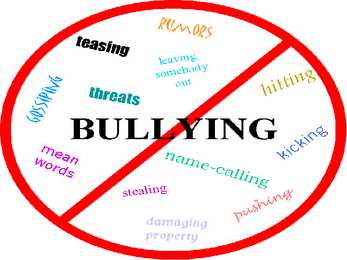
1 Types of bullying 1. Physical bullying: hitting, kicking, pushing, choking, punching 2. Verbal bullying: threatening, taunting, teasing, starting rumors, hate speech. 3. Exclusion from activities: This does not mean that a child should not have the right to choose to play, or not to play, with another child; it does mean that children should not be allowed to systematically exclude others: "No one play with Mary;" "No one wants to play with him;" "Don't be her friend." 2 Types of bullying 4. School bullying 5. Workplace bullying 6. Cyber-bullying 7. Political bullying 8. Military bullying 9. Hazing 3 4 DEFINITION • "Bullying is the act of intentionally causing harm to others through verbal harassment, physical assault, or other more subtle ...
School Bullying Worksheet Respond to the questions below in detail. 1. What are the 4 levels of negative consequences of bullying specified by the text? General school climate, right of students to learn in a safe environment without fear, lifelong consequences. 2. What is the foremost source of formal bullying research? Scandinavian countries, Great Britain, and Japan. 3. Direct bullying behaviours include (5) teasing, taunting, threatening, hitting, stealing. 4. Indirect bullying is such as spreading rumours and enforcing social isolation. 5. Boys and girls differ in their bullying behaviours in that Boys typically engage in direct bullying methods. but girls are more apt to utilize more subtle indirect strategies. 6. In general terms, bullying can be defined as direct and indirect. 7. The amou...
2 Educational system in Croatia divided into: 1. Early childhood education 2. Primary education 3. Secondary education 4. Higher education 3 Early childhood education There are three stages of early childhood education: • from when the child is 6 months old to when they're one • from the ages of one to three • from the age of three until the child stars attending primary school Even though these three stages are not compulsory, every child must attend kindergarten for a year prior to primary school. 4 Primary education (Children begin school at the age of 6 or 7.) There are two stages: • 1st through 4th grade, being taught by one teacher per class t...
Types of bullying 1. Physical bullying: hitting, kicking, pushing, choking, punching 2. Verbal bullying: threatening, taunting, teasing, starting rumors, hate speech. 3. Exclusion from activities: This does not mean that a child should not have the right to choose to play, or not to play, with another child; it does mean that children should not be allowed to systematically exclude others: "No one play with Mary;" "No one wants to play with him;" "Don't be her friend." 27.11.12 TAAB11 2 Types of bullying 4. School bullying 5. Workplace bullying 6. Cyber-bullying 7. Political bullying 8. Military bullying 9. Hazing 27.11.12 TAAB11 3 27.11.12 TAAB11 4 DEFINITION · "Bullying is the act of intentionally causing harm to others through verbal harassment, physical assault, or other m...
MY SCHOOL & SPECIALITY Kuressaare Regional Training Centre is an educational institute that provides initial vocational training and in wide area of specialties. The school was established on the 6th of november 1922, named the Kuressaare Ehitusinstruktorite school. First accepted 19 students to the new school. This marks the beginning of the continuous training on Saaremaa. Nowdays, over 1000 of students enrolled in school. As tourism is an important industry in our region, training specialists in catering, cooking, tourism management and hotel service has a very important role. Construction and related fields like carpentry have also quite a number of students. My school is located on an island which has a strong seamanship traditions and small vessel building companies, Kuressaare Reginal Traingin Centre is the only vocational school in Estonia training boat builders. Other specialties are car repairing, business management, social w...
Disc golf, is a flying disc game, as well as a precision and accuracy sport, in which individual players throw a flying disc at a target. The early history of disc golf is closely tied to the history of the recreational flying disc and may have been invented in the early 1900s.The first known instance of anyone playing golf with a flying disc occurred in Canada in 1926. Ronald Gibson and a group of his Bladworth Elementary School buddies played a game throwing tin plates at targets such as trees and fence posts. They called the game Tin Lid Golf and played on a fairly regular basis on a disc golf course they laid out on their school grounds. But, after they grew older and went their separate ways, the game came to an end. Modern disc golf started in the early 1960s, when it seems to have been invented in many places and by many people independently. Students at Rice University in Houston, Texas, for example, held tournaments with trees...
School system in the USA Education in the United States is provided by government. Each of the 50 states has its own laws regulating education. Children start school at the age of 5 or 6 and continue until the age of 18. Primary or grade school starts from the first grade up to the sixth grade. Then students attend middle school also called junior high school for three years. After middle school, students attend secondary schools, which are called "high schools" from ninth to twelfth grades. The idea of secondary school is to get a high school diploma. Students should take on average 17 or over 20 units during their studies. Public schools are free of charge and available for everybody. To which school a child attends is determined by where they live. Primary school American children start school at the age of five. The first year at school is called kindergarten. It is obligatory for all American ch...
Minu plaanid tulevikuks Nüüdseks olen juba kaheksa aastat käinud Maidla põhikoolis, üheksas aasta on hetkel käsil. Nende kaheksa aastaga on palju juhtunud, palju asju on selgemaks saanud. Viieteistkümne aastapärast on mul kolm imearmsat last. Selleks ajaks olen ma omandanud põhi-, kesk- ja kõrghariduse. Kui mu lapsed on väiksed, olen ma lastega kodus ning hoolitsen nende eest. Kuid kui nad juba koolis käima hakkavad, siis ma lähen tööle. Ma hakkan tööle ühes maailma suurimas ajalehes ajakirjanikuna. Põhitööna kirjutan ma "USA Today"-le, "The Wall Street Journal" ja "The New York Times"-ile. Kuid mõnikord rikastan ma ka Eesti ajakirjandust oma loometööga. Ma hakkan elama väga suures majas, koos oma mehe ja lastega. Meil on kaks nunnut Chihuahua ja palju kalakesi hiiglaslikus akvaariumis, mis asub elutoas. Meil on suur aed, kus on suur bassein ja laste mänguväljak. Meil on ka väike aiamajake, kus me saame suviti pere ja sõpradega grillid...
Gerd Kanter Date of birth: 6. May 1979 Lenght: 196 cm Personal record 73.38 (4. september Helsingborg, 2006) Trainer: Vésteinn Hafsteinsson (Island) Other: Estonian male athlete (2007, 2008, 2011) Gerd Kanter is an Estonian discus thrower. Gerd spent his childhood in Tallinn. After graduating the first class he went with parents from Tallinn to Vana-Vigala. He started to study in elementary school in Vana-Vigala. High school Gerd graduated already in Pärnu-Jaagupi. After graduating it he went to study to Higher School of Economics, Business Management and received his diploma in June 2001. Now he is completing Estonian Business School. Kanter residences are in Tallinn and in the field of Vigala Tiduvere village. His first coach was Ando Palginõmm. In the time of studies business management his coach was Helgi Parts. Their collaboration was short, because the coach's health was deteriorated. Then he practiced alone for about six months. ...
Benito Amilcare Andrea Mussolini was born on July 29, 1883 and died in April 28, 1945was an Italian politician who led the National Fascist Party and is credited with being one of the key figures in the creation of Fascism. He became the Prime Minister of Italy in 1922 and began using the title Il Duce by 1925. After 1936, his official title was "His Excellency Benito Mussolini, Head of Government, Duce of Fascism, and Founder of the Empire". Mussolini was born into a working class background; his father Alessandro Mussolini was a blacksmith and a Marxist activist, while his mother Rosa was a school teacher; unlike her husband, she was a devout Catholic. His father named Benito after Mexican reformist President Benito Juárez; while his middle names Andrea and Amilcare were from Italian socialists Andrea Costa and Amilcare Cipriani. Benito was the eldest of his parents' three children. As a young boy, Mussolini would spend time helping ...
Level of education The aim of the report is to analyze the level of education of men and women in Estonia at the turn of the century. A secondary education is by far the most popular level of education. This shows that it is a centric way to cover ground in life. A significant number of men have basic education. This implies that most men prefer not to pursue education. In case of women, they want to get a better education. This is demonstrated by the fact that only 18 % of women have basic education. A large proportion of women have chosen secondary vocational. This indicates that is chosen an occupation, which suggest a fixed income. A higher level of education is not certainly necessary. This is illustrated by the fact that about 6 % of people have elementary education. A small number of men and women have no schooling. This suggests that some people do not have opportunity to get an education. A substantial number of people have a ...
Albert Einstein Albert Einstein was a Germanborn theoretical physicist. Einstein is often regarded as the father of modern physics. Einstein published more than 300 scientific papers. His great intelligence and originality has made the word "Einstein" synonymous with genius. Early life Albert Einstein was born in Ulm, but the family moved to Munich in 1880. Albert attended a Catholic elementary school from the age of five until ten. In 1894, his father's company failed and in search of business, the family moved to Italy. Einstein wrote his first scientific work, "The Investigation of the State of Aether in Magnetic...
Should class attendance be mandatory for university students? It has been heavily debated, whether class attendance in general should be compulsory or optional. While most people can agree on the necessity of class attendance in elementary, as well as secondary school being obligatory, then opinions on required class attendance at university are quite divided. Both two alternatives have their respective up- and downsides but all aspects considered, which is more beneficial? To start off, the students’ chosen specialty usually reflects their interests which means that said students, in fact, want to attend classes. In this case, it seems unnecessary to make classes mandatory as it will be more time consuming and virtually even pointless for them to explain their reason for absence. After all, it is relatively common that when students take interest in a subject, it is highly unlikely they will deliberately miss a class. Regardless of c...
Me and languages. To begin with, language is a congrecation of thoughts and feelings through a system of signals, such as voice sounds, gestures, or written symbols. Communication or language is a process every child learns from birth and during our life we will usually learn many different languages. Due to the fact that both of my parents are Estonians , my mother tongue is Estonian, therefore I can speak and write in it very fluently. I also prefer read the books in Estonian. I know that some people like to do it in some other languages, in English for instance. I am really amused by the Estonian literature. I like to read books and stories from Andrus Kivirähk and F.R. Kreutzwald. English is one of the world most spoken language. You can hear it everywhere, no matter which part of the world are you in. In the third grade of elementary scool I started to learn English a...
Tallinna Tervishoiu Kõrgkool õenduse õppetool Õ15 Ksenia Tammist FÜÜSILISE AKTIIVSUS VÄIKELASTEL Referaat uurimistöö-ja arendustöö metoodikas Tallinn 2017 SISUKORD SISUKORD............................................................................................................................2 1.FÜÜSILISE AKTIIVSUSE ELAMISTOIMING...............................................................4 1.1.Väikelapse-ja lapseiga..................................................................................................4 1.2.Motoorne areng.............................................................................................................4 2.1.Bioloogilised tegurid....................................................................................................6 2....
New York City New York City is on the east coast of the USA, in the south-eastern corner of New York State. It has a population of over seven million,the largest of any city in the country, and an area of 783 kilometres. The population of New York has contained members of many races ever since the 17th century. Nowadays about 40 per cent of its inhabitants are immigrants or have a parents who were. The city has over 20 000 hectars of parkland. One of the parks, Central Park, was designed by Frederic Law Olmsted and Calvert Vaux. Its 340 hectares contain half a million tees, several lakes, a rollerskating rink, a theatre, the Metropolitan Museum of Art and much more. There are beaches in many parts of New York. One of the most popular is Coney Island Beach in Brooklyn. Visitors there can swim in the sea, enjoy the amusement park, eat hot dogs and visit the New York Aquarium, which contains about 10 000...
today is the 6th of November. rakvere vocational school my speciality is a cook monday tuesday wendsday thursday friday saturday sunday my birthday is on the 27th dec my address is i was born in 1996 country city town parish cummune municipal village flat avenue street road kindergarten(nursery) to decide vocational school profession education speciality construction of cars to establish restuarant to continue to mend to repair 1.In the future 2.i have to stay in my new school do practical work 3.i entered vocational school. 4.at the age of seven 5.i was born in 23.10.1984 6.during my session 7.for almost four years 8.i want to be weiter 1. i was born in 3 nev 1984 2.i went to school at the age of seven 3.i have to studie almost four years 4.in september i went to vocational school 5.im interested in cars 6.in school we do practical work too 7.in the future im going to keep the family resourant school final cer...
INGLISE KEELE TÖÖPLAAN 6. KLASSILE Aeg: I, II veerand 2003/2004 õ.-a Õpetaja: Age Tamm Õppe- Teemad. Alateemad. Mõisted, faktid nädal 1. nädal Unit 1. What did you do last summer? Past Simple questions, statements 2. nädal Summer activities Did you...? Yes, I did / No, I didn't Alan's summer play ball / the violin My summer go swimming / ...ing Polite English. Saying hello and introducing 3. nädal Unit 2. A trip to England Past Simple 4. nädal Outdoor activities by bus / car / train / plane, on foot English Country School Ordinals (the first, the second, ...) The Tower of London Posessive pronouns ...
Why I came to study English Why I came to study English? Seems like a simple question, but it certainly made me think about it. Some of my friends have even said that majoring in English seems so boring and they constantly bombard me with questions about my future. That made me think about how exactly did I end up studying English? First of all, as a kid, I was so sure I would be a hairdresser or a teacher or a cook in the future. I am sure that almost every kid thinks the same, when all they have for inspiration are cartoons and toys to play with. When I started school, I was very interested in mathematics and other subjects that required logical thinking, because apparently I was smart in that area at the time. Up until 6th grade I was the best student in our class, winning mathematic competitions left and right and not only that. By that time I had also found out that I loved to write, specially po...
http://www.abiks.pri.ee FREE TIME 1. Is music popular in your family? What music do you like? 2. What musical instruments have you got in your home? 3. Can you play any musical instruments? 4. Do you sing? 5. Have you sung at a song festival? 6. Has your school got a choir? 7. When do you last go to a concert? What concert was it? 8. Have you ever been to an openair concert? What was it like? 9. Do you sing at family parties? Where else Estonians like to sing? 10. Have you got a collection of cassettes, CD´s or LP´s at home? 11. Have you watched a ballet on TV? 12. Which do you prefer ballet, drama or musical? 13. How often do you go to the theatre? 14. Do you prefer going to the theatre or watching TV? Why? 15. Do you prefer buying a cheap ticket and getting a seat at the back or spending more money and sitting in the...
Konrad Mägi Konrad Mägi was born at Hellenurme, Tartu on November 1, 1878. He was an Estonian landscape painter and a teacher. He has also participated in the foundation of the art association and school "Pallas". He was one of the most colour-sensitive Estonian painters of the first decades of the 20th century, and Mägi's works on motives of the island of Saaremaa are the first modern Estonian nature paintings. As well as nature paintings, he also painted flowers and portraits. He always used sky in his paintings. His favourite colour was cadmium red, which is quite light and warm red tone. Mägi received his elementary art education from the drawing courses of the German Artisans' Society of Tartu. Mägi continued his art education in Saint Petersburg, where he was expelled due to his participation in revolutionary activities. Then he spent the summer on the islands of Åland in Finland and after tha...
Washington Washington is a state in the Pacific Northwest region of the United States located north of Oregon, west of Idaho, and south of the Canadian province of British Columbia on the coast of the Pacific Ocean. It was named after George Washington, the first President of the United States, the state was made out of the western part of the Washington Territory, which had been ceded by Britain in 1846 in accordance with the Oregon Treaty in the settlement of the Oregon Boundary Dispute. It was admitted to the Union as the 42nd state in 1889. Olympia is the state capital of Washington. Washington is sometimes referred to as Washington State or the State of Washington to distinguish it from Washington, D.C., the capital of the U.S., which is often shortened to Washington. Washington is the 18th largest with an area of 184,827 sq/km and the 13th most populous state with over 7 million pe...
Learn From Mistakes, Improve Your Intelligence We are humans. In society it's perfectly acceptable that in one way or another we've failed and will fiddle up again. Everyone does, but we, the people must let go of the past and seek for a better future, to learn, to differ the wrong form the right. Now why do we bollocks up in the first place? The answer lies in you, yourself have to find out why did you fail and what can be learned from it. Frequent failing can cause sadness, depression and lack of motivation but it's not the way to go if you want to succeed in life and become a better you. It's better to understand your mistakes and learn from them to expand your knowledge rather to get everything right and stay on elementary level of problem solving. To fail or not to fail, that is the question. To everyone who state they've never felt failure, first of all, remember when you missed the bus or burnt a meal, tripped over som...
Positive sides of outdoor learning Essay "Tell me and I forget. Teach me and I remember. Involve me and I learn." Benjamin Franklin In the last few years outdoor education has become more and more popular worldwide and in Estonia too. While there are many definitions for outdoor education, I think the best way to describe it would be outdoor education is a form of education, when learning takes place somewhere else than a classroom and the subjects are not only about the environment and nature but also linked to the national curriculum. Outdoor education often takes place on a walk around the block, a visit to the cemetery or a local post office. It can happen at a city zoo, on a forest trail, or in a national park. These kinds of locations are conducive to first- hand experien...
Viimsi Keskkool Anette Leis VASAKUKÄELISE ÕPILASE TOIMETULEK KOOLIS VIIMSI KESKKOOLI NÄITEL Uurimistöö Juhendaja: Ruth Lobjakas Viimsi 2016 SISUKORD 1.2.1Vaba vaatluse meetod..................................................................................................7 1.2.2Vaatlemine mängimisel...............................................................................................7 3.1.1Vasakukäelisuse esinemine sugulaste seas................................................................17 3.1.2Ümberõppimine paremale käele...............................................................................18 3.1.3Probleemide tekkimine käelisuse tõttu ainetundides................................................19 3.1.4Tekkinud probleemide täpsustus.....................................................
Libraries. We know a lot of things thanks to books, but we do not know exactly when and where they originated, and what should be considered the first book in the world. Ancient document, written on parchment, papyri and vellum can hardly be qualified as books the way we understand the word today. Centuries went before paper replaced parchment and papyri. In the 15 th century Johann Gutenberg invented a mechanical process of duplicating texts, which we today call book printing. The first book was printed between 1444 and 1446, so these years can be considered as the beginning years of book printing. His most important preserved printings are the 40 copies of the Bible. By the end of the 15 th century there were about 1000 print-shops in Europe already. The oldest Estonian book dates back to 1535. Libraries form a vital part of education. They make available-through books, f...
Education Education is so multifaceted that it is difficult for me to know where to begin discussing it, or how to prioritize the many factors. Relaying my own experience is easy: I had a standard classroom approach, supplemented by inordinate reading. In only the briefest and least memorable instances did I receive any individual tutoring. Education is commonly thought of as the job of schools. Adults cry "educate our children!" Everyone has opinions about the best way to do the job. It is of urgent importance, and all the numerous factors are much studied, debated, and new (or old) ideas continually tested or retested. Some people say "it's as simple as . . . " and then name their pet peeve or passion. My view is not of an education specialist, but of one who loves sharing what I learn, and owes much to educators. Since I don't have an educational theory neatly worked-out, nor an outline of my perceptions, my intent is to addr...
toimetuleku oskuste arendamisele põhinev haridus. Kirjandus Hiiemäe, R. (2012). Katk ja AIDS sarnaste fenomenide käsitlemine rahvapärimuses. http://www.folklore.ee/pubte/kuuldust/031Katkjaaids.html Churchwell, E. et al. (2001). HIV/AIDS: a challenge in the classroom. Public Health Nursing, 15, pp 257-262. Pick, S. et al. (2007). Communication as a protective factor: Evaluation of a life skills HIV/AIDS prevention program for Mexican elementary-school students. AIDS Education and Prevention, 19 (5), pp 418-421. Cuijpers, P. et al. (2002). The effects of drug abuse prevention at school: the healthy school and drugs project. A
Kuressaare Gümnaasium "Ajastu muutub, kas ka inimene?" Luuleprojekt Laulusõnad esitajalt Tupac Shakur Dear mama When I was young me and my mama had beef Seventeen years old kicked out on the streets Though back at the time, I never thought I'd see her face Ain't a woman alive that could take my mama's place Suspended from school; and scared to go home, I was a fool with the big boys, breakin all the rules I shed tears with my baby sister Over the years we was poorer than the other little kids And even though we had different daddy's, the same drama When things went wrong we'd blame mama I reminice on the stress I caused, it was hell Huggin on my mama from a jail cell And who'd think in elementary? Heeey! I see the penitentiary, one day And runnin from the police, that's right Mama catch me, put a whoopin to my backside And even as a crack fiend, mama You always was a black queen, mama I fin...
Tallinna Ülikooli Haapsalu Kolledž KOOLILASTE TERVIS JA SELLE EDENDAMINE ÜHTSES KOOLITERVISE SÜSTEEMIS Kädi Lepp Haapsalu 2010 KOOLILASTE TERVIS JA SELLE EDENDAMINE ÜHTSES KOOLITERVISE SÜSTEEMIS Autor: Kädi Lepp Keeletoimetaja: Victoria Parmas Autoriõigus: Kädi Lepp, 2010 Autoriõigus: Tallinna Ülikooli Haapsalu Kolledž, 2010 ISBN ISBN 978-9949-463-02-2 Tallinna Ülikooli Haapsalu Kolledž Lihula mnt 12 90507 Haapsalu www.hk.tlu.ee 2 Sissejuhatus Laste ja noorte tervisele ja heaolule avaldab mõju bioloogiliste, kultuuriliste, sotsiaalsete, majanduslike ja keskkonnategurite keeruline kombinatsioon. Mitmel põhjusel on sagenenud laste kroonilised haigused, kasvanud on vaimse tervise häired, probleeme tekitavad tervisekäitumise negatiivsed suunad. Keskkond, mis soodustab ebatervislikku eluviisi, ei o...
Antropoloogilise mõtte ajalugu Positivism ja sotsiaalne progress Auguste Comte (19. saj): Prantsuse filosoof, esimesi mõtlejaid, kes uuris inimühiskoda süstemaatiliselt ning teaduslikult, võrreldes selle uurimist füüsika protsessidega, kogudes empiirilisi andmeid ning vaadeldes 3 tähtsat mõistet positivism, sotsioloogia, altruism Altruism inimesel on tendents teha koostööd teiste liikidega Bioloogia on eeskujuks sotsioloogiale, seega sotsioloogia on loodusteadustega võrreldav Loomad ja taimed arendavad välja elundid, mis vastavad konkreetse keskkonna vajadustele, arenevad eri staadiumiteni, kõrgeim neist inimene Inimesi on samuti kujundanud keskkond ja looduslik ümbrus, kus nad arenevad üha edasi kõrgemateks vormideks Inimajalugu kui pidev progress Inimühiskonna 3 staadiumit kolme seaduse idee: 1. ...
Antropoloogia jaotumine neljaks väljaks, nende põhilised uurimisalad antropoloogia jaguneb neljaks järgmiselt: arheoloogia, kultuurantropoloogia, bioloogiline antropoloogia ja antropoloogiline lingivistika. Arheoloogia möödunud kultuuride võrdlev uuring läbi materiaalsete uuringute ja keskkonna uuringute, mis inimtegevuse tagajärjel minevikust maha jäänud. Kultuurantropoloogia uurib inimest, kui ühiskondlikku olevust, tema käitumismustreid, tavasid, kombeid. Ühelt poolt püütakse leida universaalset, midagi mis on ühine kõikidele kultuuridele. Teiselt poolt tuleb märgata just ainulaadset, seda mis eristab ühte kultuuri teisest, muutes ta universaalsekt, kordumatuks. Bioloogiline antropoloogia tegeleb peamiselt inimese füüsilise karakteristika uurimise ja analüüsimisega. Antropoloogiline lingvistika interdistsiplinaarne uuring, kuidas keel mõjutab ühiskonda. Antropoloogiline lingvistika uurib, kuidas keel kujundab kommunikatsioo...
BOOKS (From Wikipedia, the free encyclopedia) A book is a set or collection of written, printed, illustrated, or blank sheets, made of paper, parchment, or other various material, usually fastened together to hinge at one side. A single sheet within a book is called a leaf, and each side of a leaf is called a page. A book produced in electronic format is known as an electronic book (e-book). Books may also refer to works of literature, or a main division of such a work. In library and information science, a book is called a monograph, to distinguish it from serial periodicals such as magazines, journals or newspaper. The body of all written works including books is literature. In novels and sometimes other types of books (e.g. biographies), a book may be divided into several large sections, also called books (Book 1, Book 2, Book 3, etc.). A lover of books is usually referred to as a bibliophile, or, more informally, a bookworm. A st...
More praise for Influence: Science and Practice! "We've known for years that people buy based on emotions and justify their buying decision based on logic. Dr. Cialdini was able, in a lucid and cogent manner, to tell us why this happens." --MARK BLACKBURN, Sr. Vice President, Director of Insurance Operations, State Auto Insurance Companies "Dr. Cialdini's ability to relate his material directly to the specifics of what we do with our customers and how we do it, enabled us to make significant changes. His work has enabled us to gain significant competitive differentiation and advantage" -LAURENCE HOF, Vice President, Relationship Consulting, Advanta Corporation "This will help executives make better decisions and use their influence wisely ... Robert Cialdini has had a greater impact on my thinking on this topic than any other scientist." -CHARLES T...
SOTSIAALPEDAGOOGIKA TEOORIA JA SELLE PRAKTILISI VÄLJAKUTSEID EESTIS : - : · . · TARTU 2006 Sissejuhatuseks Kiiresti muutuvas maailmas tuleb igal inimesel leida oma kõht ühiskonnas, enese teostamise võimalused ja toimetuleku teed. Algus selleks tehakse juba lapseeas, kus hakkavad välja kujunema vastavad omadused, ellusuhtumine, väärtushinnangud, põhihoiakud ja toimetulekustrateegiad. Lapseeas otsustub suurel määral ka indi- viidi võime omandada haridust - tehtud vead on küll mõningal mää- ral parandatavad, aga selleks on vaja peale lisaaja ja jõupingutuste ka muid soodustavaid tegureid. Heaoluks vajalike ressursside puudumisel väheneb inimese või...
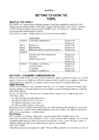
CHAPTER 1 GETTING TO KNOW THE TOEFL WHAT IS THE TOEFL? The TOEFL is a comprehensive English language examination required by more than 3,000 colleges and universities in the United States, Canada, and other parts of the world. In addition, foreign born professionals frequently need a TOEFL score for certification to practice their profession in the United States or Canada. The TOEFL is a timed test that consists of the three sections listed here. THE TOEFL Section 1 Listening Comprehension 50 questions 35 minutes Part A Statements 20 questions Part B Short Dialogs 15 questions ...
Some of the things you will learn in THE CODEBREAKERS • How secret Japanese messages were decoded in Washington hours before Pearl Harbor. • How German codebreakers helped usher in the Russian Revolution. • How John F. Kennedy escaped capture in the Pacific because the Japanese failed to solve a simple cipher. • How codebreaking determined a presidential election, convicted an underworld syndicate head, won the battle of Midway, led to cruel Allied defeats in North Africa, and broke up a vast Nazi spy ring. • How one American became the world's most famous codebreaker, and another became the world's greatest. • How codes and codebreakers operate today within the secret agencies of the U.S. and Russia. • And incredibly much more. "For many evenings of gripping reading, no better choice can be made than this book." —Christian Science Monitor THE ...
UNO SOOMERE ESTONIAN SYMPHONIC MUSIC. THE FIRST CENTURY 1896-1996. AN OVERVIEW With a Historical and Cultural Summary IN MEMORY OF THE GREAT ESTONIAN COMPOSERS CONTENTS ESTONIA AND THE ESTONIANS FOREWORD IN THE FOLD OF TSARIST RUSSIA. EMERGENCE AND FIRST STEPS ON THE CLASSICAL-ROMANTIC PATH. HISTORICAL INTRODUCTION I. MUSICAL LIFE IN TARTU AT THE TURN OF THE CENTURY. TRAILBLAZERS: ALEKSANDER LÄTE, RUDOLF TOBIAS, ARTUR KAPP. II. THE FIRST DECADE OF THE 20TH CENTURY. ARTUR LEMBA: THE BEGINNING OF ESTONIAN SYMPHONY AND OPERA. III. NEW DEVELOPMENTS IN CULTURAL AND MUSICAL LIFE: THE END OF THE TSARIST PERIOD. THE INDEPENDENT REPUBLIC OF ESTONIA: THE INTRODUCTION OF INNOVATIONS FROM WESTERN ART AND THE EVOLUTION OF NATIONALLY ORIENTED MUSICAL TRENDS. IV. THE TWENTIES. ARTUR KAPP: ROMANTICIST AND DRAMATIST. V. THE INFLUENCE OF NEW WESTERN MUSIC...
 annaabi.ee