Leidsid 33 sarnast õppematerjali, mis on seotud failiga "Eessõnad". Need materjalid aitavad sul teemat sügavamalt mõista.
milleski, millessegi, millestki, prepositions, doing, benefit, kiindunud, duel, plane, bussi, tired, väsinud, filled, charge, stay, hotel, included, provide, result, concentration, pack, round, ideal, delight, noon, work, põnevus, exam, focus, isolation, came, confident, famous, interpretation, duellil, illness, dying, travel, reisima, aware, ignorantAbstain from-halvast harj hoiduma According to-vastavalt Account for-põhjendama Accuse sb of-süüdistama Accustomed to-harjunud Acquainted with-tuttav millegi/kellegagi Advantage of-eelis Advice on-nõu andma Afraid of-kedagi kartma Afraid for-kellegi pärast kartma Agree with sb on sth-nõustuma Aim at-sihtima Allergic to-allergiline Amazed at/by-imestunud Amount to-ulatuma sinnani Amused at/with/by-lõbustatud Angry at what sb does-vihane Angry with sb about sth-vihane Angry with sb for doing sth-vihane Annoyed with sb about sth-häiritud (in)answer to-vastus Anxious about sth-murelik Apologise to sb for sth-vabandama Appeal to/against-meeldima Apply(to sb)for sth-kandideerima Approve of-heaks kiitma Argue with sb about sth-vaidlema Arrest sb for sth-arreteerima Arrive at(a small place)-saabuma Arrive in(a town)-saabuma Ashamed of-häbenema Ask for-küsima midagi Ask sb a question-küsimust kelleltki küsima Astonished at/by-hämmingus Attend to-osa võtma (un)aware of-teadlik
Flight attendant - stjuardess Restaurant chef - peakokk Estate agent - kinnivaraagent Firefighter - tuletõrjuja Door-to-door salesperson - uksest-ukseni müügimees Tour guide - ekskursioonijuht Executive - ärijuht Interpreter - tõlk Wage - weekly paid, palk, töötasu Salary - monthly paid, töötasu, palk Pay - töötasu, maksma, money given in return for work don Savings - säästud, money saved, putting by Pension - pension, A sum of money paid regularly as a retirement benefit Interest - intress, you earn it on the money you have invested Cash - sularaha, money in the form of bills or coins Pocket money - taskuraha, money that parents give to their children To congratulate sb on sth - kedagi millegi puhul õnnitlema To retire retire from a job - pensionile minema To apply for a position - kohale kandideerima Specialise in sth - millelegi spetsialiseeruma Deal with sth - millegagi toime tulema, millegiga tegelema
get along= jätkama vaatamata raskustele continue despite difficulties get along with= läbi saama be on friendly terms;get on with get at= õel/mõtlema mean get away with= põgenema karistuse eest escape punishment for a wrongful, illegal act get back= tagasi võtma recover possession of get down= 1) neelama raskustega swallow with difficulty 2) alla suruma depress get down to = alustama millegi tegemist tõsiselt start doing sth seriously get on= 1) sisenema (bussi trammi) enter(bus) 2) arenema make progress get on with= headel tingimustel olema (sõbralik vms) be on good terms with get out= tuntuks saama (of news) become known get over= toibuma recover from get round= veenma persuade; bring round get round to= leidma aega et teha midagi find time to do sth get throught to= 1)lõpetama oma tööd finish (a piece of work) 2) elama rasketel aegadel
Hope of Idea of Intension of Jealous of Know of Knowledge of Lack of Notice of Opinion of (take a) photograph of Picture of Pleasure of Proud of (keep) a record of Regardless of Remind sb of Reputation of Result of Scared of (be) in search of Short of Shy of Sick of Smell of Sure of Suspicious of Taste of Terrified of Think of Tire of Tired of (be) (at) the top of Typical of Warn sb of Worthy of WITH Acquained with Agree with sb on sth Amused with Angry with sb about sth Angry with sb for doing sth Annoyed with sb about sth Argue with sb about sth Begin with Bored with Busy with Chat with Charge sb with Careless with Communicate with Compare with Comply with (in) connection with Connect with Content with Cope with Correspond with Crowded with Deal with Delighted with Difficulty with Disagree with Disappointed with Dissatisfied with Experiment with Expert with sth Familiar with Fed up with Fight with sb Fill sth with sth else Friendly with Furious with sb about/at sth Gossip with sb
Lõhikesi vorme ei kasutata! (don't) 150 sõna Teema "should mery-killing be punished?" HOMEWORK Terms to explain: Nation - a country, especially when thought of as a large group of people living in one area with their own government, language, traditions, etc: Stranger someone whom you do not know Citizen - a person who is a member of a particular country and who has rights and obligations because of being born there or because of being given them Penalty - a punishment for doing something that is against a law Government - the group of people who officially control a country System of courts - a set of connected positions which operate together to ensure ... ? To commit a crime to do sth that is forbidden by law Corruption - illegal, immoral or dishonest behaviour, especially by people in positions of power Fine (trahv) - an amount of money that has to be paid as a punishment for not obeying a rule or law
6. All files are stored in cabinets 7. The company's personnel is highly trained. 8. Please keep in mind that you must answer all questions. 9. This machinery is rather outdated. 10. Following his advice will do you a lot of good. PHRASAL VERBS 1. take sth in understand = aru saama 2. send sth back return = tagastama, tagasi saatma 3. take back admit to an error = tunnistama oma viga 4. take up sth begin doing sth = millegagi tegelema hakkama 5. send sth on forward = midagi edasi saatma 6. send for summon = kedagi kutsuma 7. send out on order = käskima 8. take on accept = vastu võtma, nõustuma LANGUAGE FOCUS 1. keyboard klaviatuur 2. ignition süüde 3. expansion port laiendusport (USB) 4. clutch sidur 5. tail wings lennuki tagumised tiivad, millega muudetakse kurssi 6. hard drive kõvaketas 7. cockpit kokpit 8
property (vara) - something that is owned by a person (bussiness, land, building etc) to administer property (vara haldamine) - to manage some kind of property (bussiness, land, building, real estate) family law (perekonnaõigus) - an area of the law that deals with matrimonial matters and domestic relations (marriage, civil unions, child abuse, divorce, adoption) unjust enrichment (alusetu rikastumine) - when a person unfairly gets a benefit by chance, mistake or another's misfortune legal remedies (õiguskaitsevahendid) - the way a right is enforced by a court of law when wrongful act is imposed upon another individual procedure (menetlus) - the official and proper way of doing things in a legal case in certain way or order victim (ohver) - a person who has been attacked, injured, robbed, or killed by someone else.
FCE Result Words and Phrases Alphabetical Wordlist a bite to eat (phr) abandon (v) abruptly (adv) absent-minded (adj) abstract (adj) abusive (adj) access (n) accuse of (v) achievement (n) aching (adj) acknowledgement (n) acquire (v) activist (n) adaptation (n) addicted to (adj) addictive (adj) additional (adj) admire (v) admission (n) adoptive (adj) adrenalin (n) adulthood (n) aerial (n) aging (n) aisle (n) alarming (adj) alien (n) alike (adv) allegedly (adv) alley (n) alongside (adv) aloud (adv) alternate (adj) amateur (n) ambitious (adj) anaemic (adj) analysis (n) ancestor (n) ancient (adj) angel (n) ankle (n) announce (v) annual (adj) anthropologist (n) 1 anticipate (v) antisocial (adj) apart (adv) ape (n) apparatus (n) apparent (adj) appeal to (v) appetising (adj) applicable (adj) apprenticed to (adj) approach (v) approximately (adv) arch criminal (n) archaeological (adj) archbishop (n) architect (n) argumentative (adj) arrogant (adj) articulated
on Monday evening. For lunch in the afternoon. Until/till 5 o'clock in 2006. in spring. Kindla eesõnaga sõnad be absent from puuduma, (kuskilt)be afraid of kartma (kedagi, midagi),be angry at vihane olema (millegi peale) be angry with vihane olema (kellegi peale), be fond of kiindunud olema (kellessegi, millessegi) be full of täis olema (kedagi, midagi), be good at hea olema (milleski),be interested in huvitatuma (kellestki, millestki) be keen on huvituma (kellestki, millestki), be kind to lahke olema (kellegi vastu),be late for hilinema (millekski) be pleased with rahul olema (millegagi),be proud of uhke olema (kellegi, millegi üle), be satisfied with rahul olema (kellegagi, millegagi), be short of
Koht, kust voolab jõgi läbi London lies on the Thames. Millegi peal, pinnal On the table. Kuskil pool paremal, vasakul On the right, On the left. Majakorrusel On the first floor. Ühistranspordi puhul On the bus, On a plane. Televiisorist, raadiost On TV, On the radio. BY/NEXT Kellegist paremal või vasakul pool Jane is standing by/next TO/BESIDE to/beside her car. UNDER Madalamal kui miski muu asi, The bag is under the table. maapinnal BELOW Madalamal kui miski muu asi, kuid The fish are below the
;P ulJbijlg lsBN 978-1-8432s-569-7 Illllll]ililil]t llll ||||rl 9 x781843x255697x Conlenls UNI T1 househol d & appl i ances; dw el l i ngs ln Searchof the Perfect My Home is my chores;colours& rooms;home H ome(mul ti pl choi e ce) Castle(pp. 5-19) safety TheCharmingPast:Blarney Castle- Du
;P ulJbijlg lsBN 978-1-8432s-569-7 Illllll]ililil]t llll ||||rl 9 x781843x255697x Conlenls UNI T1 househol d & appl i ances; dw el l i ngs ln Searchof the Perfect My Home is my chores;colours& rooms;home H ome(mul ti pl choi e ce) Castle(pp. 5-19) safety TheCharmingPast:Blarney Castle- Du
;P ulJbijlg lsBN 978-1-8432s-569-7 Illllll]ililil]t llll ||||rl 9 x781843x255697x Conlenls UNI T1 househol d & appl i ances; dw el l i ngs ln Searchof the Perfect My Home is my chores;colours& rooms;home H ome(mul ti pl choi e ce) Castle(pp. 5-19) safety TheCharmingPast:Blarney Castle- Du
;P ulJbijlg lsBN 978-1-8432s-569-7 Illllll]ililil]t llll ||||rl 9 x781843x255697x Conlenls UNI T1 househol d & appl i ances; dw el l i ngs ln Searchof the Perfect My Home is my chores;colours& rooms;home H ome(mul ti pl choi e ce) Castle(pp. 5-19) safety TheCharmingPast:Blarney Castle- Du
28. Compounds Compounds are formed by joining two or more root morphemes or combining forms into a single lexeme. Compounding is a word-formation process in which two or more simple words are joined to a new word with a single meaning. Compound nouns – coffee pot, airmail, highway, coffee table, Compound adjectives – sky-blue, lead-free, machine-readable, sugarfree Compound verbs – dry-clean, carbon-copy, Compound prepositions – onto, into, unto 29. Solid, hyphenated, and open compounds 11 The common rule is to use as few hyphens has possible. The US English generally prefers the parts of the compound to be written together, whereas British English prefers them to be separate. Solid o Teapot, blackbird Hyphenated o Glass-making, muddle-headed, blue-haired
Isles of Scilly, the Hebrides, the Orkney Islands, the Shetland Islands, and about 5,500 small islands and islets. Britain is also the largest island in Europe and the eighth largest in the world. It covers 218,980 sq. km. The second largest in the British Isles is the island of Ireland (area 83,694 sq. km.). 2. In 1875 Matthew Webb was the first to swim across the Channel. And in 1907 Louis Blériot made the first air crossing in a plane. There are memorials to both at Dover. A tunnel under the English Channel (the Channel Tunnel) linking France and England was opened in 1994. Vocabulary 1. affect (v) воздействовать, влиять effect (n) воздействие, влияние; результат, эффект syn. influence (n/v) влияние; влиять 2. exception исключение
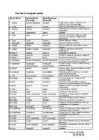
The list of irregular verbs Basic Form Simple Past Past Participle Form (II) Form (III) 1. abide abode (abided) abided (mlgi juurde) jääma, (mlstki) kinni pidama, (mdgi) järgima (by) 2. arise arose arisen tõusma, esile tulema või kerkima 3. awake awoke awoken (üles) ärkama, virguma; (üles) äratama, virgutama 4. be was/were been olema 5. bear bore borne kandma; kannatama, taluma, vastu pidama; esile tooma, ilmale tooma, sünnitama 6. beat beat beaten lööma, peks
Conditional sentences(If I do, If I did) Tingimuslaused Tingimuslaused koosnevad kahest osast: If (tingimus), (tingimus realiseerub) kõrvallause pealause Inglise keeles on kolm tingimuslause tüüpi. 1. tüüp reaalne tingimus olevikus või tulevikus Tingimus (if) Tulemus Verb lihtolevikus, kestvas olevikus või verb lihtolevikus või lihttulevikus täisminevikus (do, is doing, have done) If she phones me, If he isn´t going, you will answer the phone. I will go there myself. she has to keep it. If she has given a promise, 2. tüüp ebareaalne tingimus olevikus või tulevikus Tingimus (if) Tulemus Verb lihtminevikus (did) Would/should+verb Pane tähele! Verb be on kõigis pööretes were Could/might+verb (I/you/he/we/they were)
poest mööda past the shop TEGUSÕNAD EESSÕNAGA take care of hoolitsema kellegi eest care about hoolima kellestki care for soovima midagi take part in osalema worry about muretsema apply for kandideerima get off (the bus, train) maha minema got on (the bus, train) peale minema speak about rääkima millestki speak to rääkima kellegiga speak on the phone rääkima telefoniga apologise for / about vabandama millegi pärast send by fax/email saatma faksiga/epostiga suffered from kannatama millegi all listened to kuulama midagi focus on keskenduma millelegi belong to kuuluma kellelegi wait for ootama kedagi deal with tegelema millegiga
Kestev olevik The present continuous Praegu toimuv tegevus. Now, at the present. am / is / are + -ing We are learning English. Is Mark reading or writing? Where is the teacher standing? 3 4 Kestev minevik The past continuous Minevikus teatud hetkel parajasti kestnud tegevus. Yesterday at 6, when she came, this time on Tuesday. was / were + -ing When the teacher came in, the pupils were talking. What were you doing when she opened the door? I was not talking, I was reading a book. Kestev tulevik The future conrinuous Väljendab tegevust, mis hakkab tulevikus toimuma. Lause põhirõhk on suunatud ajale tulevikus. will / be + -ing She will be attending school in Switzerland. He will finish working at 4 o'clock. Will she be at home tomorrow. Täisminevik The present perfect Äsja lõppenud tegevus. Seotud olevikuga.Just, today, this week, never, ever,yet. have / has + 3. pv We are tired
Kestev olevik The present continuous Praegu toimuv tegevus. Now, at the present. am / is / are + -ing We are learning English. Is Mark reading or writing? Where is the teacher standing? 3 Kestev minevik The past continuous Minevikus teatud hetkel parajasti kestnud tegevus. Yesterday at 6, when she came, this time on Tuesday. was / were + -ing When the teacher came in, the pupils were talking. What were you doing when she opened the door? I was not talking, I was reading a book. Kestev tulevik The future conrinuous Väljendab tegevust, mis hakkab tulevikus toimuma. Lause põhirõhk on suunatud ajale tulevikus. will / be + -ing She will be attending school in Switzerland. He will finish working at 4 o'clock. Will she be at home tomorrow. Täisminevik The present perfect Äsja lõppenud tegevus. Seotud olevikuga.Just, today, this week, never, ever,yet. have / has + 3. pv We are tired
on the basis of deliberately submitted false information tahtlikult esitatud valeinformatsiooni alusel 57. as the result of the intentional withholding of information tahtlikul informatsiooni varjamise põhjusel 58. regarding circumstances which prelude receipt of Estonian citizenship puutub asjaoludesse, mis välistavad Eesti kodakondsuse saamise 59. be deprived of ilma jätma 60. a foundling leidlaps 61. unilateral ühepoolsd 62. multilateral mitmepoolsed 63. benefit toetus * U7 64. to file a petition esitama kaebust 65. act was adopted seadus oli vastu võetud 66. entered into force jõustus 67. was repealed tühistati 68. coming into effect jõustuma 69. deficiencies and gaps puudused ja lüngad 70. the elaboration of the new act uue seaduse väljatöötamine 71. the norms and terms of the former law eelmise seaduse sätted ja mõisted 72. outdated iganenud 73. regulative part reguleeriv osa 74
Kuressaare Gümnaasium "Ajastu muutub, kas ka inimene?" Luuleprojekt Laulusõnad esitajalt Tupac Shakur Dear mama When I was young me and my mama had beef Seventeen years old kicked out on the streets Though back at the time, I never thought I'd see her face Ain't a woman alive that could take my mama's place Suspended from school; and scared to go home, I was a fool with the big boys, breakin all the rules I shed tears with my baby sister Over the years we was poorer than the other little kids And even though we had different daddy's, the same drama When things went wrong we'd blame mama I reminice on the stress I caused, it was hell Huggin on my mama from a jail cell And who'd think in elementary? Heeey! I see the penitentiary, one day And runnin from the police, that's right Mama catch me, put a whoopin to my backside And even as a crack fiend, mama You always was a black queen, mama I finally understand for a woman it ain't easy tryin
studium.ee Trükitud OÜ Greif trükikojas Lohkva, Luunja vald Tartumaa 62207 --- 3 xxx 1. The Big Apple 1. Write the verbs in the present continuous or the past continuous tense. Do you remember? am is are was were verb -ing 1 Sorry. I ... (write) a report at the moment. I can't come with you. 2 When Peter arrived, his friends ... (play) football. 3 I ... (sleep) when the alarm went off in my sister's room. 4 Dad's mobile phone is switched off because he ... (fly) to Paris. He's on the plane at the moment. 5 I ... (read) an interesting book. It's a collection of memories. 6 Leo was late again. He ... (step) out of his father's car when the bell rang. 7 Helen ... (lie) on the sofa when an ambulance stopped in front of the house. 8 I ... (give) this report from inside the school radio studio. Right now, the two teams ... (take) their places on the football field. 9 Mrs Watson ... (make) her speech when the girls rushed in. --- 4 2
ure if we are continually criticized and punished when we try some- thing new or different. We are shouted at and told, “No! Get away from there! Stop that! Put that down!” Physical punishment and the withholding of love, possibilities that scare us and make us feel inse- cure, often accompany these shouts and criticisms. We soon begin to believe that we are too small, too weak, in- competent, inadequate, and incapable of doing anything new or dif- ferent. We express this feeling with the words, “I can’t, I can’t, I can’t.” Whenever we think about doing something new or challeng- ing, we automatically respond with feelings of fear, trembling, and a churning stomach. We react exactly as if we are afraid of getting a spanking. We say, “I can’t” over and over. The fear of failure is the primary reason for failure in adult life.
children (who may lead the life of adult). Foreign languages are taught only at high school. As a result, there is lack of cultural awareness, knowledge of other countries and their history and geography. Children are open to new and unknown. Then they will appreciate what they have and improve what needs improving by comparing different styles of life. Educational establishments in the USA could use and benefit more from hiring international students at the university and schools to acquire the best trends in educational system of different countries, and encourage international students to issue newsletters with their ideas valuable for developing education further, using the best from different systems. It could be the project of the century! Exchange programs with international scholars and students, especially those in education, can be very beneficial for both parties
______________________________ 6 Last year we went/were going camping and we had a great time. ______________________________ 7 My mum was taking/took a picture when she dropped the camera. ______________________________ 8 Hippies lived/were living in the 1960s and 1970s. ______________________________ 9 The plane arrived/was arriving in Madrid on time. ______________________________ 10 I played/was playing football when I broke my leg. ______________________________ Marks: /10 3 Rewrite these questions correcting the mistakes. 1 What clothes she wore at the party?
to getting us to say yes. One aspect of what I learned in this three-year period of participant observa- tion was most instructive. Although there are thousands of different tactics that compliance practitioners employ to produce yes, the majority fall within six basic categories. Each of these categories is governed by a fundamental psycholog- ical principle that directs human behavior and, in so doing, gives the tactics their power. This book is organized around these six principles. The principles- reciprocation, consistency, social proof, liking, authority, and scarcity-are each discussed in terms of their function in the society and in terms of how their enor- mous force can be commissioned by a compliance professional who deftly incor- porates them into requests for purchases, donations, concessions, votes, or assent. '
Maturita Solutions Advanced Workbook Key stand bananas and coffee! It's a bit 3 1 to 8 of Unit 1 uncanny really. Is it something she's 2 about 9 century passed on to me genetically, or is it 3 like 10 assumed / 1A Memories page 3 learned behaviour? Who knows? 4 of thought / 1 See exercise 2 2 5 6 any fought
On Monday I'm going to Paris. C Direct and indirect objects The indirect object without to comes before the direct object. Aunt Jane gave Sarah a record. She sent Peter a book. The indirect object with to comes after the direct object. Aunt Jane gave the record to Sarah. She sent the book to Peter. Practice Put these words in order to make sentences: 1 often he plane by travels 2 out friends I go usually Friday on with 3 office boss out my is of often the 4 always at have Christmas an we office party 5 days don't they faxes these often send 6 morning always in I the am tired 7 have in doesn't lunch usually she office the 8 in I on holiday August never go 19 E-mails, compiling them. Polite expressions
Analog Interfacing to Embedded Microprocessors Real World Design Analog Interfacing to Embedded Microprocessors Real World Design Stuart Ball Boston Oxford Auckland Johannesburg Melbourne New Delhi Newnes is an imprint of Butterworth–Heinemann. Copyright © 2001 by Butterworth–Heinemann A member of the Reed Elsevier group All rights reserved. No part of this publication may be reproduced, stored in a retrieval system, or transmitted in any form or by any means, electronic, mechanical, photocopying, recording, or otherwise, without the prior written permission of the publisher. Recognizing the importance of preserving what has been written, Butterworth–Heinemann prints its books on acid-free paper whenever possible. Library of Congress Cataloging-in-Publication Data Ball, Stuart R., 1956– Analog interfacing to embedded microprocessors : real world design / Stuart Ball. p. cm. ISBN 0-7506-7339-7 (pbk. : alk. paper) 1. Embedded computer
9. Financial Reporting ................................................................................................... 83 2.10. Currency Regulations............................................................................................. 86 Appendix 1. Ukraine. Key macroeconomic forecasts. ...........................................................89 Appendix 2. Ukraine. Development of IT Outsourcing industry - selected charts ..................90 Appendix 3. Ukraine. Summary of Doing Business indicators...............................................92 Appendix 4. Ukraine. Chart of withholding tax rates. ............................................................96 Appendix 5. Belarus. Summary of Doing Business indicators. ..............................................99 Appendix 6. Belarus. Chart of withholding tax rates. ...........................................................103 References ................................................................................
VIISIMRUSES ESINEVAD EESSNAD KUIDAS? by bus (bussiga) by train (rongiga) by plane (lennukiga) on foot (jalgsi) in English (inglise keeles) in a loud voice (valju hlega) in a whisper (sosinal) with difficulty (suure vaevaga) with care (hoolikalt) with his key (vtmega) without delay (viivitamata) AJAMRUSES ESINEVAD EESSNAD MILLAL? IN 1. Pikad ajajrgud (sajandid, aastad, aastaajad, kuud) *in June (juunis) *in spring (kevadel) *in 1991 (1991. aastal) 2. Pevaperioodid (v.a. sel- at night) *in the morning (hommikul) *in the afternoon (prastlunal) *in the evening (htul) AT 1
 annaabi.ee