Leidsid 33 sarnast õppematerjali, mis on seotud failiga "E.M.Remarque "Läänerindel Muutuseta"". Need materjalid aitavad sul teemat sügavamalt mõista.
them, soldier, other, himmelstoss, thin, front, kropp, tjaden, kantorek, before, soldiers, friend, even, recruit, thing, come, turn, shell, return, erich, wound, friends, kemmerich, feel, death, kill, army, class, able, during, experience, again, train, müller, fight, find, german, than, rest, begin, dead, mother, know, sent, classmate, training, whileHence, he is bitter and dejected. He seems to symbolize the entire Lost Generation in that he feels out of place and purposeless in his later adult life. Harvey Stone - A drunken expatriate gambler who is perpetually out of money. Harvey is intelligent and well read, yet he cannot escape his demons of excessive drinking and gambling. Like many of Jake's friends, he is prone to petty cruelty toward Cohn. Jake Barnes The key events in the formation of Jake's character occur long before the novel's action begins. As a soldier in World War I, Jake is wounded. Although he does not say so directly, there are numerous moments in the novel when he implies that, as a result of his injury, he has lost the ability to have sex. Jake's narration is characterized by subtlety and implication. He prefers to hint at things rather than state them outright, especially when they concern the war or his injury. Early in the novel, for example one must read the text
Award, making Card the only author (as of 2008) to win both of science fiction's top prizes in consecutive years. Card continued the series with seven books, which divide into "Shadow" and "Speaker" series. He has also announced his plan to write two more novels: Shadows in Flight, a book that connects the "Shadow" series and "Speaker" series together, and Ender in Exile, a book that takes place after Ender's game and before Speaker for the Dead. Furthermore, Card recently announced that Ender's Game will soon be made into a movie. Though Card is best-known for "Ender's Game", he has also written in a variety of other genres, including plays, short stories, books on writing, the Homecoming series, other science fiction books, and nonfiction, such as articles on computer technology. Orson Scott Card in 2008 and when he was younger. The Setting
Ameerika Kirjandus 30.01.13 Naturalism · France, Emile Zola · Put down his theory in 1879: Le Roman Experimental, attempt to explain the development of human society throuch biological laws · Outlook is deterministic, pessimistic, fatalistic (fate or biology) · Man as an animal-clever than other beasts, still explainable within the framework · Man is not a free agent, is govern by something · Unable to determine his own faith · Hereditary · Naturalists tried to apply in fiction the processes of natural sciences · Writers task is to record facts, systems of behaviour, living conditions, never revealing any natural unbiased (completely natural) · Point of view: amoral-outside the category of morality, neither good or bad
The Relationship between Love and Pain - Against the backdrop of war, Hemingway offers a deep, mournful meditation on the nature of love. No sooner does Catherine announce to Henry that she is in mourning for her dead fiancé than she begins a game meant to seduce Henry. Her reasons for doing so are clear: she wants to distance herself from the pain of her loss. Likewise, Henry intends to get as far away from talk of the war as possible. In each other, Henry and Catherine find temporary solace from the things that plague them. The couple's feelings for each other quickly pass from an amusement that distracts them to the very fuel that sustains them. Henry's understanding of how meaningful his love for Catherine is outweighs any consideration for the emptiness of abstract ideals such as honor, enabling him to flee the war and seek her out. Reunited, they plan an idyllic life together that promises to act as a salve for the
Plot Overview Lieutenant Frederic Henry is a young American ambulance driver serving in the Italian army during World War I. At the beginning of the novel, the war is winding down with the onset of winter, and Henry arranges to tour Italy. The following spring, upon his return to the front, Henry meets Catherine Barkley, an English nurse's aide at the nearby British hospital and the love interest of his friend Rinaldi. Rinaldi, however, quickly fades from the picture as Catherine and Henry become involved in an elaborate game of seduction. Grieving the recent death of her fiancé, Catherine longs for love so deeply that she will settle for the illusion of it. Her passion, even though pretended, wakens a desire for emotional interaction in Henry,
Othello opens in the stately city of Venice, a worldwide hub for trade and commerce. The first characters introduced are Iago, an ensign denied promotion by Othello, and Roderigo, a jealous ex- suitor of Desdemona. The two are in route to describing to Senator Brabantio the elopement of Othello and Desdemona, Brabantio’s daughter. Quickly revealing Iago’s deceitful nature, the matter is breached to Brabantio and soon afterward brought before the Duke of Venice to be discussed. Othello and Desdemona plead their love to the Duke, refuting the Senator’s claims that Othello bewitched his daughter, and that their marriage was true. After Othello claims that he wooed her with his adventurous stories, Desdemona herself testifies that she fell honestly in love with the Moor and freely married him. Following their clearance of wrongdoing, Othello is immediately sent to defend against the Turks in Cyrpus
estate. He discovers that Kitty is also being pursued by Count Alexei Kirillovich Vronsky, an army officer. At the railway station to meet Anna, Stiva bumps into Vronsky. Vronsky is there to meet his mother. It surmises that Anna and the Countess Vronskaya have travelled together in the same carriage and talked together. As the family members are reunited, and Vronsky sees Anna for the first time, a railway worker accidentally falls in front of a train and is killed. Anna interprets this as an "evil omen." Vronsky is infatuated with Anna. Anna, who is uneasy about leaving her young son, Seryozha, alone for the first time, talks openly and emotionally to Dolly about Stiva's affair and convinces Dolly that her husband still loves her, despite his infidelity. Dolly is moved by Anna's speeches and decides to forgive Stiva. Dolly's youngest sister, Kitty, comes to visit her sister and Anna. Kitty, just 18, is in her first season
Some of the things you will learn in THE CODEBREAKERS • How secret Japanese messages were decoded in Washington hours before Pearl Harbor. • How German codebreakers helped usher in the Russian Revolution. • How John F. Kennedy escaped capture in the Pacific because the Japanese failed to solve a simple cipher. • How codebreaking determined a presidential election, convicted an underworld syndicate head, won the battle of Midway, led to cruel Allied defeats in North Africa, and broke up a vast Nazi spy ring. • How one American became the world's most famous codebreaker, and another became the world's greatest.
The woman, without a word of who she was, died and left her new born boy, Oliver, to the drunken nurse that stood by. Chapter2: The State gave Oliver to Mrs. Mann who housed a number of orphaned children. Mrs. Mann took a large portion of the money given to her by the authorities for each child's food so Oliver grew up small and malnourished. On his ninth birthday, the town beadle, Mr. Bumble, came to collect Oliver and take him to the board for an interview. They told him he was to live with other wards of the state to become educated and learn a trade. Oliver did not mind this, but soon after he arrived, the state decided to implement a plan that would save money by feeding the people very little. After a time on this diet, the boys at the table chose Oliver to go ask the head cook for more gruel. Oliver did this, and was taken away. A flyer was then posted that said the state would give five pounds for someone to take young Oliver off their hands.
man. Wind and water have worn away and continue to wear away, unprotected sites. And the paintings and carvings are increaslibly falling victim to vandalism: they have been painted over, spoilt with knives, even used for target practice. The American Rock Art Research Association protects rock-art sites. 2) THE FAVOURITE SPORT IN BRITAIN The most popular sport is probably football. Two kinds of football is played in Great Britain. One of them, which is called association football, is played all over Europe. The other kind: rugby football is also very popular in New Zealand, France, and some other European countries. English boys play it at school, and in public parks. When they grow up, they play as members of important amateur teams or as a professional in teams competing in football ,,leagues". Professional football is as much a business as a sport. Rugby football was first played in 1823. In rugby every player is allowed to
novel when the Anglo-French relationships were at their worst during the Iraq War spring 2003. Therefore his novels (he has written three in this series) have become enormously popular all around the world, especially because they are partly true. Stephen Clarke himself still lives in Paris with his French girlfriend. This novel is considered to be seriously funny and a comedy with a message. "Merde Actually" has one main character whose name is Paul West, but there are also many other significant characters, that come from the previous book "A Year in the Merde". I can say that it would be better to read the first book of this series first, other wise some jokes and thoughts might stay incomprehensible. This novel starts with a description of how and where Paul West is going with his girlfriend Florence. As known, in France, the summer holidays are quite long for working class; therefore a lot can be done. Anyway, Paul and Florence start their holiday by going to
In the first book of the Bible, Guinesses, Adam and Eve were created from an apple tree. One of their children, Cain, asked "Am I my brother's son?" God asked Abraham to sacrifice Issac on Mount Montezuma. Jacob, son of Issac, stole his brother's birthmark. Jacob was a partiarch who brought up his twelve sons to be partiarchs, but they did not take to it. One of Jacob's sons, Joseph, gave refuse to the Israelites. Pharaoh forced the Hebrew slaves to make bread without straw. Moses led them to the Red Sea, where they made unleavened bread, which is bread made without any ingredients. Afterwards, Moses went up on Mount Cyanide to get the ten commandments. David was a Hebrew king skilled at playing the liar. He fougth with the Philatelists, a race of people who lived in Biblical times. Solomon, one of David's sons, had 500 wives and 500 porcupines. Without the Greeks, we wouldn't have history. The Greeks invented three kinds of columns - Corinthian, Doric and Ironic
Chapter 21 Chapter 42 Chapter 1 It is a truth universally acknowledged, that a single man in possession of a good fortune, must be in want of a wife. However little known the feelings or views of such a man may be on his first entering a neighbourhood, this truth is so well fixed in the minds of the surrounding families, that he is considered the rightful property of some one or other of their daughters. "My dear Mr. Bennet," said his lady to him one day, "have you heard that Netherfield Park is let at last?" Mr. Bennet replied that he had not. "But it is," returned she; "for Mrs. Long has just been here, and she told me all about it." Mr. Bennet made no answer. "Do you not want to know who has taken it?" cried his wife impatiently. "You want to tell me, and I have no objection to hearing it." This was invitation enough. "Why, my dear, you must know, Mrs
The making of a new nation. The Enlightenment in America. The emergence of the notion of the American Dream. The great Enlighteners: Crèvecoeur, Jefferson, Paine, Franklin. The American Enlightenment is the intellectual thriving period in the United States in the midtolate 18th century (17151789), especially as it relates to American Revolution on the one hand and the European Enlightenment on the other. Influenced by the scientific revolution of the 17th century and the humanist period during the Renaissance, the Enlightenment took scientific reasoning and applied it to human nature, society, and religion. American Enlightenment a gradual but powerful awakening that established the ideals of democracy, liberty, and religious tolerance in the people of America.
1. Beowulf. The dating of Beowulf is still controversial. The poem is one of the earliest and greatest monuments of the Germanic literatures. The main stories of the poem (the fights of B.) are versions of common folk-tales, but the poet also introduces many incidental stories, some of which belong to the world of ancient Germanic legend. He writes his folk-tales and legends in a web of other events, mainly set in the Baltic Kingdoms. He shows a very rich and leisurely portrayal of this Baltic world, providing many customs like the close relationship between lord and man in the war-band and others. All this encouraged the supposition that the unknown author of the poem was himself a bard of the ancient type portrayed within the poem (a lord's scoop). However, many people propose that the author could be
There are all kinds of wars in Africa than the rest of world put together. The majority of so-called Africans leaders want to stay in power until the day their bodies are put in the grave. Through buffoonery, utter mismanagement and downright stealing of the wealth of the masses, these leaders have so impoverished Africa that we are now nothing but a beggar continent. We beg for everything; we are more dependent on our colonial masters than when we received our independence from them. Africa owes the West more money than we and our generations to come can pay. I arrived in America in December of 1967as an official of what we believed was going to be a dynamic African nation – the young Republic of Biafra. But Biafra was defeated and Nigeria remained one, as a giant of Africa. In the last 32 years, I have watched with horror and outright helplessness as the downward slide of the African race continues to escalate. But rather than address the problems, we
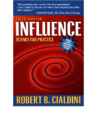
do it, enabled us to make significant changes. His work has enabled us to gain significant competitive differentiation and advantage" -LAURENCE HOF, Vice President, Relationship Consulting, Advanta Corporation "This will help executives make better decisions and use their influence wisely ... Robert Cialdini has had a greater impact on my thinking on this topic than any other scientist." -CHARLES T. MUNGER, Vice Chairman, Berkshire Hathaway, Inc. If you're wondering why of Latin America, the Far East, and Central Europe. you should buy this new edition of Influence: o More neuroscience evidence of how the influence process works is inte-
5 (possible answers) she was my age and apart from the 1 1 go ahead 5 come to eighties hairstyle we're the spitting 1 Well, you will go to bed late every night. 2 fall through 6 bring about image of each other! Some people 2 Well, you will refuse to wear a 3 tip off 7 go down with say that they can see a strong family coat. 4 mistake for 8 come up with resemblance between my dad and me.
Of Plymouth Plantation Of Plymouth Plantation is the single most complete authority for the story of the Pilgrims and the early years of the Colony they founded. Written between 1620 and 1647, the journal describes the story of the Pilgrims from 1608, when they settled in the Netherlands, through the 1620 Mayflower voyage, until the year 1647. The book ends with a list, written in 1650, of Mayflower passengers and what happened to them. The Age of Reason The Age of Reason: Being an Investigation of True and Fabulous Theology , a deistic treatise written by eighteenth-century British radical and American revolutionary Thomas Paine, critiques institutionalized religion and challenges the inerrancy of the Bible. Published in three parts in 1794, 1795, and 1807, it was a bestseller in America, where it caused a short- lived deistic revival
Source: Feedbooks 1 About Shakespeare: William Shakespeare (baptised 26 April 1564 – died 23 April 1616) was an English poet and playwright, widely regarded as the greatest writer in the English language and the world's pre-eminent dramatist. He is often called England's national poet and the "Bard of Avon" (or simply "The Bard"). His surviv- ing works consist of 38 plays, 154 sonnets, two long narrative poems, and several other poems. His plays have been trans- lated into every major living language, and are performed more often than those of any other playwright. Shakespeare was born and raised in Stratford-upon-Avon. At the age of 18 he married Anne Hathaway, who bore him three children: Susanna, and twins Hamnet and Judith. Between 1585 and 1592 he began a successful career in London as an actor, writer, and part owner of the playing company the Lord Chamberlain's Men, later known as the King's Men. He ap-
Many aspects of Stonehenge remain subject to debate. There is little or no direct evidence for the construction techniques used by the Stonehenge builders. *The Celts in Britain and their legacy The Cets lived in Britain in The Iron Age. They were warring tribes who were battleful amongst themselves as well as inter-tribal war. They were not centrally governed. The Celts brought iron working, iron ploughs and metal swords, horses, wheels and chariots - all these things gave them an instant superiority over the native tribes. The Celts built a number of hill forts throughout the region. The society was divided into warrior aristocracy, agricultural commons and the priests, the druids. *Caesar in Britain - Britain was very rich in minerals but that wasn't the main reason Caesar wanted to defeat it. He could clearly see that Britain was a threat to his latest and greatest conquest - France. He invaded Britain twice, in 55 and 54 BC. The first invasion was
with Ireland (abetted by the treacherous Lord Wictred). They often consider ending their relationship for the sake of their duty to Marke. In Tristan's final attempt to end the relationship, he and Isolde are caught in an awkward situation by all of the kings. The kings decide to part ways with Marke; the alliances are ruined and his wife and son-figure have betrayed him. Marke is at first angry but softens after hearing Isolde explain her history with Tristan and offers them the chance to run away together. Tristan chooses instead to stay in England and fight for his king. At the same time, Marke's nephew and Tristan's old friend Melot, angry at his uncle's long favouring of Tristan and tricked by Wictred's seeming support of him, shows Wictred an old passage into the Roman foundations of Marke's castle that Tristan and Isolde used to carry out their affair. Wictred then fatally stabs Melot and sneaks his army into the castle.
requirements. David painted carefully all the contours and forms of the human body, because he started to imitate Antique sculptures. Moreover, David and Classicism in general were not limited to only mimicking the external form of the Antique, but also the plot was often borrowed from the Antique literature or mythology. Best suited were the subjects that glorified bravery, loyalty, love for the fatherland and other virtues. Paintings were supposed to be instructive and fight against vices. (Leesi, 2003, p.115) As a matter of fact, the whole life of Jacques-Louis David was somehow connected to political change and therefore David was left with no other choice than to be a part of the French Revolution. In 1780 David returned to Paris and a few years later he exhibited his masterpiece Oath of the Horatii in the Salon. The Salon was a place where all the great men
He describes the darkness that is creeping up. In my opinion he is talking about USA, which is beginning to creep up on England or on Europe. And because of that England is becoming a less dominant and more isolated place. He is saying that intimacy is dying and that may represent the globalization. Another political poem I really enjoyed is ´´Homage To a Government´´. Larkin says that next year they are going to bring all the soldiers home, because they (citizens) want the money for them selves. And that their children do not know it's a different country, because they did not achieve anything in the war. But at least they can leave their children some money. I think that Larkin means that the troops are going to be brought home from Vietnam. At the end of almost every line in the first stanza is /And it is all right./ In his ironical way he is trying to say that the Vietnam War was pointless, because it did not bring any results. Another poem about the Vietnam War is
Chekov Lady and the Lapdog Reid about Chekov: The characters in Chekhov's plays are never fully "known" as a writer, he seems to delight in maintaining a sense of indeterminacy, and unknowability, about them. The bare facts are always laughably inadequate to the complexity of "real" people. Anton Pavlovich Chekhov was born on 29 January (New Style), 1860, in Taganrog, a small port on the Sea of Azov, in southern Russia. As the son of a grocer and grandson of a serf, Chekhov was a first-generation intellectual. His modest background and upbringing are crucial to his development as a writer. Chekhov always felt that he missed out on childhood. It was a
So he sets of to London to find a new gardener. In between some interviews he runs into Freddie, whom he had forbid to leave Blandings castle. They have a little chat and then go on in different directions. Later he finds out that Freddie had come to propose the girl from Blandings, Aggie. At one point he goes to the London Gardens and gets into a bit of trouble. There he meets McAllister and they make up with each other. After they have returned to Blandings castle, Lord Emsworth meets with Aggie's father and finds out that he is a millionaire from America, has his own company, and wants to hire Freddie. Of course Lord Emsworth is rejoiced by this fact and agrees to give the young couple his blessing. A few days later is the pumpkin contest and, as you might guess, Lord Emsworth's pumpkin wins. 2) Lord Emsworth act for the best: The second story revolves mostly around
Henry himself made a pilgrimage to Canterbury, walked barefoot through the town and was flogged by bishops at his request. In the end Henry quarrelled with his beautiful & powerful wife, his sons took Eleanor's side. In 1189 Henry died a broken man, disappointed & defeated by his sons and the French king. He was followed by his rebellious son, Richard. Although he spent little time in England (6 months of his 10-year reign), he was one of England's most popular kings. He was brave, a good soldier, but his nickname ,,lion-heart" shows that his culture was French. He died in 1199. He had no son. His brother John followed. King John is often regarded as the worst king England has ever had (unpopular, greedy). He wanted himself to choose archbishops, the pope didn't allow & from 1208-1213 King John locked the churches. In 1204 John lost his lands in France. He tried to recapture Normandy. As the cost of War had risen, he raised the taxes, the barons didn't like it. In 1214 the barons
The military occupation of the Isles ended in 410 AD. The Romans eventually brought Christianity to Britain. Hadrian's wall on the border of Scotland and England. It began construction in 122 AD. An Anglo-Saxon attack on Rome forced the Romans to leave The British Isles. They were replaced by Germanic tribes Angles, Jutes and Saxons, who drove the Celts to the north (Scotland) and west (Wales). They came from the North and Baltic Seas. Along with them came their dialects, which constitute the basis for Old English. Around 4500 words are still used today. They also had their own religion and Germanic gods. Their names are still used today: Freya Friday, Thor Thursday, Angle-land England. The Anglo-Saxons divided the cuntry into small warring kingdoms Northumbria, Mercia, Wessex, Sussex, Essex, Kent, East Anglia. Due to constant conflict weakened the kingdoms. The
vivacious woman about whom a future Viceroy of India would say, "Dullness and Mrs. Kipling cannot exist in the same room."[3] Father - John Lockwood Kipling. Lockwood Kipling, a sculptor, an illustrator, museum curator and pottery designer, was the principal and professor of architectural sculpture at the newly- founded Sir Jamsetjee Jeejeebhoy School of Art and Industry in Bombay. Later in life Kipling illustrated many of Rudyard Kipling's books, and other works. Kipling also remained editor of the Journal of Indian Art and Industry, which carried drawing works from the students of the Mayo School. COUPLE named their son after the place they had first met Rudyard Lake. Alice Kipling Fleming - Sister of British author Rudyard Kipling who became a well-known psychic, producing automatic writing under the name "Mrs. Holland." Born June 11, 1868, Alice Kipling was privately educated
She'd hide the weakness of her worn-out charms. That is the way with all your old coquettes; They find it hard to see their lovers leave 'em; And thus abandoned, their forlorn estate Can find no occupation but a prude's. These pious dames, in their austerity, Must carp at everything, and pardon nothing. They loudly blame their neighbours' way of living, Not for religion's sake, but out of envy, Because they can't endure to see another Enjoy the pleasures age has weaned them from. MADAME PERNELLE (to Elmire) There! That's the kind of rigmarole to please you, Daughter-in-law. One never has a chance To get a word in edgewise, at your house, Because this lady holds the floor all day; But none the less, I mean to have my say, too. I tell you that my son did nothing wiser In all his life, than take this godly man Into his household; heaven sent him here, In your great need, to make you all repent; For your salvation, you must hearken to him;
Douglas married Jane Belson on November 24 1991. They got daughter in 1994. He died on 11 May 2001 of a heart attack. A memorial service was held at the same year. There is also Douglas Adams's gravestone in London. Page 3 Plot Arthur Dent has been lived in a cave, feeling alone, for the last four years. But then, his old friend Ford Perfect finds him. Ford is followed by a chesterfield sofa that happens to be going their way. It drags them into a space-time eddy. Thanks to that they find Lord's Cricket ground. There they get know, that Vogons will destroy the Earth. And it all happens after... two days. There they meet Slartibartfast and a collection of evil robots, who can play cricket. Slartibartfast brings them in Bistro Mathematics powered spacecraft. There, Arthur and Ford have to fill in the warriors of the planet Krikkit. Slartibartfast tells them, that they have to stop
[2] It features her famous Belgian detective, Hercule Poirot, and is set in 1946. 1 Plot summary In a flashback from late Spring to early Spring, Lynn Marchmont, newly demobilised from the Women's Royal Naval Service, finds difficulty settling into the village life of Warmsley Vale. She is engaged to Rowley, one of several members of the Cloade family living nearby. Each of them grew dependent on money from Gordon Cloade, a bachelor who was expected to die and leave his fortune to them. But instead he marries an Irishwoman, Rosaleen Turner, invalidating his previous will, before being killed in an explosion at his home, which his new wife survives. As a result, Rosaleen inherits Gordon's fortune and the entire family now faces financial crisis, augmented by the poor state of the economy in the aftermath of World War II. Rosaleen's fortune is zealously guarded by her brother, David Hunter, and although various family members manage to wheedle small sums out
visual arts through exhibitions, education and debate.). The founders were William Hunt, John Millais, Dante Rossetti. Because of the fact that they were all students they were also very young- the oldest one, Hunt, was 21. They were soon joined by William Rossetti(critic), James Collison(painter), Frederic Stephens (critic), Thomas Woolner(sculptor). The three youthful Pre-Raphaelites deliberately challenged the established view of art, drawing up a manifesto of their intentions and publishing them in the four issues of a periodical called "The Germ". They would paint direct from nature, with objective truthfulness and genuine ideas in sympathy with what was direct and heartfelt in the art of the past. The brotherhoods techniques came from the early Flemish art- especially Van Eyck. To imitate the work of great Italian artists the PRB-s studied the colours in nature. To have the effect of glowing colours they invented a new method called "wet white"
 annaabi.ee