Leidsid 33 sarnast õppematerjali, mis on seotud failiga "Cv koostamine". Need materjalid aitavad sul teemat sügavamalt mõista.
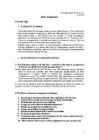
speak, microsoft, good, languages, russian, english, skill, uulu, objective, apply, university, gymnasium, skills, internet, driver, learner, juku32 Rahu Street Narva IdaVirumaa 20608 18 November 2008 Mrs J. Lo Personnel Officer AUDI AG City Road London EC3 4HJ Dear Mrs Lo I would like to apply for the position advertised in The Murzilka on 10 November for a Sales Manager. As you will see from my curriculum vitae, the work I did in my last position is practically the same as in position offered. I dealt with all sales manager's duties: dealing with customers, presentations at work meetings, the organization of goods delivering, working with computer application Microsoft Office XP, etc. Your advertisement asked for a knowledge of languages
My languages I love different languages. I mean, I really, really love different languages. I also believe and have been told that I pick them up rather easily. That might be true, although I did not pick any Greek up in Greece but that might have been because they spoke so damn fast that I could not tell if it was a word or an entire sentence. The first foreign language I learned was Russian. Considering I was ten when Estonia became a Republic, it makes sense. We began studying Russian in first grade, though it was simplified – "koška" instead of "kot", "medvešonok" instead of "medved", "saichik" etc. Did not make much sense and we mostly played some games in Russian (Tare-tareke etc). Learned as much playing outside, since we had Estonian-Russian kids around as well. Not that we played with them. It's sad to say but it was not a nice time to be a Russian kid
It replaces the traditional forms of Mrs and Miss. Greetings Good morning/afternoon/evening! 'How are you?' Very often people expect you to say something positive. Here's a breakdown of how you can express how you really are without complaining too much. · Fine, thanks. / On top of the world, thanks. · OK, thanks · Not so bad, thanks. / Can't complain, thanks. · So so, thanks. / So and so, thanks. · Not so good, actually 1 The English alphabet Spelling Work with your partner and spell out first your name and then some names of places. Write down each letter as you hear it, and then say the word. The English alphabet on the phone: You might find the following alphabet (used by international airlines) useful when trying to spell a word on the telephone.
wishes/Yours, Mike. 4. Remember that it is not necessary to write addresses in the exam. Style in formal and informal letters Formal letters Greeting: Dear Sir/Madam / Mr bobbins, Informal letters · impersonal style Greeting: Dear Julie, · complex sentence structure - frequent · personal, short, zappy style use of Passive Voice - single word · use of slang or colloquial English use of verbs - non-colloquial English -- formal idioms/phrasal verbs language · pronouns are often omitted · each paragraph develops one specific · chatty, wide use of descriptive adjectives topic · use of short forms · only facts, infrequent use of descriptive Best wishes / Love / Yours / Regards.
UNIVERSITY OF TARTU DEPARTMENT OF ENGLISH Using Blogs as a Platform in the Teaching of English as a Foreign Language Research paper Tartu 2010 ABSTRACT This work analyses the usefulness of blogging in teaching English as a foreign language. The definition of the term `blog' is provided along with the advantages and disadvantages of blogs' usage in practice. The analysis of language skills developed by students throughout the use of blogs for learning purposes is given in the paper with possible limitations that blogs have. Author of this paper also shares personal comments about the experience in the field. In this paper it is also
Tests Superstar 1 Luke Prodromou Test 1 Name____________________ Class_______ Use your English 1 Complete these sentences using the correct form (present simple or present continuous) of the verb in brackets. _ 1 She is in a band and she _________________________________ (record) a CD at the moment. _ 2 She is an actress and often _________________________________ (appear) on television. _ 3 At the moment she _________________________________ (have) a rest because she is tired. _ 4 Mike is a doctor and he _________________________________ (live) in Manchester.
launched into orbit. There are 4 main media: Newspapers, TV, Radio and the Internet. Today's people take this as an ordinary thing and we don't realise that we nearly can't live without it. Media are very important for us. They give us big amount of information, so big that we can't remember all that things. They help us to understand things and if you have lots of information you are able to make your own decisions. This is connected with education and media are very good teachers. They highly influence us. They can help other people making charities... News aren't always true, they are not objective or says just half true. Our world is very huge and sending a message from America to Asia a hundred years ago was nearly impossible or it took a lot of time. Nowadays you can send the message in a few seconds and it is very simple. The media makes the world much smaller particularly the TV and the Internet. When you turn on the TV or a
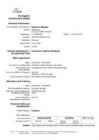
competences Mother tongue(s) Estonian Other language(s) Self-assessment Understanding Speaking Writing European level (*) Listening Reading Spoken Spoken interaction production English C2 Proficient user C2 Proficient user C2 Proficient user C1 Proficient user C1 Proficient user Page 1 / 3 - Curriculum vitae of For more information on Europass go to http://europass.cedefop.europa.eu Katherin Mayfair © European Communities, 2003 20060628 Russian B2 Independent B2
A minority in each community will be really dedicated to help their kids explore their horizons. It is true that we should re-think the fundamental principles in which we educate our children. Our task is to educate the children so that they can face this future. II 10 effective classroom management techniques. 1. Set and agree the house rules and class regulations with the class. 2. Choose class activities that encourage any good relationships. 3. Be dedicated and care for your students. 4. Accept and even celebrate individual differences. 5. Realise that people learn in different ways 6. Create more student-centred activities. 7. Provide a diverse lesson with a variety of activities 8. Be always prepared for the lesson. 9. Let learners know about your teaching style, the course content and your reasons for doing some activities.... 10
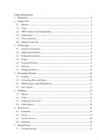
Tallinna Mustamäe Humanitargümnaasium Valeria Jefremenkova ENGLISH AS A GLOBAL LANGUAGE INGLISE KEEL KUI ÜLEMAAILMNE KEEL Research work Supervisor: Jevgenija Kozlova Tallinn 2016 1 Table of Contents СONTENT…………………………………………………………………………………...2 INTRODUCTION…………………………………………………………………………...3
Book 1 BASIC ENGLISH BASIC ENGLISH GRAMMAR GRAMMAR BASIC ENGLISH GRAMMAR Book 1 Book 1 Younger students at beginning to intermediate levels will greatly benefit from this step-by-step approach to English grammar basics. This is the ideal supplement to your language arts program whether your students are native
He was lying on the floor, bleeding heavily and I didn't know what to do. All my years as a nurse washed out of my mind. What to do? What to do! I kept screaming in my head. "Jess....*cough* I...wanted to t....tell you....." Tom was trying to tell me something, but he was too hurt, too exhausted to get the words out. Our last conversation flashed through my mind. I accused him of not loving me and then he stormed out. Now he was hurt and I was responsible. "Oh, Tom! Don't speak, you need your strength. I love you, Tom!" I told him. He had to know. "No! Jess! I wanted to... tell you... this is not.... real. You are having a dream, my love!" 4 Kirjapraktika Portfoolio 2013 6. Official letters a) letter of application Kuuse 1 Haapsalu Estonia 27 September 2013 Adrian Warren Personnel Manager Head Office Northgate Halstead Road
J: - Here is your money. H: - Thank you Getting a post-restante. H: - Hi, Julia! What are you doing here? J: - I'm getting post restante letter from Boris... H: -Ah, yeah, remember him. What is he saying? J: - Oh, well...He is asking to come to him, and, besides, here is the money-order... H: - Oh! Would you like to cash money-order? Have you got your passport with you? J: - Yeah, certainly. H: - Then, they'll cash your money order without fail. J: - Ok, I'll go to that counter and speak to clerk. Wait for me, please! Can you go and by tickets with me after this? H: - Certainly! Discuss the functions of post office H: - There are a lot of functions of post office. Of course, we have friends in different parts of the world, but it's really expensive to call them often. J: - Yes. Some people can use Internet, but not everyone is provided with it. So, then you can send letters... H: - Oh, yeah! It's really convenient! You can send even photos, is spite of the fact that the
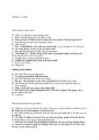
Education and learning Task 1. Underline the most suitable word or phrase. a) Jack decided to take a course/lesson in hotel management. b) Sheila always got good marks/points in algebra. c) After leaving school, Ann studied/trained as a teacher. d) Peter decided not to go in/enter for the examination. e) My sister learned/taught me how to draw. f) I can't come to the cinema. I have to read/study for a test. g) In history we had to learn a lot of dates by hand/heart. h) I hope your work will improve by the end of course/term. i) Martin failed/missed his maths exam and had to sit it again. j) If you have any questions, raise/rise your hand.
Taking responsibility for every implemented piece in appreciation of the value of long- term relationships Free and creative thinking precedes rules and standards Confidentiality and respect for others Precision is valuable, ethics and care are absolutely necessary 2.3.SWOT Analysis of the Organization Strengths Weaknesses SO1: Good reputation on the local market WO1: Not enough qualified employees to SO2: Extensive and varying customer base support numerous customers SO3: Relations with foreign partners in WO2: Project-orientedness implies a Baltic states, Scandinavia and UK multitude of different code to support
English structure revision for the exam 1. Terms Language → A systematic, conventional (tavakohane) use of sounds, signs or written symbols in a human society for communication and self-expression. Human language at all levels is rule- or principle- governed (valitsema) meaning that language corresponds to the grammar. Natural language is usually spoken, while language can also be encoded into symbols (such as letters, morse etc) For example: Estonian, English. Linguistics → The scientific study of human natural language. Broadly, there are three aspects to the study which are Pragmatics (studies the use of language → interested in the gap between the sentence’s meaning and the speaker’s meaning). Semantics (concerned with the meaning of the language aspects and the way they change, also how objects and language and thinking and language are related).
They say it's unimaginable, boring, tasteless, it's chips with everything and totally overcooked vegetables. The basic ingredients, when fresh, are so full of flavour that British haven't had to invent sauces to disguise their natural taste. What can compare with fresh pees or new potatoes just boiled and served with butter? Why drown spring lamb in wine or cream and spices, when with just one or two herbs it is absolutely delicious? If you ask foreigners to name some typically English dishes, they will probably say "Fish and chips" then stop. It is disappointing, but true that, there is no tradition in England of eating in restaurants, because the food doesn't lend itself to such preparation. English cooking is found at home. So it is difficult to a good English restaurant with a reasonable prices. In most cities in Britain you'll find Indian, Chinese, French and Italian restaurants. In London you'll also find Indonesian, Mexican, Greek..
The PlayStation 2 processor runs with a clock speed of 294 MHz, has 32Mb of RAM, and a separate graphics chip that can render about 66 million polygons per second. The small amount of RAM is an important constraint upon games wishing to use Java. The introduction of the Xbox changed the game rules (so to speak), with its Pentium III, 64Mb RAM, a 8Gb hard disk, and the ability to render 150-200 million polygons per second. Sony and Microsoft have recently released network adapters for their consoles, highlighting the growing importance of multiplayer games. Future console designs (e.g. the PlayStation 3 and Xbox 2) will bring PCs and consoles even closer, and further emphasize online gaming. The PlayStation 3 (slated to appear at the end of 2004) may use a 3GHz processor, 512Mb RAM, a 120Gb hard disk, and render 2 billion polygons per second. The Xbox 2 (due at the end of 2006)
) We'd better ask John to help us. 11. Use the present progressive am playing, is raining etc to talk about things that are continuing at the time of speaking. I'm playing very badly today. (NOT I play very badly today.) Look! It's raining! (NOT Look! It rains!) 12. Use for with a period of time. Use since with the beginning of the period. for the last two hours = since 9 o'clock for three days = since Monday for five years = since I left school I've been learning English for five years. (NOT I've been learning English since three years.) We've been waiting for ages, since eight o'clock. 13. Don't separate the verb from the object. VERB OBJECT She speaks English very well . (NOT She speaks very well English.) Andy likes skiing very much. (NOT Andy likes very much skiing.) 14. Don't use the present perfect have/has seen, have/has gone etc with words that name a finished time. I saw him yesterday. (NOT I have seen him yesterday.)
Tel: +372 55 83987 e-mail: [email protected] Objective: To obtain a position of a responsible, caring and certified babysitter in the Agent Nanny. Career: Kindergarten teacher in Lepatriinu Lasteaed in Tallinn July 1997- Nov 1997 ·Gave children in different age groups English, Music ·and dance lessons Babysitter- McGregor family with two children in the UK Mar 1998- Jan 2000 Babysitter- Brown family with one child in the UK Feb 2000- Jun 2006
Morphemes: the smallest units of language that have their own meaning or grammatical function. cat, cat/s, laugh/ed, un/able, sheep Free morphemes: cat, laugh, eat, red Bound morphemes: prefixes: pre- prejudge dis- dislike suffixes: -ist typist infixes attached within another morpheme. Infixation is common in languages of Southeast Asia and the Philippines, and it is also found in some Native American languages. circumfixes morphemes that are attached to a root or stem morpheme both initially and finally. Morphs: the concrete realisation of a morpheme (`was' be, past, singular) Allomorphs: a/an Types of affixes: Derivational and infelctional Derivational affixes: Derivational affixes may change the grammatical class of the root verbs into nouns, nouns into adjectives (boy, boyish), and so on. Derivation is a lexical
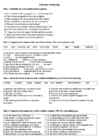
2 pricey 7 profitable 5 None of the shops are open. 3 worthy 8 valuable 3 1 I advised Mike to get an early night. 6 The food was neither cheap nor 4 financial 9 worthless 2 I agreed to give Jenny a lift into good. 5 costly 10 economical town. 7 There are no easy answers. 3 I had no difficulty repairing the 2 1 economical 7 priceless 8 Few of my relatives live nearby. broken vase.
When? Why? 22. Have you ever seen a rehearsal of a show? When? Which show? 23. Have you ever been to a zoo? Which zoo? What animals were there? http://www.abiks.pri.ee 24. Have you ever been to a funfair? Where? 25. Have you ever been to a circus? When? Where? 26. Have you ever seen a circus show on TV? 27. What did you see in the show? (an animal act? clowns? acrobats? jugglers?) 28. Are you good at juggling? What makes you think so? 29. Do you like aerobics? Are you good at it? Do you know anybody who is? 30. Would you like to perform in a circus? 31. Do you know anybody who might become a good clown? What must a clown be good at? 32. Have you ever played sport regularly? What training classes do you go to and how often? What sport would you like to play and why? 33. Have you ever taken part in sport competitions? When, where and what were the results? 34
FGI 1811 Proseminar I. Ladusseva 1 10.09.2002 At the defense aspects that are considered are: - your own contribution (whether it is there and is sufficient) - theory (you should have at least 6-10 connected pages discussing the state of the art) - mechanics (the layout of the paper: font size 12, double space, etc.) - answering questions - performance (pronounce distinctly, make good impression, no language mistakes, etc.) - extra linguistic part (how you stand, how you speak, etc.). Will be checked student's ability to classify, to describe material, to draw conclusions (e.g. you give an example and then comment on it). Internet sources: it is nice to have some Internet sources to show your sophistication, but not too many of them, because they are not very reliable. As you start reading sources do it systematically:
ccc_tracy_fm_i-xviii.qxd 7/7/03 3:22 PM Page vi ccc_tracy_fm_i-xviii.qxd 7/7/03 3:22 PM Page vii Foreword If you are ready to leverage yourself to greatness and achieve giant results, you have the right road map in your hands.You have before you the DNA of your future. All you need to create a wonderful fu- ture for yourself is to read this book, decide how you are going to apply it to your own life, write out a plan, and then go forth with en- thusiasm and make it happen. I have a confession to make. I am one of Brian’s raving fans. I have studied him, his brilliant work, and the extraordinary results he has achieved. I am also one of his close colleagues and friends. We have worked together on many platforms, and met and talked with each other on numerous occasions.
CNT Carbon Nanotube .CNT Contents (file name extension) CNV Conventional (pertaining to Memory) CNVT Convert CNX Certified Network Expert CO Central Office + Command Output + Convert Out COAST Card On A Stick (module) COAX Coaxial Cable COB Chip-On-Board .COB COBOL source code (file name extension) COBOL Common Business-oriented Language (See HLL) .COD Code List (file name extension) CODASYL * Conference on Data System Languages (Group that designed COBOL) CODE Client-Server Open Development Environment CODEC Coder/Decoder + Compression/Decompression COE Common Operating Environment COEM Commercial Original Equipment Manufacturer COFF Common Object File Format [Unix] COGO Coordinate Geometry (Programming Language) COL Collision + Computer Oriented Language COLD Computer Output to Laser Disk COLL Collision COM Component Object Model [Microsoft] + Computer Output Microfilm
Federico Faggin directs the work. Intel creates the first 4004 microprocessor. (1971 The first commercial 4- bit microprocessor 4004 (2,300 transistors; 10 µm features; 10 mm2 die; 108 kHz kHz)) Relational database software: theory and first research groups. In 1970 an IBM researcher named Ted Codd published the first article on relational databases. Codd envisaged a system where the user would be able to access information with English like commands, and where information would be stored in tables. Due to the technical nature of the article, and the reliance on mathematics to support its case, the significance of it was not realized immediately. However, it did lead to IBM starting a research group known as 'System R'. Eventually System R evolved into SQL/DS which later became DB2. The language created by the System R group, SQL. (Structured Query Language) has become the industry standard
Studium Units 1-4 e-formaat Toimetatud Tartu Emajõe Koolis Toimetaja I. Tars Tartus, 2016 Elektroonilisse vormingusse kohandatud õpikus kasutatud märgised, mis aitavad otsingukäsu kasutamisel navigeerida * Tavakirjas leheküljenumbri ees on kolm järjestikust sidekriipsu, tühik ja vastava lehekülje number, näiteks, --- 5; * peatüki ette on kirjutatud kolm x-i, tühik ja vastava peatüki number, näiteks xxx 5; * visuaalne info on pandud kahekordsete ümarsulgude vahele. I Love English 6 töövihik sobib inglise keele õpetamiseks 8. klassis Töövihik vastab riiklikule õppekavale Retsenseerinud Piret Kärtner, Viive Latt, Ingrit Tera Toimetanud Viiu Menning, Nicola Fyfe, Tiina Helekivi Kujundanud ja küljendanud Eve Kurm Tehniliselt toimetanud Andero Kurm Illustreerinud Ülle Meister Esikaas: Boswell and Dr. Johnson (foto Scanpix). Vaata Unit 20. Autoriõigus: Mare Jõul, Ülle Kurm, 2009 Kirjastus Studium, 2009 Kõik õigused on kaitstud
English lexicology 1. Size of English vocabulary Vocabulary is a sum total of words used in a language by speakers or for dictionary-making. Active and passive vocabulary. The Old English vocabulary was homogenous. There were about 50 000 – 60 000 words, 1/3 of which have survived. o About 450 loans from Latin o About 2000 from the Viking invasions. The Middle-English vocabulary became a heterogeneous hybrid of Germanic and Romanic languages. 100 000 to 125 000 words. o About 10 000 loans from Norman French, 75% are still in use o Continuing Latin influence
was in orbit around the Earth. `Sputnik' was small, no bigger in fact than a football, and compared to today's technology, it was very primitive. All it could do was to bleep. But its impact was enormous. After its launch, things began to happen quickly. Less than a month later it was followed by `Sputnik 2' which carried a dog Laika into orbit. The USA sent its first satellite, `Explorer 1', into space early the next year. The next step, putting a man in space followed in 1961 when the Russian pilot called Yuri Gagarin orbited the Earth in `Vostok 1'. In 1961, President Kennedy announced that America would begin a programme to put a man on the Moon. Use the Internet to get answers to the following questions: 1 When did the first man take the first steps on the Moon? What was the name of the first man on the Moon and what did he say? Was he walking on the Moon alone? 2 How many Apollo missions were registered? What number mission was the first/last to land on the
· Establishment of independent Estonia · Tightening of American immigration laws · Estonian immigration to the United States slowed down dramatically 1924 The Estonian quota fixed at 116; even this small annual quota was not used up *After World War II = In the post World War II years, all three Baltic nations maintained consulates in the United States · About 15,000 Estonians came to the United States · This group was strongly anti-Communist and nationalistic 3. Russian colonization of America. What has preserved from this period to the present? The Russian colonization of the Americas covers the period, from 1732 to 1867, when the Tsarist Imperial Russian Empire laid claim to northern Pacific Coast territories in the Americas. The Russians were primarily interested in the abundance of fur-bearing mammals on Alaska's coast, as stocks had been depleted by overhunting in Siberia.
Russian philology The meaning of the word "philology" is "love for word". This is love that unites teachers and researchers of modern and Classical languages and literature, interpreters and diplomats, journalists and publishers, writers and poets. Russian philologis are highly demanded in various spheres of scholarly research and education, in the mass media, in civil service at the Ministry of Foreign Affairs, in archives, libraries, museums, in travel agencies, as well as Russian and international companies. Curriculum within in philological faculty includes courses of Russian and European languages and literature, courses of Linguistics and Theory of Literature for students to familiarize themselves with various schools and trends of Russian and foreign philology. The core curriculum also includes a number of Liberal Arts courses (Philosophy, History, Psychology, Pedagogy), as well as courses of basic mathematics and computer studies, and
adjective + preposition omadussõna + eessõna proud of, good at, married to adverb particle Some verbs are followed by adverb particles. Examples are: put on, take off, give away, bring up, call in. Sometimes the particle is detached from the verb and put after the object. •He took his boots off. •They called the doctor in. apposition a grammatical construction in which two usually adjacent nouns having the same referent stand in the same syntactical relation to the rest of a sentence (as the poet and Burns in “a biography of the
 annaabi.ee