Nevertheless, he inspires loyalty in subjects such as Gloucester, Kent, Cordelia, and Edgar, all of whom risk their lives for him. Read an in-depth analysis of King Lear. Cordelia - Lear’s youngest daughter, disowned by her father for refusing to flatter him. Cordelia is held in extremely high regard by all of the good characters in the play—the king of France marries her for her virtue alone, overlooking her lack of dowry. She remains loyal to Lear despite his cruelty toward her, forgives him, and displays a mild and forbearing temperament even toward her evil sisters, Goneril and Regan. Despite her obvious virtues, Cordelia’s reticence makes her motivations difficult to read, as in her refusal to declare her love for her father at the beginning of the play. Goneril - Lear’s ruthless oldest daughter and the wife of the duke of Albany. Goneril is jealous, treacherous, and amoral. Shakespeare’s audience would have been particularly shocked at
Katherine is the daughter of a rich nobleman of Padua. Katherine is a very shrew and stubborn woman. There are also Baptista Minola the father of Katherine; Bianca Minola the sister of Katherine; Lucentio, Gremio and Hortensio, who are the suitors of Bianca; servants Nathaniel, Tranio, Biondello, Philip, Joseph, Grumio, Nicholas and Peter; Vincentio the father of Bianca's suitor Lucentio; a Pedant and a Widow. Themes The main themes of this book are cruelty, as Katherine and Petruchio show out cruelty to others as well as to each other throughout the play; gender relations, which are displayed in Kate's final speech, where she explains the place of women in relationships with men (pages 158-159); male perceptions of women, which are shown when the Lord tells his servant how to behave as a woman (Induction: Lines 110-121) and male dominance is seen as Petruchio used different tactics to physically tame Katherine to show his superiority.
He is also bought other people’s stolen things. Fagin don’t commit crimes himself however he employs others to commit them. Nancy was picking pockets for Fagin’s. She is also Sikes’s lover however after Sikes abused Oliver, she didn’t love him anymore. Nancy gives her life for Oliver when Sikes murders her for revealing his house. Bill Sikes is a professional burglar. Sikes is Nancy's lover, and he treats his dog with a cruelty. He murdered Nancy. Mr. Bumble is a beadle who works for the workhouse where Oliver is born. He behaves without compassion toward the children’s. In my opinion, the movie is a good movie and it worth of watching. It is a good to know what happened at England in 18. Century and what children’s had to do, to survive in community. My favourite character is Nancy who didn’t want that Sikes abuse Oliver and she gives her life for Oliver. Andree Hein 8. A
In addition to that, sometimes people use a war just to justify their revenge, they just use the power, they have, to satisfy own ambitions to feel a win's spirit. So they become winners, but it is only formally. On the other hand, there is only one advantage of a war getting some territory or money, but it has much more disadvantages like violence, distraction, houndreds of innocent victims, human's deaths etc. What's more, millions of veterans and their children would remember cruelty, violence and rudeness. In conclusion, I would like to say that war has neither winners nor losers. If somebody wins a war, he is the same loser like those who are not, because he puts himself at the same low moral level as a simple criminal.
inmate to escape the full punishment. However proving whether one is guilty or not is a very complicated and time-consuming process. From an ethical perspective, the death penalty is, undoubtedly, a violation of human rights. Most death penalty critics charge that it is particularly barbaric when applied to mentally retarded people and juvenile delinquents. In this case, capital punishment looks like senseless cruelty. A number of states had already passed legislation adopted by the Supreme Court in June 2002 prohibiting such executions to this group of people. As for juvenile delinquents, we should admit their lack of maturity thus they may be less culpable than adults who commit crimes. Ultimately, the death penalty is an utter denial of human rights. It implies that killing is acceptable under certain circumstances. Relatively few developed countries in the world impose the death penalty
In many cases, not only are the results wrong, but the opposite can be true for humans; a drug may cure a disease in lab animals but have an bad effect when used in treating people for the same symptoms. Only the study of human patients will ultimately lead to valid research. Unfortunately, many institutions which commit violations of animal rights appear to have no concern for their activity. It seems that the only option is to force them to stop their cruelty. Bills concerning animal research should be introduced to Congress as soon as possible. This is the only way to ensure that this tragedy will be ended, or at least contained. In the meantime, individuals can also help this problem by reducing or eliminating actions that contribute to the exploitation and abuse of animals. By becoming informed, you can stop supporting animal testing by not purchasing products which are tested on animals.
zoos don't handle. But when they perform in circuses and traveling shows, they often do so without adequate pro- tection for staff and audience members. We now know that performing animals suffer in circuses and traveling shows and that wild animal acts pose a dan- ger to human safety. Hundreds of jurisdictions around the world, including entire countries, have recognized this and prohibited wild animals acts. Our community should not condone cruelty to animals by allowing performing animal acts to visit, nor should we wait for someone to be injured or killed before we decide to act in the interest of human safety. [Name of your City] should consider a prohibition on wild animal acts as soon as possible. Sincerely, [ Your Name & Address ] Sample Letter to the Editor
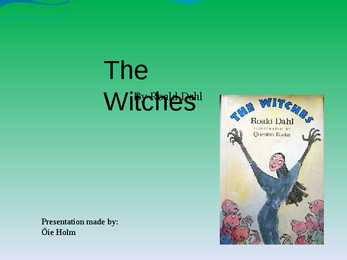
witches. She was a wonderful story - teller but the storys she telled about witches were all true. She told her grandson how to spot them from a crowd and told him what ugly and bad creatures they are. One day the boy met a witch, and got out alive luckily. The boy and hes granmother went to live to England. One day they went to a hotel just to relax and have some fun. The boy happend on a RSPCC meeting- The Royal Society For The Prevention Of Cruelty To Children. Turned out that it was a witch gathering. The boy got caught and was turned into a mouse with `Formula 86 Delayed Action Mouse- Maker`. At the end of the book, the boy and hes granmother used the advantage that the boy was so small and could go to small places and turned all the witches of England into mice, wich were killed. The main caracters · The boy · The grandmother · Bruno · The Grand High witch My opinion
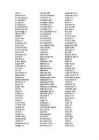
affection for conscious of fond of afraid of consist of forget about agree with contrast with forgive for ahead of convinced of friendly with allowance for correspond to frightened of angry with correspond with generous with annoyed with crazy about gentle with anxious about critical of genuine in apart from cruelty to go with apologize for deal with gossip about apply for decide against grumble about approve of delay in guilty of argue about delighted with habit of argue with depend on hear about ashamed of despair on hope of ask after different from identify with ask for difficult to impress on
Intelligent Intelligence intelligently Obedient- Obedience- kuuletumine Obey- kuuletuma sõnakuulelik Lazy- laisk Laziness- laiskus Laze- laisklema Loyal Loyalty Loyally- lojaalselt Arrogant- ülbe Arrogance- ülbus Arrogate- Arrogantly- ülbelt ülbitsema Cruel- julm Cruelty- julmus Cruelly- julmalt Independent- Independence- Independently- sõltumatu/iseseisev sõltumatus sõltumatult Playful- mänguline Playfulness- Playfully- mängulisus mänguliselt Intriguing intrigue intrigue intriguingly
Dorian then dumps her. The next day he regrets it and writes a letter to Sybill. Before he can post it, lord Henry comes over and comforts him with the news of Sybill Vane's suicide. As years pass Dorian's two-faced personality developes even further. He lives a secret life, where he goes to shady bars to pick fights with foreign sailors, and is suspected of smoking opium. The things he do show up on the painting. At first there are only slight signs of cruelty, but later the face on the painting "deforms". Dorian is really afraid of someone seeing the portrait so he hides it in a locked room. He only shows the portrait to Basil, when he wants to take it to Paris for an exhibition. After Basil comments on the satanic look of the person in the portrait Dorian kills him for no reason. To get rid of the body he blackmails his old friend Alan Campell, who kills himself later on, probably because he was afraid of Dorian revealing the secret.
Marriage à-la-mode 1743-1745 maalis Hogarth 6 maali mille nimeks pani ta Marriage à-la-mode, mis kujutas 18saj kõrgklassi naljakates olukordades.Sellega mõnitas ta 18 saj ühiskonda mis oli kihistunud jõukuse järgi.Nägu ka teose pealkiri ütleb abielus rahaga. Pärast perioodi kus ta maalis rikkaid ja kuulsaid hakkas ta 1751a tegema igapäeva elu kajastavaid gravüüre.Nägu näiteks Beer Street, Gin Lane ja Four Stages of Cruelty mis aga said väga populaarseks. 1762 avaldas ta sõjavastased gravüürid The Times.See töö ärritas paljusid sõjaväelasi ja poliitikuid.Üks tuntumaid poliitikuid,Jhon Wilkes avaldas tema kohta kritiseeriva artikli.Peale seda jäi ta raskesti haigeks 1763 juulis oli tal atakk ning tema viimaseks teoseks jäi Tailpiece: The Bathos (1764).Ta suri 25-ndal oktoobril 1764 aastal. Frans Hals Hals sündis Antwerpis.Tema vanemad olid flaamid kes kolisid Hollandisse peale seda kui
Earnshaw, and his family. One day, Mr. Earnshaw goes to Liverpool and returns home with an orphan boy whom he will raise with his own children. At first, the Earnshaw children--a boy named Hindley and his younger sister Catherine--detest the dark- skinned Heathcliff. But Catherine quickly comes to love him, and the two soon grow inseparable, spending their days playing on the moors. After his wife's death, Mr. Earnshaw grows to prefer Heathcliff to his own son, and when Hindley continues his cruelty to Heathcliff, Mr. Earnshaw sends Hindley away to college, keeping Heathcliff nearby. Three years later, Mr. Earnshaw dies, and Hindley inherits Wuthering Heights. He returns with a wife, Frances, and immediately seeks revenge on Heathcliff. Once an orphan, later a pampered and favored son, Heathcliff now finds himself treated as a common laborer, forced to work in the fields. Heathcliff continues his close relationship with Catherine, however. One night they
island. Then in chapter eight when Simon visits this jungle glade again he finds a sow's head on the stake there. The fact how this setting changed during five chapters is described in a quote from chapter eight ,,The other time the air had seemed to vibrate with heat; but now it threatened." Simon's secret place had turned from unearthy paradise into something terrifying and that also symbolised how the boys had become savages already. Without noticing the natural cruelty inside them developed, savagery instincts emerged and most of them stopped caring about civilisation. The reason why the characters in the novel turned from decent British boys into small savages is hidden in human nature. All the boys were used to have grown-ups around and then they were suddenly thrown into a situation where there were non. At first they were thrilled with happiness but like usually when children are left alone in the dark they start to fear and that
I would fain do so; I pray Your highnesses to pardon me. I am so ruined as I have said; hitherto I have wept for others; now, Heaven have mercy upon me, and may the earth weep for me. Of worldly goods, I have not even a blanca for an offering in spiritual things. Here in the Indies I have become careless of the prescribed forms of religion. Alone in my trouble, sick. in daily expectation of death. and encompassed about by a million savages, full of cruelty and our foes, and so separated from the holy Sacraments of Holy Church, my soul will be forgotten if it here leaves my body. Weep for me, whoever has charity, truth, and justice. I did not sail upon this voyage to gain honor or wealth; this is certain, for already all hope of that was dead. I came to Your Highnesses with true devotion and with ready zeal, and I do not lie. I humbly pray Your Highnesses that if it please God to bring me
They are especially concerned about killing animals because they are considered pests. Such animals would be beavers, bats, geese, deer, pigeons, mice, raccoons, snakes, chipmunks, squirrels, bears, coyotes, ducks, foxes, mountain lions, prairie dogs, rabbits, and even wolves. So their view on hunting is negative. [9] Animal Aid is animal rights organization in United Kingdom, founded in 1977. They do campaigns against all forms of cruelty against animals. They lobby politicians, make undercover investigations into slaughterhouses, factory farms and horse racing industry. If they find anything it is given to media or used in campaigns. Animal Aid considers all hunting to be more cruel than necessary; they have been and are especially against fox hunting with hounds. In UK fox hunting with hounds has been traditional way of hunting for nobility, but in 2005 Animal Aid organization managed to get the legal ban of the usage
Introduction I chose this topic beacuse I tought it would be interesting to write. Beacuse of the fact, that I only know a few legends, I decided to read the book ,,Tallinna legendid", and after reading this book I gain much more information. It was interesting to read stories, how Tallinn got its name beacuse of the goat, who fell from the cliff and why Tallinn will never be ready. *Tallinn is magnificent old-town, wich is full of legends about, cruelty, tragedy and magic 3 Legends of Tallinn Tallinn is a city of legends, and almost every house has its story to told some of them are nicer, some of them are more terrible. As it is with ethnic stories, every teller adds something of his own. Because of that many legends have been difficult to find a specific historical background. Some of them even tend to be more science fictional than true
grown on the African oil palm tree. Oil palms are originally from Western Africa, but can flourish wherever heat and rainfall are abundant. Today, palm oil is grown throughout Africa, Asia, North America, and South America, with 85% of all palm oil globally produced and exported from Indonesia and Malaysia; but most of the time not using sustainable measures. The industry is linked to major issues such as deforestation, habitat degradation, climate change, animal cruelty and indigenous rights abuses in the countries where it is produced, as the land and forests must be cleared for the development of the oil palm plantations. According to the World Wildlife Fund, an area the equivalent size of 300 football fields of rainforest is cleared each hour to make way for palm oil production. This large-scale deforestation is pushing many species to extinction, and findings show that if nothing hanges, species like the
antagonism of Jake and his friends. Read an in-depth analysis of Robert Cohn. Bill Gorton - Like Jake, a heavy-drinking war veteran, though not an expatriate. Bill uses humor to deal with the emotional and psychological fallout of World War I. He and Jake, as American veterans, share a strong bond, and their friendship is one of the few genuine emotional connections in the novel. However, Bill is not immune to the petty cruelty that characterizes Jake and Jake's circle of friends. Mike Campbell - A constantly drunk, bankrupt Scottish war veteran. Mike has a terrible temper, which most often manifests itself during his extremely frequent bouts of drunkenness. He has a great deal of trouble coping with Brett's sexual promiscuity, which provokes outbreaks of self-pity and anger in him, and seems insecure about her infidelity as well as his lack of money. Pedro Romero - A beautiful, nineteen-year-old bullfighter
However, the mentioned principle is effective if only the population is provided with jobs for livelihood. By creating the nameless projector, who promotes A Modest Proposal, Swift, illustrates the poor living standards in Ireland, where nobody wished to take any efficient measures to improve the situation. The satirical effect is created by the fact that through a dispassionate efficiency and accuracy of the good intentions, the fictitious author "projector" discovers a monstrous cruelty, and his manipulation of the precise calculations gives the appearance of a real project. Works cited and consulted Cunningham, Lawrence S., John J., Reich. Culture and Values: A Survey of the Humanities with Readings. 7th ed. Wadsworth: Cengage Learning, 2010. Print. Kiberd, Declan. "Jonathan Swift: A Colonial Outsider" Irish Classics. London: Granta, 2000. Print. Ranelagh, John O'Beirne. A Short History of Ireland. Cambridge: Cambridge UP, 1994. Print. Swift, Jonathan
name if insulted, served God & the king & defended any lady in need. Ed III introduced the idea of chivalry into his court. Ed III chose 24 knights. They met once a year on St. George's Day at Windsor Castle, where Arthur's Round Table was supposed to have been. The custom is still followed. Chivalry was a useful way of persuading mend to fight by creating the idea that war was a noble & glorious thing. War coult also be profitable. But the realities of war were cruelty, death, destruction. The Black Prince who was the living example of chivalry in England, was feared in France for his cruelty. Ed III reigned for 50 years (died in 1377). His soldier son, the Black Prince died in 1376.Ed III's 10-year-old grandson became King Richard II. The boy's uncle John Gaunt, ruled for him. Richard II was less fortunate. He had neither diplomatic skills nor popularity. He had bad advisers (a tax for every person over the age of 15)
learned writers of all time. Many scholars consider his epic poem The Divine Comedy consisting of Inferno, Paradiso, and Purgatorio, among the finest works of all literature. Critics have praised it not only as magnificent poetry, but also for its wisdom and scholarly learning. Dante was a man who lived, who saw political and artistic success, and who was in love. He was also a man who was defeated, who felt danger and the humiliation of exile, and who was no stranger to the cruelty and treachery possible in people. Dante felt he was a victim of a grave injustice. He also suffered serious self-doubts, natural for a man in exile. His works reflect his experiences and attempts to answer some of life's difficult questions. In 1968, Allen Tate, a conservative thinker and a convert to Catholicism, wrote "The Unilateral Imagination; or, I too Dislike it", in his Essays of Four Decades. This critique was established from a lecture given by Tate in 1955 based on his works.
Tartu Kivilinna Gümnaasium Liis Viljak 10b Bodyshop Company The Body Shop International plc is a global manufacturer and retailer of naturally inspired, ethically produced beauty and cosmetics products. Founded in the UK in 1976 by Dame Anita Roddick, we now have over 2,100 stores in 55 countries, with a range of over 1,200 products, all animal cruelty free, and many with fairly traded natural ingredients. We were the first international cosmetics brand to be awarded the Humane Cosmetics Standard for our Against Animal Testing policy. And we have our own fair trade programme called Community Trade, making us the only cosmetics company with such an extensive commitment to trading fairly. Community Trade now works with 31 suppliers in 24 countries, providing over 15,000 people across the globe with essential income to build their futures.
Kyle and Kenny don't interact that much during the show and aren't seen alone together very much, but are known to be quite good friends The enmity between Cartman and Kyle has been in the show from the start, but has become significantly more pronounced as the series has progressed. Cartman holds an anti-Semitic attitude towards Kyle, whereas Kyle makes cracks at Cartman's weight and is horrified and disgusted with Cartman's immorality, cruelty, bigotry, and greed. Kyle is considered more friendly and caring of Butters than anyone else in the show, due to Butters' cooperation with him. CARTMAN Cartman is an obese, foul-mouthed, mean-spirited, selfish, and ill-tempered fourth-grader living with his hermaphroditic de facto mother in the fictional town of South Park, Colorado. Liane spoils Cartman, bends to his persuasion, and contributes to his weight problem by allowing him to eat vast amounts of junk food
(or "Trix"), were taken to England--in their case to Southsea (Portsmouth), to be cared for by a couple that took in children of British nationals living in India. The two children would live with the couple, Captain and Mrs. Holloway, at their house, Lorne Lodge, for the next six years. In his autobiography, published some 65 years later, Kipling would recall this time with horror, and wonder ironically if the combination of cruelty and neglect he experienced there at the hands of Mrs. Holloway might not have hastened the onset of his literary life. She ruled the boarding house with fire and brimstone and Kipling was often beaten by her and her son. "Then the old Captain died, and I was sorry, for he was the only person in that house as far as I can remember who ever threw me a kind word."--ibid. Kipling soon learned to read and found solace in literature and poetry, voraciously turning to the magazines and
162. A little house well filled, a little field well tilled, and a little wife well willed, are great riches. 163. Keep your eyes wide open before marriage, half shut afterwards. 164. Work as if you were to live a hundred years. Pray as if you were to die tomorrow. 165. They that can give up essential liberty to obtain a little temporary safety deserve neither liberty nor safety. 166. Fear is the main source of superstition, and one of the main sources of cruelty. To conquer fear is the beginning of wisdom. 167. One of the symptoms of an approaching nervous breakdown is the belief that one's work is terribly important. 168. It has been said that man is a rational animal. All my life I have been searching for evidence which could support this. 169. Do not fear to be eccentric in opinion, for every opinion now accepted was once eccentric. 170. Men are born ignorant, not stupid. They are made stupid by education.
Larkin gives us through his poetry, a vision of middle-aged conservative, that in a politically incorrect way in our days, does not stand children, detests the life in family, he does not believe in anything and he does not wait anything of the life. He scorns the “literary life” and also the things that normally soften everybody: the romantic love, the memories of the childhood, the nature, etc. Keywords: Larkin, poetry, cruelty, suffering, nature Index Introduction 4 1. Chapter I 5 1.1. Larkin Studies Points of View: Biography and Poetry 5 1.2. Larkin Stylistic Map 8 2. Chapter II 11 2.1 Expressing Himself 11 3
iconic skirt-blowing scene for The Seven Year Itch in front of New York's Trans-Lux Theater. Bill Kobrin, then Fox's east coast correspondent, told the June 26, 2006 Palm Springs Desert Sun that it was Billy Wilder's idea to turn it into a media circus: "... every time her dress came up and the crowd started to get excited, DiMaggio just blew up." The couple later had a "yelling battle" in the theater lobby.[38] She filed for divorce on grounds of mental cruelty 274 days after the wedding. Years later, she turned to him for help. In February 1961, her psychiatrist arranged for her to be admitted to the Payne Whitney Psychiatric Clinic, where, according to Donald Spoto, she was placed in the ward for the most seriously disturbed. Unable to check herself out, she called DiMaggio, who secured her release. She later joined him in Florida. Their "just good friends" claim did not stop rumors of remarriage
It has been noted, for instance, that the sounds l, m, n suggest slowness and peacefulness. An exhaustive study of consonants and some consonant clusters has been conducted by Marjorie Boulton who claims the following: B and p suggest quickness, movement, triviality, scorn; M, n, ng provide various effects of humming, singing, music, occasionally sinister L suggests liquids in motion, streams, water, rest, peace, luxury K, g, st, ts, ch suggest harshness, violence, cruelty, discomfort, noise, conflict S, sh hissing, also soft and soothing sounds Z appears in contexts of harshness F, w and to a lesser extent v, suggest wind and any motion of a light kind T, d are like k, g, but less emphatic R depends on the sounds near it, but is generally found in contexts of movement and noise: Th tends to be quiet and soothing. Apart from poetry and prose, A. is used in newspaper headlines, the titles of books, advertisements, phraseological units e
Paul and the others refuse to tell him where Tjaden is hiding. The sergeant-major solves the problem by declaring that Tjaden must report to the Orderly Room within ten minutes. The men resolve to torment Himmelstoss at every opportunity. Himmelstoss returns later to demand that they tell him where Tjaden is. Kropp insults him, and Himmelstoss storms off. Later that evening, Kropp and Tjaden are put on trial for insubordination. Paul and the others tell the court about Himmelstoss's cruelty toward Tjaden during training. After hearing their story, the presiding lieutenant gives Tjaden and Kropp light punishments and lectures Himmelstoss about his behavior. Tjaden receives three days open arrest and Kropp receives one. Paul and the others visit them in the makeshift jail and play cards. Kat and Paul bribe a driver of a munitions wagon with two cigarettes to take them back to the house where they heard the geese. Paul climbs over the fence and enters the shed to find two geese
It goes back to Anglo-Saxon poetry. It may convey various shades of meaning. F at the beginning may imitate blowing wind. In that case alliteration becomes onomatopoeic in quality. The function of alliteration depends on the peculiar context; its rhythmical value goes hand in hand with the connotations it evokes. According to Boulton: · B and p--quickness, movement, scorn · M, n, ng--humming, singing · l--liquids in motion, water · k, g, st, ts, ch--harshness, cruelty · s, sh--hissing, also soft and soothing sounds Assonance--vocalic alliteration, repetition of stressed vowels. It has melodious and emphatic patterns. (Forgive what seemed my sin in me--Tennyson) Normally it does not appear alone: it is accompanied by other means of sound orchestration. There have also been attempts to relate vowel sounds to the meaning they convey. · The sound [I] is said to produce the impression of lightness, airiness, brightness.
emancipation and suffrage in the 19 C and 20 C The movement for women´s emancipation started in 18 C claiming legal and civil equality for women. In 19 C II half women were given the right to retain separate income after marriage and to possess tjeir own property. They as well could not be treated as chattels of their husbands, women were leagl guardians of thier children after divorce or death of a husband. 19 c also focused on wife beating, physical cruelty, white slavery of prostitution, relation between the sexes The campiagn for female suffrage dated from 1860´s. More active involvement in politics, right to vote- In 20 C after the WW II women over 30 ratepayers, got the right to vote, later all over 21 The House of Windsor George V 20 C Edward VIII 20 C George VI 20C Elizabeth II 20-21 C World War I 1914-1918 Antanta- England, France, Russia; triple alliance- Germany, Italy, Austria
An exhaustive study of consonants and some consonant clusters has been conducted by M. Boulton who claims the following: b and p - suggest quickness, movement, triviality, scorn; m, n, ng - provide various effects of humming, singing, music, occasionally sinister; l - suggests liquids in motion, streams, water, rest, peace, luxury, voluptuousness; k, g, st, ts, ch - suggest harshness, violence, cruelty, discomfort, noise, conflict; s, sh - hissing, also soft and soothing sounds; z - appears in contexts of harshness; f and w - and to a lesser extent v, suggest wind and any motion of a light kind; t, d - like k, g, but less emphatic; are much used in contexts where short actions are described; r - depends on the sounds near it, but is generally found in contexts of movement and noise; th - tends to be quiet and soothing (). ASSONANCE (book, page 44.)
not pure naturalist. Narrator's point of view, his style is more poetic of the style, rhythm and repetition. Steinberg is fascinated in foreign elements, includeing immigrants. He is a believer of the superiority to the country people to the city people. Because when his characters manage to establish themselves on the land they are usually good hearted and hard working, but when they have to abandon their land the trouble comes. Like a naturalist, great cruelty and passion. Very often the characters are simple, when they do commit crimes they do it out of accident and they regret it immediately. Tortilla Flat. Career into 4 periods: early writings, influence by naturalism and he was interested in animal motivation behind human behaviour as a basis of human behaviour. Cub of gold. Rarely weak period. The second period: second half of 1930's, becomes much more socially minded, analyzez the conflict between capital and labour
Pray do not talk of that odious man. I do think it is the hardest thing in the world, that your estate should be entailed away from your own children; and I am sure, if I had been you, I should have tried long ago to do something or other about it." Jane and Elizabeth tried to explain to her the nature of an entail. They had often attempted to do it before, but it was a subject on which Mrs. Bennet was beyond the reach of reason, and she continued to rail bitterly against the cruelty of settling an estate away from a family of five daughters, in favour of a man whom nobody cared anything about. "It certainly is a most iniquitous affair," said Mr. Bennet, "and nothing can clear Mr. Collins from the guilt of inheriting Longbourn. But if you will listen to his letter, you may perhaps be a little softened by his manner of expressing himself." "No, that I am sure I shall not; and I think it is very impertinent of him to write to you at all, and very hypocritical
result in their own destruction. The collective manifestations of the insanity that lies at the heart of the human condition constitute the greater part of human history. It is to a large extent a history of madness. If the history of humanity were the clinical case history of a single human being, the diagnosis would have to be: chronic paranoid delusions, a pathological propensity to commit murder and acts of extreme violence and cruelty against his perceived “enemies” – his own unconsciousness projected outward. Criminally insane, with a few brief lucid intervals. Fear, greed, and the desire for power are the psychological motivating forces not only behind warfare and violence between nations, tribes, religions, and ideologies, but also the cause of incessant conflict in personal relationships. They bring about a distortion in your perception of other people and yourself
 annaabi.ee