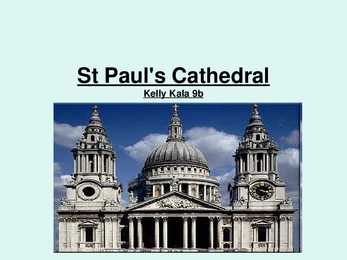
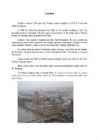
St Paul's Cathedral Kelly Kala 9b St Paul's Cathedral · St Paul's Cathedral is the Anglican cathedral on Ludgate Hill in the City of London and the seat on the Bishop of London. The present building dates from the 17th century and is generally reckoned to be London's fifth St Paul's Cathedral. The cathedral sits on the highest point of the City of London. The cathedral is one of London's most visited sights. St Paul's Cathedral Today · St Paul's Cathedral today is a busy working church. Daily services are held every day to which all are welcome to attend. Whilst the Cathedral charges for those who wish to sightsee,it does not charge for people who want to worship. Those attending services at St Paul's do so at no cost. People seeking a place to be quiet and pray are admitted to the St Dunstan's Chapel free of charge. Admission on Sundays for all services is free and th...
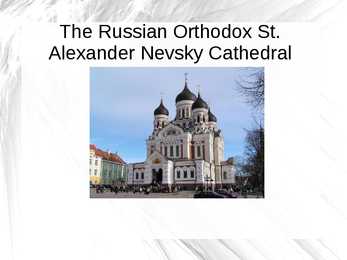
The Russian Orthodox St. Alexander Nevsky Cathedral The Russian Orthodox St. Alexander Nevsky Cathedral is designed by Mikhail Preobrazhensky ( a professor at St. Petersburg Academy of Arts) And built on the order of Alexander III between 1894 and 1900,during the period when the country was part of the Russian Empire The Alexander Nevsky Cathedral is Tallinn's largest and oldest orthodox cathedral It is dedicated to Saint Alexander Nevsky who in 1242 won the Battel of the Ice on Lake Peipus The church's towers' hold Tallinn's most powerful church bell ensemble,consisting of 11 bells (one of them weighing 15 tonnes) Orthodoxy in Estonia is practiced by 12.8 % of the population,making it the second most identifield religion after Lutheran Christianity with 13.6 % Orthodoxy is mostly practiced within Estonia's Russian ethnic minority The first mention of an Orthodox...
LANDMARCS HYDE PARK: Hyde Park is one of the largest parks in central London, England and one of the Royal Parks of London, famous for its Speakers' Corner. The park is divided in two by the Serpentine. The park is contiguous with Kensington Gardens; although often still assumed to be part of Hyde Park, Kensington Gardens has been technically separate since 1728, when Queen Caroline made a division between the two. THE TOWER OF LONDON: Her Majesty's Royal Palace and Fortress, more commonly known as the Tower of London (and historically as The Tower), is a historic fortress and scheduled monument in central London, England, on the north bank of the River Thames. It is located within the London Borough of Tower Hamlets and is separated from the eastern edge of the City of London by the open space known as Tower Hill. It is the oldest building used by the British government. [1] TOWER BRIDGE: Tower Br...
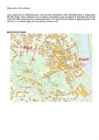
Urban trail in Tartu old town. Tartu, small town in southern-Estonia. Town was first mentioned in 1030. Nowadays there is living nearly 100 000 people. Tartu is known as city of students, and students come to improve to Tartu from all over the world. But Tartu is also known as a Hansa town, that is why one of the most attractive sightseeing place is the old town. It is a valuable place for Tartu and for Estonia as well. PHOTO HUNT MAP: Start the photo hunt on the corner of Lai and Jakobi street. Go up to the Toome hill, it's a great upturn and a great test for legs. As you move forward you will see the famous ,,Musumägi". In english it is called ,,The Kissing Hill" Take a picture with your crew members in the background of the hill. After a brief walk in the Toome Park you see the Ruins of Toome Cathedral. Is it possible to visit the ruins of the Cathedral? Now, go straight ahead until you reach the Lossi street, turn rig...
Neti Kukk London London is the capital of England and the United Kingdom . London Eye The EDF Energy London Eye is a giant 135metre tall Fer r is wheel situated on the banks of the River Thames in the Br itish capital. The Tower of London Tower of London, is a histor ic castle on the north bank of the River Thames in central London, England. St Paul's Cathedral St Paul's Cathedral is an Anglican cathedral dedicated to Paul the Apostle. It sits at the top of Ludgate Hill, the highest point in the City of London, and is the seat of the Bishop of London. Shakespeare's Globe Shakespeare's Globe is a reconstr uction of the Globe Theatre which was destroyed by f ire in 1613. The theatre was opened to the public in 1997. Westminster Abbey Westminster Abbey is a large, mainly Gothic church in Westminst...
Kunda Ühisgümnaasium Tallin Old Town Report Student: Kristin Karu Teacher: Kristi Aron Kunda 2012 The Alexander Nevsky Cathedral The Alexander Nevsky Cathedral is an orthodox cathedral in the Tallinn Old Town,Estonia. It was built to a design by Mikhail Preobrazhensky in a typical Russian Revivalstyle between 1894 and 1900, during the period when the country was part of theRussian Empire. The Alexander Nevsky Cathedral is Tallinn's largest and grandest orthodox cupola cathedral. It is dedicated to Saint Alexander Nevsky who in 1242 won the Battle of the Ice on Lake Peipus, in the territorial waters of present-day Estonia. The late Russian patriarch, Alexis II, started his priestly ministry in the church. Interior of the Cathedral. The Alexander Nevsky Cathedral crowns the hill of Toompea where the Estonian folk hero Kalevipoeg...
London sightseeing Pollock's Toy Museum Southwark Cathedral London Bridge Experience and Tombs Kirsti Kloren Pollock's Toy Museum It was started in 1956. There are 6 rooms. 3 staircases Southwark Cathedral It is the mother church of the Anglican Diocese of Southwark. It has been a place of Christian worship for over 1,000 years, but a cathedral only since 1905. Carved by Henry McCarthy in 1912. London Bridge Experience and London Tombs The London Bridge Experience is a popular tourist attraction located on Tooley Street. It has sister attraction The London Tombs which is included in the admission price. THE END
John Constable 1776-1837 Salisbury Cathedral from the Meadows Constable is famous for his landscapes, which are mostly of the Suffolk countryside, where he was born and lived. He made many open-air sketches, using these as a basis for his large exhibition paintings, which were worked up in the studio. His pictures are extremely popular today, but they were not particularly well received in England during his lifetime. He did, however, have considerable success in Paris. Sailsbury Cathedral from the Meadows was painted by John Consatble in 1831, one year after his wife's death. He later added nine lines from ,,The Seasons" by 18th Century poet James Thomson that reveal the painting's meaning: That the rainbow is a symbol of hope after a storm that follows on the death of the young Amelia in the arms of her lover Celadon. ...
How well do you know London? Form 10, February 2012 Welcome back to the tour of London! This is your second day (lesson) that you spend exploring the famous landmarks of the city. Again - follow the map so that you would not get lost and try to get streetwise in London. It is also wise to use Google Maps Street View simultaneously it gives you the wonderful feeling of strolling the streets and landmarks. Take the following questions with you, find answers to them and put them down for yourself in this MSWord document. Don't forget to "take" photos - you are supposed to recognise the landmarks later on! At the end of the tour send the worksheet to yourself so that you could use it again. Good luck with exploring the city! DAY 2. The route: Westminster Abbey The Houses of Parliament London Eye 10 Downing Street St Paul's Cathedral The Tower of London Tower Bridge Globe Theatre Greenwich Ob...
London March 28th Parliament of the United Kingdom The Parliament of the United Kingdom, commonly known as the UK Parliament or British Parliament, is the supreme legislative body in the United Kingdom, British Crown dependencies and British overseas territories. It alone possesses legislative supremacy and thereby ultimate power over all other political bodies in the UK and its territories. Its head is the Sovereign of the United Kingdom (currently Queen Elizabeth II) and its seat is the Palace of Westminster in the City of Westminster, one of the Boroughs of the British capital - London. Tower of London The Tower of London, officially Her Majesty's Royal Palace and Fortress of the Tower of London, is a historic castle located on the north bank of the River Thames in central London. It lies within the London Borough of Tower Hamlets, separated from the eastern edge of the square mile of the City of L...
THE CITY OF LONDON History The City of London occupies one square mile in the middle of the capital. It once made up entire town of London, surrounded by the wall first built by Romans. The Romans also built a bridge over the Thames and there has been one in the same area ever since. The Roman Londinium grew up on the northern side of the bridge. In AD 61 the native Celtic tribe, led by Queen Boudicca, rose up against the Romans. They burnt down Londinium to the ground and killed most of its inhabitants. Roman armies eventually defeated Boudicca and Londinium was rebuilt. At the end of the fourth century AD the Roman Empire began to crumble and the Roman armies were recalled from Britain to defend Rome itself. Once they had left, tribes such as Angles, Saxons and Jutes invaded and settled in from Holland, Germany and Denmark. Together they are known as Anglo-Saxons. They were farming people who pr...
London important sights guide Roman period 20th century · Big Ben is the nickname for the great bell of the clock at the north end of the Palace of Westminster in London and is often extended to refer to the clock or the clock tower as well. It is the largest four-faced chiming clock and the third-tallest free-standing clock tower in the world. The clock first ticked on 31 May 1859. The pendulum is installed within an enclosed windproof box sunk beneath the clockroom. It is 3.9m long, weighs 300 kg and beats every 2 seconds. The clockwork mechanism in a room below weighs 5 tons. · Buckingham Palace is the official London residence of the British monarch. Originally known as, the building which forms the core of today's palace was a large townhouse built for the Duke of ...
London London is almost 2,000 years old. Romans came to England in 43 AD. It was first called Londinium. In 1666 the Great Fire destroyed four fifths of the wooden buildings in the City including St Paul`s Cathedral. The fire began in the kitchen of the King`s baker Thomas Farriner in Pudding Lane and lasted for five days. London is the capital of England and the United Kingdom. By now London has swallowed up many of the small towns and villages that once surrounded it. London is on the same latitude as Warsaw. London is a city were more than 7 million inhabitants live. In London there are famous Telephone booths and taxis. Also there are red double- decker buses. The quick and easy way is use the underground trains. The cheapest is to buy a Travelcard. London hosted the 1908 and 1948 Summer Olympic Games and will host the 2012 Summer Olympic Games. ...
London History The Romans AD 43- AD 410 The Romans finally invaded Britain in AD 43 from Kent. The Romans lead by Julius Caesar attempted to invade Britain twice before that in 55 and 54 BC but the invasions were unsuccessful. They made their way to the river Thames and sailed up it. The Romans knew it was important to control a crossing point at the river Thames, so they decided to build a settlement on the north bank. Although small settlements had been built on the banks of the Thames, the Romans were the ones who built the first city. They called their city Londinium. The Roman engineers noticed that the point where the swampy river narrowed would make an ideal crossing point, they built London Bridge. Less than 20 years later the native Iceni tribe, led by Queen Boudicca, rose up against the Romans in revenge for mistreatment and burnt Londinium to the ground. The well disciplined Roman army defeated her forces and Londinium was r...
The City of London History The City of London occupies one square mile in the middle of the capital. It once made up the entire town of London, surrounded by the wall first built by the Romans. The Roman Londinium grew up on the northern side of the "London Bridge" in the past. Products such as olive oil, wines and fruit were brought by ships from different parts of the Roman Empire and unloaded onto wooden quays along the river. In AD 61 the native Celtic Iceni tribe, led by Queen Boudicca, rose up against The Romans. They burnt Londinium to the ground but Roman armies eventually defeated Boudicca. The city was rebuilt and was gradually surrounded with a wall of stone and brick which lasted for many centuries. During the archeological excavations in 1954 the Roman Temple of Mithras was revealed. It was a pagan temple dedicated to the Persian Sun-god. The Temple was later reconstructed only a short way...
London There were some people living on the banks of the Thames when the Romans came to England in 43 AD. But we don't know much about them. London first called Londinium . In 200 they built a wall around their city, a part of which can still be seen near the Museum of London . London Bridge was built in stone in 1176. It was London's only bridge until 1729. Now there are about twenty bridges . London soon became the largest city in England and by the time of the Norman Conquest in 1066 it had become the most important city in Britain. It grew in are and population until September 1666, when the Great Fire destroyed four fifths of the wooden buildings in the City including St Paul's Cathedral. The fire began in the kitchen of King's baker in Pudding Lane and lasted for five days. London is an exciting city which attracts people from all over the world. It is popular place to live because there is something new to see and do every day. M...
The history of London There were some people living on the banks of the Thames when the Romans came to England in 43 AD. The Romans built houses, a port and a bridge over the river and named the place Londinium. The bridge which was built by the Romans was later known as London Bridge and it was built in stone in 1176. It was London's only bridge until 1729. Now there are about twenty bridges crossing the river within London. London soon became the largest city in England and by the time of the Norman Conquest in 1066 it had become the most important city in Britain. It grew in area and population until September 1666, when the Great Fire destroyed four fifths of the wooden buildings in the City including ST Paul's Cathedral. The fire lasted for five days. By now London has swallowed up many of the small towns and villages that surrounded it. It is a city of seven million pepole covering 1,606 square mile...
Dear Madam, I wish to rent a 3 bedroom apartment in Võru city. I would like apartment to be situated near the city centre, bigger stores, kindergarten and school. It needs to be with all the comforts and in new or renovated condition. Kitchen should be big and spacious plus bathroom and toilet needs to be separate. Apartments with balcony or terrace, large windows and separate rooms are more appealing for me. I prefer to rent for a longer period of time with reasonable price. Range should not be over 400 which includes public utility bills. It is important that apartment has full kitchen furniture, cellar and garage for car. Neighbourhood needs to be peaceful, with nice neighbours and good public transport access. Do you have a webpage, where I could see latest apartment ads with pictures and your other offers? I look forward to hearing from you. Best regards, Maris Springtime vacation in London In ...
The United States of America is a big country. People speak English in America. Washington is the capital of the United States. New York City is the largest city in the country, the centre of business. Los Angeles is the second largest city, the film capital. Chicago is the third largest city in the country, the world`s tallest building Sears Towers. The flag of the United States has thirteen stripes. These show the number of states in 1776. It has fifty stars that show the number of states now. I love to see the starry flag That floats above my head. I love to see its waving folds With stripes of white and red. "Be brave," say the red stripes. "Be pure," say the white. "Be true," say the bright stars, "And stand for the right." Author Unknown The Bald Eagle is the national bird of the United States...
TATE MODERN · Tate Modern is the national gallery of international modern art · it is one of the family of four Tate galleries which display selections from the Tate Collection(British art from the year 1500 to the present day) and the national collection of international modern art( art since 1900). · The building was created in the year 2000. · problem was whether the modern art gallery should be a new building or a conversion of an existing building · amazing location on the south bank of the River Thames opposite St Paul's Cathedral and the City of London. · The power station consisted of a huge turbine hall, thirty-five metres high and 152 metres long, with, parallel to it, the boiler house. · The chimney was capped by a coloured light feature designed by the artist Michael Craig- Martin, known as the Swiss Light. At night, the penthouse lightbeam and the...
Hagia Sophia Hagia Sophia is a former patriarchal basilica, later a mosque, now a museum in Istanbul, Turkey. Famous for its massive dome, it is considered the epitome of Byzantine architecture. It was the largest cathedral in the world for nearly a thousand years, until the completion of the Seville Cathedral in 1520. The current building was originally constructed as a church between 532 and 537 A.D. on the orders of the Byzantine Emperor Justinian, and was in fact the third Church of the Holy Wisdom to occupy the site. It was designed by two architects. Church contained a large collection of holy relics and featured, among other things, a 50 foot (15 m) silver iconostasis. It was the patriarchal church of the Patriarch of Constantinople and the religious focal point of the Eastern Orthodox Church for nearly 1000 years. In 1453 Sultan Mehmed II ordered the building to be converted into a mosque. The bells, altar, iconostasis, and sa...
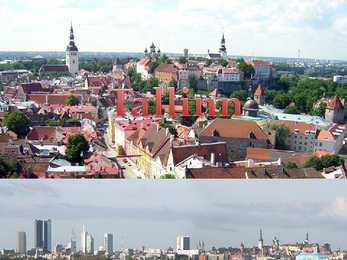
Old Tallinn Old Town, a medieval walled city filled with old buildings and fortifications. The sheltered bay and the easily defended Toompea Hill made it a natural place to settle. Sometime about 1050 A.D. a fortress was built atop the hill, the first of many. In 1219 the Danes showed up as part of the Northern Crusade to subjugate the Baltics and convert the local pagans to Christianity whether they wanted to or not. The Danes improved the fortifications and expanded the town, which became part of the Hanseatic League, a trading organization of a hundred northern cities. The Danes sold Tallinn to the Livonan Order, a branch of the Teutonic Knights, in 1346. The Swedes came next in 1561. Tallinn weathered plague and the Great Northern War and became part of Russia in 1710. In 1918, Estonia declared independence from Russia and fought a bitter war against Bolshevik Russia. Independence didn’t last long, ...
Haapsalu Castle Haapsalu Episcopal Castle, is a castle with cathedral in Haapsalu, western Estonia. It was founded in the thirteenth century to be a center for Bishopric of Ösel-Wiek. When there is a full moon in the month of August, it is said that an image of a maiden, the White Lady, appears on the inner wall of the chapel. On full moon nights in August an image of a maiden, The White Lady, is said to appear on the inner wall of the chapel. In 1228, the Archbishop of Riga formed a new diocese consisting of Läänemaa, Saaremaa and Hiiumaa and designated Gottfried, an abbot of Dünamünde Cistercian monastery, as the bishop. These boundaries of the new diocese were permanently fixed by a legate of Pope, Wilhelm of Modena in 1234. The first residence of the diocese was located in Lihula, where with the help of the Order the Bishop transferred the diocese's residence to Vana-Pärnu, wich was burned and destroyed...
Sculptures and monuments St. John's Lutheran Church St John's Church was probably built in the first third of the 14th century. There is no other brick church decorated with so much terracotta plastic in Europe Eduard Tubin Monument The Eduard Tubin monument, marking the 100th birthday of the composer, was dedicated in 2005. The authors of the statue are sculptor Aili Vahtrapuu, architect Veronika Valk, with sound installations by Louis Dandrel.Eduard Tubin (1905-1982) was a versatile composer and conductor, one of the most recognized symphonists throughout history. He served as concert master and conductor at the Vanemuise Theatre. In 1944, when the theatre was destroyed, he left Estonia to Sweden. Monument to Gustav II Adolf In 1632, King Gustav II Adolf of Sweden, then at the war camp near Nürnburg, signed the charter to found Tartu University, which was also named Academia Gustaviana in his honour....
Names with and without the. A/ We do not use 'the' with names of most streets/roads/squares/parks etc.: Union Street (not 'the...') / Fifth Avenue/ Piccadilly Circus/ Hyde Park Blackrock Road/ Broadway/ Times Square/ Waterloo Bridge Many names (especially names of important buildings and institutions) are two words: Kennedy Airport/ Cambridge University The first word is usually the name of a person ('Kennedy') or a place ('Cambridge'). We do not usually use 'the' with names like these. Some more examples: Victoria Station (not 'the...') / Edinburgh Castle/ London Zoo/ Westminster Abbey/ Buckingham Palace/ Canterbury Cathedral But we say 'the White House', 'the Royal Palace', because 'white' and 'royal' are not names like 'Kennedy' and 'Cambridge'. This is only a general rule and there are exceptions. B/ Most other names (of places, buildings etc.) have names with the: These places usually have names w...
Kunda Gymnasium Rait Türkel Old Tallinn Report Instructor:Teacher Kristi Aron Kunda 2012 Introduction Like most cities with an eight-hundred-year-old past, Tallinn is a patchwork of historic areas. The city's pride and joy is without a doubt its Medieval Old Town, but equally enchanting is the Kadriorg district, a throwback to the time when Estonia was ruled by the Russian Tsars. Tallinn is the capital and largest city of Estonia. It occupies an area of 159.2 km2 with a population of 416,470. It is situated on the northern coast of the country, on the shore of the Gulf of Finland, 80 km south of Helsinki, east of Stockholm and west of Saint Petersburg. Tallinn's Old Town is in the list of UNESCO World Heritage Sites. It is ranked as a global city and has been listed among the top 10 digital cities in the world.The city was a European Capital of Culture for 2011, along with urku, Finland.T...
Stephen wiltshire 1 slaid Stephen was born in London, United Kingdom to West Indian parents on 24th April, 1974. As a child he was mute, and did not relate to other people. Aged three, he was diagnosed as autistic. He had no language and lived entirely in his own world. 2.slaid At the age of five, Stephen was sent to Queensmill School in London, where it was noticed that the only pastime he enjoyed was drawing. It soon became apparent he communicated with the world through the language of drawing; first animals, then London buses, and finally buildings. The instructors at Queensmill School encouraged him to speak by temporarily taking away his art supplies so that he would be forced to ask for them. Stephen responded by making sounds and eventually uttered his first word - "paper." He learned to speak fully at the age of nine. His early illustrations depicted animals and cars; he is still extremely interested in american cars and is...
England Sightseeings Stonehenge Is a prehistoric monument located in the English county of Wiltshire, about 3.2 kilometres (2.0 mi) west of Amesbury and 13 kilometres (8.1 mi) north of Salisbury. The dating of cremated remains found that burials took place as early as 3000 B.C, when the first ditches were being built around the monument. One of the most famous prehistoric sites in the world. The site and its surroundings were added to the UNESCO's list of World Heritage Sites in 1986 in a co-listing with Avebury henge monument, and it is also a legally protected Scheduled Ancient Monument. Biggest stone is press 26 ton. Cambridge'is College was founded in the 13.century. this is world oldest ang the best collage. Oxford college Is founded in 1379. The College's motto, created by William of Wykeham, is "Manners Makyth Man" Lake District Also known as The Lakes or Lakeland, is a rural area in Nor...
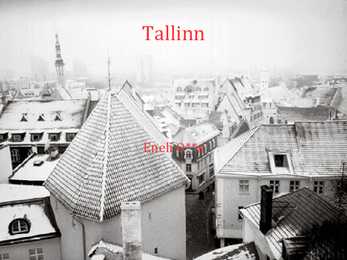
Tallinn Eneli O**a History City rights were given to Tallinn on May 15, 1248 Independent since 1991 Covers the area of 159.2 km2 Old Town of Tallinn Tallinn's Old Town is one of the most well- preserved old towns in northern Europe The golden era in lies in the period between the early 15th and mid 16th centuries It has three parts: Lower Town, Upper Town + Town Wall, Towers and the Gates Lower Town/Upper Town Town Hall Square Toompea Castle & Tall Tallinn Town Hall Hermann's Tower Town Hall Pharmacy Cathedral of Saint Mary the Virgin Great Guild Hall Danish King's Garden House of the Brotherhood of Black Heads Other Attractions Ka...
Tallinn Mustamäe College G2K Jaana-Kristiina Jõgevest The Four oldest churches of Tallinn Report Supervisor: Ingrid Teigar Tallinn 2009 The Dome Church The Danes began fortification of Toompea after the conquest of Tallinn in 1219 and probably also built the first church there. It was presumably a wooden building located at the site of the present cathedral. However, a serious conflict with the Order of the Brothers of the Sword broke out soon as the latter wanted to gain control of the entire Estonia. The order succeeded in subordinating Tallinn and the whole of North Estonia to its rule in 1227. The monks of the Dominican Order began the construction of a stone church in Toompea in 1229. The first written data on the cathedral date back to 1233, the date of a battle...
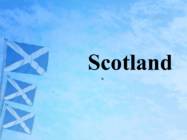
Scotland Scotland is a part of United Kingdom. It shares a border with England. The capital of Scotland is Edinburgh. Famous cities in Scotland are Aberdeen, Dundee and Glasgow. The Symbols of Scotland are thistle, bagpipes, kilts and Tartan. There are many lochs and mountains with few trees, and islands near the western coast. There is a 5 000 000 people in Scotland. There are many attractionsin Scotland. For example: Edinburgh Castle, Ben Nevis, Stirling Castle and Glagow Cathedral. I think i´d like to see Edinburgh Castle, lochs and the Loch Ness Monster there :D . Facts about Scotland : Scotland is the second largest country in the United Kingdom of Great Britain. Edinburgh was the first city in the world to have its own fire-brigade. Scotland is considered the home land of golf. The most famous actor from Scotland is probably Sean Connery. The highest point in Scotland...
Pikk Hermann Pikk Hermann is a tower of the Toompea Castle, on Toompea hill in Tallinn, the capital of Estonia. The first part was built 1360-1370. It was rebuilt 16th century. A staircase with 215 steps leads to the top of the tower. The Niguliste church The Niguliste church dates back to the 13th century, tough most of the present structure is 200 years later than that. The curch is also used for concerts and organ recitals and has fine accoustics. Alexander Nevski Cathedral The buildings belltowers host a total of 11 belss the largest of wich weighs 15 tonnes. One of the most spectacular seights in the old town of Tallinn is the Alexander Nevski Cathedral's interior. The Pühavaimu church The tower bell of Pühavaimu church, made in 1433, is the oldest in Estonia. And the painted clock...
Tallinn Tallinn is situated on the southern coast of the Gulf of Finland, in north-western Estonia. A limestone cliff runs through the city. It is exposed, for instance, at Toompea and Lasnamäe. However, Toompea is not a part of the cliff, but a separate hill. Coastline is 46 kilometres long.The highest point of Tallinn, at 64 meters above the sea level, is situated in the district of Nõmme, in the south-west of the city. The first human steps, that archeologists found, are about 5000 years old. Tallinn`s first fortress was built in Toompea, in 1050. As an important port for trade between Russia and Scandinavia, it became a target for the expansion of the Teutonic Knights and the Kingdom of Denmark during the period of Northern Crusades in the beginning of the 13th century when Christianity was forcibly imposed on the local population. Danish rule of Tallinn and Northern Estonia started in 1219. In 1285...
Great Plague of London. The Great Fire of London. Samuel Pepys's diary . The Great Plague of London (1665-1666) The Great Plague was a massive outbreak of disease in England that killed an estimated 100,000 people The plague arrived with a merchant carrying a parcel of cloth sent from London, although this is a disputed fact It was the last major outbreak of the plague in England The English outbreak is thought to have originated from the Netherlands By July 1665, plague was in the city of London itself Though concentrated in London, the outbreak affected other areas of the country A bill of mortality for the plague People at the plague King Charles II of England, his family and his court left the city for Oxfordshire The aldermen and the the majority of the other city authorities opted to stay at their posts - The Lord Mayor of the city, Sir John Lawrence quarantined himself in a ...
Names with and without the Names fot the streets/roads/squares/parks etc are without the: Union street Fifth avenue Piccadilly Circus Hyde Park Blackrock road Broadway Times Square Waterloo Bridge Many names (especially names of important buildings and institutions) are two words: Kennedy Airport Cambridge University The first word is usually the name of a person (Kennedy) or a place (Cambridge). We do not usually use ,,the" with names like these. Some more examples: Victoria Station Edinburgh Castle London Zoo Westminister Abbey Buckhingham Palace Canterbury Cathedral But we say 'the White House' and 'the Royal Palace' because 'white' and 'royal' are not names like 'Kennedy' and 'Cambridge' Most other names (of laces, buildings etc) have names with the: The + adjective or + noun ...
Prague Basic information Prague is the capital of the Czech Republic Population about 1.3 million Area of the city is 496 km². Prague is situated on the Vlatava river. The Old Town is included in the UNESCO list of World Heritage Sites. Coat of Arms Flag The location of Prague in the Czech Republic Name The name Prague is derived from an old Slavic root, praga, which means "ford", referring to the city's origin at a crossing point of the Vltava river. The native name of the city, Praha, is also related to the modern Czech word práh which means threshold. History The area of Prague was settled as early as the Paleolithic age. By the year 800 there was a simple fort fortified with wooden buildings. It was founded during the Romanesque era c. 885 and flourished in the Gothic and Renaissance eras. Prague flourished during the reign of Charles IV. Charles IV founded the first university in MiddleEurope Charles...
LONDON The history of the town is very closely linked with the history of the country itself. The name probably comes from the celtic words Llyn, which means a lake, and Dun, which means a fort or a strong place. Although the site was not important during the Celtic period (400 BC 43 AD) During the Roman occupation Londinium, as it was called then, was not influential politically, but was, however an important crossing point for the romans over the river Thames. Londinium was at a very good place, so it soon became a trading centre. In AD 61 the city was devastated by Boudicca, who led a revolt againt the Roman conquest of Britain. The city was burned down and its inhabitants massacred. London was rapidly rebuilt, becoming the capital of the province Britannia. AD 122 Roman walls were built around it as a Around AD 400 the Anglo-Saxons invaded Britain. They destroyed the roman towns and formed many kingdoms that were hostile to one a...
London There were some people living on the banks of the Thames, when the Romans came to England in 43 AD. But we don't know much about them. The Romans built houses, a port and a bridge over the river and named the place Londinium. The bridge which was built by the Romans was later known as London Bridge and it was built in stone in 1176. London soon became the largest city in England and by the time of the Norman Conquest in 1066 it had become the most important city in Britain. It grew area and population until September 1666, when the Great fire destroyed four fifths of the wooden buildings in the City. The fire began in the kitchen of the King's baker in Pudding Lane and lasted for five days. By now London is a city of seven million people covering over 1,5 square miles. Nowadays the population of London is made up of the people of very many nationalities. It is a popular...
LONDON HISTORY PERIOD EVENTS PEOPLE The Celtic period (400 BC Name: Celtic words (Llyn (a lake) + AD 43) Dun (a fort or strong place) ) Not important The Roman occupation (AD 43 Londinium not important Boadicea a revolt against - AD 410) politically. An important trading the Roman conquest centre. Devastation AD 61. Rebuilt. Roman walls built in AD 200. Anglo Saxons (AD 400 Destroyed the Roman towns. Many 1066) kingdoms. London in ruins. King Egbert one Flourishing. Attacks by Vikings. kingdom England (the 9th ...
What Might Attract Tourists to Estonia? What might attract tourists to Estonia? Definately sightseeing. Estonia is a beautiful country and theres alot to see. Tallinn is the most popular place for tourists to visit. Tourists will also like the friendly people of Estonia, and ofcourse they will like the beautiful girls in here too. Tallinn, as the capital of Estonia, has alot of tourist attractions. For instance tourists can take tours in Tallinn or visit the Old town and its colorful shops. In Tallinn tourists can see the beautiful Kadriorg park with its Swan Pond and the Baroque Catharina Palace. Not far from Kardiorg is the Song Festival Grounds. In Pirita they can see the Forest Cemetery, where many important Estonian public figures are buried. Tourist can also visit the ruins of St.Brigitta's Convent in Pirita, Maarjamae Palace, Russalka and the Memorial Monument of Estonia's Shipwreck. Popular places where tourists go are also ...
Class 10 2008 Few facts about cities Muckanaghederdauhaulia Inch village Inch village The Vikings founded sign Dublin in 841 Worth to mention The Titanic Guiness beer Traditional field sports Gaelic football- The game Hurling Similiar to hockey is like a mix of a soccer and but played on a field. rugby. Flag and religion o Irish flag is a vertical tricolour of green, white, and orange. o About 90 % of the people are Roman Catholics St. Patrick's Cathedral The Irish flag Natural resources The primary natural resources of Ireland, include natural gas, petroleum, peat, copper, lead, dolomite, barite, limestone, gypsum, silver and some zinc Ireland has no coal. Gypsum mine Limestone pavem...
Himself His birth name was Michelangelo di Lodovico Buonarroti Simoni, but commonly known as Michelangelo. He was born on March 6th 1475 Caprese near Arezzo, Republic of Florence. Today, Caprese is known as Caprese Michelangelo. A young boy Michelangelo was sent to Florence to school. The young artist showed no interest in his schooling, preferring to copy paintings from churches and seek the company of painters. He was fantastically gifted. He died on February 18th 1564 in Rome, Papal States when he was 88 year-old. Michelangelo was an Italian sculptor, painter, architect and poet and engineer of the High Renaissance. He field sculpture, painting, architecture and poetry. He is the best-documented artist of the 16th century. He told his apprentice, Ascanio Condivi: "However rich I may have been, I have always lived like a poor man." Works Two of his best-known works, the Pietà and David, were sculpted before he turned thirty. In a demo...
Names of town ● Lindanise - it was first used in 1219, derived from mythical Linda, the wife of Kalev and the mother of Kalevipoeg, national hero. ● Koluvan - found in old Russian chronicles, the name possibly deriving from the Estonian mythical hero Kalev ● Reval - used after 1219; comes from two german words ‘reh’ and ‘fall’, meaning the falling of the deer - as they fall down the Toompea hill, probably when escaping from the Danish occupation or just the hunters. ● Tallinn - used after Estonia gained its independence in 1918, origin is definitely estonian; meaning Taani-linn, tali- linn. Liberty Square ● The central square of Tallinn, it was renovated in 2008. There used to be Harju gate, which can now be seen through glass. ● The statue of Liberty, 2009; represents freedom, Estonia has been under many foreign powers, starting with Danes, Sweden, German and Russia. The clock of liberty, 2...
What kind of city is Tallinn? What is it famous for? Old own The old City, city of Hanseatic sellers, was not an administrative part of a city (the Cathedral Hill) till the end of a XIX-th century. It was the centre of medieval marketing that has provided him well- being. Now it is the most popular place among tourists with shops and big variety of restaurants. It was opened 22 july 1718 year.Kadriorg it is the largest park in Tallinn.Kadriorg`s founder was the Peter I. He named the park in honour of his wife Ekaterine I. Y ou can walk around this beautiful park and enjoy delightful sights of nature. Tallinn Hall square is the area, popular in summer months and is filled with street cafes. In winter, by the tradition which has remained since 1441, Hall square is the area decorated by a huge Christmas tree. Town Hall Square for centuries been used as a market and fairs square and also...
TARTU Tartu is the second largest city of Estonia. In contrast to Estonia's political and financial capital Tallinn. Tartu is often considered the intellectual and cultural hub, especially since it is home to Estonia's oldest and most renowned university.Situated 186 km southeast of Tallinn, the city is the centre of southern Estonia. The Emajõgi river, which connects the two largest lakes of Estonia, crosses Tartu. The city is served by Tartu Airport. Tartu was the place where the northsouth road going above the major waterwaysriver.Thought to be the sixth8.Here is the hill fortress built centuries. In Tartu live 82268 Estonians, 15998 Russians, 1214 Finns, 491 Belorussians, 141 Jews, 140 Poles, 124 Germans, 109 Latvians, 91 Lithuanians, 81 Tatars and 673 other nationality people. Mostly known as a university town, Tartu is also a site of heavy industry. In the beginning of the 21st cen...
WALES . Wales is a country that is part of the United Kingdom , bordered by England to its east , and the Atlantic Ocean and Irish Sea to its west . It is also an elective region of the European Union . Wales has a population estimated at three million . The capital Cardiff is Wales's largest city with 317,500 people . For a period it was the biggest coal port in the world . Cardiff is the largest media centre in the UK outside of London . Wales is located on a peninsula in central-west Great Britain . Its area , the size of Wales , is about 20,779 km² . Wales is bordered by England to the east and by sea in the other three directions : The Bristol Channel to the south , St. George's Channel to the west , and the Irish Sea to the north . The main population and industrial areas are in South Wales ,consisting of the cities of Cardiff , Swansea and Newport and surrounding areas , with another signifi...
France République française facts Capital-Paris Language- french Area- 674,843 square km Population-65,447,375 President-Nicolas Sarkosy Location- Western Europe, bordered by the Mediterranean Sea (Vahemeri), Bay of Biscay and English Channel National symbol- Gallic Rooster(bird),Stylised Lily(flower) Motto-Liberté, égalité, fraternité(Liberty, Equality, Fratenity) Main Religions- Roman Catholicism Government Democratic parliamentary republic Other largest sities- Lyon, Marseille, and Lille National sport- soccer (jalgpall) France is special because... There is a lots of........ v Restaurants, brasseries or bistros v Variety food- (sheese- around 400 varieties, wines, chocolate mousse, crêpes, snails, croissants, creme brule) v Tourist attractions (Eiffel tower, Notre Dame, Disneyland, 3900 museums, 4400 cinemas, 38 879 historic monuments...
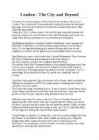
London - The City and Beyond The statue of a bronze dragon on Fleet Street is the entrance to the City of London. This is where the Romans founded Londinium almost two thousand years ago. The City covers about 2,6 square km (1 square mile) and is often called the Square Mile. Today, the City of London is one of the world's most important business and financial centres, with over 500 banks. Over 400 000 people work within the Square Mile during weekdays and it is a crowded and noisy place. The Barbican Centre is a very big complex of buildings, towers, garages and walkways. It was built in the 70s and most Londoners don't like the way it looks. It is the largest performing arts centre in Europe and home to two symphony orchestras, and art gallery and the amazing Museum of London. Fleet Street once was a road between the City and Westminster. Then it became the centre of publishing and newspaper business for centuries. The Dail...
Roald Dahl “The Landlady” Worksheet 2 13. Billy has now entered the B&B. What rooms and places does he find himself in, chronologically? …………………………………………………………………………………….. 14. Find information about the B&B: price of a room, number of floors, who was there at the different floors? PRICE OF A ROOM: Five and sixpence a night, including breakfast NUMBER OF FLOORS: 3 floor who/what was there First floor Was landladys Second floor Was Billys; there were rooms, where the Billy and the other two dead men were Ground floor Was sitting room; guestbook lying open on the piano ...
Scotland Scotland · Scotland is a country in the north of Great Britain. It is apart of the United Kingdom. Scotland is divided into three natural regions: the Southern Uplands, the Central Lowlands and the Highlands and islands. A lot of places in Scotland are a natural paradise, still untouched by man. Glasgow · Glasgow is the largest city in Scotland and the third largest in the United Kingdom. Before 1750 Glasgow was a small town. It had a cathedral and a university but it was not a rich town. After 1707 Scottish ships could go to the English colonies in America. Ships brought tobacco to Glasgow and took back Scottish goods. In 1776, the American colonies became independent and the tobacco trade stopped. Heavy industry began to develop. It used coal and iron from the Clyde valley. Glasgow became rich but very dirty. Sport · Scotland is famous for football teams: Rangers and Celtic. Mo...
 annaabi.ee