Leidsid 33 sarnast õppematerjali, mis on seotud failiga "AT, ON, IN". Need materjalid aitavad sul teemat sügavamalt mõista.
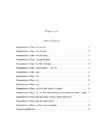
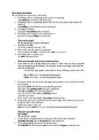
building, there, door, shop, back, days, friday, corner, something, christmas, night, ages, morning, afternoon, evening, room, floor, river, left, bottle, hotel, front, letter, street, restaurant, late, final, month, dates, longer, five, clock, months, years, sunset, 1990s, weekend, birthday, middle, winter, sunday, monday, present, same, before, takes......................................................... 7 Prepositions of Place – in & on with travelling ..................................................... 8 Prepositional Phrases ......................................................................................... 8 Prepositions of Time – in, on & at • in is used with centuries, decades, years, seasons and months, parts of the day, periods of time • on is used with dates, special days, days of week, day of week + part of day, day + of ... • at is used with holidays, exact time, meals and with night in on at • the 20th century • the 29th of November • Christmas / Easter • the Middle ages /August the first • six o’clock / 7.30 • the 1980s • Christmas Day / New • midday / noon /
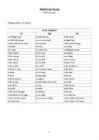
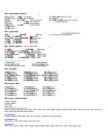
PREPOSITIONS (eessõnad) Prepositions of place: KUS? WHERE? AT ON IN at 10 High Street on Fifth Avenue in the world at 224 Fifth Avenue on the street(AmE) in High Street at the corner of the street on the plane in the east of Europe at a hotel on a bus in London at a store on a boat/ship in Trafalgar Square at the concert on the floor in America at the cinema on the wall in a village at the theatre on the shelf in the country
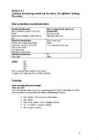
I want you to meet John Smith. I'm so pleased to meet you. This is Jane Smith. I'm Jane Smith. My name's John Smith. Informal introduction Hi. John. Jane. Hello. Titles: Mr Mrs Miss Ms Ms is a modern form of address for women. It replaces the traditional forms of Mrs and Miss. Greetings Good morning/afternoon/evening! 'How are you?' Very often people expect you to say something positive. Here's a breakdown of how you can express how you really are without complaining too much. · Fine, thanks. / On top of the world, thanks. · OK, thanks · Not so bad, thanks. / Can't complain, thanks. · So so, thanks. / So and so, thanks. · Not so good, actually 1 The English alphabet Spelling
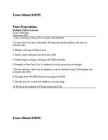
Ermo Altmäe 011PK Time Prepositions Multiple Choice Exercise Correct! Well done. Your score is 60%. 1. Jane is arriving on January 26 at 2 o'clock in the afternoon. 2. It snows here every year in December. We always go outside and play in the snow on Christmas day. 3. Michael is leaving on Friday at noon. 4. Frankie started working for her law firm in 1995. 5. Franklin began working on the project NO PREP yesterday. 6. Normally, on New Year's Eve, it's tradition to kiss the one you love at midnight. 7 Don't be ridiculous; there were no telephones in the seventeenth century! The telephone was invented in the 1870s. 8. The plane leaves NO PREP tomorrow morning at 8:00 AM. 9. The hills here are covered with wildflowers in early spring. 10
in the morning/evening/afternoon in the desert in time in the mountains - last Saturday/week/month etc at a ski resort on Friday/Thursday etc in Telluride/Tallinn/London etc in the middle in southwest Colorado in the post office by the time (selleks ajaks, kui...) on Delancy Street at night on the corner in a minute (minuti pärast) in the street haven’t talked to them for over a on Ridgeback Mountain month in the woods/forest - next weekend/month/day a small house on a lake on the first day in the countryside at the end of the semester at the ticket counter
english-4u.de/a_an_some_ex6.htm eagles We us the • when we talk about a specific thing. • when it is clear which thing or person we mean. A – AN - THE • when there is only one of something. Examples: What is the highest building in the world? Washington is the capital of the United States.
.. (3 put) on my new skirt. When I ... (4 reach) the school, I ... (5 make) a big mistake and ... (6 smile) at my friends instead of watching where I was going. While I ... (7 wave) at my best friend, I couldn't brake, and I ... (8 hit) the steps. I ... (9 fail) off my bike and ... (10 tear) my skirt. What a great start to the new year! 4. Write the sentences. 1 fifteen the off in I'm minutes to cinema I'm off to the cinema in fifteen minutes. 2 was mum up the between tension and building me my The tention was building up between my mum and me. 3 of top the photograph chest on there of was a drawers There was a photograph on top of the chest of drawers. 4 the bike a idea she upon hiring hit of The hit upon an idea of hiring a bike 5 she with were up when filled her tears stood eyes My alarm went off alarm quarter to five. 7 exhibition his of best in ran the hall into friend he front He ranned into his friend in front of the exhibition hall.
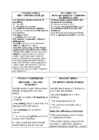
PRESENT CONTINUOUS PRESENT SIMPLE AM/IS/ARE + ING (AM INFINITIVE (WORK;WORKS) WORKING) We talk about things that we have We talk about events in the future already arranged to do in the which are 'timetabled'. future. •My plane leaves at 6 in the •I've got my ticket. I'm leaving on morning. Thursday. •The shop opens at 9.30. •I'm seeing Julie at 5 and then I'm •The sun rises a minute earlier having dinner with Simon. tomorrow. •He's picking me up at the Note the difference between: airport. *The plane leaves in ten minutes •The company is giving everyone (= statement of fact)
"Poetry can be beautiful"- poetry in general. "The poetry of Hopkins is beautiful" - I'm only talking about the poetry Hopkins wrote. 4. Rule:Rivers, mountain ranges, seas, oceans and geographic areas all use 'the'. For example, "The Thames", "The Alps", "The Atlantic Ocean", "The Middle East". Unique things have 'the'. For example, "the sun", "the moon". Some institutional buildings don't have an article if you visit them for the reason these buildings exist. But if you go to the building for another reason, you must use 'the'. "Her husband is in prison." (He's a prisoner.) "She goes to the prison to see him once a month." "My son is in school." (He's a student.) "I'm going to the school to see the head master. "She's in hospital at the moment." (She's ill.) "Her husband goes to the hospital to see her every afternoon." Musical instruments use 'the'. "She plays the piano." Sports don't have an article. "He plays football." Illnesses don't have an article. "He's got appendicitis
It gives you an idea of what grammar is about. Read and remember it. Every name is called a noun, Pronoun As field and fountain, street and town. Noun In place of noun the pronoun stands, As he and she can clap their hands. The adjective describes a thing, As magic wand or bridal ring. Adjective Most verbs mean action, something done, Verb To read and write, to jump and run. How things are done the adverbs tell, As quickly, slowly, badly, well. ition Adverb Prepos The preposition shows relation, As in the street or at the station.
Golden Grammar rules 1. Don't use an with own. Sue needs her own room. (NOT Sue needs an own room.) I'd like a phone line of my own. (NOT ... an own phone line.) 2. Use or rather to correct yourself. She's German or rather, Austrian. (NOT She's German or better, Austrian.) I'll see you on Friday or rather, Saturday. 3. Use the simple present play(s), rain(s) etc to talk about habits and repeated actions. I play tennis every Saturday. (NOT I am playing tennis every Saturday.) It usually rains a lot in November. 4. Use will ..., not the present, for offers and promises. I'll cook you supper this evening. (NOT I cook you supper this evening.) I promise I'll phone you tomorrow. (NOT I promise I phone you tomorrow.) 5. Don't drop prepositions with passive verbs.
_ 5 I _________________________________ (start) work at 8.30 every morning. _ 6 He is a good cook but she _________________________________ (prefer) to eat out. _ 7 English tests _________________________________ (get) more and more interesting. _ 8 They _________________________________ (have) a party because it's her birthday. _ 9 I sometimes _________________________________ (ride) my bicycle to school. 10_ She usually _________________________________ (go) to the gym on Friday evenings. Marks: /10 2 Choose the correct tense (present simple or present continuous) in these sentences. 1 How do you usually start/are you usually starting your day? _____________________________________ 2 What time do you go/are you going to bed at weekends? _____________________________________ 3 This Girlzone CD is belonging/belongs to Alan
2 The Definite Article – the, can be used with both singular and plural countable and uncountable nouns. By the time we got to the bus stop, the bus had already left. The children I saw in the playground were my brother's friends. The weather is awful today! Another general rule about the use of the Indefinite and Definite Article is that the Indefinite Article is used when mentioning someone or something for the first time and the Definite Article is used when referring to someone/something that has been mentioned before. We passed a beautiful house on our way to Birmingham. – Was the house for sale? I saw a man standing near the house. The man was well-dressed and looked like a businessman. In case of plural countable nouns and uncountable nouns, in ordinary situations, when something is mentioned for the first time, some is used.
without whose enthusiasm this story might still be unfinished. But of the tree of the knowledge of good and evil, thou shalt not eat of it: for in the day that thou eatest thereof thou shalt surely die. Genesis 2:17 PREFACE I'd never given much thought to how I would die -- though I'd had reason enough in the last few months -- but even if I had, I would not have imagined it like this. I stared without breathing across the long room, into the dark eyes of the hunter, and he looked pleasantly back at me. Surely it was a good way to die, in the place of someone else, someone I loved. Noble, even. That ought to count for something. I knew that if I'd never gone to Forks, I wouldn't be facing death now. But, terrified as I was, I couldn't bring myself to regret the decision. When life offers you a dream so far beyond any of your expectations, it's not reasonable to grieve when it comes to an end. The hunter smiled in a friendly way as he sauntered forward to kill me. 1. FIRST SIGHT
Present Continuous · Actions taking place at or arount the moment of speaking (The kids are watching TV..) · Fixed arrangements in the near future (I'm going to the dentist tomorrow) · Currently changing ang developing situations (The number of burgularies is increasing) · With ,,Always" to express anger or irritation at a repeated action (You're always forgetting..) TIME EXPRESSIONS USED WITH PRESENT CONTINUOUS: now, at the moment, at present, these days, nowadays, still, today, tonight etc. Present Perfect · Action happened at an unstated time in the past. Emphasis on the action, time is unimportant or unknown. (I have washed the car) · Action started in the past and continues up to the present, especially with stative verbs (I have known her for six years) · Recently completed action (I have finished my essay)
.. H: -Ah, yeah, remember him. What is he saying? J: - Oh, well...He is asking to come to him, and, besides, here is the money-order... H: - Oh! Would you like to cash money-order? Have you got your passport with you? J: - Yeah, certainly. H: - Then, they'll cash your money order without fail. J: - Ok, I'll go to that counter and speak to clerk. Wait for me, please! Can you go and by tickets with me after this? H: - Certainly! Discuss the functions of post office H: - There are a lot of functions of post office. Of course, we have friends in different parts of the world, but it's really expensive to call them often. J: - Yes. Some people can use Internet, but not everyone is provided with it. So, then you can send letters... H: - Oh, yeah! It's really convenient! You can send even photos, is spite of the fact that the envelope is heavy. You can just send registered letter! J: - And if you don't know the exact address of addressee, you can send post restante letters
"We should head to a bar and celebrate." I wasn't surprised by my roommate's emphatic pronouncement. Cary Taylor found excuses to celebrate, no matter how small and inconsequential. I'd always considered it part of his charm. "I'm sure drinking the night before starting a new job is a bad idea." "Come on, Eva." Cary sat on our new living room floor amid a half-dozen moving boxes and flashed his winning smile. We'd been unpacking for days, yet he still looked amazing. Leanly built, dark-haired, and green-eyed, Cary was a man who rarely looked anything less than absolutely gorgeous on any day of his life. I might have resented that if he hadn't been the dearest person on earth to me. "I'm not talking about a bender," he insisted. "Just a glass of wine or two. We can hit a happy hour and be in by eight." "I don't know if I'll make it back in time." I gestured at my yoga pants and fitted workout tank
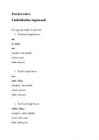
Yours sincerely, Lee Jones 5. ... I would appreciate a reply at your earliest convenience. I look forward to meeting you to discuss employment opportunities. Yours faithfully, Nicole Porter Paragraph Plan for Letters · salutation · Paragraph 1 reasons for writing · Paragraphs 2, 3 development · Final paragraph closing remarks · Name · Letters are divided into two categories, formal and informal. There are various types of formal and informal letters . · It is important to think about the person who you are writing to before you begin writing a letter. If the wrong style is used, the letter will look impolite, silly or odd. For example, if you used formal language to write to a close friend, the letter would look odd, or if you used informal language to write a letter to a company, the letter would look impolite.
Peter will visit us tomorrow. Continuous Tenses (kestvad ajad) are used when talking about a particular point in time · We were sleeping when the storm began. What were you doing at five o'clock? When I came, the children were sleeping. Perfect Tenses are used when an action or situation in the present is linked to a moment in the past often used to show things that have happened up to now but aren't finished yet to emphasize that something happened but is not true anymore Mary was tired. She had worked hard all day. Perfect Continuous Tenses Tegevus, mis mingil kindlaksmääratud momendil toimub (või toimus) ja mille alguse kohta on meil andmeid. · The child has been sleeping for six hours already. It has been raining for hours. Irregular verbs Here is a HUGE table about · irregular verbs · that you have to know by heart. · http://www2.gsu.edu/~wwwesl/egw/verbs.htm
The basic ingredients, when fresh, are so full of flavour that British haven't had to invent sauces to disguise their natural taste. What can compare with fresh pees or new potatoes just boiled and served with butter? Why drown spring lamb in wine or cream and spices, when with just one or two herbs it is absolutely delicious? If you ask foreigners to name some typically English dishes, they will probably say "Fish and chips" then stop. It is disappointing, but true that, there is no tradition in England of eating in restaurants, because the food doesn't lend itself to such preparation. English cooking is found at home. So it is difficult to a good English restaurant with a reasonable prices. In most cities in Britain you'll find Indian, Chinese, French and Italian restaurants. In London you'll also find Indonesian, Mexican, Greek... Cynics will say that this is because English have no "cuisine" themselves, but this is not quite the true. Vocabulary:
Examples: · Jane was being at my house when you arrived. Not Correct · Jane was at my house when you arrived. Correct Present Perfect [has/have + past participle] Examples: · You have seen that movie many times. · Have you seen that movie many times? · You have not seen that movie many times. USE 1 Unspecified Time Before Now Examples: · I have seen that movie twenty times. · I think I have met him once before. · There have been many earthquakes in California. · People have traveled to the Moon. · People have not traveled to Mars. · Have you read the book yet? · Nobody has ever climbed that mountain. · A: Has there ever been a war in the United States? B: Yes, there has been a war in the United States. TOPIC 1 Experience Examples: · I have been to France. This sentence means that you have had the experience of being in France. Maybe you have been there
- the evening - my birthday -lunchtime - December -Christmas Eve -night - The summer -new year eve -the weekend - 1998 -Christmas /Easter/new year There is/are Singular Plural + There's a piano + there are some glasses in the cupboard - There isn't a fridge - there aren't any pictures ? Is there a TV? ?are there any glasses? Yes, there is yes, there are. No, there isn't no, there aren't There was/there were + there was an old TV + there were only three guests - there wasn't a remote control -there weren't any more people ? was there a ghost?
The present continuous We use the present continuous to talk about: 1. Something which is happening at the moment of speaking. I'm reading the Grammar referance page. 2. Something which is happening around now but not necessarily at the moment of speaking. I'm reading a lot of detective novels these days. 3. A changing situation. Computers are getting faster and faster. 4. Something which happens often and annoys us. My boss is always asking me to stay late. The present simple We use the present simple to talk about: 1. A routine or a habit. Jim always sets the alarm for 7.30. 2. Facts which stay the same for a long time. I have a friend who lives in London. She works in a museum. 3. Something which is always true. Ice melts when you heat it. Verbs not normally used in the continuous form 1
.......................................... 2 Position of Adverbs.................................................................................. 4 Yet, still, already ....................................................................................... 6 Adverbs and Adverbial Phrases An adverb describes a verb, an adjective, another adverb or a whole sentence. Adverbs can be divided according to the information that they give. Types of Adverbs 1. Some adverbs tell us how somebody does something or how something happens. These are called Adverbs of Manner. Please speak quietly. Tom drove carefully along the narrow road. 2. Some adverbs tell us where. These are called Adverbs of Place: She put the book on the table. 3. Some adverbs tell us when. These are called Adverbs of Time. We met them at five o´clock. 4. Some adverbs tell us how often. These are called Adverbs of Frequency. E.g
· Down alla · Into sees · Out of väljas · Towards suunas · From · By juures · Near lähedal · Across risti · Over üle · In the middle of millegi keskel · Opposite vastas · Around ümber · Along piki, mööda · On to - · On the top of millegi tipus olema · Off maha , ära · Up to millegini · Next to kõrval · Beside kõrval · In the corner of (toa) nurgas · On the corner of (tänava) nurgal · On the right/left paremal/vasakul · To the right/left paremale/vasakule · Below allpool · Past mööda · Against vastu · Among hulgas · At kusagile · To kuskil Erandid ! · In the picture /photo · In the sky · On the beach / coast · On chair · In the armchair · On a map · At school/work/home/sea/station/airport/port jne.
The room was warm and clean, the curtains drawn, the two table lamps alight - hers and the one by the empty chair opposite. On the sideboard behind her, two tall glasses, soda water, whiskey. Fresh ice cubes in the Thermos bucket. Mary Maloney was waiting for her husband to come him (correction: home) from work. Now and again she would glance up at the clock, but without anxiety, merely to please herself with the thought that each minute gone by made it nearer the time when he would come. There was a slow smiling air about her, and about everything she did. The drop of a head as she bent over her sewing was curiously tranquil. Her skin - for this was her sixth month with child - had acquired a wonderful translucent quality, the mouth was soft, and the eyes, with their new placid look, seemed larger darker than before. When the clock said ten minutes to five, she began to listen, and a few moments later, punctually as always, she heard the tires on the gravel outside, and the car door
............................................................ 6 Talking about what other people say ................................................ 6 The Passive Voice The subject is the starting point of the sentence, the thing we are talking about. The new information about the subject comes at the end of the sentence. When the subject is the person or thing doing the action, then we use an active verb: Bell invented the telephone. When the subject is not doing the action, but something is happening or being done to it, or the action is directed at it, then we use a passive verb. The telephone was invented by Bell. NB! The object of an active sentence becomes the subject of a passive sentence. The doer of the action is indicated by a by phrase. When the doer of the action is not important, the ’by phrase’ is omitted: Active: Someone locks the office every evening. Passive: The office is locked every evening. Tenses in the Passive Voice
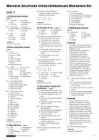
old. 3 1 was getting, arrived Challenge! 2 It's a mixed class of girls and boys. 2 was preparing, cut Students' own answers 3 It's difficult to tell what kind of 3 discovered, were building 1E Past perfect simple and lesson their in. 4 started, was talking 4 It could be that they're in a maths 5 found, was living continuous page 8 lesson.
5) particular / nothing / have / at / tell / you / to / moment / the 4. Give the comparative and the superlative of the following adjectives: ( 5 points ) e.g. tall taller the tallest lucky difficult soft good interesting 5. Put these sentences into the Reported Speech. ( 5 points ) e.g. She said:"I will call you from London." She said that she would call me from London. 1) Eric said:"Jack has gone out." 2) Frank said:"The car is waiting at the front door." 3) Tommy asked:"Is there anybody at home?" 4) I asked my friend:"Why do you come so late?" 5) Jane said:"Think before you answer!" 6. Use the correct Prepositions. ( 20 points ) 1) Jane started learning English two years........ 2) ........Monday Steve asked me to dine with him 3) Mary was born........the second of May........1964. 4) We worked........ ten hours without stopping. 5) They left........seven o`clock........the evening. 6) The castle was built...
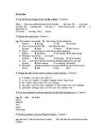
Fill in IN, ON, AT: 1. Dave was born in September. 2. He was born on the 16th of May 3. We agreed to meet at half past four. 4. On Christmas we all went to see our grandmother. 5. Jennifer came to England in 1992. 6. It started to snow on New Year's Day. 7. The First World War ended in 1918. 8. She arrived in spring. 9. We met on Sunday afternoon last week. 10. Do you drive at night? 11. It's Bruce's birthday next Wednesday. 12. Dick and Mary got married in 1993 on the 10th of July. 13. At midnight we heard footsteps. 14. In the morning we went to school as usual. 15
What concert was it? 8. Have you ever been to an openair concert? What was it like? 9. Do you sing at family parties? Where else Estonians like to sing? 10. Have you got a collection of cassettes, CD´s or LP´s at home? 11. Have you watched a ballet on TV? 12. Which do you prefer ballet, drama or musical? 13. How often do you go to the theatre? 14. Do you prefer going to the theatre or watching TV? Why? 15. Do you prefer buying a cheap ticket and getting a seat at the back or spending more money and sitting in the front? Why? 16. Do you prefer going to the theatre with your family or friends? Why? 17. How old were you when you first went to see a puppet show? Do you remember what it was? 18. Who is your favourite actor/actress? 19. What performance or concert would you like to see if it were possible? Why? 20. Have you got a drama club at your school? Are you a member of it? 21. Have you ever worn a costume? When? Why? 22
Conventional Missionary and Improved-Angle Missionary Improved-Pressure Missionary Conventional Cowgirl and Improved-Pressure Cowgirl The Clitoris The 15-Minute Female Orgasm The Hypothalamus-Pituitary-Testosterone Axis (HPTA) The Menstrual Cycle PERFECTING SLEEP FitBit Sleep Analysis WakeMate Sleep Analysis Zeo--Good Sleep Example Zeo--Bad Sleep Example Monophasic Sleep and Polyphasic Sleep REVERSING INJURIES Barefoot Walker's Feet and Modern Man's Feet Static Back Static Extension Position on Elbows Shoulder Bridge with Pillow Active Bridges with Pillow Supine Groin Progressive in Tower Alternative: Supine Groin on Chair Air Bench ART, Before and After Thoraco-dorsal Fascia The Chop and Lift Full and Half-Kneeling Ideal Placement on One Line Tricep Rope Attachment Single-Leg Flexibility Assessment Down-Left Chop Ideal Placement Down-Left Chop Ideal Placement Turkish Get-Up Start and Finish of Two-Arm Single-Leg Deadlift
EXCLAMATORY and IMPERATIVE sentences end with an exclamation mark ( ! ) : What a beautiful day! Do your homework at once! Parts of the Sentence The basic parts of the sentence are: THE SUBJECT (WHO? WHAT?) , THE PREDICATE (does, is doing, has done, etc – action/statement), THE OBJECT (WHO/WHAT is the action/statement directed at?) : Marion (who?) has a boy-friend (who?). She (who?) likes to read books (what?). The earth (what?) is a planet (what?). Besides, there are: THE ATTRIBUTE (WHAT?/WHAT KIND?) and THE ADVERBIAL (WHEN? - adverbial modifier of time/WHERE? – adverbial modifier of place/ HOW? – adverbial modifier of manner) Attributes modify nouns and stand in front of them. Adverbials modify verbs and usually stand behind them: This girl has a beautiful smile. This girl smiles beautifully. Attributes are usually adjectives but sometimes nouns as well: This is an interesting (adjective) story. The kitchen ( noun) door is locked.
 annaabi.ee