 50 punkti
Autor soovib selle materjali allalaadimise eest saada 50 punkti.
50 punkti
Autor soovib selle materjali allalaadimise eest saada 50 punkti.
 ~ 1 leht
Lehekülgede arv dokumendis
~ 1 leht
Lehekülgede arv dokumendis
 2016-02-06
Kuupäev, millal dokument üles laeti
2016-02-06
Kuupäev, millal dokument üles laeti
 2 laadimist
Kokku alla laetud
2 laadimist
Kokku alla laetud
 0 arvamust
Teiste kasutajate poolt lisatud kommentaarid
0 arvamust
Teiste kasutajate poolt lisatud kommentaarid
 anna28
Õppematerjali autor
anna28
Õppematerjali autor
New Media Economy Social media information and data collection and security In this brief essay, i would like to focus on the social media platforms in our moren society. How people use them, what kind of information we give away, what companies will do with this. Information sharing and data protection has become very popular theme in the recent few years. People care more about their privacy and avoid „big brother“ foreshadowing. It is important to know what social media platforms promise and are they really going to keep it. Users should think about what they share and what kind of information they generate. Because it is all recorded and some info can be traced back to real people. Privacy and data protecion topics are becoming more and more important and the amouts of data generated is becoming larger
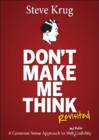
of hernose. Contents PREFACEAbout this edition INTRODUCTIONRead me first Throat clearing and disclaimers GUIDING PRINCIPLES CHAPTER 1Don’t make me think! Krug’s First Law of Usability CHAPTER 2How wereallyuse the Web Scanning, satisficing, and muddling through CHAPTER 3Billboard Design 101 Designing for scanning, not reading CHAPTER 4Animal, Vegetable, or Mineral? Why users like mindless choices CHAPTER 5Omitwords The art of not writing for the Web THINGS YOU NEED TO GET RIGHT CHAPTER 6Street signs and Breadcrumbs Designing navigation CHAPTER 7The Big Bang Theory of Web Design The importance of getting people off on the right foot MAKING SURE YOU GOT THEM RIGHT CHAPTER 8“The Farmer and the Cowman Should Be Friends” Why most arguments about usability are a waste of time, and how toavoid them
The Social Network review To begin with, I would like to prove the fact that if Facebook would be a country, then it would be the 3rd largest in the world. When I wake up in the morning I do things in a definite order. Logging in to Facebook is one of those things I do in those mornings when I have some extra time. So do many of us. If we could, we would spend hours on the world's most popular social network. But at many academic institutions and office networks Facebook has been blocked to guarantee the irrelevancy. We try to deny the importance of the site but without success. It has changed our culture in many ways, making it so modernized that some of us cannot handle it. I am quite positive, that before the movie, people did not really know the basic story of how Facebook was invented. But by now, we have searched the internet, watched the magnificent movie and bought books titled similarly and can tell many interesting facts about our biggest entertainer
Are IT and communication technology bringing about more positive or negative changes? Dear audience, i want to tell you about the positive and negative sides of it and communication technology. Informational technology is most commonly used to talk about computers and computer networks but it also includes other information sorces such as television and telephones. Electronic computers began to appear in the early 1940's. The origins of the internet are from the 1960's. Over a third of the human's
Even if he or she is at the other end of the world. Development of technologies gave new working places. Without computers where would be no such profession like computer science, web designer. Also, being an architect, engineer would be difficult without technology usage. Technologies can be found in education, too. All materials are now available in internet or can be found in university sites. Now there is no need to go to lectures – students can see it online or watch recording. It is more easier to combine studies and work. Technologies are used in banking – for transferring money or getting financial information; in agriculture –genetically engineered crops make farmers out puts bigger, because they can stand harsh conditions as well has survive pests and diseases. Technology like automobiles, airplanes, speed boats, electronic trains have made movement so easy and cheap. Tickets are not so pricy, because there is variety of choices.
First of all, I'd like to ask how many of you visit Facebook on daily basis?... I thought so! Nowadays it would be hard to find a person who hasn't heard of Facebook. One in every 13 people on Earth is on Facebook right now. It is equal to oxygen for millions and millions of people. It currently has 800 million members and the numbers are going up as we speak. It would be fascinating to know, what caused such kind of phenomenon. At present I believe I could say that life has gathered into the Facebook. We can track in real time what people are doing, who they are communicating, what their marital status is and what mood they're in. Even businesses are promoting and seeking for new potential customers- through different public games where you can win from fancy dinners to fully paid trips to Hawaii. And it has been made so simple- you only have to click like and share. I think that Facebook is a good way to boost one's ego. I see people posting well selected pictures of their trips and parties
your teacher, your priest, or some gut on television telling you how to do your shit, then you DESERVE it. - Frank Zappa *It's better to be absolutely ridiculous than absolutely boring. - Marilyn Monroe *I love the feeling when you smile at me, or even just look at me, because I know that I've crossed your mind. Even just for a second - Anonymous You know, one day you look at the person and you see something more than you did the night before. Like a switch has been flicked somewhere. And the person who was just a friend is suddenly the only person you can ever imagine yourself with. Me? I'm scared of everything. I'm scared of what I feel, of what I've said, of who I am, but most of all I'm scared of walking out of this room and never feeling the rest of my life the way I feel when I'm with you. I wish you could hear all the words I'm too afraid to say.
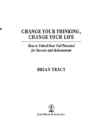
consequential, or other damages. For general information on our other products and services, please contact our Customer Care Department within the United States at (800) 762-2974, outside the United States at (317) 572-3993 or fax (317) 572-4002. Wiley also publishes its books in a variety of electronic formats. Some content that appears in print may not be available in electronic books. For more information about Wiley products, visit our web site at www.wiley.com. Library of Congress Cataloging-in-Publication Data: Tracy, Brian. Change your thinking, change your life : how to unlock your full potential for success and achievement / Brian Tracy. p. cm. ISBN 0-471-44858-3 (alk. paper) 1. Success—Psychological aspects. I. Title. BF637.S8T634 2003 158
 annaabi.ee




Kõik kommentaarid