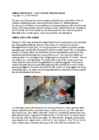
Leidsid 33 sarnast õppematerjali, mis on seotud failiga "Animals in Estonian forest". Need materjalid aitavad sul teemat sügavamalt mõista.
laade, length, years, body, adobe, tail, weight, cultural, landscapes, insects, berries, animals, forest, birds, captivity, looks, coat, gives, impressioon, weighs, badger, 90cm, 30kg, eclipse, places, wolf, deer, materials, gameBALMORAL CASTLE Mikk Kull 9.B Nõo Põhikool 2012 Castle Muutke teksti laade Teine tase Kolmas tase Neljas tase Viies tase Location Balmoral Castle /bælmrl/ is a large estate house in Royal Deeside, Aberdeenshire, Scotland. It is located near the village of Crathie, 10 kilometres (6.2 mi) west of Ballater and 11 kilometres (6.8 mi) east of Braemar. Location Muutke teksti laade Teine tase
given species or group of species can be killed There are seasonal bag limits in Estonia Open and closed hunting season. Big game 1. Brown Bear Ursus arctos 2. Wolf Canis lupus 3. Lynx Lynx lynx 4. Wild boar Sus scrofa 5. Moose Alces alces 6. Roe deer Capreolus capreolus Brown Bear (Ursus arctos) Hunting season 01.08-31.10 Biggest predator in Klõpsake juhtslaidi teksti laadide redigee Estonian forest. Teine tase Average weight 200kg Kolmas tase Neljas tase Record 370kg Viies tase Life-span 30 years Multiplicity - 700 Last hunting season 55 bear were caught. Moose (Alces alces) Hunting season 15.09-15.12 Biggest animal in our forests Klõpsake juhtslaidi teksti laadide redigeer Average weight 300-500 kg Teine tase (max 600kg) Kolmas tase Life-span 20 years. Neljas tase
Re d Pa nda Jarita Maaria Rintamäki 6.klass Appe a r a nc e o Head and body are 50 to 65 cm long, Klõpsake juhtslaidi teksti laadide redigeerimiseks tail 30 to 50 cm. Teine tase Kolmas tase o They have red and black fur. Neljas tase
-40° C, and in the summer it can be as high 20° C. There are two real seasons: a growing season and a dormant season. The growing season is when there is no frost and plants can grow (which lasts from 100 to 175 days). During the dormant (not growing) season nothing can grow because it's too cold. Taiga- Long, cold winters, and short, mild, wet summers are typical of this region. In the winter, chilly winds from the arctic cause bitterly cold weather in the taiga. The length of day also varies with the seasons in the taiga. Winter days are short, while summer days are long. The average temperature is below freezing for six months out of the year. The winter temperature range is -50 to -1° C The high in summer can be 20° C. The summers are mostly warm, rainy and humid. They are also very short with about 50 to 100 frost free days. The total precipitation in a year is 300 - 850 mm 4. Connect the climate diagram and biome.
Tundra Tundra is the world's youngest biome. It was formed 10 000 years ago. Located at latitudes 55° to 70° North. Almost all tundras are located in the Northern Hemisphere, encircling arctic desert and extending south to the coniferous forests of the taiga. The ecotone (ecological boundary region) between the tundra and the forest is known as the tree line or timberline. Tundra comes from the Finnish word tunturi, meaning treeless plain. It is noted for its frost-moulded landscapes, extremely low temperatures, little precipitation, poor nutrients, and short growing seasons. Dead organic material functions as a nutrient pool. The two major nutrients are nitrogen and phosphorus. Nitrogen is created by biological fixation, and phosphorus is created by precipitation. The most distinctive characteristic of tundra soil is its permafrost, a permanently frozen layer of ground. The average winter temperature is -28°C, but the average summer temperature is 3-16°C
democracy. The head of state is the Queen of the United Kingdom. Governor-General Michael Jeffery, performs her functions in Queen's absence. The parliament consists the Senate and the House of the Reprentativer. The head of the government is the prime minister. The Prime Minister is elected by the House of Representatives and the Cabinet. The Prime Minister is John Howard. Currency- Australian dollar. Relief Australia has a variety of landscapes. The Great Australian Bight lies in the south of Australia. The Gulf of Carpentaria is between the Arafura Sea and Cape York. The Bass Strait separates the island of Tasmania from the mainland of Australia. The Great Barrier Reef is in the north-east of Australia, between the Coral Sea and the mainland. The western part of Australia is covered with deserts. Most of the rocks have turned into sand. The biggest of them is the Great Sandy Desert, which lies in the north of Western Australia.
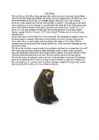
Sun Bear The Sun Bear is 120-150 cm long, making it the smallest member in the bear family. Males tend to be 10-45% larger than females the former normally weigh between 30 and 70 kg , and the latter between 20 and 40 kg. The shoulder height is about 60-72cm .The Sun Bear possesses sickle-shaped claws that are relatively light in weight. It has large paws with naked soles, probably to assist in climbing. Its inward-turned feet make the bear's walk pigeon toed, but it is an excellent climber. It has small, round ears and a stout snout. The tail is 1.2-2.8 inches (3-7 cm) long. Despite its small size, the Sun Bear possesses a very long, slender tongue, ranging from 8 to 10 inches (20-25 cm) in length. The bear uses it to extract honey from beehives. Unlike other bears, the Sun Bear's fur is short and sleek
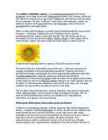
outdoor events. · Kernel means the processor has mechanically removed the hull. The resulting kernel is now in a convenient form to be sold raw or roasted for snacking or as an ingredient. Confection/Non-oil Sunflower Characteristics Confection sunflower seeds are normally black with white stripes and approximately five eighths of an inch long. The heavy hull accounts for approximately half the weight of the seed and is loosely fixed to the kernel inside. Seed size is primarily affected by plant genetics, but also to planting density and weather. Sunflower seeds are graded according to size and separated into groups. The largest size will go into the in-shell market. The medium-sized seeds are usually hulled for the kernel market. The smallest size will go into the bird and pet feeding market. Sunflower Oil - Your Healthy Choice
C. The average rainfall ranges from 2-4 cm annually. In coastal deserts the average summer temperature ranges from 13-24° C; winter temperatures are 5° C or below. The maximum annual temperature is about 35° C and the minimum is about -4° C. In Chile, the temperature ranges from -2 to 5° C in July and 21-25° C in January. The average rainfall measures 8-13 cm in many areas. The maximum annual precipitation over a long period of years has been 37 cm with a minimum of 5 cm. In cold deserts the mean winter temperature is between -2 to 4° C and the mean summer temperature is between 21-26° C. The winters receive quite a bit of snow. The mean annual precipitation ranges from 15-26 cm. Vegetation Canopy in most deserts is very rare. Plants are mainly ground-hugging shrubs and short woody trees. Leaves are "replete" (fully supported with nutrients) with water- conserving characteristics
situated directly beneath the islands and also It is the point where major ocean currents meet. These circumstances combine to make an area that truly is like no other place on earth. Galapagos is comprised of 13 major islands, more than 120 smaller islets and rocks, and the surrounding ocean. The total land mass is almost 8,000 sq. km. Highest peak is Wolf Volcano reaching 1707m. The present islands are all younger than 4 million years and were formed separately from other land masses as a result of volcanic eruptions. The Galapagos were discovered in 1535 by Fray Toms de Berlanga, the Bishop of Panama. He was sailing from Panama to Peru when he accidentally discovered the islands. Islands became a favorite hideout for Pirates and the favorite location for whale hunters. After whales were locally cleared the whalers went there for tortoises, an estimated 200 000 or more adults had been removed. The island of Floreana was
Australia is 1,800 miles from the mainland of Asia and almost half way round the world from Europe. More than 6,000 miles of ocean separate in from the America. Australia is the only continent except for Antarctica that lies all south of the equator. The natural zones of Australia are very various. There are deserts, semi deserts, grasslands, savannas, bushlands and rainforests. The wet forests occupy the narrow region in the east. Most of the animals, birds and insects live in that region, because there is enough food. The savannas which are grasslands with some trees are mostly in the west. Farther west are the bushlands. The real deserts occupy the centre of the Western Plateau. In the very south west there are thin forests of evergreens trees. Australia is the driest inhabited continent, the flattest, and has the oldest and least fertile soils. Only the south-east and south-west corners of the continent have a temperate climate. The
Between the Western Australian Shield and the Great Dividing Range is the Great Artesian Basin region. It is an area of vast plains. It includes three major basins: The Carpentaria, the Eyre and the Murray basins. Lake Eyre is one of the largest salt lakes and also the lowest point of the country (15 m below seal level). The permanent rivers can be found in eastern Australia, in southwestern Australia and in Tasmania .The biggest river is the Murray River. Approximately 3,370 km in length. It is fed by melting snows. Other rivers are seasonal. The coastline of Australia is generally regular – with few bays and capes. The largest inlets are the Gulf of Carpentaria and the Great Australian Bight. In the northeast of the country a few km off the coast there is the Great Barrier Reef. It extends about 2000 km along the coast of Queensland. Made of coral, it is the world’s largest structure created by living organism. . 4
with an average elevation of about 50 metres above sea level. South-eastern and eastern parts of Estonia are higher than the western parts. The relief of the present-day landscape was shaped during the Ice Age. Ice sheet has carried large boulders and limestone blocks here, not to mention that the hilly terrain in Estonia was also shaped by the continental ice and the melting water. The land is rising 25 cm every one hundred years. In folklore, many features of the relief are explained by the activities of giants such as the legendary national hero Kalevipoeg. The Haanja and Otepää Uplands are particularly rich in Hills. It is here that You find Big Egg Hill, the highest point in the Baltic states with 318 metres above sea level. 4. Land regions The northern coast features a steep limestone bank, the Baltic glint, which is one of the world's most important denudations of Ordovician sedimentary rocks. The
PLATINUM The platinum effect is found in some lines of Silver Persian/Chinchilla Longhair. In 1986/7, Cheryl Bennett reported in The Silver and Golden Persian Newsletter (ACFA) that one of her shaded silver females (Kelley Lane Contessa of WeANDE) had changed from pure silver to pale golden. Contessa’s parents were a shaded golden and a shaded silver; these were full siblings. At 10 – 12 months of age, Contessa began to “tarnish” i.e. show cream/reddish patches and by 3 years of age she was entirely pale golden. She produced a number of Silver Persians without tarnish, but she failed to produce any offspring when mated to a golden sire. One of Contessa’s male offspring turned from silver to golden as an adult. An adult Silver Persian from England (Lynchard Silver Shadow) was exported to Australia and also turned golden. Shadow had a few golden hairs on his paw, but did not turn golden until he was a year old when his coat turned to pale beige
Inuit Culture, Traditions, and History Traditional Inuit way of life was influenced by the harsh climate and stark landscapes of the Arctic tundra from beliefs inspired by stories of the aurora to practicalities like homes made of snow. Inuit invented tools, gear, and methods to help them survive in this environment. Read on to learn more about traditional Inuit ways of life, and how Inuit culture has been changed over the past century. Geography Inuit communities are found in the Arctic, in the Northwest Territories, Labrador and Quebec in
4. Valida Avaleht-vahekaardilt (Home) (Paste) või Ctrl+V. Ploki teisaldamine ja kopeerimine menüüsid avamata: Märgistada tekst; teisaldamine samasse dokumenti - vedada hiirega uude kohta; kopeerimine samasse või teise dokumenti - CTRL + vedada uude kohta. TEKSTI (MÄRGI) VORMINDAMINE (AVALEHT (HOME)) Font grupi nuppudest saab muuta teksti fonti, suurust (0,5 pt täpsusega; 1pt=0,35 mm), paksuks, kursiivi, valida erinevaid allajoonimise laade, muuta täheregistrit jne. Lõik (Paragraph) grupi nuppudest saab kujundada tekstilõike (üleval: nummerdada, vähendada/suurendada taandeid, sorteerida; all: joondada, muuta rea ja lõigu vahesid, varjustada ja ääristada).' Laadid (Styles) grupis on võimalik valida valmiskujundatud laade (nt pealkirjalaadid) ja neid muuta, lisada ja hallata. FONT GRUPI RIPPLOEND (CTRL+D) Font kirjatüüp (valitud Times New Roman) Fondi laad (Font style): Harilik (Regular) Kursiiv (Italic)
..) –conceptual (well, I thought that's what they wanted...) –personnel (took so long, half the team left) –User doesn't get to see anything real until the very end, and they always hateit. –System Testing doesn't get involved until later in the process. Test-Action-Cycleas optimisationcycle •Each individual optimisation cycle consists of a test and an action component which are suitably coupled. •An important dimension of the optimisation cycle is its length, i.e. the time required to complete the cycle once. •Depending on the nature of the activity and the testing, the length can be anything from a matter of a few seconds to up to possibly several years. •The longer this period, the more costly the optimisation cycle. •It is the aim of user-oriented software development to incorporate an as efficient optimisation cycle as possible into software development procedures 7. CAPABILITY MATURITY MODEL (CMM)
Australian Aborigines are those people regarded as indigenous to the Australian continent. In the High Court of Australia, Australian Aborigines have been specifically identified as a group of people who share, in common, biological ancestry back to the original occupants of the continent. History The first people of Australia were nomadic people who came to Australia from south-east Asia. Scientists don't know exactly when they arrived but it is somewhere between 40000 and 60000 years ago. When British came to Australia in 1788, they called these native people “aboriginals”, meaning people who had lived there since the earliest times. Captain James Cook set the colonization of Australia into motion by exploring and mapping the fertile eastern coast of Australia, but he was not the first to visit Australia. There is evidence suggesting Aborigines in northern Australia maintained trade with some of the Indonesian islands closest to the coast
between maritime and continental climate. Because Estonia is continuously warmed by the Gulf Stream it has a milder climate despite its northern latitude. Northern latitude means long summer daylight hours (the longest summer day stretches to 19 hours), and dark winters when daylight lasts sometimes only six hours. Being on the Baltic Sea the country is subjected to sea breezes and humidity. Estonia has a temperate climate, with four seasons of near-equal length. Summer is warm, while spring and autumn can be mild. Winter, which lasts from November to middel March, 4 can be very cold. The cold winter does not necessarily mean constant snow; in fact snowfalls are few and far between. When it falls it stays though, and there tends to be a layer of snow on the ground constantly. The deepest snow cover is usually in the south-eastern part of Estonia.
Estonian University of Life Sciences Report on Soil Microflora By Katrin Vares Tartu 2013 Introduction The purpose of this report is to define soil microflora and establish the importance of it. Since the microorganisms clearly play an important role in preserving the balance of life, the next objective is to look into factors that influence this balance. Natural conditions and cultural impact could be considered as the variables that correlate the most with the activity and composition of microflora, hence some of the natural and cultural factors will be looked into a little more in detail. Definition, composition and importance of microflora Saunders Comprehensive Veterinary Dictionary (2007) cited by the online medical dictionary (2013) defines living microorganisms as that small that they can be seen only with a
" --Phil Town, New York Times bestselling author of Rule #1 "The 4-Hour Workweek is a new way of solving a very old problem: just how can we work to live and prevent our lives from being all about work? A world of in nite options awaits those who would read this book and be inspired by it!" --Michael E. Gerber, founder and chairman of E-Myth Worldwide and the world's #1 small business guru "Timothy has packed more lives into his 29 years than Steve Jobs has in his 51." --Tom Foremski, journalist and publisher of SiliconValleyWatcher.com "If you want to live life on your own terms, this is your blueprint." --Mike Maples, cofounder of Motive Communications (IPO to $260M market cap) and founding executive of Tivoli (sold to IBM for $750M) "Thanks to Tim Ferriss, I have more time in my life to travel, spend time with family, and write book blurbs. This is a dazzling and highly useful work." --A. J
Exogenous formaldehyde appears to be readily absorbed from the respiratory and gastrointestinal tracts, but poorly absorbed following dermal application. Formaldehyde is metabolized to formate by the enzyme formaldehyde dehydrogenase; this appears to take place at the initial site of contact. Being normal components of intermediary metabolism, neither formaldehyde nor formate are stored to any significant extent in any tissue of the body. Formate is excreted in the urine (primarily as formic acid), incorporated into other cellular molecules, or oxidized to carbon dioxide and exhaled. Formaldehyde vapors are readily absorbed from the respiratory tract. Due to rapid metabolism to formate, little, if any, intact formaldehyde can be found in the blood of humans or animals exposed to formaldehyde. Formaldehyde is also readily absorbed from the gastrointestinal tract and meets
some is heat that is used in evaporation / respiration; max 2 (iii) bacteria / named bacterium decomposer; (Nitrobacter, Nitrosomonas) 1 (iv) take the first 2 answers: death / dead remains; excretion; R waste products egestion; other suitable method; e.g. insects moulting hatched eggs moulting (fur / feathers) R leaves 2 (b) Primary consumers are eating and… producers have, cell walls / cellulose; ora difficult to digest / much material, wasted / egested; energy used by gut microorganisms; ora
at the other) Photography is The art or practice of taking and processing photographs. 3 Context of the creation of the camera (CARLA) The camera has been used since before Christ. The impact in society the emergence of the camera was important and shocking because it helped us capture important moments in time that can no longer be repeated and helped a lot in the field of communication. The first models of cameras were used in the years before Christ where they were used to see closely objects. After its emergence was marked a before and after in history because thanks to this artefact can capture exact moments in which a event happened. Advancing in history have improved the types of cameras, passing cameras that took several minutes to take a photograph so far in which the process of taking a photograph or several is instantaneous. In addition, the cameras allow us to keep
The Executive power in Australia is in the hands of the Commonwealth Government lead by the Prime Minister. Today the Prime Minister is John Howard, the leader of the Liberal Party. History Australia was once a part of the giant continent Gondwana. It included Africa, South America and Antarctica. First Australia and Antarctica split from Gondwana, then Australia broke away from Antarctica and began to move north. Aborigines arrived there about 50 000 years ago. They had occupied the whole continent by 30 000 years ago. At that time Tasmania was still part of the mainland. About 20 000 years ago the ice began to melt and the rising water level cut Tasmania off from the mainland. Traders from what is now Indonesia are thought to have been visiting Australia well before the 17th century. Chinese, Malaysian and Arab sea Captains may also have landed in Northern Australia after the 15 th century.
recording, or by any information storage and retrieval system, without the written permission of the publisher. ISBN 1-59905-201-6 Printed in the United States of America 13 12 11 10 09 08 07 9 8 7 6 5 4 3 2 1 Introduction Grammar is a very old field of study. Did you know that the sentence was first divided into subject and verb by Plato, the famed philosopher from ancient Greece? That was about 2,400 years ago! Ever since then, students all over the world have found it worthwhile to study the structure of words and sentences. Why? Because skill in speaking and writing is the hallmark of all educated people. Lesson by lesson, this book provides basic instruction in the eight parts of speech--nouns, pronouns, verbs, adjectives, adverbs, prepositions, conjunctions, and interjections--as well as the standard patterns of English sentences. All students of English, be they native speakers or those
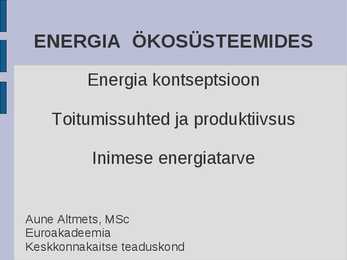
ENERGIA ÖKOSÜSTEEMIDES Energia kontseptsioon Toitumissuhted ja produktiivsus Inimese energiatarve Aune Altmets, MSc Euroakadeemia Keskkonnakaitse teaduskond Eesmärgid: Määratleda energiaallikad Maal Selgitada tuleva ja peegelduva päikesekiirguse lainepikkuse tähtsust Kirjeldada fotosünteesi Kirjeldada energia ülekannet toiduahelas Defineerida toiduahel ja toitumisvõrk Termodünaamika I seadus Termodünaamika II seadus Maa kui avasüsteem Elu eksisteerimiseks on vaja pidevat energia sisendit Päikeselt ning soojusenergia väljundit Maailmaruumi. Elu Maal on võimalik ainult tänu lakkamatule energiavoole Päikeselt. Samal ajal eraldub Maalt tohutu hulk soojusenergiat maailmaruumi. Maa ökosüsteemi stabiilsus on tagatud pideva saabuva ja pideva lahkuva energiavooga. Suhteliselt ühtlane temperatuur Maa pinnal ja selle läheduses on katkematu energiavahetuse tulemus. Päike Päikese läbimõõt on Maa läbimõõdu
lasting and strongest building materials used throughout history. In the general sense, a "brick" is a standard-sized weight-bearing building unit. Bricks are laid in horizontal courses, sometimes dry and sometimes with mortar. When the term is used in this sense, the brick might be made from clay, lime-and-sand, concrete, or shaped stone. In a less clinical and more informal sense, bricks are made from dried earth, usually from clay- bearing subsoil. In some cases, such as adobe, the brick is merely dried. More commonly it is fired in a kiln of some sort to form a true ceramic. (slide 8) On this slide you can see 3 different types of bricks compared with each other in thechnical numbers. As you can see Clay brick has somewhat better characteristics, but is also a little bit more expencive. The making of bricks (slide 9) Modern clay bricks are formed in one of three processes soft mud, dry press, or extruded. Mud bricks
3. Mountains, lowlands 4. Rivers, lakes 5. The territories and provinces 6. Towns, economy, agriculture 7. Climate 8. Animals, plantlife 9. Population 10. Sports 11. Culture 12. History 13. Political system, symbols 14. Conclusion 15. Materials 1. Introduction If you had to use two words to describe Canada, they might be large and diverse. Canada is the second largest country in the world, bordered by three oceans, and across the country, Canadians experience many different landscapes from rolling plains and mountains to the cold tundra of the north. Despite Canada's great size, it is one of the world's most sparsely populated countries. This fact, coupled with the grandeur of the landscape, has been central to the sense of Canadian national identity. 2. Geographical position Canada is the second largest country in the world after Russia. In the Arctic, Canada reaches almost as far north as Greenland. To the south it extends to the same latitude as southern France
They are also good swimmers and will jump in the water to make an escape. Polar bear Polar bear is the largest carnivore on land. The polar bear's fur is clear, not white. Light reflects off the fur and makes it look white. Their teeth and claws are very sharp so they can catch their prey easily. They hunt and eat seals, whale and walrus carcasses. In the summer they also eat lemmings, arctic foxes, ducks and some plants. They live for 15 to 20 years and spend most of their time on drifting packs of ice, eating and resting. The bears reach sexual maturity 3 to 5 years after birth. Each year pregnant polar bears dig a den in the snow of southern facing slopes, where they give birth. The females give birth to one or two cubs. Cubs are naked, blind and deaf when they are born. They learn how to hunt with their mothers for about two and a half years. Polar bears live alone, except for mothers who live with their cubs.
Names very powerful Priests mostly heriditory. Child born under unusual circumstanses-> seen on potential prophet/visionary. Child was the only one allowed to seek out. ,,Little people"-looked like cherokees, exept they were little and had long hair, they were invisible, lived away from villages, liked drumming & dancing , lived in caves. Helped children who were ,,lost". Mischevous (played tricks) : not to be disturbed. If you see a ,,little people" you weren't allowed to talk about it for 7 years! After you die, continous as a ghost. FIRE CEREMONY & STOMP DANCE Fire is a gift from the Great Spirit. It separates man from animals, makes civilization possible. A sacred fire- lit tended by priest usually of oak wood, at bottom of pit. Ceremony: Sunrise-fire is lift by the priest, sit talking. ¤aboutimportant issues + women prepare food for the day Afternoon ceremonies -> to love all mankind , stichball game Sundown-ceremony cief lights ceremonial pipe: ,,sacrifice meat to Sacred
Norway in the east and France in the south. Britain also has many dependant territories which are scattered throughout the world and are the remains of the huge former British Empire. Today Britain assists them, but they may become independent whenever they wish. There have been some difficulties with some of the territories. Argentina has made claims to the Falkland Islands and Spain to Gibraltar. History When the glaciers retreated from Britain about 10,000 years ago, Stone-Age men started to inhabit the isles. The early Britons came across the land bridge which joined Britain to the continent. They were cave-dwellers at first. This way of life was replaced by the invaders from the Mediterranean lands. These men were the first farmers. In about 500 BC came the people whose homeland was near the Rhine River. These were the Celts. The Roman invasion began in 43AD. The Romans were highly organized conquerors. They built good roads, baths and bridges
although they once ranged over most of eastern North America before becoming nearly extinct because of hunting. Now they exist only in protected areas. In the western areas live elk, deer, bighorn sheep, mountain goats and a small number of brown bears. The Kodiak bear, the largest carnivore in North America, is found in Alaska. 7 History The first people to live in North America came from Asia between 10,000 and 30,000 years ago. At that time, North America and Asia were connected by a land bridge. Eventually North America became populated by many different tribes of people. They fished, and where soil permitted, planted crops and farmed the land. After the native people came the Vikings. First they discovered Greenland and after a few years they found America. The next one to arrive in America was Christopher Columbus in 1492. He wasn't actually looking for America
 annaabi.ee