Leidsid 33 sarnast õppematerjali, mis on seotud failiga "\\\"Water for Elephants\\\"". Need materjalid aitavad sul teemat sügavamalt mõista.
jacob, circus, between, even, elephant, character, enjoy, other, thing, able, back, sentences, full, wife, beginning, them, relations, times, older, emotions, there, quite, suffer, kohalolek, varas, ratastool, year, sara, genre, novel, begins, goes, tells, tales, youth, takes, parents, accident, turns, former, jumps, first, passing, train, brothersAmeerika Kirjandus 30.01.13 Naturalism · France, Emile Zola · Put down his theory in 1879: Le Roman Experimental, attempt to explain the development of human society throuch biological laws · Outlook is deterministic, pessimistic, fatalistic (fate or biology) · Man as an animal-clever than other beasts, still explainable within the framework · Man is not a free agent, is govern by something · Unable to determine his own faith · Hereditary · Naturalists tried to apply in fiction the processes of natural sciences · Writers task is to record facts, systems of behaviour, living conditions, never revealing any natural unbiased (completely natural) · Point of view: amoral-outside the category of morality, neither good or bad
The making of a new nation. The Enlightenment in America. The emergence of the notion of the American Dream. The great Enlighteners: Crèvecoeur, Jefferson, Paine, Franklin. The American Enlightenment is the intellectual thriving period in the United States in the midtolate 18th century (17151789), especially as it relates to American Revolution on the one hand and the European Enlightenment on the other. Influenced by the scientific revolution of the 17th century and the humanist period during the Renaissance, the Enlightenment took scientific reasoning and applied it to human nature, society, and religion. American Enlightenment a gradual but powerful awakening that established the ideals of democracy, liberty, and religious tolerance in the people of America.
Author (name and some general information): Chuck Palahniuk is an American novelist born February 21, 1962 in Washington, USA. He is best known as the author for the novel Fight Club (1996), which was made into a movie in 1999. Palahniuk began writing fiction in his mid-thirties. When he attempted to publish his novel, Invisible Monsters, publishers rejected it for its disturbing content. This led him to work on Fight Club which he wrote as an attempt to disturb the publisher even more for rejecting him. After initially publishing it as a short story in the 1995 compilation, Pursuit of Happiness, Palahniuk expanded it into a full novel, which --contrary to his expectations--the publisher was willing to publish. Some other well-known novels: Rant, Choke, Diary. Analysis of the book 1. Setting The story takes place in somewhere between 1980s and 1990s in the United States. 2. Characters
,,Pride and Prejudice" by Jane Austen Book Report Introduction: The book was written between 1796 and 1797 and it was first published on 28 January 1813. The setting takes place in England, mostly in places called Hertfordshire, Derbyshire and Kent. The genre of the book is the novel of manners: it shows the conflicts between two individuals and also the love growing between them. The main themes are love, and it shows very precisely the development of young people's character and morality. The main characters are Elizabeth Bennet- main female protagonist. Mr. Fitzwilliam Darcy- main male protagonist. Mr. Bennet - Elizabeth's father. Mrs. Bennet - wife of Mr.Bennet and mother of Elizabeth and her sisters. Mr. Bingley- Darcy's friend, who becomes fond of Jane
(BrE `polo neck') (Oxford Advanced Learner's Dictionary. 6th edition.) Situation: When Andy, the engineer that June meets in the bar, peels a pink egg for her, saying that it matches her turtleneck, she corrects him, explaining that the item of clothing is called a shell, to which the man jokingly replies that he could peel that for her, too. dormancy (7) - the state of being dormant. Situation: Albertine explained that between her and her mother was an abuse, which required periods of dormancy. fallow (11) - a piece of fallow land. Situation: tattered grey windbreaks bounded flat, plowed fields that the government had paid to lie fallow. to founder (13) (of a plan or undertaking) fail or break down as a result of a particular problem. Situation: Aurelia foundered when talking about June but then her voice got stronger and she asked explained that June had nothing to come home to.
and "Speaker" series. He has also announced his plan to write two more novels: Shadows in Flight, a book that connects the "Shadow" series and "Speaker" series together, and Ender in Exile, a book that takes place after Ender's game and before Speaker for the Dead. Furthermore, Card recently announced that Ender's Game will soon be made into a movie. Though Card is best-known for "Ender's Game", he has also written in a variety of other genres, including plays, short stories, books on writing, the Homecoming series, other science fiction books, and nonfiction, such as articles on computer technology. Orson Scott Card in 2008 and when he was younger. The Setting The novel starts off on Earth, with scenes at the school and the Wiggin home. Little attention is given to the details of this setting, not even the name of the city, and so it comes across as a standard American neighborhood.
BOOK REPORT Title & author of the book: 'Anita and Me' by Meera Syal The setting of the book? The story resolves around Meena Syal, the daughter of the only Punjabi family in the Midlands' mining village of Tollington. The novel provides a vision of British childhood in the 1960s, a childhood caught between two cultures, each on the brink of enormous change. Meena is desperate to fit in with the other children in her neighbourhood while forever feeling like an outsider because she is "different". Eventhough the Punjabi family is well respected by the locals, there are still sutations when they have to deal with racism. Plot summary (NB! Use the present tenses) Anita and Me by Meera Syal is the story of a young Punjabi girl growing up in the fictional English village of Tollington in the Midlands in the 1960s. The book follows Meena during her pre-teen years
reclusive, publishing new work less frequently. Analysis of the book 1. Setting The story starts in the year 1950 when the novel's protagonist and narrator Holden starts telling a story from a hospital about the events of last year's winter. Most of the story takes place in winter of 1949 just over a couple of days in Pennsylvania and New York. 2. Characters · Holden Caulfield The main character of the book. He has been expelled from many schools due to his failure in fixing his grades and is expelled from his current school, Pencey Prep, right in the beginning of the story. Although he is intelligent, he fails almost every class, all except for English. He feels alone and sad, trying to find his place in the world, only finding support from his little sister Phoebe who he thinks is smarter than most of the adults.
To her, the ideal marriage is based on rational love, mutual understanding and respect. The Bronte sisters, Ann, Emily and Charlotte, wrote a few decades later. Although often viewed collectively, their literary output differs greatly from each other. Wrote under male pen names – difficult to get published as a woman. At the time they wrote, their works were considered blasphemous (dealt with sexuality and death). Emily Bronte – Wuthering Heights, critics presumed was written by a woman. Not understood by her contemporaries
Influenced by Varenka, Kitty becomes extremely pious, but is disillusioned by her father`s criticism. She then returns to Moscow. Part 3 Levin continues his work on his large country estate, a setting closely tied to his spiritual thoughts and struggles. Levin wrestles with the idea of falseness, wondering how he should go about ridding himself of it, and criticising what he feels is falseness in others. He develops ideas relating to agriculture and the unique relationship between the agricultural labourer and his native land and culture. He believes that the agricultural reforms of Europe will not work in Russia because of the unique culture and personality of the Russian peasant. Stiva stays with Levin on his country estate when he makes a sale of a plot of land, to provide funds for his expensive city lifestyle. Levin is upset at the poor deal he makes with the buyer and his lack of understanding of the rural lifestyle
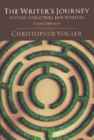
THE W R I T E R ' S JOURNEY M Y T H I C STRUCTURE FOR W R I T E R S THIRD EDITION CHRISTOPHER VOGLER S C R E E N W R I T I N G / W R I T I N G Christopher Vogler explores the powerful relationship between mythology and storytelling in his clear, concise style that's made i this book required reading for movie executives, screenwriters, playwrights, fiction and non-fiction writers, scholars, and fans of pop culture all over the world. Discover a set of useful myth-inspired storytelling paradigms like
The problems ae serious. Comedies often contain deep philosophical thoughts and problems. Light and playful manner, smooth language. Tragedies Romeo and Juliet, Hamlet, Prince of Denmark, Othello, the Moor of Venice, King Lear, Macbeth, Anthony and Cleopatra, Coriolanus all written duing his pessimistic period, except for R/J. Within his tragedies Shakesy acts as a severe critic of the Renaissance, the difference betwen its ideals and the reality. Also, slave trade. The main character was in most cases a noble figure in a difficult situations. Shakespeare shows the weakness of his characters nature. Evil forces are only victorious to a certain extent, however in the end vitue wins. Real political and social world, the influence of the environment and history on characters. Nature is an anemey in his tragedies. Othello, The Moor of Venice love's fight against racial discrimination. Othello is a
manages to escape. Next entry is by Mina, who is very worried about Jonathan and her letters to her beloved friend Lucy. Somehow she recieves a letter from Jonathan’s friend who says Jonathan is in Bulgaria. She quickly decides to go to a hospital in Bulgaria, where Jonathan is and they finally get married there. At the same time, Dracula has travelled to England and he seeks for Lucy, who has been proposed by three man, but she accepts Holmwood’s while remaining friends with the other two. Later on, Lucy starts to act very strange and dr. Seward decides to call his teacher, Abraham Van Helsing. He quickly finds out the problem, but the results are no good. The story continues when Van Helsing tries to enlighten others, what had happened and they all are trying to resolve the problem. One key to find the solution is dr Seward’s patient Renfield, who is under a spell of Dracula. Jonathan and Mina join them in their hunt for
1. Beowulf. The dating of Beowulf is still controversial. The poem is one of the earliest and greatest monuments of the Germanic literatures. The main stories of the poem (the fights of B.) are versions of common folk-tales, but the poet also introduces many incidental stories, some of which belong to the world of ancient Germanic legend. He writes his folk-tales and legends in a web of other events, mainly set in the Baltic Kingdoms. He shows a very rich and leisurely portrayal of this Baltic world, providing many customs like the close relationship between lord and man in the war-band and others. All this encouraged the supposition that the unknown author of the poem was himself a bard of the ancient type portrayed within the poem (a lord's scoop). However, many people propose that the author could be
Hastings is invited down to Styles, where Cavendish lives, to recuperate. At Styles, the center of attention is Emily Inglethorp, John Cavendish's stepmother. Emily inherited Styles from John's father when he died and runs the household with a firm hand. Hastings describes her as "an energetic, autocratic personality" with a fondness for "playing the Lady Bountiful." She is devoted to charitable causes and is always getting involved(haaratud) in bazaars and other functions. Emily hasn't changed since Hastings last saw her, and there is no question of who is running the show at Styles. Emily Inglethorp's presence and conversation dominate everyone's life at Styles. This domination must upset someone very deeply because soon Emily is found dead from strychnine poisoning. Emily was a forceful person but even so, who would want to kill her? One obvious answer is Emily's current husband, Alfred Inglethorp. He started out being the old
The Moving Finger Agatha Christie Plot summary: Brother and sister Jerry and Joanna Burton bought a country house in an idyllic English town called Lymstock so that Jerry could recover from injuries received in a wartime plane crash. They had been living in London their whole life and thus were excited but intimidated to go. Lymstock was much like any other English village, no more than 300 people. Those that live there enjoy the peace of rural life and form a union to where it can be difficult for strangers to blend in. Fortunately, it wasn't much of a problem for Jerry and Joanna. They were just getting to know the town's strange members and their characters when an anonymous letter arrived, accusing the two of not being brother and sister, but lovers. The letter started a series of poison pen letters all over the village, which destroyed the safety the villagers took for granted
extramarital relations recently. But, it's really hard to find something that good, and really easy to lose it. Just consider pro and con, and then keep what you really love. However, distance makes everything clearer; you can only see the whole when you are far enough. Take Alex for an example, as she had travelled ever further outwards, she found the answer. The Nature of Truth: Annie was a successful author and she met an old friend, Jane, on the train. Things change a lot, even if you had settled down. Jane had the boyfriend in collage and they soon got married after graduated. At first, they had a happy life, but one year later, Jane's husband had extramarital relations and divorced with Jane. In a summary, what will life be in the future? Future is not to see. Just the facts: Reporter was Lisa's first job and now she was going to write an article about Gary who killed a judgment in town and Gary was sentenced to death. However, Gary said he didn't kill that man
and where they originated, and what should be considered the first book in the world. Ancient document, written on parchment, papyri and vellum can hardly be qualified as books the way we understand the word today. Centuries went before paper replaced parchment and papyri. In the 15 th century Johann Gutenberg invented a mechanical process of duplicating texts, which we today call book printing. The first book was printed between 1444 and 1446, so these years can be considered as the beginning years of book printing. His most important preserved printings are the 40 copies of the Bible. By the end of the 15 th century there were about 1000 print-shops in Europe already. The oldest Estonian book dates back to 1535. Libraries form a vital part of education. They make available-through books, films, recordings and other media- knowledge that has been accumulated through the ages
His modest background and upbringing are crucial to his development as a writer. Chekhov always felt that he missed out on childhood. It was a very hard lifeand it may have contributed to his poor health: he succumbed later on to the"family disease", tuberculosis, which led to his early death at the age of 44.His mother was a quiet, gentle soul who was full of stories of her early life. In later years, Chekhov would say that "we inherited our talent from our father,but mother gave us soul". The other great passion of his formative years was nature, the Russiancountryside. As a port, Taganrog was surrounded on all sides by the landscapes of the Steppe and Chekhov's earliest stories reveal how intensely aware he was of his bond with the Don Steppe. Chekhov had always claimed that medicine was his wife and literature his mistress. Chekhov had lived for much of his career as a writer under the shadow of the great literary colossus of the age, Lev Tolstoy.
- Greeks are pirates, they steal- high technology - Bad tempered people Men's progress towards freedom. (Hegel) Persia is under emperor Xerxes- slaves, fighting for Xerxes and their country, but it does not mean anything to them Greece cities- Patriotism, they are fighting for their freedom and for their country, you can quit, because you volunteered, individuality. o Zeus (son of Chronos Time and Gaia Earth) · Moira- Fate, An underlying order which not even the Gods can alter · Transmigration of Souls- souls leave the bodies · Psyche- the mind · Morality and psychology might be important Miletus Underlying principle of the universe- H20 Milesian or Ionian School · Thales circa 624-546 BC - "All things come from water into water all things are resolved" - Nietzsche claimed that he deserved to be considered the first philosopher because he argued:
POINT OF VIEW Book is written using the first person perspective Alex's narration includes many uncommon words and a slang called Nadsat, which are apparently common to the speech of the youth subculture in the novel. MAIN CHARACTERS Alex is a protagonist. Alex is very easily irritable and very violent, for example he is very fond of opera and classical music but his friend Dim mocks it. Alex gets furious and punches Dim. He is also very arrogant even his gang members think so. The only thing that Alex values is violence and power. He thinks that Devil is inside him and explains that way his violent acts. He is from a good family and enjoys the power he has over his close ones. He has no empathy for his victims that mean he is very cruel. There are two things that Alex enjoys: blood and classical music. IS THE PORTRAYAL OF THE CHARACTERS BELIEVABLE? WHY/NOT? While reading the book, it seems very real, because characters
Like psychoanalysis, surrealistic painting and writing explores the inner depths of the unconscious mind. Freudian ideas have provided subject matter for authors and artists. Critics often analyze art and literature in Freudian terms. 2. Literary Modernism and its sub-movements. The influence of Structuralism and psychoanalysis. Main characteristic features of Modernism. Denial of conventions, traditional structure, plot and presentation of character. The stream of consciousness. Allusiveness. Virginia Woolf's Modern Fiction as a theoretical platform for Modernism. Criticism of Realist literary method. Literary modernism: end of the 19th century-1920 (reached its height) and ended 1940s. A self- conscious break with traditional aesthetic forms. Rejecting the sentiment and discursiveness typical of Romanticism and Victorian literature for poetry that instead favored precision (täppis) of imagery and clear, sharp language
"The English Patient" is the most well-known book by Canadian writer, poet and academician. The main activity happens in 1930.-1940. Egipt and during the last days of World War II in one Italy nunnery which was changed after the war to sickbay. · Almásy is not English. He is Hungarian by birth. Almásy's manner is knowledgeable and reflective. Almásy is not a highly dynamic character, he is intriguing and mysterious figure. He is portrayed in a sympathetic light. He was part of a British archaeological group and also as afterwards reveals a spy. · Hana was a twenty-year-old Canadian Army nurse. She put all of her energy into caring for the English Patient. When the hospital was abandoned, Hana refused to leave and instead stayed with her patient. She sees Almásy as saint like and with the "hipbones of Christ"
however, a critical threshold was reached, and suddenly there would have been an explosion of color and scent all over the planet – if a perceiving consciousness had been there to witness it. Much later, those delicate and fragrant beings we call flowers would come to play an essential part in the evolution of consciousness of another species. Humans would increasingly be drawn to and fascinated by them. As the consciousness of human beings developed, flowers were most likely the first thing they came to value that had no utilitarian purpose for them, that is to say, was not linked in some way to survival. They provided inspiration to countless artists, poets, and mystics. Jesus tells us to contemplate the flowers and learn from then how to live. The Buddha is said to have given a “silent sermon” once during which he held up a flower and gazed at it. After a while, one of those present, a monk called Mahakasyapa, began to smile. He
say about anything; not part of the politics, usually from arts department...); cast nature as a reflection of divine truth; instead classicism, looking for sth essentially British; believed in artistic socialism art and morality closely linked; against mass production , emphasis on quality; preferred Gothic, medieval revival in architecture; he taught people to appreciate art and he said that things that are important to British should be from Britain (not from other countries around the world) · The more prominent artistic and cultural movements of Victoria Britain: The Arts and Crafts Movements, Anglican Oxford Movement, Public Health Act; (founding of the National Trust and National Arts Collections Fund and Society for the Protection of Ancient Buildings); conservation movement · What were their aims/concerns? Main aims were to restore old things; make new things more like Gothic (old); displaying old things etc.
stories. His first significant work was A Study in Scarlet, which appeared in Beeton's Christmas Annual for 1887 and featured the first appearance of Sherlock Holmes, who was partially modelled after his former university professor, Joseph Bell. Future short stories featuring Sherlock Holmes were published in the English Strand Magazine. Interestingly, Rudyard Kipling congratulated Conan Doyle on his success, asking "Could this be my old friend, Dr. Joe?" Sherlock Holmes, however, was even more closely modelled after the famous Edgar Allan Poe character, C. Auguste Dupin. While living in Southsea he played football for an amateur side (that disbanded in 1894), Portsmouth Association Football Club. (This club had no connection with the Portsmouth F.C. of today.) In 1885, he married Louisa (or Louise) Hawkins, known as "Touie", who suffered from tuberculosis and died on 4 July 1906. He married Jean Leckie in 1907, whom he had first
as a mastermind of vengeance seem like day and night. Although Dantes seems very naïve at the beginning of the story, he becomes very sharp during his stay in jail. By the amount of detail and preciseness in his plans, Dantes as the Count can be looked as a mastermind. Much of Dantes' knowledge comes from the old, thought to be crazy, priest named Faria that taught him in prison. Faria was also responsible for much of Dantes character change due to his great power of reasoning. Because Faria had given him a treasure and a hunger for vengeance, Dantes was willing and had enough money and power to carry out revenge on his enemies. Faria is the first person that opens up Dantes' eyes so that he can see who his enemies really are. When Dantes first meets Faria, he is overjoyed because he hasn't seen another person, other than the guard, for years
any fought believed 11 between 1 I take after my mum 2 1 disorientated 5 withdrawn 7 granted 12 Although 2 the spitting image 2 distraught 6 preoccupied 3 a strong family resemblance 4 1 F 2 T 3 F 4 F 5 T 3 bewildered 7 circumspect
Page |2 Reading: Read through the text, look up unknown words by J. K. Rowling In 1990, a British woman in her mid-twenties called Joanne Rowling was on a train in England when she suddenly had an idea for a story she could write. She had enjoyed writing ever since she was a young girl, but there was something about the main character in this story that seemed especially exciting. He was a thin, black-haired boy who wore glasses. He was also a wizard, but didn't yet know about his magical powers. His name was Harry Potter. Harry has since made Rowling (whose pen name is J.K. Rowling) the richest author in the world. Her six books about his adventures have sold more than 300 million copies worldwide and exist in more than 50 different languages. Most of the readers are children or young teenagers, but the books are
1. A generalist is ignorant from the point of view of a specialist and a specialist is stupid from the point of view of a generalist. 2. All great stupidity is created by geniuses. 3. All stereotypes are true; the fact that you recognize a slur proves that it isn't. 4. Anything you're afraid is true is true. 5. Before most people get to the point of being able to tell their ass from a hole in the ground they're already assholes and it's too late. 6. Concentrating on something important can make you lose track of your soap opera. 7. Debunking the bunk is everyone's responsibility. 8. Don't ask me to pay for anyone else's mistakes. I make enough of my own. 9. Even those who possess real magic must beware of being misled by "magical thinking." 10. Everyone knows what shit tastes like. 11. Exclusive occupancy of a private room is a basic human right.
novel when the Anglo-French relationships were at their worst during the Iraq War spring 2003. Therefore his novels (he has written three in this series) have become enormously popular all around the world, especially because they are partly true. Stephen Clarke himself still lives in Paris with his French girlfriend. This novel is considered to be seriously funny and a comedy with a message. "Merde Actually" has one main character whose name is Paul West, but there are also many other significant characters, that come from the previous book "A Year in the Merde". I can say that it would be better to read the first book of this series first, other wise some jokes and thoughts might stay incomprehensible. This novel starts with a description of how and where Paul West is going with his girlfriend Florence. As known, in France, the summer holidays are quite long for working class; therefore a lot can be done. Anyway, Paul and Florence start their holiday by going to
Character sketch Shel "Orlando" Virginia Woolf Marmaduke Bonthrop Shelmerdine, Esquire was Orlando's second love interest, whom she married. They met in the nineteenth century. Orlando thought that she was dying when she heard Shel approach on his horse. Shel went to help her and basically "swept her off her feet". Moments later they got engaged. After knowing each other for two minutes, Shel and Orlando knew everything important about one another. Shel had a castle in the Hebrides, but it was ruined. He was not that rich and spent his time mostly at the sea. Before meeting Orlando he had been on his way to join his brig, but the wind blew from the wrong direction and he could not continue his journey. He was passionate about his job because he did a little model on the ground of the Cape Horn when Orlando asked about it and
vivacious woman about whom a future Viceroy of India would say, "Dullness and Mrs. Kipling cannot exist in the same room."[3] Father - John Lockwood Kipling. Lockwood Kipling, a sculptor, an illustrator, museum curator and pottery designer, was the principal and professor of architectural sculpture at the newly- founded Sir Jamsetjee Jeejeebhoy School of Art and Industry in Bombay. Later in life Kipling illustrated many of Rudyard Kipling's books, and other works. Kipling also remained editor of the Journal of Indian Art and Industry, which carried drawing works from the students of the Mayo School. COUPLE named their son after the place they had first met Rudyard Lake. Alice Kipling Fleming - Sister of British author Rudyard Kipling who became a well-known psychic, producing automatic writing under the name "Mrs. Holland." Born June 11, 1868, Alice Kipling was privately educated
 annaabi.ee