 50 punkti
Autor soovib selle materjali allalaadimise eest saada 50 punkti.
50 punkti
Autor soovib selle materjali allalaadimise eest saada 50 punkti.
 ~ 1 leht
Lehekülgede arv dokumendis
~ 1 leht
Lehekülgede arv dokumendis
 2009-04-13
Kuupäev, millal dokument üles laeti
2009-04-13
Kuupäev, millal dokument üles laeti
 19 laadimist
Kokku alla laetud
19 laadimist
Kokku alla laetud
 0 arvamust
Teiste kasutajate poolt lisatud kommentaarid
0 arvamust
Teiste kasutajate poolt lisatud kommentaarid
 Eliise Vilepill
Õppematerjali autor
Eliise Vilepill
Õppematerjali autor
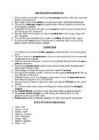
{SCHOOL} NOKIA Report {NAME} Instructor: {NAME} 2 Tartu 2008 TABLE OF CONTENTS TABLE OF CONTENTS....................................................... 2 INTRODUCTION................................................................ 3 HISTORY.......................................................................... 3 PRESENT-DAY STATE ....................................................... 3 VISION AND STRATEGY.................................................... 4 PRODUCTS ..................................................................... 4 QUALITY........................................................................ 5 ANALYSIS....................................................................... 5 CONCLUSION.................................................................. 6 REFERENCES..................................
3. The main components of a standard computer are the keyboeard, the mouse, the monitor and the central unit. 4. Modern computers will recognise hardware components as soon as you connect them without you having to do anything else. 5. Every time you download something off the Internet, your modem starts converting and storing incoming data. LANGUAGE FOCUS III 1. Your mouse will work on any surface but, ideally, you should use a mouse mat. 2. The invention of the silicon chips meant that computers advanced at an unprecedented rate. 3. Put the disk in your floppy drive and save the file onto it; this way you can use it on any other computer. 4. All mobile phones have a call recognition feature which lets you see who's calling you before you answer. 5. An itemised bill lets you see exactly how much each phone call cost you. 6. My mobile has gone dead, and I've left my battery charger at home; can I borrow yours? 7
Don’t Make Me Think, Revisited A Common Sense Approach to Web Usability Steve Krug Don’t Make Me Think, Revisited A Common Sense Approach to Web Usability Copyright © 2014 Steve Krug New Riderswww.newriders.com To report errors, please send a note [email protected] New Riders is an imprint of Peachpit, a division of Pearson Education. Editor: Elisabeth Bayle Project Editor: Nancy Davis Production Editor: Lisa Brazieal Copy Editor: Barbara Flanagan Interior Design and Composition: Romney Lange Illustrations by Mark Matcho and Mimi Heft Farnham fonts provided by The Font Bureau, Inc. (www.fontbureau.com) Notice of Rights All rights reserved. No part of this book may be reproduced or transmitted in any form by any means, electronic, mechanical, photocopying, recording, or otherwise, without the prior written permission of the publisher. For information on getting permission for reprints and excerpts, [email protected]. Notice of Liability Th
1 When did the first man take the first steps on the Moon? What was the name of the first man on the Moon and what did he say? Was he walking on the Moon alone? 2 How many Apollo missions were registered? What number mission was the first/last to land on the Moon? How many Apollo missions landed on the Moon? 3 What do you know about the following people: Harrison Schmitt; Alan Shephard; Eugene Cernan? 4 Which invention enabled the people on the Moon to travel long distances? 5 Have the Russians walked on the Moon? Though the exploration of Mars has taken place over hundreds of years, it began in earnest with the invention and development of the telescope in the 1600s. Increasingly detailed views of the planet from the Earth inspired speculation about its environment and possible life, even intelligent civilizations that might be found there
Maturita Solutions Advanced Workbook Key stand bananas and coffee! It's a bit 3 1 to 8 of Unit 1 uncanny really. Is it something she's 2 about 9 century passed on to me genetically, or is it 3 like 10 assumed / 1A Memories page 3 learned behaviour? Who knows? 4 of thought / 1 See exercise 2 2 5 6 any fought
New Media Economy Social media information and data collection and security In this brief essay, i would like to focus on the social media platforms in our moren society. How people use them, what kind of information we give away, what companies will do with this. Information sharing and data protection has become very popular theme in the recent few years. People care more about their privacy and avoid „big brother“ foreshadowing. It is important to know what social media platforms promise and are they really going to keep it. Users should think about what they share and what kind of information they generate. Because it is all recorded and some info can be traced back to real people. Privacy and data protecion topics are becoming more and more important and the amouts of data generated is becoming larger. When wrongly access this kind of data, a lot damage could be done by criminals. Users privacy settings should be reviewd and fixed when needed. Social media Humans hav
Tallinna Tehnikaülikool Raadio- ja sidetehnika instituut Projekt ainetes ,,IRT0030 Andmeside" ja ,,IRT0100 Kommunikatsioonivõrkude struktuurid ja teenused" teemal «VoIP teenus» Üliõpilane: Ruslan Karpovits Õpperühm: IATM Matrikli nr: 050829 Õppejõud: Avo Ots Tallinn 2008 Author's word This project is written to show some interesting aspects of working with VoIP (Voice over Internet Protocol) service. The project briefly describes the process of finding a solution for based VoIP problem and its realization.
MODULE 1 Greeting. Introducing oneself and the others. The alphabet. Spelling. The tenses. How to introduce yourself and others Formal introductions How to respond and reply to an May I introduce myself? I am John introduction Smith. How do you do. Allow me to introduce John Smith to Pleased to meet you. you. Standard introduction Nice to meet you. I'd like you to meet John Smith. Hello. I want you to meet John Smith. I'm so pleased to meet you. This is Jane Smith. I'm Jane Smith. My name's John Smith. Informal introduction Hi. John. Jane. Hello. Titles: Mr Mrs Miss Ms Ms is a modern form of address for women. It replaces the traditional forms of Mrs and Miss. Greetings Good morning/afternoon/evening! 'How are you?' Very often people expect you to s
 annaabi.ee






Kõik kommentaarid