Leidsid 33 sarnast õppematerjali, mis on seotud failiga "Addictions". Need materjalid aitavad sul teemat sügavamalt mõista.
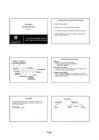
addiction, alcohol, game, crime, alcoholism, eating, term, describe, negative, consequences, gamble, games, disorder, behavior, ability, other, social, rather, than, define, sometimes, results, control, often, experience, harm, addictions, english, marion, physical, such, widely, considered, pathological, acute, development, seeking, vulnerabilityAddictions summary 2011 Table of contents 1. Addictions 3 Drug addiction 3 Behavioural addiction 3 2. Drug addictions 3 Smoking 3 Drinking alcohol 4 Doing drugs 4 3. Behavioral addictions 4 Playing video games 4 Use of the internet 5
Research INTERNET ADDICTION This study set out with the aim of assessing the negative effects of computer addiction in life. The results of this study show that the Internet may become a problem when it absorbs too much of your time, causing you to neglect your relations, your work, school, or other important things in your life. Surprisingly, computer addiction covers a variety of impulse-control problems including cybersex addiction, cyber-relationship addiction, net compulsions, information overload and Internet addiction. These findings supports the importance of the Internet addiction. Many people turn to the Internet in order to manage unpleasant feelings such as stress, loneliness, depression, and anxiety. This suggests that it's important to remember that there are healthier (and more effective) ways to keep difficult feelings in check. These may include
only the smokers but also people around them. Those people are called passive smokers. Children who live in a home where there's a smoker or come in contact with cigarette smoke very often are more likely than average to become smokers themselves when older. They are at increased risk of developing cancer as adults. And they also do worse at reading and reasoning skills compared with children in smoke-free homes, even at low levels of smoke exposure. Smoking also has short term consequences like your breath, clothes, hair, skin, and home smell of tobacco. You do not notice the smell if you smoke, but to non-smokers the smell is obvious and unpleasant. Your sense of taste and smell are dulled. Enjoyment of food may be reduced. Smoking is a serious problem, about 100,000 people in the UK die each year due to smoking. It is very hard to quit smoking but luckily there are things like nicotine patches and gums to help you during the process. But those things won't help you if you lack
You've probably heard that drugs are bad for you, but what does that mean and why are they bad? Medicines Are Legal Drugs If you've ever been sick and had to take medicine, you already know about one kind of drugs. Medicines are legal drugs, meaning doctors are allowed to prescribe them for patients, stores can sell them, and people are allowed to buy them. But it's not legal, or safe, for people to use these medicines any way they want. Cigarettes and Alcohol Cigarettes and alcohol are two other kinds of legal drugs. (In Estonia, adults 18 can buy cigarettes and alcohol.) But smoking and excessive drinking are not healthy for adults and off limits for kids. Nicotine is the drug in tobacco leaves. Whether someone smokes, chews, or sniffs tobacco, he or she is delivering nicotine to the brain. Each cigarette contains about 10 milligrams of nicotine. Nicotine is what keeps people smoking despite its harmful effects. Because the
Still others prefer the life of a tramp. It may be difficult but they are free no boss telling them what to do, no family to restrict ( ) them . Homelessness can be caused by war, fire, flood, or similar emergency, violence in the home, divorce, unemployment, or a shortage ( ) of low-cost housing . Homeless people tend to be single, middle- aged, unemployed, and lacking in qualifications. Many have a history of violence in the home, and many suffer from psychological disorders, alcoholism, and drug abuse. Homelessness creates a sense of failure ( ) and results in isolation, loss of self- esteem ( ) , and loss of control over the most basic decisions and acts of everyday life such as when and what to eat, and where and when to wash. The number of homeless has been growing in recent years, especially among the young. Many young people come to big cities in search of more exciting life. Because
Social Problems Crime In the sociological field, crime is the breach of a rule or law for which some governing authority or force may ultimately prescribe a punishment. The word crime originates from the Latin crimen. When society deems informal relationships and sanctions insufficient to create and maintain a desired social order, there may result more formalized systems of social control imposed by a government, or more broadly, by a State. With the institutional and legal machinery at their disposal, agents of the State can compel individuals to conform to behavioural codes and punish those that do not
Short and long term effects of alcohol Good morning. My name is NIMI. I'm going to talk about short and long term effects of alcohol consumption. Firstly I'll tell you about short term effects and then move on to long term effects. My presentation will take about 5 minutes. If you have any questions, you are welcome to ask them afterwards. Firstly I would focus on the short term effects of alcohol consumption. The amount and circumstances of alcohol consumption play a large part in determining the extent of intoxication; for instance, consuming alcohol after a heavy meal causes alcohol to absorb more slowly. Hydration also plays a role as for determining the extent of hangovers. Initially, alcohol produces feelings of relaxation and cheerfulness, but as a result of further consumption blurred vision and coordination problems generally occure. As far as cell
5. A multinational state- A multinational state is a sovereign state which is viewed as comprising two or more nations. Such a state contrasts with a nation-state where a single nation comprises the bulk of the population. 6. A single-nation state- a geographical area that can be identified as deriving its political legitimacy from serving as a sovereign nation. A state is a political and geopolitical entity, while a nation is a cultural and ethnic one. The term "nation state" implies that the two coincide, but "nation state" formation can take place at different times in different parts of the world. 7. Commonwealth realm- is a sovereign nation within the Commonwealth which has Queen Elizabeth II as its head of state. There are 16 of them (including the UK) and they have a combined area of 18.7 million sq km and a population of 140 million. The vast majority of the
According to Christian teachings, the normal collective state of humanity is one of “original sin.” Sin is a word that has been greatly misunderstood and misinterpreted. Literally translated from the ancient Greek in which the New Testament was written, to sin means to miss the mark, as an archer who misses the target, so to sin means to miss the point of human existence. It means to live unskillfully, blindly, and thus to suffer and cause suffering. Again, the term, stripped of its cultural baggage and misinterpretations, points to the dysfunction inherent in the human condition. The achievements of humanity are impressive and undeniable. We have created sublime works of music, literature, painting, architecture, and sculpture. More recently, science and technology have brought about radical changes in the way we live and have enabled us to do and create things that would have been considered miraculous even two hundred years ago. No
his wife took the responsibility for him. His name and personal information have been revealed in many television podcasts and his wife wrote a book about him. In experiments researcher often deliberately use deception and can put participants in unpleasant situations (e.g. watching an unpleasant film). Evaluate schema theory with reference to research studies. Schema is a network of knowledge, beliefs and expectations about a particular aspect of the world. Schemas can describe how specific knowledge is organized and stored in memory. Schema theory has been used to explain memory processes. Memory processes are divided into three main stages: 1) Encoding: transferring sensory information into a meaningful memory. 2) Storage: retaining information over time / creating a biological trance. 3) Retrieval: using the stored information. It is believed that schema processing can affect memory at all three stages. For example in encoding
growth. With inflation for the 2006 calendar year down to 6.0% and unemployment down to 8.9%, the nominal GDP grew by an unprecedented 2.9%. An investment programme in island transportation and utility infrastructure and gains in the tourism, mining, and service sectors all contributed this figure. All projections for 2007 show an even higher potential for economic growth with all estimates over 3.0% and hampered only by urban crime and public policies. In 2006, Jamaica became part of the CARICOM Single Market and Economy (CSME) as one of the pioneering members. 5 Econometrics GDP (2005): $9.7 billion. Real growth rate (2006): 2.5%. Per capita GDP (2005): $3,640. Natural resources: Bauxite, gypsum, limestone, marble, sand, silica. Agriculture: Products--sugar, bananas, coffee, citrus fruits, condiments and spices.
All things considered, it is possible that we are becoming more ignorant of the things we must know to live well and sustainably on the Earth. A fourth myth of higher education is that we can adequately restore that which we have dismantled. In the modern curriculum we have fragmented the world into bits and pieces called disciplines and subdisciplines. As a result, after 12 or 16 or 20 years of education, most students graduate without any broad integrated sense of the unity of things. The consequences for their personhood and for the planet are large. For example, we routinely produce economists who lack the most rudimentary knowledge of ecology. This explains why our national accounting systems do not subtract the costs of biotic impoverishment, soil erosion, poisons in the air or water, and resource depletion from gross national product. We add the price of the sale of a bushel of wheat to GNP while forgetting to subtract the three bushels of topsoil lost in its production
punishment, or a person may be criticized by the society; rules of a social institution tend to carry precise penalties but they are not enforceable by any political authority; however governments use a system of courts backed by the power of the police to enforce the laws they have made. The relations between people are regulated by a combination of all these rules. One of the ways to classify laws is to separate them into prescriprive and descriptive law. Descriptive laws simply describe how people usually behave. For example law of gravity- if a person throws an apple up in the air, then it’s very likely that it falls down again. Other laws are prescriptive- they prescribe how people should or should not behave. For example, the law says that the minor can’t drink alcohol, but in spite of that rule, they still do. Relations between people are regulated by prescriptive laws. Some of them are customs – informal rules of social and moral behaviour
The aim: to lighten your load so you can focus on more important issues and to help the subordinate learn and grow. Stereotypes: older workers are hard workers vs they are difficult to train to use new methods Communication style Germans: communicate at work to demonstrate their knowledge and gain respect USA: communicate to be liked. USA presentations focus on main points, less analysis into details than Germans. USA: "sandwich technique" in criticizing: The negative part is btw 2 positive statements: Germans consider it unabmiguous or dishonest Problem-solving Germans: analyze in depth before taking action, USA call it "analysis paralysis" US approach: try things out, see if they work: "trial and error" Planning a negotiation Negotiating Putting yourself into the other's shoes Adopting a "poker face" Outcomes: win/win; win/lose; lose/lose. Although a win/win outcome is most desirable, a win/lose result may not always be too bad.
getting physical, emotional and social factors in balance. Stress is a part of most peoples' everyday life. Some stress is useful, some not. The body is equipped to respond to emergencies but if the stress goes on for a long time, the body can become unbalanced with lots of signs of ill health, such as headaches, digestive problems, emotional disturbances and so on. Other lifestyle habits are often as a result of stress, such as drinking alcohol and smoking. Also, eating an unbalanced diet and not getting enough exercise can cause weight gain and poor health. Having a balanced diet mainlyof unprocessed starchy and high fibre foods, fruit and vegetables, some meats, milk and milk products and a small amount of food and drinks containing fat and sugar will help mainain a healthy weight and may prevent cardiac diseases and forms of cancer related to diet. By having a varied diet,
The ............... with which surveillance cameras are used is FREQUENT increasing .............. all the time, and due to the STEADY ............. of improved technology they are being INTRODUCE used in a .............. of new and unusual ways. VARY CCTV cameras improve public ..............., it is said, SAFE because they help the police to identify ..............., CRIME which makes the ............... of crime much easier. PREVENT Traffic cameras film those ...............of speeding or GUILT ................driving, so reducing the risk of accidents. DANGER Despite the general .................of CCTV cameras. POPULAR Some people ................of their use, because they feel APPROVE that any surveillance is and invasion of privacy. 2
sisse elada. Early neglect, loss, osychological abandonment, loneliness, feelings of isolation and being ignored seem to be common elemnts in the backgrounds of MSBP parents. Therefore, denial, which can be either an assertion of innocence or an apparent symptom of the syndrome, is deeply problematic in providing insight to others about the mother's motivation or intent. The Munchausen by proxy (MBP) label was first proposed by Meadow (1977) to describe cases in which a parent or caretaker intentionally causes physical symptoms in a child in order to indirectly assume the sick role or gain attention from the medical system. MSBP diagnoosimine võib olla raske, kui emad teavad, mida nad teevad ning kui ei ole mingit tõelist tõendit (video, pealt nägemine vms), siis ongi raske tõestada seda. There are two types of MSBP presentations: doctor addicts and active inducers. Caretakers in the first category
· Differences: composition of dispositions varies from person to person · Causation: trait differences cause differences in behaviours Page The Grandfathers of Trait Theory Structure of personality descriptors Allport and Odbert (1936) · Found 17,953 words to describe behavioural and psychological Dimensions (traits!) characteristics (e.g. introversion-extraversion) · Examples of trait terms: Shy Anxious Trait (facet) Trustworthy Witty
PRAISE FOR The 4-Hour Workweek "This is a whole new ball game. Highly recommended." --Dr. Stewart D. Friedman, adviser to Jack Welch and former director of the Work/Life Integration Program at the Wharton School, University of Pennsylvania "It's about time this book was written. It is a long-overdue manifesto for the mobile lifestyle, and Tim Ferriss is the ideal ambassador. This will be huge." --Jack Can eld, cocreator of Chicken Soup for the Soul®, 100+ million copies sold "Stunning and amazing
Introduction “Data is Everything and Everyone is Data. “[1] The ability to collect, organize, structure and analyse data on a large scale is probably the most significant trait that sets us, humans, apart from our primate friends. [1] To comprehend the opportunities and threats regarding big data located within the cloud, one must first realize the essence of them. Big data is not only what its name says, but it is also so much more. What is Big data? Big data is a term, which is used to describe a broad spectrum of concepts: from the technological ability to collect, aggregate, and process data, to the cultural shift that is pervasively invading industry and society, both drowning in information overload. [2] Big data can be described by the following properties: - Volume. Organizations collect data from a variety of sources, including business transactions, social media, and information from sensor or machine-to-machine data.
Polymorphism is essential to object-oriented programming because it allows you to call methods with the same names, no matter what type of object is in use at the moment. 2. COMPONENT TECHNOLOGY – THE PROBLEM The Problem •Today, anything and anyone must be net-enabled. •Automated business processes, products, and software systems need to evolve in „e-Time“. •Everything must be changeable, extensible, adaptable. •Quality is an important issue. Architectural consequences of these requirements: •Software should not be designed as monolithic unit but partitioned into composableservices that can be spontaneously connected and orchestrated by business/technical processes (component-based software). •„Software entropy“should be maximized: loosely coupling between peers,decentralized information access, reflective approaches (Just-in-Time Integration). •Software must be e-enabled. Application Partioning •Solutions consist of collections of components.
their positions, irrespective of the stressful conditions they experience. However, should they be given alternative benefits, they will be willing to leave the organisation. Mowday, Porter and Steers support the "side-bet" theory by describing organisational commitment as a behaviour "relating to the process by which individuals become locked into a certain organisation and how they deal with this problem. Wiener and Vardi describe organisational commitment as behavioural intention or reaction, determined by the individual's perception of the normative pressure. Meyer and Allen discribes organisational commitment as a psychological state that characterises organisational members' relationship with the organisation and has implications for the decision to continue or discontinue membership in the organisation. Effects Organisational commitment can have either a negative or a positive effect on the organization.
ALCOHOL Alcohol is a widely used substance for both science and in technology. Its name comes from an Arabic word al-kuhl meaning " a powder for painting the eyes". The term was later applied to all compounds that contain alcoholic spirits. To most people alcohol is considerd a downer that reduces activity in the nervous system. Some of the things alcohol effects you is, the alcohol intoxicated person exhibits lose muscle tone, loss of fine moter coordination,and often has a staggering "drunken" gait. The eyes may appear somewhat "glossy" and pupils may be slow to respond to stimulus. At high doses pupils may become constricted. At intoxing doses, alcohol can decrease heart rate, lower blood pressure and respiration rate, and result in decreased reflex and slower reaction times. Skin may be cool to touch but to the user may feel
there, it's easier that way. Home task situation in western sahara, recognition , international court of nation un. Read the case Rainbow warrior, know details, clearly Recognition of the States A political act by which one state acknowledges an act or status of another state or government, thereby according it legitimacy and expressing its intent to bring into force the domestic and international legal consequences of recognition. Not only recognition of the country, but also the government (e.g. after a revolution there will be a new government, or when there's occupation or when government is in exile, e.g. the Polish government). Sometimes recognition required for nations fighting for their independence, otherwise they're not recognized as subject of IL. Recognition could be de facto (country enters into certain new relations with another country, but
with their own government, language, traditions, etc: Stranger someone whom you do not know Citizen - a person who is a member of a particular country and who has rights and obligations because of being born there or because of being given them Penalty - a punishment for doing something that is against a law Government - the group of people who officially control a country System of courts - a set of connected positions which operate together to ensure ... ? To commit a crime to do sth that is forbidden by law Corruption - illegal, immoral or dishonest behaviour, especially by people in positions of power Fine (trahv) - an amount of money that has to be paid as a punishment for not obeying a rule or law Suspension - when a person is temporarily not allowed to work, go to school or take part in an activity, as a punishment Prosecution - to officially accuse someone of committing a crime in a court of law, or to try
1. Background to Gaming Giving a definition for `computer game' is problematic, due to the wide range of game types. For example, the ArcadePod site (http://www.arcadePod.com) divides its hundreds of Java games into more than ten categories: 3D games, multiplayer, action, classic, indoor sports, board, outdoor sports, card, mind, casino, educational, and the useful `miscellaneous' catch-all. This makes it difficult to pin down the typical content of a game, and highlights the range of design and programming skills required to create one. Another problem with giving a definition is that game platforms vary enormously, including PCs, dedicated game consoles (e.g. the Sony PlayStation 2), arcade machines, web-based games, hand-held consoles (e.g. the Nintendo Gameboy), interactive TV, set-top boxes (as supplied by some cable networks), cellular phones, and PDAs. 1.1. Revenue
adj covered with healthy green plants or grass v to chew or bite food noisily n a long step when walking adj almost out of control because of extreme emotion, such as anxiety v to walk or move unsteadily from side to side as if you are going to fall over n the short stems left after a crop has been cut adj never having happened or existed in the past n the surface layer of land on which grass is growing 10. Describe, compare and contrast the following pictures. Selles ülesandes tuleb teil kirjeldada, võrrelda ja kõrvutada/vastandada kahte pilti. Teil tuleb rääkida nendest piltidest 2 minutit. Enne rääkima asumist on teil 1 minut ettevalmistuseks, kuid te ei tohi märkmeid. Antud ülesanne koosneb neljast osast. Proovi jaotada aega nii, et jõuaksid käsitleda 2 minuti jooksul kõiki osasid. Teil tuleb: 1) kirjeldada, keda või mida te piltidel näete 2) võrrelda kahte fotot (s.t
should be remembered that American English has about 10 times more speakers than the RP and thus the significance of it in the today’s world should not be underestimated. 2) Submarine sandwich is ‘a large sandwich consisting of a long roll split lengthwise and filled with layers of meat, cheese, tomatoes, lettuce and condiments’ (www.ahdictionary.com). How did it get its name? It is difficult to say when the term submarine sandwich was first used for these types of large sandwiches. Although it is quite obvious that the sandwich got its name because of its long shape that resembles submarines, there are several myths around the origin of the term. The first theory is that at the beginning of World War II a sandwich was specifically created in a restaurant in Scollay Square in Boston to appeal to the mean serving at Charlestown Navy Yard.
Biotechnology-Biotechnology is technology based on biology, especially when used in agriculture, food science, and medicine. United Nations Convention on Biological Diversity defines biotechnology as:[1] Any technological application that uses biological systems, living organisms, or derivatives thereof, to make or modify products or processes for specific use. Biotechnology is often used to refer to genetic engineering technology of the 21st century, however the term encompasses a wider range and history of procedures for modifying biological organisms according to the needs of humanity, going back to the initial modifications of native plants into improved food crops through artificial selection and hybridization. Bioengineering is the science upon which all biotechnological applications are based. With the development of new approaches and modern techniques, traditional biotechnology industries are also acquiring new
Identity theft The Estonian Information Technology College Social, Professional and Ethical Aspects of Information Technology 18.10.2016 The purpose of this paper is to raise awareness about the threats associated with Identity theft. I will talk about the different types of identity theft, the most common way they take place and what consequences they might have. I will also talk about some of the examples and point out actions everyone can take to minimize the chance of becoming a victim of an identity theft. What is Identity theft Identity theft is defined as the deliberate use of someone else's identity, usually as a method to gain a financial advantage or obtain credit and other benefits in the other person's name, and perhaps to the other person's disadvantage or loss. The person whose identity has been assumed
be popular, to have friends and relationships with people of the opposite sex etc. Mass media experts understand this need of the people and hence they come out with advertisements on TV, or in the newspapers, or on websites on how people can be more popular using a certain product. Most advertisements you see which are aimed at the youth generally talk about the 'cool quotient' of the product and how it is going to be the next 'in-thing'. And if you want to stay ahead of the game, it is absolutely vital that you procure it. The visual effect, seeing the things happen in front of you and the slice-of-life effect makes them look a lot believable than they should be. So how should mass media be used with youth? Mass media, effective as it is, can be used on the youth to drive home pressing concerns in the country. Child obesity, the dangers of alcohol and preteen sexual relations, importance of exercise and fitness etc.
effects in new technologies, such as of persuasion. persuasion resulting from on line banner ads and the subliminal presentation o Twice as many Reader's Reports- first-person accounts in which readers of odors. of previous editions describe how e Increased coverage of how compliance they've seen a principle work on principles work in other cultures. or for them. Reader's Reports have New insights are derived from the become the most popular feature of research findings, sayings, and customs the book. Boston. New York • San Francisco Mexico City • Montreal • Toronto • London • Madrid • Munich • Paris Hong Kong • Singapore • Tokyo • Cape Town • Sydney
opening sentence--let us call it sentence (1)--you understood it perfectly, whether or not you were ready to accept it, and you did so without the slight- est conscious effort. Remarkable, I said. It probably does not strike you as remarkable or sur- prising, even now that you have noticed it. You are entirely used to reading words and sentences and understanding them at sight, and you find it nearly 2 Philosophy of Language as natural as breathing or eating or walking. But how did you understand sentence (1)? Not by having seen it before; I am certain that never in the history of the universe has anyone ever written or uttered that particular sentence, until I did. Nor did you understand (1) by having seen a very similar sentence, since I doubt that anyone has ever produced a sentence even remotely similar to (1). You may say that you understood (1) because you speak English and (1) is an English sentence
 annaabi.ee