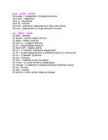
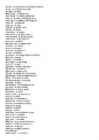
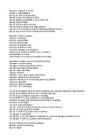
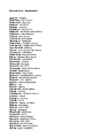
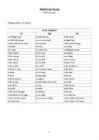
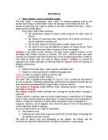
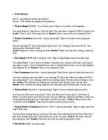
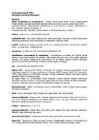
GIVE GAVE GIVEN Give away 1)paljastama 2)midagi ära andma Give back tagastama Give in alla andma Give off erituma Give out 1)levitama, laiali jaotama 2) lõppu ette reetma Give up 1)alla andma 2) mingit harjumust muutma GO WENT GONE Go after jälitama Go ahead lubama millegi juhtumist Go away lõpeta, mine ära Go back on lubadust lõhkuma Go by kellegi ideedel baseeruv Go down with haigeks jääma Go for 1) ründama 2)taotlema midagi (tööd) Go off 1) plahvatama (pomm) 2) helisema, (alarm) 3) riknenud toit Go on 1) jätkama 2)juhtuma Go out kustuma Go over 1)detaile uurima 2)kordama Go round 1) (uudis) levima 2) kõigile jagub Go through 1) läbielamus 2)lõpetatud edukalt 3)detaile arutama Go up tõusma Go with sobima Go without toime tulema millegi puudusega
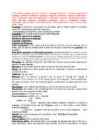
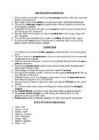
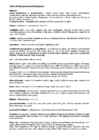
Act out to copy actions in a theatrical manner act up to misbehave/not work act upon to affect Break away te detach from break down to stop/to malfunction break in to enter a building by force break into to suddenly start doing sth break off to terminate break up to erupt Call for to require, need call off to cancel come about to happen come across to find by chance come forward to present oneself come in for to be subject to come into to inherit Do away with to dispose with do down to critisise do out to decorate do out of to deprive of do over to ransack do without to manage despite not having Done for doomed Drive at to allude to drive away to discourage drive off to repel Fall apart to break into pieces fall back on to resort to fall in with to agree with fall into to engage (in conversation) fall through to fail (of agreement etc) fall to to become so's duty Get about/...
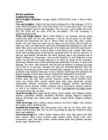
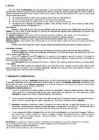
Pay back- to punish or reward Pay for- to make payment pay for- to suffer or be punished pay off- to pay a full amount (a debt) pay off- produce a profitable or successful result pay off- to get revenge pay off- to birbe (pistist maksma) pay out-a sum of money to sb (large amount) pay out- to let out (a line or rope) by slackening (lõdvaks laskma) pay up- to give over the full monetary amount demanded carry off- to die of a disease carry on- to continue carry on- have an affair carry on- behave badly carry out- to perform a task carry out- to follow or obey carry out- complete or accomplish st carry over- to continue to another time or situation carry through- to survive carry through- to accomplish, complete successfully pull ahead- overtake, move into the lead or in front pull apart- top from fighting pull apart- weaken an argument or theory pull out- bus or train leaving station pull out- move into traffic pull out- withdraw pull b...
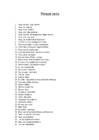
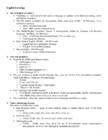
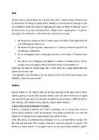
Phrasal verbs 1. Hang around- ringi jõlkuma 2. Hang on- ootama 3. Hang on to- hoidma 4. Hang out- välja panema 5. Hang out with- Kellegagi koos aega veetma 6. Hang over- painama 7. Hang up- telefoni kõnet lõpetama 8. Commit a crime- kuritegu sooritama 9. Crime prevention- kuriteo ennetamine 10. Crime rate- kuritegude sagedus/määr 11. Crime scene- kuriteopaik 12. Juvenile/youth crime- noorsoo kuriteod 13. Petty crime- väärtegu 14. Serious crime- tõsine kuritegu 15. Street crime- tänaval juhtunud kuritegu 16. Turn to crime- kurjale teele minema 17. Violent crime- vägivaldne kuritegu 18. Au pair- lapsehoidja 19. Bon appetit- head isu 20. Bon voyage- head reisi 21. Critique- kriitik 22. Cuisine- köök 23. En suite- magamistuba koos privaatvannitoaga 24. Faux pas- piinlik apsakas 25. Fiance- kihlatu 26. Blizzard- lumetorm 27. Breeze- tuul 28. Downpour- paduvihm 29. Drizzle- tib...
Viljandi County Gymnasium Prepositions Name Form 11b Supervisor: Name Viljandi 2009 Viljandi County Gymnasium 1. Prepositions of place The ball is in the box The ball is on the box. The ball is under the box. Jane's house Bill's house John's house John's house is next to Jane's Jane's house is between Bill's Bill's house is next to Jane's house. and John's houses. house. The man stood The climbers The man stood The enemies stood The gardners next to the gopher stood on top of between the two opposite each stood behind the ...
Phrasal verbs - ühendverbid Apply for – taotlema Break down - katki minema Break out of – põgenema Bring out - esile tooma Bring up – kasvatama Brought out - välja müüdud Bump into - otsa sõitma, kokku juhtuma Calm down - maha rahunema Catch up - järele jõudma Catch up on - järele tegema Check up on – kontrollima Come across - juhuslikult kohtama Come up with - (mingile ideele) tulema Cope/ deal with - käsitlema Cost out - sunniviisiliselt välja viskama Cut down on – vähendama; Drink/ eat up; ära jooma/ sööma End up - lõpetama, lõppu tegema Fall out with - tülli minema Fool around – lollitama Get on with - läbi saama Get out of - välja tulema Get through - kohale jõudma, läbima Go dead - tühjaks saama Hang around – aega veetma Hang on to - kramplikult kinni hoidma Hang out - pesu kuivama panema Hang over - kohal rippuma Head for - asuma millegi suunas Hold on – oota Hunt for – jahtima Keep up with - sammu pidama Line up – rivistama Loo...
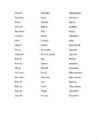
Doze off Fall asleep Magama jääma Turn down Reject Ära ütlema Butt in Interrupt segama Cover for Replace asendama Track down Find leidma Cut down Reduce vähendama Fill in Complete täitma Strip off Undress Lahti riietuma Pile up Accumulate kogunema Gulp down Eat/drink quickly kugistama Hold up Rob röövima Brush up Improve parandama Tart up Decorate kaunistama Give away Reveal Nähtavale tooma Mess about Waste time Aega raiskama Break off End lõpetama Make up Invent Välja mõtlema Draw up Prepare valmistuma Clear off Go away Ära minema
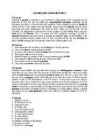
VOCABULARY EXERCISES UNIT 5 II Exercise Learning to operate a computer is not as difficult as many people think. Computers can be expensive to buy, but you can often get comprehensive packages containing all the equipment you need at a discount from big companies. Some companies will even install the system for you. Your system will also include various kinds of software such as word- processing and game programmes, all stored on disks. When you put the disk into the computer, the programme or information can be displayed on the screen. Many computer users go on the Internet. This is a system that links computers, making it possible to transmit information from one system to another in a different place via the telephone. This can cause problems, because addicts who use their computers all the time can overload the phone circuits meaning that other people cannot make ordinary phone calls. III Exercise 1. Joh...
Michael Phelps Michael Phelps was born on 30 June, 1985, in the USA. He is called 'The Baltimore Bullet'. He is an American swimmer who is famous for holding the world record for the most gold medals at a single Olympics. Michael was born and raised in Baltimore, Maryland. Michael's parents divorced in 1994. He has two older sisters, Whitney and Hilary, who both are also swimmers. In his youth, Michael was diagnosed with attention-deficit/hyperactivity disorder. He took up swimming at the age of seven mainly to provide himself an outlet for his energy. At the age of 10, Phelps held a national record for his age group. He improved rapidly and by the age of 15 he qualifyed for the 2000 Summer Olympics. Phelps finished fifth in the 200 metre butterfly. Five months later he broke the world record in the same event and also became the youngest man ever to set a swimming world re...
Phrasal verbs: Pass & Pull M.P Pass Pass off - Convince something that something is real I managed to PASS OFF the fake money in the market. Pass on - Give a message to someone -Decline an invitation or opportunity I'll PASS the message ON when she gets here. Pass on to - Change topic or subject Let's PASS ON TO the next item on the agenda. (British Eng.) Pass around - Give out to everybody there The teacher PASSED the handout AROUND. Pass away - Die Georgia’s uncle PASSED AWAY yesterday. Pass by - Go past without stopping - Miss an opportunity I was just PASSING BY when I saw the accident. Pass down - Transmit information or give property to younger generations The tales were PASSED DOWN for centuries without changing any of the words. Pass through - Visit a place without stopping or only stopping briefly I didn’t see much as I was only PASSING THROUGH the town Pass to - Become owner of o...
PUT ACROSS (separable) to communicate; convey effectively During the meeting, management put across the message that our concerns were insignificant. PUT AWAY (separable) to discard; renounce Let's put away our worries, and live for the moment. (separable) to consume I watched Max put away several hamburgers in just a few minutes. (separable) to confine; incarcerate; imprison The government put Sherman away for a year for having the wrong information on his website. PUT BACK (separable) to place something where it was previously When you finish the milk, please don't put the empty container back in the fridge. PUT DOWN (separable) to insult or make disparaging remarks about someone I feel sorry for Max. Everytime he and Mary get together with their friends Mary puts him down in front of everybody. (separable) to kill a sick or injured animal (usually out of mercy) The vet said it was necessary to put down the race horse because of its b...
TAKE AFTER = resemble a parent - similar to Most people say I take after my father. I look a lot like him. TAKE AROUND = introduce, show Let me take you around to those you don't know. TAKE AWAY = A. remove B. leave (mentally, in your mind) A. Mother took the toys away from the children for misbehaving. B. The smell of coconut oil took me away to a tropical island. TAKE BACK = A. retract sth said B. return sth to a store, exchange A. The politician tried to take back what he said to the press. B. The gift I received didn't fit, so I took it back and exchanged it for sth else. TAKE DOWN = A. write what is spoken, keep notes B. remove A. The secretary took down the minutes of the meeting B. The building owners had to take down the wifi tower on top of their building. TAKE FOR = consider, view Don't take him for an idiot... he's actually quite smart. TAKE IN = A. learn B. deceive C. make smaller D. watch A. Many students have difficu...
PREPOSITIONS (eessõnad) Prepositions of place: KUS? WHERE? AT ON IN at 10 High Street on Fifth Avenue in the world at 224 Fifth Avenue on the street(AmE) in High Street at the corner of the street on the plane in the east of Europe at a hotel on a bus in London at a store on a boat/ship in Trafalgar Square at the concert on the floor in America at the cinema on the wall in a village at the theatre on the shelf in the country at the station on the table in (the) town at the airport ...
Phrasal verb BREAK Anni Haasma Tartu 2009 Break sth off SEPARATE to separate a part from a larger piece, or to become separate: He broke off a piece of chocolate. RELATIONSHIP to end a relationship: They've broken off their engagement. The governments have broken off diplomatic relations. STOP DOING to suddenly stop speaking or doing something: She broke off in the middle of a sentence. Break away ESCAPE to leave or to escape from someone who is holding you: He grabbed her, but she managed to break away. FIGURATIVE One or two of the tourists broke away from the tour group. NOT AGREE to stop being part of a group because you begin to disagree with them: Some members of the British Labour Party broke away to form the Social Democratic Party. Break out START If something dangerous or unpleasant breaks ou...
Writing letters Formal letters institutions, strangers Semi-formal letters - acquaintances Informal letters friends, family Layout Always in paragraphs A paragraph starts with a space, which is as wide as your finger No empty rows Block style in the content of the letter Greeting and farewell on the left side The greeting and farewell have the same style Dear..................... ........................................................................ ............................................................................. ......................................................... ........................................................................ ............................................................................. ............................................................................. .........................................................................
English structure revision for the exam 1. Terms Language → A systematic, conventional (tavakohane) use of sounds, signs or written symbols in a human society for communication and self-expression. Human language at all levels is rule- or principle- governed (valitsema) meaning that language corresponds to the grammar. Natural language is usually spoken, while language can also be encoded into symbols (such as letters, morse etc) For example: Estonian, English. Linguistics → The scientific study of human natural language. Broadly, there are three aspects to the study which are Pragmatics (studies the use of language → interested in the gap between the sentence’s meaning and the speaker’s meaning). Semantics (concerned with the meaning of the language aspects and the way they change, also how objects and language and thinking and language are related). ...
English lexicology 1. Size of English vocabulary Vocabulary is a sum total of words used in a language by speakers or for dictionary-making. Active and passive vocabulary. The Old English vocabulary was homogenous. There were about 50 000 – 60 000 words, 1/3 of which have survived. o About 450 loans from Latin o About 2000 from the Viking invasions. The Middle-English vocabulary became a heterogeneous hybrid of Germanic and Romanic languages. 100 000 to 125 000 words. o About 10 000 loans from Norman French, 75% are still in use o Continuing Latin influence Early Modern English. 200 000 – 250 000 words o English becomes a pluricentric language. o Polyglot. Cosmopolitan language Modern English. 500 000 words o At present at least 1 billion lexical units 2....
1. Be ready to explain the terms (lecture 1): language, linguistics, synchronic approach to language, diachronic approach to language, linguistic competence, linguistic performance, what is grammar?, prescriptive grammar vs. descriptive grammar; phonology, phonetics, phone, allophone, phoneme; morphology, morphemes (types of morphemes), morphs, allomorphs, types of affixes, derivational affixes, inflectional affixes; open vs closed class words; syntax. Language: a systematic, conventional use of sounds, signs or written symbols in a human society for communication and self-expression. - human language at all levels is rule- or principle-governed. Linguistics: the scientific study of human natural language Synchronic approach to language: Diachronic approach to language: Linguistic competence: Linguistic performance: What is grammar?: "The sounds and sound patterns, the basic units of meaning, such as words, and the rules to combine them...
Review questions English lexicology Size of English vocabulary. Average speaker 45,000-60,000 words, a total of about 200,000. Core and periphery. English has been heavily influenced by other languages. 31.8 % comes from Old English, 45% comes from French, 16,7% comes from Latin, 4,2% other germanic languages and 2,3 other languages. The very core is mono-syllabic (93 of the first 100 words and the other seven are two-syllabic). The core vocabulary is predominantly germanic. Native and foreign element. Native words belong to very important semantic group (modal verbs-shall, will, can, may; pronouns- I, you, he, my, his; preps- in, out, under; numerals and conjunctions::but, till, as. Native words are head, arms, back; mother, brother, son, wife; snow, rain, wind, sun; cat, sheep, cow; old, young, cold, hot, dark; do, make, go, come, see. Many native words have developed many meanings (nt, hand, man, head). Most native words have become ...
STYLISTICS 1. Style, stylistics, a survey of stylistic studies The term ,,style" is polysemantic. Latin ,,stilus"--a writing instrument used by the ancients for writing on waxed tablets. Soon, the meaning was extended to denote the manner of expressing one's ideas in written or oral form. Jonathan Swift said: ,, Style is proper words in proper places" Present day--half a dozen meanings: · the characteristic manner in which a writer expresses his ideas (Style of Byron) · the manner of expressing ideas characteristic of a literary movement or period (symbolism, romanticism) · the use of lg. typical of a literary genre (comedy, drama, novel) · the selective use of lg that depends on spheres of human activity. These are called functional styles or registers (fiction, newspaper) Stylist...
1. Active/Passive Active - the professor teaches the students. Passive - The students are taught by the professor 2. Present Simple [VERB] + s/es in third person. Tegevus on korduv või tavapärane. You speak English. I play tennis. Cats like milk. The train leaves tonight at 6 PM. I am here now. Active= Once a week, Tom cleans the car. Passive= Once a week, the car is cleaned by Tom. 3. Present Continuous [am/is/are + present participle]. Tegevus toimub/ei toimu praegusel hetkel. You are watching TV. You are learning English now. I am studying to become a doctor. I am meeting some friends after work. Active= Right now, Tom is writing the letter. Passive= Right now, the letter is being written by Tom. 4. Past Simple [VERB+ed] or irregular verbs. Tegevus algas/lõppes minevikus täpsel ajal. . You called Debbie. I saw a movie yesterday. I finished work, walked to the beach, and found a nice place to swim. I lived in Brazil for two year...
ADVANCES IN TECHNOLOGY 1. My new cellular phone allows me to send text messages anywhere within the country and abroad. (communications) 2. Don't forget to turn on the modem if you want to go-online. (information technology) 3. The advent of endoscopic surgery has greatly reduced the post-operative recovery time of most patiens. (medical) 4. Supermarkets of the future will make use of scanners to read the contents of your trolley and total up your bill. (electronics) 5. Factories which rely on humans working on assembly lines are becoming a thing of the past. (industrial) 6. You would be quite astounded by the number of satellites orbiting the Earth. (space) 7. Not only would a solar powered vehicle be safe, it would also make use of one of the planet's greatest natural resources. (energy) COMPUTERS 1. I'm terribly sorry I'm late but traffic congestion...
1. STYLE The term "style" is polysemantic (has many meanings): a Latin word "stilus" originally meant a writing instrument used by ancient people. Already in classical Latin the meaning was extended to denote the manner of expressing one's ideas in written or oral form. Jonathan Swift defined style as "proper words in proper places". In present day English the word "style" is used in about a dozen of principle meanings: 1. the characteristic manner in which a writer expresses his/her ideas (e.g. style of Byron) 2. the manner of expressing ideas, characteristic of a literary movement or period 3. the use of language typical of a literary genre (e.g. the style of a comedy, drama, novel). 4. the selective use of language that depends on spheres / areas of human activity (e.g. style of fiction, scientific prose, newspapers, business correspondence, etc.). STYLISTICS Stylistics is the study of s...
Style The term style is a polysemantic one. The latin word ,,stilus" meant a writing instrument used by the ancients for writing on waxed tablets. Already, in classical latin the meaning of style was extended to denote the manner of expressing one's ideas in written or oral form. One of the abts/the best was given by Jonathan Swift: ,,Proper words in proper places." In present- day english, the world style is used in about half a dozen basic meanings. 1. the characteristic manner in which a writer expresses his ideas. Some speak about the style of Hemingway, Dickens etc. 2. the manner of expressing ideas, characteristic of a literary movement or period. Style of symbolism, romanticism 3. the use of language to pick a literary genre-comedy, novel, drama, O.D (poetic form) etc. 4. the selective use of language that depends on spheres of human activity fiction, scientific prose, newspape...
Kordamisküsimused (2009) Sissejuhatus germaani filoloogiasse Mõisted: ablaut (kvalitatiivne ja kvantitatiivne) ablauti mõiste leiutas Jakob Grimm; morfoloogiline vokaalivaheldus tugevates tegusõnades germaani keeltes ja tüvedes ja juurtes indoeuroopa keeltes; kvalitatiivne ablaut kolmeastmeline vokaalimuutus: 1) e-aste (täisaste), nt IE ped pedestrian, 2) o- aste, nt IE pod podium, 3) nullaste - ø kvantitatiivne ablaut täishääliku pikkus muutub, nt võivad esineda pikk e ja pikk o afrikaat häälikud ch, j; vastavad ühele foneemile analüütiline keel keel, milles sõnadele liitub vähe morfoloogilisi elemente, kasutab liidete asemel spetsiifilisi grammatilisi sõnu või partikleid, et väljendada süntaktilisi suhteid artikkel abisõna, mis määrab nimisõna soo või arvu. Skandinaavia keeltes võib olla liikuv artikkel. En bil üks auto; bilen konkreetne auto. aspiratsioon h-häälik, mis tekib vahel helitute sulghäälikute jär...
Sissejuhatus germaani filoloogiasse Mõisted: ablaut (kvalitatiivne ja kvantitatiivne) – ablauti mõiste leiutas Jakob Grimm; morfoloogiline vokaalivaheldus tugevates tegusõnades germaani keeltes ja tüvedes ja juurtes indoeuroopa keeltes; kvalitatiivne ablaut – kolmeastmeline vokaalimuutus: 1) e-aste (täisaste), nt IE ped – pedestrian, 2) o-aste, nt IE pod – podium, 3) nullaste - ø kvantitatiivne ablaut – täishääliku pikkus muutub, nt võivad esineda pikk e ja pikk o afrikaat – häälikud ch, j; vastavad ühele foneemile analüütiline keel – keel, milles sõnadele liitub vähe morfoloogilisi elemente, kasutab liidete asemel spetsiifilisi grammatilisi sõnu või partikleid, et väljendada süntaktilisi suhteid. Sõnajärg lauses range Boy ate soup- vaid 1 võimalus! artikkel – abisõna, mis määrab nimisõna soo või arvu. Skandinaavia keeltes võib olla liikuv artikkel. En bil – üks auto; bilen – konkreetne auto. aspiratsioon – h-häälik, mis tekib vahel...
FGI 1081 Stilistika (Irina Ladusseva) Kab. 420 2 AP Ends with an exam; lasts only for 1 semester. At the exam you get 2 questions and an exercise (50 sentences: establish the device used, recognize it, and name it). Care about the pronunciation of the terms. Books: - I. Galperin "Stylistics" - I. Ladusseva "Rhythm and Text" - I. Ladusseva "Vocabulary and Style" - I. Ladusseva "Stylistic practice: Book I, Book II" - I. Ladusseva "A Guide to Punctuation" EXAMINATION TOPICS: 1. Style, stylistics, a survey of stylistic studies ...
Tallinna Polütehnikum Automation Author: TomTom2 Group :AA-09 Instructor: Marina Zotikova Tallinn 2010 Contents Introduction......................................................................................................................3-4 Person Knowledge Technologies supports......................................................................4-6 Online Essay Evaluation Service.....................................................................................6-7 WordNet lexical database................................................................................................7-8 Practice Online (TPO)................................................................................................
Tests Superstar 1 Luke Prodromou Test 1 Name____________________ Class_______ Use your English 1 Complete these sentences using the correct form (present simple or present continuous) of the verb in brackets. _ 1 She is in a band and she _________________________________ (record) a CD at the moment. _ 2 She is an actress and often _________________________________ (appear) on television. _ 3 At the moment she _________________________________ (have) a rest because she is tired. _ 4 Mike is a doctor and he _________________________________ (live) in Manchester. _ 5 I _________________________________ (start) work at 8.30 every morning. _ 6 He is a good cook but she _________________________________ (prefer) to eat out. _ 7 English tests _________________________________ (get) more and more interesting. _ 8 They _________________________________ (have) a party becau...
Letters Letters FORMAL, INFORMAL, TRANSACTIONAL TASK 1 Read the extracts and answer the questions. · Where are the extracts from? · What is the purpose of each letter? · How do they differ? · Which extracts are examples of formal letters? · How is the reader addressed in a formal letter? · What are the closing remarks for formal letters? · What is the salutation in a friendly letter? · How would you end extracts 1,2,3 ? · How would you begin the extracts 4 and 5? 1. Dear Mr Miller, I received your kind invitation to the reception. Unfortunately, owing to other commitments. I will be unable to attend ... 2. Dear Ralph, l just got your invitation to the company's event. l `m afraid I can't make it because I've a/ready made plans which l can "t change ... 3. Dear Sirs, I am writing to complain about the poor quality of ...
LEXICOLOGY 1. Size of English vocabulary 1) Old English – 50,000 to 60,000 words Vocabulary of Shakespeare OE – homogeneous; 1/3 of the vocabulary has survived • 884,647 words of running text About 450 Latin loans (Amosova) • 29,000 different words (incl. work, working, Viking invasions added 2,000 worked, which are counted here as separate 2) Middle English – 100,000 – 125,000 words) English becomes heterogeneous (Norman French, • 21,000 words English, Latin), hybrid of Germanic and Romance languages Norman French influence – about 10,000 words, 75 % are still in use (Baugh) Latin influence continues 3) Early Modern English – 200,000 – 250,000 English becomes a polycentric language; polyglot, cosmopolitan lang...
;P ulJbijlg lsBN 978-1-8432s-569-7 Illllll]ililil]t llll ||||rl 9 x781843x255697x Conlenls UNI T1 househol d & appl i ances; dw el l i ngs ln Searchof the Perfect My Home is my chores;colours& rooms;home H ome(mul ti pl choi e ce) Castle(pp. 5-19) safety TheCharmingPast:Blarney ...
;P ulJbijlg lsBN 978-1-8432s-569-7 Illllll]ililil]t llll ||||rl 9 x781843x255697x Conlenls UNI T1 househol d & appl i ances; dw el l i ngs ln Searchof the Perfect My Home is my chores;colours& rooms;home H ome(mul ti pl choi e ce) Castle(pp. 5-19) safety TheCharmingPast:Blarney ...
;P ulJbijlg lsBN 978-1-8432s-569-7 Illllll]ililil]t llll ||||rl 9 x781843x255697x Conlenls UNI T1 househol d & appl i ances; dw el l i ngs ln Searchof the Perfect My Home is my chores;colours& rooms;home H ome(mul ti pl choi e ce) Castle(pp. 5-19) safety TheCharmingPast:Blarney ...
;P ulJbijlg lsBN 978-1-8432s-569-7 Illllll]ililil]t llll ||||rl 9 x781843x255697x Conlenls UNI T1 househol d & appl i ances; dw el l i ngs ln Searchof the Perfect My Home is my chores;colours& rooms;home H ome(mul ti pl choi e ce) Castle(pp. 5-19) safety TheCharmingPast:Blarney ...
Maturita Solutions Advanced Workbook Key stand bananas and coffee! It's a bit 3 1 to 8 of Unit 1 uncanny really. Is it something she's 2 about 9 century passed on to me genetically, or is it 3 like 10 assumed / 1A Memories page 3 learned behaviour? Who knows? 4 of thought / 1 See exercise 2 2 5 6 any ...
 annaabi.ee