 50 punkti
Autor soovib selle materjali allalaadimise eest saada 50 punkti.
50 punkti
Autor soovib selle materjali allalaadimise eest saada 50 punkti.
 ~ 2 lehte
Lehekülgede arv dokumendis
~ 2 lehte
Lehekülgede arv dokumendis
 2010-10-09
Kuupäev, millal dokument üles laeti
2010-10-09
Kuupäev, millal dokument üles laeti
 11 laadimist
Kokku alla laetud
11 laadimist
Kokku alla laetud
 0 arvamust
Teiste kasutajate poolt lisatud kommentaarid
0 arvamust
Teiste kasutajate poolt lisatud kommentaarid
 Stina Adermaa
Õppematerjali autor
Stina Adermaa
Õppematerjali autor
Pay back- to punish or reward Pay for- to make payment pay for- to suffer or be punished pay off- to pay a full amount (a debt) pay off- produce a profitable or successful result pay off- to get revenge pay off- to birbe (pistist maksma) pay out-a sum of money to sb (large amount) pay out- to let out (a line or rope) by slackening (lõdvaks laskma) pay up- to give over the full monetary amount demanded carry off- to die of a disease carry on- to continue carry on- have an affair carry on- behave badly carry out- to perform a task carry out- to follow or obey carry out- complete or accomplish st carry over- to continue to another time or situation carry through- to survive carry through- to accomplish, complete successfully pull ahead- overtake, move into the lead or in front pull apart- top from fighting pull apart- weaken an argument or theory pull out- bus or train leaving station pull out- move into traffic pull out- withdraw pull back- score a goal or point when behind pull back-
" (the evening) at "I go to bed at night." (night) in "It usually snows in the (a season) winter." Viljandi 2009 Viljandi County Gymnasium 4. Phrasal verbs Many verbs in English are followed by an adverb or a preposition (also called a particle), and these two-part verbs, also called phrasal verbs, are different from verbs with helpers. The particle that follows the verb changes the meaning of the phrasal verb in idiomatic ways: · drop off - decline gradually The hill dropped off near the river · drop off(2) - fall asleep While doing his homework, he dropped off. · drop off(3) - stop and give something to someone
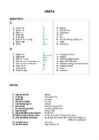
UNIT4 Appendix1 G 1. Genius (n) at 1. geenius 2. glance (v) at 2. pilku heitma 3. glare (v) at 3. põrnitsema 4. good (adj) at 4. osav 5. good (adj) to 5. hea 6. grateful..sb..sth (adj) to, for 6. tänulik kellelegi millegi eest 7. guilty (adj) of 7. süüdi 8. guilty about 8. kahetsema H to 1. happen (v) 1. kellegiga juhtuma about/with 2. happy (a
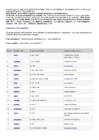
One is the imperfective, the other is the perfective. Often these two words are closely related, but this is not always the case. (Often the perfective is simply prefixed with “По”). ) Жить, Прожить – live Любить, Полюбить – love Делать, Сделать - do, make Говорить, Сказать - talk, speak, say. Работать, Поработать - work Aspects in the negative Using the negative with perfective verbs indicates the person failed to do that action. Using the imperfective will normally simply mean that it didn’t happen. Я не позвонила - I failed to phone (perfective) (but I was expected to) Я не звонила - I didn’t phone. (imperfective) Rank Russian verb English translation Aspectual pair (imp/perf) 1. быть to be, have imperfective, no pair
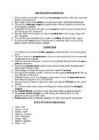
Operate the machinery carefully. 3. The company offers a range of word processing packages. 4. The company's motto reflects the owners' policy. 5. One of the company's major concerns is to make the product sell in lots of markets. 6. All files are stored in cabinets 7. The company's personnel is highly trained. 8. Please keep in mind that you must answer all questions. 9. This machinery is rather outdated. 10. Following his advice will do you a lot of good. PHRASAL VERBS 1. take sth in understand = aru saama 2. send sth back return = tagastama, tagasi saatma 3. take back admit to an error = tunnistama oma viga 4. take up sth begin doing sth = millegagi tegelema hakkama 5. send sth on forward = midagi edasi saatma 6. send for summon = kedagi kutsuma 7. send out on order = käskima 8. take on accept = vastu võtma, nõustuma LANGUAGE FOCUS 1. keyboard klaviatuur 2
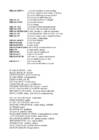
BREAK DOWN- 1) (int)(of machinery) stop working 2) (int) (of a person) lose control of feelins; 3) (int) (of talks/negotiations etc) fail 4) (tr) seperate under headings BREAK IN 1) (int) enter by force or illegally BREAK INTO 1) (tr) enter by force 2) (tr) inerrput BREAK OFF 1) (tr) end a relationship/agreement BREAK OUT 1) (int) (of war, etc) begin suddenly BREAK THROUGH 1) (int) advance (in spite of opposition) BREAK TO 1) (tr) tell (usu bad news) to sb in a kind way BREAK UP 1) (int) (of schools, etc) ; stop for holidays 2) (int) end a relationship BRING ABOUT 1) (tr) cause happen BRING BACK tr cause to recall BRING DOWN tr cause to fall BRING FORWARD tr move sth to an earlier date or time BRIN IN tr create profit, money BRING ON tr cause, usu sth unpleasant BRING OUT tr put on the market BRING ROUND 1) tr cause to regain consciousness: 2) tr oer
Phrasal verbs - ühendverbid Apply for – taotlema Break down - katki minema Break out of – põgenema Bring out - esile tooma Bring up – kasvatama Brought out - välja müüdud Bump into - otsa sõitma, kokku juhtuma Calm down - maha rahunema Catch up - järele jõudma Catch up on - järele tegema Check up on – kontrollima Come across - juhuslikult kohtama Come up with - (mingile ideele) tulema Cope/ deal with - käsitlema Cost out - sunniviisiliselt välja viskama Cut down on – vähendama; Drink/ eat up; ära jooma/ sööma End up - lõpetama, lõppu tegema Fall out with - tülli minema Fool around – lollitama Get on with - läbi saama Get out of - välja tulema Get through - kohale jõudma, läbima Go dead - tühjaks saama Hang around – aega veetma Hang on to - kramplikult kinni hoidma Hang out - pesu kuivama panema Hang over - kohal rippuma Head for - asuma millegi suunas Hold on – oota Hunt for – jahtima Keep up with - sammu pidama Line up – rivistama Look down
ÜHENDVERBID (NB! Ühendverbe on tegelikult väga palju. Siin on toodud vaid mõned valitud näited nende kohta.) BLOW UP (explode): The factory was blown up yesterday. (Tehas lasti eile õhku.) BREAK DOWN (stop functioning): My car broke down yesterday. (Mu auto lakkas eile töötamast.) BREAK IN ON (interrupt): He broke in on my conversation with mom. (Ta segas vahele mu vestlusele emaga.) BRING UP (mention a topic): Jenny brought up that song again. (Jenny võttis jälle selle laulu kõne alla.) BRING UP (raise children): Deborah has to bring up four children. (Deborah'l peab nelja last kasvatama.) CALL OFF (cancel): The meeting was called off. (Koosolek jäeti ära.) CALL ON (visit): The doctor called on Helen. (Arst käis Heleni juures.) CATCH ON (become popular): Meg caught on in her class. (Meg sai oma klassis populaarseks.) CATCH UP WITH (keep abreast): You should catch up with the the class. (Sa peaks klassiga sammu pidama.) CHECK UP ON (examine): She promised to check up on
 annaabi.ee






Kõik kommentaarid