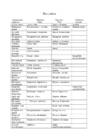
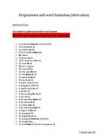
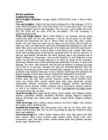
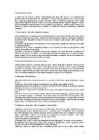
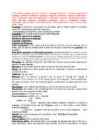
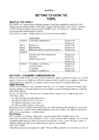
Derivation Omadussõna Nimisõna Tegusõna Määrsõna Adjective Noun Verb Adverb Angry- vihane Anger- viha Anger- vihastama Angrily Embarassed- Embarrassment- piinlikus Embarrass- piinlikust Embarrassingly piinlik tundma Amazed- Amazement- hämmastus Amaze- hämmastama üllatunud Disappointed- Disappointment- pettumus Disappoint- pettuma pettunud Sad- kurb sadness- kurbus Sadden- kurvastama Terrified- Terror- hirm Terrify- hirmutama hirmunud Shocked Shock Shock Anxious- Anxiety-ärevus närviline Beautiful- ilus Beauty- iludus Beautifully- ...
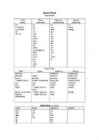
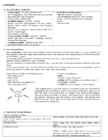
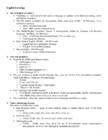
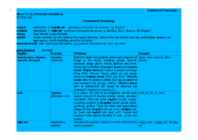
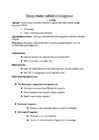
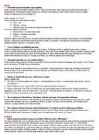
DERIVATION (tuletamine) Verb Noun Adjective Adverb (öeldis) (nimisõna) (omadussõna) (määrsõna) -en -er -en -ly -fy (beauty -or -cal nicely beautify) -ist -able cruelly -ate -ics -less -ize/ ise -ism -al -ion -ed -ation -ent -ing -ant -ness -ful -let -ie -ment -ish -ee (employee) -ive -dom -ous -ence ...
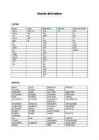
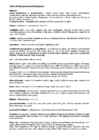
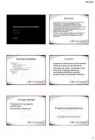
Words derivation LÕPUD: Noun Verb Adjective Adverb Prefix & Sufix -ation -ise/-ize -ing -ly dis- -ence -en -ive ir- -ion en- -able im- -ance -ate -y -il -age -fy -ed in- -er -ical un- -ing -ant over- -ness -ent out- -ity -en under- -ition -ous -ment -ful -hood -ible -ship -less -ist ...
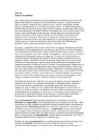
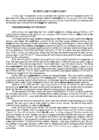
There are also a number of broadly European historical events and features (e.g. the Roman Empire, the Enlightenment) that affected many European languages, including the Romance languages, in similar ways. So the identity of these languages as a group is due at least in part to features of their lexicons. To discuss this we need some terminology for talking about word-formation and diachronic lexical changes. The main grammatical mechanisms that languages have for creating new words are derivation and compounding. Some languages prefer one mechanism over the other. These mechanisms are fairly systematic and predictable and hence tend to feature in discussions of language structure. Derivation generally involves the use of affixation of various types, e.g. getting the noun derivation from the verb derive. Compounding involves putting together two existing elements of the lexicon (normally "content" words rather than grammatical words and affixes) to create a new word, like matchbox
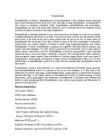
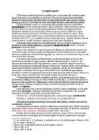
· subject TO · TO sb/sth · sikution TO · rude TO · subject TO · similar TO · subscribe TO FOR · ready FOR · reason FOR · demand FOR · cure FOR · necessary FOR · famous FOR KERMO MAISTE · eager FOR With the words home, downtown, uptown, inside, outside, downstairs, upstairs, we use no preposition. WORD FORMATION (DERIVATION) -er/-or,-ian and ist used to discribe people and work what they do -er -or -ist -ian Dancer Actor Artist Beautician Murderer Director Economist Musician Manager Translator Psychologist liberian Farmer Operator Journalis Derivational suffix adjective -ous
However, the derived word tells us something about the speaker’s attitude, which is a newmeaning. Treating expletive infixation as regular wordformation is also in wline with the idea…that diminutives (like doggy) and augmentatives (like super-cool) are instances of wordformation. Four types of affixes: An infix is placed within a word; they are rare in English ( -o- narcology -i- calciferous ) 22. Combining forms 23. Back-formation “…a kind of derivation in reverse, in which a supposed affix is removed from a word”. It is the process of forming a new word (a neologism) by extracting actual or supposed affixes from another word; shortened words created from longer words. Verb: back-form (itself a back-formation). Backformation is a form of shortening in which the omitted material is or is perceived to be a formative, typically an affix. Itsomission produces a new form with a meaning related to but distinct from that of the etymon
and for their protection . Famous Scottish People William Wallace Rod Stewart King MacBeth Sean Connery Alexander Graham Bell Sir Alexander Fleming James Watt Tartans in Scotland The word 'tartan' is derived from the French 'tiretaine' which described a type of material, not a specific color or pattern. It is not, as some have tried to claim, of Gaelic derivation; the Gaelic for tartan is, and has always been, 'breacan'. The earliest tartans were of undyed wool from the indigenous Soay sheep: light brown, dark brown and white. The oldest preserved Scottish tartan is a fragment in these colours known as 'the Falkirk tartan'. National symbols · The national flag of Scotland, known as the Saltire or St. Andrew's
Stonehenge Riverside Project:[5] " Stonehenge was a place of burial from its beginning to its zenith in the mid third millennium B.C. The cremation burial dating to Stonehenge's sarsen stones phase is likely just one of many from this later period of the monument's use and demonstrates that it was still very much a domain of the dead. " Etymology Christopher Chippindale's Stonehenge Complete gives the derivation of the name Stonehenge as coming from the Old English words "stn" meaning "stone", and either "hencg" meaning "hinge" (because the stone lintels hinge on the upright stones) or "hen(c)en" meaning "hang" or "gallows" or "instrument of torture". Medieval gallows consisted of two uprights with a lintel joining them, resembling Stonehenge's trilithons, rather than looking like the inverted L-shape more familiar today. The "henge" portion has given its name to a class of
Meil võib olla raske öösel korralikult magada. o Kohe pärast uinakust ärkamist oleme uimased ja halvasti kontsentreerunud. (http://www.sleepfoundation.org/site/c.huIXKjM0IxF/b.2419153/k.8430/The_Short_Stor y_on_Napping.htm) Kirjeldus ühest lõunauinakut uurivast katsest Uuringu läbiviimine Uuringu nimi: ,, The role of a short post-lunch nap in improving cognitive, motor, and sprint performance in participants with partial sleep derivation" Uuringu läbiviijad: Research Institute for Sport and Exercise Sciences; J. Waterhouse, G. Atkinson, B. Edwards, T. Reilly Uuringus osales 10 meessoost isikut, keskmise vanusega 23,3a. Kõik osalejad olid hea tervise juures ega põdenud unetushäireid. Nädal enne uuringut läbisid kõik osalejad koolituse, mille käigus harjutati testideks ja tutvustati uuringu läbiviimise vahendeid. 24h. Enne katse toimumist keelati osalejatel tarbida alkohoolseid ja kohveiini sisaldavaid jooke tarbida
Three types of clipping: Fore clipping- retain the final part of the word- racoon - coon, telephone- phone Back clipping- retains the beginning crocodile- croc, doctor- doc, gasoline-gas Ambiclipping- middle part is retained- influenza- flu Clipping means beginning plus beginning, situation comedy- sitcom Blends blends form if you take beginning plus the end- money plus energy=monergy Clipped compounds compounds formed by clipping. Conversion A type of derivation where no suffix is used to change the word class. Catch as a verb and catch as a noun, break-down as a verb and break-down as an adjective. Compounds Are formed by joining two or more root morphemes. Compounds are often idiomatic in meaning or at least not entirely transparent. Coffe plus pot equals coffeepot Solid, hyphenated, and open compounds An open compound means that the words of the compound are written separately (credit card), a hyphenated compound separates the
+u +v = v 2 + 2 + - t z r z r r r r 2 9. Find velocity components for ,,Kelvin cat eyes": U * h y x -U *t ( x, y , t ) = U * y + * Ln cosh( ) + A * cos( ) 2 h h u= v=- We know that y and x , we need take derivation from given equation: U h y x - U t u= = U y + ln cosh + A cos y y 2 h h y U sinh =U + h y x - U t 2 cosh + A cos h h U h y x - U t v= = U y + ln cosh + A cos =
või keelevõrdluse teel; tähistab ka diakriitikut (täpitähte), nt Buch Bücher kirjakeel keele vorm, mis on esitatud kirjasüsteemi abil; ei esine üksi vaid alati täiendusena kõnekeelele, kuigi mõnest surnud keelest on säilinud ainult kirjakeel; keele ühtseim kuju klusiil sulghäälik (g, b, d, k, p, t), moodustatakse õhuvoolu täieliku sulgemise abil konversioon nähtus, kus sõna võib kuuluda mitmesse sõnaliiki, kusjuures sõna ise ei muutu (zero- derivation) kreoolistumine kreoolistumine algab pidzinist; nt inimesed transporditakse vastu tahtmist teisele maale, nad kaotavad kontakti oma emakeelega kuid ei suuda ka uue kogukonna keelt selgeks õppida. Algeline grammatika. Pidzini arengut kreoolkeeleks nimetatakse kreoolistumiseks kreoolkeel keel, mis on tekkinud mitme keele koosmõjul (nt kolonisatsiooni tagajärjel); erineb pidzinkeelest, sest kreoolkeel on saanud naturaalseks keeleks ja seda õpitakse esimese keelena, sellel
modify an existing meaning, the combining form adds a layer of extra meaning to the word, e.g. bio- (life, living) biochemistry -cide (killing) pesticide Mal- (bad) – maladjusted, malodorous -graphy (writing) – biography, cartography 22. Back-formation The process of creating a new lexeme(word) usually by removing actual or supposed affixes. A derivation in reverse. Adsorption – adsorb Babysitter – babysit Television – televise Bartender – bartend 23. Alphabetisms, initialisms, acronyms Alphabetisms function as nouns and adjectives and are formed of letters of the alphabet. Initialisms are alphabetisms, where the initial letters of a phrase are taken to replace the phrase. All the letters are pronounced as a sequence.
It's a syntactic word building (ehk compression) Derivational compounds are compound derivatives (nt, black heared boy). Compounds may be based on reduplication (nt, hush-hush, murmur). Ironic words (nt, pretty-pretty), ablaut combinations two parts with same consonant sounds but different vowels (nt, chit-chat foolish talking). There is also rhyming combinations (hoity-toity) 10. Conversion is a non affixal formation of words. (zero derivation) . Conversion is using a word of one part of speech as a word of some other part of speech. Words with complex structure are not converted as a rule. (nt, childhood, friendship) Noun becomes a verb (anger, to anger)- that's the basic model of conversion Adj becomes a verb (to thin, to slow, to equal) Prep becomes a verb (to out, to down) Prep becomes a noun (ups and downs) Substantivation Substantivation of adjectives is when nouns are converted from adjectives. They
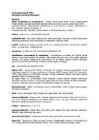
(cf. Non-count or non- countable nouns) decline käänama demonstrative (pronoun) demonstratiiv- Grammatical term for the items this, that, these, those. Shall I put that into this box over pronoomen, näitav The demonstrative specifies whether the referent is here? asesõna close or distant in relation to the speaker. derivation derivatsioon, A main process of word formation by which one word is midnight, unfortunate, redo, tuletus formed ('derived') from another, most commonly by hopeless adding affixes to base forms. This brings about a change of meaning and/or grammatical class.
keelevõrdluse teel; tähistab ka diakriitikut (täpitähte), nt Buch Bücher kirjakeel – keele vorm, mis on esitatud kirjasüsteemi abil; ei esine üksi vaid alati täiendusena kõnekeelele, kuigi mõnest surnud keelest on säilinud ainult kirjakeel; keele ühtseim kuju klusiil – sulghäälik (g, b, d, k, p, t), moodustatakse õhuvoolu täieliku sulgemise abil konversioon – nähtus, kus sõna võib kuuluda mitmesse sõnaliiki, kusjuures sõna ise ei muutu (zero- derivation) kreoolistumine – kreoolistumine algab pidžinist; nt inimesed transporditakse vastu tahtmist teisele maale, nad kaotavad kontakti oma emakeelega kuid ei suuda ka uue kogukonna keelt selgeks õppida. Algeline grammatika. Pidžini arengut kreoolkeeleks nimetatakse kreoolistumiseks kreoolkeel – keel, mis on tekkinud mitme keele koosmõjul (nt kolonisatsiooni tagajärjel); erineb pidžinkeelest, sest kreoolkeel on saanud naturaalseks keeleks ja seda õpitakse esimese keelena, sellel on
metabolic degradation. Ecotoxicity Releases into the environment are likely to occur during production and processing as intermediate as well as from use of products containing the substance. Aquatic Effects Distribution modelling estimates water to be the main target compartment for formaldehyde. The most sensitive organism in an valid acute aquatic toxicity test was Daphnia pulex with an EC50 (48 h) of 5.8 mg/l. For the derivation of the PNECaqua an assessment factor of 1000 is applied on this value resulting in a PNECaqua of 5.8 g/l.n. (EC50 - half maximal effective concentration; PNEC - Predicted No Effect Concentration) Terrestrial Effects Nematodes in peat were killed by application of formalin (37 % formaldehyde solution) at 179 ml/m³ (Lockhart 1972). Pollen grains of Lilium longiflorum which had been sown in a straight line on a culture medium were exposed separately to various concentrations of injurious gases
American languages. circumfixes morphemes that are attached to a root or stem morpheme both initially and finally. Morphs: the concrete realisation of a morpheme (`was' be, past, singular) Allomorphs: a/an Types of affixes: Derivational and infelctional Derivational affixes: Derivational affixes may change the grammatical class of the root verbs into nouns, nouns into adjectives (boy, boyish), and so on. Derivation is a lexical process which actually forms a new word out of an existing one by adding affixes to stems or roots. consideration, considerate, inconsiderate, inconsiderateness Inflectional affixes: Inflectional affixes may be described as `relational markers' that fit words for use in a sentence (express a syntactic relation). Inflections do not change the grammatical class of a given item or produce new lexemes, just different word forms.
8 How long have people explored the Mars and which invention enhanced the exploration? 9 Find the main points about the Mars One mission. 10 What is the difference between a cosmonaut, astronaut and taikonaut? 11 Explain the difference between the words corps and corpse? How do you pronounce these words? 12 Translate the italicized expressions and bold words in the text. Make sure that your translation is appropriate! 13 Derivation is the process of forming a new word from an existing word, often by adding a prefix or suffix. For example, from the word HAPPY we can derive the following words: happen, happily, happiness, unhappy, unhappiness. Make derivations from the following words, using prefixes and suffixes and translate each word: Able Common Entertain Apply
The Altair pictured on the cover of the magazine is actually a mock-up, as an actual computer was not available. 1974 Alto A personal computer to be used for research Cost: $32,000 Never produced for profit First serious machine to feature a modern user interface: windows, mouse, etc invented by Engelbart in 1964 Great influence on Macintosh Great influence on Microsoft C language: first half of 70s Influences/derivation history: from ALGOL to C ALGOL 58/60: Hoare, Perlis, Dijkstra, Kurtz, ..., Kotli,... BCPL derivative of ALGOL (Strachey) B simplified derivative of BCPL (Ken Thompson) C derivative of B (Dennis & Ritchie) C development 1969-1973 Famous C book 1978 “ The C Programming Language” 1975 Bill Gates and Paul Allen found Micro-Soft (the hyphen is later dropped). 1976
One of them has to do with the form of the conceptual legal dogmatic reasoning. It reminds in this respect deceptively the theory of natural law. As we remember, according to the outlining given to natural law by Christian Wolff, natural law is a pyramid on the top of which there are the most general principles and the foundation of which consists of individual answers derived from them according to the laws of logic. The starting points are mastered by intuition, and the derivation by logic. In the same way it is conceived in pure conceptual legal dogmatics. Also in it the form of the system is hierarchical. The difference from natural law lies really only in the fact - as Carlos Alchourrón and Eugenio Bulygin (1971 p. 51 ff.) emphasize - that the highest principles of natural law have been replaced "by the norms given by the legislator (positive law)" and legal concepts. Otherwise the idea of intuition and deduction are the same as in the Wolffian natural law
While many modern dictionaries list the meanings of words from the most common and current meaning to the oldest meaning, some list their definitions from the earliest meaning to the latest meaning . Therefore, before you choose a definition, you should read all the meaning of the entry, then choose the one that meets your needs . Some dictionaries provide synonyms, or words with the same general meaning, and antonyms, words that have the opposite meaning. Some dictionaries give the derivation, an historical development of the word that follows a word back through different languages to its origin. English language dictionaries contain entries listed in alphabetical order, that is, in an A to Z order . Two guide words appear at the top of each page in a dictionary. When the book is open, the word on the left page is the first entry of the two pages; the word on the right page indicates the last entry on the two pages
industry, and our talents to cement human society more closely together, man to man. The foundation of justice, moreover, is good_faith; -- that is, truth and fidelity to promises and agreements. And therefore we may follow the Stoics, who diligently investigate the etymology of words; and we may accept their statement that "good faith" is so called because what is promised is "made good," although some may find this derivation/a rather farfetched. There are, on the other hand, two kinds of injustice -- the one, on the part of those who inflict wrong, the other on the part of those who, when they can, do not shield from wrong those upon whom it is being inflicted. For he who, under the influence of anger or some other passion, wrongfully assaults another seems, as it were, to be laying violent hands upon a comrade; but he who does not
(1) Ebaolulised ja mitte asjakohased faktid. ,,a collection a hammer, and everything seems made to of facts without a priori guesses as to their importance or relevance," be hit; give a social scientist variables and (2) Faktide analüüs ilma hüpoteesideta ,,an analysis of the general linear model and everything those facts without hypotheses," (3) Induktiivne üldistamine ,,the inductive derivation of seems made to be factored, regressed, generalizations from them, and then" and fit" (4) Üldistatud tulemuste edasine testimine ,,the further (Van de Ven and Poole, 2005: 1383) testing of the generalizations" Lühikokkuvõte olulisematest
nition for Oafish.) Thus, one will write the clause for "renate" as "`Renate' denotes renates" rather than as "`Renate' denotes cordates." To derive the lat- ter (albeit true) statement from our truth theory, one would need to add the contingent and nonlinguistic premise, "All and only renates are cordates." And, according to Davidson, the meaning of a target sentence is given, not by just the T-sentence directed upon that target sentence, but by the T-sentence together with its derivation from the axioms of the truth theory. To avoid the suggestion that being cordate is part of the meaning of "renate," we can require that the T-sentence's derivation contain no nonlinguistic premises. Second reply "Renate" and "cordate" will be distinguished in sentences containing certain sorts of construction, notably in modal sentences and in belief sentences. Whatever semantics Davidson gives for sentences like "There could be a
(3/9/1945, in the Continental style), and his personal keynumber (13, changed to 20 in 1956). The latter three keys generated the keys for two transpositions and the coordinates of a straddling checkerboard through a process that was complicated but that possessed a kind of tractive logic, was meant to be memorized, and probably would be after two or three run-throughs. This process injected an arbitrary five-digit number at the very beginning of the key derivation, strongly influencing the end result. (This number was also inserted in a predetermined position in the cryptogram so that the decipherer would have it. In Hayhanen's case, this position was the fifth group from the end, the position coming from the last figure, 5, of the victory date.) This group changed from message to message, so the enciphering keys, and consequently the ciphertexts of all messages enciphered in this system, would bear no exploitable relation to one another
 annaabi.ee