Leidsid 33 sarnast õppematerjali, mis on seotud failiga "WATER POLLUTION". Need materjalid aitavad sul teemat sügavamalt mõista.
waste, throw, causes, marine, dumping, industrial, plants, toxic, products, animal, urine, diseases, oxygen, could, plastics, bags, choke, animals, anything, chemicals, filters, spoil, drinking, birds, feathers, stuck, drown, blind, trantsport, prevent, sink, rubbishWATER POLLUTION THERE ARE THREE DIFFERENT WAYS THAT WATER CAN BE POLLUTED. ⦿ Surface Water Pollution - Most common type, you can visually see the pollution floating (plastic containers or oil and gasoline spills). ⦿ Ground Water Pollution – This becomes more relevant as it affects our drinking water. It become infected by toxic chemicals. ⦿ Microbial Pollution – Found in the countries who don’t have the facilities to cure the water so the bacteria and viruses grow in the water. The people have no other way of getting water so they are forced to drink it. WHAT CAUSES WATER POLLUTION? ⦿ Wastewater ⦿ Marine dumping ⦿ Industrian waste ⦿ Radioactive waste ⦿ Oli pollution ⦿ Underground storage ⦿ Global warming WHY IS IT A PROBLEM? ⦿ It causes worldwide disasters and deaths.
require urgent attention. 1. Pollution: Pollution of air, water and soil require millions of years to recoup. Industry and motor vehicle exhaust are the number one pollutants. Heavy metals, nitrates and plastic are toxins responsible for pollution. While water pollution is caused by oil spill, acid rain, urban runoff; air pollution is caused by various gases and toxins released by industries and factories and burning of fossil fuels; soil pollution is majorly caused by industrial waste that deprives soil from essential nutrients. FIND OUT 5 WAYS HOW TO STOP POLLUTION. 2. Global Warming: Climate changes like global warming is the result of human practices like emission of Greenhouse gases. Global warming leads to rising temperatures of the oceans and the earth surface causing melting of polar ice caps, rise in sea levels and also flash floods, excessive snow or desertification. FIND OUT 5 WAYS HOW TO STOP GLOBAL WARMING. 3
Water pollution Water pollution is the contamination of water bodies such as lakes, rivers, oceans, and groundwater caused by human activities, which can be harmful to organisms and plants and for all of us. First, we have to talk about the causes of water pollution. Domestic households, industrial and agricultural practices produce wastewater that can cause pollution of many lakes and rivers. Industry is a huge source of water pollution, it produces pollutants that are extremely harmful to people and the environment. Dumping of litter in the sea can also cause huge problems. Different items take different lengths of time to degrade in water. Oceans are polluted by oil on a daily basis from oil spills, everyday shipping and dumping.
Cars also, like factories, produce poisoned gas in the air. So instead of cars, we should use public transport or a bike, in the name of our enviroment. And what about the factories? Well, we can't remove them from the planet, but they should be built in places, where is less forest and no cities near. Water pollution Secondly, water pollution is also a main issue. Many peole throw rubbish in rivers and lakes. Ships at the sea cause oil problems, where oil flows in the water and causes a lot of damage, like killing the sea animals and also birds, who are on the seacoast, where the oil reaches. When these problems continue, soon we won't be able to swim in a clean body of water and the drinking water becomes unusable. In some places there are floods after the snow melts or in autumn, when raining cause sea level rising. When water retreats, it brings
The oil spill of the Exxon Valdez showed many around the world just how horrible the effects of water pollution could be. However, even the Exxon Valdez spill barely touched the surface of the problem of water pollution. The ship spilt only 5% of the oil spilt that year, and oil is just one of many pollutants that people dump into the water every year. Every year, 14 billions pounds of sewage, sludge, and garbage are dumped into the world's oceans. 19 trillion gallons of waste also enter the water annually. The problem of ocean pollution affects every nation around the world. This is especially true because water is able to transport pollution from one location to another. For many years, chemicals were dumped into bodies of water without concern. While many countries have now banned such behavior, it continues to go on today. As the world has industrialized and its population has grown, the problem of water pollution has intensified
How to Stop Water Pollution Water pollution is one of the biggest threats to the environment today. There are several sources of water pollution ranging from sewage and fertilizers to soil erosion. The impact of water pollution on wildlife and their natural habitat can be immense. While it may seem like preventing water pollution can be an overwhelming subject to tackle, there are also a number of things that the average person can do to help stop water pollution. Tips on Preventing Water Pollution The best solution for water pollution is prevention. While pollution that has already occurred is a current threat to all life on Earth, attempts to clean it up may cause even more harm.There are several steps that can be taken to help prevent water pollution from getting worse. Keep Machinery in Good Working Order The oil used to lubricate engines in all types of machines needs to be changed regularly. When the oil is changed, it presents
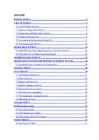
1 Uses of energy in homes...............................................................................................5 2.2 Types of energy used in homes.................................................................................... 6 2.3 Energy use in different types of homes........................................................................ 6 2.4 Commercial Energy Use...............................................................................................9 2.5 Industrial and Manufacturing Energy Use..................................................................11 2.6 Transportation Energy Use.........................................................................................12 RENEWABLE ENERGY..................................................................................................14 3.1 What Role Does Renewable Energy Play in the United States?................................ 14 3.2 Why Don't We Use More Renewable Energy?...............
A very loggers. This way we get to know who they slowly good idea is to are and who hired them and finally we can destroying our use more fine or even put to jail these criminals. planet with public Our world is facing a problem that unawereness. transport directly affects our living standards. It is We just don't instead of water pollution. Water pollution causes the death of many species of fish and water plants that grow in rivers or lakes. This problem has dramatically increased in the last years and fortunately the governments have already started to realise that this is a problem we can solve and they have started solving it. But how do they do it? First of all, they take tests from the swimming live without crocodile leather and mink fur. polluted rivers again, which Also sea turtle shells are being used to make
where isn't growing anything. I'm sure you know there are many ecological problems today. It is the pollution of seas and oceans, dissapearance of many species of animals and plants, acid rains, destruction of the ozone layer and etc. In spite of this, people are still harming the enviroment. The great number of cars contribute much to the air pollution. Many factories are built near rivers into which they put their chemical waste. Amounts of industrial and city waste are placed near the lakes and rivers. Before I stop, let me just say that everyone can start by theirselves . We should keep nature clean, we shouldn't throw garbage there, where it doesn't belong. Finally, may I say that, there is a great need for environmental education. Children of all ages should be taught about the man´s relationship to nature. They should be educated that this planet with its components create one ecosystem. No part can exist separately.
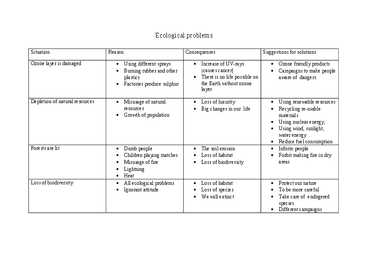
Ecological problems Situation Reason Consequenses Suggestions for solutions Ozone layer is damaged · Using different sprays · Increase of UV-rays · Ozone friendly products · Burning rubber and other (causes cancer) · Campaigns to make people plastics · There is no life possible on aware of dangers · Factories produce sulphur the Earth without ozone layer
exchange the oxygen runs out and living organisms will not survive there. Also, the author points out a problem considering heavy metals which increase the water toxicity. It is estimated that about half of heavy metal inputs to the North and Baltic Seas originate as air pollutants. Heavy metals are indestructible and do not break down. When they sink to the bottom and stay strapped there, they may become toxic to the organisms in the area and also, for people, birds and animals who eat the contaminated water organisms. Last but not least, oil and oil products are also playing a big role in marine pollution. In the authors opinion the most dramatic inputs of oil result from accidents. Aniansson points out that such incidents cause widespread damage because wind and currents carry the oil away from the scene in a short term. Oil and oil products that are not completely insoluble in water
New plants can't grow Global warming Life for animal Greenhouse gases Why they are cutting rainforest? More place for new homes To build new roads Selling the lumber to Japan To generate electricity Trees are used in flooring, furniture and other items Make more space for grazing lands Solution To enforce their anti-logging laws Provide alternatives to poor farmers Use less firewood and paper products Recycle old furniture and wood Educate yourself Ari Pollution Second largest environmental problem Industrial activities are the major causes Urbanisation Vehicular gas emissions dropped by 94% Burning trees Solution of air pollution Use more public transport To limit emissions of carbon dioxie Recycle different products Need to stop or low burning trees Clear the rainforests Use of wind power Use solar energy Waste disposal
It provides a brief review of usage and future prospects of the biogas. I have tried to make this report as understandable as possible. By the end of this report I want to come to a conclusion whether biogas is the best source of future energy or are there any other sources that are better. What is biogas? Typically it refers to the gas produced by the anaerobic digestion or fermentation of organic matter including manure, sewage sludge, municipal solid waste, biodegradable waste. If opportunely refined it can be used for electricity production. Also for space-, water- or process heating. Unintentional production of biogases has been an ongoing issue in many regions of the world, and several nations have also looked to biogas as a potential source of clean energy. India and China have both invested extensively in creative biogas technology to provide fuel for their citizens and there are a number of
Environmental issues in Estonia The Earth is considered to be the most beatiful planets in the Universe. But our planet is threaten by environmental problems. Even a small country like Estonia can make difference. Our capital city is fighting against air pollution. But people produce much refuse and ways of recycling are getting old. Water pollution is also a problem in Estonia. We have factories that let their waste run into rivers. One of the biggest problems in Estonia is air pollution. Our air is polluted by exhaust fumes, because today we have a lot of cars, buses and other machines. In 2009 we had 407 cars to thousand inhabitants, which is lower than European Union average, but this number is still high. Because cars produce gases that contain carbon dioxide. This carbon dioxide in the air causes global warming, which is the result of the greenhouse effect. Tallinn wants to fight
to control water flow; and a reservoir where water can be stored. Hydroelectric power provides almost onefifth of the world's electricity. China, Canada, Brazil, the United States, and Russia were the five largest producers of hydropower in 2004. The first hydroelectric power plant was built at Niagara Falls in 1879. Negative aspects of hydropower Damming rivers may destroy or disrupt wildlife and other natural resources. Hydropower plants can cause low dissolved oxygen levels in the water, which is harmful to river habitats. Hydroelectric power plants don't work for a very long time. Silt, or dirt from a riverbed, builds up behind the dam and slows the flow of water. Geothermal energy Geothermal energy is the heat from the Earth. It's clean and sustainable. It can be extracted without burning a fossil fuel such as coal, gas, or oil. Geothermal fields produce only about onesixth of the carbon dioxide
breathing thing we can also do is to use paper and Ho difficulties andcloth bags instead of plastic bags. w can we stomach We can also fight against water make our problems. We pollution. We should stop using the town a should do products of companies whose factories better something cause pollution, so we will force them to place to before its too use environmentally friendly production live in? late. methods. The government should close The these companies who have polluted rivers first thing for a long time. This way our rivers will The we can do is be cleaner
Testing is defined Thermoplastic Piping Design Codes and Standards AS 3518-2004 Acrylonitrile Butadiene Styrene (ABS) Compounds, Pipes and Fittings for Pressure Applications AS 3690 Installation of ABS Pipe Systems AS2566.1 Buried Flexible Pipelines Part 1: Structural Design AS 2566.2 Buried Flexible Pipelines Part 2 :Installation AS 4041 Pressure Piping Code ASME B31.3 Chemical & Refinery Piping Code ISO 15493 Plastics piping systems for industrial applications -- Acrylonitrile-butadiene styrene (ABS), unplasticised poly (vinyl chloride) (PVC-U) and chlorinated poly (vinyl chloride) (PVC-C) -- Specifications for components and the system Metric series Hydraulic Analysis Darcy Weisbach friction Losses in Pipe factor Losses in fittings Hazen Williams formula Newtonian Fluids Bends and Elbows Non Newtonian Fluids Tees straight through
struck by free neutrons and in turn generate neutrons when they break apart. This makes possible a self-sustaining chain reaction that releases energy at a controlled rate in a nuclear reactor or at a very rapid uncontrolled rate in a nuclear weapon. The amount of free energy contained in nuclear fuel is millions of times the amount of free energy contained in a similar mass of chemical fuel such as gasoline, making nuclear fission a very tempting source of energy; however, the products of nuclear fission are radioactive and remain so for significant amounts of time, giving rise to a nuclear waste problem. Concerns over nuclear waste accumulation and over the destructive potential of nuclear weapons may counterbalance the desirable qualities of fission as an energy source, and give rise to ongoing political debate over nuclear power. What is radioactive decay? Radioactive decay is the process in which an unstable atomic nucleus loses energy by
Hydropower is the second largest source of renewable energy consumption. Biomass and conventional hydroelectric power had the largest volumetric increases at 220 and 166 trillion Btu respectively, while wind energy consumption had the fastest annual rate of growth at almost 50 percent. The electric power sector continued to be the largest consumer of renewable energy in 2006 (55 percent of total), primarily due to the very large contribution of conventional hydroelectric power . The industrial sector was second (29 percent of the total), due to that sector's major consumption of wood and derived fuels. Geothermal and conventional hydropower played only minor roles in the industrial sector. The residential sector also consumed wood for space heating and solar energy for water heating and electricity. The commercial sector accounted for just 2 percent of total renewable energy consumption. The transportation sector was the fastest growing sector, consuming 40 percent
Foundation, the long list of health- and environment- improving benefits of having trees around include reducing your air-conditioning costs by providing shade; possibly raising the property value and resale appeal of your home; pulling carbon dioxide out of the environment and creating oxygen; improved water quality; and providing you with calming surroundings. . RECYCLE GLASS RECYCLE PAPER Recycled glass reduces related air By using waste paper to produce new paper disposal problems are reduced. pollution by 20 percent and Just the Sunday papers would save related water pollution by 50 more than half a million trees every percent. If it isn't recycled it can week. take a million years to decompose. . RECYCLE OLD CELL PHONES RECYCLE UNWANTED WIRE The average cell phone lasts around HANGERS
running water used to natural gas threw mostly dams being 50% to provide energy. efficient. · Hydropower is · The only problem about 1/3 the cost is, you need water. of using fossil fuels and about 1/6 the cost of natural gas. Biofuels · Using natural I Love you Plants materials to turn into fuel or forms of combustible energy. · Which is mostly plants and plant products Cost Efficient? · A study done by OSU So much for the love.... · Going to biofuels would be like adding a new gas tax. About 25 cents. · And it is not proven to reduce green house gases and may even produce more of them. Geothermal Energy -By using heat from the earth's crust in forms of hot water and steam to power generators for electricity The Math? · Geothermal Energy systems are expensive to put in. · But they are able
You should switch off anything, that uses electricity. If you’re not using it, then turn it off, it’s simple. This goes for lights, televisions and so on. Also try unplugging if possible, because even when an appliance is turned off, it still may use power. You could switch your light bulbs to LED light bulbs, because these are using less energy and even last longer. If you use renewable energy sources, you won’t cause burning fossil fuels, that causes pollution. Another way how to help the enviroment would be saving water. Turn off the water, when you’re not using it. People often leave water running, when they’re brushing teeth- turn if off between rinses! If you find a leak somewhere, fix it and in the meantime put a bowl orsm under the drip. Also you should conserve water. Take shorter showers, run your dishwasher only when it’s completely full and if possible reuse water.
D i ox i n s a n d f u r a n s i n t h e atmosphere. Their impact on humans and nature. Emission sources What are dioxines and furans? The term Dioxin is commonly used to refer to a family of toxic chemicals that all share a similar chemical structure and a common mechanism of toxic action. Most dioxins and furans are not manmade or produced intentionally, but are created when other chemicals or products are made. This family includes: seven of the polychlorinated dibenzo dioxins (PCDDs), ten of the polychlorinated dibenzo furans (PCDFs) and twelve of the polychlorinated biphenyls (PCBs). · PCDD · 2,3,7,8TCDD · PCDF · PCB · PCDDs and PCDFs are not commercial chemical products but are trace level unintentional byproducts of most forms of combustion and several industrial chemical processes. Of all
Taking up cycling instead of using a car is too dangerous in cities. It could be argued that taking up cycling is very healthy for people. It supports people more to move and it is like doing a sport. Besides it is very good for environment. Thanks to using bicycles cities air will be cleaner and air is not such impure. Thanks to cleaner air people's can breathe better air. This is partly true, but taking up cycling instead of using a car is really more dangerous than use only cars. Thanks to taking up cycling traffic will go busier and messier. There is much different kind of movers in traffic and it makes traffic really dangerous. It is clear that it is not too dangerous. There are many cities where cycling is very popular, for example in Copenhagen. If this method will be chosen, city needs to build special cycling roads. Thanks to these roads traffic should be safer. More energy is used up taking items to recycling banks than the benefits gained from recycl
Each part has a special job, and all the parts work together to keep you alive and healthy. Good health is one of the most important things in life. There are certain things we can do to stay healthy. We should eat a balanced diet that includes the right kinds of food and drink plenty of clean, fresh water. We should exercise regularly, strengthening our muscles and keeping us in shape. Exercise helps the blood circulate around our bodies, cleaning out waste and supplying plenty of oxygen. It is also important what we get enough sleep. The number of hours we sleep we need depend on our age. Young babies sleep for 20-22 hours each day, whereas older people often need only 6-7 hours. 2.1 Early hospitals The earliest known institutions aiming to provide cure were Egyptian temples. In ancient times temples dedicated to the gods of healing used to have a hospital area. Sick people came there to pray and be treated. Later in the Middle Ages hospitals
The main threat posed to living resources by the persistent residues of spilled oils and water-in- oil emulsions ("mousse") is one of physical smothering. The animals and plants most at risk are those that could come into contact with a contaminated sea surface. Marine mammals and reptiles; birds that feed by diving or form flocks on the sea; marine life on shorelines; and animals and plants in mariculture facilities. The most toxic components in oil tend to be those lost rapidly through evaporation when oil is spilt. Because of this, lethal concentrations of toxic components leading to large scale mortalities of marine life are relatively rare, localised and short-lived. Sub-lethal effects that impair the ability of individual marine organisms to reproduce, grow, feed or perform other functions can be caused by prolonged exposure to a concentration of oil or oil components far lower than will cause death
Though you may think that water is very common on our planet, but most of it is circulating in oceans and due the high salinity, it can’t be used to satisfy people’s needs. Clean water is only 3% of the World’s whole water supply and even though most of it is in permafrost. Water cleaning is expensive and indicative. That is why we need to use water sparingly. You don’t have to do much to use water sparingly. Just don’t let run the water when you brush your teeth because you may waste about 30 litres of water per day with that, all depending on the time it takes for you. Don’t flush toxic substances down from your sink, because with those in the water system it is harder to get the chemicals out of that water, Instead but those into a garbage can or collecting places. With that you make the water cleaning a little bit easier and these are the little things that matter. But getting clean water to everywhere is a problem and it will always be a problem
Nitrates can remove additional calcium and magnesium from the soils. Social effects Humans can become seriously ill, even die from the effects of acid rain. One of the major problems caused in a human being is respiratory problems. Many can find it difficult to breathe, especially people who have asthma. Asthma, along with dry coughs, headaches, and throat irritations can be caused by the sulfur dioxides and nitrogen oxides from acid rain. Acid rain can be absorbed by both plants (through soil and/or direct contact) and animals (from things they eat and/or direct contact). When humans eat these plants or animals, the toxins inside of the things they eat can affect them. It can cause brain damage, kidney problems and even Alzheimer's disease. The countries that are producing the majority of the pollutions that causes acid rain are not that badly affected (Germany, Britain, USA). Instead
These chemicals come from a variety of sources. Among the many types of air pollutants are nitrogen oxides, carbon monoxides, and organic compounds that can evaporate and enter the atmosphere. Air pollutants have sources that are both natural and human. Now, humans contribute substantially more to the air pollution problem. Forest fires, volcanic eruptions, wind erosion, pollen dispersal, evaporation of organic compounds, and natural radioactivity are all among the natural causes of air pollution. Usually, natural air pollution does not occur in abundance in particular locations. The pollution is spread around throughout the world, and as a result, poses little threat to the health of people and ecosystems. Though some pollution comes from these natural sources, most pollution is the result of human activity. The biggest causes are the operation of fossil fuel-burning power plants and automobiles that combust fuel
Ott Speek Subject: English Geodesy Study group: GI-21b PETROLEUM PRESENTATION Petroleum (L. petroleum, from Greek: Πέτρα (rock) + Latin: oleum (oil) is a naturally occurring flammable liquid consisting of a complex mixture of hydrocarbons of various molecular weights and other liquid organic compounds, that are found in geologic formations beneath the Earth's surface. The name Petroleum covers both naturally occurring unprocessed crude oils and petroleum products that are made up of refined crude oil. A fossil fuel, it is formed when large quantities of dead organisms, usually zooplankton and algae, are buried underneath sedimentary rock and undergo intense heat and pressure. Petroleum is recovered mostly through oil drilling. This comes after the studies of structural geology (at the reservoir scale), sedimentary basin analysis, reservoir characterization (mainly in terms of porosity and permeable structures). It is refined and
oxygen, and other gases already present there to form sulfuric acid, ammonium nitrate, and nitric acid. These acids then disperse over large areas because of wind patterns and fall back to the ground as acid rain or other forms of precipitation. The gases responsible for acid deposition are normally a byproduct of electric power generation and the burning of coal. As such, it began entering the atmosphere in large amounts during the Industrial Revolution and was first discovered by a Scottish chemist, Robert Angus Smith, in 1852. In that year, he discovered the relationship between acid rain and atmospheric pollution in Manchester, England. Although it was discovered in the 1800s, acid deposition did not gain significant public attention until the 1960s and the term acid rain was coined in 1972. Public attention further increased in the 1970s when the New York Times published reports about problems occurring
2.1 Finland 2.1.1 Background Finland was a province and then a grand duchy under Sweden from the 12th to the 19th centuries, and an autonomous grand duchy of Russia after 1809. It won its complete independence in 1917. During World War II, it was able to successfully defend its freedom and resist invasions by the Soviet Union albeit with some loss of territory. In the subsequent half century, the Finns made a remarkable transformation from a farm/forest economy to a diversified modern industrial economy; per capita income is now among the highest in Western Europe. A member of the European Union since 1995, Finland was the only Nordic state to join the euro system at its initiation in January 1999. In the 21st century, the key features of Finland's modern welfare state are a high standard of education, equality promotion, and national social security system currently challenged by an aging population and the fluctuations of an exportdriven economy
Gerly Haaristo 206 RMÜ The Disappearing Rainforests Kaduvad Vihmametsad · Rainforests once covered 14% of the earth's land surface; now they cover a mere 6% and experts estimate that the last remaining rainforests could be consumed in less than 40 years. · Vihmametsad katsid kunagi 14% maapinnast, praegu katavad nad ainult 6% ja eksperdid arvavad et viimased alles olevad vihmametsad nö. tarvitatakse ära vähema kui 40 aasta pärast. Causes of rainforest destruction Vihmametsa hävitus põhjused. · Logging · Agriculture · Fuelwood- küttepuud · Large Dams- suured tammid · Mining and industry- kaevandus ja tööstus. · Tourism turism. · Poverty and overpopulation vaesus ja ülerahvastatus. · Colonialism kolonialism. Why save it? · The rainforest is home to over · Vihmamets on koduks rohkem
 annaabi.ee