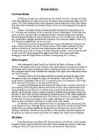
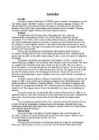
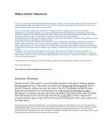
Second level Third level Fourth level Fifth level National symbols Golden wattle Flag of Australia Goat of arms of Australia Green and gold Animal: Red Kangaroo (unofficial emblem) Bird: Emu (unofficial emblem) Coat of arms of australia Click to edit Master text styles Second level Third level Fourth level Fifth level Natural Resources Coal Iron ore Gold Silver Nickel Mineral sands Lead Diamonds Natural gas Animals & Birds Platypus Emu Koala Kangaroo Dingo Kookaburra Currency
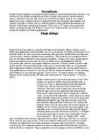
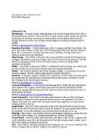
ANDY WARHOL 6.08 1928-22.02 1987 Biography Andy Warhol (real name Andrew Warhola) was born in Pittsburg. 1945-1949 learnt graphics in Pittsburg Carneg Technical Collegue Worked in magazines Vogue, Harpar's Bazaar 1952 first art exhibition in New York 1960 ,,Campbell's soupcan" pictures 1962 started to do prints of celebrities as Marilyn Monroe, Elizabeth Taylor 1962 founded art studio The Factory Favourite print tehnique is silknet 300 unofficial movies - first movie ,,Sleep" showd man, who was sleeping six hours solidly 1968 was attempted murder to Warhol from woman who worked in The Factory 1975 ,,Andy Warhol philosophy" Popart icon Andy Warhol Campbell's soupcan Marilyn Monroe Mickey Mouse Che Guevara Knives Banana Dollar Andy Warhol's self-portrait
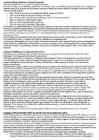
50,346 sq mi Population- 49 446 600 (2004) National flag of England Coat of arms of England Rose · The Tudor rose is the national floral emblem of England, and was adopted as a national emblem of England around the time of the Wars of the Roses. Anthem · England does not have an official designated national anthem, as the United Kingdom as a whole has " God Save the Queen". However, the following are often considered unofficial English national anthems: · "I Vow to Thee, My Country" · "Land of Hope and Glory" · "Nimrod" · "Jerusalem" · "Heart of Oak" Climate · England has a temperate climate, with plentiful rainfall all year round, although the seasons are quite variable in temperature. However, temperatures rarely fall below -5 °C (23 °F) or rise above 30 °C (86 °F). Ethnic groups (2006) · 89% White 6% South Asian 3% Black 2% Mixed race 1% Chinese 1% Other
Since the 1930's, the song has been popular with Boy Scouts and Girl Guides. Its origin is unclear. It is sung regularly at Canadian Scout and Girl Guide Camps. "The Maple Leaf Forever" is a Canadian song written by Alexander Muir (1830 1906) in 1867. Muir was said to have been inspired to write this song by a large maple tree which stood on his property: Maple Cottage. The song became quite popular in English Canada and for many years served as an unofficial national anthem. Maples Cottage is a historic cottage in Westborough, Massachusetts. "Northwest Passage" is one of the best-known songs by Canadian musician Stan Rogers. An a cappella song. While it recalls the history of early explorers who were trying to discover a route across Canada to the Pacific Ocean , its central theme is a comparison between the journeys of these past explorers and the singer's own journey to and through the same region.
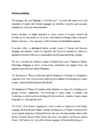
Australian symbols National symbols of Australia are the symbols that are used to represent what is unique about the nation, reflecting different aspects of its cultural life and history. FLAG- It was first flown in Melbourne on 3 September 1901. This date has been proclaimed as Australian National Flag Day. COAT OF ARMS- The Coat of Arms is the formal symbol of Australia and its ownership and authority. ANTHEM- Created by the Scottish-born composer Peter Dodds McCormick, the song was first performed in 1878, and was sung in Australia as a patriotic song. It did not gain its status as the official anthem until 1984, following a plebiscite to choose the national anthem in 1977. COLOURS- They were formally proclaimed by the Governor-General of Australia, Sir Ninian Stephen, on the 19th of April, 1984; on advice from the then Prime Minister Bob Hawke. FLORAL EMBLEM- It have been the informal floral emblem of Australia for many year...
pronunciation of "Bob" in the Blackadder II episode "Bells". Atkinson suffers from a stammer, and the over-articulation is a technique to overcome problematic consonants. Atkinson's often visually based style, which has been compared to Buster Keaton, sets him apart from most modern television and film comics, who rely heavily on dialogue, as well as stand-up comedy which is mostly based on monologues. Rowan made his big-screen debut in 1983's unofficial James Bond picture Never Say Never Again. Despite this film receiving mixed reports, he has continued to juggle TV and film roles. In 1997 Mr. Bean came to the big screen. This was followed by spoof Bond feature Johnny English in 2003. As a long-time collaborator with writer Richard Curtis, he has regularly contributed to Comic Relief. He even played the 9th Doctor, in the 1999 Doctor Who spoof The Curse Of Fatal Death.
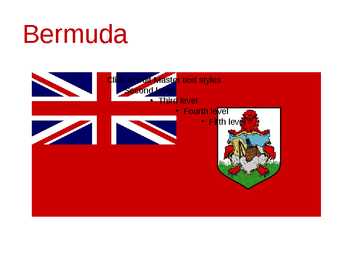
municipalities: Hamilton (city) St. George's (town) Sport is a popular pastime in Bermuda, especially football (soccer), sailing, cricket, golf, and rugby. Bermuda's national cricket team participated in the Cricket World Cup 2007 in the West Indies. Their most famous player is a 130 kg police officer named Dwayne Leverock Coins circulating in 2006 Motto: "Quo Fata Ferunt" (Latin) · "Whither the Fates Carry [Us]" · Anthem: God Save the Queen (official) Hail to Bermuda (unofficial) · Capital (and largest city): Hamilton · Official languages : English · Ethnic groups : 54.8% black 34.1% white 6.4% multiracial 4.3% other 0.4% unspecified · Area : Total 53.2 km2 Water 26% ` · Population: 2009 estimate 67,837 · Currency : Bermudian dollar · Time zone : Atlantic (UTC -4)
Jaanipäev, therefore, always reminded Estonians of their independence in the past, despite Soviet attempts to eliminate such ideas. The tradition before the Soviet occupation, which has now been restored, was for a fire to be lit by the Estonian President on the morning of Võidupüha. From this fire, the flame of independence was carried across the country to light the many bonfires. During the transition to the re-establishment of Estonia's de facto independence, Jaanipäev became an unofficial holiday, with many work places closing down. It once again became an official national holiday in 1992. On Jaaniõhtu, Estonians all around the country will gather with their families, or at larger events to celebrate this important day with singing and dancing, as Estonians have done for centuries.
football league. The modern passing game of football was developed in London in the early 1870s. For these reasons England is considered the birthplace of the game of football or soccer. The national flag of England, known as St. George's Cross, has been the national flag since the 13th century, originally it was used by the Republic of Genoa. There are numerous other symbols, both official and unofficial, including the red rose, the White Dragon and the Three Lions featured on the coat of arms. England's National Day is St George's Day, as Saint George is the patron saint of England, it is held annually on 23 of April. England has no official anthem; however, the United Kingdom's "God Save the Queen" is currently used.
colours known as 'the Falkirk tartan'. National symbols · The national flag of Scotland, known as the Saltire or St. Andrew's Cross, dates (at least in legend) from the 9th century, and is thus the oldest national flag still in use. Since 1606 the Saltire has also formed part of the design of the Union Flag. There are numerous other symbols and symbolic artefacts, both official and unofficial, including the thistle, the nation's floral emblem, the 6 April 1320 statement of political independence the Declaration of Arbroath, the textile pattern tartan that often signifies a particular Scottish clan, and the Lion Rampant flag . · Flower of Scotland is popularly held to be the National Anthem of Scotland, and is played at events such as football or rugby matches involving the Scotland national team · St Andrew's Day, 30 November, is the national day, although
was physically weak. 3.SLAID In 1533 when Edward died another rival was put forward- her cousin Lady Jane Grey who supported Protestantism. Public sympathy remained with Mary, and she soon overcame resistance to her accession. . Mary first began to earn her unofficial title of "Bloody Mary" when she had her cousin executed to prevent any possible power struggle Mary tried to turn England back to Roman Catholicism. This effort was carried out by force, and hundreds of Protestant leaders were executed. The first was John Rogers the printer of the "Matthews-Tyndale Bible" .It was followed by the execution of former archbishop Thomas Cranmer,
Midsummer's eve is important for lovers. Among Estonian fairy tales and literature there is the tale of two lovers, Koit and Hämarik. The tradition before the Soviet occupation, which has now been restored, was for a fire to be lit by the Estonian President on the morning of Victory Day. From this fire, the flame of independence was carried across the country to light the many bonfires. St John's Day became an unofficial holiday, with many work places closing down. It once again became an official national holiday in 1992. On Jaaniõhtu, Estonians all around the country will gather with their families, or at larger events to celebrate this important day with singing and dancing, as Estonians have done for centuries.
Nine O'Clock News.) Atkinson's other creation, the hapless Mr. Bean, first appeared on New Year's Day in 1990 in a half-hour special for Thames Television. Several sequels to Mr. Bean appeared on television until 1995, and the character later appeared in a feature film. Bean was directed by Mel Smith, Atkinson's colleague in Not the Nine O'Clock News. A second film, Mr. Bean's Holiday, was released in 2007. Atkinson's film career began with a supporting part in the 'unofficial' James Bond movie Never Say Never Again. His television character Mr. Bean debuted on the big screen with Bean to international success. A sequel, Mr. Bean's Holiday also became an international success. He has also starred in the James Bond parody Johnny English and its sequel, Johnny English Reborn. Atkinson later appeared in theatrical productions like The Nerd, The New Revue and The Sneeze. Best known for his use of physical comedy in his Mr. Bean persona, Atkinson's other characters
civil cases are also the judges for the high court for criminal cases. Scots Law differs from England's common law system. National symbols The Flag of Scotland, known as the Saltire or St. Andrew's Cross, dates (at least in legend) from the 9th century, and is thus the oldest national flag still in use. The Saltire now also forms part of the design of the Union Flag. There are numerous other symbols and symbolic artefacts, both official and unofficial, including the thistle, the nation's floral emblem, the 1320 statement of political independence the Declaration of Arbroath, the textile pattern tartan that often signifies a particular Scottish clan, and the Lion Rampant flag.Flower of Scotland is popularly held to be the National Anthem of Scotland, and is played at events such as football or rugby matches involving the Scotland national team. However, since devolution, more serious discussion of the issue has led to this being disputed.
9. Prügikast - Rubbish bin(GB)/ trash can(US) - a place where you can throw your trash 10. Õli laigud - Oil spills - pollutions, usually in the sea 11. Lojaalne Loyal - always supporting 12. Orgaaniline - Organic - made without artificial chemical 13. Kaasa haarama - To engage s.b. - to attract s.b. and keep their interest 14. Tagasilöök - A backlash - a strong reaction against s.th. 15. Hüüdnime andma - To dub - to give an ´unofficial` name 16. Kuni - Through(US) until(GB) 17. Lihtrahvas - Grass roots - at the level of ordinary people 18. Bioloogiline mitmekesisus - Biodiversity - many different plants and animals existing in one area 19. Ressursi väljavõtmine - Resource extraction - taking natural products from the earth 20. Vastupidavus - Sustainability - when you can do s.th. for a long period your sustainable 21
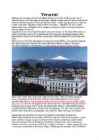
spices, heading practices from Arfica, sensual dances from Cuba it is music that speaks to the souls of the state 6.7 millon people.Beneah sun-drenched palm trees,tris of string musicians isteners el son jaroaocho,a blend of styles from aroud the world that has become the typical music of Veracruz.Between numbers androunds of beer and bpiled shrimp dueling marimba bands launch into ear-busting renditions of "Veracruz" the unofficial state anthem by native spn Agustin Lara."For veracruzanos" says veteran marimba player Matias Montejo, "music is the highest thing" Racking up points, youngsters test their skills on la maquinita, their name for the video game outside a grocery store in Tlacotalpan.for a peso, players get to run high-tech obstacle courses in five mythical worlds.In real life they will be lucky to get to past the obstacles of their own world,a dwindling town of 15,000 in the Papaloapan River Basin."It's a nice
institution Succeeded by his son in 1307 who became King Edward II The Palace of Westminster Edward II's reign is known as a disastrous era for England wars were lost, political plots etc. - Favoured Hugh Despenser with whom he plotted against the barons - His humiliated wife, Isabella of France, formed an alliance in Paris with Roger Mortimer - In 1263 they defeated Edward II, Despenser and their army, Isabella became the (unofficial) Queen - The imprisoned King was given two options to give up his throne for his son or keep his title and be sentenced guilty in incompentence resulting in an appointment of King outside the bloodline - Before his alleged murder in 1327, he rendered up his throne for his son During the first years of Edward III's reign, the country was still controlled by Isabella and Mortimer - When he was 17 years old, he rose up against the
Midlothian and The Bride of Lammermoor. "A sound head, an honest heart, and an humble spirit are the three best guides through time and to eternity" Robert Burns 17591796 National poet of Scotland He is the best known of the poets who have written in Scottish Grew up in poverty and hardship Made compositions and collected folk songs from across Scotland His song Auld Lang Syne is often sung at Hogmanay (the last day of the year), and Scots Wha Hae served for a long time as an unofficial national anthem of the country. Other poems and songs of Burns that remain wellknown across the world today, include A Red, Red Rose, A Man's A Man for A' That, Ae Fond Kiss and Tam o' Shanter. Lord Byron 1788 1824 One of the greatest British poets and a leading figure in the romantic movement, he remains widely read and influential His bestknown works are the lengthy narrative poems ,,Don Juan" and ,,Childe Harold's Pilgrimage "and the short lyric "She Walks in Beauty".
It was composed in 1848 by Friedrich Pacius. The words were written by Johann Voldemar Jannsen. It was performed in 1869 in the first Song Festival in Tartu and it gained popularity during the national movement. It was adopted as the national anthem in 1920, after the World War I. The melody of the anthem is the same as the Finnish have. During the Soviet time the anthem was banned and My Native Land, My Dearest Love was the unofficial anthem but people carried the real anthem in their hearts. Lions were first used as Estonia's heraldic emblem in the 13 th century when they appeared on the large coat of arms of Tallinn. A similar motif was used on the coat of arms of the Province of Estonia under Swedish rule. In 1925 they were adopted officially. The current coat of arms is a golden shield charged with three blue lions with a golden oak branch on each side
Joy", was composed in 1848 by Friedrich Pacius, a Finn of German descent. The Estonianlanguage words were written by Johann Voldemar Jannsen. In 1869 it was performed at the first allEstonian Song Festival in Tartu and gained popularity during the period of the national movement. Estonians carried the melody in their hearts and souls during Soviet occupation, when it was banned. Another song "My Native Land, My Dearest Love" by Gustav Ernesaks, became an unofficial anthem at that time and enabled the people to express their feelings of national identity. COAT OF ARMS Lions were first used as Estonia's heraldic emblem in the 13 th century when they appeared on the large coat of arms of Tallinn. The originated from Denmark, which was ruling Northern Estonia at that time. A similar motif was later used on the coat if arms of the Province of Estonia under Swedish rule. Estonia changed hands but the three lions remained. In 1925 they were
week and, by September 1665, to 7 000 people per week. By late autumn, the death toll began to slow until, in February 1666, it was considered safe enough for the King and his entourage to return to the city. By this time, however, trade with the European continent had spread this outbreak of plague to France, where it died out the following winter. (Wikipedia homepage: http://en.wikipedia.org/wiki/Great_Plague_of_London) 5.1 The Great Fire of London The Great Fire of London was an unofficial end of the Black Death. The fire started at the bakery of Thomas Farriner on Pudding Lane. It spread quickly west across the city of London because the houses were made out of timber. Plague cases continued at a modest pace until September 1666. On 2 and 3 September, the Great Fire of London destroyed much of the centre of London. At about the same time, the plague outbreak tapered off. Although, it is now thought that the Plague had died off before
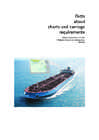
How do I recognise an official ENC? When you are buying: Only authorized distributors sell official ENCs as an ENC service, which includes the delivery of update information. The distributors are authorized either directly by the originating Hydrographic Office or by a cooperation of Hydrographic Offices. When used in an ECDIS: ECDIS distinguishes an official ENC from unofficial data. When unofficial data is used, ECDIS informs mariners that they must navigate by means of an official up to date paper chart by a warning, which appears continuously on the screen. If unofficial data is shown on the ECDIS display, its boundary is to be identified by a special line style. This boundary is visualized as a “one-sided” RED line with the diagonal stroke on the non-HO side of the line.
In 1901 the flag was chosen from about 30000 entries in a public contest. It was officially adopted as Australian flag in 1953. The coat of arms features a kangaroo and an emu (the national animals of Australia), golden wattle (the national floral emblem), a shield with the coats of arms of the six states of Australia and a star for all states and territories. Australia's national anthem is "Advance Australia Fair", which replaced "God Save The Queen" in 1984. the unofficial anthem is "Waltzing Matilda". As said before Australias national animals are kangaroos and emus. Often coalas are mentioned too, its floral emblem is the golden wattle and its national colours are the colours of its flag red, white and blue. Head of state Head of state is Queen Elizabeth II, who is queen of United Kingdom and also queen is Australia. In practice, Governor General performs her functions in queen's absence
In 1869 it was performed at the first all-Estonian Song Festival in Tartu and gained popularity during the period of the national movement. After World War I the melody became the national anthem of Estonia and Finland. It was officially adopted in Estonia after the War of Independence in 1920. The anthem was banned during Soviet occupation and another song, My Native Land, My Dearest Love by Gustav Ernesaks (words by Lydia Koidula), became an unofficial anthem at that time and enabled the people to express their feelings of national identity. The Estonian coat of arms - originates from Denmark, which was ruling Northern Estonia at the time. Lions were first used as Estonia's heraldic emblem in the 13 th century when they appeared on the large coat of arms of Tallinn. A similar motif was later used on the coat of arms of the Province of Estonia under Swedish rule Estonia changed hands but the three lions remained. In 1925 they were
It was a meeting of the King and his Barons and servants at which various administrative and financial problems were discussed. In order to make it easier to put the decisions taken into practice, each Shire had to elect a number of knights to attend at these meetings at report the decisions to their Shires. Edward I continued this experiment and in 1295 called a parliament that became known as the Model Parliament. The House of Commons as a separate Chamber resulted from the unofficial meeting of these knights and burgesses. The person chosen to speak for these commoners in Parliament became known as the speaker. The Hundred Years War fought between France and England had a devastating effect on the English economy. The high taxation necessary to finance the war and the Black Death (1348) led to such extreme hardship for the peasant class that there was a revolt in 1381. Although the Peasant's Revolt was soon put down, it led to greatly improved conditions for
the star represent exactly the same thing that they do on the flag. The supporters of the shield are native Australian animals: the red kangaroo and the emu. Usually the coat of arms is depicted on the background of sprays of golden wattle with a scroll beneath it containing the word `Australia'. Australia's national anthem is `Advance Australia Fair', which replaced `God Save the Queen' in 1984. It was written by a Scottish-born composer, Peter Dodds McCormick. The unofficial anthem of Australia is `Waltzing Matilda'. It tells a story about a swagman, who has named his sleeping blanket Matilda. He is chased by police for stealing a sheep which he wanted to eat. The swagman doesn't want to be punished, so he jumps into a billabong and drowns. The golden wattle was proclaimed the official national floral emblem in 1988. It is a spreading shrub or a small tree, which grows in the under storey of open forest, woodland and
Australia has a British Union flag. It is red, white and blue. Five small stars represent the constellation Southern Cross. The big star represents the country’s states and territories On January 1-s 1901 this flag was chosen from about 30 000 entries in a public contest. It was officially adopted as the Australian flag in 1953. Australia’s monetary unit is Australian dollar. Australia’s national anthem is “Advance Australia Fair”. This replaced “God save the Queen” in 1984. The unofficial anthem is called “Waltzing Matilda”. Conclusion Overall Australia is a very big and very beautiful country. It is famous of its great athletes, the production of merino wool and of course the amazing animals. It’s the only continent which is located all south of equator. It’s a dry country and about one third of it is covered by plains and deserts. It has an interesting history about the aborigines and how the Englishmen got there. Materials Internet: http://www.australia.gov
New York - Viking Penguin Inc., 1982. 4. King, Stephen. Rita Hayworth and Shawshank Redemption in Different Seasons. New York - Viking Penguin Inc., 1982. 5. Reino, Joseph. Stephen King: The First Decade, Carrie to Pet Sematary. Boston - Twayne Publishers, 1988. 6. Underwood, Tom. Conversations on Terror with Stephen King. New York - Warner Books, 1988. 7. 14. Veebruar 1998, Sõnumileht, "Stephen King - õuduse meister." Interneti leheküljed: Unofficial Stephen King Homepage - http://www.geocities.com/Area51/Cavern/1947/Main.htm Stephen King Website - http://www.wco.com/~pace/king.html Stephen King Opening Page - http://www.malakoff.com/skopen.htm Welcome to Castle Rock - http://www.max-net.com/personal/bdobson/king/
having a territory. Lenin wavered on this. Stalin's statement in Marxism and Natl Question, 1914. Natl territories in Crimea and Birobidzhan. After Rev, labeled a nation. Jewish Commissariate, Evsektsia. Koronizatsia, J schools, institutions. Retreat. Jewishness a nationality or a religion? Religious books not allowed. 5th paragraph nationality ?. 16 years old, could decide if parents of diff nationalities. Dec 27 1932. Basis for unofficial discrimination of Js. Not directed towards J. Cities crowded? Stop moving around, anonymity. Affect on Js during Holocaust. ID, ability to succeed, edu and employment. Other nationalities encouraged to increase #s in universities. Take from other. Sources? Proximity in time, books for issuing passports, esp in Baltics, etc. Nationality not listed in intl passports. IL just removed nationality from internal passports. DK party archives, municipal archives propiski, what's approved,
festival. Starting with the fourth festival, mixed choirs were also participating. Starting with the sixth festival in 1896, the festival tradition moved to Tallinn. It began in 1947, during the first song festival (Laulupidu) held after the Soviet occupation, when a centuryold national poem, forbidden by the Soviets, was set to music. "Mu Isamaa on minu arm" ("Lands of My Fathers, Land That I Love") was set to music and the song became the unofficial Estonian national anthem that miraculously slipped by the Soviet censors. In 1969, more than a hundred thousand participants gathered for the century anniversary of a national song festival and, in a spontaneous act of nonviolent resistance, sang this song. For fifty years, it was a musical statement of every Estonian's desire for freedom. http://www.blogto.com/events/3626 Pärnu Hanseatic Days 2008 June 27th 28th
last day. Paul describes his fellow soldiers: he, Leer, Müller, and Kropp are all nineteen years old. They are from the same class in school, and each enlisted in the army voluntarily. Tjaden, a locksmith, is a voracious eater but remains thin as a rail, making Paul wonder where all the food goes to on his skinny frame. Haie Westhus, also nineteen, is a peat-digger with a body as large and powerful as Tjaden's is thin. Detering is a peasant with a wife at home. Katczinsky, the unofficial leader of Paul's small group of comrades, is a cunning older man of about forty years. After a sound night's sleep, the men line up for breakfast. The cook has unwittingly made enough food for 150 men. The men are anxious to eat the rations designated for their fallen comrades, but the cook insists that he is only allowed to distribute single rations and that the dead soldiers' rations will simply have to go to waste. After a heated argument, however, he agrees to distribute all of the food.
Six such agendas can be pinpointed: (1) the Orthodox emancipation agenda (1600-1700), (2) the Russian nation building agenda (1700-present), (3) the scientific agenda (1860-present), (4) the Marxist agenda (1917-1989), (5) the Eurasian agenda (1920-1935), (6) the cybernetic agenda (1953-1975). Russian language Russian language is an East Slavic language and an official language in Russia, Belarus, Kazakhstan, Kyrgyzstan and many minor or unrecognised territories. It is an unofficial but widely spoken language in Ukraine and Latvia, and to a lesser extent, the other post-Soviet states and former members of the Eastern Bloc. Russian belongs to the family of Indo-European languages and is one of the four living members of the East Slavic languages. Written examples of Old East Slavonic are attested from the 10th century and beyond. It is the most geographically widespread language of Eurasia and the most widely spoken of the Slavic languages
intelligentsuse ja kuritegeliku käitumise vahel. IQ tunnusena ennustab sama hästi kriminaalset käitumist kui rass ja sotsiaalne klass ning paremini kui perekonna staatus. Niisuguste tunnuste ja kuritegeliku käitumise seoses kahtlevad aga väga vähesed autorid. Samal ajal on kurjategijate hulgas vähe väga madala intelligentsusega persoone ja enamiku IQ on vahemikus 80100. Vaadeldes seoseid mitteametliku kuritegeliku käitumise (self-report, unofficial) ja IQ vahel, siis ei ole need nii selged. Üheks selle põhjuseks on, et madal IQ ennustab paremini korduvat kuritegelikku käitumist kui ühekordset või harva, samuti on täheldatud retsidivistide madalamat IQ taset kui ühekordselt karistatud kurjategijail.Põhjused, miks intelligentsuse ja kuritegeliku käitumise seoseid on raske tuvastada, olid autorite arvates järgmised:
feudal arrangement. A Real Parliament Edward I (1272 – 1307) brought together the first real parliament. In 1295 he commanded each shire and town to send two representatives to what became known as the Model Parliament. There the barons and the high clergy were present together with the knights and burgesses representing the shires and towns (or boroughs) 4. The ‘House of Commons’ as a separate chamber resulted from the unofficial meetings of these knights and burgesses. The person chosen to ‘speak’ for these ‘commoners’ in Parliament and to the king became known as the Speaker5. In the fourteenth century the House of Lords and the House of Commons became separate chambers. Special and Important In other parts of Europe, similar ‘parliaments’ kept the gentry separate from the commoners. England was special because the House of Commons contained a
confirms their existing situation. Many think that declaratory theory is more relevant, in reality, constitutive theory is more practical. To receive international rights and obligations you have to be recognized, it's easier to deal with the constitutive theory. Northern Cyprus is recognized only by 2-3 countries, and then no-one considers it as an independent state. How many states should recognize? In an unofficial doctrine it says half of the countries. But usually when countries start recognizing the process goes quickly and soon most countries recognize. E.g. Kosowa, a lot of countries recognize it, but it's still less than half; also Taiwan which is officially under China, but recognized by several countries. Another example: Western Sahara. Situations A > B ; On the territory of one country another country is established (e.g. Soviet Union over
Voldemar Jannsen) played an exceptionally important role in the two decades before her death; her poetic talent emotionally and inspirationally expressed the national spirit, glorifying her homeland and its people. Koidula’s song, Mu Isamaa on Minu Arm (My Country is My Love) with the music written by Gustav Ernesaks (1908-1993) finished every song festival since 1947 (a tradition still very much alive), and became the unofficial anthem during the Soviet occupation when her father’s Mu isamaa, mu õnn ja rõõm (My Country is My Pride and Joy), the anthem of the first independent Estonian Republic (music by Friedrich Pacius, 1809-1891) was banned. For the Vanemuine Society, as a founder member of the national amateur theatre, her first play, Saaremaa Onupoeg (The Cousin from Saaremaa) was the inaugural performance of the theatre in 1870.
We ex- plained, and we asked the same question of them. One was an aspiring actor who wanted desperately to succeed at his craft and had come to the meeting to learn if TM would allow him to achieve the necessary self-control to master the art; the re- cruiters had assured him that it would. The second described herself as a severe in- somniac who hoped that TM would provide her with a way to relax and fall asleep easily at night. The third served as unofficial spokesman. He was failing his college courses, because there didn't seem to be enough time to study. He had come to the meeting to find out ifTM could help by training him to need fewer hours of sleep each night; the additional time could then be used for study. It is interesting to note that the recruiters informed him as well as the insomniac that Transcenden- tal Meditation techniques could solve their respective, though opposite, problems.
and the only—man to become a millionaire from cryp-tology. 12. Duel in the Ether: I SHORTLY AFTER NOON on the tense 31st of August, 1939, the last day of peace that the world was to know for six years, Swedish businessman Birger Dahlerus met with Hermann Goring at the Nazi leader's large and richly furnished town house at 2 Leipzigerstrasse in Berlin. Dahlerus had been trying desperately to avert the onrushing cataclysm of war by flying between England and Germany as Goring's unofficial mediator. Britain had pledged to aid Poland if Hitler attacked her, and, in an effort to stave off actual warfare had proposed to both Germany and Poland that they negotiate their differences directly. At a few minutes past one, as Dahlerus and Goring were discussing the situation, an adjutant brought in a red envelope of the kind used for especially urgent affairs of state. Goring ripped it open. When he read its contents, he leaped from his
 annaabi.ee