Leidsid 33 sarnast õppematerjali, mis on seotud failiga "The Palace of Versailles / Versailles' loss". Need materjalid aitavad sul teemat sügavamalt mõista.
palace, versailles, french, even, today, built, government, gardens, mirrors, fact, done, chateau, started, lodge, king, cost, could, located, france, hired, named, total, seven, windows, debt, brought, open, museum, during, back, restored, construction, royal, hunting, 1624, beginning, imagine, northern, southwest, paris, order, such, place, painterLondon History The Romans AD 43- AD 410 The Romans finally invaded Britain in AD 43 from Kent. The Romans lead by Julius Caesar attempted to invade Britain twice before that in 55 and 54 BC but the invasions were unsuccessful. They made their way to the river Thames and sailed up it. The Romans knew it was important to control a crossing point at the river Thames, so they decided to build a settlement on the north bank. Although small settlements had been built on the banks of the Thames, the Romans were the ones who built the first city. They called their city Londinium. The Roman engineers noticed that the point where the swampy river narrowed would make an ideal crossing point, they built London Bridge. Less than 20 years later the native Iceni tribe, led by Queen Boudicca, rose up against the Romans in revenge for mistreatment and burnt Londinium to the ground. The well disciplined Roman army defeated her forces and Londinium was rebuilt
It seems that the Celts, who had been arriving from Europe from the 8th cent BC onward, intermingled with the peoples who were already there. The Celts were extremely talented people, creative and artistic. More than 1 Celtic tribe invaded Br. The descendants of ancient Celts live in Wales, Scotland, Cornwall and Ireland. They lived in primitive society. Druids priests, more powerful than chiefs. Acted like prophets. 2. Stonehenge From prehistoric period. Was built on Salisbury plain between 2500 and 1500 bc. One of the most famous and mysterious archaeological sites in the world. One of the mysteries is how it was built at all with the technology of the time. Another is its purpose. It appears to function as a kind on astronomical clock and we know it was used by the Druids for ceremonies marking the passing of the seasons. It appears in number of novels. These days it is not only the interest of tourists but is also a
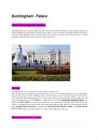
Buckingham Palace About Buckingham Palace Buckingham Palace serves as both the office and London residence of Her Majesty The Queen. It is one of the few working royal palaces remaining in the world today. During the summer, visitors can tour the nineteen State Rooms, which form the heart of the Palace. These magnificent rooms are decorated with some of the greatest treasures from the Royal Collection, including paintings by Rembrandt, Rubens and Canaletto and sculpture by Canova. History Buckingham Palace history is going back to the time of Queen Victoria in 1837 . Then, the Palace has been serving as the London Royal residence. In 1703, the Duke of Buckingham had created the Buckingham House. In 1761, George III (1738 1820) buy it
Art Museum of Estonia Art Museum of Estonia was founded on November 17th, 1919, but it was not until 1921 that it got its first permanent building the Kadriorg Palace, built in the 18th century. In 1929 the palace was expropriated from the Art Museum in order to rebuild it as the residence of the President of Estonia. The Art Museum of Estonia was housed in several different temporary spaces, until it moved back to the palace in 1946. In September, 1991 the Kadriorg Palace was closed, because it had totally deteriorated by then. At the end of the year the Supreme Council of the Republic of Estonia decided to guarantee the construction of a new building for the Art Museum of Estonia in Kadriorg. Untill then the Knighthood House at Toompea Hill served as the temporary main building of the Art Museum of Estonia. The exhibition there was opened on April 1, 1993. Art Museum of Estonia premanently closed down the exhibitions in that building in October 2005.
· Perhaps the epitome of London's surviving pageantry can be found in the ceremonial Changing of the Guard. · A hugely popular spectacle, the Changing of the Guard takes place at a range of royal locations in and around · London daily during the summer and on alternate days for the rest of the year. · There is no ticketing, so make sure you get there early. · Ever since 1660 Household Troops have guarded the Sovereign Palaces. · The Palace of Whitehall was the main residence until 1689 and was guarded by the Household Cavalry. · The court moved to St James's Palace in 1689 and when Queen Victoria moved into Buckingham Palace the Queen's Guard remained at St James's Palace and a detachment guarded Buckingham Place, as it does today. Trooping the Colour · Often cited as the ceremonial event of the year, the Trooping the Colour marks the 'official' birthday of the Queen.
HOUSES OF PARLIAMENT Houses of Parliament also known as the Palace of Westminster is one of the most attractive buildings in London. It stands on the site where Edward the Confessor had the original palace built in the first half of the eleventh century . In 1547 the royal residence was moved to Whitehall Palace, but the Lords continued to meet at Westminster, while the commons met in St. Stephen's Chapel. Ever since these early times, the Palace of Westminster has been home to the English Parliament. In 1834 there was a huge fire that destroyed much of the old palace. All that remained was the chapel crypt, The Jewel Tower and Westminster Hall. It was Lord Melbourne, the Prime Minister, who saved the great hall by arranging for the fire engines to be brought right into the hall and personally supervising the fire fighting operation. The magnificent Gothic Revival masterpiece you see today was built between
Legend has it that one day, when the Danes were about to lose a bloody battle, the sky suddenly opened and a red flag with a white cross on it dropped down upon them from the heavens. This is allegedly how the Danes obtained their national flag, the Dannebrog in a battle against the Estonians. In the middle of the 14th century Denmark sold its possessions in Estonia to the German Teutonic Order. Toompea became the seat of the German-born gentry. A wall was built to separate the Upper Town and the Lower Town. In 1285 Tallinn joined the Hanseatic league and became a junction of trade between East and West. Tallinn is said to be built on salt, as it was an important trading commodity. In the 16th century Tallinn had a population of about 7,000 8,000 making it one of the biggest cities in northern Europe. In 1629 Sweden took control of the whole of Estonia. Though hard times
London is the capital city of the United Kingdom and the largest urban area in England. The ancient City of London, to which the name originally belonged, still maintains its medieval boundaries, but the name "London" has long applied more to the whole metropolis that has grown up around it. London has been an important settlement for over two millenniums. It is also one of the world's leading business, financial and cultural centres and its influence in politics, education, entertainment and even fashion contribute to its status as a major global city. London is a major tourist attraction with four world heritage sites, several royal parks and numerous iconic landmarks such as the Houses of Parliament, Towe Bridge, the Tower of London, Westminster Abbey and the London Eye. 2. History Although there is some evidence of a permanent settlement before the Romans came in 43 A.D., it is more accepted by historians that the Romans were the first. The settlement was called Londinium.
kool Research work Styles in interior design nimi TALLINN2010 Interior design is a multifaceted profession in which creative and technical solutions are applied within a structure to achieve a built interior environment. The interior design process follows a systematic and coordinated methodology, including research, analysis, and integration of knowledge into the creative process, whereby the needs and resources of the client are satisfied to produce an interior space that fulfills the project goals. Baroque Baroque (pronounced /brok/ b-ROHK in American English or /brk/ in British English)
London important sights guide Roman period 20th century · Big Ben is the nickname for the great bell of the clock at the north end of the Palace of Westminster in London and is often extended to refer to the clock or the clock tower as well. It is the largest four-faced chiming clock and the third-tallest free-standing clock tower in the world. The clock first ticked on 31 May 1859. The pendulum is installed within an enclosed windproof box sunk beneath the clockroom. It is 3.9m long,
Cultural life London is the worldclass centre. It has more than40 theatres, where audiences enjoy everything from musicals to William Shakespeare's plays. The city also contain many cinemas, concert halls, museums and art galleries. Royal residence English (later British) kings and queens have lived in London for almost 1,000 years. There are several royal palaces in the capital. St James's Palace was built by King Henry VIII in the 16th century. Since 1837 the monarch has lived in Buckingham Palace LONDON'S EARLY HISTORY The Romans invaded England in 43 AD. They landed in Kent, made their way to the River Thames and sailed up it. Then they settled in a place on the north bank, where the river was not to wide. This settlement was called Londinium. A bridge was later built across the Thames. Roman London Tribes in England fought the Romans
The weather changes so frequently that it is difficult to forecast. It is not unusual for people to complain that the weathermen were wrong. Fortunately there is no extreme weather conditions, it is never very cold or very hot. The first inhabitants were Iberians and Celts who settled on the land and were often at war with each other. In AD 43 the Roman Emperor Claudius invaded, and made Britain a Roman province. They stayed for three hundred years, and built villas, roads and towns. Many Roman remains can be visited in Britain today. The Romans finally abandoned Britain in AD 410 and a long period of invasion by Nordic peoples (from northern Germany and Scandinavia) started. The Angles, Saxons and Jutes began to settle from the sixth to the eighth centuries, and the Angles gave England its name. These invaders introduced a new culture to Britain, and even today British customs and habits are described as ´Anglo-Saxon`
LANDMARCS HYDE PARK: Hyde Park is one of the largest parks in central London, England and one of the Royal Parks of London, famous for its Speakers' Corner. The park is divided in two by the Serpentine. The park is contiguous with Kensington Gardens; although often still assumed to be part of Hyde Park, Kensington Gardens has been technically separate since 1728, when Queen Caroline made a division between the two. THE TOWER OF LONDON: Her Majesty's Royal Palace and Fortress, more commonly known as the Tower of London (and historically as The Tower), is a historic fortress and scheduled monument in central London, England, on the north bank of the River Thames. It is located within the London Borough of Tower Hamlets and is separated from the eastern edge of the City of London by the open space known as Tower Hill. It is the oldest building used by the British government. [1]
bottom, spreads to 208-ft. long by 142-ft. wide at the roofline. 5. Kansas City Public Library (Missouri, United States) This installation is permanent, on a much larger scale, and is designed to conceal the library’s car park. Here the public were asked to nominate books that they felt represented Kansas City. The library was founded in 1873 A.D, and is the oldest and the third largest public library in Kansas City area. 6. Ferdinand Cheval Palace a.k.a Ideal Palace (France) Cheval began the building in April 1879. He claimed that he had tripped on a stone and was inspired by its shape. He returned to the same spot the next day and started collecting stones. For the next 33 years, during his daily mail route, Cheval carried stones from his delivery rounds and at home used them to build his Palais idéal, the Ideal Palace. First he carried the stones in his pockets, then a basket and eventually a wheelbarrow
Big Ben When most people heat the words "Big Ben" they immediately conjure up an image of the striking Victorian Gothic structure of the clock tower of the Palace of Westminster (the Houses of Parliament). Let's clear up a common misconception first; technically speaking, the name "Big Ben" does not refer to the famous tower, nor to the four huge clock faces of this London landmark; instead, it refers to the largest of the five bells inside the clock tower, whose chimes are such a familiar sound to listeners to BBC radio over the years.
and Northern Ireland and of Her other Realms and Territories Queen, Head of the Commonwealth, Defender of the Faith. 2. The Queen’s working day. Starts after breakfast. Reads the newspapers which are prepared by the Press Secretary, and a report on the previous day’s proceedings in the Parliament and the letters she receives. Also phone calls. Once a month she attends the Privy Council in order to give Royal Assent to various items of government legislation. Discusses domestic matters with the Master of the Household. Towards the end of the day, there is always another pile of official papers and reports waiting to be read or acted upon. The business on constitutional monarchy never ends. 3. Who is the present heir to the throne? Speak about his education. Who are the 2nd and 3rd in line? Present heir is Prince Charles, The Prince of Wales. Has been an exchange student in Australia
The City of London History The City of London occupies one square mile in the middle of the capital. It once made up the entire town of London, surrounded by the wall first built by the Romans. The Roman Londinium grew up on the northern side of the "London Bridge" in the past. Products such as olive oil, wines and fruit were brought by ships from different parts of the Roman Empire and unloaded onto wooden quays along the river. In AD 61 the native Celtic Iceni tribe, led by Queen Boudicca, rose up against The Romans. They burnt Londinium to the ground but Roman armies eventually defeated Boudicca. The city was rebuilt and was gradually surrounded with a wall
Great coat of arms - three lions, a knight, and Danish queen; leaves around Old Thomas - quardian of Tallinn, put on top of the spire of Tallinn Town Hall in 1530; boy that excelled springtime contests thrown by Baltic German elite, because of his low-born status was unable to receive a prize, therefore was granted the position of town guard. Right now there’s third Old Thomas, first one can be seen at Tallinn City Museum. Toompea as a symbol of power Toompea palace - wooden fortification was originally built in the 9th century, Danes made the castle the centre of secular power; Toompea palace hosts the parliament of the Republic of Estonia, designed by Eugen Habermann and Herbert Johanson. The parliament has 101 members and is chosen for 4 years. Stenbock House - the official seat of the Estonian Government since 2000; the building started in 1787, originally meant to be a courthouse. After russians ran out of fund, house went into
While on the way, follow the map so that you would not get lost and so that you could eventually get streetwise in London. Take the following questions with you, find answers to them and put them down for yourself in this MSWord document. Don’t forget to “take” photos - you are supposed to recognise the landmarks later on! At the end of the tour send the worksheet to yourself so that you could use it again. Good luck with exploring the city! DAY 1. The route: The Buckingham Palace – Trafalgar Square – National Gallery – Piccadilly Circus – The British Museum – Madame Tussauds – Oxford Street – Hyde Park – Harrods Destination 1: The Buckingham Palace What is its function? - Buckingham Palace has served as the official London residence of Britain's sovereigns since 1837 and today is the administrative headquarters of the Monarch. When was it built? 1703 Who was the first monarch to live there? Queen Victoria
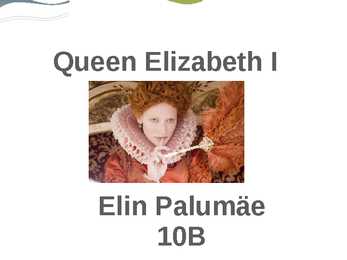
1547(37 years) Father -Henry VII of England Coronation - 24 June 1509 (aged 17) Issue Mary I of England Predecessor - Henry VII Henry FitzRoy Successor - Edward VI Elizabeth I of England Spouse - Catherine of Aragon Edward VI of England Anne Boleyn Mother - Elizabeth of York Jane Seymour Born - 28 June 1491 Greenwich Palace, Anne of Cleves Greenwich Catherine Howard Died - 28 January 1547 (aged 55) Catherine Parr Palace of Whitehall, London Burial - St George's Chapel, Windsor Castle Religion Christian (Anglican, previously Roman Catholic) Early life Elizabeth was born in Greenwich Palace
THE CITY OF LONDON History The City of London occupies one square mile in the middle of the capital. It once made up entire town of London, surrounded by the wall first built by Romans. The Romans also built a bridge over the Thames and there has been one in the same area ever since. The Roman Londinium grew up on the northern side of the bridge. In AD 61 the native Celtic tribe, led by Queen Boudicca, rose up against the Romans. They burnt down Londinium to the ground and killed most of its inhabitants. Roman armies eventually defeated Boudicca and Londinium was rebuilt. At the end of the fourth century AD the Roman Empire began to crumble and the Roman armies
I am very glad since all of you could make it today, since at previous lesson most of us were absent. So today I am going to introduce to you small presentation about Tokyo. I have divided my presentation I n 3 parts, so Firstly I will speak about Tokyo overall, then I will continue my presentation talking about some places to visit in Tokyo and finally I will speak about few facts that you should know, when you decided to go to Tokyo. AS OU CAN SEE THERE ARE SOME GOOD REASONS TO VISIT TOKYO, THO IT COULD BE QUITE EXPENSIVE, ANYWAY THIS IS GREAT EXPERIENCE AND I THINK EVETYONE SHOULD GET IT.
Prince Albert was commonly known as the "Prince Consort", though he did not formally obtain the title until 1857. Prince Albert was never granted a peerage dignity. [4] Prince Albert replaced Melbourne as the dominant male influence in Victoria's life. She was thoroughly devoted to him, and completely submitted to his will. [5] Victoria did nothing without her husband's approval. His interests in art, science and industry spurred him to organize the Crystal Palace Exhibition in 1851, a highly profitable industrial convention. [6] Her marriage to Prince Albert brought nine children between 1840 and 1857. Most of her children married into other Royal families of Europe. [7] On December 14th 1861 Albert died from typhoid fever at Windsor Castle. Victoria remained in self-imposed seclusion for ten years. This genuine, but obsessive mourning kept her occupied for the rest of her life and played an important role in the evolution of what would
Soon the flourishing city Londinium came into existence. The Romans rebuilt the town into a centre of great importance. After the Romans withdrew from Britain in the Picts, Scots, Jutes, Angles and Saxons invaded London. It started to expand again under the Saxon kings. London was described as a commercial centre into which goods from all parts of the world flew by land and sea. King Alfred the Great repopulated and fortified the city. Edward the Confessor started to build a new royal palace at Westminster and raised London to the level of capital. William the Conqueror started the construction of the Tower of London and his successor William II enlarged it and constructed Westminster Hall. The two centres which were to characterise the English capital for many years emerged: The City of L and Westminster. In 1193 Londoners elected Henry Fitzalwin their first Mayor and in 1209 a stone bridge was built to replace the earlier wooden one, which was the first real London Bridge.
March 28th Parliament of the United Kingdom The Parliament of the United Kingdom, commonly known as the UK Parliament or British Parliament, is the supreme legislative body in the United Kingdom, British Crown dependencies and British overseas territories. It alone possesses legislative supremacy and thereby ultimate power over all other political bodies in the UK and its territories. Its head is the Sovereign of the United Kingdom (currently Queen Elizabeth II) and its seat is the Palace of Westminster in the City of Westminster, one of the Boroughs of the British capital - London. Tower of London The Tower of London, officially Her Majesty's Royal Palace and Fortress of the Tower of London, is a historic castle located on the north bank of the River Thames in central London. It lies within the London Borough of Tower Hamlets, separated from the eastern edge of the square mile of the City of London by the open space known as Tower Hill.
It is said that Edward blamed her for his miserable and lonely childhood. For the first eleven years of Edward's reign the real ruler of England was Godwin, Earl of Wessex. In 1045, he married Godwin's only daughter, Edith. Godwin was the most important nobleman in England. They had no children as Edward had taken a vow of celibacy. Even this marriage couldn't prevent a breach between Godwin and Edward in 1049. A number on Normans were killed in a scrap in Dover and Kent in 1051. Edward still had influential friends in Normandy and he wanted the people of Dover punhised for this. Edward asked Earl Godwin to be the punisher. After saying no to king he raised an army against Edward instead. The other two senior noblemen, the earls of Mercia and Northumbria, remained loyal to Edward. Later Edward
Sightseeing in Estonia Tallinn TV Tower The Tallinn TV Tower (Tallinna teletorn) is a free-standing structure with an observation deck, built to provide better telecommunication services for the 1980 Moscow Summer Olympics regatta event (see Sailing at the 1980 Summer Olympics). It is located near Pirita, six km north-east of the Tallinn city center. The tower has a specified height of 314 m (1030.2 ft), though some sources put it at 312.6 m (1026.6 ft). The building is administered by the public company Levira (formerly Estonian Broadcasting Transmission Center Ltd) and is a member of the World Federation of Great Towers.
l Town rights - 1248 l Mayor - Edgar Savisaar l Aera - Total 159.2 km2 (61.5 sq mi) l Population - (1 Mar 2012) Total - 416,470 Denisty - 2,614.0/km2(6,766.6/sq mi) Tallinn Coat of arms Flag Top 5 Attractions 1. Kiek in de Kök Visitors to the museum will see examples of Medieval firepower, displays detailing how the city's system of walls and towers developed through the centuries and an exhibit on crime and punishment in Old Tallinn. 2. Kadriorg Palace - Kadriorg Art Museum A trip to Tallinn isn't a trip to Tallinn without a visit to this magnificent northern baroque palace, built by Peter the Great for his wife, Catherine I, in 1718. The grandiose palace with its surrounding manicured gardens is home to the foreign art collection of the Art Museum of Estonia. The Kadriorg Art Museum displays hundreds of 16th- to 20th-century paintings by Western and Russian artists, as well as prints, sculptures and other works. 3
Now they are all part of the same kingdom and share the same monarch. The UK consists of Northern Ireland, Scotland, England and Wales. The peoples of these countries are British subjects; they hold British passports and therefore their nationality is British. The british Isles is the geographical name for all the islands off the west coast of Europe. These islands also include The Republic of Ireland, which is politically independent of the Britsh government. Many people refer to the inhabitants of the British isles as 'the English', but England is only one of the countries. The other countries are Scotland, Wales and Northern Ireland. Great britan is the name of the one island which is made up of Scotland, England and Wales. It is calles Great because in some languages the word for Britain is the same as the word for Brittany, which is in France. The word 'Great' helps to distinguish the two: 'Grande
Main Sights England is known for its many world-famous sightseeings and people all around the world come to see them. Some of them are even like symbols of England. The most famous ones are: Stonehenge is one of the greatest national icons of Britain. That prehistoric monument is located in the plain of Salisbury, in the county of Wiltshire in the south-west of England. It is built of 150 enormous stones which are set in a purposive circular pattern. Stonehenge was probably built to mark the longest and shortest day of the year because it lies on the line of the midsummer sunrise and the midsummer sunset. That would have enabled people to keep a record of changing of seasons. Although it is still unclear who built it. Hadrian’s Wall is an ancient wall which was built in 2nd century by Hadrian, the emperor of Rome from AD 117 to 138, and it marked the northern border of the Roman Empire in Britain
Tower Bridge Globe Theatre Greenwich Observatory Destination 1: Westminster Abbey When was Westminster Abbey founded? (see its homepage: http://www.westminster-abbey.org/home ) 960 When was the last royal wedding held in Westminster Abbey? Whose was it? 29 April 2011 Prince William and MissCatherine Middleton How many monarchs have been buried in Westminster Abbey? 17 Destination 2: The Houses of Parliament What is the other name for the Houses of Parliament? Palace of Westminster How many Houses are located in the Houses of Parliament? What are they called both in English and Estonian? House of Commons riigikogu and House of Lords suurbritannia parlament There is the Clock Tower generally known as "Big Ben" at one side of the huge building. What is the name of the other tower in the south-western corner of the building? Victoria Tower What is the diameter of the clock's dial? 7m Why is the Clock Tower called Big Ben? Why not
good friendship with each other. I also chose it, because it seemed so interesting. I really wanted to know, who controls Estonia's neighbour Sweden. Anyway, I enjoyed doing this report and now you can read a little about them. 3 King Carl XVI Gustaf Carl XVI Gustaf is the King of Sweden. Carl Gustaf was born twenty minutes past ten in the morning on Tuesday, on April 30, 1946, at Haga Palace. He was baptised at the Palace church and his real name is Carl Gustaf Folke Hubertus. He is also the Duke of Jämtland. Carl became Sweden's King on September 19, 1973 at the age of 27, succeeding his grandfather, King Gustaf VI Adolf. He is son of the Crown Prince Gustaf Adolf, who died in a plane crash in Copenhagen in 1947, and Princess Sibylla of Sachsen-Coburg-Gotha, who died in Stockholm in 1972. King Carl Gustaf married Miss
Street to Pikk Street. Parallel with Pikk Street, Lai Street, too, ends at the Great Coast Gate (first mentioned 1359). Lai Street is very wide considering that it was laid out in the Middle Ages. This is because it sprang up on both sides of former city wall. Lai is quite a peaceful street with few shops. However, it has three museums and two theatres. The main entrance into St Olaf´s Church also faces the street. Several Lai Street houses have kept their Gothic appearance and even interiors, although we can also notice moderate Nordic Baroque, Neoclassicicm, Historicism and even Art Nouveau. The origin of the name "Lai" Lai Street belongs among the oldest streets of Tallinn. Despite its length and width its share in the city's inner traffic is fairly modest. The extraordinary width of the street is likely due to the fact that the town wall used to be there and the street then sprang up on both sides of the city wall
 annaabi.ee