Leidsid 33 sarnast õppematerjali, mis on seotud failiga "The Industrial Revolution". Need materjalid aitavad sul teemat sügavamalt mõista.
industrial, revolution, transition, production, included, machines, change, power, higher, manufacturing, processes, period, 1760, between, going, hand, wood, other, fuels, coal, britain, within, spread, western, europe, states, changed, allowed, deeper, mining, iron, making, vastly, levels, such, jenny, again, lower, cost, creation, quicker, networks1 Uses of energy in homes...............................................................................................5 2.2 Types of energy used in homes.................................................................................... 6 2.3 Energy use in different types of homes........................................................................ 6 2.4 Commercial Energy Use...............................................................................................9 2.5 Industrial and Manufacturing Energy Use..................................................................11 2.6 Transportation Energy Use.........................................................................................12 RENEWABLE ENERGY..................................................................................................14 3.1 What Role Does Renewable Energy Play in the United States?................................ 14 3.2 Why Don't We Use More Renewable Energy?...............
managing to unite the Anglo-Saxons and Danes at the beginning of 11th century. Medieval England After defeating the Anglo-Saxon King Harold at the Battle of Hastings in 1066, William of Normandy (who became William I, also called William the Conqueror) introduced the Norman feudal system, rewarding his French-speaking followers with land in return for their continued support. French remained the language of the upper classes and administration until the 14th century. The power of these Norman Barons gradually increased and during the reign of the Plantagenets began the challenge the King's absolute power, which resulted in King John being forced to sign Magna Carta in 1215. It consisted of long list of limitations to the King's power and it gave more power to the origins of Parliament. The origins of Parliament are to be found in the reign of John's successor, Henry III. It
geothermal heat--which are renewable (naturally replenished). In 2006, about 18% of global final energy consumption came from renewables, with 13% coming from traditional biomass, such as wood-burning. Hydroelectricity was the next largest renewable source, providing 3% (15% of global electricity generation),followed by solar hot water/heating, which contributed 1.3%. Modern technologies, such as geothermal energy, wind power, solar power, and ocean energy together provided some 0.8% of final energy consumption. While there are many large-scale renewable energy projects and production, renewable technologies are also suited to small off-grid applications, sometimes in rural and remote areas, where energy is often crucial in human development.Kenya has the world's highest household solar ownership rate with roughly 30,000 small (20100 watt) solar power systems sold per year.
Petroleum is recovered mostly through oil drilling. This comes after the studies of structural geology (at the reservoir scale), sedimentary basin analysis, reservoir characterization (mainly in terms of porosity and permeable structures). It is refined and separated, most easily by boiling point, into a large number of consumer products, from petrol (or gasoline) and kerosene to asphalt and chemical reagents used to make plastics and pharmaceuticals. Petroleum is used in manufacturing a wide variety of materials, and it is estimated that the world consumes about 88 million barrels each day. The use of fossil fuels such as petroleum can have a negative impact on Earth's biosphere, releasing pollutants and greenhouse gases into the air and damaging ecosystems through events such as oil spills. Concern over the depletion of the earth's finite reserves of oil, and the effect this would have on a society dependent on it, is a field known as peak oil. Etymology
The industrial revolution The Industrial Revolution, which took place from the 18th to 19th centuries, was a period during which predominantly agrarian, rural societies in Europe and America became industrial and urban. By mid-century, many people worked for small businesses or on farms, laboring in fields that would yield barely enough food to feed the family. New inventions and technology began to change that, however. Larger factories opened and produced new farm equipment, such as the steel plow and the tractor,
naval battles to set fire on enemy ships. Around this time they also started being used for more peaceful purposes again. In the 16th and 17th century Europe fireworks displays using rockets became a very popular form of public entertainment. In the late 18th century the British army suffered two serious defeats at battles in Seringapatam, in India. The main reason for these defeats was that the Indian prince, Haidar Ali's army included a corps of rocket throwers. They used very large bamboo rockets which had a range of hundreds of metres. The British were determined to learn from their mistakes and a British officer, William Congrieve, began work on developing even bigger and better rockets. Within a few years Congrieve had developed 14 kg iron rockets that could be fired over 3200 m. These rockets were successfully used against Napoleon in the battle of Waterloo and during the US War of Independence.
Eli Whitney Whitney was born in Westborough, Massachusetts, on December 8, 1765, the eldest child of Eli Whitney Sr., a prosperous farmer. At age fourteen he operated a profitable nail manufacturing operation in his father's workshop during the Revolutionary War.[2] Because his stepmother opposed his wish to attend college, Whitney worked as a farm laborer and schoolteacher to save money. He prepared for Yale at Leicester Academy (now Becker College) and under the tutelage of Rev.Elizur Goodrich of Durham, Connecticut he entered the Class of 1789. Whitney expected to study law but, finding himself short of funds, accepted an offer to go to South Carolina as a private tutor
Tartus secondary school of business Nuclear Power Helena Nulk form 11b Tartu 2009 Table of contents Introduction..........................................................................................................................................3 What is nuclear power?....................................................................................................................3 Nuclear life cycle.............................................................................................................................3 What is nuclear energy?...................................................................................................................3 What is nuclear fusion?.................................................................
To simplify the concept, supply chain management can be defined as a loop: it starts with the customer and ends with the customer. All materials, finished products, information, and even all transactions flow through the loop. However, supply chain management can be a very difficult task because in the reality, the supply chain is a complex and dynamic network of facilities and organizations with different, conflicting objectives. Supply chains exist in both service and manufacturing organizations, although the complexity of the chain may vary greatly from industry to industry and firm to firm. Unlike commercial manufacturing supplies, services such as clinical supplies planning are very dynamic and can often have last minute changes. Availability of patient kit when patient arrives at investigator site is very important for clinical trial success. This results in overproduction of drug products to take care of last minute change in demand. R&D manufacturing is
climate such that winters are generally long and mild, and summers are short and cool. These conditions help in the development of forests. Finally, around the Great Lakes and alongside the St. Lawrence River as far downstream as the city of Québec, the climate is characterized by relatively warm summers and cool winters, moderated by surrounding water bodies. These conditions are suitable to the development of mixed wood and broadleaf forests. Mineral Resources Mining and fuel extraction and production accounted for 4.5 percent of Canada's GDP or some US$36.1 billion. Fuel exploration and production dominate this sector, but the processing of other types of mineral resources has grown significantly. In 1996, the top non-fuel minerals were gold with production of US$2.05 billion, copper US$1.47 billion, nickel US$1.45 billion, and zinc US$1.25 billion. There was also significant production of lead and iron. There are about 50
Germanic tribes. The Anglo-Saxon, Danish and Norman Invasions Raid / red / rünnak Abbey / 'æb / klooster Parish / 'pær / kihelkond Germanic tribes attacked Britain after the Romans had left. The Angles named this island Anglia. In 597 AD St Augustine of Rome brought Christianity to England after which religion became very important. The Vikings settled mainly in Scotland and Ireland, the Danes in the north and east of England. Local Anglo-Saxons lost their power in 1066 to Norman conqueror William the Conqueror. Medieval Britain Centralised / 'sentrlazd / tsentraliseeritud, kesestatud Administration / dmn'stren / valitsus, juhtkond The Normans introduced the feudal system, strengthened the power of the King and the Church. England became a strong country under military rule. The Normans enjoyed absolute power: they built castles and destroyed villages. The main language spoken was
.................................................... 6 18501918.............................................................................................................................. 8 The national awakening................................................................................................... 8 The russification period.................................................................................................... 9 Emergence of parties and the 1905 revolution............................................................... 11 The post-revolutionary situation and World War I (19071917)...................................... 14 Our opinion............................................................................................................................ 18 References............................................................................................................................ 19
Wall painting from Pompeii, before 79 AD. Papyrus scrolls were still dominant in the 1st century AD, as witnessed by the findings in Pompeii. The first written mention of the codex as a form of book is from Martial, in his Apophoreta CLXXXIV at the end of the century, where he praises its compactness. However the codex never gained much popularity in the pagan Hellenistic world, and only within the Christian community did it gain widespread use. This change happened gradually during the 3rd and 4th centuries, and the reasons for adopting the codex form of the book are several: the format is more economical, as both sides of the writing material can be used; and it is portable, searchable, and easy to conceal. The Christian authors may also have wanted to distinguish their writings from the pagan texts written on scrolls. 2/15 A Chinese bamboo book
If it is asked, "What is the content of speech?," it is necessary to say, "It is an actual process of thought, which is in itself nonverbal." An abstract painting represents direct manifestation of creative thought processes as they might appear in computer designs. What we are considering here, however, are the psychic and social consequences of the designs or patterns as they amplify or accelerate existing processes. For the "message" of any medium or technology is the change of scale or pace or pattern that it introduces into human affairs. The railway did not introduce movement or transportation or wheel or road into human society, but it accelerated and enlarged the scale of previous human functions, creating totally new kinds of cities and new kinds of work and leisure. This happened whether the railway functioned in a tropical or a northern environment, and is quite independent of the freight or content of the railway medium
current political crisis. Western parts of the country at times belonged to Poland, Austro- Hungary, and Czechoslovakia, while eastern and southern parts belonged to Russian Empire. Only after World War II did Ukraine attain its present borders as a republic within the Soviet Union. That history partly explains Ukraine's voting patterns, political sympathies, and outlook on the future. Population of Western Ukraine largely supports politics paying EU card (Yusteshenko, Tymoshenko), while industrial Eastern regions support Yanukovych as Politian closely associated with better relation / integration with Russia. 1.1.2. Post-Independent Ukraine. Economy and politics 1990-s When Ukraine became independent in 1991, there were expectations that it would in the near future become a wealthy free market democracy and a full member of the European and Euro-Atlantic communities. Ukraine never fulfilled those expectations. Instead, it is seen
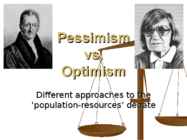
57 (page 378 of Waugh). Draw the graph and discuss. Malthus believed that there was a finite optimum population in relation to food supply and that an increase beyond that point would lead to a decline in living standards and to war, famine and disease. An increase in the population above the optimum limit would therefore lead to war, famine and disease. A PESSIMISTIC approach Thomas Malthus (1798) proposed his work during the early stages of the industrial revolution when inadequate food and clothing were common features in England. His argument was that population increases (geometrically) or at an exponential rate if unchecked i.e. 1-2-4-8- 16-32 etc Food supply at best increases at an arithmetic rate i.e.1-2-3-4-5-6 etc A PESSIMISTIC approach Malthus suggested that a rise in population, however small, would mean that eventually population growth exceeded increases in food supply and
Due to the available natural resources Estonian economy largely relies on the branches related to the forest; Estonian energy sector is based on oil shale, a resource quite rare elsewhere in the world. Finland and Sweden are the most important trade partners. The Estonian economy profits significantly from the business generated by more than 2 million tourists a year, most of whom come from Finland. More than 67% of the Estonian GDP is derived from the service sectors, industrial sectors yield over 28% and primary branches (including agriculture) approximately 5.5% of the overall output. The important sectors of the Estonian economy are the processing industry (approximately 18% of the overall production), transport, warehousing and communications (15%), commerce (over 14%) and estate, rental and letting, as well as business services (about 16.5%). Agriculture amounts to slightly less than 3% of the overall production, construction
banned until late in the fourth century. *Boadicea/Boudica At his death bed, Boudica's husband left half his possession to the emperor, expecting that this would protect his family. However, his property was confiscated. When Boudica, the queen of the Celts, protested, she was flogged and her daughters were raped. She swept trough Southern Britain with her tribe and tortured every Roman she met. A women having power seemed unnatural to the Romans. She fought back for 2 years, but finally took poison and died. *Hadrian's Wall It was built by the emperor Hadrian and it marked the Northen border of the Roman empire. Hadrian's Wall was built, beginning in 122, to keep Roman Britain safe from hostile attacks from the Picts. The wall stretched from the North Sea to the Irish Sea. In addition to the wall, the Romans built a system of small forts called milecastles. Sixteen larger
Civil War broke out in 1642 and it lasted until1649. It ended with complete victory for the parliamentary forces. The king was captured and executed after a trial for crimes against his people. The leader of the parliamentary army, Oliver Cromwell, became "Lord Protector" of the republic. The monarchy was restored in 1660, after the death of Cromwell. In the 18th.century Britain expanded its empire in America, in Africa and India. Technological inventions led to the Industrial Revolution. Hundreds of thousands of people moved from rural areas into new towns and cities. London became an important business and trading centre. By the 19th century Britain was a powerful empire with its colonies in Canada, France, Australia, New Zealand, India and Africa. Tens of thousands people left Great Britain to settle in these colonies. Government The United Kingdom is a constitutional monarchy with Elizabeth II, Queen of the United
national colours are the colours of its flag red, white and blue. Head of state Head of state is Queen Elizabeth II, who is queen of United Kingdom and also queen is Australia. In practice, Governor General performs her functions in queen's absence. Since 1989 Bill Hayden has been the Governor General Government Australia is constitutional monarchy, based on liberal democratic tradition. In practice Australia is parliamentary democracy. The power in the country is put to life by Parliament. Parliament is consists of The House Of Representatives and The Senat. The House of Representatives consists of 150 members. The party with the majority provides the Prime Minister, who also forms the Government. Today the power is divided by three parties: The Australian Labour Party, the Liberal Party and National Party. The Senat's membership is wider, it comprises 12 senators from each state and 2 from each territory
Native Americans also died from the diseases that the Europeans brought. At first they had to move to the west. But soon the white moved further west into the lands where the Indians lived and there were again many battles. The American Civil War (18611865) was a civil war between the United States of America (the "Union") and the Southern slave states of the newly formed Confederate States of America under Jefferson Davis. The Union included all of the free states and the five slaveholding border states and was led by Abraham Lincoln and the Republican Party. Republicans opposed the expansion of slavery into territories owned by the United States, and their victory in the presidential election of 1860 resulted in seven Southern states declaring their secession from the Union even before Lincoln took office. The Union rejected secession, regarding it as rebellion.
A book of lost illusions, the conclusion that the social system of the 19th century is a vast jail. Victorian England and Victorian poetry Victorian Age 1837–1901. Rapid developments; England leading industrial country; large empire. Steam power, railways/iron ships, printing presses, the telegraph, the intercontinental cable, photography, farmer’s combines, anaesthetics, compulsory education. National wealth accumulated: markets all over the world, many factories; social contradictions i.e. double standard: rich/poor, empire/colonies, wealth/exploitation,
Heating in Europe: Barriers to overcome for Swedish export" , which was prepared for The Swedish District Heating Association. The losses by energy conversion in Europe are of the same magnitude as the European heat demand and consist mainly of heat that is wasted by electricity generation . District heating is a means to utilise such surplus heat to cover heat demand. District heating can utilise the heat from electricity generation in combined heat and power (CHP) plants. District heating can also use other heat sources that are difficult to use for individual buildings, such as unrefined biomass fuels, heat from waste incineration and industrial surplus heat. The latter may, for example, be a by-product from production of automotive biofuel. District heating can provide cheap energy to consumers by using low-cost energy sources, such as wood, waste and surplus heat. Many of these resources can be of local origin
control of the lands lying to the north and south. By the 12th century, the kings of Alba had added to their territories the Anglic-speaking land in the south-east and attained overlordship of Gaelic-speaking Galloway and Norse-speaking Caithness; by the end of the 13th century, the kingdom had assumed approximately its modern borders. However, processes of cultural and economic change beginning in the 12th century ensured Scotland looked very different in the later Middle Ages. The stimulus for this was the reign of King David I and the Davidian Revolution. Feudalism, government reorganisation and the first legally defined towns (called burghs) began in this period. These institutions and the immigration of French and Anglo-French knights and churchmen facilitated a process of cultural osmosis, whereby
tongue, be it Spanish, Portuguese or English. OECD has two different approaches: sector and product (industry) approaches. High-tech sectors The sector approach classifies industries according their technology intensity, product approach according to finished products. · Aerospace technology · Biotechnology · Information technology · Nanotechnology · Robotics · Aerospace technology -In most industrial countries, the aerospace industry is a cooperation of public and private industries. For example, several countries have a space program under the command of the government, such as NASA in the United States, ESA in Europe, the Canadian Space Agency in Canada, Indian Space Research Organisation in India, RKA in Russia, China National Space Administration in China, and Iranian Space Agency in Iran.
Margit Tepner k0848752 Sustainability aspects of biofuels 1. Introduction The literature review will discuss the sustainability aspects of biofuels. Food production will be the main concern as it is the most debated issue, but other aspects, such as land use change and water consumption will be also considered as they are essential aspects in the biofuels sustainability criteria. The review will discuss the viability of biofuels based on the current technologies. Second-generation biofuels are not yet commercially viable and therefore will not be discussed; although they could significantly improve the sustainability of biofuels when they break through to the industrial scale. 2. The scale of biofuels production 2.1
After that in the 1960s and 1970s the Americans fought in the Korean and in the Vietnam War, and in the1990s in the Gulf War and now they are fighting in Iraq. Industry The US is extremely rich in natural resources. The western mountains are especially rich in them. The US is among the leading countries in the value of its mineral production. The US is third, after Russia and Saudi Arabia, in the production of petroleum. Mining has been the key of development of the USA. The US has large deposits of coal, iron ore, natural gas, and petroleum, which are vital to the country's industrial strength. Its many other important minerals include copper, gold, lead, silver and zinc. To meet its needs the US must import additional amounts of iron ore, petroleum, and other minerals.Most American industry is located in the eastern and mid- western parts, around the Great Lakes and also on the Pacific coast
The Government remains committed to lowering inflation, with a long-term objective of bringing it in line with that of its major trading partners. After a period of steady growth from 1985 to 1995, real GDP (gross domestic product) decreased by 1.8% and 2.4% in 1996 and 1997, respectively. The decrease in GDP in 1996 and 1997 was largely due to significant problems in the financial sector and, in 1997, a severe island-wide drought (the worst in 70 years) that drastically reduced agricultural production. In 1997, nominal GDP was approximately J$220,556.2 million (US$6,198.9 million based on the average annual exchange rate of the period). Fishing boats and bauxite cargo ships share the waterways near Alligator Pond, Jamaica The economy in 1997 was marked by low levels of import growth, high levels of private capital inflows and relative stability in the foreign exchange market. Recent economic performance shows the Jamaican economy is recovering. Agricultural
...........................................10 2.2 CAUSES OF THE PROBLEMS .............................................................................................................12 2.2.1 Structural: contractual systems ...............................................................................................12 2.2.2 Management in construction ...................................................................................................15 2.2.21 Conventional production management theory in construction..........................................16 2.2.22 Conventional project management theory in construction ................................................17 2.2.23 Learning and improvement ...............................................................................................19 2.2.3 Lack of technological exploitation ..........................................................................................19 2
attention on those bridges - globally - that best illustrate the history of bridge building, and to encourage their preservation. What is a World Heritage bridge? The World Heritage Committee states that to be of World Heritage status a monument or site must be of outstanding universal value. It must illustrate or interpret the heritage of the world in terms of engineering, technology, transportation, communication, industry, history, or culture. World Heritage industrial sites and monuments must meet one or more of the following criteria and pass the test of authenticity: Represent a masterpiece of human creative genius; Have exerted great influence, over a span of time or within a cultural area of the world, on developments in engineering theory, technology, construction, transportation, and communication; Be an outstanding example of a type which illustrates a significant stage in bridge engineering or technological developments.
Around the Great Lakes and New England are mixed forests of pines, maples, elms, birches, oaks and beeches. Along the Gulf of Mexico grow magnolia, red and black gum, cypress and mangrove. Geographical Regions The territory of the United can be divided into eight regions: 1) New England; 2) the Mid-Atlantic region; 3) the South; 4) the Midwest; 5) the Southwest; 6) the Rocky Mountain region; 7) the Pacific Northwest and Alaska; 8) California and Hawaii. New England is highly industrial, but it also has many fields, woods and small towns. New England is the part of the United States that is most like "old" England. It includes six states: Maine, New Hampshire, Vermont, Massachusetts, Rhode Island, and Connecticut. The Mid-Atlantic region plays an important role in the United States. Its cities include Washington D. C., the nation's capital, and New York City, the nation's financial centre. The Mid-Atlantic region is densely populated. It includes six states: New York, New
which makes her the great-great-grandmother of Franklin Delano Roosevelt, president of the US from 193345. · Hans Rebane = 1897 founded the first Estonian-language newspaper in the US Eesti Ameerika Postimees (published in NY until 1911) · 1898 founded an Estonian Lutheran congregation in NY (still exists today) 2. Signficant waves of migration from Estonia to the US in the 20th century, their reasons. *The failure of the 1905 Revolution: The first significant wave of immigration · Brought a strong Socialist contingent to the United States; led to the formation of many Estonian American Socialist and Communist organizations. * The 1920s30s: · Establishment of independent Estonia · Tightening of American immigration laws · Estonian immigration to the United States slowed down dramatically 1924 The Estonian quota fixed at 116; even this small annual quota was not used up
but are created when other chemicals or products are made. This family includes: seven of the polychlorinated dibenzo dioxins (PCDDs), ten of the polychlorinated dibenzo furans (PCDFs) and twelve of the polychlorinated biphenyls (PCBs). · PCDD · 2,3,7,8TCDD · PCDF · PCB · PCDDs and PCDFs are not commercial chemical products but are trace level unintentional byproducts of most forms of combustion and several industrial chemical processes. Of all of the dioxins and furans, one, 2,3,7,8tetrachloropdibenzo dioxin (2,3,7,8 TCDD) is considered the most toxic. · PCBs were produced commercially in large quantities until production was stopped in 1977. . Emission sources Dioxins are mainly produced as unwanted byproducts of industrial processes and there is no intentional production or use
 annaabi.ee