Leidsid 33 sarnast õppematerjali, mis on seotud failiga "Tasmaania Tiiger". Need materjalid aitavad sul teemat sügavamalt mõista.
thylacine, australia, extinct, land, tail, extinction, tasmanian, tiger, film, years, animal, known, guinea, rare, australian, continent, 1930s, island, body, across, hair, near, humans, wild, late, shot, taken, wolf, times, native, 20th, century, became, before, british, settlement, able, open, unusual, extent, seen, part, black, sequence, weak, teethTopic Australia Tallinn English College 2006 Australia 1 . Introduction The name Australia is derived from the Latin Australis, meaning of the south. In land area, Australia is the sixth largest nation, its territory is 7,686,850 sq km and its population reaches today over 20,5 million people. It is the only nation to govern an entire continent and its outlying islands. Australia's capital is Canberra, the only city with its own territory. It was built in the early 1900s just to be the capital. The official language is English and the official name of Australia is the Commonwealth of Australia.
Topic Australia Introduction Many people know Australia as the land down under because it is the only continent except for Antarctica that is all on the southern hemisphere. Its name means ,,Southland". The official name of the country is the Commonwealth of Australia. It's capital is Canberra. Australia is the sixth largest country in the world but the smallest continent. Australia has 6 states and 2 territories (New South Wales, Victoria, Tasmania, Queensland, Western Australia , South Australia, The Australian Capital Territory and the Northern Territory). The Australian people are culturally the same as the Anglo Americans. There also live aborigines. Aborigines are the ancestors of the people. Like the US and Canada, Australia was an English speaking colony of Great Britain. Today Australia is a modern developed country with a diversified economy. Australia is an island continent of 7.7 million square kilometres, which makes it a little smaller than the USA.
...................................................... ................................. Aborigines and first settlers.......................................................................................... Sports............................................................................................. .................................... Culture............................................................................................. .................................. Factfile Australia is the only country in the worlf that fills the whole continent. The continent is also called Australia, if you want to make clear that you are speaking about the country you may call it by its official name: Commonwealth of Australia. Australia is the smallest continent, but one of the largest countries in the world. Its area is about 7,6 million sq kilometers. Its population is about 20,0 million and most of the people live in bigger cities: Sydney (4.2 million), Melbourne (3
..................................................................................................................10 Conclusion....................................................................................................................11 Materials........................................................................................................................11 2 Australia Introduction Australia is the one and only country in the world which fills the whole continent. The continent it fills is called Australia too. So, Australia is both a country and a continent. If you want to make clear that you are speaking about the country, you may call it the Commonwealth of Australia. It’s the official name of the country. Australia is the smallest continent, but one of the largest countries on Earth. It’s 6th largest country. Its area is about 7.6 million sq km
Natural Zones and Flora. There are five distinguishable natural zones in Australia. In the very east there are wet forests (1.) that occupy the space between the Great Dividing Range and the eastern coast. Westward from the Great Dividing Range the wet forests give place to beautiful grasslands with some trees . These grasslands are called the savannas (2.). Farther west the trees disappear and the bushlands (3.) begin. The real desert (4.) occupies the centre of the Western Plateau. In the very southwest there are thin forests of evergreen trees (5.).
Australia Australia is the smallest continent in the world. It is 7.6 million square kilometres big. It is often called the island continent because it is rather small for a continent and very big for an island. There are only five countries bigger than Australia in the World. There are five states in the mainland. Tasmania is also considered as a state so there are six states. The Northern Territory and Canberra are also independent but they are not states. Canberra is the capital of Australia and it is
Introduction, Location Australia is a country between the Indian Ocean and the Pacific Ocean. It is the only country in the world that occupies an entire continent. The mainland covers an area of 7.7 million km² and it is about 3700 km from the most northern point to its most southern point and about 4000 km from east to west. There are also many different seas around Australia, like the Coral and the Tasman Seas in the west or the Timor and the Arafura Seas in the north, where the Indian and the Pacific Oceans meet. Because all seas and oceans near Australia are warm, surfing is a very popular hobby. Political subdivision Australia is divided into six states, which are: · New South Wales · Victoria · Queensland · South Australia · Western Australia · Tasmania New South Wales is the most populous state in Australia. Its capital is Sydney.
Causes: *The main cause of animal extinction, without doubt,is human demand, either for animal resources directly, or for the natural resources of the animals' habitats. *In addition to that, there are other indirect causes caused by human activities. *Habitat loss: Is considered to be the main cause for animal extinction. Humans are clearing our forests for wood and timber. The foodchain is disturbed and animals will die. *Wildlife trade: Poaching and wildlife trade are another common threat to animals. International wildlife trade has also been linked to drugs trade. The most common anilmal trade is pet trade, such as orangutangs. Animals are also killed for fur(tigers, leopards, cheetahs) *Climate change: It has been recently suggested that warmer global temperatures may be affecting animals
Test 19 1 Translate. 1 Hollandi maadeuurijad kaardistasid Austraalia lääneranniku. Dutch explorers mapped the western coast of Australia. 2 Britannia saatis tuhandeid süüdimõistetuid Austraaliasse. Britain sent thousands of convicts to Australia. 3 Eukalüpt ja akaatsia on kõige tavalisemad taimeliigid. The Eucalyptus and the Acacia are the most common types of flora. 4 Känguru saad on umbes saja kilomeetri kaugusel lõunarannikust. Kangaruu Island is about 100km off the southern coast. 5 Austraalia taimestik on värvirikas. The flora of Australia is colorful. 6 Kängurud ja koaalad on kukkurloomad.
Australia Fact file: Australia comprises a land area of 7 686 850 square kilometres. Its population is about 21,3 million people. Australia's capital is Canberra. The national language is English. The official name of it is the Commonwealth of Australia. It's divided into six states and two territories: New South Wales, Queensland, South Australia, Western Australia, Tasmania, Victoria, Australian Capital Territory (ACT) and Northern Territory. Symbols: Australia had the British flag as their official flag until 1901, when the Commonwealth of Australia was formed. Over 30 000 entries attracted the official competition. Five of them, which contained almost identical designs, were placed equally first. The Australian flag symbolises Australia's historical links with Britain, because it has
Australia Australia is a country and also a continent. If someone wants to make clear, that he is speaking of the country, he may call it by its full name of Commonwealth of Australia. Australia's name means "southland."It is south of the equator. Sometimes it is also called the island continent because it is an island. There are about twenty million people in Australia.It is 1,800 miles from the mainland of Asia and almost half way round the world from Europe. More than 600 miles of ocean separate it from Americas. Since Australia is south of the equator, its seasons are just the opposite of ours. It has summer while we have winter, and the other way round. States and Territories. Australia consists of six states, two territories and eight external territories. The six states are: Western Australia (capital Perth), South Australia (capital Adelaide),
AUSTRALIA Tallinn 2008 Only one country in the world fills a whole continent. That country is Australia. The continent it fills is Australia, too. Australia, then, is both a country and a continent. Australia is one only continent except Antartctica that is all south of the equator. Since it is south of the equator, its seasons are just the opposite of ours. It has summer while we have winter, and the other way round. Sometimes Australia is called the island continent. There is a good reason why. It is an island. It is 1800 miles from the mainland of Asia and almost half way round the world from Europe. More than 6000 miles of ocean separate it from the America. Australia is the world's smallest, flattest and driest continent. It is also the oldest some of the rocks are more than 3,000 million years old. It is the 6th largest country. Its territory is 7 700 000 km2.
Geography The name Australia means ,,southland". It is both a country and a continent, with an area of 7,617,930 square kilometres and it is also an island, separated from Asia by the Arafura and Timor seas. But Australia is also surrounded by the Indian and Pacific oceans. The Great Barrier Reef is the world's largest coral reef. It lies off the north-eastern coast and extends for over 2000 kilometres. The famous mountain range in the eastern part of Australia is the Great Diving Range and it's highest peak is Mount Kasciusco's 2230m. In the continental part, there are the Macdonnell ranges. Other smaller mountain ranges are the Musgrave Mountains, the Hammessley Mountains and the Darling Mountains. The continental part of Australia is mostly covered with deserts and these deserts are the Great Sandy Desert in the north-western part, the Great Victoria dessert in the southern part and Gibson desert and the Simpson desert
The Dog Fence When you think about the world's longest manmade structures, China and Great Britain (Stonehenge) spring to mind. Very rarely does the Australian continent get a mention, which is a shame, because the Dog Fence, or Dingo Fence, is the longest structures on earth. The Dingo Fence is a barrier that was built in Australia during the 1880s and finished in 1885.This fence was built only on one purpose: to stop dingoes (Australia’s wild dogs) from killing sheep. It is one of the longest structures on the planet, and the world's longest fence. it’s 3,307 miles long. That makes about 5,320 km. That is about two and a half times longer than the Great Wall of China. The fence starts near the coast of Great Australian Bight and ends up
Australia Australia , officially the Commonwealth of Australia, is a country in the Southern Hemisphere comprising the mainland of the Australian continent, the island of Tasmania and numerous smaller islands in the Indian and Pacific Oceans. Australia flag Australia coat of arms. Australia is a cloudless dark blue sky, the bright sun, multikilometer beaches with snowwhite sand and ocean up to horizon. Australia's landmass of 7,617,930 square kilometers is on the IndoAustralian Plate. Surrounded by the Indian and Pacific oceans, it is separated from Asia by the Arafura and Timor seas. It the sixth largest country in area after Russia, Canada,
Australia Kaspar Rätsep G1A Australian nature · Australian nature is extremely diverse and interesting. It's the driest inhabited continent, only its south-east and south-west corners have a temperate climate. · The climate of Australia is significantly influenced by ocean currents, which is correlated with periodic drought, and produces cyclones in northern Australia. · Much of the northern part of the country has a tropical summer rainfall (monsoon) climate. The southwest corner of the country has a Mediterranean climate. Much of the southeast is temperate. · Climate change has become an increasing concern in Australia in recent years, with many Australians considering protection of the environment to be the most important issue facing the country. Australian nature · Eastern Australia is marked by the Great Dividing Range and
- What is the capital of Australia? a. Sydney b. Melbourne c. Canberra - Which city is the oldest and largest? a. Canberra b. Sydney c. Darwin - Which is a popular Australian animal? a. bear b. kangaroo c. fox - Who are the Australian natives a. Eskimos b. Aborigines c. Indians - Who discovered Australia? a. Columbus b. Captain Cook c. Lewis and Clark - What is the official Language in Australia? a. English b. German c. Spain Australia is situated south of Asia, between the Pacific and the Indian Oceans. Australia is a continent, a country and an island at the same time. Australia is located in the southern hemisphere. OFFITIAL NAME : Commonwealth of Australia CAPITAL: Canberra TOTAL AREA: 7,700,000 sq.km POPULATION: 20 million people HEAD OF STATE: Queen Elizabeth II represented by Governor- General
Australia Australia is the only country in the world that covers an entire continent, yet also the smallest and the driest of all the continents. It's almost the same size as continental USA, being the sixth largest country in the world. It's also the oldest some of the rocks are more than 3,000 million years old. Australia is often called `Down Under', because it lies in the Southern Hemisphere. As a result, its seasons are the opposite of ours. Australia, Tasmania and a number of smaller islands form the Commonwealth of Australia. Because of the country's great size, the climate in Australia ranges from tropical regions of the Northern Territory to the cool temperate conditions in the southeast and Tasmania, where it often snows in winter. In the north, half the year is `wet' and half is `dry'. From November to April heavy rain fills the rivers and makes enormous lakes where thousands of birds come for the summer. From
PLATINUM The platinum effect is found in some lines of Silver Persian/Chinchilla Longhair. In 1986/7, Cheryl Bennett reported in The Silver and Golden Persian Newsletter (ACFA) that one of her shaded silver females (Kelley Lane Contessa of WeANDE) had changed from pure silver to pale golden. Contessa’s parents were a shaded golden and a shaded silver; these were full siblings. At 10 – 12 months of age, Contessa began to “tarnish” i.e. show cream/reddish patches and by 3 years of age she was entirely pale golden. She produced a number of Silver Persians without tarnish, but she failed to produce any offspring when mated to a golden sire. One of Contessa’s male offspring turned from silver to golden as an adult. An adult Silver Persian from England (Lynchard Silver Shadow) was exported to Australia and also turned golden. Shadow had a few golden hairs on his paw, but did not turn golden until he was a year old when his coat turned to pale beige
Australia Topic Koostas: Aineõpetaja: Tallinn 2011 Location Only one country in the world fills a whole continent. That country is Australia. The continent it fills is Australia, too. Australia, then, is both a country and a continent. If someone wants to make clear that he is speaking of the country, he may call it by its full name of Commonwealth of Australia. Sixty million years ago Australia and its nearby islands were separated from the rest of the world by a great upheaval. They were cut off from Asia by the ocean. Very few people and almost no animals visited Australia before English colonists began to settle there in 1788. During all those 60 million years the native Australian mammals developed by themselves, undisturbed by the animals developing elsewhere. Australia is the only continent except Antarctica that is all south of the equator. It's name means "southland"
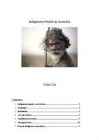
.............................. 5 8. Interesting facts.............................................................................................. 5 9. Used links.........................................................................................................6 Indigenous peoples: an overview Indigenous Australians are the original inhabitants of the Australian continent and nearby islands. The Aboriginal Indigenous Australians migrated from the African continent around 70,000 years ago, and arrived in Australia around 50,000 years ago. The term "Aboriginal" has traditionally been applied to indigenous inhabitants of mainland Australia, Tasmania, and some of the other adjacent islands. There is a great diversity among different Indigenous communities and societies in Australia, each with its own unique mixture of cultures, customs and languages. In present day Australia these groups are further divided into local communities. [infoplease] Language
Australia. Kadri Rampe 2012 Position in the world. Australia, officially the Commonwealth of Australia, is a country comprising the mainland of the Australia continent, the island of Tasmania and numerous smaller islands. Its the world`s sixthlargest country by total area. On 1 January 1901, the six colonies federated,forming a Commonwealth of Australia, since Federation, Australia has maintaned a stable liberal democratic political system. The population of 22,7 million is highly urbanised and heavily concentrated in eastern states due to geography and climate. A highly developed country, Australia is the world's 12th largest economy and has the world's fifthhighest per capita income. Enviroment. Although most of Australia is semiarid or desert, it includes a diverse range of habitats from alpine heaths to tropical rainforests.
Norway in the east and France in the south. Britain also has many dependant territories which are scattered throughout the world and are the remains of the huge former British Empire. Today Britain assists them, but they may become independent whenever they wish. There have been some difficulties with some of the territories. Argentina has made claims to the Falkland Islands and Spain to Gibraltar. History When the glaciers retreated from Britain about 10,000 years ago, Stone-Age men started to inhabit the isles. The early Britons came across the land bridge which joined Britain to the continent. They were cave-dwellers at first. This way of life was replaced by the invaders from the Mediterranean lands. These men were the first farmers. In about 500 BC came the people whose homeland was near the Rhine River. These were the Celts. The Roman invasion began in 43AD. The Romans were highly organized conquerors. They built good roads, baths and bridges
Geography A ring of coastal mountains surrounds low central plains. The highest peak is Carrauntuohill , which is 1,041 m. The island is bisected by the River Shannon, at 386 km (240 miles) the longest river in Ireland. The island's lush vegetation, a product of its mild climate and frequent but soft rainfall, earns it the sobriquet "Emerald Isle". The island's area is 84,412 km². Ireland is divided into four provinces: Connacht, Leinster, Munster and Ulster. Ireland's least arable land lies in the south-western and western counties. These areas are largely spectacularly mountainous and rocky, with beautiful green sights. Ireland is sometimes referred to as being part of the British Isles. However, notwithstanding the level of acceptance of the term within Northern Ireland, exception is taken by many Irish people to the extension of this nomenclature to include Ireland due to the perception that it implies an identity at odds with historical, cultural and political reality
Australia Australia is surrounded by the Indian and Pacific oceans, it is separated from Asia by the Arafura and Timor seas. Australia presents an enormous range of climatic conditions, since it covers thirty degrees of latitude. It is mostly temperate, but one third of the continent is tropical, and there are large desert areas. The two largest cities are Sydney and Melbourne. The capital of Australia is Canberra. It is a small city and was built in the early 1900s. History. Two hundred years ago there were no white people in Australia. The only inhabitants were dark-skinned people who were still living in a Stone Age. Their only weapons were stone knives and boomerangs. But their tribes had very well-worked- out customs. A few aborigines still live in the emptier part of the continent. In 1770, the British explorer Captain Cook raised the British flag
SOCIETY AND CULTURE OF ENGLISH-SPEAKING COUNTRIES Introduction 1. Nowadays, English is so widely spoken that it can hardly be considered "a one nation's" language. The main countries where English is spoken are: the U.K, the U.S, Canada, Australia, the Republic of Ireland, New Zealand, West Indies 2. There are approx. 300-400 million speakers of English in the world. English occupies the 3rd place by its number of speakers; it is right behind Mandarin and Spanish. 3. ESL (English as a Second Language) used in your own country (e.g. India) EFL (English as a Foreign Language) used in a foreign country ESP (English for Specific Purposes) used in business, airlines, hotels etc. 4
exploitation in New Guinea's forests are its tropical hardwood trees, such as merbau. Vast quantities are being exported illegally from both Papua New Guinea and Indonesia. Some of the plants here are more than 100 million years old. Canopy trees can reach over 50 m and have straight trunks, which often are supported by buttress roots. /4/ Species of plants Species groups have their comfort zones. Take plants for example. In New Guinea, the greatest diversity is seen in lowland forests. For birds, it's the opposite - diversity increases as we go up in altitude. /2/ Between 15,000 and 20,000 plant species thrive in New Guinea, many in the island's forests
Resources – page 11 Appendix – page 11-14 2 Introduction I selected this theme because it was the most interesting one for me. Aborigines have interested me for a long time now so doing this essay is really fun for me. Australian Aboriginal culture is one of the world's longest surviving cultures. Australian Aborigines, also known as Indigenous Australians , are the native people of Australia . Many of them suffered when white people from Britain arrived in Australia, because of disease, the loss of their hunting lands, and unfair laws. Australian Aborigines are those people regarded as indigenous to the Australian continent. In the High Court of Australia, Australian Aborigines have been specifically identified as a group of people who share, in common, biological ancestry back to the original occupants of the continent. History
items of government legislation. Discusses domestic matters with the Master of the Household. Towards the end of the day, there is always another pile of official papers and reports waiting to be read or acted upon. The business on constitutional monarchy never ends. 3. Who is the present heir to the throne? Speak about his education. Who are the 2nd and 3rd in line? Present heir is Prince Charles, The Prince of Wales. Has been an exchange student in Australia. Graduated from the university of Cambridge with BA (honors). 2nd and 3rd in line are Prince William of Wales and Prince Henry of Wales, respectively. 4. Make up your list of 5 top British people. Give your motivation. The Queen, Adele, Elton John, Shakespeare, JK Rowling. 5. Which 5 places attract visitors in Wales and Scotland? Edinburgh, Loch Ness, The Highlands, Snowdonia, Cardiff. 6. Name 6 islands, 5 rivers, 3 lakes, 3 mountains in UK.
In my essay I will describe the most characteristic features of the Maori people and the aborigines. I will divide the essay in 3 parts the Maori people, the aborigines and their comparison. Maori are the host people of New Zealand. Their name is derived from Ma-Uri which means the children of heaven. The arrival of the Maori people to New Zealand is considered to be somewhat of a mystery. It is known that first Polynesians arrived to New Zealand about 1000 years ago, when navigator Kupe discovered the land in 950 AD. He named it Aotearoa The Land of the Long White Cloud. Although these facts can be debatable, I will focus my attention on this interpretation of Maori history. After the Maori arrived to New Zealand, they started to develop into tribes and sub tribes, this tribal system is still in use. Their culture had almost no influence from the rest of the world. They evolved a culture endorsed by agriculture and hunting. Of course the Maori
Kingdom of Great Britain and Ireland. After the Irish War of Independence most of Ireland seceded from the Union, which then became the United Kingdom of Great Britain and Northern Ireland. The relatively limited variety of fauna and flora on the island is due to its size and the fact that wildlife has had little time to develop since the last glacial period. The high level of urbanisation on the island has contributed to a species extinction rate that is about 100 times greater than the background species extinction rate. 2 The History of the Great Britain The island was first inhabited by people who crossed over the land bridge from the European mainland. Traces of early humans have been found (at Boxgrove Quarry, Sussex) from some 500,000 years ago and modern humans from about 30,000 years ago. Until about 10,000 years
an average humidity of 65 per cent. Average maximum temperatures in the winter (June-August) are around 16°C. Sydney's rainfall is highest between March and June. Appealling climate - Australian seasons are the opposite to the Northern Hemisphere, summer starts in December, autumn in March, winter in June and spring in September. Australian seasons Spring: September November Summer: December February Autumn: March May Winter: June August The best seasons to travel to Australia (nicest weather) are in either Spring or Autumn. Driving in Australia The most important thing to remember in Australia when driving is that Australian people drive on the left-hand side of the road. For people coming from the USA and Europe this is going to be a big change, so if planning on driving using either a local or international licence, it may help to practise a little before venturing out onto main roads and highways.
The Iberians brought their metal working skills and the first real civilization to Britain in the 3rd millennium B.C. And were then overrun by the various Celtic tribes that begun in the 8th century B.C. The Celts introduced the tribal organization and an early form of agriculture before they were forced westwards to Cornwall, where the Celtic language still exists in different forms, by the Roman invasion begun in 43. AD. The Romans ruled Britain for over two hundred years and left behind three things of importance: their roads, the sights of important cities notably London, and the seeds of Christianity. The Latin way of life villas, arts, language and political organization all vanished, however after the invasions from Northern Europe by the Anglo-Saxons and Jutes from the 5th century onwards. These pagan peoples' were easily converted to Christianity and the preachers from Rome brought with them learning and civilization.
 annaabi.ee