Leidsid 33 sarnast õppematerjali, mis on seotud failiga "Stress in the lives of young people today". Need materjalid aitavad sul teemat sügavamalt mõista.
stress, things, person, study, live, friend, them, lives, today, grades, appearance, everyday, find, attend, classes, sure, factor, cause, active, nowadays, worry, impact, biggest, often, students, knowledge, pass, subject, lazy, amount, blame, best, avoid, studying, hard, able, independent, decent, losing, fight, crazy, look, hopes, opposite, ?perfectChapter 5 Take Charge of Your Life 77 Chapter 6 Commit to Excellence 90 Chapter 7 Put People First 118 Chapter 8 Think Like a Genius 136 Chapter 9 Unleash Your Mental Powers 154 Chapter 10 Supercharge Your Thinking 179 Chapter 11 Create Your Own Future 201 Chapter 12 Live A Great Life 222 Summary and Conclusions 249 ix ccc_tracy_fm_i-xviii.qxd 7/7/03 3:22 PM Page x x ➤ CONTENTS Bibliography 256 Index 260 Advanced Coaching and Mentoring Program 268 About the Author 269
enthusiastic. Moreover, I have had experience of working in a summer camp. Secondly, I would like to know what kind of work i have to do and how hard it is. Finally, Could you tell me where the Bundoran exactly is and when the summer camp work begins? In addition, I would like to know how much payment I am going to get. I would appreciate it if you could inform me as soon as possible. Yours sincerely, Mari Mets ESSAY 2010 Stress in the Life of Young People Today Stress is a natural part of young people's lives. Negative stress can affect people's ability to be positive. I'd probably agree with the statement. To begin with, one of the main sources of stress for young people today can be relationships with parents. Everybody knows that fighting with parents can affect ours ability to be positive. Moreover, parents are the closest persons in our lives and fighting with them break us
. . " and then name their pet peeve or passion. My view is not of an education specialist, but of one who loves sharing what I learn, and owes much to educators. Since I don't have an educational theory neatly worked-out, nor an outline of my perceptions, my intent is to address each educational ingredient that comes to my mind. After I've said what I think about each topic, readers may have a fair comprehension of my philosophy. First comes sensitivity. If a person be insensitive, be it from numbing cold, exhaustion, drugs, genetic makeup, or upbringing, then the process of education is bogged down, and results come only after great efforts. Sensitivity in my integrated meaning is broad, covering literally the senses, so that deaf and blind people are less sensitive, as well as people whose senses work perfectly, but whose receptivity or thought processes are blunted for whatever reason
To begin with, my childhood was quite ordinary, I spent a lot of time in my country home, spending most of my time playing. I have been raised by my mother. As I grew older, I got more and more interested in different things. At one point it occured to me that when I want to be successful in some field, then I really have to educate myself in that filed.When my friends have characterised me then they have mainly mentioned that I am an active person, who has been successful in different fields. I still do not think I am succesful because it is a really complicated definition, but I know that I have succeeded in doing several things. For me the key is my so called success has been that when dealing with a particular thing I have tried to delve into the subject as deep as possible. Firstly, when we are talking about success and asking the question who is a succesful person, we
different now. Children have more freedom to make their own decisions. For example, children aged 13 may be employed part time in Great Britain. Age 15 is legally a "young person" not a "child". Age 16 is a school leaving age. They can leave home, drive a moped, marry with "parents' consent" buy beer. Age 17 can drive a car. Age 18 can vote, get married, drink in pubs. Education is a very important part in the life of British youth. One can't become an independent person without it. When time comes to enter a college a young Englishman chooses one far away from home. It is a necessary part of becoming adult. During the last 30 years there were a lot of different trends in youth movements. All of them were characterized by their own philosophy, way of life, style of dressing. Each tendency was born by the influence of economic and political changes in the society. Those trends are known as the "hippies" the "punks" the "rockers".
come to play an essential part in the evolution of consciousness of another species. Humans would increasingly be drawn to and fascinated by them. As the consciousness of human beings developed, flowers were most likely the first thing they came to value that had no utilitarian purpose for them, that is to say, was not linked in some way to survival. They provided inspiration to countless artists, poets, and mystics. Jesus tells us to contemplate the flowers and learn from then how to live. The Buddha is said to have given a “silent sermon” once during which he held up a flower and gazed at it. After a while, one of those present, a monk called Mahakasyapa, began to smile. He is said to have been the only one who had understood the sermon. According to legend, that smile (that is to say, realization) was handed down by twenty- eight successive masters and much later became the origin of Zen. Seeing beauty in a flower could awaken humans, however briefly, to
Stress is a natural part of people’s lives. Negative stress can affect people`s ability to be positive. What are the main sources of stress for young people today? What can they do to cope with it? Millions of people around the world live in stress. In particular young people are more often a subject to stress. I want to talk about the stress that young people have. In general there are two types of stress: negative stress and positive stress. First type is the positive stress. It is very important in our life. Positive stress gives you the energy to throw yourself into something what you want to do very well. For example, approximation for exams. In this situation a student begins to learn diligently all materials that he didn’t learn before. On the other hand, we have negative stress too. This type of makes people nervous and they can’t be positive. Nowadays we have a lot of sources of stress.
My Magna Carta. When I first started my own Magna Carta, I thought what's the most near heart and important to me. I chose two main topics, what I find important and relevant. I'm sure that I'm not the onl one who thinks like that. The first thing I would do, is forbid bullying. What is bullying? Bullying is the use of force, threat or duress to abuse, terrorize or aggressively dominate others. There are different types of victims. One of those is the one that ignores all the hate and insulting what comes at him/her. The other one takes it all by heart and seriously. Words can hurt, a lot. Most of the people don't realize what are they causing the victim, when
Table of contents 1. Introduction 2. History 2.1. Early Hospitals 2.2 Recent developments 3. The National Health Service 4. Diseases 5. First Aid 6. Medicine and elements of medical care 7. Doctors 8. Ways of keeping health 9. Conclusion 10.Used materials 1. Introduction The human body is just like a machine with many parts. Each part has a special job, and all the parts work together to keep you alive and healthy. Good health is one of the most important things in life. There are certain things we can do to stay healthy. We should eat a balanced diet that includes the right kinds of food and drink plenty of clean, fresh water. We should exercise regularly, strengthening our muscles and keeping us in shape. Exercise helps the blood circulate around our bodies, cleaning out waste and supplying plenty of oxygen. It is also important what we get enough sleep. The number of hours we sleep we need depend on our age. Young babies sleep
Scott A. Cohena Bournemouth University, United Kingdom a corresponding author: School of Tourism, Dorset House, Talbot Campus, Poole, Dorset, BH12 5BB, United Kingdom. Tel: +44 1202 961261 Fax: +44 1202 515707 Email: [email protected] ABSTRACT Scholarship on backpackers speculates some individuals may extend backpacking to a way of life. This article empirically explores this proposition using lifestyle consumption as its framing concept and conceptualises individuals who style their lives around the enduring practice of backpacking as ‘lifestyle travellers’. Ethnographic interviews with lifestyle travellers in India and Thailand offer an emic account of the practices, ideologies and social identity that characterise lifestyle travel as a distinctive subtype within backpacking. Departing from the drifter construct, which (re)constitutes this identity as socially deviant, the concept of lifestyle allows for a contemporary appraisal of these individuals’ patterns of
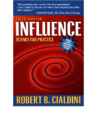
ads and the subliminal presentation o Twice as many Reader's Reports- first-person accounts in which readers of odors. of previous editions describe how e Increased coverage of how compliance they've seen a principle work on principles work in other cultures. or for them. Reader's Reports have New insights are derived from the become the most popular feature of research findings, sayings, and customs the book. Boston. New York • San Francisco Mexico City • Montreal • Toronto • London • Madrid • Munich • Paris Hong Kong • Singapore • Tokyo • Cape Town • Sydney Acquisitions Editor: Michelle Limoges Editorial Assistant: Christina Manfroni Executive Marketing Manager: Wendy Gordon
some receptors. Now, the smoker needs nicotine just to create normal levels of dopamine in his or her brain. Without nicotine, the smoker feels irritable and depressed. The smoker has trained the limbic system to crave tobacco. Think about how you long for a cold drink on a hot day. Or how you want a sandwich when you are hungry. Craving for tobacco is much stronger. These changes in the brain and body make nicotine highly addictive. Other addictive drugs of abuse, including heroin and cocaine, cause the same changes in the brain. While inhaling a cigarette, smokers are pulling more than nicotine into their lungs. Tobacco smoke contains more than 4,000 chemicals. Besides nicotine, the most dangerous chemicals in cigarette smoke are tar and carbon monoxide. Tar causes lung cancer, emphysema, and bronchial diseases. Carbon monoxide causes heart problems; smokers are at high risk for heart disease. Smokers also have a dulled sense of smell and taste, reduced stamina for exercise and sports,
Mass Media What is Mass Media? Statistics show that there are few things which impact the human mind more than mass media. The advice of teachers, parents and relatives may fall on deaf ears, but the mass media influence holds us all spellbound! At this point, it becomes necessary to define mass media. Mass media may be defined as any form of communication which is meted out to the people at large, through the various forms of communication. What modes of communication are we talking about? Well there can be no static definition for the
Changing career: 'These days, I go home feeling relaxed' Starting a new career is a daunting prospect for many. But Kate Hilpern discovers that plenty of help is at hand Some of the jobs that career changers are most keen to break into PR and teaching, among them are the very same jobs that people are queuing to get out of, says John Lees, author of How to Get a Job You'll Love and Take Control of Your Career. Many of us get to the point, whether in our twenties, thirties, forties or fifties where we decide to change careers. Some of us will make radical changes, while others will move to the edge of their comfort zone, perhaps shifting from acupuncturist to homeopath or PR office to journalist
The Fear of Choosing The Wrong Major in University People have to make a lot of choices throughout their lifetime. One of the biggest choices a person has to make is to choose what they are going to study after high school. Many students decide to acquire vocational education and they have to choose which profession to pursue, whether it be, for example, learning to become a technician or a hairdresser. However, a bigger majority of teenagers decide to go to university. But before doing so, teenagers have to be certain what kind of study program they will be taking. This puts young people under a lot of stress, because they have a lot of doubt and fear.
Stress in the life of young people We should acknowledge from the start that we all have stress in our lives and it's completely normal. The problem is that the age of people suffering from the stress is getting younger every year. We are all a little different and and also respond differently to situations that make us feel stressed. It is clear that there are many things that cause stress, especially when one is a teenager still trying to find his place in the world and finding out what to do with his life. The reasons may be upcoming exams, homework, new school, taking on a new responsibility school is a huge part of teenager's life and studying may often cause stress. Another thing that causes a lot of stress in the life of young is having bad relations. Being left out of the group, being harrased or having troubles with parents.
But I think it is more complicated than that. Going to university is a logical step to a ambitious young high school graduate and some even don’t consider other possibilities. On the other hand, universities are getting a lot of critic because some say that the goal of universities are to produce as many diploma graduates as possible. I think that universities are places where young people who doesn’t know yet what they want from life, can use this time to discover their true interests. Im sure that many young high school graduates who start study in university are at first not very passionate about their speciality because they dont know what to expect and if their choice is right. There is no quarantee and this is where university comes in play – objective is not only to educate students about their chosen subject but to expand one’s horizon and to develop logical thinking. One could argue that there are too
important in nowadays and needs a special attention. Some of the ways to bully other people are by: calling you names, making things up to get you into trouble, hitting, pinching, biting and pushing, taking things away from you, damaging your belongings, stealing your money, taking your friends away from you. Now, to talk about why people bully someone there are many aspects. Some bullies do it to get attention or to make other people afraid of them. Others might be jealous of the person they are bullying. It makes bully feel, stronger, smarter, or better than the person he or she is bullying. Some people think that it's one of the best ways to keep others from bullying himself. What is even worse, some bullies may not even understand how wrong their behaviour is and how it makes the person being bullied feel. Some young people are bullied for no particular reason, but sometimes it's because they are different in some way
6 have/'ve known interested and it looks as though shipwrecked three times. 7 walked they are working hard. Most of She was lucky because she survived 8 have you phoned them are looking at the experiment each of the three disasters. 2 1 written 8 was trying and working together. They are 4 1 D 3 F 5 G all wearing uniform it's quite an 2 been meaning 9 came
ManOS Overview Everything below is rooted in my core value of creating selfesteem. My actions today focus on work, girls, travel & having fun. My career is the ultimate leverage point as this creates the money, selfesteem and confidence. The money allows me to travel and the selfesteem & confidence allow me to live the lifestyle that is congruent with drawing in girls. Long term (5+ years), I want my life to offer value to the world by having a beneficial impact on those around me. I am obviously not clear how I will do this, so for now, I am focused on taking the greatest strides possible over the next few years, to better put me in a position to achieve my long term goal. 1. Career Vision I want to earn the rank of manager in my firm within the next 3 years. I want to earn the respect and trust of fellow employees. I�
Challenges of children`s “participation”: A Case Study of active citizenship in Cadle Primary School Gerli Orumaa – 662974 9th of May 2014 Word Count: 8,800 `Submitted in partial fulfilment of the requirements for the degree of B.A. International Relations` Table of Contents Abstract 3 Introduction 4 Chapter 1: Citizenship, Children`s Rights and Participation: from the UN to the UK 6
My speech is about Body-Shaming. I chosed the topic because i think that it is importent to talk about it. Did you ever stop and think about how often we are told to change our appearance? Magazines constantly offer tips about how to lose weight “in days,” appear slimmer “instantly,” and hide our “imperfections”… without actually knowing anything about us, much less our appearance. This is one example of body-shaming, and it is everywhere. It has become the norm to criticize aspects of our bodies as some type of bonding experience with friends – if we all hate our bodies; it somehow makes us feel connected and united. Body-shaming can lead to a vicious cycle of judgment and criticism. Messages from the media and from each other often imply that we should want to change, that we should care about looking slimmer, smaller, and tanner. And if we don’t, we worry that we are at risk of being the target of someone else’s body-shaming comments. Body-shaming mani
· And when you begin to miss me, dont forget it was you who let me go. · There is an end to things no matter how much we want to hold into them. · Otsisin keset seda pimedust, sind ja loodetud vabadust,kui mu käed su poole, tegid alguse loole, printsessist ja printsist, ühest kaunist kandist, kus oleme meie kaks, kus lõbutseme, kuni otsas jaks. Sa ei pea muinasmaad looma, sa ei pea tähti taevast tooma. Ole vaid minu kõrval, kui tõuseb päike. Ole vaid mu kõrval kui mind piinab meeleheide. Ole mu kõrval, kui kumab kuu, kui su nime
Libraries. We know a lot of things thanks to books, but we do not know exactly when and where they originated, and what should be considered the first book in the world. Ancient document, written on parchment, papyri and vellum can hardly be qualified as books the way we understand the word today. Centuries went before paper replaced parchment and papyri. In the 15 th century Johann Gutenberg invented a mechanical process of duplicating texts, which we today call book printing. The first book was printed between 1444 and 1446, so these years can be considered as the beginning years of book printing. His most important preserved printings are the 40 copies of the Bible. By the end of the 15 th century there were about 1000 print-shops in Europe already. The oldest Estonian
Money in our everyday life Money plays a quite important role in our everyday life First of all, nowadays mostly everything circles around money and how much people can afford things. Secondly, every adult has to work so they could get the paycheck at the end of the month they need to pay the bills, buy food and to pay for any other expences. On the other hand, money is not the only thing in the world and money does not give you everything. You can't buy a family and friends.
· Hereditary · Naturalists tried to apply in fiction the processes of natural sciences · Writers task is to record facts, systems of behaviour, living conditions, never revealing any natural unbiased (completely natural) · Point of view: amoral-outside the category of morality, neither good or bad · Naturalist find it absurd to blame the wicked. These criminals are doing what nature, environment, their unconscious tells them to do. Naturalists do not judge their characters, they simply report. Try to describe facts like they are. Naturalists depict the lower, coarser forms of life. · Drab, squallid set of scene. Revolting, disgusting · Characters are people with strong animal desires · Neurotic characters unable to understand the forces that control them · By the end of the 18th century the naturalism depicts in europe, but stars to become
in common with my mum. She's got a knack of choosing really brilliant 3 borrowed 10 dictionaries photos but I never get round to it. birthday presents for me, be it clothes, 4 alphabet 11 spelling 4 After my boyfriend broke off our pictures or whatever, basically because 5 Old Norse 12 influenced relationship I bought some new she likes the same kinds of things 6 evolve 13 non-native clothes to cheer myself up. as I do. We also share a liking for the 7 disappeared 5 My father was offered a job in same kinds of food, like olives and New York but after thinking it strawberries, and neither of us can 2 A honeymoon B salary C posh
Schools kill creativity Kristiina Moosel N-14 Ken Robinson had a greate speech in TedX 2006. He was discussing about creativity and how we help ourselves and others to develope it. Mostly I agreed with him but still there were some points, where I could argue with him. Ken Robinson says noone knows how’ll the future be like. The future where our kid’s are going to have to live in. Still our education system wants us to prepare them for that. Prepare them for the mystery, for something we have no idea about how it’s going to be. If I had no younger relatives, I’d have to dissagree with him - I mean, when I was in secondary school I had to study mostly only those subjects I’d really need in the future. But I have some relatives younger than I am. The youngest is 9 right now. And when I look at what she must
That's a striking departure from the past. Up till a couple decades ago, geography was destiny for cities. All great cities were located on waterways, because cities made money by trade, and water was the only economical way to ship. Now you could make a great city anywhere, if you could get the right people to move there. So the question of how to make a silicon valley becomes: who are the right people, and how do you get them to move? Two Types I think you only need two kinds of people to create a technology hub: rich people and nerds. They're the limiting reagents in the reaction that produces startups, because they're the only ones present when startups get started. Everyone else will move. Observation bears this out: within the US, towns have become startup hubs if and only if they have both rich people and nerds. Few startups happen in Miami, for example,
homework to do. I discovered that I’m really lacking the studying skill and despite my hatred towards school I really need it to make sure I understand the topics. The hardest part of home schooling is that I need to discipline myself and make sure all my homework is completed and sent to teachers. I have never liked studying from home and now with days passing and me still in home it feels like a prison. Luckily I still somehow manage to deal with the stress that comes from studying and all those due dates that I have now. This virus is slowly breaking my spirit. I realized that today when I just didn’t care about anything anymore. Weeks have become dull and weekends are extra boring for me. Usually I look forward to every week because I have so much to do. There are people I love and hobbies I enjoy. I should have had almost three dance lessons by now and the fact
No more homeworks, teachers giving you bad grades, or days lasting up to 4 or 5 pm. Great. While it’s all party and stuff, people will tend to ask you one question all the time, as you start to finish your last year. I don’t know how many of you have suffered that pain already, but I have. People, friends and family more frequently, will ask you the following: ‘Hey. Soo… Who do you want to become in the future?’ First thing most of you will say is that: ‘Um, I’m not entirely sure, I’m yet to decide.’ The one who asks is confused: ‘It’s your last year of high school, you’re probably going to university next year or whatever, and you don’t know who you want to become?!?’ In our busy society where we live in, everything tends to move really fast. All the people around you seem to have a goal in their life, almost if they knew what they were destined to since they were born. As if you were the only one, who has no idea what’s going on in your future
celebrating Africa’s coming of age, as more and more African countries received their independence either from Britain or France. It was especially a poignant time for Africa, as then British Prime Minister Harold McMillan articulated his now famous “winds of change” sweeping Africa. We had high hopes for Africa, for the Black race, that the insidious imposition of foreign rule on us, the looting of Africa’s natural resources by our colonial masters accorded us would be things of history. That is more than forty years ago. Unfortunately, the promise of independence has not been fulfilled. Today, Africa has become more desolate; there is more starvation, diseases and non-provision of essential services than when we got our independence. There are all kinds of wars in Africa than the rest of world put together. The majority of so-called Africans leaders want to stay in power until the day their bodies are put in the grave
Copyright ©2007 by Saddleback Educational Publishing. All rights reserved. No part of this book may be reproduced in any form or by any means, electronic or mechanical, including photocopying, recording, or by any information storage and retrieval system, without the written permission of the publisher. ISBN 1-59905-201-6 Printed in the United States of America 13 12 11 10 09 08 07 9 8 7 6 5 4 3 2 1 Introduction Grammar is a very old field of study. Did you know that the sentence was first divided into subject and verb by Plato, the famed philosopher from ancient Greece? That was about 2,400 years ago! Ever since then, students all over the world have found it worthwhile to study the structure of words and sentences. Why? Because skill in speaking and writing is the hallmark of all educated people. Lesson by lesson, this book provides basic instruction in the eight parts of speech--nouns, pronouns, verbs,
 annaabi.ee