Leidsid 33 sarnast õppematerjali, mis on seotud failiga "Strawberries". Need materjalid aitavad sul teemat sügavamalt mõista.
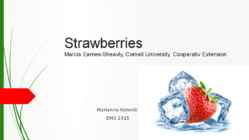
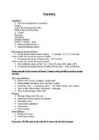
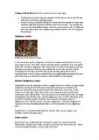
plant, berries, grow, plants, good, strawberries, best, flavor, late, harvest, before, grown, season, soil, growing, weed, important, disease, pick, morning, please, questions, perform, than, others, particular, perhaps, early, reliable, fruit, location, either, them, apart, control, diseases, bugs, select, today, till, difficult, predict, garden, findStrawberries Marcia Eames-Sheavly, Cornell University. Cooperativ Extension Marianne Kümnik EMÜ 2015 2 Choosing Cultivars[1] Some cultivars perform better than others. Best way to decide. Planting strawberries in a large area Some cultivars that perform well: Earliglow Northeaster Sable Allstar Honeoye Jewel Lateglow Marianne Kümnik 3 Site Selection[1] A pH of approximately 6.2 The strawberries do not tolerate extremes in pH. It's not good to plant strawberries in an area: where they were recently grown. where crops in the tomato family have been grown. Marianne Kümnik
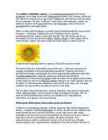
The sunflower (Helianthus annuus) is an annual(iga aastane) plant in the family Asteraceae, with a large flower head (inflorescence(õiekobar, õisik, õitseaeg, õidumine)). The stem(tüvi) of the flower can grow up to 3 metres tall, with the flower head reaching 30 cm in diameter. The term "sunflower" is also used to refer(nimetama, viitama, üle andma) to all plants of the genus(perekond, sugu) Helianthus, many of which are perennial(alaline, aastaringne) plants. What is usually called the flower is actually a head (formally(ametlikult) composite(liit-, komposiit- ; korvõieline, komposiit) flower) of numerous flowers (florets) crowded(täistuubitud, tunglev, rahvarohke) together. The outer flowers are the ray florets(pähik (õisiku osa) and can be yellow, maroon, orange, or other colors, and are sterile(steriilne, viljatu). The florets inside the circular head are called disc florets.
BASIL Sandra Pähklepa Horticulture 1. course Introduction • I have grown basil • Member of mint family • Belongs to the genus ocimum • The genus includes over sixty species of annuals Chemistry • Essential oils in the plant • Most basils contain methyl chavicol, eugenol and linalool • Methyl chavicol provides a sweet flavor Nutrition • Low in calories • No fat • Source of vitamin A • Also contains Calcium and smaller amounts of other vitamins Cultivation indoors • Growing indoors is challenging • Basil needs alot of water • As a tropical plant, basil requires plenty of heat and light • Good soil is sphagnum, perlite and wood chip mix • Cool white or warm white fluorescent tubes on a timer work best from light
P arrived people CHEROKEE. Southeast U.S- their heartland, not on the ocean. Lanuage + customs + weapons-> related to IROQUIS family of nations (Iroquis lived around Great Lakes) 1300 A.D. established in South East U.S Classical Cherokee Civilization 16th-19th centuries MATERINEAL-(,,mother line") women controlled home, family, children, inheritana, clan membership. Men hunted and made babies. Cherokee Wedding Ceremony- ¤groom brings meat(,,hunter") ¤ bride brings other food (grains, berries etc.) -> prooves that she's ,,homemaker" They step on the Ceremonial Blanket-> family. A girl got her name from older females. Boys were given a soft, sweet nickname. Boys got a new name, when they got older. Boy-> ,,Vision guest"-passage to adulthood. Ceremony->spirtual discovery. Holding man/medicine man/ shamom gives permanent name . ¤ The husband moves into the wifes village, allows to live there. Wifes were free to devorce. WEAPONS. Short spear (1 m) made from river reed (bamboo)
....................................................................................................5 Queen Victoria.............................................................................................................5 Relief............................................................................................................................6 Climate ........................................................................................................................7 Plants............................................................................................................................7 Animal life................................................................................................................... 7 Natural Resources........................................................................................................ 8 Economy..........................................................................................................
..................18 The Chelsea Flower Show Gala Dinner...................................................................18 The first day - by invitation only..............................................................................18 Two Days for Members Only...................................................................................18 Two Days for the public...........................................................................................18 The Chelsea Plant Sell-Off.......................................................................................18 Judgment Days.............................................................................................................20 .....................................................................................................................................21 Facts about Chelsea Flower Show................................................................................22 Putting on the Show...
down for farming purposes. Plants: Trees of this biome include hardwoods such as maple, oak, hickory, and beech. There are often some evergreens, such as hemlock, spruce, and fir growing amongst them. Decidous forests have usually 3-5 layers of plants; Top layer, or canopy: tall deciduous trees. Although the canopy is quite thick, it does allow sunlight to reach the forest floor, which encourages the other layers to grow. The 2nd layer: saplings and shorter kinds of trees The 3rd layer, or understorey: shrubs. The 4th layer: forest herbs, such as wildflowers and berries. In spring, before the leaves develop on the deciduous trees, these herbs bloom and grow quickly while they are getting a lot of sunlight. The 5th layer: mosses and lichens that grow on tree trunks. Lianas such as wild grape, poison ivy, and Virginia creeper climb the trees to flower and fruit high in the forest canopy. Plant adaptations:
butter? Why drown spring lamb in wine or cream and spices, when with just one or two herbs it is absolutely delicious? If you ask foreigners to name some typically English dishes, they will probably say "Fish and chips" then stop. It is disappointing, but true that, there is no tradition in England of eating in restaurants, because the food doesn't lend itself to such preparation. English cooking is found at home. So it is difficult to a good English restaurant with a reasonable prices. In most cities in Britain you'll find Indian, Chinese, French and Italian restaurants. In London you'll also find Indonesian, Mexican, Greek... Cynics will say that this is because English have no "cuisine" themselves, but this is not quite the true. Vocabulary: to criticize - tasteless overcooked - ingredient - to invent - sauces - to disguise - spice herb - delicious - disappointing - to lend cuisine British Youth (2)
into a soft, bright red berry-like structure called an aril. The arils are mature 69 months after pollination, and with the seed contained are eaten by thrushes, waxwings and other birds. The aril is not poisonous. The seeds themselves are extremely poisonous and bitter, but are opened and eaten by some bird species Toxicity The bark, stem, needles and seeds of the yew are poisonous, although birds can eat the berries without digesting the seed. This dangerous side of the yew has led some to call it the "tree of death,,. Symptoms include staggering gait, muscle tremors, collapse, difficulty breathing, coldness and eventually heart failure. However, death occurs so rapidly that many times the symptoms are missed. Fatal poisoning in humans is very rare, only occurring after eating a lot of yew foliage. Traditional uses
..........................................................................................................3 Geographical Position.....................................................................................................3 Relief...............................................................................................................................4 Climate & Time Zones....................................................................................................5 Plants...............................................................................................................................5 Animals...........................................................................................................................6 Population.......................................................................................................................6 The Native Australians..............................................................................
· Precious trees (ebony, mahagony, sandalwood) · Hard-broadleaf (decidious) trees (oak, beech pöök) · Coniferous trees -> consumption timber -> soft timber (spruce, pine, juniper) · Trees of little value (willow, bird-cherry toomingas) · Trees of special usage (fruits, cork) Forestry: · Planting, taking care of the trees · Protection of forests againts fire and pests · Soil improvement · Special forest plantations · Fertilisation · Plant breeding Forest Industry: · Felling of the trees · Processing of timber · Trees grow: 80-100 years in the wild, 60-70 years with the help of people The usage of forests: 1. Gathering · To live, get food and shelter from the woods · Don't change or harm the forests 2. EarlyAgrarian m.m. · Slash and burn -> woods replaced by brush (võsa) · Typical to Mediterranean region and East-Asia 4. Late Agrarian m.m · Very bad situation primeval fields
, 222 Rosewood Drive, Danvers, MA 01923, (978) 750-8400, fax (978) 750-4470, or on the web at www.copyright.com. Requests to the Publisher for permission should be addressed to the Permissions Department, John Wiley & Sons, Inc., 111 River Street, Hoboken, NJ 07030, (201) 748-6011, fax (201) 748-6008, e-mail: [email protected]. Limit of Liability/Disclaimer of Warranty: While the publisher and author have used their best efforts in preparing this book, they make no representations or warranties with respect to the accuracy or completeness of the contents of this book and specifically disclaim any implied warranties of merchantability or fitness for a particular purpose. No warranty may be created or extended by sales representatives or written sales materials. The advice and strategies contained herein may not be suitable for your situation
called the savannas. Further west the trees disappear and the savannas are replaced by the bush lands. The real desert occupies the centre of the Western Plateau and in the very south- west there are thin forests of evergreen trees. Most of the Austrian trees are various kinds of eucalyptus and acacia. Some eucalyptuses are small bushes in the semi deserts, some are the main trees in the savannas, but the biggest eucalyptuses grow as tall as hundred metres. Eucalyptuses give the people timber and eucalyptus oil. Of 600 kinds of acacias, the golden wattle is the best know because it is the national flower of Australia. Of the other trees there are bottle trees in the savannas and tree-ferns in the tropical forests and many others. Most of the animals which live in Australia are marsupial or pouched mammals. There are 150 different species of them
It replaces the traditional forms of Mrs and Miss. Greetings Good morning/afternoon/evening! 'How are you?' Very often people expect you to say something positive. Here's a breakdown of how you can express how you really are without complaining too much. · Fine, thanks. / On top of the world, thanks. · OK, thanks · Not so bad, thanks. / Can't complain, thanks. · So so, thanks. / So and so, thanks. · Not so good, actually 1 The English alphabet Spelling Work with your partner and spell out first your name and then some names of places. Write down each letter as you hear it, and then say the word. The English alphabet on the phone: You might find the following alphabet (used by international airlines) useful when trying to spell a word on the telephone.
" --Mike Maples, cofounder of Motive Communications (IPO to $260M market cap) and founding executive of Tivoli (sold to IBM for $750M) "Thanks to Tim Ferriss, I have more time in my life to travel, spend time with family, and write book blurbs. This is a dazzling and highly useful work." --A. J. Jacobs, editor-at-large of Esquire magazine and author of The Know-It-All "Tim is Indiana Jones for the digital age. I've already used his advice to go spear shing on remote islands and ski the best hidden slopes of Argentina. Simply put, do what he says and you can live like a millionaire." --Albert Pope, derivatives specialist at UBS World Headquarters "Reading this book is like putting a few zeros on your income. Tim brings lifestyle to a new level--listen to him!" --Michael D. Kerlin, McKinsey & Company consultant to Bush-Clinton Katrina Fund and a J. William Fulbright Scholar "Part scientist and part adventure hunter, Tim Ferriss has created a road map for an entirely new world
training part-time. One question I ask people is, 'What will happen if you don't do it?' The answer inevitably is that they will wish they had." There are plenty of organisations able to help people embark on their journey of career change. SMP Solutions is among them. Steve Preston, the director, says that while some people opt for one-to-one advice and support, others benefit from group workshops. "People are not very good at talking about themselves in a positive way and what happens in a group dynamic is that people point out others' strengths and potential ideas for careers. It works well." Emma White, a personal development coach, believes it's important that people understand the breadth of careers out there. "Sometimes I get people coming to me saying something like, 'I just know I want to work with animals.' They go away amazed at the opportunities available."
This brought along the great gold rush. Thousands of people went to the new land to find fortune. Forty years later the gold was found in the west. The miners of the east had a very hard time, the water was scarce and the roads were bad. But then the railway was built. Many of people who came to Australia to find gold stayed on to do other kinds of work. The found that Australia has other riches too, such as coal, copper, ironore, nickel, natural gas and more. The forests had good timber. Along seashorepearls and tortoise shells could be gathered. Some needed to manufacture such things as butter, cheese, shoes and clothing. Geographical position Australia is located in southern hemisphere. It's the only continent except for Antarctica that is all south of equator. Sometimes Australia is called the Island Continent. There is a great reason why. It really is an island. It is 2880 km from the mainland of asia and is almost half way round the world
Estonia in 1969. The high latitude makes the rotation of seasons and the interchange of light and dark periods of the year well pronounced in Estonia the maximum length of a summer day on the north coast is 18 hours 14 minutes, wheres during the shortest day in winter the sun appears for a mere 6 hours 3 minutes. Moreover, the long twilight time makes the transition between day and night rather smooth and the nights around the Midsummer Day shorter still. 7. Flora & fauna Estonia's plants and animals aren't represented in great variety. The percent of forests is growing every year and the most common trees are pine, birch, spruce, aspen, oak and alder. Forests offer a habitat to different wild animals. Among 65 species of mammals, the most widespread are the elk, roe deer, wild boar, hare, hedgehog, squirrel, fox and marten. Some endangered species, such as the brown bear, lynx and wolf, are represented in small numbers. Estonia is believed
Topic Health Introduction Good health is very important for us. We should do everything we can to stay healthy. Being in good health means having our body and mind in good working order, free from disease and pain. Ways of keeping health There are many ways for keeping health. To stay healthy we should eat right foot, dress comfortably, spend much time in fresh air, have enough rest, keep ourselves clean and have regular checkups with the doctor and the dentist. A big part of prevention of diseseases is sporting. Poeple need to have phsical exercise. If they can not have it, they will get stressed and they will be infected with dieseases much easier
middle latitudes typically have between 25 cm and 50 cm of precipitation a year. Much of this falls as snow, serving as reservoir of moisture for the beginning of the growing season. Warm to hot summers are experienced, depending on latitude. In the winter, grassland temperatures can be as low as -40° C, and in the summer it can be as high 20° C. There are two real seasons: a growing season and a dormant season. The growing season is when there is no frost and plants can grow (which lasts from 100 to 175 days). During the dormant (not growing) season nothing can grow because it's too cold. Taiga- Long, cold winters, and short, mild, wet summers are typical of this region. In the winter, chilly winds from the arctic cause bitterly cold weather in the taiga. The length of day also varies with the seasons in the taiga. Winter days are short, while summer days are long. The average temperature is below freezing for six months out of the year
It is caused by airborne acidic pollutants and has highly destructive results. Scientists first discovered acid rain in 1852, when the English chemist Robert Agnus invented the term. From then until now, acid rain has been an issue of intense debate among scientists and policy makers. Acid rain, one of the most important environmental problems of all, cannot be seen. The invisible gases that cause acid rain usually come from automobiles or coal-burning power plants. Acid rain moves easily, affecting locations far beyond those that let out the pollution. As a result, this global pollution issue causes great debates between countries that fight over polluting each other's environments. For years, science studied the true causes of acid rain. Some scientists concluded that human production was primarily responsible, while others cited natural causes as well. Recently, more
oceans, seas, canals, deserts,... Example: The Nile is the longest river. • when we talk about musical instruments, plants, animals and currencies. Examples: He plays the piano well. The rose is my favourite flower.
In June 1992, Estonia replaced the ruble with its own freely convertible currency, the Kroon (EEK). A currency board was created and the new currency was pegged to the German Mark at the rate at 8 EEK for 1 DEM. When Germany introduced the Euro, the peg was changed to 15.6466 Kroon for 1 Euro. The Estonian government is intending to adopt the Euro as the country's currency on 1 January 2008 due to continued high inflation, and finalised the design of Estonia's Euro coins in late 2004. Some people try to avoid paying taxes. But the situation has changed positively from 1991 and now about 25% of the people don't pay them. Personal income tax in Estonia is 26% and it is the same for all the people with different incomes. Corporate income tax is also 26% but comes only from profit so nothing is deducted from wages/salaries. Value added tax is the country's main income. It is not noticeable as it is already added to prices and no papers have to be filled.
......................................................................................27 SOLAR ENERGY..............................................................................................................27 8.1 Photovoltaic energy...................................................................................................... 28 8.2 Solar thermal heat.......................................................................................................29 8.3 Solar thermal power plants......................................................................................... 30 8.4 Solar energy and the environment..............................................................................30 WIND ENERGY.................................................................................................................31 9.1 The History of Wind ..................................................................................................31 9.2 How wind machines work...
in brackets. _ 1 She is in a band and she _________________________________ (record) a CD at the moment. _ 2 She is an actress and often _________________________________ (appear) on television. _ 3 At the moment she _________________________________ (have) a rest because she is tired. _ 4 Mike is a doctor and he _________________________________ (live) in Manchester. _ 5 I _________________________________ (start) work at 8.30 every morning. _ 6 He is a good cook but she _________________________________ (prefer) to eat out. _ 7 English tests _________________________________ (get) more and more interesting. _ 8 They _________________________________ (have) a party because it's her birthday. _ 9 I sometimes _________________________________ (ride) my bicycle to school. 10_ She usually _________________________________ (go) to the gym on Friday evenings.
2013): 1. Bacteria a) Heterotrophic bacteria, eg. symbiotic and non - symbiotic N2 fixers, ammonifier, cellulose decomposers, denitrifiers b) Autrotrophic bacteria, eg. nitrosomonas, nitrobacter, sulphur oxidizers, etc; 2. Fungus; 3. Viruses 4. Actinomycetes and stretomyces; 5. Algae eg. BGA, yellow gree algae, golden brown algae. The soil microflora largely depends on the type of soil, temperature, moisture, plant growth, nutrients, pH, and many other factors which may vary between locations but also within a single plot and over very small distances (OECD, 2007). Nevertheless of the quantity of microflora, biomass of all microorganisms living in soil play an important role in the functioning of entire soil ecosystems because their enormous biochemical activity (Barabasz et al. 2002). Soil microflora cycles carbon, nitrogen, phosphorus, and sulfur, plays a role in soil structure
coast of mainland Europe. The largest island is Great Britain, which is also the largest island in Europe. It consists of England, Wales and Scotland. The next largest island is Ireland, which is made up of Northern Ireland and the Irish Republic. Britain and Northern Island together form the United Kingdom. When referring to Britain or Great Britain in everyday life, the names are used to mean the United Kingdom. The English Channel (and best known: the Strait of Dover) separate Britain from mainland Europe and its closest neighboring country France. 3. History Great Britain has a long and interesting history stretching back millennia's. The Iberians brought their metal working skills and the first real civilization to Britain in the 3rd millennium B.C. And were then overrun by the various Celtic tribes that begun in the 8th century B.C. The Celts introduced the tribal organization and an early form of
The capital letter is also called a big letter or upper- case letter, or sometimes just a capital. A B C D E F G H I J K L M N O P Q R S T U V W X Y Z When do you use a capital letter? 4Use a capital letter for the first letter in a sentence: The dog is barking. Come here! 4Always use a capital letter for the word I : I am eight years old. Tom and I are good friends. 4Use a capital letter for the names of people: Alice, Tom, James, Kim, Snow White 4Use a capital letter for the names of places: National Museum, Bronx Zoo, London, Sacramento 4Use a capital letter for festivals, holidays, days of the week, months of the year: New Year's Day, Christmas, Labor Day, Mother's Day, Sunday, Monday, Friday, January, May, July, October Exercise 1 Circle the letters that should be CAPITALS. Then write
Afrikaner and British descent and their slaves and servants - this includes the cuisine of the Cape Malay people, which has many characteristics of Malaysia and Java, and recipes from neighbouring colonial cultures such as Portuguese Mozambique. Indigenous cookery traditional South African cuisine In the precolonial period, indigenous cuisine was characterized by the use of a very wide range of fruits, nuts, bulbs, leaves and other products gathered from wild plants and by the hunting of wild game. The domestication of cattle in the region about two thousand years ago by Khoisan groups enabled the use of milk products and the availability of fresh meat. However, during the colonial period the seizure of communal land in South Africa restricted and discouraged traditional agriculture and wild harvesting, and reduced the extent of land available to black people. Decline of indigenous cookery
For me this report is a great challenge because I have not done anything like this before, especially in English. Primary goal for me is to improve my knowledge about renewable energy and also usage of English language. This report is going to talk about biogas. It provides a brief review of usage and future prospects of the biogas. I have tried to make this report as understandable as possible. By the end of this report I want to come to a conclusion whether biogas is the best source of future energy or are there any other sources that are better. What is biogas? Typically it refers to the gas produced by the anaerobic digestion or fermentation of organic matter including manure, sewage sludge, municipal solid waste, biodegradable waste. If opportunely refined it can be used for electricity production. Also for space-, water- or process heating. Unintentional production of biogases has been an ongoing issue in many regions of
10.01.2016. 2Stefan Riedel, ‘’Edward Jenner and the history of smallpox and vaccination’’, https:// www.ncbi.nlm.nih.gov/pmc/articles/PMC1200696/, 10.01.2016. 2 I think that knowledge in natural sciences can have less value to us when compared to human sciences even though it is, in most cases, produced with difficulty. There were many scientists that carried out experiments to study plant life. It was in the 1600s when the first reasonable hypothesis was made by Jan Van Helmont (although only partially correct), and it was only later in 1930s that Cornelis Van Niel was able to propose the general equation for photosynthesis.3 It has taken hundreds of years for scientists to make sense of photosynthesis, but we don’t really value this information and it isn’t of much importance to us, the ordinary people. An argument for this would be the importance of
Education Education is so multifaceted that it is difficult for me to know where to begin discussing it, or how to prioritize the many factors. Relaying my own experience is easy: I had a standard classroom approach, supplemented by inordinate reading. In only the briefest and least memorable instances did I receive any individual tutoring. Education is commonly thought of as the job of schools. Adults cry "educate our children!" Everyone has opinions about the best way to do the job. It is of urgent importance, and all the numerous factors are much studied, debated, and new (or old) ideas continually tested or retested. Some people say "it's as simple as . . . " and then name their pet peeve or passion. My view is not of an education specialist, but of one who loves sharing what I learn, and owes much to educators. Since I don't have an educational theory neatly worked-out, nor an outline
air that we breathe, becomes dangerous to our health. The ozone layer around the Earth, there is a special type of oxygen called ,,ozone". Ozone is important because it stops ultraviolett radiation from the sun. Many aerosol sprays and factories destroy ozone and they have made a very big hole in the ozone layer. This means that too much ultraviolet radiation now enters the Earth. This is very dangerous because it can cause cancer. Poisonous chemicals also cause acid rain, that destroyes plants, rivers, lakes and buildings. Acid rain can travel thousands of miles, so pollution in one country can become acid rain for another country. So how to avoid the worst? Lets talk about cars, which are the main means of transport in our everyday life, they are useful and take us to the place, where we want to go. But lets be honest, they have also negative aspects. Like heavy traffic in the morning, while you are going to work and in the evening, when you are about to go home
 annaabi.ee