Leidsid 33 sarnast õppematerjali, mis on seotud failiga "Saksamaa vaatamisväärsused". Need materjalid aitavad sul teemat sügavamalt mõista.
memorial, frankfurt, tomb, frederick, germany, engel, freedom, berlin, dedicated, nazi, rule, statue, angel, first, wall, charlie, museum, both, regime, rights, alike, subject, fritz, known, gave, thought, 1786, armchair, study, sanssouci, wished, buried, favouritelecturers and authors in American history. Douglass was a firm believer in the equality of all people, whether black, female, American Indian, or recent immigrant. He spent his entire life advocating the brotherhood of all humankind. One of his favorite quotations was: "I would unite with anybody to do right and with nobody to do wrong." Life as a slave Frederick Augustus Washington Bailey, who later became known as Frederick Douglass, was born a slave in Talbot County, Maryland near Hillsboro. He was separated from his mother, Harriet Bailey, when he was still an infant. She died when Douglass was about 7. The identity of Douglass' father is obscure; Douglass originally stated that his father was a white man, perhaps his master, Captain Aaron Anthony, but later said he knew nothing of his father's identity. When Anthony died, Douglass was given to Mrs. Lucretia Auld, wife of Captain Thomas Auld. Mrs
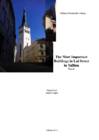
It was included in the UNESCO World Heritage List in 1997. The rest of the capital could be called the New Town, dating mainly from the 19th and 20th centuries. Tallinn is a mixture of the modern and the medieval where tradition goes hand in hand with the most recent trends. Its cross-cultural history has given the city a special charm. It has about 30 museums, 25 galleries and 15 exhibition halls. Among its many twin towns and partners are Helsinki in Finland, Schwerin and Kiel in Germany, Stockholm and Malmö in Sweden, Gent in Belgium, Venice in Italy and Odessa in the Ukraine. 2. Toompea For centuries Toompea was always inhabited by the ruling classes. In the Middle ages, it was the place where the bishops and the nobility resided. Here the landed gentry built their beautiful town houses. Most of the remaining buildings were erected after the big fire on Toompea in 1684.
Londinium was rebuilt. By AD 100 it had also become the capital of the Roman province. A massive wall was built to protect the city from further attacks. The Roman Empire came under increasing attack across Europe and in AD 410 they retreated. The Romans gave us a language based on Latin, the calendar, law and legal system, the census and also straight roads, central heating and concrete. Anglo- Saxons around AD 400 Anglo- Saxons were warrior farmers from Germany, Denmark and the Netherlands. Later in the 5th century, Anglo-Saxons settled just west of Londinium, around the Strand, and formed the town of Lundenwic. The area of the old Roman city became a landing-place for ships and a centre for trade.The first English King to convert to Christianity, King Ethelbert, founded St Paul's Cathedral in 604. The Vikings 8th and 9th century By the 9th century, London was a very prosperous trading centre, and its wealth attracted the attention of Danish Vikings
States of America. The original building was started in 1792. It was built of sand stone, painted white. There are 132 rooms now. The white House includes the private living quarters of the president and his family together with the President`s office, cabinet room, library, state dining room, diplomatic reception room, map room and staff quarters. There are numerous monuments in Washington, D.C. The Washington Memorial is a high building built between 1848 and 1885 in honour of the first president of the United States. The Jefferson Memorial was built in memory of Thomas Jefferson who wrote the declaration of Independence. Inside the Lincoln Memorial there is the statue of Lincoln and two wall paintings with symbols of freedom and justice. On two huge stone tablets one can read some of Lincoln`s important speeches. The Vietnam Veterans` Memorial consists of two long walls. The names of 50,000
09, which is roughly the replacement level for industrialized countries. The total U.S. population crossed the 100 million mark around 1915, the 200 million mark in 1967, and the 300 million mark in 2006 (On Tuesday, October, 17). The U.S. population more than tripled during the 20 th - a growth rate of about 1.3 percent a year - from about 76 million in 1900 to 281 million in 2000. This is unlike most European countries, especially Germany, Russia, Italy and Greece, whose populations are slowly declining, and whose fertility rates are below replacement. The current population according to the U.S Census Bureau is 303,026,362 as of 2nd October 2007. This is based on the 2000 census and national population estimates. 8. Natives Native Americans in the United States are the indigenous peoples from the regions of North America now encompassed by the continental United States, including parts of Alaska. They
same place and soon became a professional German City Theatre. The famous German writer August von Kotzebue (1761-1819), the life and soul of the theatre, lived in Tallinn for several long periods. (Otto von Kotzebue, the son of August von Kotzebue, accompanied explorer Adam Johann von Krusenstern on his Journey around the World of 18031806.) Estonian was heard from a theatre stage for the first time. Early in the 19th century city architect Carl Ludwig Engel (helped rebuild Helsinki and also built the palace at 8 Kohtu Street on Toompea) designed a sumptuous hall for the theatre, but it was destroyed in a fire. Another fire devastated the theatre in 1902, after which it moved out from Old Town. The premises came into the possession of the Puppet Theatre in 1955. In 1991, the whole building was given to the theatre. Renovation works took place in 2001-03. 5 17 Lai Street Lai 17, so-called Menshikov House was completed about 1685 in the Dutch
It is built during the years 1503-1512. It has a magnificient vault and it is one of the most outstanding chapels of its time. It features a large stained glass window, the Battle of Britain memorial window. The window, which dates from 1947, commemorates fighter pilots and crew who died during the Battle of Britain in 1940. The Abbey's formal title is The Collegiate Church of St Peter, Westminster. The popular title `Westminster Abbey' continues to be used, even though there have been no monks here since the 16th century. The Dean of Westminster must give his permission for all burials and monuments in the Church. Ashes only are permitted
During his lifetime, Faraday rejected a knighthood and twice refused to become President of the Royal Society. When asked by the British government to advise on the production of chemical weapons for use in the Crimean War (1853-1856), Faraday refused to participate citing ethical reasons.Faraday died at his house at Hampton Court on 25 August 1867. He had previously turned down burial in Westminster Abbey, but he has a memorial plaque there, near Isaac Newton's tomb. Faraday was interred in the dissenters' (non-Anglican) section of Highgate Cemetery.
Kingdom of Kent to Christianity. Kent was probably chosen because it was near the Christian kingdoms in Gaul and because Æthelberht had married a Christian princess, Bertha. King Æthelberht converted to Christianity and also allowed the missionaries to preach freely, giving them land to found a monastery outside the city walls. *St George He is immortalised in the tale of George and the Dragon. According to this story he saved a maiden in distress from a dragon. His memorial is celebrated on 23 April. St. George is a very popular saint and is the patron saint of England, Georgia, Greece, Russia and many other countries. George was offered gifts of land, money and slaves if he made a sacrifice to the Pagan gods, but he refused. So, he was executed for his refusal. Before the execution George gave his wealth to the poor and after his death, the Christians soon came to honor him as a martyr. *St Andrew He is the patron saint of Scotland
of Westminster Abbey. In 2010, the International Astronomical Union approved that a crater on the planet Mercury would be named after Kipling - one of ten newly discovered impact craters observed by the MESSENGER spacecraft in 2008-9. Many older editions of Rudyard Kipling's books have a swastika printed on their covers associated with a picture of an elephant carrying a lotus flower. Since the 1930s this has raised the possibility of Kipling being mistaken for a Nazi-sympathiser, though the Nazi party did not adopt the swastika until 1920. Kipling's use of the swastika was based on the Indian sun symbol conferring good luck and well-being; the word derived from the Sanskrit word svastika meaning "auspicious object". He used the swastika symbol in both right- and left-facing orientations, and it was in general use at the time. Even before the Nazis came to power, Kipling ordered the engraver to remove it from the printing block so that he should not be thought of as supporting them
the ministry of the friars and their business interests.They traded in fish in order to support themselves,but their reason for existing was preaching the word of God. The seal of the monastery bore the words `Order of Preachers". The people, however, knew it as "Blackfriars Monastery' because of the black cloak the friars wore in public over their white habit. Accoding to medieval documents the monastery was dedicated to Saint Catherine. A common symbol of the Dominican Order is a black and white dog holding in his mouth a burning torch. It derives from a pun on the Latin name of the friars, "Dominicanes", which means `the followers of Dominic". But the name could be split into two words "Domini canes" which means "the hounds of the Lord". The torch represents the flame of truth. The monastery was celebrated for its scholarship Its best known prior was an Estonian from Tallinn named Mauritius
The Culture of the United States is a Western culture, and has been developing since long before the United States became a country. Today the United States is a diverse and multi-cultural nation. Its chief early influence was British culture, due to colonial ties with the British that spread the English language, legal system and other cultural inheritances. Other important influences came from other parts of Europe, especially countries from which large numbers immigrated such as Ireland, Germany, Poland, and Italy. Due to the extent of American culture there are many unique subcultures within the United States. The types of food served at home vary greatly and depend upon the region of the country and the family's own cultural heritage. Recent immigrants tend to eat food similar to that of their country and Americanized versions of these cultural foods, such as American Chinese cuisine or Italian-American cuisine often eventually appear. Government, Political structure
Sculptures and monuments St. John's Lutheran Church St John's Church was probably built in the first third of the 14th century. There is no other brick church decorated with so much terracotta plastic in Europe Eduard Tubin Monument The Eduard Tubin monument, marking the 100th birthday of the composer, was dedicated in 2005. The authors of the statue are sculptor Aili Vahtrapuu, architect Veronika Valk, with sound installations by Louis Dandrel.Eduard Tubin (1905-1982) was a versatile composer and conductor, one of the most recognized symphonists throughout history. He served as concert master and conductor at the Vanemuise Theatre. In 1944, when the theatre was destroyed, he left Estonia to Sweden. Monument to Gustav II Adolf
Tobacco plantations African slaves, working in tobacco harvest 1620 by Dutch boat. Also Englishmen (convicts and poor people) Mayflower and Pilgrim Fathers Mayflower- cargo ship In 1620 one hundred Puritans boarded the Mayflower From Plymouth, England, to today's Plymouth, Massachusetts, United States Claim they are the forefathers of USA aristocracy- FALSE They saw little chance of England becoming a proper country Wished to live free of English laws and oppressing church religious freedom In may (had time before winter!!!) · Mayflower Compact First governing document of Plymouth Colony Agreement composed by a consensus among new Settlers Composed for the sake of their own survival Fair and equal laws, for the general good Signed by 41 adult male members on the Mayflower Free of English law foundation of the USA constitution · Puritan Colony in Plymouth, New England America's first permanent puritan settlement Along with Jamestown, the most successful colony
Introduction Name: The United States of America Area: ~10 mln km2 Population: ~300 mln people Symbols: The American Flag- consists of 13 equal horizontal stripes of red alternating with white and represent the Thirteen Colonies. The 50 small, white stars represent the 50 U.S. states. The U.S. flag is commonly called ,,the Stars and Stripes". The Statue of Liberty, that is locatd in New York,is a gift from the France. The Libety Bell, that is a bronze bell that symbolizes freedom in the United States of America. It is located in Pennsylvania,U.S. Capital: Washington D.C Biggest city: New York National language: English Location U.S is located in North America, bordering both the North Atlantic Ocean and the North Pacific Ocean. United States neighbour countries are Canada and Mexico. The USA has the 8th longest coastline in the world at ~20 000 km. 62% of the perimeter of the USA is coastline
home of the Crown Jewels of the United Kingdom. The peak period of the castle's use as a prison was the 16th and 17th centuries, when many figures fallen into disgrace, such as Elizabeth I before she became queen, were held within its walls. · The Victoria Memorial is a sculpture in London, placed in front of Buckingham Palace. It has a large statue of Queen Victoria facing north-eastwards towards The Mall. The other sides of the monument feature dark patinated bronze statues of the Angel of Justicethe Angel of Truth and Charity facing Buckingham Palace. · The Victoria and Albert Museum is the
In 731 ,,The Great Ecclesiastical History of the English People"- overshaows all other sources of 7th, early 8th C Well-founded scraps of tradition, first work of history, where AD system is used Angles, Saxons, Jutes. Frisians 430´s onwards, Germans settlers arrived in large numbers. Anglo-Saxon invasions in 499 The Saxons- Saxon country to South and West The Angles- Angulus to East Anglia, Jutes in Kent Same culture as southern Scandinavia, Germany, northern France 600 they had founded their 7 kingdoms The Anglo-Saxon kingdoms Kent-JUtes, Essex, Sussex, Vessex- Saxons East Anglia, Mercia, Nothumbria- Angles Series of over-kings from various kingdoms St Patrick Conversion of Irish- 432-461 Patron saint of Ireland, originally pagan, slave He escaped, became a Christian priest and later bishop. Ireland was largely christian by 6th C Monasteries multiplied, monastic lines,
5. When did the Europeans come? Europeans setteled in Auckland in 1840, a thousand years after Maori's did. 6. What kind of centre is Auckland? Auckland is the center of sails. 7. What are its most famous sights? Describe them. Famous landmarks such as the Sky Tower and Cornwall Park and One Tree Hill get top spots on most visitors sightseeing. Also American Express Viaduct Harbour, Auckland Civic Theatre, Auckland War Memorial Museum and Eden Park. Cornwall Park and One Tree Hill Sir John Logan Campbell presented the land which was to become Cornwall Park to the government in 1901. Logan died in 1912 and was buried at the top of One Tree Hill, a mound which he was responsible for naming. Aside from the park's historic interest, it is a lovely place to spend time with its spacious parkland areas and grassy slopes offering great opportunities for leisurely walks. One Tree Hill is low
Reval - comes from the German words “REH” and “FALL”, meaning the falling of the deer; could be deers trying to escape from the Danes, running down the Toompea hill Tallinn - the word origins from estonian language, could mean “taani-linn”, “tali-linn” or “talu- linn”; Reval was replaced when Estonia became independent Symbols Flag - blue black white tricolor; blue represents sky, black the soil, and white our freedom. Danneborg - red flag with a white cross fell from the sky during the battle in 1219. It is also set into the small coat of arms of Tallinn. Great coat of arms - three lions, a knight, and Danish queen; leaves around Old Thomas - quardian of Tallinn, put on top of the spire of Tallinn Town Hall in 1530; boy that excelled springtime contests thrown by Baltic German elite, because of his low-born status was unable to receive a prize, therefore was granted the position of town guard
On this day Americans give thanks for their blessings they have enjoyed during the year. Thanksgiving is usually a family day, celebrated with big dinners and happy reunions. The first American thanksgiving was held in Plymouth, Massachusetts in 1621. In 1620 a small group of puritans on a ship called mayflower set sail for America. This group called themselves pilgrims because of their wanderings in search of religious freedom. There were 102 men, women and children on the ship- The pilgrims were poorly trained and poorly equipped to cope with life in the wilderness. One spring morning in 1621, an Indian came into the little village of Plymouth and introduced himself in friendly way. The Indians taught the pilgrims how to hunt, fish, and grow food. Because of this help from Indians, the pilgrims had a good harvest that year. Governor William Bradford invited the Indians to a feast. It lasted three days
didn't help, because the Aryan race should have people with light eyes,hair and skin, they should be tall and powerful. He didn't care for people who didn't meet his expectations of the perfect race. In his eyes all other groups of people like the Russians, Jews and just crazy, crippled or diseased people were worthless and didn't have any other use than for slave work or just killing. b) After the war twenty-four major political and military leaders of Nazi Germany, indicted for aggressive war, war crimes, and crimes against humanity, were brought to trial before the British, French, Russian and American judges. More than 100 additional defendants, representing many sectors of German society, were tried in a series of 12 trials.Twelve prominent Nazis were sentenced to death. Most of the defendants admitted to the crimes of which they were accused, although most claimed that they were simply following the orders of a higher authority
jpg Kailasa Temple Represents Mt. Kailasa, home of god Shiva; Largest monolithic structure in the world; 200 000 tons of removed rocks; 2x the area of Parthenon and 1,5 times higher; 7000 labourers; 150 years. Kailasa Temple Indo-Islamic Architecture Muslims in medieval time Imperial style under patronage of the Sultans of Delhi Mughal architecture round domes, high minarets, pillars, open courtyards Indo-Islamic style most important symbol is tomb provided spaciosness, massiveness and breadth Examples : Qutub Minar, Alai Darwaza, Tughlaqabad Fort, Fatehpur Sikri, Agra Fort, Taj Mahal, Red Fort Delhi Fahpur Sikri Palace Qutub Minar and Alai Darwaza Tughlaqabad Fort Agra Fort Red Fort Delhi Taj Mahal (built 1631 A.D -1654 A.D) More than 22, 000 workers Height of Dome 35 m Height of Minarets 40m
residence of Britain's sovereigns since 1837 and today is the administrative headquarters of the Monarch. When was it built? 1703 Who was the first monarch to live there? Queen Victoria Is it open to public? Yes Go to the official website of the British monarchy http://www.royal.gov.uk/TheRoyalResidences/BuckinghamPalace/Buckin ghamPalace.aspx and take a virtual tour of The Grand Staircase and The Blue Drawing Room. Whose memorial is immediately in front of the gates of the palace? Queen Victoria What is the name of the road along which you reach your next destination? What is the colour of the road? Why? Red, like a carpet, Destination 2: Trafalgar Square What does the square’s name commemorate? Its name commemorates the Battle of Trafalgar - mälestab Which birds flock the square? - Pigeons What is the name of the column on the square? Who does it commemorate
Tramway was opened in Kopli in 1915 by factories ( ,,Vene-Balti's", ,,Noblenesser's" and ,,Bekker's factory") to they'r workers transport. 4 Independent Estonia (1918-1940) On February 24, 1918 Estonia took advantage of the weakening Bolsheviks and proclaimed independence; already the next day German troops occupied Estonia. Local town government was restored after Germany capitulated in the WW I. The first city council elected during the Republic of Estonia assembled on June 16, 1919. On 2 February 1920, the Tartu Peace Treaty was signed with Soviet Russia, wherein Russia acknowledged the independence of the Estonian Republic. Tallinn became the capital of an independent Estonia. Esonian first constitutional law was accepted in 15.06.1920. There was extensive citizenlaws: confluence-, religion-, meetings- and speechfreedom
Kadrina Secondary School Princess Diana Report Mattias Suurkivi 8.a Class Instructor: Katrin Mägi Kadrina 2009Contents Introduction I chose Princess Diana, because I wanted to know about her and I like the British royal family and she was a part of the family, too. She is dead and if somebody reads it, he or she can learn about her and will know what she was like. The purpose of the work is to introduce Diana and get to know her better. Diana Facts about Diana Main Facts Her full name is Diana Frances Spencer and she was the Princess of Wales. Diana was called people's Princess. She was born on 1. July 1961 in Park house, Sandringham, Norfolk. She was born at the same place as her mother. She was married to Charles, Prince of Wales in 1981 and divorced in 1996. She died in ca
Some of the things you will learn in THE CODEBREAKERS • How secret Japanese messages were decoded in Washington hours before Pearl Harbor. • How German codebreakers helped usher in the Russian Revolution. • How John F. Kennedy escaped capture in the Pacific because the Japanese failed to solve a simple cipher. • How codebreaking determined a presidential election, convicted an underworld syndicate head, won the battle of Midway, led to cruel Allied defeats in North Africa, and broke up a vast Nazi spy ring. • How one American became the world's most famous codebreaker, and another became the world's greatest. • How codes and codebreakers operate today within the secret agencies of the U.S. and Russia. • And incredibly much more. "For many evenings of gripping reading, no better choice can be made than this book." —Christian Science Monitor THE Codebreakers
they deemed "inalienable." Democracy: The colonies had no say in the formation of the government, and had no representation in the lawmaking process. Consequently, they were attracted to the idea of democracy, where the government is "of the people, by the people, for the people," as Lincoln later expressed in his Gettysburg Address. Religious Tolerance: Much impetus for the ideas of religious tolerance came from the rule of King George II, who was a staunch Catholic and did not allow freedom of religion to Protestants in New England. Voltaire was among the first to denounce Christianity and other organized religions as mere ploys to support monarchy. What emerged was Deism, which was more or less a new religion that considered reason its foundation. In Deism, there is no interference by a deity, and man controls his own destiny. These ideas stirred the masses into action, as the people dreamed of carving their own futures. Adopted by the Founding Fathers, Enlightenment
and the widest is Emajõgi. About 50% of the country is covered by forests while wetlands cover 30%. The landscape of Estonia, through covering a small area, is varied and unique. Lake Peipsi is Estonia's largest lake and Europe's fourth largest freshwater lake. 5. Symbols The flag The Estonian blue-black and white national flag was originally the flag of the Estonian Students' Society and was consecrated in Otepää Church in 1884. Today there is a memorial plaque on the church wall commemorating the event. The Flag Museum, opened in an annex in 1996, attracts tourists who take an interest in the history of the flag. After about half a century, during which it was prohibited by the Soviet authorities, the flag was seen again in public for the first time in Tartu in May 1988. 24 February 1989, Estonia, still part of the Soviet Union, hoisted its tricolor on the tower of Pikk Hermann in Tallinn. Since then the
languages and means East). The Estonians, our Finno-Ugric forefathers settled here in approximately 5,000 BC from northern Russia and the Urals, as fishermen and hunters. They called themselves “rural people”, the term “Estonians” started to spread three centuries ago, taking firm root in the middle of the 19th century. From the 13th century onwards the ancient Estonians had to continually fight for their freedom, against the Danes, Germans, Swedes, Poles and Russians. The Russians annexed the Estonian territory from Sweden after the Great Northern War in 1721 by the Treaty of Nystad. After the fall of Tsarist Russia in 1917, Estonians fought for their independence, and in 1918 the Republic of Estonia was established and endured until 1940. In the summer of that year the Soviet Union occupied all three Baltic states.
This was the time of the crystallization and the culmination of serfdom, when various socio- political and cultural undercurrents were also active, preparing the ground for the industrial society and the national-democratic movement in the second half of the 19th century. The 1710 of the corporations of knights and towns, until Alexander II (18551881), established the relationships between Estonia, Livonia and the Russian Empire. The Baltic Landesstaat reached its full development. The freedom of action in the new provinces was naturally granted to one of the most firm ideological pillars of the tsarist empire -- the Russian orthodox church; though as the Landeskirche in the Estonian and Livonian territories, the Lutheran church long maintained a de facto predominance. The most important organ of Baltic German local government was the Diet, consisting of all the noble families who had been `selected' in a list of the eligible. Although jealously
future children. His idea was to become a doctor or a lawyer. As he honoured his father and (2) G , he decided to become a priesst. At the age of 17 his father let him preach a sermon in his curch. It was a freat success and he was certain he had found his calling, so he went to study religion in Pennsylvania. During his studies King (3) A of Mahatma Gandhi in India. He supported Gandhi´s idea of non-violent protests as a way of getting freedom and civil rights. Always an excellent student, he continued his sutides at Boston University and got a PhD in Philosophy in 1955. In the 50s and 60s he continued his work as one of the leaders of the civil rights movement in the USA. He (4) F and was against violence even when he and his family were atacced because of the work he was doing. On 28 August 1963 King (5) D that brought more that a quarter of a million
The Middle Ages The Middle Ages are one of the most turbulent periods in English history. The Middle Ages are so called as the middle period between the decline of the Roman Empire and the Renaissance. The Middle Ages started in 1066. with the Battle of Hastings and the Norman Conquest. William the Conqueror took all the lands from the Saxon English and gave these to French nobles. Normans were known as great builders. This is assured by the fact that many great castles and other buildings, including the Tower of London, were built during the Norman Conquest. In 1086. Domesday Book was compiled. It is a detailed survey of England ordered by William the Conqueror. The reign of King William Rufus who was the son of William started in 1087 and lasted until 1100. Next king was Henry I who was the brother of William Rufus. His reign was from 1100-1135. In 1135 Henry I nephew Stephen got to the throne of England and reigned the country for 19 years. He was th
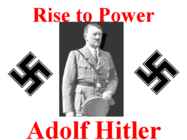
Rise to Power Adolf Hitler Objectives: • The objective of this presentation is to give students an understanding of Adolf Hitler’s early, pre-adult years. • Students will also become familiar with how this seemingly unimportant Austrian rose to power in post World War I Germany. Overall Purpose: The overall purpose of this presentation is to explain how this little boy on the left became the man on the right who was ultimately responsible for the death of about 50 million people all over the world!! Birth • Adolf Hitler was born on April 20, 1889 in Braunau, Austria. • Adolf was 1 of 6 children - 3 of who died at early ages Parents Alois Schickelgruber Hitler was a customs official
 annaabi.ee