Leidsid 33 sarnast õppematerjali, mis on seotud failiga "Ringo Starr". Need materjalid aitavad sul teemat sügavamalt mõista.
ringo, starr, beatles, liverpool, drums, ludwig, songs, friends, broke, journey, blues, photograph, married, barbara, bach, bond, lennon, first, movies, hard, night, other, magic, studio, release, single, real, richard, starkey, july, england, joined, taking, pete, best, before, another, groups, storm, super, classic, black, pearl, lead, singer, yellowR i ng o S t a rr 1 94 0 - English musician and actor Music: Ringo Starr Never Without You (2003) Eliisa Sommer Early years real name is Richard Starkey was born on 7 July 1940 was raised in working class area of Liverpool his parents split up when he was three years old Afflicted (vaevatud) by illness for much of his childhood In 1957, he formed The Eddie Clayton Skiffle Group In 1959, he joined the Raving Texans adopting the stage name Ringo Starr because of the rings he wore and because it sounded "cowboyish" and his drum solos were billed as "Starr Time" The Beatles 19621970 Ringo Starr was performing in Hamburg, Starr met The Beatles
Ringo Starr About Ringo Starr · He was born in 7 July, 1940. Right now he is 69 years old. · Birthplace: Liverpool, England · He is an English musician, singer songwriter and actor. · He gained worldwide fame as the drummer for the rock group The Beatles. · His real name is Richard Starkey, Ringo Starr is just a stage name. Significant Facts About Ringo Starr · Oldest Beatle and last to join the group, in 1962. · 20 studio and live albums since 1970 · Lefthanded drummer who uses a righthanded drum · kit. Before The Beatles · Young Richard Starkey started his own group in 1957, moving on to The Raving Texans, where he adopted the name Ringo Starr. · He met the Beatles in 1960 in Germany
biggest airport in the UK after London. No tickets on certain buses. Mainly nightlife economy, over 10 000 visitors per night. 2 universities, 2 football clubs, 2 big stadiums, largest is Manchester United Football stadium. Granada television, BBC, Hollywood films, The Guardian, red brick houses, second greatest after London. Mihkel: "Liverpool" Founded in 1207, city in 1880. Has been bombed 80 times. Albert Dock, Royal Liver Building (1911), Cunard Building (1917), Port of Liverpool (1907)is being restored in 2009.the Liverpool Blue Coat School is the top school in UK, has produced 8 Nobel Prize winners. The Beatles in 1960, record company was Parlophone records, Paul and Ringo still active. 1892 FC Liverpool,most successful in UK. Robert: "Traditional British Foods" Breakfast 1:eggs, bacon, sausages, bread, beans, mushrooms,coffee Breakfast 2: cereals, slice of toast, orange juice, coffee Lunch: sandwiches, crisps, fruits, juices
ABSTRACT FAMOUS SINGERS AND BANDS IN THE ENGLISH 2010 Contents: page The Bands · The Beatles 3 · The Who 4 · Placebo 5 · The Kooks 6 · Coldplay 7 The Singers · Sir Elton Hercules John 8 · Andrew Abraham 9 · Robert Peter "Robbie" Williams 10 · Christopher Anthony John "Chris" Martin 11 The Bands The Beatles were an English rock band, formed in Liverpool in 1960 and one of the most
Multi-Instrumentalist Entrepreneur Record and Film producer Who Is He ? English singer-songwriter Poet Composer Multi-Instrumentalist Entrepreneur Record and Film producer Painter Who Is He ? English singer-songwriter Poet Composer Multi-Instrumentalist Entrepreneur Record and Film producer Painter Animal and peace activist James Paul McCartney, was born June 18, 1942 at Walton Hospital where his mother had worked as a nurse. Walton Hospital is in the northern part of Liverpool not far from Paul's teen-age home at 20 Forthlin Road, Liverpool. Paul McCartney grew up in working-class Liverpool. His father, James, led the Jim Mac Jazz Band in the 1920s. A few months after his mother, Mary, died of breast cancer in 1956, Paul bought his first guitar and learned to play. In June 1956 he met Lennon and asked to join his band, the Quarrymen In the years of the Beatles' greatest popularity, Paul was generally regarded as the best-
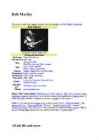
Studio One, Beverley's, Upsetter/Trojan, Label(s) Island/Tuff Gong Associated The Wailers Band, The Wailers acts Website www.bobmarley.com Robert "Bob" Nesta Marley OM (February 6, 1945 May 11, 1981) was a Jamaican singer, songwriter, guitarist, and activist. He is the most widely known performer of reggae music. A faithful Rastafari, Marley is regarded by many as a prophet of the religion.[1] Marley is best known for his reggae songs, which include the hits "I Shot the Sheriff", "No Woman, No Cry", "Three Little Birds", "Exodus", "Could You Be Loved", "Jammin'", "Redemption Song", and "One Love".[2] His posthumous compilation album Legend (1984) is the best-selling reggae album ever, with sales of more than 12 million copies.[2] Early life and career Marley was born in the small village of Nine Mile in Saint Ann Parish, Jamaica. His father,
(1965) and "(I Can't Get No) Satisfaction" (1965) by The Rolling Stones From the late 1960s it became common to divide mainstream rock music that emerged from psychedelia into soft and hard rock Hard rock was most often derived from blues-rock and was played louder and with more intensity. Origins (1960s) 2/2 Blues-rock acts that pioneered the sound included Cream, The Jimi Hendrix Experience, and The Jeff Beck Group Cream, in songs like "I Feel Free" (1966) combined blues-rock with pop and psychedelia, particularly in the riffs and guitar solos of Eric Clapton Jimi Hendrix produced a form of blues-influenced psychedelic rock, which combined elements of jazz, blues and rock and roll Even The Beatles attempted to produce songs in the new hard rock style, trying to create a greater level of noise than The Who, from The Beatles (1968) (known as the "White Album") onwards, beginning with "Helter Skelter"
He has been heavily involved in the fight against AIDS since the late 1980s, and was knighted in 1998. He entered into a civil partnership with David Furnish on 21 December 2005 and continues to be a champion for LGBT social movements. On 9 April 2008, John held a benefit concert for Hillary Clinton's presidential campaign, raising $2.5 million. In 2008, Billboard magazine released a list on which are present Hot 100's top 100 artists and Elton John reached #3, preceded by Madonna and The Beatles. John was born and raised in Pinner, Middlesex in a council house of his maternal grandparents, with whom his newlywed parents (Sheila Eileen (Harris) and Stanley Dwight) were living. Then they moved to a nearby semi-detached house. He was educated at Pinner Country Grammar School until the age of 15, before pursuing a career in the music industry. When John began to seriously consider a career in music, his father tried to steer him toward a more conventional career such as banking
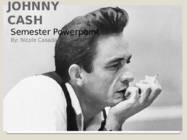
collective consciousness about social issues of the day. The Johnny Cash Show EST. 1969 By the age of 48, Johnny Cash became the youngest living inductee into the Country Music Hall of Fame. The Rock and Roll Hall of Fame also bestowed their honor on him in 1995.Cash was became the first ever known to be not only recognized by idolized in both genres of music. Even after all of Cash's accomplishments he was far from stopping. In 1985, Cash joined with friends Willie Nelson, Waylon Jennings and Kris Kristofferson to form "The Highwaymen." The `super-group' released three albums between 1985 and 1995 scoring a No. 1 hit with the single "Highwayman" from their first album. In the 1990's Cash began a struggle with health issues, but entered a professional renaissance after signing with rap producer Rick Rubin's American record label. In 1994 he won a Grammy for best "By the age of 48, Johnny Cash became
How genre and narrative makes meaning in ``The Black Dahlia`` When analyzing a film, people understand the movie is much more complicated than it seems. To make a difference, to give a meaning to the film, film-makers have used different visual and thematic features. There are macro features (genre, narrative) as well as micro features (mise en scene, cinematography) and they are linked together in many ways. I have chosen to analyse the closing sequence of ``The Black Dahlia``, directed by Brian de Palma, and I will focus on macro features in this essay. Brian de Palma is well known director, who is focused on noir area through his career (he was once considered as a Hitchcock imitator) ``The Black Dahlia" can be classified as Film Noir. The genre is called Film Noir due to the `serie noir` books, which were publised in France (bethween 1940s and 1950s). These books were translations of American novels by authors like Dashiel
) . Wailing or crying was a common occurrence among the mourners who often painted their bodies with pipe clay, red ochre, or charcoal when a relative or friend died. In some districts people wore a head covering made of feathers. Others beat their bodies with sticks or clubs, or cut themselves with shells or stone knives to cause bleeding. In these instances the period of sorrow or mourning, was considered to be at an end when their wounds were healed. Relatives and close friends often sat beside a grave of a deceased person, but this was related to their superstitious beliefs. 4 Sitting beside a grave - sometimes shaded with a hut or covering to provide shelter for the mourner or mourners - involved ensuring that the deceased person's spirit had gone to the 'sky camp' or to its spirit- place. Obviously it is impossible to say 'how' they knew or considered when this happened. However
Wilkie Collins' The Moonstone and works by the likes of Ralph Waldo Emerson and Bret Harte also left an indelible impression on Kipling. Respite from the Holloway household was gained when he spent one month a year in London with his mother's kindly sister Aunt Georgie and her husband, pre-Raphaelite painter Edward Burne Jones and their children. Those months of December were a veritable paradise to Kipling; North End House was constantly brimming with visiting friends and relatives, and the homey and artistic effects of the affectionate couple were everywhere. Their home echoed with laughter and the patter of little feet or was eerily hushed as the children raptly listened to fantastic stories told by Edward. They also played the organ, sang songs, dressed up in costumes and acted out plays. In January 1878 Kipling was admitted to the United Services College, at Westward Ho!, Devon, a school founded a few years earlier to prepare boys for the armed forces
the show), Mr. Hankey, Towelie, Jesus, and Satan. Episodes have parodied Michael Jackson ("The Jeffersons"), Paris Hilton ("Stupid Spoiled Whore Video Playset"), and The Passion of the Christ ("The Passion of the Jew"). The show has also addressed serious political issues such as terrorism ("Cartoon Wars"), American immigration policy ("Goobacks"), gay marriage ("Follow That Egg!"), racism ("With Apologies to Jesse Jackson"), and the Terri Schiavo case ("Best Friends Forever"). The show depicts what many people find to be taboo subject matter, from its use of vulgarity ("It Hits the Fan") to its satire of subjects such as religion and cults (such as "All About the Mormons?", "Bloody Mary", "Red Hot Catholic Love", "Fantastic Easter Special", and "Trapped in the Closet"), sexuality ("The Death Camp of Tolerance"), drugs ("My Future Self n' Me", "Up the Down Steroid"), and global warming ("Two Days Before the Day After Tomorrow"). Beginning
She died when Douglass was about 7. The identity of Douglass' father is obscure; Douglass originally stated that his father was a white man, perhaps his master, Captain Aaron Anthony, but later said he knew nothing of his father's identity. When Anthony died, Douglass was given to Mrs. Lucretia Auld, wife of Captain Thomas Auld. Mrs. Auld then sent Douglass to Baltimore to serve the Captain's brother, Hugh Auld. Early education When Douglass was 12 years old, Hugh Auld's wife, Sophia, broke the law by teaching him some letters of the alphabet. Thereafter, as detailed in his Narrative of the Life of Frederick Douglass, an American Slave (published in 1845), Douglass succeeded in learning to read from white children in the neighborhood in which he lived, and by observing the writings of the men with whom he worked. When Mr. Auld discovered this, he strongly disapproved, saying that if a slave learns to read, he would become
In How to Marry a Millionaire, Monroe was teamed up with Lauren Bacall and Betty Grable. She played a short-sighted dumb blonde, and though the role was stereotypical, critics took note of her comedic timing.[28] Her next two films, the western River of No Return and the musical There's No Business Like Show Business, were not successful. Monroe eventually got tired of the roles that Zanuck assigned her. After completing work on The Seven Year Itch in early 1955, she broke her contract and fled Hollywood to study acting with Lee Strasberg at the Actors Studio in New York.[5] Fox would not accede to her contract demands and insisted she return to work on productions she considered inappropriate, such as The Girl in Pink Tights (which was never filmed), The Girl in the Red Velvet Swing, and How to Be Very, Very Popular. Marilyn Monroe Productions Main article: Marilyn Monroe filmography
i this book required reading for movie executives, screenwriters, playwrights, fiction and non-fiction writers, scholars, and fans of pop culture all over the world. Discover a set of useful myth-inspired storytelling paradigms like "The Hero's Journey," and step-by-step guidelines to plot and • character development. Based on the work of Joseph Campbell, The Writers Journey is a must for all writers interested in further developing their craft. This updated and revised Third Edition provides new insights and observations from Vogler's ongoing work on mythology's influence on stories, movies, and man himself. In revealing new material, he explores key principles like polarity and catharsis, plus:
Arthur Conan Doyle statue in Crowborough. Conan Doyle was involved in the campaign for the reform of the Congo Free State, led by the journalist E. D. Morel and the diplomat Roger Casement. He wrote The Crime of the Congo in 1909, a long pamphlet in which he denounced the horrors in that country. He became acquainted with Morel and Casement, taking inspiration from them for two of the main characters in the novel, The Lost World (1912). He broke with both when Morel became one of the leaders of the pacifist movement during the First World War, and when Casement committed treason against the UK during the Easter Rising out of conviction for his Irish nationalist views. Conan Doyle tried, unsuccessfully, to save Casement from the death penalty, arguing that he had been driven mad and was not responsible for his actions. Conan Doyle was also a fervent advocate of justice, and personally investigated two
Table of contents Table of contents.........................................................................................................................1 Introduction.................................................................................................................................2 ................................................................................................................................................2 The climate of the United States of America..............................................................................7 The people of the United States of America...............................................................................8 Famous Americans......................................................................................................................9 Economy.............................................................................................................
land and farms. Three generations of Joad's family are depicted in the book, Steinberg does not idealize them. They are illiterate, very suspicious, ignorat, quick tempered and crude- unsophistaicaded. However there are good qualities too, family comes first with them, there is wisdom, generosity, courage and persistance. Steinberg paints the portraits with ove and humour. The first generation we have Grandpa and Grandma. The founders of the family, they die at the end of the journey, their death is symbolical. Grandpa is lusty and indescent. And grandma is very religious and bios and sufferind all the time. Pa, Ma-father and mother, Pa is the official head of the family, has worked hard all his life to support his large family, but he hasn't been very succesful at it. The Ma is the real center of the family because he is both womanly and maternal and very hard working and persistent. The third generation is
Estonian culture did not possess the same opportunities for development as the great nations of the West: from the middle of the thirteenth century Estonia, in essence, had the status of a colonial territory and Estonians had to live under the oppression of several foreign powers: Germany, Russia, Denmark, Poland and Sweden. Throughout this period the main channel of expression, national spirit, and the guardian of national identity was the indigenous Estonian folk art: runic poetry, songs, tales, tunes, dances, richly decorated handicraft, and folk customs. The ancient Estonian runic song stood quite apart from the European tradition: the core consisting of one-two phrases in small diapason (up to 5-6 tones), recitative performance, slow movements, a governing epic-lyrical mood with mostly stable rhythmic patterns, as a rule usually sung by women in one voice. In the second half of the 19th century Estonian folk song and folk poetry were displaying novel features
Lowood School in Jane Eyre). At home in Haworth Parsonage, Charlotte and the other surviving children -- Branwell, Emily and Anne -- began chronicling the lives and struggles of the inhabitants of their imaginary kingdoms. Charlotte and Branwell wrote stories about their country -- Angria -- and Emily and Anne wrote articles and poems about theirs -- Gondal. Charlotte continued her education at Roe Head, Mirfield, from 1831 to 1832, where she met her lifelong friends and correspondents, Ellen Nussey and Mary Taylor. During this period (1833), she wrote her novella The Green Dwarf under the name of Wellesley. In May 1846, Charlotte, Emily and Anne published a joint collection of poetry under the assumed names of Currer, Ellis and Acton Bell. In June 1854, Charlotte married Arthur Bell Nicholls, her father's curate, and became pregnant very soon thereafter. Her health declined rapidly during this time, and according to
had no direct experience of World War I and because he is Jewish. He holds on to the romantic prewar ideals of love and fair play, yet, against the backdrop of the devastating legacy of World War I, these values seem tragically absurd. As a Jew and a nonveteran, Cohn is a convenient target for the cruel and petty antagonism of Jake and his friends. Read an in-depth analysis of Robert Cohn. Bill Gorton - Like Jake, a heavy-drinking war veteran, though not an expatriate. Bill uses humor to deal with the emotional and psychological fallout of World War I. He and Jake, as American veterans, share a strong bond, and their friendship is one of the few genuine emotional connections in the novel. However, Bill is not immune to the petty cruelty that characterizes Jake and Jake's circle of friends.
suppress. In the midst of the turmoil, Stiva reminds the household that his married sister, Anna Arkadyevna Karenina is coming to visit from Saint Petersburg. Meanwhile, Stiva's childhood friend Konstantin Dmitrievich Levin ("Kostya") arrives in Moscow with the aim of proposing to Dolly's youngest sister Princess Ekaterina Alexandrovna Shcherbatskaya, "Kitty". Levin is a passionate, restless but shy aristocratic landowner who, unlike his Moscow friends, chooses to live in the country on his large estate. He discovers that Kitty is also being pursued by Count Alexei Kirillovich Vronsky, an army officer. At the railway station to meet Anna, Stiva bumps into Vronsky. Vronsky is there to meet his mother. It surmises that Anna and the Countess Vronskaya have travelled together in the same carriage and talked together. As the family members are reunited, and Vronsky sees Anna for the first time, a
humanity of the dreamer, but also for the suffering humanity of Christ. The Cross himself participates in Christ's sufferings and it can also participate in his glory. After the Crucifixion he is first buried and then raised up and honored (like Christ). The vision has come full circle and now the dreamer can also hope to participate, as one ordinary tree has done, in that victory. The poem ends in a mood of confidence. Now the dreamer can bear solitude and the loss of friends on earth though he sees the way open to a `heavenly home'. 3. The Gen. Charst. Of OE poetry and prose. The distinction between verse and prose is by no mean always clear in that period of time. Anglo-Saxon verse is the product of a tradition which reached far back into pre-literate times and which was challenged and eventually replaced after the Conquest by a quite different tradition, so to say Eng poetry began with an end. But by contrast, the earliest monuments
5 pessimistic e not very good at talking to other people 6 friendly f wanting to know the answer to things 7 impatient g easy to talk to and nice 8 generous h not changing your mind easily 9 curious i thinking things are bad or are getting worse 10 confident j a lot of people like you and you have a lot of friends Marks: /10 Total marks: /50 Macmillan Publishers Limited 2001. This sheet may be photocopied for use in class. 3 Test 2 Name____________________ Class_______
2 farming 9 printing press 3 I keep meaning to sort out my in common with my mum. She's got a knack of choosing really brilliant 3 borrowed 10 dictionaries photos but I never get round to it. birthday presents for me, be it clothes, 4 alphabet 11 spelling 4 After my boyfriend broke off our pictures or whatever, basically because 5 Old Norse 12 influenced relationship I bought some new she likes the same kinds of things 6 evolve 13 non-native clothes to cheer myself up. as I do. We also share a liking for the 7 disappeared 5 My father was offered a job in
despair. Existentsialism-general problem of existence. Always a subject of literature. Entered the realm of philosophy. A merging of philosophy and literature. Albert camus, jean paul sartre-ideas through fiction. Iris Murdoch-philosopher by education. Purpose of novel: to analyse ideas. Aritficial fictional world. Characters-express ideas. Parable, allegory, fable. Existentsialist-born lonely. Loneliness, impossibility of communication even in most intimate moments. Tragedy of lovers, friends. Murdoch: we cast a verbal net over the other. We all speak a different language. Antonioni ,,eclipse". Realism in the visual arts and literature refers to the general attempt to depict subjects as they are considered to exist in third person objective reality, without embellishment or interpretation and "in accordance with secular, empirical rules. 10. Post WWII English Literature. The age of Fear. The philosophical novel. Existentialism
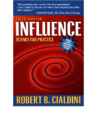
People Power 99 After the Deluge 102 Cause of Death: Uncertain(ty) 109 A Scientific Approach 113 Devictimizing Yourself 115 Monkey Me, Monkey Do 117 Monkey Die 120 Monkey Island 128 Defense 131 Sabotage 132 Looking Up 135 Summary 138 Study Questions 139 CHAPTER 5 Liking: The Friendly Thief 141 Making Friends to Influence People 144 Why Do I Like You? Let Me List the Reasons 146 Physical Attractiveness 146 Similarity 148 Compliments 149 Contact and Cooperation 151 Off to Camp 154" Back to School 156 Conditioning and Association 159 Does the Name Pavlov Ring a Bell? 163 From the News and Weather to the Sports 166
The capital letter is also called a big letter or upper- case letter, or sometimes just a capital. A B C D E F G H I J K L M N O P Q R S T U V W X Y Z When do you use a capital letter? 4Use a capital letter for the first letter in a sentence: The dog is barking. Come here! 4Always use a capital letter for the word I : I am eight years old. Tom and I are good friends. 4Use a capital letter for the names of people: Alice, Tom, James, Kim, Snow White 4Use a capital letter for the names of places: National Museum, Bronx Zoo, London, Sacramento 4Use a capital letter for festivals, holidays, days of the week, months of the year: New Year's Day, Christmas, Labor Day, Mother's Day, Sunday, Monday, Friday, January, May, July, October Exercise 1 Circle the letters that should be CAPITALS. Then write
hundred poems were published during her lifetime. The work that was published during her lifetime was usually altered significantly by the publishers to fit the conventional poetic rules of the time. Dickinson's poems are unique for the era in which she wrote; they contain short lines, typically lack titles, and often utilize slant rhyme as well as unconventional capitalization and punctuation. Many of her poems deal with themes of death and immortality, two subjects which infused her letters to friends. Walter Whitman Walter Whitman (May 31, 1819 March 26, 1892) was an American poet, essayist, journalist, and humanist. He was a part of the transition between Transcendentalism and realism, incorporating both views in his works. Whitman is among the most influential poets in the American canon, often called the father of free verse. His work was very controversial in its time, particularly his poetry collection Leaves of Grass, which was described as obscene for its overt sexuality.
They don't have to pay for expensive seats at the theatre or cinema. They turn on the TV-set and can watch interesting films, concerts, football matches. But some people think that it's bad to watch TV. Those who watch TV need do nothing. We are passive when we watch TV. Television shows us many interesting programmes. But again there is a disadvantage here: we watch TV every evening, and it begins to dominate our lives. My friend told me that when his TV-set broke down, he and his family found that they had more time to do things and to talk to each other. There are other arguments for and against television. Very often the programmes are bad. Sometimes they show too much violence in films and news programmes. There is also too much pop music and ads. Ads on the whole are convenient for grown-ups. But is it good for children to watch all those ads where they show all kinds of underwear and what not? Questions: 1. What advantages does television have?
Some of the things you will learn in THE CODEBREAKERS • How secret Japanese messages were decoded in Washington hours before Pearl Harbor. • How German codebreakers helped usher in the Russian Revolution. • How John F. Kennedy escaped capture in the Pacific because the Japanese failed to solve a simple cipher. • How codebreaking determined a presidential election, convicted an underworld syndicate head, won the battle of Midway, led to cruel Allied defeats in North Africa, and broke up a vast Nazi spy ring. • How one American became the world's most famous codebreaker, and another became the world's greatest. • How codes and codebreakers operate today within the secret agencies of the U.S. and Russia. • And incredibly much more. "For many evenings of gripping reading, no better choice can be made than this book." —Christian Science Monitor THE Codebreakers
worldwide Anglican Communion. The Church of England understands itself to be both Catholic and Reformed. 19. The Elizabeth Age - was a time associated with Queen Elizabeth I's reign (15581603) and is often considered to be the golden age in English history. It was the height of the English Renaissance and saw the flowering of English poetry, music and literature. This was also the time during which Elizabethan theatre flourished, and William Shakespeare and many others composed plays that broke free of England's past style of plays and theatre. It was an age of exploration and expansion abroad, while back at home, the Protestant Reformation became more acceptable to the people, most certainly after the Spanish Armada was repulsed. It was also the end of the period when England was a separate realm before its royal union with Scotland. Shakespeare- was an English poet and playwright, widely regarded as the greatest writer in the English language and the world's pre-eminent dramatist
 annaabi.ee