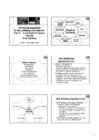
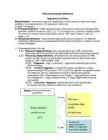
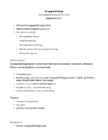
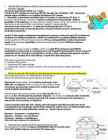
Exercise Physiology Blood Gas Exchange and Transport Today's lesson Cardiovascular responses & adaptations to exercise a review Transporting O2 and CO2 in the blood Gaseous exchange at the muscle Types of muscle tissue Properties and function of muscle tissue Microscopic anatomy of muscle tissue Sliding filament theory Components of Respiration Pulmonary ventilation External respiration Pulmonary diffusion Internal CO2 and O2 transport respiration via blood Tissue gaseous exchange Transport of O2 in Blood Blood carried in 2 ways: 1. Dissolved in the blood plasma (less than 2%) · Assuming a total plasma V of 3-5 L, only ~ 9-15 ml O2 can be carried in a dissolved state. · Resting tissues require > 250ml O2 per min. 2. In combination with haemoglobin within the RBC (greater than 98%)
15...19.5% Decreased ability to work strenuously. May impair co- shown that higher levels of CO2 within the range ordination and may induce symptoms in persons with coronary, pulmonary or circulatory problems. found in normal indoor settings are associated with perceptions of poor air quality, increased 12...15% Respiration deeper, increased pulse rate and impaired co-ordination, perception and judgement. prevalence of acute health symptoms (headache, Further increase in rate and depth of respiration, mucosal irritation), slower work performance, and 10...12% further increase in pulse rate, performance failure, increased absence (Erdmann and Apte, 2004) giddiness, poor judgement and blue lips.
) to like something To be good at (v.) to be successful at Trophy (n.) something material one receives for winning To ought to (v.) should Inevitable (adj.) unable to be avoided; sure to happen Gadget (n.) a mechanical device Economic (adj.) business-related; financial Economical (adj.) conservative with resources To beat somebody (v.) to defeat Achievement (n.) accomplishment To achieve (v.) to accomplish Breath (n.) the air inhaled and exhaled in respiration To breathe (v.) to respire Gradually (adv.) step by step Badminton (n.) a game including rackets, a net and a shuttlecock To affect (v.) to influence Effect (n.) result; outcome
30. herbs ürdid/ravimtaimed 31. nuts pähklid 32. poultry linnuliha 33. seafood mereannid 34. shellfish koorikloom 35. parsley petersell 36. mutton lambaliha 37. veal vasikaliha 38. wheat nisu 39. barley oder 40. rye rukis 41. oats kaer 42. strength tugevus 43. circulation (vere)ringe 44. digestion - seedimine 45. muscles - lihased 46. nerves - närvid 47. reproduction paljunemine 48. respiration - hingamine 49. sense taju/meel 50. skeleton skelett 51. brain - aju 52. heart süda 53. kidneys neerud 54. large intestine jämesool 55. liver maks 56. lungs kopsud 57. pancreas pankreas, kõhunääre 58. small intestine peensool 59. stomach - magu
3 / 1(%); 2 (ii) R any reference to energy / light missing the plant reflected (off plant) / only certain wavelengths of light can be, absorbed / used; ora absorbed by / hits, non-photosynthetic parts; e.g. bark passes through leaf / misses chlorophyll / misses chloroplasts; some is heat that is used in evaporation / respiration; max 2 (iii) bacteria / named bacterium decomposer; (Nitrobacter, Nitrosomonas) 1 (iv) take the first 2 answers: death / dead remains; excretion; R waste products egestion; other suitable method; e.g. insects moulting hatched eggs
Report Individual Sugars, Soluble, and Insoluble Dietary Fiber Contents of 70 High Consumption Foods. Introduction Glucose is a simple sugar and an important carbohydrate in biology. Glucose is one of the main products of photosynthesis and it also starts cellular respiration. But do you know how many saccharide our food contains? Main body At the beginning different products were analyzed such as baked products, cereal grains and pasta, fruits, legumes and vegetables were purchased for analysis. This kind of method is named sampling. One of the important methods of analysis is sample preparation. Non-edible parts of fruits and vegetables, such as stem, core, seeds, and skin, were removed before further sample preparation
54.GROIN-KUBE 55.TRUNK-TÜVI 56.HEPATIC DISEASE -MAKSAHAIGUS-OF THE LIVER 57.PANCREAS-KÕHUNÄÄRE 58.DUODENUM-KAKSTEISTSÕRMIKSOOL 59.GALL BLADDER- SAPIPÕIS 60.LIVER- MAKS 61.RIGHT KIDNEY-PAREM NEER 62.LEFT KIDNEY- VASAK NEER 63.SPLEEN-PÕRN 64.STOMACH-MAGU 65.DIGESTIVE SYSTEM- SEEDESÜSTEEM 66.BOWEL or INTESTINE- SOOL NT. SMALL BOWEL or SMALL INTESTINE 67.LARGE BOWEL- JÄMESOOL 68.ANUS-PÄRAK 69.RECTUM-PÄRASOOL 70.IN DIGESTION- SEEDEHÄIRE 71.RESPIRATION- HINGAMINE 72.RESPIRATORY SYSTEM HINGAMISSÜSTEEM 73.AIRWAYS- HINGAMISTEED 74.LUNGS-KOPSUD 75.LOBES-SAGAR 76.LARYNX-KÕRI 77.TRACHEA or WINDPIPE- HINGETORU 78.BRONCHUS-BRONID/ BRONCHIOLES- BRONHIOOLID // BRONCHUS-BRONH, BRONCHI-BRONHID 79.DIAPHRAGMA-VAHELIHAS 80.LARYNGEAL- KÕRGIGA SEOTUD 81.PELVIS- VAAGEN/ PELVIC- VAAGNAD 82.URETER- KUSEJUHA / URETHRA- KUSITI / EMPTY YOUR BLADDER- TÜHJENDADA OMA PÕIT 83.HEPATITIS- HEPATIIT-MAKSAPÕLETIK 84.PNEUMONIA- KOPSUPÕLETIK 85
54.GROIN-KUBE 55.TRUNK-TÜVI 56.HEPATIC DISEASE -MAKSAHAIGUS-OF THE LIVER 57.PANCREAS-KÕHUNÄÄRE 58.DUODENUM-KAKSTEISTSÕRMIKSOOL 59.GALL BLADDER- SAPIPÕIS 60.LIVER- MAKS 61.RIGHT KIDNEY-PAREM NEER 62.LEFT KIDNEY- VASAK NEER 63.SPLEEN-PÕRN 64.STOMACH-MAGU 65.DIGESTIVE SYSTEM- SEEDESÜSTEEM 66.BOWEL or INTESTINE- SOOL NT. SMALL BOWEL or SMALL INTESTINE 67.LARGE BOWEL- JÄMESOOL 68.ANUS-PÄRAK 69.RECTUM-PÄRASOOL 70.IN DIGESTION- SEEDEHÄIRE 71.RESPIRATION- HINGAMINE 72.RESPIRATORY SYSTEM HINGAMISSÜSTEEM 73.AIRWAYS- HINGAMISTEED 74.LUNGS-KOPSUD 75.LOBES-SAGAR 76.LARYNX-KÕRI 77.TRACHEA or WINDPIPE- HINGETORU 78.BRONCHUS-BRONID/ BRONCHIOLES- BRONHIOOLID // BRONCHUS-BRONH, BRONCHI-BRONHID 79.DIAPHRAGMA-VAHELIHAS 80.LARYNGEAL- KÕRGIGA SEOTUD 81.PELVIS- VAAGEN/ PELVIC- VAAGNAD 82.URETER- KUSEJUHA / URETHRA- KUSITI / EMPTY YOUR BLADDER- TÜHJENDADA OMA PÕIT 83.HEPATITIS- HEPATIIT-MAKSAPÕLETIK 84.PNEUMONIA- KOPSUPÕLETIK 85
7 For the plants, caffeine acts as a natural pesticide. It paralyzes and kills insects that attempt to 8 feed on the plants. The molecule was first isolated by the German chemist Friedrich Ferdinand 9 Runge in 1819. 10 When purified, caffeine is an intensely bitter white powder. It is added to colas and other soft 11 drinks to impart a pleasing bitter note. However, caffeine is also an addictive stimulant. In 12 humans, it stimulates the central nervous system, heart rate, and respiration, has psychotropic 13 (mood altering) properties, and acts as a mild diuretic. 14 A normal dose of caffeine is generally considered to be 100 mg, which is roughly the amount 15 found in a cup of coffee. However, more than half of all American adults consume more than 300 16 mg of caffeine every day, which makes it America's most popular drug. Caffeine is generally 17 consumed in coffee, cola, chocolate, and tea, although it is also available over-the-counter as a 18 stimulant.
They play a role in movement control. BLOOD-BRAIN BARRIER – A barrier made of epithelial cells which line the blood vessels of the brain. These cells form very tight junctions and control the passage of the chemicals between the blood and brain. BRAIN STEM – The part of the brain which connects to the spinal cord. It is the major route for information transfer between the brain and spinal cord. It controls such vital functions as respiration and heart rate. BROCA’S AREA – The brain region located in the frontal lobe of the left hemisphere which is implicated in the production of speech. CATECHOLAMINES – Group of neurotransmitters which includes dopamine, noradrenaline and adrenaline which are active both in the brain and the peripheral nervous system*. CAUDAL – Towards the tail end of a body. CELL – A structural and functional unit of all living organisms.
1.1. Primaarproduktsioon võib olla: 1.1.1 Primaarne koguproduktsioon (gross primary production, GPP): autotroofsete (fotosünteesivate ja kemosünteesivate) organismide poolt salvestatud energia koguhulk. 1.1.2 Primaarne puhasproduktsioon, netoproduktsioon (net primary production NPP): energia, mis jääb seotuks, kui autotroofide koguproduktsioonist maha arvata nende hingamine. GPP HINGAMINE =NPP 1.1.2.1 Hingamine (ingl k. respiration) organismide kataboolne gaasivahetus väliskeskkonnaga. 1.1.2.2 Aeroobne hingamine on sisuliselt fotosünteesi pöördprotsess energia saamise eesmärgil (ATP ja soojus). CO2ks ja H2O-ks laguneb osa orgaanilisi aineid. Osa kataboolse protsessi vaheprodukte kasutatakse lähteainetena mitmetes sünteesiprotsessides. Hingamisprotsessil on 3 etappi: 1. etapp (glükolüüs) toimub raku tsütoplasmas, 2
To most people alcohol is considerd a downer that reduces activity in the nervous system. Some of the things alcohol effects you is, the alcohol intoxicated person exhibits lose muscle tone, loss of fine moter coordination,and often has a staggering "drunken" gait. The eyes may appear somewhat "glossy" and pupils may be slow to respond to stimulus. At high doses pupils may become constricted. At intoxing doses, alcohol can decrease heart rate, lower blood pressure and respiration rate, and result in decreased reflex and slower reaction times. Skin may be cool to touch but to the user may feel warm or normal, profuse sweating may accompany alcohol use. Loose muscle tone, lose of fine motor coordination,odor of alcohol on the breath,and a stagging "drunken"gait. The effects of alcohol intoxication are greatly influenced by individual variations among users. Some users may become intoxicated at a much lower Blood Alcohol
This process happens so fast because nicotine is shaped like the natural brain chemical acetylcholine. Acetylcholine is one of many chemicals called neurotransmitters that carry messages between brain cells. Neurons have special spaces called receptors, into which specific neurotransmitters can fit, like a key fitting into a lock. Nicotine locks into acetylcholine receptors in different parts of the brain, rapidly causing changes in the body and brain. Nicotine raises the heart rate and respiration (breathing) rate, and causes more glucose, or blood sugar, to be released into the blood. This might be why smokers feel more alert after smoking a cigarette. Nicotine also attaches to neurons (brain cells) that release a neurotransmitter called dopamine. Nicotine stimulates neurons to release unusually large amounts of dopamine. Dopamine stimulates the brain's pleasure and reward circuit, a group of brain structures called the limbic
- üldistatavus · intervjuu kitsama teema jaoks, levinud kliinilises töös, väikelastega, lapstunnistajad + paindlik, võimalik küsida täpsustusi - sõltub kontaktist ja küsimuste sõnastusest, valiidsus ja reliaablus, teadmised ja arvamused, lapsed ütlevad tihti, mida peab ütlema, mitte, kuidas asi on (ma olen arengus maas? :D ) * Väga väikeste laste aeng: apgari indeks (activity, pulss, grimass, appearance, respiration) · küsimustik - + - · eksperiment - + - · joonistused + - · testid, arenguskaalad eelduseks standardiseeritus + dünaamiline jälgimine, astmeline käsitlus, mõõdetavus; eriti väikelaste ja erivajadustega - individuaalsuse eiramine, kultuurierinevused, valiidsus, reliaablus, kallid nt Bayley arenguskaala, Griffithsi arenguskaala (üldmotoorika, isiklik-sotsiaalne, kõne-kuulmine,
organismivälist orgaanilist ainet (loomad, seened, parasiittaimed ja enamik baktereist). Heterotrophs organisms that get the carbon necessary for life from organic substrates. , . Hingamine Nii taimed kui loomad vajavad energiat elutegevuseks. See energia saadakse protsessis, mida nimetatakse hingamiseks e. respiratsiooniks. Hingamine koosneb enam kui 70 erinevast keemilisest reaktsioonist. Selle käigus vabaneb fotosünteesil talletatud keemiliste sidemete energia. Respiration the process in which nutrients are converted into useful energy in a cell. () , , ( ). . Hingamine Fotosünteesil tekivad taimedes päikeseenergia, CO 2 ja vee baasil energiarikkad glükoosi molekulid. Kui need reageerivad hapnikuga, moodustuvad väiksemad väga suurte energeetiliste sidemetega molekulid ATP-d (adenosiintrifosfaadid), mis on universaalne ,,valuuta" energiavahetuses. ATP võib salvestuda tulevikuks või kuluda ära rakustruktuuris.
380 nm 69. Mis on valgushingamine ja millise reaktsiooniga see algab? Valgushingamine ehk fotorespiratsioon on fotosünteesi protsess,kus hapnik asendab süsihapegaasi Calvini tsüklis. Fotorespiratsiooniks nim. valgusest sõltuvat O2 neeldumist ja CO2 eraldumist. Saab alguse fosfoglükolaadi moodustumisel Calvini tsükli vaheproduktidest ja lõppeb 3-fosfoglütseraadi tekkega. 71. Mida mõistetakse taimede pimehingamisena (1) A form of respiration in plants where carbon dioxide is released without the aid of (sun)light. (2) Mitochondrial respiration in plants tsitraaditsükliga. 72. Nimetage fotorespiratsiooni toimumise piirkonnad rakus. Kloroplast, mitokonder ja peroksisoom 73. Millest sõltub valgushingamise intensiivsus Sahhariidide hulgast 74. Fotosünteesi intensiivsust mõõdetakse lehekambris eksperimentaalselt CO 2 neeldumise järgi. Kas tegelik (arvutuslik)
intervjuu ja juhtumianalüüs levinud kliinilised psühholoogias ◦ intervjuu jaoks vajalikud eelteadmised, milline oleks oodatav vastus selles vanuses lapselt, tähtis oskus küsida ja kontakti loomine lapsega ▪ nt eelkooliealised ei oska veel emotsioone sõnastada väga väikeste laste hindamine: ◦ Apgari indeks - kohe pärast sündi (1.;5. ja 10.minutil) ▪ aktiivsus, pulss, grimass, appearance (naha värv), respiration (hingamine) ◦ põhiliselt hinnatakse füüsilist arengut vanematel lastel varieeruvad arengutestide tulemused rohkem kõige olulisem reliaablus (loodud kindlad tingimused, seega võimalik katset kinnitada ja teistega võrrelda) ning valiidsus (mõõdetakse seda, mille kohta tehakse järeldusi) Bayley arenguskaala (0-3-aastaste hindamiseks põhiline skaala) ◦ mitu korda uuendatud, vajalik Bayley kohver, kus kindlad asjad, mida kasutada
Paediatrics & Child Health. 37(5), 495-500. Tsaikina, Irina. (2005). Vastsündinu ja imiku õendus perioperatiivses perioodis anesteesia aspektist. Tartu Meditsiinikool, õe õppekava. Tartu. [Diplomitöö]. Tunell, R. 1998. Neonatoloogia. Tartu: OÜ ,,Greif", 171-180 Wallace, J. L. (1999). Suctioning a two-edged sword: reducing the theorypractice gap. Journal of Neonate Nursing, 5(1): 1417. Wallis, L., Healy, M., Undy M., Maconochie, I. (2005) Age related reference ranges for respiration rate and heart rate from 4 to 16 years. American Journal of Diseases of Children 90 (11), 1117-1121 Weilitz, P. B. 1991. Pocket Guide to Respiratory Care. St. Louis: Mosby Year Book Inc., 106- 109 Weiss, M., Gerber, A. C. (2006.) Cuffed tracheal tubes in children things have changed.// Pediatric Anaesthesia, 16, 1005-1007 Veldman, A., Trautschold, T., Weiss, K., Fischer, D., Bauer, K. (2006.) Characteristics and
75. Mis on ühist tööl ja soojusel? On energia ülekande viisid. 76. Mille poolest erinevad elastsed põrked mitteelastsetest põrgetest? Elastsel põrkel säilib summarne impulss ja summarne kineetiline energia. Mitteelastsel säilib vaid impluss. 77. Ensüümid käituvad aktsivatsioonienergiat vähendavalt. 78. Faasidiagrammidel võib tavaliselt näha kahte erievat punkti. Mis need on? Mis suurused on tavaliselt faasidiagrammi telgedel? Y-T*, x-rõhk. (emergence, respiration). jõudu def kui: ühik, dim: (kui keha liigub jõu toimel ühest kohast teise, siis jõud on teinud tööd). F. Njuuton. kgm/s2 79. Mäe otsast alla kaks ühe massiga kuuli, üks kukkus, teine veeres. Mis lõppkiirused+ põhjendus. Garv väli: kus keha potents energia muutus sõltub ainult keha alg-ja lõppasendist, mitte aga vahepealse liikumise trajektoorist. Tehtud töö on sama, ükskõik millist rada mööda liigutakse samade alg- ja lõpp-punktide vahel. Mäe
Ainult alfa ja beeta subühikutest koosnev F1 komponent hüdrolüüsib ATP-d. Käärimisel vajavad rakud elutegevuseks samuti prootonpotentsiaali energiat. Sel juhul toimub F1F0 ATPaasi manulusel ATP hüdrolüüs ning hüdrolüüsi käigus vallandunud energia abil pumbatakse prootonid rakust välja. F1F0 ATPaasi kompleks on kodeeritud atp operoni poolt. ). ArcA/ArcB represseerib peamiselt aeroobse hingamisega ja tsitraaditsükli tööga seotud funktsioone (aerobic respiration control). Kahe-komponendiline Arc süsteem kontrollib mitmete metaboolsete radade tööd: 1) tsitraaditsükkel 2) glüoksülaadi rada 3) terminaalne elektronide transport molekulaarsele hapnikule aeroobne hingamine 4) rasvhapete degradatsioon ArcA võib käituda nii aktivaatorina kui ka repressorina. Näiteks tsütokroom d operon (cydAB) on fosforüleeritud ArcA poolt aktiveeritav, tsütokroom o operon cyoABCDE aga represseeritav. Paljud arc
geenide ees asuvad translatsiooni initsiatsiooni signaalid on erineva efektiivsusega (erinevused Shine- Dalgarno järjestuses ja järjestustes, mis moodustavad potentsiaalseid sekundaarstruktuure, blokeerimaks ribosoomide juurdepääsu Shine-Dalgarno järjestusele). ArcB ArcAvahendatud metabolismi regulatsioon ArcB on sensor-kinaas ja ArcA signaalile vastav (response) regulaator. Nimetus Arc tuleneb inglise keelest (aerobic respiration control). ArcB autofosforüleerib ennast vastusena stiimulile ja seejärel toimub ArcA fosforüleerimine. Arvatakse, et stiimuliks on mingi metaboliidi redutseeritud vorm (näiteks NADH, D- laktaat, atsetaat) soodustavad ArcB autofosforüleerimist in vitro. Kui stiimul keskkonnast kaob, toimub ArcB ja ArcA defosforüleerimine. Mõlemaid reaktsioone teostab ArcB. Kahe-komponendiline Arc süsteem kontrollib mitmete metaboolsete radade tööd: 1) tsitraaditsükkel 2) glüoksülaadi rada
can be affected by increased NO production muscle. Journal of Cell Biology 173:905–916. Bendall, J. R., and H. J. Swatland. 1988. A review of the include inhibition of excitation-contraction relationships of ph with physical aspects of pork coupling, increased glucose uptake, decreased quality. Meat Science 24:85–126. mitochondrial respiration, and decreased Bertram, H. C., P. P. Purslow, and H. J. Andersen. 2002. Relationship between meat structure, water moblity, force production. The decrease in force is and distribution: A low-field nuclear magnetic reso- apparently because of an inhibitory effect nance study. Journal of Agricultural and Food
· For tissue repair: how much delta-wave sleep am I experiencing? · For both of the above: am I experiencing sleep apnea? The problem with testing these in a proper sleep lab (the test is called a polysomnogram) is The problem with testing these in a proper sleep lab (the test is called a polysomnogram) is that you generally have at least 22 wires attached to you to measure brain activity (EEG), eye movements (EOG), skeletal muscle activation (EMG), heart rhythm (ECG), respiration, and sometimes peripheral pulse oximetry. Guess what? No one can sleep in a weird lab with 22 wires attached to them on the rst night. So the data are terrible. But let's assume you try. The second night, you come in after an all-nighter and crash within minutes like a postsugar high two-year-old. Double-bad data. To really test and tweak things under realistic sleeping conditions, I would need a pocket- sized sleep lab. That didn't happen until 2009. My First F*cking Sleep Lab
internetist terviseameti kodulehelt www.terviseamet.ee või USA haiguste kontrolli ja ennetuse keskusest www.cdc.gov. Millele tuleks mõelda nakkusohtlikule patsiendile kiirabi osutamisel Seisundi raskusastme ja hospitaliseerimise vajalikkuse määratlemisel lähtuda CRB skaalast (Confusion; Respiratory rate; Blood pressure). Iga alljärgnev sümptom annab 1 punkti: Confusion (teadvus) (GCS skaalas): ≤ 8 või ilmuv desorientatsioon isikus, ajas ja kohas Respiration (hingamissagedus) ≥ 30/min Blood pressure (arteriaalne vererõhk) süstoolne < 90 mmHg või diastoolne ≤ 60 mmHg Vanus üle 65 aasta 365 TEGEVUS KRITEERUMID Viivitamatu hospitaliseerimine intensiivravi võimaldavasse 4 või 3 haiglasse, kui positiivsed Hospitaliseerimine üldhaiglasse 2 või 1
 annaabi.ee