Silicon Valley Could you reproduce Silicon Valley elsewhere, or is there something unique about it? It wouldn't be surprising if it were hard to reproduce in other countries, because you couldn't reproduce it in most of the US either. What does it take to make a silicon valley even here? What it takes is the right people. If you could get the right ten thousand people to move from Silicon Valley to Buffalo, Buffalo would become Silicon Valley. That's a striking departure from the past. Up till a couple decades ago, geography was destiny for cities. All great cities were located on waterways, because cities made money
Tb p 63 ex 5-8 5.To grow new parts-the ability to reproduce To produce young-offspring To react to something-respond to To become adjusted to new conditions-able to adapt Plants and animals living in one place-natural community Type of plant or animal-specie Area covered with growing trees-woodland Organisms that feed on dead tissues-decomposers 6.able to grow- change to different size or shape Replace-something -living things can to for themselvs Repair parts-living things can to for themselvs Respond to stimuly- ability to grow toward the light
The Crucial Problems of the World There are many problems in the world right at this time. One of the biggest and maybe the one which people talk about the most is the waste and recycling problem. As we all know, humankind is producing more waist than we can handle, reproduce and recycle. Even in here, Estonia, people are thinking of building a nuclear power station, because fossil fuel is soon depleted. The other problem, a little bit connected to the first one, is the greenhouse effect. The light from the Sun reaches us and after that the light reflexes from the Earth's surface back to the space, but thanks to the pollution, it absorbs and reflexes back to us again, causing global warming. The third problem is the fastly growing population
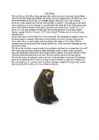
These distinctive markings give the Sun Bear its name. The diet of the Sun Bear consists mainly of invertebrates and fruits but as omnivores they will eat a wide variety of foods including small vertebrates, such as lizards, birds, and turtles, eggs, the young tips of palm trees, nests of bees, berries, sprouts, roots, and coconuts. In fact, Sun Bears have been observed to eat over 100 insect species and over 50 plant species. The Sun Bear does not hibernate, and, as a result, it can reproduce year-round. The offspring reach sexual maturity after 3-4 years and may live up to 30 years in captivity. A female Sun Bear can produce 1 to 2 cubs per year. Sun Bears undergo a roughly 96 day gestation period after which the 300 to 400 g cub is born blind and hairless.
The two major nutrients are nitrogen and phosphorus. Nitrogen is created by biological fixation, and phosphorus is created by precipitation. The most distinctive characteristic of tundra soil is its permafrost, a permanently frozen layer of ground. The average winter temperature is -28°C, but the average summer temperature is 3-16°C. During the brief summers, the top section of the soil may thaw out allowing plants and microorganisms to grow and reproduce. However, these plants and microorganisms become dormant during the cold winter months. Soil is formed slowly. The constant freezing and thawing in the tundra helps to break the rocks into smaller pieces. Permafrost consists mostly of gravel and finer material. The arctic tundra is also a windy place and winds can blow between 48 to 97 kilometres. The tundra is basically like a desert when it comes to precipitation. Only about 150-250 millimetres of precipitation (mostly snow) fall each year
natural habitat. Lions can not have an active lifestyle because the area around them is too small and as for polar bears, who need low temperature for existence it is impossible to turn zoo into so said natural habitat. In conclusion, zoos are necessary alternatives to a natural environment. Not only zoos can protect animals from being poached, but also can help research centers, that try to find the solution to rebuild original natural environment and help animals to reproduce. There are big organizations such as UNESCO and WAZA that are sure that zoos are irreplaceable. "African elephants brought to zoos in Japan are often unable to raise their offspring because many lost their parents to poaching by ivory hunters. But they are smart enough to learn from their keepers, said Osamu Shiina, who cares for the animals at a prefectural-run zoo on Shikoku. Shiina, 51, is in charge of a family of four African elephants at Tobe Zoological Park in the
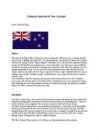
national occasions, for example Royal Visits, and Jubilee celebrations provided the display is not a permanent feature. Use of the Arms may be permitted on permanent souvenirs of a particular event, for example a Royal Anniversary or Visit. Advice of permission to use the Arms in this manner is published in the New Zealand Gazette. Publishers of encyclopaedia, educational and heraldry books may be granted permission to reproduce the Arms in certain circumstances. New Zealand's National Anthems The words for "God Defend New Zealand" were written as a poem in the 1870s by Irish immigrant Thomas Bracken. A competition to compose music for the poem was held in 1876. The winner of the competition was John Joseph Woods of Lawrence, New Zealand who composed the melody in a single sitting the evening after finding out about the competition.
The U.S. Environmental Protection Agency(EPA) has said that it is likely to be a cancer causing substance to humans. In addition, people exposed to dioxins and furans have experienced changes in hormone levels. High doses of dioxin have caused a skin diseased called chloracne. Animal studies show that animals exposed to dioxins and furans experienced changes in their hormone systems, changes in the development of the fetus, decreased ability to reproduce and suppressed immune system. Impact on human health Shortterm exposure of humans to high levels of dioxins may result in skin lesions, such as chloracne and patchy darkening of the skin, and altered liver function. Longterm exposure is linked to impairment of the immune system, the developing nervous system, the endocrine system and reproductive functions. Due to the omnipresence of dioxins, all people have background exposure and a certain level of
Cup-Shaped Flowers Soil Not Needed for Growth Polar Desert- Plants that grow in the Arctic regions must be very hardy and adapted to the extreme winter cold of these environments. Polar desert plants have a summertime growing season, but in the Arctic and Antarctic that season is short---often wildflowers and the other plants that manage to survive here are active only from June to July Alphine biome- Because of the blustery weather, most plants are small groundcover plants, which grow and reproduce slowly. They protect themselves from the cold and wind by hugging close to the ground. When plants die the cold weather makes it hard for them to decompose quickly. This makes for poor soil conditions. Most alpine plants are adapted to grow in sandy and rocky soil. Plants have also adapted to the dry conditions of the alpine biome. Some 5. How are animals adaapted to life in the biome ?
Louise Erdrich Love Medicine Assignment 2 (pp. 4384) 1. Define the following words and expressions (considering the context) and reproduce (in your own words) the situations in which they appear in the book: the marrow of something (44) - The soft stuff inside of a bone is called marrow. ... From this biological kind of marrow comes a figurative meaning of marrow -- the essence of something. S The convent is on top of the high hill and from its window the Sisters can see the marrow of the town. to be privy to something (46) - If you're privy to something, you've been let in on a secret
Louise Erdrich Love Medicine Assignment 1 (pages 142) 1. Define the following words and expressions (considering the context) and reproduce (in your own words) the situations in which they appear in the book: a beacon (2) (AmE) a fire or light set up in a high or prominent position as a warning, signal, or celebration, it appears as a metaphor to describe a white egg in her hand. Situation: June walked through the door and toward blue egg in the white hand of Andy, which she compares with a beacon in the murky air. a turtleneck (2) - Example. Definition: (AmE) a `turtleneck' is a sweater with a high
59. max 3 from points 1 to 5 1 limited, food supply / space; 2 competition; 3 predation; 4 disease; 5 reached carrying capacity / death rate = birth rate; marking points 1 – 5 linked to keeping population stable 6 individuals show variation; 7 variation due to, combination of alleles / mutations; 8 best adapted survive / ora; A survival of fittest idea 9 reproduce; 10 pass alleles to offspring; 11 frequency of favourable alleles will, increase / be maintained; A ora 5 max [5] 60. light / daylength; gravity; water / humidity; touch; chemicals; R carbon dioxide temperature; A heat 3 max
push across cause to be understood or accepted put off postpone put on dress in; deceive or fool put up preserve (food); receive as an overnight guest quiet down be quiet ring up the telephone rinse off rinse the surface of rinse out rinse the inside of rule out eliminate run down trace; disparage; hit with a vehicle run off cause to depart; reproduce mechanically save up accumulate see through complete; in spite of difficulties see off accompany someone to the beginning of a trip send back send to a place where formerly located send over send to where someone is Viljandi 2009 Viljandi County Gymnasium set up arrange show off exhibit ostentatiously shut off cause to cease functioning
The squeezed core rebounds like a squished sponge, launching a shock wave that races outward, ramming into the material that is still pouring down from the star's outer layers. Astronomers once thought this shock would be enough to tear the star apart and generate the explosion, says Adam Burrows of the University of Arizona. Turns out it's not so simple. Simulating a supernova gobbles enormous amounts of computer power, and even the largest supercomputers can't fully reproduce an exploding star in three dimensions. But over the years the models have improved, and the shock wave scenario has fallen apart. Researchers found that less than a thousandth of a second after the shock wave is generated, a flood of tiny, nearly massless particles called neutrinos escapes from the center of the star. The neutrinos, born in the collapsing core, drain energy from the shock wave. The shock stalls, and-- at least in the computer--the supernova is a dud.
organism that trade off between quantity or quality of offspring. The focus upon either increased quantity of offspring at the expense of individual parental investment, or reduced quantity of offspring with a corresponding increased parental investment, is varied to promote success in particular environments. r-selection (unstable environments) In unstable or unpredictable environments, r-selection predominates as the ability to reproduce quickly is crucial. There is little advantage in adaptations that permit successful competition with other organisms, because the environment is likely to change again. Traits that are thought to be characteristic of r-selection include: high fecundity, small body size, early maturity onset, short generation time, and the ability to disperse offspring widely. Organisms whose life history is subject to r-selection are often referred to as r-strategists or r-selected.
hear. If intelligibility is the goal then it suggests that some pronunciation features are more important than others. Some sounds have to be right to get your message across. Stressing words and phrases correctly is vital. Intonation is an important meaning carrier too. Problems There are 2 particular problems in pronunciation teaching and learning. 1. What St-s can hear: some St-s have difficulty hearing pronunciation features which we want them to reproduce. How to deal with this problem? - Show them how sounds are made (demonstration, diagrams, explanation) - Draw the sounds to their attention every time they appear on a tape or CD or in the conversation. When they can hear correctly they are able to speak correctly. 2. The intonation problem is the most problematic area for many teachers. The teachers should offer their students opportunities to recognise moods and intentions
reptiles; birds that feed by diving or form flocks on the sea; marine life on shorelines; and animals and plants in mariculture facilities. The most toxic components in oil tend to be those lost rapidly through evaporation when oil is spilt. Because of this, lethal concentrations of toxic components leading to large scale mortalities of marine life are relatively rare, localised and short-lived. Sub-lethal effects that impair the ability of individual marine organisms to reproduce, grow, feed or perform other functions can be caused by prolonged exposure to a concentration of oil or oil components far lower than will cause death. Sedentary animals in shallow waters such as oysters, mussels and clams that routinely filter large volumes of seawater to extract food are especially likely to accumulate oil components. Whilst these components may not cause any immediate harm, their presence may render such animals unpalatable if they are consumed by man, due to the presence
Incomplete rhymes derive from certain modifications of full rhymes. Incomplete Vowel rhymes require identical vowels, whereas consonants are different: world - serve, bulb - skull, pen - best. The same principle is observed in Consonant rhymes consisting of identical consonants and dissimilar vowels: blood - blade, love - live, crisp grasp. These rhymes are sometimes referred to as partial rhymes or pararhymes. Compound rhymes are made up of two or more words, united by a single stress, that reproduce the sound form of a correlated word: women - two men, adorer - before her. Compound rhymes are mainly employed to evoke a humourous response. They also add a colloquial touch to the text. A peculiar property of English rhymes is eye-rhyme. It contains identical letters while vowel sounds are pronounced differently: love - grove, farm - warm, flames - Thames. Eye-rhyme is appreciated by the eye rather than by the ear. Thus, it is a property of the written poem.
Incomplete rhymes Derive from modifications of full rhymes. Incomplete vowel rhymes require identical vowels, while consonants are different: world- serve, bulb-skull, pen-best, storm-mourn, balm-path. Consonant rhymes The reverse principle is observed here, consisting of identical consonants and dissimilar vowels, as in: blood-blade, love-live, felt-fault, burn-born, crisp-grasp. Compund rhymes Are made up of two or more words, united by a single stress, that reproduce the sound form of a related word: clamorous- enamour us, women two men, adorer-before her, Verona- known a ..., feter-beset her, grammar-d-n her, bottom-forgot ´em (examples are taken from Byron's ,,Beppo") These rhymes are mainly employed to evoke a humorous response. They also add a colloquial touch to the text. Eye-rhyme (or sight rhyme) A peculiar feature of English rhymes. It contains identical letters while vowel sounds are
as partial rhymes or pararhymes. As a rule, incomplete rhymes are made use of occasionally to FGI 1081 Stylistics (I. Ladusseva) 12 introduce variety into the prevailing type of rhyme. They may also occur throughout a poem, producing a striking aesthetic impact on the attentive reader. Compound rhymes are made up of two or more words, united by a single stress, that reproduce the sound form of a correlated word. The following instances are taken from G.G. Byron's poem "Beppo": clamorous - enamour us, women - two men, adorer - before her, Verona - known a ..., fetter - beset her, Harvey - starve ye, grammar - d-n her, bottom - forgot'em. Compound rhymes are mainly employed to evoke a humourous response. They also add a colloquial touch to the text. A peculiar property of English rhymes is the so-called eye-rhyme (or sight-rhyme). It
sounds of correlated words. Rhyming words have either similar or identical sound combinations. Full rhymes--repetition of the last stressed vowel and the following consonant (miss- kiss, mellow-yellow) Incomplete rhymes--require identical vowels, whereas consonants are different (pen- best, balm-path) Consonant rhymes--consist of identical consonants and dissimilar vowels (live-love, crisp-grasp) Compound rhymes--made up of two or more words, united by a single stress, that reproduce the sound form of a correlated word (women-two men, bottom-forget'em). These rhymes evoke a humorous response and add colloquial touch to the text. Eye-rhyme (sight-rhyme)--contains identical letters while vowel sounds are pronounced differently (love-grove, farm-warm). It is a property of the written poem. Internal or inner rhymes occur within a poetic line (I am the daughter of earth and water... Byron) Head rhymes are rather uncommon. It connects the end of a line with the beginning of
reconstruct themselves, as partners in intercultural communication, and act accordingly. After all, as van Wyke shows (2010, p. 115), `translation does not merely reproduce ideas and information, but plays an active part in creating culture and civilization. As it gains visibility, and as we explore its complex implications, translation can also help us rethink the ethics of cultural encounters that define relationships among the peoples of the world'.
It shows actual brain activity and has a higher resolution that PET scans. Experiments with animals are still used a lot because this enables psychologists to study specific biological correlates of behavior using invasive techniques (removing or scarring brain tissue). Prior to the development of modern technology, one of the most common ways to study the brain was case study. Often case studies provide researchers with a situation that they could never ethically reproduce in a laboratory. One of the most famous case studies of how brain damage can affect behavior is the study of Phineas Gage by Dr John Harlow. Gage was in a serious accident, where a metal pole pierced his skull and brain. Luckily he survived, losing vision in his left eye. He had no difficulty with speech or language, but the balance between his intellectual abilities and emotional control had been destroyed. He became highly agitated and irrelevant, often impatient and rude
11.3 Hydropower and the environment Some people regard hydropower as the ideal fuel for electricity generation because, unlike the nonrenewable fuels used to generate electricity, it is almost free, there are no waste products, and hydropower does not pollute the water or the air. However, it is criticized because it does change the environment by affecting natural habitats. For instance, in the Columbia River, salmon must swim upstream to their spawning grounds to reproduce, but the series of dams gets in their way. Different approaches to fixing this problem have been used, including the construction of "fish ladders" which help the salmon "step up" the damv to the spawning grounds upstream. NUCLEAR ENERGY Nuclear energy is energy in the nucleus (core) of an atom. Atoms are tiny particles that make up every object in the universe. There is enormous energy in the bonds that hold atoms together. Nuclear energy can be used to make electricity
16. The sugar maple grows to a height of 120 feet and has a dense crown of leaves that turns bright red in the fall. (A) vibrant (B) thick (C) remarkable (D) large 17. The sumacs grown for landscape use display a graceful style with spectacular fall colors and colorful fruit clusters. (A) elude (B) maintain (C) develop (D) exhibit 18. Tadpoles typically dwell at the bottom of bodies of fresh water. (A) swim (B) feed (C) live (D) reproduce 19. John Quincy Adams was a conspicuous opponent of the expansion of slavery. (A) consistent (B) noticeable (C) distinguished (D) formidable 20. The Indian civilizations of Alabama spanned over 10.000 years. (A) declined (B) developed (C) covered (D) prospered 21. The banana is a gigantic herb that springs from an underground stem to form false trunks up (3) to 20 feet high. (A) an immense (B) a striking (C) an attractive (D) a plentiful 22
Similarly, letters are given numerical values, usually a = 0, 6 = l,...z = 25. Using his known or assumed plaintext values, the cryptanalyst sets up equations in which the displacements of the several rotors constitute the unknowns, and then, using higher algebra, solves the equations for them. By repeating this process, the cryptanalyst can list the differences between many of the displacements on the rotor. He can then seek an arrangement of wires having these differences that will reproduce the known cryptographic effects. In similar fashion, he will reconstruct another rotor. Such are the basic principles of the rotor solution. But their practice wracks the cryptanalyst with some of the most excruciating mental torture known to man. And so the rotor system produces an extremely complex and secure cipher from simple elements in a simple construction. Who are the four contrivers of this miniature labyrinth, the four modern Daedaluses of cryptography?
motif but all that follows takes its cue from it. The clarinet in the low register creates an air of mystery: Example 47. On an alert and pulsating background an image of a belligerent force increasing in power is created. In the Finale the ruthless incessant pulsation has won its rights: in the background a gloomy, terrible drama is taking place… Only after the last fight is the depressing tension lowered: the tragedy has reached its fatal end. The strings reproduce the mystical atmosphere of the beginning. The general mood become conciliatory with the final chord in soothing B major… Only legends will survive.2 It is obvious that all the themes of the symphony are derived from a common source. In their development the inner unity is expressed. There are repetitions of a 1 First performance was at Tallinn, Estonia Concert Hall, 24 June 1938. The State Broadcasting Symphony orchestra was conducted by Olav Roots. 2 Olav Roots
On this view, (2) Albert believes that Mark Twain was less than 5 feet tall. is true, not false. At the very least, belief sentences have transparent readings or understandings, on which readings the names that fall within the scope of "believes" really do just refer to what they refer to. We naturally think otherwise; (2) does not seem true to us. That is because when we see a belief sentence, we usually take its complement clause to reproduce the ways in which its subject would speak or think. If I assert (2), I thereby somehow imply that Albert would accept the sentence "Mark Twain was less than 5 feet tall" or something fairly close to it. If I say, "Albert doesn't believe that Mark Twain was less than 5 feet tall," I am suggesting that if faced with the sentence "Mark Twain was less than 5 feet tall," Albert would say either "No" or "I wouldn't know." But the DR theorists point out that such suggestions are not always true,
 annaabi.ee