Leidsid 33 sarnast õppematerjali, mis on seotud failiga "Punase pandakaru kohta ingliskeelne ettekanne". Need materjalid aitavad sul teemat sügavamalt mõista.
mostly, bamboo, description, average, length, tail, weigh, soft, claws, climbing, narrow, behavior, quiet, sleep, during, active, afternoon, clean, diet, eating, other, mammals, birds, eggs, berries, volume, survive, habitat, fourthViies tase o Red pandas have long, bushy tails. o On their heads are two large white and black ears. o The muzzle area around the nose is also covered in white fur. Ha b i t a t o Red Pandas live in Nepal, Burma, southern China and surrounding areas. o They live in Himalaya forests and in mountains, bamboo forests and thickets. Live in trees. o Be h a v i o r Red pandas are fast climbers and will use their tails to balance o when running in trees. Red panda sleeps during the day. o When they wake up, then they clean their fur like cats. o Their enemy is snow leopard. o Red pandas use their sharp claws to defend themselves. o They can even stand up for ten seconds. o Ba b y r e d pa nd a s o
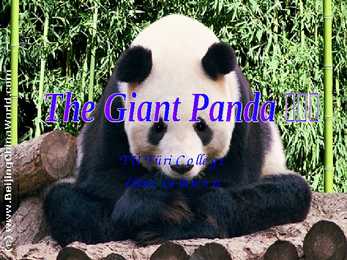
· The Giant Panda lives in a few mountain ranges in central China. · It once lived in lowland areas, but farming, forest clearing, and other development now restrict the Giant Panda to the mountains. In the wild · The Giant Panda is a · Pandas communicate terrestrial animal and through vocalization primarily spends its life and scent marking such roaming and feeding in as clawing trees or the bamboo forests. spraying urine. It is able · Though generally alone, to climb and take each adult has a shelter in hollow trees defined territory and or rock crevices. females are not tolerant · Pandas do not of other females in their hibernate, which is range. similar to other subtropical mammals. Eating and food · It has a diet which is 99% bamboo.
Sun Bear The Sun Bear is 120-150 cm long, making it the smallest member in the bear family. Males tend to be 10-45% larger than females the former normally weigh between 30 and 70 kg , and the latter between 20 and 40 kg. The shoulder height is about 60-72cm .The Sun Bear possesses sickle-shaped claws that are relatively light in weight. It has large paws with naked soles, probably to assist in climbing. Its inward-turned feet make the bear's walk pigeon toed, but it is an excellent climber. It has small, round ears and a stout snout. The tail is 1.2-2.8 inches (3-7 cm) long. Despite its small size, the Sun Bear possesses a very long, slender tongue, ranging from 8 to 10 inches (20-25 cm) in length. The bear uses it to extract honey from beehives. Unlike other bears, the Sun Bear's fur is short and sleek. This adaptation is probably due to the lowland climates it inhabits
FOREST
INSECTS
The control of forest insects: general considerations
The kangaroo is one Australian animal that everybody knows.There are more than 50 species of kangaroo. They are furry animals that hop on their hind legs. The biggest are red kangaroos, grey kangaroos and euros. The smallest are thekangaroos that belong to the group called rat kangaroos. There are million of kangaroos in Australia. Another Australian marsupial is the wombat. It lives in burrows in grassland areas of Australia and Tasmania. It has short strong legs and long claws for digging burrows.Wombats live in groups and come out to look for food at night. They have poor eyesight but they can smell and hear very well. Their nearest living relatives are koalas. The koala is one of the best known Australian animals. They live in eucalyptus trees,sleeping for 18 hours and eating 1 kilo of leaves each day. They drink almost nothing they get water from the leaves of the trees.They eat leaves of only five of 500 different kinds of eucalyptus trees
rivers, they receive water rarely. Lake Eyre, Torrens, Frome and Gairdner are the remains of a vast inland sea which once extended south from the Gulf of Carpentaria. Rivers Australia has only few rivers. Many of them are full of water only after it rains. There are many temporary rivers called creeks. The biggest rivers are in the east. All the rivers in Australia are short. Murray River is Australia's principal river. The Murray River and its tributaries run approximately 3,370km in length and form most of the border between New South Wales and Victoria. Climate Because of its size, Australia has many climates. The Tropic Capricorn cuts across the northern part of Australia so about 40per cent of the country lies in tropics. In the south, the island state of Tasmania lies in the cool roaring forties. In the north the climate is tropical. Monsoon winds bring moist air from the northwest during summer. This time of high rainfall, between December and March is known as "the wet".
body is called the Abdomen. SpidersGettingBigger-GlobaW l armingtoBlame? A group of Danish scientists wondered whether global warming would make the hairy, meat-eating wolf spiders of northeastern Greenland bigger, since longer summers mean more hunting time. The spiders can live for at least two years, and the researchers found that, in years when spring came early, the animals grew larger, on average. For example, when spring came 30 days earlier than usual, some spiders grew exoskeletons that were 10 percent thicker than average, resulting in bigger bodies overall. http://www.youtube.com/watch?v=mA0u2J1bKAc Snakes There are around 3000 snake species in the world, and about 375 of these are venomous. Snakes can be found in all types of habitats. While some climb trees, others live underground, and still others are found in the waters of lakes and even seas.
More than 6,000 miles of ocean separate in from the America. Australia is the only continent except for Antarctica that lies all south of the equator. The natural zones of Australia are very various. There are deserts, semi deserts, grasslands, savannas, bushlands and rainforests. The wet forests occupy the narrow region in the east. Most of the animals, birds and insects live in that region, because there is enough food. The savannas which are grasslands with some trees are mostly in the west. Farther west are the bushlands. The real deserts occupy the centre of the Western Plateau. In the very south west there are thin forests of evergreens trees. Australia is the driest inhabited continent, the flattest, and has the oldest and least fertile soils. Only the south-east and south-west corners of the continent have a temperate climate. The northern part of the country, with a tropical climate, has vegetation consisting of rainforest,
north-western part of the country. The deserts in Australia occupy 18% of the continent. The biggest deserts are the Great Victory Desert, the Great Sandy Desert, the Tanami Desert, the Simpson Desert and the Gibson Desert. Although Australia is a low continent, there are a few mountain rangers there, too. The biggest is the Great Dividing Range. It stretches more than 3500 km from the north-eastern tip of Queensland, running the entire length of the eastern coastline through New South Wales, then into Victoria and turning west, before finally fading into the central plain at the Grampians in western Victoria. It consists of a complex of mountain ranges, plateaus, upland areas and escarpments. One part of the Great Dividing Range is the Australian Alps. It's highest point is Mount Kosciuszko, which is 2,228 metres high. The Snowy Mountains in New South Wales are also part of the Alps.
Introducing Red Grouse Scoticus(Lagopus Lagopus scotica ) Evelyn Landing Red grouse scoticus: medium-sized bird found in heather moorland in Great Britain and Ireland usually classified as a subspecies of the Willow Ptarmigan but is sometimes considered to be a separate species moorfowl or moorbird Description plumage being reddish brown, and not having a white winter plumage tail is black and the legs are white white stripes on the underwing red combs over the eye young birds are duller and lack the red combs Habitat Red Grouse is endemic to the British Isles The British population is estimated at about 250,000 pairs with around 15,000 pairs in Ireland Pretators like Hen Harrier, foxes and sometimes dogs hunt them. What they eat? The Red Grouse is herbivorous and feeds
Ursula Potivar Healthy eating and school lunches Healthy eating Healthy eating is about feeling great, having more energy, and keeping yourself as healthy as possible. Healthy eating is a way of balancing the food you eat to keep your body strong, energized, and well nourished. When you eat well, you are taking good care of your body. Your food choices can reduce your risk of illnesses such as heart disease, cancer, and diabetes, as well as defend against depression. Additionally, learning the habits of healthy eating can improve your health by boosting your energy, sharpening your memory and stabilizing your mood. Fruits and vegetables. Fruits and vegetables are the foundation of a healthy diet. They are low in calories and nutrient dense, which means they are packed with vitamins, minerals, antioxidants and fiber. Fruits and vegetables should be part of every meal and your first choice for a snack --aim for a minimum of five portions each day.. The
-40° C, and in the summer it can be as high 20° C. There are two real seasons: a growing season and a dormant season. The growing season is when there is no frost and plants can grow (which lasts from 100 to 175 days). During the dormant (not growing) season nothing can grow because it's too cold. Taiga- Long, cold winters, and short, mild, wet summers are typical of this region. In the winter, chilly winds from the arctic cause bitterly cold weather in the taiga. The length of day also varies with the seasons in the taiga. Winter days are short, while summer days are long. The average temperature is below freezing for six months out of the year. The winter temperature range is -50 to -1° C The high in summer can be 20° C. The summers are mostly warm, rainy and humid. They are also very short with about 50 to 100 frost free days. The total precipitation in a year is 300 - 850 mm 4. Connect the climate diagram and biome.
Individual territory sizes depend on terrain, vegetation, and abundance of prey. A single male lion may require up to 175 square miles of territory for its home range. They prefer wild areas frequented by deer. One lion will consume about one deer per week. A lion will cover the remains of its prey and return to the kill to feed until the meat begins to turn. If you find a lion kill, don't hang around the area. The animal may still be nearby. An adult can weigh up to 200 pounds. It is the second heaviest cat in the New World, after the jaguar, and the fourth heaviest in the world, after the tiger, lion, and jaguar, although it is most closely related to smaller felines. Cougars are good climbers and can leap more than 20 feet up into a tree from a standstill. They can jump to the ground from as high as 60 feet up a tree. A single male lion may travel 25 miles a night while hunting. Cougars may be active by day in areas far from humans. They are most
Renewable energy Meriliin Lend Estonian University of Life Sciences Tartu 2013 Topics Renewable energy Solar energy Wind energy Hydroelectric power Geothermal energy Biomass energy Renewable energy Renewable energy comes from sources that naturally renew, or will not run out in our lifetimes. Includes sunlight, wind, water, geothermal heat and various forms of biomass. Renewable energy cannot be exhausted and is constantly renewed. Does not harm the environment. Saves money. Solar energy Solar energy is the technology used to harness the sun's energy and make it useable. Every hour the sun beams onto Earth more than enough energy to satisfy global energy needs for an entire year. Solar energy use has surged at about 20 percent a year over the past 15 years, thanks to rapidly falling prices and gains in efficiency. Solar energy is inexhaustible. Noise free. Does not harm the environment. Click to edit Master text styles Second l
Matsalu national park Matsalu National Park is situated in the western part of Estonia Click to edit Master text styles Second level Third level Fourth level Fifth level Goals To protect nesting, moulting and migratory birds Unique landscapes-floodplains, reed bed, coastal meadows, wooded meadows and islets Current situation Area-50 000 hectares, of which 30 000 hectares is covered with water There are 282 species of birds 49 species of fish 47 species of mammals 772 species of vascular plants 6500 hectares of semi-natural landscapes are maintained by local people 5368 ha is traditional farmlands Millions of migratory birds stop on our coast on their way from we
flippers for the water. They breathe air, but can stay submerged for a long time. Depending on their form, they feed on bottom algae, seagrasses, jellyfish, bottom sponges, crabs and mollusks. The Galapagos penguin lives farther north than any other penguin. Breeding on Isabela and Fernandina islands, the penguin is monogamous and is not as social as other penguins. They are only 40 cm tall. Sea lions and fur seals are fin-footed mammals with amazing abilities in water. They have a body length between 150 and 250 cm and they weigh between 50 and 400 Kg, males are much larger than females. Boobies are a member of the penguin family and are the most common species of booby in the Galapagos. Boobies have tapered bodies, long pointed wings and long tails. They are distinguished by their bright feet. They are blue-footed, red-footed or masked. The waved albatross is the largest bird in the Galapagos. It has a wingspan of 2m and the ability
sources suggest the genes had additive effect on each other to create the pale milk coffee coloured cats when there were 2 Barrington Brown genes. Since Barrington Brown is a recessive gene. If only one copy was present it should be masked by the dominant non- Barrington copy. This is part of the problem when interpreting reports that use an old, non- standard genetics notation! ba - Barrington Brown Locus (unverified) Genotype Description Phenotype Cat unaffected - i.e. Ba/Ba Homozygous - Non Barrington Brown Black/Brown/Chocolate etc Heterozygous - Non Barrington Brown - Cat unaffected - i.e. Ba/ba carrying Barrington Brown Black/Brown/Chocolate etc
in the laughter and raised a beer to toast the incident. I, on the other hand, was eager to move on to the main event. In the next 45 minutes, I consumed almost two full-size barbecue chicken pizzas and three handfuls of mixed nuts, for a cumulative total of about 4,400 calories. It was my fourth meal of the day, breakfast having consisted of two glasses of grapefruit juice, a large cup of co ee with cinnamon, two chocolate croissants, and two bear claws. The more interesting portion of the story started well after Trent Reznor left the stage. Roughly 72 hours later, I tested my bodyfat percentage with an ultrasound analyzer designed by a physicist out of Lawrence Livermore National Laboratory. Charting the progress on my latest experiment, I'd dropped from 11.9% to 10.2% bodyfat, a 14% reduction of the total fat on my body, in 14 days. How? Timed doses of garlic, sugar cane, and tea extracts, among other things.
Tundra swans Tundra swans ● Whooper swan, Bewick´s swan and mute swan (laululuik, väikeluik, kühmnokk-luik) Whooper swan ● Large white swan (bigger than bewick) ● Lenght – 140 to 165 cm ● Deep honking call and powerfull fliers ● Require large areas to live in ● Adult birds – feathers entirely white, black feet, mostly black bill ● Pens (females) – slightly smaller than cobs (males) ● Immatures – white mixed with some dull grey feathering; bills – black, large dirty-pink patch ● In Estonia first nesting - 1979 Whooper swan Behaviour of whooper swan ● Pair for life, cygnets stay with them all the winter ● Breffered breeding habitat – wetlands ● Both build the nest ● Male will stand guard over the nest while female incubates ● 4 to 7 eggs
lived around Great Lakes) 1300 A.D. established in South East U.S Classical Cherokee Civilization 16th-19th centuries MATERINEAL-(,,mother line") women controlled home, family, children, inheritana, clan membership. Men hunted and made babies. Cherokee Wedding Ceremony- ¤groom brings meat(,,hunter") ¤ bride brings other food (grains, berries etc.) -> prooves that she's ,,homemaker" They step on the Ceremonial Blanket-> family. A girl got her name from older females. Boys were given a soft, sweet nickname. Boys got a new name, when they got older. Boy-> ,,Vision guest"-passage to adulthood. Ceremony->spirtual discovery. Holding man/medicine man/ shamom gives permanent name . ¤ The husband moves into the wifes village, allows to live there. Wifes were free to devorce. WEAPONS. Short spear (1 m) made from river reed (bamboo). Stone or bone tip/point. ,,Throwing stick" 1539. Hernando de Soto (concistator) they tried to look for ,,Eldorado" They were no highly developed metal
Native Americans Doris Luha 11.b Falling sea levels created the Bering land bridge that joined Siberia to Alaska, which began about 60,00025,000 years ago. The indigenous peoples of the Americas are the pre Columbian inhabitants of North and South America, their descendants and other ethnic groups who are identified with those peoples. There are over 500 recognized native American tribes in America. Agriculture and hunting There were four basic ways for people in ancient societies to find food: hunting and fishing, gathering, farming, and raising domesticated animals. Over the course of thousands of years, American indigenous peoples domesticated, bred and cultivated a large array of plant species. These species now
And in recent years Australia has been making very good wine, too. In Tasmania there are apple orchards and dairy farms. Sheep have been important since the earliest days. Most Australian sheep are Spanish merinos, which were first bought there in 1797. Twenty per cent of the world's sheep live in Australia, mainly in New South Wales and Victoria. Twenty-five per cent of the world's wool comes from there. Cattle are found mostly in the drier parts of the north and centre and cattle stations cover one-quarter of Australia. The meat from Australian cattle is sold to countries all over the world. Most of its workers do not work in factories or on farms. Two-thirds of them work in shops, offices, banks or schools. Animals, birds and plants. A strange thing happened when ocean blocked off this island continent. Appearently none of
never very hot in summer. So, the British ports are ice-free and its rivers are not frozen throughout the year. The weather on the British Isles has a bad reputation. It is very changeable and fickle. The British say that there is a climate in other countries, but we have just weather. If you don't like the weather in England, just wait a few minutes. It rains very often in all seasons in Great Britain. Autumn and winter are the wettest. The sky is usually grey and cold winds blow. On the average, Britain has more than 200 rainy days a year. The English say that they have 3 variants of weather: when it rains in the morning, when it rains in the afternoon, and when it rains all day long. Sometimes it rains so heavily, that they say «It's raining cats and dogs». Britain is known all over the world for its fogs. Sometimes fogs are so thick that it's impossible to see anything within a few meters. The winter fogs of London are, indeed, awful; they surpass all imagination
Temperate deciduous forests, woodlands and shrub Tartu 2008 Location: Temperate forests are typical of all European continent, the Eastern region of Asia (in special, Chinese and Japan) and North America. Also are finded in tempered areas of South America. Climate: The average temperature in temperate forests is 50° F. Summers are mild, and average about 70° F, while winter temperatures are often well blow freezing. The average yearly precipitation is 30-60 inches. This precipitation falls throughout the year, but in the winter it falls as snow. There are four seasons in this biome, with warm summers and cold winters, often snowy. In autumn, the leaves change color and fall from the trees. The leaves decay on the forest floor, so the soil is very rich. Because of this, and because of the long growing season, many deciduous forests have been cut down for farming purposes. Plants:
Complex social behaviour in humans: human social interactions are more subtle and flexible than those of animals. For much of human social life is based on the individual's rational appraisal of how another person will respond to his own actions: ,, If I do this...he will think this...then I will have to do this.." and so on. Peacockss courtship ritual happens to fail then he has no alternate strategy; all he can do is display his tail feathers again and again. · Under some circumstances people tend to behave differently in crowds than they do when alone. ( For example panic- when someone shouts FIRE! in a tightly packed auditorium, the resulting stampede may claim many more vitims than the fire actually itself would have) Dreams as behaviour: Dreams as conscious, mental experiences are essentially private, they go on ,,inside" the individual. Two kinds of sleep: quiet sleep and active sleep.
Natural Resources Britain has a variety of mineral and agricultural resources, but must rely on imports of both. Mining in Britain has an ancient history. Salt mining, for example, dates back to pre-historic times. Today limestone, sandstone, salt, clay and gravel are found in Britain. Zinc, lead and gold are also mined. Gold is mined in Wales. The biggest coal fields are in Wales, Northern England and Scotland. Britain has the largest energy resources than any country in the EU, mostly in the form of oil and natural gas. Oil and gas are found in the North Sea. Other energy sources include coal and nuclear power. Some alternative energy sources, notably wind farms, are being developed n various parts of Britain. Economy The development of industry in Britain was a long process. Industrialization took place earlier and more rapidly than anywhere else because the existing conditions were favorable in England. In Britain there is a good system of internal waterways and canals,
Book 1 BASIC ENGLISH BASIC ENGLISH GRAMMAR GRAMMAR BASIC ENGLISH GRAMMAR Book 1 Book 1 Younger students at beginning to intermediate levels will greatly benefit from this step-by-step approach to English grammar basics. This is the ideal supplement to your language arts program whether your students are native English speakers or beginning English language learners. Skill-specific lessons make it easy to locate and prescribe instant reinforcement or intervention. · Illustrated lessons a
Between the Western Australian Shield and the Great Dividing Range is the Great Artesian Basin region. It is an area of vast plains. It includes three major basins: The Carpentaria, the Eyre and the Murray basins. Lake Eyre is one of the largest salt lakes and also the lowest point of the country (15 m below seal level). The permanent rivers can be found in eastern Australia, in southwestern Australia and in Tasmania .The biggest river is the Murray River. Approximately 3,370 km in length. It is fed by melting snows. Other rivers are seasonal. The coastline of Australia is generally regular – with few bays and capes. The largest inlets are the Gulf of Carpentaria and the Great Australian Bight. In the northeast of the country a few km off the coast there is the Great Barrier Reef. It extends about 2000 km along the coast of Queensland. Made of coral, it is the world’s largest structure created by living organism. . 4
MIINA HÄRMA GYMNASIUM Deserts Saudi-Arabia Tartu 2007 Deserts In geography, a desert is a landscape form or region that receives very little precipitation. Generally, deserts are defined as areas that receive an average annual precipitation of less than 250 mm (10 inches). Deserts cover at least one-fourth of the Earth's land surface. Desert biomes can be classified according to several characteristics. There are four major types of deserts: · Hot and dry · Semiarid · Coastal · Cold Location The four major North American deserts of hot and dry deserts are the Chihuahuan, Sonoran, Mojave and Great Basin. Others outside the U.S
looked to establish new penal settlements to replace the North Atlantic colonies. The first fleet of 11 ships with 1500 aboard, half of them convicts, arrived at Botany Bay in January 1788. Sydney grew from that first British penal settlement. Transportation of convicts to New South Wales ceased in 1840, but continued to Western Australia in 1868. About 160 000 convicts arrived in over 80 years. The convicts were mostly poor townspeople. Only few of them were from wealthier classes. The building of a new society based on these people was an outrageous challenge. The most cunning and skilful of the convicts became later the founders of prominent colonial families. Until 1830s the convicts were harshly punished for almost no reason, flogging being the most common penalty. During the 1850s, the settlement was boosted by gold rushes. Gold was first found at Bayhurst in 1851
being the Gulf of Finland, the Gulf of Riga and the Gulf of Pärnu. Bays include the Narva Bay, Matsalu Bay, Kolga Bay, Kunda Bay, Tallinn Bay etc. Estonia has over 1500 islands, the largest being Saaremaa and Hiiumaa, Muhu and Vormsi. Saaremaa and Muhumaa are connected to each other with a bridge. The best- known smalles islands are Naissaar, Aegna, Ruhnu, Kihnu, Väike-Pakri, Suur-Pakri etc. 3. Relief Lying in the north-western part of the East-European Plain, Estonia is mostly flat with an average elevation of about 50 metres above sea level. South-eastern and eastern parts of Estonia are higher than the western parts. The relief of the present-day landscape was shaped during the Ice Age. Ice sheet has carried large boulders and limestone blocks here, not to mention that the hilly terrain in Estonia was also shaped by the continental ice and the melting water. The land is rising 25 cm every one hundred years. In folklore, many features of the relief are
(c) no growth until day, 8 / 10; auxin moves out of paste / AW; inhibits growth; growth occurs after, 8 / 10, days; because auxin, levels fall / ‘used up’; 3 [8] 12. (i) max 1 for meaning of term attached to an insoluble material / AW; max 2 for description (micro)encapsulation / (trapped) in alginate beads; adsorption / stuck onto, collagen / clays / resin / (porous) glass; cross linkage / covalent / chemical, bonding to, cellulose / collagen fibres; gel entrapment / trapped inside gel e.g. silica (lattice / matrix); partially permeable membrane (polymer) microspheres; 3 (ii) any three from the following:
much as 12,000 dollars The Fence is administered by the Department of Natural Resources and Mines. The Wild Dog Barrier Fence staff has 23 employees, with two person teams which patrol a 300 km section of the fence once every week. They gather the corpses of dingoes who have been died in the traps. They reset the trap and cover it with sand. THE DINGO The dingo looks like a small wolf cousin to the coyote and the jackal. It’s a leggy dog, short pointed ears and bushy tail. The most common colour is ginger and yellowish-tan. It has a short fur. Dingoes rarely bark. They yelp and howl. The dingo is Australia’s largest carnivore. They hunt alone or in small packs. They hunt mostly at night. They eat rats, kangaroos, rabbits, lizards, and of course sheep. Sheep are really easy to catch because they are slow, panicky, and have nowhere to hide. The dogs pull them down by their necks and with powerful jaws tear the sheep into pieces
 annaabi.ee