Leidsid 33 sarnast õppematerjali, mis on seotud failiga "Pros and Cons of the Capital Punishment". Need materjalid aitavad sul teemat sügavamalt mõista.
death, penalty, criminals, crime, government, same, murder, hand, there, again, other, cons, controversial, issue, completely, country, based, practical, religious, emotional, groups, argue, making, them, sure, never, find, onto, cheaper, than, keeping, security, prison, rest, lives, claim, taken, support, idea, invent, wishes, families, friends, simpleCapital Punishment Should (not) Be Abolished Capital punishment or the death penalty is the killing of the person as the punishment for offence. To get the capital punishment, you need to do a very serious crime, like homicide, or even more serious than that. The pros of a capital punishment are that if the person gets that punishment, he or she will never get a chance to do something that cruel again. Sometimes the criminals, who get a prison sentence, do something illegal again, after that punishment. Second pro is that it's cheaper for the country to kill the person, than to pay for his/her food and clothes for the rest of his/her life in the prison. Although the killing of the person also needs money, it's still way cheaper than to pay for at least 40 years for all the life needs in prison. The main con of the capital punishment is that if the person actually didn't commit the crime, he or she was punished for, will die as innocent. Nobody can
This is one of the most controversial topics today. People are either favour or against it. Firstly capital punishment saves money compared to the alternative of life in prison because criminals deserve to die, not stay in jail and live comfortable life. Also when a killer stays in prison he takes up space in already over crowed prisons. Secondly it might prevent the fact that people who have killed someone before, would probably to it again. Because killer`s point of view does not change. Finally it would reassure the people close to the victim it would not happen again. Also it gives them the feeling that the death has been avenged. A family will feel less pain if the killer dies. In my opinion capital punishment should not be abolished, because if someone has committed a major crime such as rape, torture or murder deserves basically the same. I think we should use this policy: an eye for an eye tooth for a tooth.
Capital punishment Capital punishment is the killing of a person by judicial process as a punishment for an great offence. It has been used in almost every part of the globe. There is an international organisation called Amnesty International who are fighting for human rights. Thanks for them there are many countries who abolished it. But is it right or should capital punishment exist? Firstly I belive capital punishment should exist because if you gonna take somebody's life it is only fair when you pay for this with your own life. Many people are thinking how cruel it is for a criminal but we should also think of the families that are broken apart because of the merciless acts of these criminals. Secondly it is too expensive to hold prisoners who have lifelong punishment
Law-makers breaking the law: torture as a justified interrogation technique? 1 Introduction It was Jeremy Bentham who thought of a famous method to give ethics a rational basis. He was fed up with the penal laws where offenders met corporate punishment and together with Cesario Beccaria he stood up to torture, corporal punishment, and the death penalty. He resisted against irrational moral emotions as the instigation for ethical conduct, saying only reasonable grounds could justify the moral decisions of individuals and legislators. And now his theory of is the one that is known for justifying torture (Verplaetse, 2008). Since 9/11 and the following fight against terrorism it became clear that the Bush administration thought of torture as something justifiable while it goes against all possible agreed upon treaties and conventions
For and against capital punishment If one commits a murder or more, robbes a bank in addition or does something more terrible than human kind could possibly put up, then one is sentenced to death. But everyone can put up a legal murder of a convict. Do people agree with killing a killer, which is nothing more than a publik murder itself? Death penalty is justified if one causes pain for many people. Pain is a strong feeling, something you will never forget if experienced. Haunting nightmeres from the depths from the worst memories will probably never leave from victims dreams. In that case a capital punishment is and should be the right thing to do, to make the others feel safe again. Death of a culprit may decrease the pain, but will never make it go away? It is always
descriptive law (kirjeldav õigus) - laws which simply describe how people or even natural phenomenas usually behave nation (riik) - country with its own goverment citizen (kodanik) - person native of a country; realationship between country and a person stranger (välismaalne) - person who is unfamiliar, from another country penalty (karistus) - punishment fixed by law, as for a crime or from any soical groups goverment (valitsus) - organization which controlls a stre or community System of Courts (kohtusüsteem) - organization applying law in the name of states to commit a crime (kuritegu läbi viima) - breaking a law, usually given out by the goverment fine (trahv) - certain sum of money person pays for breaking a law corruption (korruptsioon) - dishonest or unethincal conduct by a person entrusted with a position of authority
Capital punishments should not be abolished There is a big argument in society should capital punishment be abolished or not? Some people think that some criminals should just spend their whole life in prison and suffer there instead of capital punishment. I think that they deserve capital punishment. Why? If they spend their whole life in prison, it means, they will have three free meals in a day and they can also watch tv, study, work, don't have to pay taxes and some of the prisons look more nicer than someone's ordinary home and who pays for their free living? We do. I also think that some of the criminal are kind of mentally ill and they will never feel guilty of what they
For and against capital punishment Capital punishment as death penalty is the killing of a person by judical process for retribution and incapacitation. And it has advantages and disadvantages. The main advantage of capital punishment is that it permanently removes the worst criminals from society and should prove much safer for the rest of us. It is self- evident that dead criminals cannot commit any further crimes, either within prison or after escaping or being released from it. Another advantage of capital punishment is that country can have minor costs in prison. In other words, the country may very well better spend our (limited) resources on the old, the young and the sick etc., rather than on the long term imprisonment of murderers, rapists, etc. However, there are a number of incontrovertible arguments against the death penalty
!!!!!!!!!!! HOMEWORK - Academic writing Title Introduction Body conclusion Lõikude vahele 1 rida, taandrida ei jäeta! Argumendid millegi poolt, argumendid millegi vastu. Väldime I-vormi, vaid kasutame passive-vormi. Lõhikesi vorme ei kasutata! (don't) 150 sõna Teema "should mery-killing be punished?" HOMEWORK Terms to explain: Nation - a country, especially when thought of as a large group of people living in one area with their own government, language, traditions, etc: Stranger someone whom you do not know Citizen - a person who is a member of a particular country and who has rights and obligations because of being born there or because of being given them Penalty - a punishment for doing something that is against a law Government - the group of people who officially control a country System of courts - a set of connected positions which operate together to ensure ... ? To commit a crime to do sth that is forbidden by law
law. Descriptive law – describes the way people or natural phenomena behave, e. g. law of gravity Prescriptive law – prescribe how people ought to behave e.g. speed limits In all societies relations between people are regulated by prescriptive law; customs (informal rules of social and moral behaviour); rules we accept if we belong to a particular institution (religion, organization); laws imposed on people by a government Penalties for breaking the rules are different. For not following the customs there may not be a punishment, or a person may be criticized by the society; rules of a social institution tend to carry precise penalties but they are not enforceable by any political authority; however governments use a system of courts backed by the power of the police to enforce the laws they have made. The relations between people are regulated by a combination of all these rules.
Capital punishment has been an ancient way of punishment, which is thought to have started with blood feud and human sacrifices to gods. There are different points of views supporting or held against this sort of punishment. First of all, it is inhumane, primitive and brutal way of revenge, which is contradiction to the basic values of Christian Europe. What is more, it stands in the way of society progressing morally. With this sort of punishment county sets itself at the same level as the criminal and this may increase aggressiveness and lover the value of human life. People who support capital punishment have as good arguments as those who are against it. Capital punishment helps to preserve people's belief in justice and the power of law. It also may help preventing wild justice. For this kind of punishment is the fact that public opinion has always supported it. It would be cynical to decide whether a person dies or lives based on financial consideration
Sandra Demitseva Capital punishment The opinions on capital punishment are usually based on justice and moral. There are people who believe that an ideal community should be merciful even to the ones who have not shown mercy, but there are also people who think that violating the rights of fellow members of the community, particularly if it happens consistently, should be punished as severely as the death sentence. Most Christians are firmly against capital punishment, because they believe that there is some good in every person, even if he does not show any regret for what he has done. Not all people are as mature as to have such forgiveness in them. On the other hand this type of
Crime & Punishment The fight between good and evil is as old as the humankind itself. Even in society there are always black sheep and these people are called 'criminals'. Although we are part of the EU and tend to be as humane as possible, we have to deal with the problem of growing numbers of people admitted to penitentiaries. One in all we have to dwelve into the mind of a criminal and find out what makes a felon tick. What forces an individual to commit crimes against others? Are we too humane and lenient? When looking for the reasons why people commit crimes I can only say what I believe to be
PIL regulates relations between states. Thats why PIL is important for international relation students. PIL influences the life of everybody, it doesn't regulate people directly but indirectly (through the decisions of the states), because it's everywhere. It's like air. E.g. when you want to send a letter to Brazil, you put a stamp from your own country and send it from your post office and the letter gets delivered. Why is this so easy, because there are certain international conventions that regulate postal services. E.g. traffic signs are almost the same everywhere, why? Because of certain int conventions that require the states to have more or less unified traffic signs. States apply international regulations to national regulations and they have to be in accordance with each other, the states can always specify these regulations. Therefore, PIL regulates people indirectly.
Harsher punishments will reduce the amount of crime. Is it safe to live your life nowadays? Unfortunately it does not seem like that. Almost everyone can say that they have had some contact with crimes, it can vary from a minor offence to even a murder. But how can we reduce the amount of crime? Are harsher punishments the solution? Firstly I think that if the punishments are as weak as they are now, it won't make the criminals think. They get punished and still commit crimes. Probably the biggest punishment for a petty theft is community service which isn't much of a punishment. It gives the feeling that a person can do what he wants, live like he wants and nothing happens. Furthermore I think that the life in prison is actually quite good. A place to sleep, food and people. Many prisoners who get out of prison are not afraid to go back. They have a stable life there and they are satisfied
Social Problems Crime In the sociological field, crime is the breach of a rule or law for which some governing authority or force may ultimately prescribe a punishment. The word crime originates from the Latin crimen. When society deems informal relationships and sanctions insufficient to create and maintain a desired social order, there may result more formalized systems of social control imposed by a government, or more broadly, by a State. With the institutional and legal machinery at their disposal, agents of the State can compel individuals to conform to behavioural codes and punish those that do not. Various mechanisms are employed to regulate behaviour, including rules codified into laws, policing people to ensure they comply with those laws, and other policies and practices designed to prevent crime. In addition are remedies
· Man is not a free agent, is govern by something · Unable to determine his own faith · Hereditary · Naturalists tried to apply in fiction the processes of natural sciences · Writers task is to record facts, systems of behaviour, living conditions, never revealing any natural unbiased (completely natural) · Point of view: amoral-outside the category of morality, neither good or bad · Naturalist find it absurd to blame the wicked. These criminals are doing what nature, environment, their unconscious tells them to do. Naturalists do not judge their characters, they simply report. Try to describe facts like they are. Naturalists depict the lower, coarser forms of life. · Drab, squallid set of scene. Revolting, disgusting · Characters are people with strong animal desires · Neurotic characters unable to understand the forces that control them
The making of a new nation. The Enlightenment in America. The emergence of the notion of the American Dream. The great Enlighteners: Crèvecoeur, Jefferson, Paine, Franklin. The American Enlightenment is the intellectual thriving period in the United States in the midtolate 18th century (17151789), especially as it relates to American Revolution on the one hand and the European Enlightenment on the other. Influenced by the scientific revolution of the 17th century and the humanist period during the Renaissance, the Enlightenment took scientific reasoning and applied it to human nature, society, and religion. American Enlightenment a gradual but powerful awakening that established the ideals of democracy, liberty, and religious tolerance in the people of America.
property or reputation Classification of the court There are two different kind of courts: The court of first instance – the court, where a case is first heard The appellate court – the higher court, where to it is possible to appeal a case for reconsideration of the decision of the original court o Appeal to the higher court to reconsideration 1. Country, administer, 2. Circuit court (ringkonna kohus), 3. Supreme court (riigikohus) THERE IS NO COURT ABOVE IT – THE HIGHEST European court of justice – deals with the matters, where it is about the EU law Classifying courts according to their functions The courts of civil jurisdiction o Civil actions take place between two or more individuals in dispute, it is a responsibility of the civil court to adjudicate, to give judgement FAIRLY o Provide remedy for the wronged party o To solve the disputes between individuals or companies
2 a recall 5 b recollection 6 she's passed on to me 3 a shred 3 d reminisce 6 e ingrained genetically 4 plausible 5 obsolete 4 1 I've asked you time and time 3 1 There's a strong resemblance again to keep the noise down. between Paul and Joe. 1D Sporting origins page 67 2 She recognised him at once. 2 Phobias can be genetically 3 He's working at his father's shop inherited. 1 1 staunchly / resolutely for the time being. 3 When it comes to politics, 2 By and large 4 They'll be here any moment now
Gay rights According to an opinion widely held, homosexuality is said to be freer today than ever before. It is present and visible everywhere: in the street, in the newspapers, on television, at the movies. It is even supposedly completely accepted, judging by the recent legislative advances made in many countries for the recognition of same sex couples. Certainly, some work remains necessary in order to eradicate the last vestiges of discrimination. But with changing public opinion, it will only be, according to some people, a matter of time, the time needed for a movement begun many decades earlier to achieve its goals. To tell the truth, the 20th century has undoubtedly been the most violently homophobic period of history: deportation to concentration camps under the Nazi regime, Soviet gulags,
vinuks rehabiliteerida. Ebaiglast kohut on minevikus hulganisti nhtud ja ei j see ngemata tulevikuski. Eelmistest erineb kttemaksu kontsept. Selle peamine sisu on mitte kuritegu vltida, vaid tasuda ktte vritikitumise eest, s.o kurjategijale ktte maksta. Videtakse, et iglus nuab kttemaksu ja hiskond nitab selle lbi oma hukkamistu. Nii oleks surmanuhtlus hiskondlike normide peegeldus. I've paid close attention to this issue. Unfortunately, not yet rahuaegset the death penalty in all countries in the Baltic countries belonging to the Board have been abolished. I've often been faced with the argument that public opinion is against the death penalty and the time is not yet ripe for this purpose. For and against The most common pooltvide the death penalty is the need for society. Indeed, the deterrent is the law and order. According scarytheory is necessary for the welfare of society to kill rioter,
8. If________, then_______. 8. LOGICAL ARGUMENT 8.1 Questions or conclusions based on conditions with "if". If farmers really need to kill foxes, why don't they just shoot them? What if there isn't enough work to go round? What if the employers decide to introduce new working practices? And what happens if the two sides can't agree? What would happen then if state benefits were cut completely? If this also makes Britain more attractive for overseas visitors, so well and good. You'd only use capital punishment if you were absolutely sure that you'd convicted the right person. It'd be O.K
prevalent in the Western society. The purpose of this dissertation is to critically explore this hotly debated tension between these two conflicting salient features that have often prevented the recognition of children as active citizens, entitled to respect and participation. With a particular interest in Wales, the following research project analyses the development of children`s active participation both in the Welsh Government and the County and Council of Swansea as they both have regarded the UNCRC on the basis of all its activity. Finally, the Cadle Primary School in Swansea has been used as a case study to investigate the potential change in attitudes in children after the school placed the UNCRC at the heart of its ethos and curriculum across all areas of the school. The primary goal is to critically analyse the commitment of the Cadle towards children`s participation within school and explore the
Present the advantages and disadvantages in a fair way, discussing them objectively in equal detail. Do not use strong, emotional expressions (I know, I believe… Use words like: It seems that… It can be seen that…) Useful language: To list points: one major advantage/disadvantage of, a further advantage, one point of view in favor of/against, in the first place, first of all, to start with, secondly, thirdly, finally, last but not least… To add more points to the same topic: what is more, furthermore, also, in addition to, beside, apart from this/that, not to mention the fact that… To make contrasting points: on the other hand, however, in spite of, while, nevertheless, despite, even though, although, it can be argued that, one can argue that… To conclude: to sum up, all in all, all things considered, in conclusion, on the whole, taking everything into account, above all, as was previously stated… Opinion essays
inhabitant each. Many writers have estimated the total number killed to have been in the millions. Women made up some 85 percent of Athose executed old women, young women and children. In locale and timing, the most virulent witch hunts were associated with periods of great social upheaval shaking feodalism at its roots mass peasent uprising and conspiracies, the beginnings of capitalism, and the rise of Protestantism. There is fragmentary evidence which feminists ought to follorw up suggesting that in some areas witchcraft represented a female-led peasant rebellion. The history of the witches was recorded by the elite, so that today we know the witch only through the eyes of her persecutor. Two of the most common theories of the witch hunts are basically medical interpretations, attributing the the witch witch craze to unexplainable outbreaks of mass hysteria. One version has it
Harold McMillan articulated his now famous “winds of change” sweeping Africa. We had high hopes for Africa, for the Black race, that the insidious imposition of foreign rule on us, the looting of Africa’s natural resources by our colonial masters accorded us would be things of history. That is more than forty years ago. Unfortunately, the promise of independence has not been fulfilled. Today, Africa has become more desolate; there is more starvation, diseases and non-provision of essential services than when we got our independence. There are all kinds of wars in Africa than the rest of world put together. The majority of so-called Africans leaders want to stay in power until the day their bodies are put in the grave. Through buffoonery, utter mismanagement and downright stealing of the wealth of the masses, these leaders have so impoverished Africa that we are now nothing but a beggar continent. We beg for
· Hobbes leviathan · Locke second treatise of government · Rousseau - social contract · Montesquieu - The Spirit of the Laws · Kant idea for a universal history from a cosmopolitan point of view · Hegel - philosophy of right Key dates 1603 Shakespear's King Lear , Death of the Queen Elizabeth 1. 1618-48 The Thirty Year's War 1649 Execution of Charels 1 of England, Establishment of Oliver Cromwell's Prodecorate 1651 Hobbes' Leviathan(1588-1679) 1660 The Restoration of Charels 2. as king of England 1688 The Glorious Revolution of Willim and Mary in England 1689 John Locke publishes Two Treatises of Goverment 1707 formation of the British Parliament Social Contract philosophy: The reasons for entering a social contract and the responsibilities of the goverment
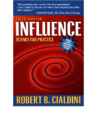
The Rule Is Overpowering 23 Politics 26 The Not-So-Free Sample 28 The Rule Enforces Uninvited Debts 31 The Rule Can Trigger Unequal Exchanges 33 Reciprocal Concessions 35 Rejection-Then-Retreat 37 Reciprocal Concessions, Perceptual Contrast, and the Watergate Mystery 40 Damned If You Do, Damned If You Don't 42 Here's My Blood, and Do Call Again 43 The Sweet, Secret Side Effects 44 Responsibility 44" Satisfaction 45 Defense 45 Rejecting the Rule 45 Smoking Out the Enemy 47 Summary 49 Study Questions 50 CHAPTER 3 Commitment and Consistency: Hobgoblins of the Mind 51 Whirring Along 53 The Quick Fix 54 The Foolish Fortress 54
Mass Media What is Mass Media? Statistics show that there are few things which impact the human mind more than mass media. The advice of teachers, parents and relatives may fall on deaf ears, but the mass media influence holds us all spellbound! At this point, it becomes necessary to define mass media. Mass media may be defined as any form of communication which is meted out to the people at large, through the various forms of communication. What modes of communication are we talking about? Well there can be no static definition for the
51. There's a stupid way of thinking that would make doing the right thing contingent on whether the right thing has been done in supposedly-analogous cases. It's simply irrelevant. You should do the right thing no matter what the rest of the world does. 52. The sincerity of a man's remorse is measured by whether he can refrain from taking potshots along with expressing it. 53. To one destined for purgatory, God says, "You try again." To one destined for hell, He says, "I'll try again." 54. Unless he's more intelligent than himself, there's no hope for a man. 55. Wants should subsidize needs. 56. We need to expand our sense of the possible and contract our sense of the probable. 57. What good is it to be able to read someone else's mind if you can't read your own? 58. When a moron meets a lesson, they annihilate one another. 59. While there is only one human race, there are lots of human losers. 60
Konstantin Dmitrievich Levin ("Kostya") arrives in Moscow with the aim of proposing to Dolly's youngest sister Princess Ekaterina Alexandrovna Shcherbatskaya, "Kitty". Levin is a passionate, restless but shy aristocratic landowner who, unlike his Moscow friends, chooses to live in the country on his large estate. He discovers that Kitty is also being pursued by Count Alexei Kirillovich Vronsky, an army officer. At the railway station to meet Anna, Stiva bumps into Vronsky. Vronsky is there to meet his mother. It surmises that Anna and the Countess Vronskaya have travelled together in the same carriage and talked together. As the family members are reunited, and Vronsky sees Anna for the first time, a railway worker accidentally falls in front of a train and is killed. Anna interprets this as an "evil omen." Vronsky is infatuated with Anna. Anna, who is uneasy about leaving her young son, Seryozha, alone for
Before the war, Himmelstoss was a postman. He is a petty, power-hungry little man who torments Paul and his friends during their training. After he experiences the horrors of trench warfare, however, he tries to make amends with them. Read an in-depth analysis of Corporal Himmelstoss. Franz Kemmerich - One of Paul's classmates and comrades in the war. After suffering a light wound, Kemmerich contracts gangrene, and his leg has to be amputated. His death, in Chapter Two, marks the reader's first encounter with the meaninglessness of death and the cheapness of life in the war. Joseph Behm - The first of Paul's classmates to die in the war. Behm did not want to enlist, but he caved under the pressure of the schoolmaster, Kantorek. His ugly, painful death shatters his classmates' trust in the authorities who convinced them to take part in the war. Detering - One of Paul's close friends in the Second Company. Detering is a young man with
 annaabi.ee