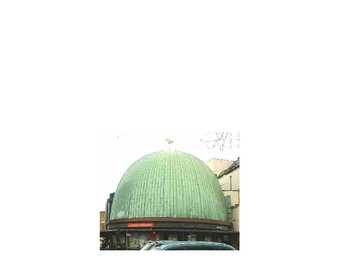
Madame Tussauds museum About museum Madame Tussauds the family themselves pronounce it is a wax museum in London with branches in a number of major cities. It was founded by wax sculptor Marie Tussaud and was formerly known as "Madame Tussaud's"; the apostrophe is no longer used. Madame Tussauds is a major tourist attraction in London, displaying waxworks of historical and royal figures, film stars, sports stars and infamous murderers. Madame Tussauds is owned and operated by Merlin Entertainments. History
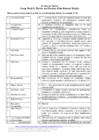
We say "eh?" a lot. We live in igloos. We all speak French. We ride polar bears.. There is no summer; it's always cold and snowy Everyone watches/liked/plays hockey. We're polite. They hate Americans. It snows non stop in canada Canada beer is better than American beer Canadians pronounce the word "about" ..."aboot They wear funny hats They eat blubber Canada hokey players are mullets Canadians are fat They don't have water toilets They are all monarchists All Canadians snowboard They all are jealous of Americans Canada is where Avril Lavigne and Eskimos come from Peaceful hippies They put maple syrup on EVERYTHING They don't have roads Canadians drive dog sleds everywhere They have monopoly money They have no army They have beavers everywhere
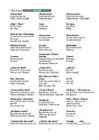
protect protection arrange arrangement disappoint disappointment pronounce pronunciation happen happening bleed blood defend defence order order
* AmE zero or nothing *0= love in tennis *0= zero in temperature *0= nought in mathematics * AmE zero *0= oh for telephone numbers and flight numbers Mare Roes 10 10.10.2012 *Notes *We use ZERO to express some numerical values such as temperatures, taxes and interest rates *We can pronounce 0 like the letter `o', when we are reading out numbers figure by figure (flight number, credit card number, telephone number etc) Mare Roes 11 10.10.2012 *Decimal numbers *In English use a point (.) and not a comma (,) for decimals. * 10.001 *Use commas in figures only when writing thousands.
Past simple We use the past simple: 1. To talk about a completed action in the past, often with a time reference. Yesterday morning, the car broke down on the motorway. 2. To tell people about past events and to tell stories. We unlocked the door quietly, went into the room and began to look for clues. 3. With the past continuous to talk about an action which interrupted another. The bell rang while I was having dinner. !!!Watch out!!! We pronounce: 1. Regular past verb endings as /d/: Remembered screamed 2. Verbs ending in ded or ted as /did/ or /tid/: Landed started 3. verbs ending in ch, sh, x or ss as /t/ watched rushed fixed crossed Past continuous We use the past continuous: 1. to talk about an action which was going on at a particular time in the past. At three o'clock yesterday afternoon i was walking back home. 2. To 'set the scene' in a story.
See http://www.globe-theatre.org.uk/globe-theatre-box-office.htm for help. Congratulations! You are now leaving London to explore England even further. Your last stop will be at Greenwich Observatory You can stand on Longitude 0° in the Observatory. What is it? Prime meridian The Royal Observatory is also the home to the common abbreviation GMT. What does it stand for? Greenwich mean time Is Estonia GMT +2 or GMT +1? Gmt +2 Finally learn to pronounce "Greenwich" correctly: http://www.howjsay.com/ Good luck with further exploring of the UK - there is so much to see!
first element. I-UMLAUT In linguistics, umlaut (from German "sound alteration") is a sound change in which a vowel is pronounced more like a following vowel or semivowel. (ö ü). Umlaut is a form of assimilation, the process by which one speech sound is altered to make it more like another adjacent sound. If a word has two vowels, one far back in the mouth and the other far forward, more effort is required to pronounce the word than if the vowels were closer together. Thus, one possible linguistic development is for these two vowels to be drawn closer together. The Germanic umlaut (more usually called i-umlaut or i-mutation) is a type of linguistic umlaut in which a back vowel changes to the associated front vowel (fronting) or a front vowelbecomes closer to /i/ (raising) when the following syllable contains /i/, /i/, or /j/. It took place
Viljandi 2009 Viljandi County Gymnasium fill out complete (a printed form) fill up fill completely (a container) find out discover fix up repair; arrange in a suitable manner get across cause to be understood give back return give out distribute; announce give up surrender something hand down deliver; pronounce formally; leave as an inheritance hand over yield control of hang up suspend have on be dressed in have over entertain someone informally at one's home hold off delay; restrain hold up delay; rob; threaten with a weapon keep up continue; keep the same pace leave out omit let down disappoint let out release from confinement; make larger (in sewing)
an initial questioning that occurs at the demand of an accused wherein a judge screens the proposed criminal charge against the available evidence; procedure before the trial 11. To discharge the case - type of sentence imposed by a court whereby no punishment is imposed 12. To pass a sentence – (karistust määrama) to officially say in a court of law what a criminal’s punishment will be Syn: Serve/pronounce a sentence 13. Summary offence - (väärtegu) a crime in some common law jurisdictions that can be proceeded against without discussion or a legal process, without the right to a jury trial and/or indictment 14. Indictable offence - (kuritegu) an offence which the government can opt to cause trial by a more formal process than by summary process 15. Triable either way - (hagetav mõlemat moodi) a crime that may be tried either as an
There is no complete one-to-one correspondence between letters and phonemes and it causes many problems for learners. Teachers can help students by giving them typical spellings for sounds every time they work on them. Connected speech and fluency The sounds of words change when they come into contact with each other. We can adopt a three-stage procedure for teaching St-s about features such as elision and assimilation. I stage comparing: we show learners sentences and phrases and have them pronounce the words correctly in isolation. Then play them a recording of someone saying the sentences in normal connected speech. We ask St-s what differences they hear. II stage identifying: St-s listen to recordings of connected speech, and they have to write out a full grammatical equivalent of what they heard. III stage production: in our modelling and teaching of phrases and sentences we will give St-s the connected version, and get them to say the phrases and sentences in this way.
-graduation paper (2 pages of sources). FGI 1811 Proseminar I. Ladusseva 1 10.09.2002 At the defense aspects that are considered are: - your own contribution (whether it is there and is sufficient) - theory (you should have at least 6-10 connected pages discussing the state of the art) - mechanics (the layout of the paper: font size 12, double space, etc.) - answering questions - performance (pronounce distinctly, make good impression, no language mistakes, etc.) - extra linguistic part (how you stand, how you speak, etc.). Will be checked student's ability to classify, to describe material, to draw conclusions (e.g. you give an example and then comment on it). Internet sources: it is nice to have some Internet sources to show your sophistication, but not too many of them, because they are not very reliable. As you start reading sources do it systematically:
127. начаться to begin начинаться/начаться 128. представлять to present, introduce, imagine представлять/ представить 129. объяснить to explain объяснять/объяснить 130. произнести to pronounce, say, utter произносить/ произнести 131. нравиться to please, like нравиться/ понравиться 132. существовать to exist, to be 133. удаться turn out well, succeed, manage удаваться/удаться 134
6 How did the Germans use rockets in the World War II? 7 Speak about the first steps in conquering the space. 8 How long have people explored the Mars and which invention enhanced the exploration? 9 Find the main points about the Mars One mission. 10 What is the difference between a cosmonaut, astronaut and taikonaut? 11 Explain the difference between the words corps and corpse? How do you pronounce these words? 12 Translate the italicized expressions and bold words in the text. Make sure that your translation is appropriate! 13 Derivation is the process of forming a new word from an existing word, often by adding a prefix or suffix. For example, from the word HAPPY we can derive the following words: happen, happily, happiness, unhappy, unhappiness.
are italicized. 11. Graphon is distorted () spelling. It occurs in prose only (in dialogues). It suggests careless, incoherent pronunciation caused by young age, intoxication, or ignorance of the discussed topic. There appear also social and educational factors. There is permanent graphon used by many writers (e.g. "fellow" "fella"; "tomorrow" "tomorra"; "don't know" "dunno"; "give me" "gimme"). This spelling is very close to how we pronounce words. Rendering them in Russian or Estonian is rather difficult. 11. COMMON LITERARY AND COLLOQUIAL VOCABULARY Common literary words are those that are more lofty than their neutral counterparts (here belong also borrowings) (e.g. yearly annual; begin commence; smell aroma; true authentic). How these words function in fiction: literary words have elevated
rääkige otse kõnetorusse - speak directly into the mouthpiece pange see hästi nähtavasse kohta - put it in a conspicuous place kontrollige nimede õigsust - check the accuracy of the names hoidke sageli kasutatavad numbrid laual - keep an index of frequently called numbers on the table tavamaksed - regular charges kättetoimetamise kuupäev - the dates of delivery hoiduge, et teist ei saadaks valesi aru - avoid being misunderstood hääldage sõnu selgelt - pronounce words distincly inimese lauale, kellele see on mõeldud - on the desk of the person for whom is it intended olge asjalik - be businesslike vaadake telefoniraamatust järele - consult the telephone directory alandatud tariifid - reduced rates 27 see on oluline - it is essential meeldiv ja helisev hääl - a pleasing and resonant voice kordamööda - in turn telefoni abonent - telephone subscriber telefonimaksed telephone charges kasutama oskuslikult - to use skilfully
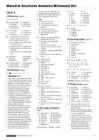
Some have more than one answer What does "look up" mean? It's called a pencil sharpener. How do you say "kapp" in English? It means find the word in a dictionary What's this called in English? We say cupboard. How do you spell "married"? I'm sorry. I don't know. Can you repeat that, please? It's spelt M-A-double R-I-E-D. How do you pronounce this word? Yes, of course. M-A-double R-I-E-D. 12 MODULE 3 Asking and answering questions. Direct questions and indirect questions. 1. Asking and answering questions How to ask and answer direct questions where a short Yes or No answer is expected: Are you cold? Yes I am./No. I'm not Are you waiting for someone? Are you coming on Friday? We usually make questions by changing the word order: we put the first auxiliary
There appear also social and educational factors. There is permanent Graphon used by many writers (e.g. "fellow" "fella"; "somewhat" "summat"; "tomorrow" "tomorra"; "hell of a" "helluva"; "don't know" "dunno"; "give me" "gimme"; "what do you do" "whado"; "old" "ole"; "where are you" "whereja"; etc.) (e.g. "We lov ar ticher."; "She gave permissen for operashun."). This spelling is very close to how we pronounce words. Rendering them in Russian or Estonian is rather difficult. THE STYLISTIC COLOURING OF WORD STYLISTIC CLASSIFICATION OF ENGLISH VOCABULARY Some words have stylistic colouring, which is their permanent part neutral words, formal / literary / bookish words, and colloquial words. Stylistically neutral words are those used in any style of language, they are not associated with
districts); and secondary formation (other territory). Dialectology within Russia recognizes dozens of smaller-scale variants. The dialects often show distinct and non-standard features of pronunciation and intonation, vocabulary and grammar. Some of these are relics of ancient usage now completely discarded by the standard language. The Northern Russian dialects and those spoken along the Volga River typically pronounce unstressed /o/ clearly, a phenomenon called okanye (). Besides the absence of vowel reduction, some dialects have high or diphthongal /ei/ in the place of Proto-Slavic * and /ou/ in stressed closed syllables (as in Ukrainian) instead of Standard Russian /e/ and /o/. An interesting morphological feature is a post-posed definite article -to, -ta, -te similarly to that existing in Bulgarian and Macedonian.
ftuId=FTU_3.1.2.html, by Mariusz Maciejewsk, 12/2016 6 R. Barents "Charges have an Equivalent effect on Customs Duties" (1978) 15CNL rev 415 7 - Paul Craig, Gráinne de Búrca, EU Law: Text, Cases, and Materials, p.613, 617, 618, 2015 8 - http://eur-lex.europa.eu/legal-content/EN/TXT/?uri=CELEX%3A61968CJ0024 2.Cassis de Dijon (case 120/78) (Officially called, "Rewe-Zentral AG v Bundesmonopolverwaltung für Branntwein." But 'the Cassis de Dijon case' is much easier to remember and pronounce!) 3.Keck (cases C-267-8/91) Case 1: Dassonville Dassonville concerned Belgian rules which required imported goods to have a certificate of authenticity from the authorities of certain countries of origin. A group of whiskey traders bought Scotch Whisky in France and tried to import it into Belgium without a certificate. The Court of Justice determined that such a measure would fall within Article 34 TFEU saying,
3 j hard h g g, sometimes a h qu k ai / all / ay eye z s z, ce, ci th (in northern Spain only) The five vowels in Spanish are all pure vowels: [a], [e], [i], [o], [u] Be sure that you do not pronounce a diphthong as we do in English (the extra yuh or wuh sound at the end). Stress: Just as in English, Spanish stresses a certain syllable in a word. If a word ends in a consonant, except s or n, the stress is on the last syllable. If a word ends in a vowel, or s or n, the stress is on the second-to-last syllable. For words that do no follow these rules, an accent is written over the vowel so that you will know to stress that syllable, as in el pájaro (bird).
1 plague 2 friction between 2 acquire fame and fortune Transcript WB 11 3 vie for 3 cause pain I'd like to state from the outset that 4 loves, bits 4 laugh off an incident I don't agree that tougher prison 5 into conflict 5 pronounce dead sentences are the answer to knife 6 sibling 6 provoke mixed feelings crime since spending time in prison 7 shake off an image in the company of hardened criminals 8 take a risk is not going to make a young person
switch to a learner's dictionary as soon as possible, or to use it in conjunction with a bilingual dictionary. You will find that your vocabulary will increase faster by using an English language dictionary. What You Can Learn A dictionary gives you the information required to choose the best word for your needs. A typical dictionary entry contains the correct spelling of a word, followed by the word written in a phonetic alphabet, which shows how to pronounce it. The word is separated by syllables. These help you determine where to separate it at the end of a line when writing. Following the phonetic spelling of the word, its part of speech is indicated. The meanings of the word are given in a numerical order, sometimes followed by a sentence that shows the proper use of the word. While many modern dictionaries list the meanings of words from the most common and current meaning to the oldest
GUILDENSTERN The king, sir,— HAMLET Ay, sir, what of him? GUILDENSTERN Is in his retirement marvellous distempered. HAMLET With drink, sir? GUILDENSTERN No, my lord, rather with choler. HAMLET Your wisdom should show itself more richer to signify this to his doctor; for, for me to put him to his purgation would perhaps plunge him into far more choler. GUILDENSTERN Good my lord, put your discourse into some frame and start not so wildly from my affair. HAMLET I am tame, sir: pronounce. 107 GUILDENSTERN The queen, your mother, in most great affliction of spirit, hath sent me to you. HAMLET You are welcome. GUILDENSTERN Nay, good my lord, this courtesy is not of the right breed. If it shall please you to make me a wholesome answer, I will do your mother's commandment: if not, your pardon and my return shall be the end of my business. HAMLET Sir, I cannot. GUILDENSTERN What, my lord? HAMLET
that it should be equally unreserved was impossible. Elizabeth could never address her without feeling that all the comfort of intimacy was over, and though determined not to slacken as a correspondent, it was for the sake of what had been, rather than what was. Charlotte's first letters were received with a good deal of eagerness; there could not but be curiosity to know how she would speak of her new home, how she would like Lady Catherine, and how happy she would dare pronounce herself to be; though, when the letters were read, Elizabeth felt that Charlotte expressed herself on every point exactly as she might have foreseen. She wrote cheerfully, seemed surrounded with comforts, and mentioned nothing which she could not praise. The house, furniture, neighbourhood, and roads, were all to her taste, and Lady Catherine's behaviour was most friendly and obliging. It was Mr. Collins's picture of Hunsford and Rosings rationally softened; and Elizabeth
speech act to be performed, for example, "I admit that I had several private conversations with the defendant." No satisfactory solution to that problem has been found. William Alston and Stephen Barker have offered a distinctive type of "use" theory of meaning, based on the illocutionary notion of a speech act. Performatives Consider the following sentences. (1) I promise to pay you for the diapers. (2) I pronounce you husband and wife. (3) I christen this ship the Ludwig Wittgenstein. Speech acts and illocutionary force 145 (4) I apologize. (5) I double. [A bid in bridge.] (6) Raise you five. [A bet in poker.] (7) Nay. [A vote on a formal motion.] Except possibly for the last two, these are declarative sentences, so (in particular) the verificationist must address them; what are their respective verification conditions
ideas, strivings, explorations, discoveries, success and failure. This is the musical chronicle of an epoch already lived. Naturally, one person cannot grasp it totally with all its multiple manifestations: it seems impossible. Therefore we have to have certain reservations when evaluating the works of composers who are still writing. There is no temporal distance between music and the listener. The spirituality and pithiness of music opening up in the course of time pronounce the last word on either the value or worthlessness of any musical composition. I am writing about Estonian symphonists and symphonism. What do I mean by this term? For example, one can speak of the symphonism of Eduard Tubin, Artur Kapp and Arvo Pärt. In its best and exact sense symphonism means the creation of a sublime philosophical idea in music in an intense extensive and developing form. Symphonism is a way of thinking through the medium of music and therefore perhaps the most
He laughed. "Don't worry about that now, Bella. You can argue with me when you wake up." I think I smiled. '"Kay." I could feel his lips at my ear. "I love you," he whispered. "Me, too." "I know," he laughed quietly. I turned my head slightly... searching. He knew what I was after. His lips touched mine gently. "Thanks," I sighed. "Anytime." I wasn't really there at all anymore. But I fought against the stupor weakly. There was just one more thing I wanted to tell him. "Edward?" I struggled to pronounce his name clearly. "Yes?" "I'm betting on Alice," I mumbled. And then the night closed over me. EPILOGUE:AN OCCASION Edward helped me into his car, being very careful of the wisps of silk and chiffon, the flowers he'd just pinned into my elaborately styled curls, and my bulky walking cast. He ignored the angry set of my mouth. When he had me settled, he got in the driver's seat and headed back out the long, narrow drive. "At what point exactly are you going to tell me what's going on
most common words in English because the relationships they express are so common. In English, only ten of these words constitute more than one quarter of any text: the, of, and, to, a, in, that, it, is, and / totalled 26,677 of 100,000 words in a count made by Godfrey Dewey. Inevitably this preponderance will affect the frequency table. H, for example, owes most of its occurrences to the. The second source of redundancy stems from the human laziness that favors sounds easier to pronounce and identify. The voiceless stops /ptk/ require less energy to articulate than the corresponding voiced stops /bdg/ and they average twice the frequency of voiced stops in sixteen widely varying languages surveyed by George K. Zipf. Similarly, short vowels are markedly more frequent than long vowels or diphthongs. In the same way, auditors of English, at least, seem to prefer sounds that are easier to identify. Tests made with nonsense syllables show that
 annaabi.ee